
Sphenoiditis - causes, symptoms and integrative treatment
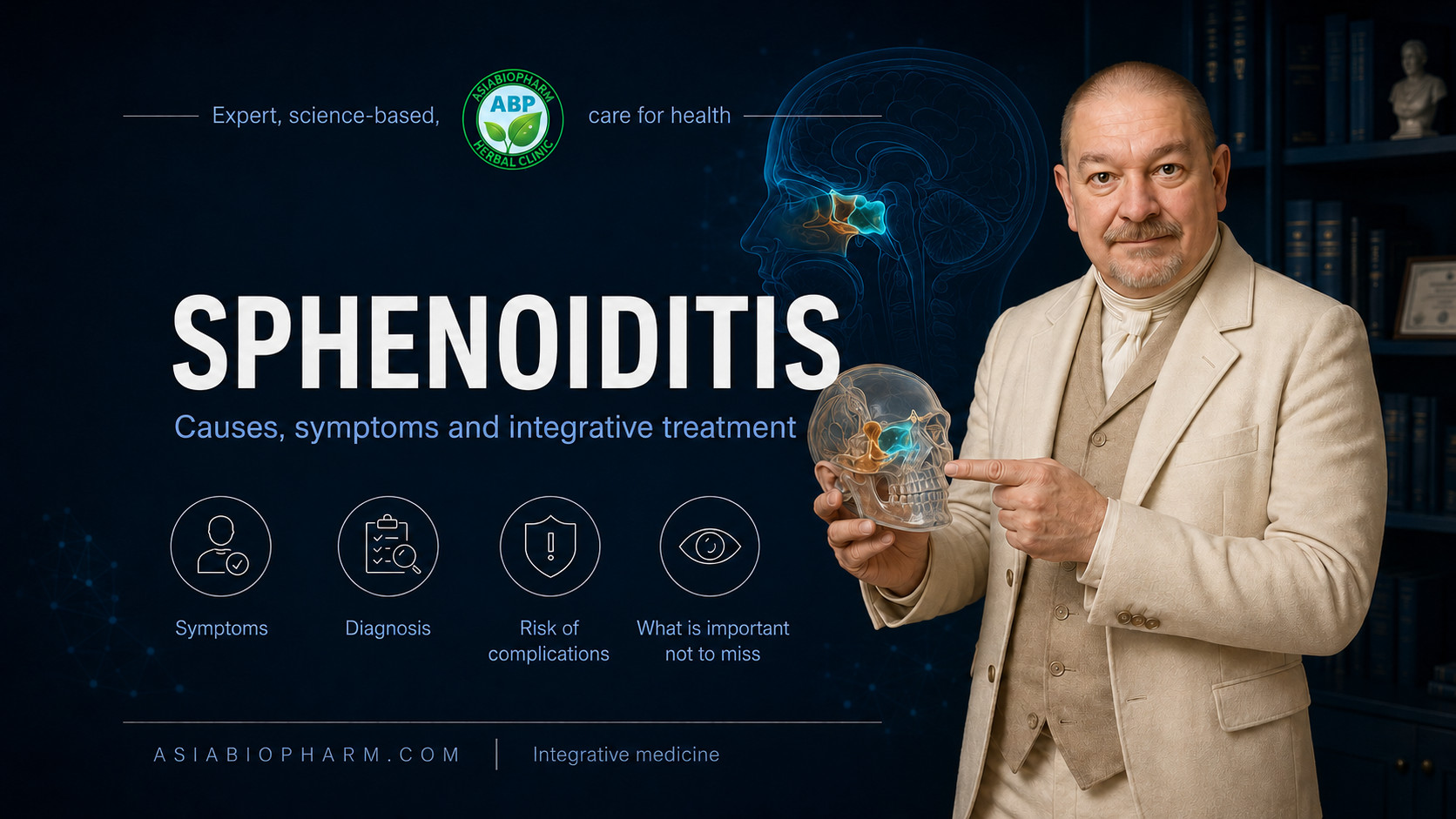
Sphenoiditis is inflammation of the mucous membrane of the sphenoid sinus, which is located deep at the base of the skull near the optic nerves, pituitary gland, cavernous sinuses, internal carotid arteries, and cranial nerves. The main symptom is a deep headache at the crown of the head, in the back of the head, behind the eyes, or seemingly “in the center of the head,” which often responds poorly to conventional analgesics. Postnasal drainage, an unpleasant odor, nasal congestion, reduced sense of smell, fever, and weakness may occur, although a typical runny nose may be absent. Causes include viral inflammation with blockage of the sinus opening, bacterial infection, fungal involvement, a polyp, cyst, mucocele, deviated nasal septum, an anatomically narrow sinus opening, trauma, or previous surgery. Sphenoiditis itself is not transmitted from person to person, but a preceding viral infection may be contagious. Isolated involvement is uncommon in children and often presents almost exclusively as headache; in older adults and patients with immunodeficiency, it is particularly important to rule out invasive fungal disease and neoplasm. An acute process usually develops over several days and lasts for up to several weeks; persistence of inflammation for at least 12 weeks is considered a chronic course.
How to determine whether you have sphenoiditis
Sphenoiditis may be suspected when there is a new, persistent, or gradually worsening deep headache, particularly if it developed after a respiratory infection and is accompanied by pressure behind the eyes, drainage of thick mucus into the throat, fever, or deterioration of vision. The location of the pain is variable and does not by itself confirm the diagnosis. It is impossible to inspect the sphenoid sinus on your own: even during examination of the nose, the mucosa may appear almost normal. An ENT specialist performs endoscopy and assesses the sphenoethmoidal recess, but the absence of visible pus does not exclude the disease. The main method of confirmation is computed tomography of the paranasal sinuses; it can show sinus opacification, a fluid level, mucosal thickening, fungal inclusions, and the condition of the bony walls. MRI is necessary in cases of visual impairment, neurological symptoms, suspected intracranial spread of inflammation, vascular complications, a tumor, or invasive mycosis. Sphenoiditis must be differentiated from migraine, tension headache, neuralgia, cervical spine disorders, meningitis, pituitary disease, vascular disorders, and space-occupying lesions. Therefore, an unusual prolonged headache should not automatically be considered “sinusitis” without imaging.
Red flags
Immediate medical attention is required in the event of sudden loss of vision, double vision, pain with eye movement, drooping of the eyelid, dilation of the pupil, or restricted eye movements — the inflammation may have spread to the optic nerve, orbit, cavernous sinus, or cranial nerves; urgent assessment by an ENT specialist, ophthalmologist, and neurologist is required. High fever accompanied by a sudden worsening of headache, neck stiffness, repeated vomiting, photophobia, confusion, seizures, or focal weakness may indicate meningitis, a brain abscess, or venous thrombosis — emergency medical services should be called. Rapidly increasing one-sided pain, swelling around the eye, black areas on the nasal or palatal mucosa, bloody discharge, marked weakness, and deterioration over several hours are dangerous signs. Children, pregnant women, older adults, and patients with diabetes mellitus, cancer, neutropenia, HIV infection, as well as those who have undergone transplantation or are receiving immunosuppressive therapy, require particularly urgent evaluation. In these groups, an invasive fungal process may progress rapidly.
Initial self-care measures for sphenoiditis
Until medical evaluation, physical exertion should be reduced, 7–9 hours of sleep should be maintained, and air travel, diving, intensive exercise, and prolonged work with the head bent forward should be avoided. Indoor temperature should preferably be maintained at 20–22 °C with relative humidity of 40–60%, and the room should be ventilated regularly. In the absence of cardiac or renal restrictions, an approximate daily fluid intake of 30 ml per kilogram of body weight may be used as a general reference: water, weak tea, or unsweetened compote at 25–40 °C, taken in small portions. Alcohol, smoking, very spicy foods, and excessive coffee that may contribute to dehydration should be temporarily avoided.
For nasal cleansing, gentle irrigation with sterile isotonic 0.9% sodium chloride solution at room or body temperature once or twice daily is acceptable. For preparation at home, use only sterile or distilled water, or water that has been boiled for at least five minutes and then cooled: 4.5 g of salt per 500 ml of water. The container should be washed and completely dried after every procedure. The solution should be introduced without strong pressure, without attempting to “force” it into the sinus. Irrigation should be stopped if ear pain or ear blockage, bleeding, or a sudden increase in headache occurs; after surgery, irrigation should be performed only according to the surgeon’s instructions. The sinus area should not be heated, hot steam inhalations should not be performed, and plant juices, alcohol, hydrogen peroxide, essential oils, or instruments should not be introduced deep into the nose. Vasoconstrictor drops should not be used without proper control: they do not eliminate the cause and may induce rhinitis medicamentosa. If the headache worsens, fever develops, or there is no improvement within 24–48 hours, ENT assessment is required; visual impairment or neurological symptoms must not be managed by waiting.
Possible progression and complications of sphenoiditis
Sphenoiditis does not have a specific sequential stage-by-stage course. An acute process often begins with swelling and closure of the sinus opening, after which ventilation and drainage of secretions become impaired; when a bacterial infection develops, purulent contents may form. Chronic disease is promoted by anatomical narrowing of the sinus opening, polyps, mucocele, chronic inflammation of other sinuses, allergic rhinitis, impaired mucociliary clearance, smoking, immunodeficiency, and inadequate eradication of the inflammatory focus. A fungal ball, allergic fungal inflammation, and invasive mycosis are considered separately — these are different conditions requiring different approaches. Possible complications are related to the anatomical proximity of vital structures: optic neuritis and optic nerve damage, paralysis of the ocular motor nerves, cavernous sinus thrombosis, meningitis, epidural or intracerebral abscess, osteomyelitis of the skull base, and involvement of the internal carotid artery. This is why confirmed isolated sphenoiditis requires follow-up by an ENT specialist even when nasal symptoms are minimal.
Integrative treatment methods for sphenoiditis
An integrative treatment regimen should be selected only after the diagnosis has been confirmed by ENT examination, endoscopy, and computed tomography. It is necessary to determine whether the sphenoiditis is acute viral-inflammatory, bacterial mucopurulent, chronic recurrent, allergic-edematous, fungal, or associated with mechanical obstruction of the sinus opening. In cases of visual impairment, double vision, drooping of the eyelid, neurological symptoms, mucocele, fungal ball, invasive mycosis, or spread of inflammation beyond the sinus, herbal preparations do not replace urgent surgical and antimicrobial treatment.
The main agent for local treatment is ABP-153 oil infusion. The basic version without DMSO is intended primarily for mucous membranes, cavities, and superficial inflammatory processes. Its clinical objectives are to reduce inflammatory edema, support epithelial recovery, normalize secretion, facilitate mucociliary clearance, and provide additional antimicrobial support.
ABP-153 has a fluid MCT base and can spread over the contours of the nasal mucosa. However, it does not penetrate directly into a closed sphenoid sinus, does not mechanically open an obstructed sinus ostium, and does not replace endoscopic drainage. Statements about its effect on the sphenoid sinus should be understood as treatment of accessible nasal mucosa and the sphenoethmoidal recess, rather than as guaranteed delivery of the preparation into an obstructed sinus cavity.
Before use, the nasal passages should be cleared of secretions. The infusion is administered intranasally while lying down with the head tilted back, after which the position of the head is changed slowly so that the fluid oil base spreads over the deeper areas of the nasal cavity. The oil should not be inhaled sharply or deeply into the nasopharynx. Caution is necessary in patients with swallowing disorders, pronounced gastroesophageal reflux, neurological disease, or a tendency to aspirate.
Menthol, camphor, borneol, eucalyptus, clove, and other active components may cause burning, sneezing, hyperemia, increased rhinorrhea, or reactive swelling. If bleeding, marked burning, increasing congestion, or an allergic reaction occurs, use should be discontinued. Saline cleansing and water-based intranasal preparations should be used before application of the oil infusion, while ABP-153 should be administered in a separate time window.
ABP-153D is not used for sphenoiditis. Enhanced transmembrane delivery with DMSO does not solve the problem of a closed sinus ostium and does not provide controlled penetration into the sphenoid sinus. For mucosal and cavity targets, the basic ABP-153 formulation without DMSO is appropriate.
Heartleaf houttuynia Houttuynia cordata is used exclusively orally in the form of a dry powdered extract. The powder should not be used intranasally or added to nasal irrigation solutions. The extract is considered a principal systemic component for infectious-inflammatory sphenoiditis, particularly after a respiratory infection, in the presence of mucopurulent discharge, and when several paranasal sinuses are inflamed simultaneously.
Houttuynia is directed at inflammation of the respiratory mucosa, pathological secretion, and the exudative component. It does not replace an antibiotic in confirmed bacterial disease or surgical drainage when the sinus opening is blocked. Dyspepsia, increased urination, and allergic reactions may occur. Caution is required in severe decompensated hepatic or renal dysfunction, during use of diuretics, and in active autoimmune diseases. Safety during pregnancy and breastfeeding requires separate assessment.
Black seed Nigella sativa is used exclusively orally as a dry powdered standardized extract. It should not be used as a standalone nasal oil or diluted for nasal irrigation.
Thymoquinone and other components of black seed provide systemic anti-inflammatory, antihistamine, and immunomodulatory effects. The extract is particularly appropriate for an edematous-allergic phenotype, a sensation of pressure, persistent congestion, and sphenoiditis combined with allergic rhinitis or metabolic disorders.
Possible adverse effects include gastric discomfort, nausea, diarrhea, headache, lowered blood pressure and blood glucose levels, and allergic reactions. The possibility of enhanced effects of antihypertensive and glucose-lowering medications, anticoagulants, and antiplatelet agents should be taken into account.
Andrographis paniculata is used exclusively orally in the form of a dry powdered or standardized extract. A separate oral formulation provides systemic action and does not duplicate the small amount of the plant contained in topical ABP-153.
Andrographis is more appropriate for an acute infectious-inflammatory process following an acute respiratory viral infection, particularly when there is fever, weakness, body aches, throat inflammation, and development of mucopurulent discharge. It has anti-inflammatory, immunomodulatory, and anti-infective potential but does not replace an antibiotic in confirmed bacterial sphenoiditis.
Possible adverse effects include nausea, abdominal pain, diarrhea, headache, rash, and systemic allergic reactions. Caution is required in hypotension, hypoglycemia, coagulation disorders, and during treatment with immunosuppressants, anticoagulants, antiplatelet agents, antihypertensive medications, and glucose-lowering drugs. Andrographis should not be used during pregnancy without a separate decision by a specialist.
Weeping forsythia Forsythia suspensa is taken orally and may be included in cases with a bacterial-inflammatory and mucopurulent phenotype. Its use is directed at mucosal inflammation, the infectious component, and the response of lymphoid tissues.
Japanese honeysuckle Lonicera japonica is taken orally and complements forsythia in rhinosinusitis that developed after a viral infection, as well as in chronic or mixed allergic-inflammatory processes. Forsythia and honeysuckle may be used as a functional pair, but they do not replace antibiotics in bacterial sphenoiditis when there is a threat of visual, vascular, or intracranial complications.
Dyspepsia and allergic reactions may occur. During pregnancy, breastfeeding, liver disease, and concurrent multicomponent therapy, the safety of the combination should be assessed individually. Adding other herbs with similar anti-infective activity without an independent therapeutic purpose creates unjustified duplication.
Chinese goldthread Coptis chinensis is used exclusively orally in the form of a dry powdered extract. The powder should not be used intranasally or added to irrigation solutions.
Berberine and related alkaloids provide systemic antibacterial, anti-inflammatory, and antibiofilm activity. Coptis may be considered in chronic, recurrent, or mucopurulent disease when resistant bacterial flora and biofilms are suspected to be involved. It does not replace microbiological testing or necessary antibacterial therapy.
Possible adverse effects include a bitter taste in the mouth, nausea, abdominal pain, constipation or diarrhea, reduced appetite, headache, hypotension, and hypoglycemia. Berberine affects CYP3A4, CYP2D6, CYP2C9, and P-glycoprotein and may alter concentrations of cyclosporine, tacrolimus, and other drugs with a narrow therapeutic range.
Interactions with anticoagulants, antiplatelet agents, glucose-lowering medications, antihypertensives, antiarrhythmics, and immunosuppressive drugs are particularly important. Coptis should not be used during pregnancy, breastfeeding, or in newborns. In patients with liver disease or those taking multiple medications, clinical pharmacological assessment is required.
Indian frankincense Boswellia serrata is used exclusively orally as a dry extract. Boswellic acids reduce activity of the 5-lipoxygenase pathway and leukotriene-dependent inflammation.
Boswellia is more appropriate for prolonged inflammation, chronic mucosal edema, and recurrent disease. It complements the anti-infective component of treatment but does not have sufficient independent activity against bacterial or fungal sphenoiditis and does not eliminate mechanical obstruction of the sinus opening.
Possible adverse effects include dyspepsia, heartburn, nausea, diarrhea, and allergic reactions. Caution is required in active peptic ulcer disease, during treatment with anticoagulants or antiplatelet agents, and before surgery.
In chronic edematous-congestive disease, a lymphatic and anti-edema complex containing Murdannia loriformis, butcher’s broom Ruscus aculeatus, and squalene may be used. All powdered extracts in this group are intended exclusively for oral administration.
Murdannia loriformis is used to support immunoinflammatory and lymphatic regulation and to reduce exudative tissue overload. It is not a direct decongestant and does not replace restoration of sinus ostium patency. Possible adverse effects include dyspepsia, weakness, lowered blood pressure, and allergic reactions. Caution is required in acute nephritis, pancreatitis, cholangitis, pregnancy, and breastfeeding.
Ruscus aculeatus supports venous tone and reduces capillary filtration and fluid congestion in tissues. Butcher’s broom is not a vasoconstrictive α-adrenergic agonist, but caution is required in severe arterial hypertension and when it is combined with decongestants, sympathomimetics, or other medications affecting vascular tone.
Squalene has membrane-repair and antioxidant functions and supports restoration of the epithelial barrier. It has no independent anti-edema or antimicrobial effect. Squalene is contraindicated in people with allergies to fish, seafood, or sulfites.
The lymphatic component is not mandatory in acute sphenoiditis. It is considered primarily in chronic edematous-congestive, recurrent, or mixed inflammatory disease. Simultaneous use of all three components is acceptable only when each has an independent therapeutic purpose and after assessment of blood pressure, renal function, and drug interactions.
When fever, chills, body aches, and general intoxication are present, Antipyretic Compound is used. It is intended to relieve the febrile syndrome but does not treat an obstructed sinus ostium, fungal ball, or bacterial focus.
For inflammatory headache or facial pain and pronounced edema without high fever, Five Root Compound may be used. This is a powdered formula intended exclusively for oral administration. It should not be used intranasally or added to nasal irrigation solutions.
Antipyretic Compound and Five Root Compound should not automatically be taken at the same time. The first formula is more appropriate for fever, chills, and general intoxication, while the second is more appropriate for inflammatory pain and edema. Continuous simultaneous use creates unnecessary duplication of anti-inflammatory and analgesic effects.
Allergy Mixture Capsules should be added only in confirmed allergic rhinitis or a mixed allergic-inflammatory phenotype. It is directed at hypersecretion, mucosal edema, and Th2-dependent inflammation but is not a basic treatment for purely bacterial or fungal sphenoiditis.
Because Allergy Mixture contains Murdannia loriformis and other active herbs, separate use of Murdannia and other components with similar activity should be taken into account in order to avoid unjustified duplication. During pregnancy, breastfeeding, severe cardiovascular disease, and in patients with individual hypersensitivity, the formula requires separate assessment.
For postnasal drip, pharyngeal irritation, dry cough, or hoarseness, “Cough and Hoarseness” boluses are used. They do not act directly on the sphenoid sinus and are used only to relieve accompanying symptoms.
Because the boluses contain licorice, prolonged use requires caution in arterial hypertension, edema, heart or kidney failure, and hypokalemia. Combination with diuretics and systemic glucocorticosteroids increases potassium loss, while combination with digoxin and certain antiarrhythmic medications increases the risk of cardiac rhythm disturbances.
A rational basic regimen may include ABP-153 for local treatment of accessible mucosa and one or more oral components selected according to the clinical phenotype. Houttuynia and andrographis are more appropriate for an acute infectious-inflammatory process, forsythia and honeysuckle for mucopurulent and postviral phenotypes, coptis for a chronic bacterial process with suspected biofilms, black seed for an allergic-edematous component, boswellia for prolonged inflammation, and the lymphatic complex for a chronic edematous-congestive course.
Simultaneous use of all herbal remedies is not required. Effectiveness of the regimen should be assessed not only by reduction of headache but also by restoration of drainage, endoscopic findings, and follow-up examination results. Herbal origin does not exclude allergy, dyspepsia, hypotension, hypoglycemia, effects on coagulation, or drug interactions. In cases of visual impairment, neurological symptoms, fungal ball, mucocele, obstruction of the sinus opening, or absence of improvement, integrative therapy must not delay endoscopic drainage and necessary antimicrobial treatment.
What you need to know about standard protocols in modern medicine
Treatment of sphenoiditis is determined not only by headache, nasal congestion, or the nature of the discharge, but also by the cause of the disease, duration of the process, endoscopic and computed tomography findings, and the condition of the natural opening of the sphenoid sinus. Isolated opacification of the sinus on CT is not sufficient grounds for prescribing an antibiotic: a similar appearance may occur with viral inflammation, mucocele, retention cyst, fungal ball, polyposis, tumor, or mechanical obstruction of the sinus opening.
In confirmed acute bacterial sphenoiditis, a physician may prescribe amoxicillin or amoxicillin with clavulanic acid. Possible adverse effects include nausea, abdominal pain, diarrhea, candidiasis, rash, and allergic reactions. The most dangerous include anaphylaxis, angioedema, severe skin reactions, interstitial nephritis, hemolytic anemia, thrombocytopenia, and seizures caused by accumulation of the drug in patients with renal failure.
Clavulanic acid increases the risk of cholestatic hepatitis and drug-induced liver injury. Jaundice, itching, dark urine, and marked weakness may appear both during treatment and after it has ended. Amoxicillin with clavulanate may cause antibiotic-associated colitis, including Clostridioides difficile infection with severe diarrhea, dehydration, toxic megacolon, intestinal perforation, and sepsis.
The medication should not be started in patients with a history of a severe immediate allergic reaction to penicillins or other β-lactam antibiotics or previous cholestatic liver injury associated with this combination. Individual dose adjustment is required in renal impairment. Clinically significant interactions occur with warfarin, methotrexate, probenecid, and allopurinol.
Doxycycline is sometimes considered an alternative in adults with certain types of allergy to β-lactam antibiotics. It may cause nausea, abdominal pain, esophagitis, esophageal ulceration, phototoxic reactions, candidiasis, and drug-induced liver injury. The medication should not be taken immediately before going to bed or without an adequate amount of water.
A rare but dangerous complication of doxycycline is intracranial hypertension, which presents with severe headache, nausea, visual impairment, and swelling of the optic disc. Combination with systemic retinoids increases this risk. Absorption of doxycycline is markedly reduced by iron, calcium, magnesium, and zinc preparations and by antacids. It is generally not used during pregnancy or in young children because of the risk of effects on bone formation and permanent tooth discoloration.
Respiratory fluoroquinolones are reserved for situations in which safer options cannot be used because their toxicity may be severe and irreversible. Levofloxacin and moxifloxacin may cause tendon inflammation and rupture, and injury may sometimes occur weeks or months after the course has ended. The risk is particularly high in older patients, those with renal impairment, and those simultaneously receiving systemic glucocorticosteroids.
Fluoroquinolones may cause peripheral neuropathy with burning, numbness, pain, and muscle weakness, which in some cases becomes irreversible. Anxiety, insomnia, confusion, hallucinations, psychotic reactions, seizures, glycemic disturbances, toxic liver injury, and severe antibiotic-associated diarrhea may occur.
Moxifloxacin and levofloxacin may prolong the QT interval and provoke dangerous ventricular arrhythmias. In predisposed patients, fluoroquinolones have been associated with an increased risk of aortic aneurysm and aortic dissection. They should not be used without medical supervision in patients with significant cardiac rhythm disorders, aortic aneurysm, severe renal impairment, myasthenia gravis, pregnancy, or complex multidrug therapy.
An antibiotic should not be selected solely on the basis of headache, pressure behind the eyes, or opacification of the sphenoid sinus. In the presence of a fungal ball, mucocele, cyst, tumor, or mechanical obstruction of the sinus ostium, antibacterial therapy does not eliminate the cause of the disease and may delay necessary surgical treatment. Repeated empirical switching of antibiotics disrupts the microbiota, promotes candidiasis and Clostridioides difficile infection, and contributes to the emergence of resistant flora.
The intranasal glucocorticosteroids mometasone, fluticasone, and budesonide are used to reduce associated inflammation and edema, especially in allergic rhinitis or polyposis. They do not kill bacteria or fungi, do not open an obstructed sinus ostium, and do not remove contents from the sphenoid sinus.
The most common adverse reactions are dryness, burning, irritation, crusting, and nosebleeds. Directing the spray toward the nasal septum increases the risk of chronic trauma, ulceration, and, rarely, perforation. Suppression of local immune defense may mask a bacterial or fungal infection and delay mucosal healing after trauma or surgery.
With prolonged use of high doses, use of several hormonal preparations, or combination with strong CYP3A4 inhibitors, systemic accumulation of the steroid may occur. Consequences include adrenal suppression, signs of hypercortisolism, elevated intraocular pressure, glaucoma, cataracts, and impaired growth in children. Combination of fluticasone with ritonavir or cobicistat is particularly dangerous and may lead to Cushing syndrome and secondary adrenal insufficiency.
Intranasal steroids should not be started without medical supervision in the presence of an unhealed injury or recent nasal surgery, mucosal ulceration, active untreated infection, frequent nosebleeds, glaucoma, or concurrent use of other hormonal medications.
Paracetamol reduces headache, facial pain, and fever but does not restore sinus drainage and does not act on the causative pathogen. Its main danger is dose-dependent hepatic necrosis. Overdose, simultaneous use of several combination products, alcohol consumption, fasting, exhaustion, and liver disease may lead to acute liver failure, coagulation disorders, encephalopathy, coma, the need for liver transplantation, and death.
Nonsteroidal anti-inflammatory drugs reduce inflammatory pain but may cause erosions, ulcers, massive gastrointestinal bleeding, and perforation. They reduce renal blood flow, promote sodium and fluid retention, raise blood pressure, and may provoke edema, acute kidney injury, and decompensated heart failure.
NSAIDs may cause bronchospasm, anaphylaxis, liver injury, and severe skin reactions. They should not be used without medical supervision in patients with an active ulcer or bleeding, severe renal impairment, decompensated heart failure, NSAID-induced bronchospasm, coagulation disorders, or in late pregnancy. Combination with anticoagulants, antiplatelet agents, systemic steroids, and certain antidepressants markedly increases the risk of bleeding.
In cases of an obstructed sinus ostium, mucocele, fungal ball, bony changes, visual or intracranial complications, or failure of conservative therapy, endoscopic opening and drainage of the sphenoid sinus with examination of its contents may be required. Possible complications of the procedure include bleeding, infection, mucosal injury, scarring, adhesions, recurrent obstruction, and injury to adjacent anatomical structures. The sphenoid sinus lies close to the optic nerves, internal carotid arteries, cavernous sinus, and skull base, so surgical intervention requires a high degree of precision.
Invasive fungal sphenoiditis threatens vision, cranial nerves, blood vessels, and the brain and requires urgent surgical debridement and systemic antifungal therapy. Amphotericin B may cause severe kidney injury, reduced potassium and magnesium levels, anemia, fever, chills, hypotension, cardiac arrhythmias, and infusion reactions. Renal function, electrolytes, and blood cell counts must be continuously monitored during treatment.
Voriconazole may cause toxic liver injury, visual disturbances, photopsia, altered color perception, dizziness, confusion, hallucinations, peripheral neuropathy, and QT interval prolongation. Long-term use may cause severe phototoxicity and periostitis and may increase the risk of cutaneous squamous cell carcinoma. The medication has numerous interactions mediated through CYP2C19, CYP2C9, and CYP3A4 and may dangerously alter concentrations of anticoagulants, statins, immunosuppressants, antiarrhythmic medications, and psychotropic drugs.
A reliable single percentage for complete recovery and absence of recurrence over two years has not been established for all forms of sphenoiditis. Prognosis differs fundamentally between acute bacterial inflammation, chronic disease, fungal ball, invasive mycosis, mucocele, tumor, and anatomical obstruction of the sinus ostium.
Combined use of antibiotics, intranasal glucocorticosteroids, NSAIDs, paracetamol, and systemic antifungal agents creates a cumulative burden on the liver, kidneys, gastrointestinal tract, cardiovascular system, nervous system, immune system, and hematopoietic system. Such treatment may cause drug-induced hepatitis, renal failure, bleeding, arrhythmias, neuropathy, tendon injury, candidiasis, antibiotic-associated colitis, and antimicrobial resistance. Alternative integrative programs based on rationally selected herbal formulas can target inflammation, edema, secretion, and mucosal recovery and generally do not exert the same degree of aggressive systemic effects as unjustified or prolonged combined use of chemically synthesized medications.
Why dosages and duration of treatment are not specified in the article
The same disease may be at different stages in different people, vary in severity, develop complications, and coexist with other conditions. To select a dosage and course duration, a specialist must assess the current phase of sphenoiditis, its duration, severity of edema and pain, presence of mucopurulent contents, condition of the sphenoid sinus ostium, chronic or recurrent course, CT and endoscopic findings, age, body weight, and the function of the liver, kidneys, cardiovascular, nervous, endocrine, and immune systems.
Current use of antibiotics, antifungal medications, anticoagulants, antiplatelet agents, antihypertensive drugs, glucose-lowering medications, and immunosuppressive agents must also be taken into account. A universal dosage may be insufficient and ineffective or excessive and dangerous. Therefore, this article describes possible treatment approaches but does not replace an individualized clinical pharmacological assessment.
If necessary, you can ask a short question in the comments to this article, and for more complex cases you can book a consultation with a clinical pharmacologist specializing in integrative medicine at https://asiabiopharm.com/konsultaciii.
0 comments