
NaproXen — How Dangerous It Is, Side Effects and Contraindications
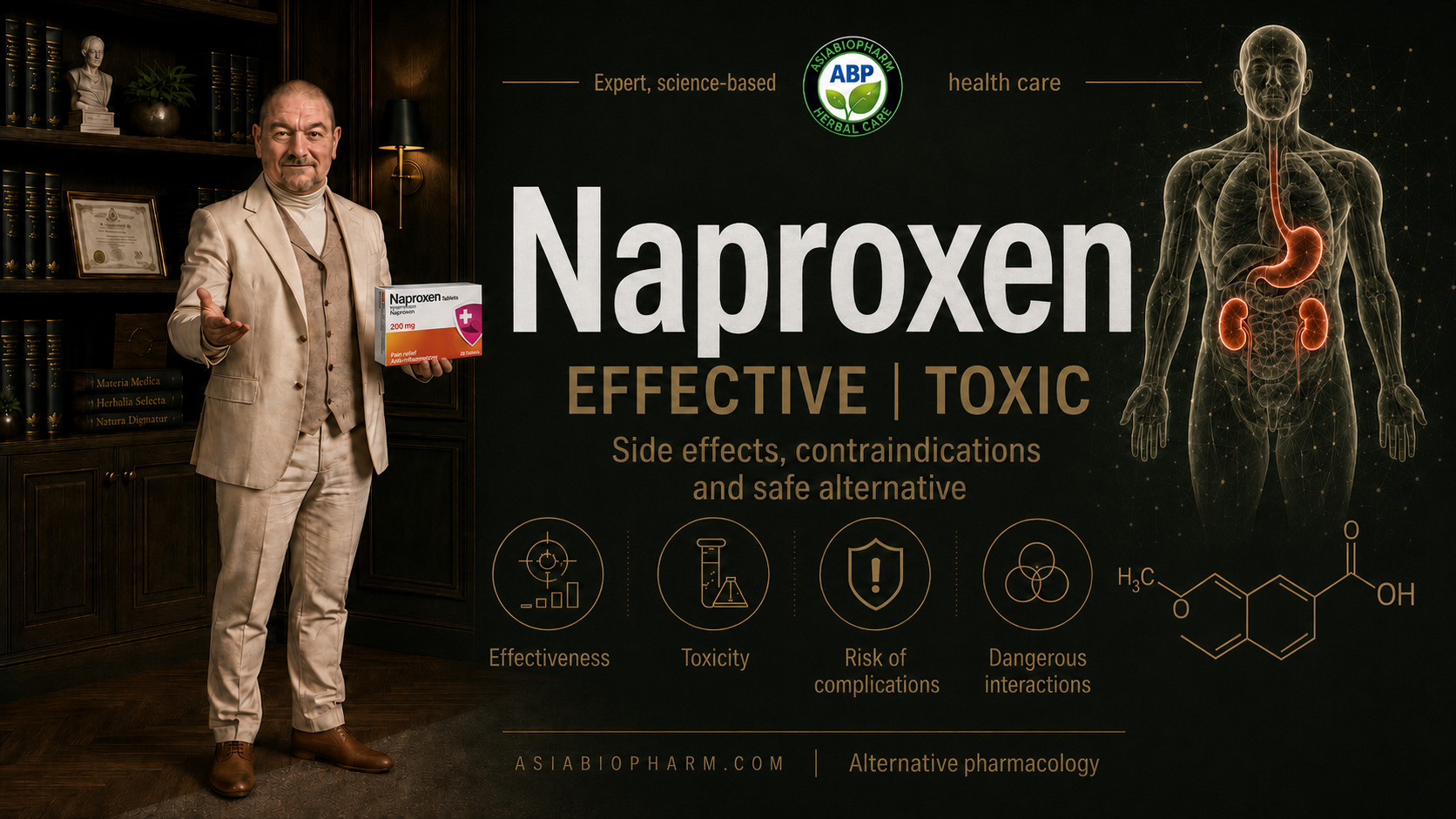
EFFECTIVE | TOXIC
Names Under Which Naproxen Is Sold
The international nonproprietary name is naproxen; the Latin spelling is naproxen. Medicinal products contain naproxen or its more rapidly absorbed sodium salt — naproxen sodium. The main dosage forms are conventional and enteric-coated tablets, extended-release tablets, and oral suspension. Naproxen and naproxen sodium doses should not automatically be considered interchangeable: 275 mg of naproxen sodium corresponds to approximately 250 mg of naproxen, while 550 mg corresponds to 500 mg of naproxen.
The main brand names found in different countries include Naprosyn, Aleve, Anaprox, Anaprox DS, Naprelan, Apranax, Nalgesin, Nalgesin Forte, and Motrin. The list depends on national registration and may change.
Combination products that can result in hidden duplication of naproxen include Treximet and its generics — sumatriptan with naproxen sodium; Vimovo — naproxen with esomeprazole; Aleve-D Sinus and Cold, Aleve-D Sinus and Headache, and certain cold remedies — naproxen sodium with pseudoephedrine. A patient may take one of these products for migraine or a cold and then additionally take “regular” naproxen without realizing that the doses are being added together.
Why Naproxen Is Considered Harmless and Where the Real Risk Begins
Naproxen is often perceived as a familiar, long-acting pain reliever, but its ability to reduce pain is inseparably linked to suppression of protective prostaglandins in the gastrointestinal tract, kidneys, and vascular system. Therefore, ulcers, gastrointestinal bleeding, acute kidney injury, fluid retention, elevated blood pressure, myocardial infarction, or stroke can develop not only after many months of treatment but also during the first weeks, while gastrointestinal complications can occur at any time and without warning symptoms.
A false sense of safety is created by the over-the-counter availability of certain doses, the familiar name, and the absence of an immediate reaction after the first tablet. A person repeats the dose, takes naproxen sodium under another brand name, adds ibuprofen, diclofenac, aspirin, or a combination migraine product, and gets not “stronger pain relief” but additive gastrointestinal toxicity, nephrotoxicity, and bleeding risk. The official prescribing information explicitly prohibits simultaneous use of several products containing naproxen.
Side Effects During the First Hours and Days
Common early reactions include heartburn, dyspepsia, epigastric pain, nausea, constipation or diarrhea, headache, dizziness, drowsiness, tinnitus, and peripheral edema. These symptoms should not automatically be dismissed as “ordinary stomach irritation”: burning, increasing pain, weakness, dizziness, or darkening of the stool may be the first manifestations of erosive or ulcerative injury and blood loss.
Clinically significant complications of a short course include exacerbation of gastritis and peptic ulcer disease, gastrointestinal bleeding, sodium and fluid retention, elevated blood pressure, reduced effectiveness of antihypertensive medications, decreased urine output, and acute kidney injury. The risk rises particularly sharply with dehydration, fever, vomiting, diarrhea, and concurrent use of diuretics, ACE inhibitors, or angiotensin receptor blockers.
Life-threatening reactions may occur after the first dose: anaphylaxis, bronchospasm in a patient with aspirin-sensitive asthma, severe gastrointestinal bleeding, ulcer perforation, myocardial infarction, stroke, Stevens–Johnson syndrome, toxic epidermal necrolysis, and DRESS syndrome. Naproxen must be stopped immediately if a generalized rash, blisters, skin detachment, facial swelling, difficulty breathing, chest pain, one-sided weakness, speech disturbance, vomiting of blood, or black tarry stools occur.
Consequences of Long-Term and Repeated Use
With prolonged or regularly repeated use, risk is determined not only by the daily dose but also by cumulative exposure. Suppression of renal prostaglandins reduces renal blood flow and promotes sodium retention, edema, hyperkalemia, worsening blood pressure control, and decompensation of heart failure. In patients with pre-existing reduction in glomerular filtration, persistent deterioration of renal function and progression of acute kidney injury to chronic impairment are possible.
Gastrointestinal damage can accumulate without symptoms: the absence of pain does not rule out erosions, ulcers, or occult blood loss. Long-term microscopic bleeding can result in iron deficiency and anemia, while the first obvious manifestation of an ulcer may sometimes be massive bleeding or perforation. The risk increases with higher doses and longer treatment duration.
Prolonged use may also cause drug-induced liver injury, anemia, and worsening of hypertension and heart failure. Naproxen does not cause classic dependence and does not produce a specific withdrawal syndrome, but regular suppression of pain can mask progression of arthritis, traumatic injury, peptic ulcer disease, infection, or another disorder. The drug reduces pain and inflammatory manifestations but does not eliminate the cause of most conditions for which it is used.
In women, NSAIDs can reversibly impair ovulation and reduce fertility; when conception is difficult, prolonged naproxen use should be considered a potentially significant factor.
Contraindications and High-Risk Groups
Naproxen is contraindicated in patients with confirmed hypersensitivity to the drug, bronchospasm, urticaria, anaphylaxis, or other allergic reactions after aspirin or other NSAIDs, and for pain control in the perioperative period of coronary artery bypass graft surgery. In aspirin-sensitive asthma, repeated exposure may trigger severe and sometimes fatal bronchospasm or anaphylaxis.
In the presence of an active ulcer, recent gastrointestinal bleeding, perforation, or recurrent NSAID-associated ulcers, the drug creates an unacceptably high risk of recurrence. It is particularly dangerous for older adults, patients with a history of peptic ulcer disease, anemia, inflammatory bowel disease, alcohol dependence, smoking, or concurrent use of anticoagulants, antiplatelet agents, glucocorticoids, and serotonergic antidepressants.
Naproxen products are not recommended when creatinine clearance is below 30 mL/min. With dehydration, cirrhosis, nephrotic syndrome, chronic kidney disease, heart failure, or diuretic therapy, even a standard dose can cause a significant reduction in renal perfusion and acute kidney injury.
After a recent myocardial infarction, naproxen should be avoided unless the expected benefit outweighs the risk of recurrent thrombosis and death. In uncontrolled hypertension, ischemic heart disease, cerebrovascular disease, marked edema, and heart failure, the drug may worsen the condition because of fluid retention, reduced effectiveness of antihypertensive therapy, and increased cardiovascular risk.
During pregnancy, systemic NSAIDs should be restricted from approximately week 20 because of the risk of fetal renal dysfunction and oligohydramnios, and naproxen should be avoided from approximately week 30 because of the risk of premature closure of the ductus arteriosus.
Dangerous Interactions
Combining naproxen with other NSAIDs is contraindicated or highly undesirable: ibuprofen, diclofenac, ketoprofen, meloxicam, indomethacin, celecoxib, and analgesic doses of aspirin. Such combinations provide little or no increase in effectiveness but increase ulcer formation, bleeding, and nephrotoxicity. Hidden duplication can occur when Aleve, Naprosyn, Nalgesin, Treximet, Vimovo, or cold remedies containing naproxen sodium are taken together.
Combination with warfarin, direct oral anticoagulants, heparins, clopidogrel, aspirin, SSRIs, and SNRIs requires assessment of risk and monitoring for bleeding. Naproxen impairs platelet function and damages the gastrointestinal mucosa, so anticoagulant and gastrointestinal toxic effects are additive. Oral glucocorticoids further increase the risk of ulceration and bleeding.
ACE inhibitors, angiotensin receptor blockers, diuretics, and naproxen form a particularly dangerous combination in dehydration and chronic kidney disease: glomerular filtration decreases, antihypertensive and diuretic effects are reduced, and the likelihood of acute kidney injury and hyperkalemia rises. Blood pressure, hydration status, creatinine, and potassium need to be monitored.
Naproxen reduces the renal clearance of lithium: lithium concentrations rise, increasing the risk of tremor, ataxia, confusion, seizures, and renal toxicity. When the drugs are combined, lithium levels must be monitored. Digoxin concentrations may also increase, requiring laboratory monitoring.
Concurrent use with methotrexate increases the risk of myelosuppression, thrombocytopenia, neutropenia, and kidney injury. Cyclosporine and tacrolimus increase nephrotoxicity. Pemetrexed used together with naproxen may more frequently cause myelosuppression and gastrointestinal and renal toxicity.
Probenecid increases naproxen concentrations and prolongs its half-life. Antacids containing magnesium or aluminum, sucralfate, and cholestyramine may slow absorption and alter the onset of action.
Alcohol does not create a specific chemical incompatibility, but it damages the gastric mucosa, makes symptoms of bleeding more difficult to recognize, and increases the risk of ulcers, blood loss, and falls related to dizziness. The combination is therefore particularly dangerous at high doses, during prolonged courses, in patients with a history of ulcers, and with concurrent anticoagulant use.
Herbal products and dietary supplements with antiplatelet activity — ginkgo, high-dose garlic, ginger, curcumin, dong quai, willow bark, and meadowsweet — can theoretically and pharmacologically increase bleeding. Willow bark and meadowsweet additionally create a salicylate burden, so they should not simply be added to naproxen as a “natural way to enhance pain relief.”
Patient Errors
The most common error is increasing the dose when a rapid effect does not occur. Naproxen has a relatively long duration of action, so another tablet taken after a short interval may overlap with the concentration of the drug that is still present in the body. Errors are particularly easy when switching between naproxen and naproxen sodium because the milligram amounts shown on the packaging are not fully equivalent.
The second error is taking several pain relievers from the same pharmacological group at the same time. A patient takes naproxen for back pain, ibuprofen for headache, and an aspirin-containing combination product for a cold, believing them to be different medications. The clinical result is additive gastrointestinal, renal, and hemorrhagic toxicity with minimal additional analgesic benefit.
The third error is continuing treatment for weeks or months without monitoring blood pressure, hemoglobin, creatinine, or signs of occult blood loss. The absence of stomach pain is mistakenly regarded as evidence that no injury is occurring, although ulcers and bleeding may develop without symptoms.
Taking naproxen on an empty stomach, combining it with alcohol, using it during dehydration, fever, vomiting, or diarrhea, and trying to “wait out” black stools, coffee-ground vomiting, reduced urine output, edema, shortness of breath, or chest pain are dangerous. Food may reduce dyspepsia but does not eliminate the systemic risk of bleeding, kidney failure, or cardiovascular complications.
Naproxen does not require gradual dose reduction, so “incorrect withdrawal” does not mean stopping it abruptly. Instead, the error is continuing the drug solely out of fear that pain will return without diagnosing the cause of the symptoms.
Overdose and Poisoning
A precise single dose of naproxen that inevitably causes death has not been established. The severity of poisoning depends on the amount taken, dosage form, age, body weight, kidney and liver function, dehydration, and concurrent use of other medications.
The official prescribing information considers ingestion of 5–10 times the recommended dose a large overdose requiring active medical assessment even if the initial symptoms appear moderate.
During the first hours, nausea, vomiting, epigastric pain, heartburn, drowsiness, lethargy, dizziness, and tinnitus are most common. These manifestations can deceptively resemble ordinary intolerance. More severe poisoning may cause gastrointestinal bleeding, marked hypertension, metabolic disturbances, acute kidney injury, respiratory depression, confusion, seizures, and coma.
Delayed deterioration may develop after a period of relative well-being: urine output decreases, creatinine rises, edema and hyperkalemia appear, along with weakness, shortness of breath, signs of blood loss, and impaired consciousness. In a patient with chronic kidney disease, cirrhosis, heart failure, or dehydration, severe injury may occur at a lower dose.
Hidden overdose occurs when naproxen and naproxen sodium are combined, several brand-name products are used, Treximet, Vimovo, or cold remedies containing naproxen are taken, dosing intervals are shortened, a child’s dose is calculated incorrectly, or the usual dose is continued despite a sharp deterioration in kidney function.
There is no specific antidote. Treatment is symptomatic and supportive. In a medical facility, activated charcoal may be considered within the first four hours after ingestion in a symptomatic patient or following a large overdose. Inducing vomiting or taking charcoal at home instead of seeking emergency care is not appropriate. Hemodialysis, forced diuresis, and urine alkalinization are generally of little benefit because naproxen is highly bound to plasma proteins.
Waiting for seizures, coma, bloody vomiting, or cessation of urine output is dangerous. After a substantial overdose, urgent toxicological assessment and monitoring of consciousness, breathing, blood pressure, electrolytes, creatinine, hemoglobin, and signs of gastrointestinal bleeding are required.
Safe Integrative Alternative to Naproxen
For joint, muscular, and degenerative-inflammatory pain, the most substantiated systemic alternative is the Sahastara analgesic formulation. The formula is used for osteoarthritis of the knee and hip joints, arthralgia, nonspecific myalgia, low back pain, neck-shoulder syndrome, tendinopathies, and bursitis. Its pharmacological effects are associated with suppression of pro-inflammatory prostaglandin and nitric oxide production and effects on COX-2, iNOS, NF-κB, 5-LOX, and nociceptive TRP channels. It contains Piper nigrum, Plumbago indica, Terminalia chebula, Piper retrofractum, Baliospermum montanum, Acorus calamus, Nigella sativa, and other anti-inflammatory and analgesic components.
In a clinical study in knee osteoarthritis, Sahastara reduced pain and improved functional outcomes; the authors considered it a possible alternative to diclofenac with fewer systemic adverse effects. A systematic review of randomized trials also demonstrated the analgesic potential of the formula, although the number of studies and sample sizes remain substantially smaller than for standard NSAIDs. It is therefore more accurate to describe it not as unconditionally equivalent to naproxen for every type of pain, but as a pharmacologically and clinically substantiated substitute for stable mild-to-moderate musculoskeletal pain.
An advantage of Sahastara is the absence of the nonselective suppression of protective prostaglandins in the gastric mucosa, kidneys, and blood vessels that is characteristic of naproxen. At the doses studied, mild dyspeptic reactions and rare allergic skin manifestations were reported more often; severe systemic complications were not recorded in the published studies. This does not mean absolute safety: the formula is contraindicated during pregnancy, exacerbation of peptic ulcer disease, erosive gastritis, and individual intolerance to its components. Piperine can alter the bioavailability of concomitantly used medications, so potential interactions should be assessed in patients taking multiple drugs.
For acute inflammatory pain, fever, and inflammatory respiratory diseases, a separate option may be the “5 Roots” anti-inflammatory formulation. It is more suited to a short-term anti-inflammatory and antipyretic purpose, whereas Sahastara is more specifically aimed at joint, muscular, and degenerative-inflammatory pain.
For bruises, localized myalgia, sprains, superficial edema, and localized joint pain, systemic therapy can be supplemented with topical mountain arnica products. Topical administration allows the painful area to be targeted directly without creating high systemic exposure. Arnica should not be applied to damaged skin and should not be taken orally in unprepared forms.
White willow and meadowsweet have anti-inflammatory and analgesic potential but contain salicylate derivatives. They are not suitable for patients with aspirin or salicylate intolerance, active peptic ulcer disease, bronchospasm after NSAIDs, a tendency to bleed, or anticoagulant therapy. They should not be used concurrently with naproxen as a “herbal enhancement.”
Complete substitution of naproxen with Sahastara may be possible for stable mild-to-moderate musculoskeletal pain, chronic arthralgia, myalgia, and osteoarthritis without a marked exacerbation. During an acute gout attack, active rheumatoid inflammation, severe trauma, rapidly increasing swelling, high fever, pronounced nocturnal pain, or suspected infection, a herbal product should not delay diagnosis and necessary treatment.
Real Effectiveness of Naproxen and Medical Errors
Naproxen is genuinely effective for acute and chronic inflammatory pain. It reduces pain, swelling, stiffness, and local inflammation in osteoarthritis, rheumatoid arthritis, ankylosing spondylitis, tendinitis, bursitis, acute gout attacks, primary dysmenorrhea, and some forms of acute musculoskeletal pain. Because of its relatively long half-life, the drug acts longer than many other NSAIDs and usually provides pain relief for 8–12 hours.
The effect in acute pain may begin within approximately one hour, with naproxen sodium being absorbed faster than conventional naproxen. In chronic inflammatory disease, pain relief may begin after the first doses, but a full assessment of the anti-inflammatory effect requires several days of regular use.
Naproxen does not restore articular cartilage, reverse tendon degeneration, cure rheumatoid arthritis, dissolve uric acid crystals, or correct the biomechanical cause of back pain. In inflammatory arthropathies, it relieves symptoms but does not alter the course of the disease and does not prevent destruction of joints or soft tissues.
One common medical error is prescribing naproxen for any complaint of pain without establishing its origin. Neuropathic pain, compressive radiculopathy, infectious arthritis, fracture, vascular ischemia, cancer pain, and pain caused by visceral pathology require different diagnostic approaches and often different treatment. Reduction of a symptom after an NSAID is not evidence of a correct diagnosis.
A second error is prolonged prescribing without even a basic assessment of ulcer history, blood pressure, cardiovascular risk, kidney function, hemoglobin, and concomitant medications. A third is using a full dose in a dehydrated older patient, a patient with chronic kidney disease, or a person taking a diuretic together with an ACE inhibitor or angiotensin receptor blocker.
Prescribing a proton pump inhibitor may sometimes reduce the risk of ulcerative injury in the upper gastrointestinal tract, but it does not make naproxen a safe drug. Such protection does not eliminate the risk of small intestinal injury, kidney failure, hyperkalemia, edema, decompensated heart failure, elevated blood pressure, myocardial infarction, or stroke.
Safety Monitoring During Treatment
For a single short-term dose in a young person without risk factors, special laboratory monitoring is generally unnecessary. If treatment continues for more than a few days, is repeated in courses, or is given to an older patient, blood pressure, edema, body weight, urine output, and signs of gastrointestinal blood loss should be monitored.
Before a prolonged course, it is reasonable to obtain a complete blood count with hemoglobin and hematocrit, creatinine with calculation of estimated glomerular filtration rate, urea, potassium, ALT, and AST. In patients with chronic kidney disease, heart failure, cirrhosis, dehydration, or use of diuretics, ACE inhibitors, or angiotensin receptor blockers, creatinine and potassium should preferably be rechecked shortly after treatment is started or the dose is increased.
Reduced urine output, rising creatinine, development of hyperkalemia, marked edema, shortness of breath, or rapid weight gain require discontinuation of self-treatment and urgent assessment of kidney and heart function. A fall in hemoglobin without an obvious cause may indicate occult gastrointestinal bleeding even in the absence of abdominal pain.
Naproxen must be stopped immediately if black tarry stools, vomiting of blood or coffee-ground material, sudden severe abdominal pain, fainting, marked weakness, chest pain or pressure, sudden shortness of breath, speech disturbance, facial asymmetry, weakness on one side of the body, a sharp decrease in urine output, swelling of the face or larynx, bronchospasm, generalized rash, blisters, skin detachment, jaundice, or dark urine occur.
If severe bleeding, myocardial infarction, stroke, anaphylaxis, ulcer perforation, or acute kidney injury develops, waiting or trying to “protect the stomach” with an antacid worsens the prognosis. These complications require emergency medical care, not another pain-relief tablet.
Correct Discontinuation of Naproxen
Naproxen can be stopped immediately. Gradual dose reduction is not required because the drug does not cause physical dependence or a specific withdrawal syndrome. If bleeding, an allergic reaction, acute kidney injury, a severe skin reaction, chest pain, or neurological symptoms occur, treatment must be stopped immediately.
After discontinuation, pain, stiffness, swelling, or fever may return, but this is not withdrawal syndrome. It is the reappearance of manifestations of the underlying disease after the symptomatic effect has ended. The longer naproxen has masked a disease without adequate diagnosis, the greater the likelihood that returning pain will be mistaken for “dependence on the drug.”
In rheumatoid arthritis, ankylosing spondylitis, and other chronic inflammatory diseases, self-discontinuation of naproxen should not be accompanied by discontinuation of disease-modifying therapy. Naproxen does not replace disease-modifying drugs, so disappearance of pain while taking an NSAID does not mean that the immune-inflammatory process has been suppressed.
When switching to Sahastara, a special period of gradual naproxen dose reduction is generally unnecessary. However, concomitant use should be assessed individually: Sahastara contains piperine, which can affect the absorption and metabolism of some medications. In peptic ulcer disease, extensive polypharmacy, anticoagulant therapy, and liver or kidney disease, unsupervised combination is undesirable.
A Rational Approach to Treatment
Naproxen is justified when relatively rapid, pronounced, and predictable suppression of inflammatory pain is required: during an acute gout attack, an arthritis flare, pronounced tendinitis, bursitis, primary dysmenorrhea, or another short-term inflammatory pain condition in the absence of contraindications. In such situations, the rational strategy is the lowest effective dose for the shortest necessary duration.
For long-term treatment of chronic joint and muscle pain, the toxicological cost of naproxen increases. Repeated courses create a risk of ulcerative injury, occult blood loss, anemia, renal dysfunction, fluid retention, hypertension, and cardiovascular complications. The absence of side effects after several tablets does not guarantee the safety of subsequent months of treatment.
In stable arthralgia, myalgia, osteoarthritis, and nonspecific musculoskeletal pain, it is reasonable to consider Sahastara as a systemic integrative alternative with a lower likelihood of typical NSAID-associated complications. For acute inflammatory conditions accompanied by fever, the “5 Roots” anti-inflammatory formulation may be used, while topical mountain arnica products may be used for localized pain and bruising.
The purpose of integrative substitution is not to mechanically reject an effective synthetic drug, but to reduce the duration of its use, lower the cumulative dose, and prevent organ toxicity. Naproxen should be reserved for situations in which its speed and strength of action are genuinely necessary, while chronic stable pain should be managed by transitioning to less toxic supportive therapy, adjusting physical load, restoring mobility, treating the cause of inflammation, and controlling body weight.
If you have questions about the subject of this article, you can ask a clinical pharmacologist in the comments or book an appointment using this link: https://asiabiopharm.com/konsultaciii/
0 comments