
Methotrexate — how dangerous it is, side effects, contraindications and overdose
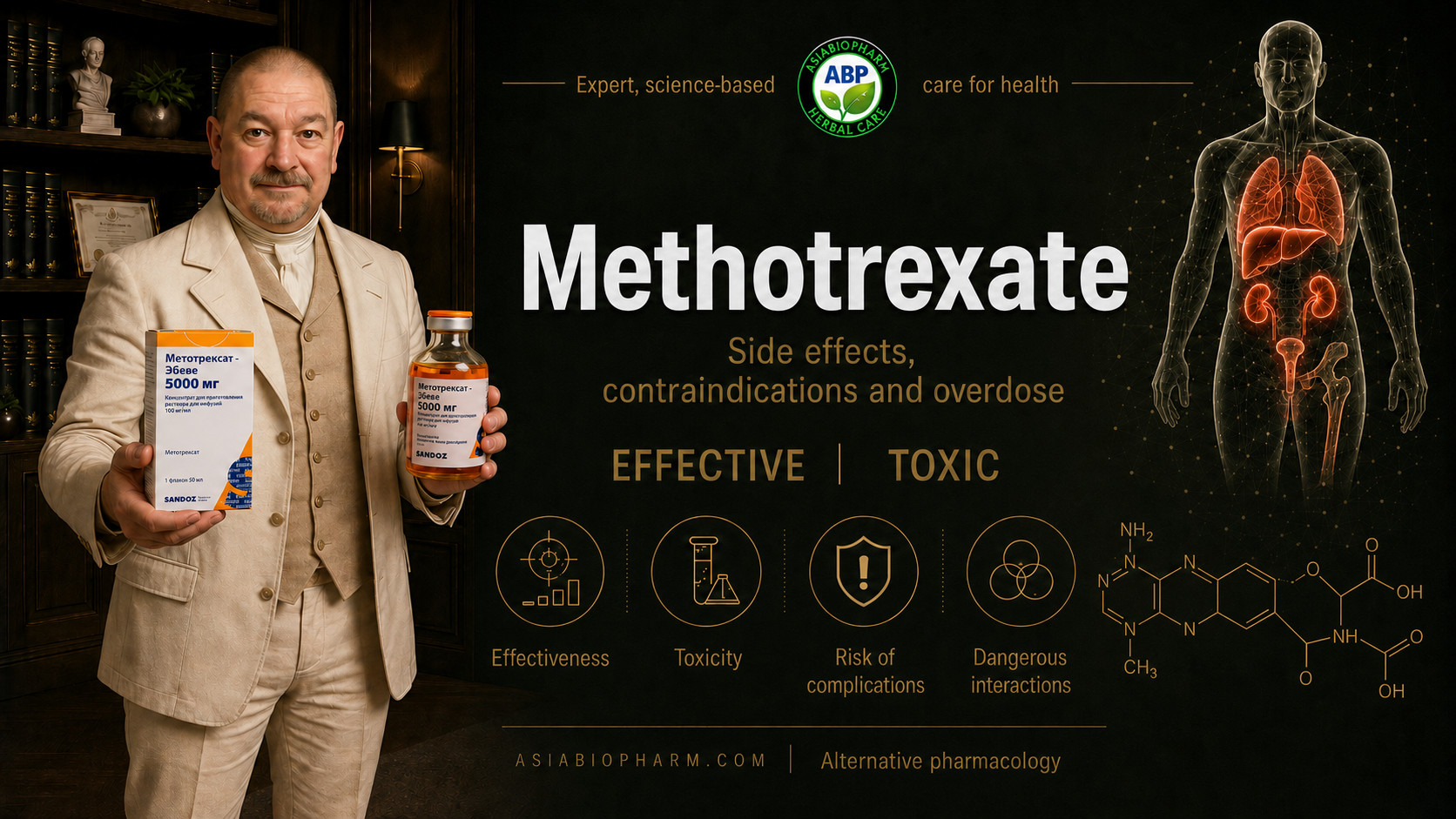
EFFECTIVE | TOXIC
What names methotrexate is sold under
The international nonproprietary name is methotrexate, the Latin spelling is Methotrexate, and the abbreviation is MTX. Medications usually contain methotrexate or methotrexate sodium — Methotrexate sodium. The main dosage forms are tablets, solution for subcutaneous, intramuscular, intravenous and intrathecal administration, prefilled syringes and autoinjectors. Common trade names include Methotrexate, Methotrexate-Ebewe, Metoject, Metortrit, Zexate, Trexan, Maxtrex, Jylamvo, Metoject, Methofill, Nordimet, Otrexup, Rasuvo, RediTrex, Trexall. Different commercial formulations contain the same active ingredient, so tablets and injectable methotrexate should not be regarded as separate, unrelated medications. Fixed-dose combination medicines containing methotrexate are uncommon; the main risk of hidden duplication arises when methotrexate from different manufacturers is used simultaneously or when a patient switches from tablets to injections without discontinuing the previous formulation.
Why methotrexate is considered a familiar medication and where the real risk begins
Methotrexate can cause bone marrow suppression, severe infections, ulceration of the mucous membranes, toxic injury to the liver, kidneys and lungs, severe skin reactions, infertility and embryo-fetal death. A particular danger lies in the unusual dosing schedule used for inflammatory diseases: the medication is usually taken once a week rather than every day. Mistakenly taking it daily instead of weekly has repeatedly resulted in fatal toxicity, which is why European regulators introduced special warnings on packaging and restrictions on prescribing. The first signs of poisoning — weakness, nausea, mouth pain, diarrhea or fever — are nonspecific and may mistakenly be attributed to an infection or an exacerbation of the underlying disease.
A false sense of safety is also created by the fact that much lower doses are used for rheumatoid arthritis or psoriasis than in oncology. However, a “low dose” does not mean low toxicity: dehydration, impaired kidney function, advanced age, folate deficiency and drug interactions can sharply slow methotrexate elimination. Severe poisoning can occur not only after a single large dose but also after several ordinary tablets mistakenly taken every day.
Side effects after the first dose and at the beginning of treatment
Common early reactions include nausea, decreased appetite, abdominal pain or discomfort, diarrhea, headache, fatigue, increased activity of hepatic transaminases, and inflammation and ulceration of the oral mucosa. Stomatitis is particularly important: tongue soreness, mouth ulcers or difficulty swallowing may be early manifestations of excessive antifolate activity and may precede pronounced suppression of blood cell production.
Clinically significant complications during the first days and weeks include leukopenia, neutropenia, thrombocytopenia, anemia, increased susceptibility to infections, mucosal bleeding, drug-induced hepatitis and acute kidney injury. Acute methotrexate-induced pneumonitis may occur: dry cough, shortness of breath, fever and hypoxemia can develop regardless of the overall duration of treatment and require immediate discontinuation of the medication.
Life-threatening reactions include pancytopenia with sepsis or bleeding, severe interstitial pneumonitis, anaphylaxis, toxic epidermal necrolysis, Stevens — Johnson syndrome, severe gastrointestinal injury with ulceration and perforation, as well as acute impairment of kidney function with delayed elimination of the medication. The danger increases with high doses, reduced glomerular filtration, dehydration, fluid accumulation in the pleural or abdominal cavity and concurrent use of medicines that reduce renal elimination of methotrexate.
Consequences of long-term and repeated use
With prolonged treatment, the most significant concerns are cumulative hepatotoxicity, bone marrow suppression, immunosuppression, recurrent infections, lung injury and impaired reproductive function. Persistent elevation of transaminases may progress to steatohepatitis, fibrosis and cirrhosis of the liver. Normal ALT and AST levels in a single test do not rule out the development of chronic injury, especially in patients with obesity, diabetes mellitus, regular alcohol consumption and other liver diseases.
Prolonged suppression of bone marrow hematopoiesis manifests as increasing weakness, shortness of breath, frequent infections, mucosal ulcers, petechiae, nosebleeds and decreases in all blood cell lines. When methotrexate is discontinued promptly and folinate therapy is provided, these changes are often reversible, but severe pancytopenia may be complicated by sepsis, internal bleeding and death.
Methotrexate can cause oligospermia, ovulatory disorders and reduced fertility; some of these changes are reversible after treatment is discontinued. The medication has proven embryotoxic and teratogenic effects. Prolonged immunosuppression increases susceptibility to bacterial, viral, fungal and opportunistic infections. Lymphoproliferative disorders have been reported, some of which may regress after methotrexate is discontinued. The medication does not cause drug dependence, tolerance or a classic withdrawal syndrome; however, stopping therapy may lead to a return of activity of rheumatoid arthritis, psoriasis or another underlying disease.
Contraindications and high-risk groups
When used to treat non-oncological diseases, methotrexate is contraindicated during pregnancy because of the risk of embryo death and severe congenital malformations. It is also not used in patients with severe hypersensitivity to the medication. Active severe infections, pronounced leukopenia, thrombocytopenia, anemia, bone marrow failure, severe liver disease, alcohol abuse and significant impairment of kidney function make toxic complications substantially more likely.
In chronic kidney disease, methotrexate is eliminated more slowly, so even a standard dose may cause mucositis, pancytopenia and systemic intoxication. In older patients, the risk is further increased by reduced glomerular filtration, polypharmacy and lower folate reserves. With dehydration, vomiting, diarrhea, ascites or pleural effusion, pharmacokinetics become unpredictable and the medication may remain in the body for longer.
Obesity, diabetes mellitus, fatty liver disease, viral hepatitis and regular alcohol consumption increase the likelihood of liver fibrosis. Patients with pre-existing lung disease require particularly careful assessment because a new cough or shortness of breath may represent drug-induced pneumonitis rather than an infection. Live vaccines during significant immunosuppression may cause an infectious complication instead of the expected safe immunization.
Dangerous interactions
The combination of methotrexate with trimethoprim and co-trimoxazole is considered contraindicated or highly undesirable. Both medications interfere with folate metabolism, so the combination can cause severe stomatitis, megaloblastic changes, pancytopenia and infectious complications even during low-dose rheumatological therapy.
Nonsteroidal anti-inflammatory drugs, including ibuprofen, naproxen, diclofenac and acetylsalicylic acid, may reduce renal elimination of methotrexate and increase its concentration. During stable low-dose therapy, some such combinations are used under medical supervision, but independently adding a painkiller, especially in the presence of dehydration or renal impairment, is dangerous. The risk is substantially higher with high-dose methotrexate.
Proton pump inhibitors — omeprazole, esomeprazole, pantoprazole and related medications — can delay elimination of methotrexate and its metabolite, particularly at oncology doses. Penicillins, some cephalosporins, sulfonamides, probenecid and other weak organic acids may also compete for renal secretion or displace methotrexate from protein binding. This requires assessment of kidney function, blood parameters and, during high-dose therapy, methotrexate concentrations.
Alcohol increases the toxic burden on the liver. Regular consumption, episodes of heavy drinking and combination with other hepatotoxic agents increase the likelihood of drug-induced hepatitis and fibrosis. Leflunomide, azathioprine, retinoids and some anticonvulsants may further increase hepatotoxicity or myelosuppression.
Folic acid is usually prescribed during low-dose treatment of inflammatory diseases to reduce stomatitis, gastrointestinal reactions and certain laboratory abnormalities, but its dosing regimen should be agreed with a physician. During cancer treatment, uncontrolled use of folic or folinic acid may alter the antitumor effect. Herbal products should not be considered neutral either: potentially hepatotoxic extracts, diuretics, laxatives and agents that cause dehydration may increase the risk of methotrexate accumulation.
Patient errors that turn treatment into poisoning
The most dangerous mistake is taking the weekly dose every day. This can occur because of a habit of taking tablets daily, an unclear prescription, automatic filling of a pill organizer or misunderstanding of the instructions. Just several days of such dosing can cause severe mucositis, diarrhea, pancytopenia, sepsis, bleeding and death. This exact error led to the introduction of special Europe-wide safety measures.
Other common mistakes include independently increasing the dose when there is no rapid effect, shortening the weekly interval, repeating a dose because of uncertainty about whether it was taken, combining tablets with an injection, using different brands of methotrexate and mistakenly selecting tablets of another strength. In inflammatory diseases, the therapeutic effect develops gradually, so an extra dose does not accelerate suppression of inflammation and only increases toxic exposure.
Continuing treatment during fever, severe diarrhea, vomiting, dehydration, mouth ulcers, a new cough, shortness of breath, unusual bruising or a sharp decrease in urine output is dangerous. It is equally risky to take co-trimoxazole, antibiotics, NSAIDs or omeprazole independently without informing the physician about methotrexate use. The absence of complications during the first few weeks does not prove that the liver, bone marrow and lungs will remain unharmed as therapy continues.
Methotrexate overdose and poisoning
There is no single safe threshold for overdose. Toxicity depends not only on the amount of medication but also on the dosing regimen, kidney function, hydration, age, concomitant medications, albumin level and the presence of pleural effusion or ascites. During low-dose therapy, the greatest danger is not a single large dose but repeated daily administration of the weekly dose. Severe toxicity has been described after several consecutive days of such use, even when the original rheumatological dose itself was within the usual range.
During the first 24 hours, nausea, vomiting, abdominal pain, diarrhea, weakness and inflammation of the oral mucosa may occur. Painful ulcers, difficulty swallowing, dehydration and impaired nutrition then become increasingly pronounced. After several days, there may be a sharp fall in leukocytes, neutrophils and platelets, followed by fever, sepsis, pneumonia, petechiae, bleeding and severe anemia. Acute kidney injury, hepatotoxicity, skin erosions and lung injury may occur at the same time. Feeling relatively well during the first few hours does not rule out subsequent bone marrow suppression.
The antidote is calcium folinate — leucovorin — which should be started as early as possible. Its dose and duration are determined by the circumstances of the overdose, kidney function, clinical manifestations and, during high-dose therapy, the concentration of methotrexate in the blood. When elimination is delayed, intensive hydration and urinary alkalinization are used; when toxic concentrations occur in the setting of renal failure, glucarpidase may be used to rapidly break down circulating methotrexate. Conventional hemodialysis removes the medication incompletely and may be followed by a rebound increase in concentration after the procedure ends. Leucovorin is officially used to reduce toxicity in cases of impaired methotrexate elimination and following overdose with folic acid antagonists.
In cases of mistaken daily use, simultaneous use of tablets and injections, or an extra dose, one should not wait for mouth ulcers or changes in blood test results to appear. Further use must be stopped immediately and emergency toxicological care sought, with the exact name of the medication, tablet strength, number of doses taken and time of the last dose reported.
Safe integrative alternative to methotrexate
For chronic joint inflammation of mild or moderate activity, a stable course of disease and the absence of a rapidly progressing erosive process, the following combination may be considered: Sphaeranthus indicus + Derris scandens + Cryptolepis buchananii + Boswellia serrata + Curcumin + Scutellaria baicalensis. This is not merely a mechanical mixture of analgesic plants but a multi-component anti-inflammatory regimen acting on different parts of the inflammatory cascade.
Sphaeranthus indicus is of interest as an immunomodulatory component that may influence the production of pro-inflammatory cytokines and the activity of cells involved in maintaining synovial inflammation. Scutellaria baicalensis complements this approach through the flavones baicalin and baicalein, which have been shown to affect NF-κB, pro-inflammatory cytokines and synovial cell activity. However, the main evidence base for these effects remains preclinical, so they should not be presented as a proven equivalent to the disease-modifying antirheumatic effect of methotrexate.
Derris scandens has clinical data showing reduced pain and improved function in knee osteoarthritis, as well as experience of use for musculoskeletal pain. It acts primarily as an anti-inflammatory and analgesic component but has no proven ability to prevent rheumatoid joint erosions.
Cryptolepis buchananii combines analgesic, anti-inflammatory and potential chondroprotective activity. These properties have been demonstrated mainly in experimental models; clinical evidence in rheumatoid arthritis is far more limited than that available for methotrexate.
Boswellia serrata primarily suppresses the 5-lipoxygenase pathway and leukotriene production, while Curcumin affects NF-κB, COX-2 and a number of pro-inflammatory cytokines. The clinical evidence for this pair is most convincing in osteoarthritis: reductions in pain and improvements in function have been observed, although the quality of studies is heterogeneous. These agents may reduce inflammatory pain, but it has not been proven that they prevent autoimmune joint destruction to the same extent as methotrexate.
In enthesitis, tendon injury, reduced bone mineral density or a pronounced degenerative component, the combination may be supplemented with Cissus quadrangularis. Nigella sativa may be used as an additional immunometabolic and antioxidant component. Rehmannia glutinosa is more appropriately considered for restorative and organ-protective support rather than as a stand-alone replacement for disease-modifying therapy. Millettia erythrocalyx has anti-inflammatory potential, but its specific rationale in rheumatoid arthritis remains limited.
Ruta graveolens should not be included in a basic long-term regimen because of its potential gastrointestinal, hepatotoxic, phototoxic and reproductive toxicity. Elytrigia repens may be used only as an adjunct and does not have sufficient specificity for autoimmune synovitis.
Complete replacement of methotrexate with such a combination is acceptable only in conditions that do not require proven disease-modifying and cytostatic effects: stable non-erosive joint inflammation, certain forms of osteoarthritis, chronic musculoskeletal pain and soft-tissue inflammation. In active seropositive rheumatoid arthritis, progressive psoriatic arthritis, severe systemic autoimmune disease, aggressive juvenile arthritis, ectopic pregnancy and cancer treatment, an herbal combination is not an equivalent substitute. Independently discontinuing methotrexate in such situations may lead not to “cleansing the body,” but to irreversible joint damage, systemic complications or tumor progression.
Real effectiveness of methotrexate and prescribing errors
Methotrexate is genuinely effective in rheumatoid arthritis, psoriatic arthritis, severe psoriasis, certain forms of juvenile idiopathic arthritis, some autoimmune diseases and a number of malignant neoplasms. In rheumatology, it is classified as a disease-modifying antirheumatic drug: it reduces synovitis activity, pain, swelling and morning stiffness and, when therapy is effective, slows structural joint damage. The response does not develop immediately: initial changes are usually assessed after several weeks, while the full effect may take several months. Methotrexate is not a rapid pain reliever, and an extra tablet does not turn it into an analgesic.
The effectiveness of monotherapy varies. In a 2024 observational study, a successful response to monotherapy was recorded in approximately 59% of patients, and the probability of success depended on baseline disease activity and other clinical factors. This means that methotrexate is effective but not universal: a substantial proportion of patients require dose adjustment, a change in the route of administration or the addition of another disease-modifying agent.
In psoriasis, the medication reduces pathological inflammation and skin-cell proliferation but does not eliminate the genetic and immunological basis of the disease. Different doses and regimens are used for oncological indications, and the antitumor effect is related to disruption of folate-dependent nucleotide synthesis. Regimens, rules of use and toxicity assessments from rheumatology cannot be transferred to oncology or vice versa.
Common medical errors include prescribing without a baseline complete blood count, assessment of ALT, AST, albumin, creatinine and estimated glomerular filtration rate; failure to screen for chronic infections; ignoring pregnancy or reproductive plans; prescribing to a patient who regularly consumes alcohol or has significant liver disease; failure to clearly document one specific day of the week in writing; inadequate dose adjustment in renal impairment; concurrent prescribing of co-trimoxazole; and continuing treatment despite stomatitis, cytopenia, a new cough or shortness of breath. Prescribing a toxic antifolate and then failing to monitor laboratory tests for months is not an “individualized approach,” but a lack of pharmacological monitoring.
Safety monitoring during treatment
Before therapy begins, a complete blood count with differential and platelet count, ALT, AST, bilirubin, albumin and creatinine with calculation of glomerular filtration rate are required. Depending on the indication and epidemiological risk, viral hepatitis, HIV, tuberculosis and lung status are assessed. Pregnancy must be excluded before treatment when the medication is used for non-oncological indications.
At the beginning of treatment and after a dose change, laboratory monitoring is performed more frequently, usually every few weeks. Once the condition has stabilized, the intervals may be extended, but regular monitoring of blood counts and liver and kidney function remains mandatory. The specific frequency depends on the dose, indication, age, comorbidities and combination of medications.
Progressive decreases in leukocytes, neutrophils or platelets, a pronounced fall in hemoglobin, persistent elevation of transaminases, decreased albumin and worsening kidney function should raise concern. What matters is not only whether a value falls outside the reference range but also whether it deteriorates rapidly compared with baseline. When renal filtration declines, the medication may begin to accumulate even before pronounced symptoms appear.
Mouth ulcers and severe oral pain, high fever, sore throat, unusual bruising, petechiae, bleeding, marked weakness, persistent diarrhea, vomiting, jaundice, dark urine, decreased urine output, a new dry cough, shortness of breath, hypoxemia, widespread rash, blisters or skin detachment require immediate assessment. Cough and fever in a patient receiving methotrexate should not automatically be attributed to an ordinary respiratory infection: drug-induced pneumonitis or a severe infection in the setting of myelosuppression may begin in this way.
Waiting for the next scheduled laboratory test in the presence of stomatitis, fever, bleeding or shortness of breath is dangerous because bone marrow and pulmonary toxicity may progress rapidly. The next dose is usually withheld until medical assessment, but the subsequent decision regarding discontinuation, folinate therapy and hospitalization is made by a physician.
Proper discontinuation of methotrexate
Methotrexate does not cause drug dependence or a classic withdrawal syndrome, so gradual dose reduction is not always pharmacologically necessary. In severe toxicity, pancytopenia, drug-induced pneumonitis, significant liver injury, severe infection or overdose, the medication is discontinued immediately rather than tapered gradually.
When discontinuation is planned in stable rheumatoid arthritis or psoriasis, the decision depends on the duration of remission, residual disease activity, the presence of erosions and other therapy. Abrupt discontinuation may be accompanied by a return of pain, joint swelling, morning stiffness, skin lesions and laboratory evidence of inflammatory activity. This is not a withdrawal syndrome in the pharmacological sense, but recurrence of the disease after suppression is stopped.
A missed weekly dose must not be compensated for by taking twice the amount of medication. Patients should not independently change the day of administration, shorten the interval or take a tablet “just in case.” When switching from tablets to injections, simultaneous use of both formulations must be excluded.
Independently replacing methotrexate with an herbal combination is particularly dangerous in active erosive arthritis. Even if pain temporarily decreases, immune-mediated joint damage may continue. Decisions to reduce or discontinue disease-modifying therapy should be based not only on how the patient feels but also on joint examination, inflammatory markers and, when necessary, ultrasound or radiographic monitoring.
A rational approach to treatment
Methotrexate is justified when a proven disease-modifying, immunosuppressive or antitumor effect is required. In active rheumatoid arthritis, it can do more than simply reduce pain — it can slow joint destruction. In certain cancers, severe psoriasis and ectopic pregnancy, its pharmacological properties cannot be replaced by the general concept of an “anti-inflammatory plant.”
At the same time, methotrexate toxicity should not be regarded as an inevitable price that a patient must silently accept. If the medication is prescribed without sufficient indication, used only to suppress moderate pain or continued despite persistent toxicity without reconsidering therapy, it is reasonable to consider safer options.
In stable non-erosive joint inflammation, osteoarthritis, tendon inflammation and chronic musculoskeletal pain syndrome, a combination of Sphaeranthus indicus + Derris scandens + Cryptolepis buchananii + Boswellia serrata + Curcumin + Scutellaria baicalensis may reduce inflammation, pain and stiffness with a lower risk of myelosuppression, severe mucositis and antifolate toxicity. However, lower toxicity does not automatically make it an equivalent disease-modifying therapy.
In active autoimmune disease, herbal products are more appropriately used as an adjunct that may reduce the symptomatic medication burden, rather than as an unsupervised replacement for effective disease-modifying therapy. The purpose of an integrative approach is not to set plants against pharmacology, but to select the least toxic regimen capable of genuinely controlling the disease and preventing irreversible damage to organs and joints.
If you have questions about the subject of this article, you can ask a clinical pharmacologist in the comments or schedule an appointment via the following link: https://asiabiopharm.com/konsultaciii/
0 comments