
Ketoconazole — Why It Is Dangerous, Side Effects and Contraindications
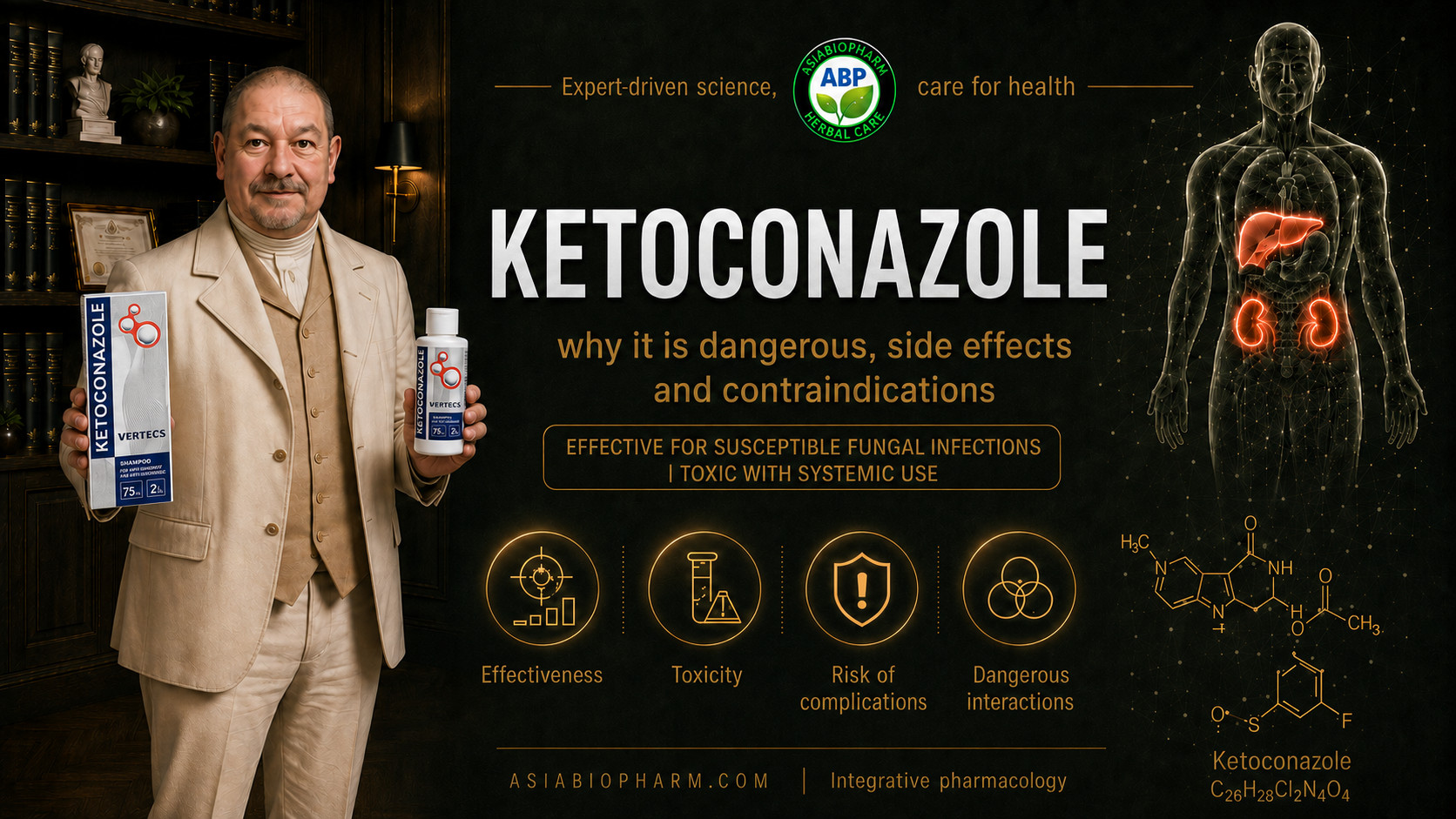
EFFECTIVE | TOXIC
Names Under Which Ketoconazole Is Found
The International Nonproprietary Name is ketoconazole; the Latin name is ketoconazole. Medical documentation and instructions may use the terms Ketoconazolum, ketoconazole tablets, ketoconazole cream, ketoconazole shampoo, as well as ketoconazole tablets, cream, ointment, shampoo, foam, and solution for topical use. The active substance is used primarily as ketoconazole itself, without a separate clinically significant salt. The best-known trade names include Nizoral, Ketoconazole, Mycozoral, Sebozol, Perkhotal, Dermazole, Keto Plus, Fungoral, Ketozal, Extina, and Xolegel. The range of registered brands depends on the country and dosage form. Combination products may contain ketoconazole together with zinc pyrithione, climbazole, salicylic acid, chlorhexidine, corticosteroids, or other topical ingredients. Therefore, using several shampoos, creams, and combination products at the same time may result in hidden duplication of topical exposure, skin irritation, and an incorrect assessment of the total dose. The trade name Nizoral does not refer to one specific dosage form: products sold under this name may have fundamentally different systemic risks, ranging from tablets to shampoo.
Why Ketoconazole Is Considered Harmless and Where the Real Risk Begins
Ketoconazole is often perceived as a familiar remedy for “fungus” or dandruff without distinguishing between topical formulations and tablets. This is precisely where the main misconception arises: a cream or shampoo produces virtually none of the concentrations reached after oral administration, whereas oral ketoconazole can cause drug-induced hepatitis, acute liver failure, suppression of cortisol and sex hormone synthesis, as well as dangerous cardiac rhythm disturbances when it interacts with other medications. Severe liver injury has been reported not only at high doses but also at the standard dose of 200 mg per day in patients with no pre-existing liver disease. In the European Union, the use of oral ketoconazole for the treatment of fungal infections was suspended because the risk of liver injury was found to be higher than with other antifungal agents, and the proposed restrictions did not provide an acceptable level of safety. Topical formulations remained in use because systemic absorption is extremely low.
Repeated self-treatment is particularly dangerous: the absence of complications during the first course does not guarantee that they will not occur during the next one. Restarting tablets after liver enzymes have already increased may lead to rapid recurrent liver injury. The first manifestations of toxicity — weakness, loss of appetite, nausea, and abdominal discomfort — are nonspecific and are often mistakenly attributed to an infection, digestive upset, or fatigue. Concurrent use of alcohol, other hepatotoxic agents, or drugs metabolized through CYP3A4 further increases the risk.
Side Effects During the First Hours and Days of Treatment
With topical use, the most characteristic reactions are burning, itching, dryness, redness, contact dermatitis, increased irritation, changes in hair texture, and reactions at the application site. Contact of shampoo or cream with the eyes causes marked irritation of the mucous membranes. Application to damaged or inflamed skin increases the local reaction and potential absorption. The appearance of a rash or worsening of the condition requires discontinuation and reassessment of the diagnosis: not every case of skin scaling is caused by a fungus that is sensitive to ketoconazole.
After taking the tablets, nausea, vomiting, abdominal pain, diarrhea, headache, dizziness, weakness, skin rash, and itching may occur during the first hours or days. Clinically significant reactions include increased ALT and AST activity, drug-induced hepatitis, pronounced hypotension or weakness due to adrenal suppression, as well as potentiation of concurrently administered medications. Anaphylaxis has been described after the very first dose and may present with urticaria, swelling of the lips or tongue, difficulty breathing, and a drop in blood pressure.
Life-threatening complications are primarily associated with acute liver injury, severe adrenal insufficiency, and drug interactions that cause QT interval prolongation and torsades de pointes ventricular tachycardia. The risk is especially high when ketoconazole is combined with drugs whose concentrations increase sharply because of CYP3A4 inhibition. The absence of severe nausea or pain does not exclude biochemical liver injury that has already begun.
Side Effects With Long-Term or Repeated Use
The main cumulative risk of oral ketoconazole is hepatotoxicity. Asymptomatic elevations of liver enzymes occur in some patients, while clinically apparent liver injury usually develops after several weeks or months. Drug-induced hepatitis typically appears between one and six months after treatment begins, although cases have been described before the end of the first month and at the standard dose of 200 mg per day. The injury is more often hepatocellular, although a cholestatic pattern is also possible. After discontinuation, recovery often begins only after one to four weeks and may take one to three months. Cases of acute liver failure, the need for transplantation, death, chronic hepatitis, and cirrhosis have been reported.
Ketoconazole inhibits steroidogenesis enzymes. At doses of 400 mg per day and above, adrenal corticosteroid secretion may decrease. Long-term or high-dose use may lead to hypocortisolism, weakness, hypotension, electrolyte disturbances, and an inadequate stress response during infection, surgery, or severe illness. The drug also reduces testosterone levels; clinical consequences may include gynecomastia, decreased libido, erectile dysfunction, and oligospermia. After treatment is discontinued, testosterone levels usually return to baseline, although recovery depends on the dose, duration of treatment, and the condition of the endocrine system.
Ketoconazole does not cause pharmacological dependence or a classic withdrawal syndrome. However, repeated uncontrolled use may mask a persistent fungal infection, a noninfectious dermatosis, or an incorrect diagnosis. With topical use, prolonged suppression of Malassezia may temporarily reduce scaling and itching but does not eliminate all causes of seborrheic dermatitis. The return of symptoms after discontinuation is not dependence, although patients often perceive it that way and begin using the product continuously.
Contraindications and High-Risk Groups
Oral ketoconazole is contraindicated in acute or chronic liver disease, unexplained elevation of liver enzymes, and a history of ketoconazole-associated drug-induced liver injury. Re-administration after a hepatotoxic reaction may cause recurrent liver injury and should not be regarded as a routine rechallenge with the drug. Severe liver injury may also occur in a person without known risk factors, so an unremarkable medical history does not eliminate the need for laboratory monitoring.
Patients with adrenal insufficiency, borderline adrenal cortical reserve, severe infection, those who have undergone major surgery, or those in intensive care are particularly vulnerable to suppression of cortisol synthesis. In men with hypogonadism, impaired fertility, or erectile dysfunction, high doses may aggravate endocrine disturbances. Congenital or acquired QT prolongation, ventricular arrhythmias, pronounced bradycardia, hypokalemia, or hypomagnesemia increase the likelihood of dangerous rhythm disturbances.
Pregnancy and breastfeeding require separate assessment depending on the dosage form. Systemic exposure from topical products is low, but the drug should not be applied unnecessarily to large damaged areas or to the breast area before feeding. Systemic use during pregnancy is unacceptable without exceptional indications and a risk assessment because ketoconazole affects steroid hormone synthesis. Oral ketoconazole should not be prescribed to children as a routine treatment for superficial mycosis: pharmacokinetic data are limited, and cases of hepatitis in children have been reported.
Topical ketoconazole is contraindicated in confirmed hypersensitivity. It should not be applied to the eyes, mucous membranes, severely damaged skin, or acutely inflamed skin without medical evaluation. If the presumed “fungal infection” does not improve, increasing the frequency of application only causes additional irritation and does not correct an incorrect diagnosis.
Dangerous Drug and Everyday Interactions
Oral ketoconazole is a potent inhibitor of CYP3A4 and P-glycoprotein. It can sharply increase the concentrations of numerous drugs by slowing their metabolism and elimination. Combinations with dofetilide, quinidine, pimozide, cisapride, methadone, disopyramide, dronedarone, and ranolazine are contraindicated because they may cause significant QT prolongation and potentially fatal ventricular tachyarrhythmias.
Combination with oral midazolam, triazolam, and alprazolam is contraindicated because of the marked intensification and prolongation of sedation, with possible depression of consciousness and respiration. Simvastatin and lovastatin may reach toxic concentrations when used with ketoconazole, leading to myopathy and rhabdomyolysis. Combination with ergot alkaloids increases the risk of ergotism, limb ischemia, and vascular complications. Certain combinations with colchicine, eplerenone, tolvaptan, lurasidone, irinotecan, and some calcium-channel blockers are also contraindicated or should be avoided.
Alcohol and other hepatotoxic substances are highly undesirable, including potentially toxic doses of paracetamol, certain antituberculosis drugs, anticonvulsants, and concentrated herbal extracts of unknown composition. The danger here is not the simplistic idea that “the liver will not cope,” but rather the additive effect of different mechanisms of drug-induced liver injury and the difficulty of identifying the causative agent. The FDA explicitly recommends avoiding alcohol and, where possible, other hepatotoxic drugs during systemic treatment.
Proton pump inhibitors, H2-receptor blockers, and antacids reduce gastric acidity and sharply decrease the absorption of ketoconazole tablets. The result is not increased toxicity but loss of antifungal efficacy and an erroneous increase in dose. Rifampicin, rifabutin, isoniazid, carbamazepine, phenytoin, efavirenz, and nevirapine may also reduce ketoconazole concentrations through enzyme induction. Ritonavir and certain boosted protease inhibitors, by contrast, increase its concentration and require dose adjustment and toxicity monitoring.
Grapefruit and concentrated grapefruit products can theoretically further alter CYP3A4 activity, so combining them with oral ketoconazole, which already has an extremely extensive interaction profile, is not justified. Caffeine, nicotine, and most foods do not produce a specific direct interaction comparable in significance to the drugs listed above. However, stimulants may make palpitations and anxiety more difficult to interpret, while nicotine does not reduce the risk of arrhythmia or hepatotoxicity.
Patient Errors When Using Ketoconazole
The most dangerous error is using tablets to treat dandruff, cutaneous candidiasis, nail fungus, or other superficial infections when topical or safer systemic treatments are available. The FDA restricts ketoconazole tablets to cases of severe systemic mycoses when other effective agents are unavailable or not tolerated. Oral ketoconazole should not be used as a routine first-line treatment for superficial infections.
Other common errors include repeating an old prescription without assessing liver function, increasing the dose when a rapid effect is not achieved, extending the course “until the symptoms disappear completely,” combining the drug with alcohol, ignoring weakness and loss of appetite, and taking it together with medications that the patient does not perceive as related to antifungal therapy. It is particularly dangerous to assume that normal test results before treatment guarantee that subsequent liver injury will not occur.
With ketoconazole cream or shampoo, errors include applying the product too frequently to irritated skin, treating large areas, allowing it to get into the eyes, using several ketoconazole-containing products simultaneously, and continuing treatment despite worsening of the condition. Lack of effect often means not that the dose is “too low,” but that the pathogen is resistant, the appropriate treatment course has been too short, or there is no fungal infection at all.
Over-the-counter availability of the shampoo creates the false impression that all forms of ketoconazole are safe. A familiar name on the packaging does not change the fact that the pharmacokinetic and toxicological profiles of a tablet and a topical product are not comparable. Using the drug “for the whole family” is particularly problematic in children, pregnant women, and people with damaged skin or an uncertain diagnosis.
Ketoconazole Overdose and Poisoning
No universal single toxic dose of ketoconazole has been established above which poisoning inevitably develops in every patient. Risk depends on the dosage form, dose taken, duration of use, liver function, gastric acidity, and concomitant medications. Severe hepatotoxicity has occurred both with large doses given for a short course and with comparatively low doses taken for a prolonged period. Therefore, not formally exceeding the maximum dose does not rule out toxic injury.
After a substantial acute overdose of tablets, nausea, vomiting, abdominal pain, dizziness, drowsiness, weakness, and a drop in blood pressure are possible during the first hours. When combined with interacting medications, pronounced sedation, impaired consciousness, QT prolongation, and ventricular arrhythmia may develop. During the following hours and days, suppression of cortisol secretion must be considered, especially in patients with reduced baseline adrenal reserve. Liver injury may not become apparent immediately: elevations of ALT and AST, jaundice, dark urine, and impaired coagulation may appear later.
With prolonged hidden overdose, weakness, loss of appetite, nausea, discomfort in the right upper quadrant, itching, dark urine, and pale stools gradually increase. Hormonal toxicity may manifest as decreased libido, erectile dysfunction, gynecomastia, impaired spermatogenesis, hypotension, and reduced tolerance of physical or infectious stress. Doses of 400 mg per day and above may suppress corticosteroid secretion; at 800 mg per day testosterone decreases markedly, and at 1600 mg per day its production may be suppressed almost completely. These values characterize the dose-dependent endocrine effect but are not safe thresholds for the liver.
There is no specific antidote for ketoconazole. After a recent substantial ingestion, urgent toxicological assessment is required, with monitoring of consciousness, blood pressure, electrolytes, ECG, ALT, AST, bilirubin, alkaline phosphatase, GGT, prothrombin time, and INR. Self-induced vomiting is unacceptable. Treatment is supportive; signs of adrenal crisis may require systemic glucocorticosteroids, infusion therapy, and correction of electrolyte disturbances. Waiting for jaundice or loss of consciousness is dangerous because by that time damage to the liver, hemodynamics, or cardiac rhythm may already have become severe.
Ingestion of cream or shampoo usually creates a lower systemic burden than tablets, but especially in a child it still requires toxicological consultation. The risk depends on the amount swallowed, the ketoconazole concentration, and the excipients. Repeated ingestion or internal use of a topical product is unacceptable.
Safe Integrative Alternative to Ketoconazole
For superficial fungal infections of the skin and mucous membranes, ABP-153 — an oil-based herbal mixture for topical use — may be considered a primary integrative alternative. It contains Andrographis paniculata, Curcuma longa, Glycyrrhiza glabra, Zingiber cassumunar, Houttuynia cordata, Syzygium aromaticum, Eucalyptus globulus, camphor, menthol, borneol, and additional plant components. The antifungal action of the formulation is combined with anti-inflammatory, antipruritic, antiseptic, reparative, and potentially biofilm-disrupting effects. Unlike oral ketoconazole, topical use of this herbal complex does not create a comparable inhibitory burden on CYP3A4, does not suppress cortisol or testosterone synthesis, and is not associated with the characteristic risk of severe drug-induced liver injury seen with ketoconazole tablets.
Ketoconazole acts primarily by inhibiting the fungal enzyme lanosterol 14α-demethylase and disrupting ergosterol synthesis. The ABP-153 herbal formulation acts less narrowly: essential and phenolic compounds disrupt microbial cell membrane function, reduce local inflammation, relieve itching, and support restoration of the skin barrier. Therefore, ABP-153 is most justified for localized dermatophytosis, candidiasis of the skin and skin folds, seborrheic lesions, and other mild or stable superficial conditions. In cases of pronounced oozing, maceration of the feet, or skin folds, it may be more convenient to use an antifungal spray containing Zingiber cassumunar, Citrus hystrix, Cuscuta reflexa, and an adsorbent mineral base. It combines local antifungal action with drying of the skin surface and reduction of conditions favorable for persistent fungal colonization.
For chronic, dense, or poorly permeable skin lesions, ABP-153-D may be used. The presence of dimethyl sulfoxide enhances penetration of plant components through the skin barrier, but at the same time requires more careful dosing: the product may enhance transdermal absorption not only of the stated active substances, but also of other compounds present on the skin surface. Therefore, ABP-153-D should not automatically be considered safer simply because its main components are of plant origin.
For candidal or inflammatory lesions of the oral cavity, formulations designed for mucosal use are preferable. Oral gel provides prolonged retention of plant components on the affected area and is suitable for localized inflammation, coating, irritation, and candidal lesions of the mucosa. Oral powder is more appropriate for erosions, ulcers, moist surfaces, and situations where additional astringent and drying effects are required. Azadirachta indica may be used as an additional herbal component because of its antimicrobial, anti-inflammatory, and antifungal activity, but it should not be presented as a universal substitute for systemic antifungal therapy in deep or disseminated mycosis.
The provided link to a nail fungus treatment does not lead to a fully herbal alternative: the product contains ketoconazole and miconazole. Its use therefore means continuation of topical azole therapy rather than replacement of ketoconazole with an herbal preparation. When used simultaneously with another ketoconazole cream, ointment, or shampoo, hidden duplication of the active substance occurs and the risk of skin irritation increases.
Complete local replacement of ketoconazole with ABP-153 or specialized herbal formulations is possible when the process is localized and superficial, the site of infection has been confirmed, and there is no pronounced immunodeficiency or clinical evidence of deep tissue involvement. In extensive dermatophytosis, scalp involvement with follicular infection, severe onychomycosis, recurrent candidiasis associated with diabetes or immunodeficiency, internal organ involvement, or systemic mycosis, an herbal product may be used only as an adjunct. In such situations, refusing necessary systemic therapy is more dangerous than the toxicity of a properly selected antifungal agent.
Real Effectiveness of Ketoconazole and Medical Errors
Topical ketoconazole is genuinely effective against susceptible dermatophytes, cutaneous candidiasis, pityriasis versicolor, and Malassezia-associated conditions, including seborrheic dermatitis. Cream usually reduces itching, redness, and scaling gradually over several days, while complete suppression of the pathogen requires adherence to the recommended duration of treatment. Shampoo reduces the amount of Malassezia on the scalp and alleviates manifestations of seborrheic dermatitis, but it does not eliminate an individual tendency toward recurrence. The return of dandruff after treatment is discontinued does not mean that the fungus has developed “dependence on the shampoo”; it means that the drug was suppressing one of the mechanisms of a chronic condition rather than altering its entire pathophysiology.
Oral ketoconazole has antifungal efficacy, but its toxicological profile has made it unacceptable as a first-line treatment for common superficial mycoses. It should not be used for routine fungal infections of the feet, skin, nails, oral candidiasis, or seborrheic dermatitis simply because a tablet seems “stronger.” In such cases, prescribing systemic ketoconazole is comparable to trying to disinfect a small scratch with an industrial flamethrower: the antifungal activity is present, but the toxicological cost is medically unreasonable.
Systemic use may be considered only for certain severe endemic mycoses when safer antifungal agents are unavailable, contraindicated, or have proved ineffective. Ketoconazole is not an optimal treatment for fungal meningitis because it penetrates poorly into the cerebrospinal fluid. It also should not be prescribed empirically without confirming the fungal nature of the disease and determining the site of infection.
Typical medical errors include prescribing tablets for superficial mycosis, failing to obtain baseline ALT, AST, bilirubin, alkaline phosphatase, and INR values, ignoring liver disease, failing to check for drug interactions, continuing treatment after transaminase levels rise, and using ketoconazole in a patient who is simultaneously taking CYP3A4 substrates with a narrow therapeutic range. It is equally incorrect to prescribe topical ketoconazole for psoriasis, contact dermatitis, rosacea, or bacterial lesions based solely on scaling. If the diagnosis is made according to the principle “the skin is red, therefore it must be fungal,” failure of treatment is entirely predictable.
Safety Monitoring During Treatment
When cream, shampoo, or another topical formulation is applied to a limited area of intact skin, laboratory monitoring is usually unnecessary. Local reactions should be observed: increasing burning, swelling, oozing, blistering, spreading rash, and severe itching may indicate contact dermatitis, an allergic reaction, or an incorrect diagnosis. If the lesion enlarges, pus, pain, fever, or signs of deep tissue involvement appear, continuing self-treatment with an antifungal agent delays correct diagnosis.
Before prescribing oral ketoconazole, ALT, AST, total and direct bilirubin, alkaline phosphatase, GGT, and INR should be measured. Treatment should not be started in active liver disease or when baseline liver tests are inexplicably elevated. During therapy, ALT activity should be monitored regularly; in practice, weekly monitoring is advisable. If ALT rises above the upper limit of normal or by more than 30% from baseline, treatment should be discontinued and liver tests reassessed. Re-administration after probable ketoconazole-induced hepatotoxicity is unacceptable.
In patients with adrenal insufficiency, severe infection, after surgery, during high-dose treatment, or with prolonged therapy, blood pressure, sodium, potassium, and morning cortisol should be monitored. Sudden weakness, dizziness on standing, a drop in blood pressure, vomiting, confusion, hyponatremia, and hyperkalemia may indicate suppression of adrenal function. If risk factors for QT prolongation or interacting drugs are present, ECG monitoring and correction of potassium and magnesium are required.
Jaundice, dark urine, pale stools, persistent nausea, loss of appetite, unusual weakness, pain or heaviness in the right upper quadrant, generalized itching, bleeding, impaired consciousness, fainting, pronounced palpitations, difficulty breathing, or swelling of the face or larynx require immediate discontinuation of the tablets and urgent medical assessment. Waiting until symptoms “become convincing” worsens the prognosis: liver failure and dangerous arrhythmias may progress faster than the patient can appreciate the seriousness of the condition.
Proper Discontinuation of Ketoconazole
Topical and oral ketoconazole do not cause pharmacological dependence, so gradual dose reduction is usually unnecessary. If signs of drug-induced liver injury, a severe allergic reaction, adrenal insufficiency, or a dangerous interaction appear, the drug should be stopped immediately. Attempting to “take it for a few more days so as not to interrupt the course” during a toxic reaction does not complete treatment but increases the injury.
With uncomplicated use of a topical formulation, the course is completed in accordance with the diagnosis and instructions. Premature discontinuation after itching has disappeared but before the pathogen has been sufficiently suppressed increases the likelihood that the infection will persist and recur. At the same time, indefinitely extending treatment on one’s own is also incorrect: lack of response requires confirmation of the diagnosis, microscopy, culture, or a change in treatment rather than simply prolonging the course.
No withdrawal syndrome is expected after stopping the tablets, but the fungal infection may return or progress. If systemic therapy is genuinely necessary, ketoconazole should be replaced with another antifungal agent selected according to the pathogen, site of infection, liver function, and drug interactions. After toxic liver injury, laboratory monitoring should continue until the parameters have stably normalized, because the injury may continue to progress for some time even after the drug has been discontinued.
A Rational Approach to Treatment
Ketoconazole is justified when a susceptible fungal infection has been confirmed and the selected dosage form corresponds to the site of infection. Topical ketoconazole remains an effective option for dermatophytosis, cutaneous candidiasis, pityriasis versicolor, and Malassezia-associated seborrheic dermatitis. Its local use differs fundamentally in risk from tablets and should not automatically be demonized because of the toxicity of the systemic form.
Oral ketoconazole is needed only in exceptional situations involving severe systemic mycosis when safer drugs cannot be used. For superficial fungal infections, exposing the liver, endocrine system, and drug metabolism to the risks of systemic ketoconazole usually has no pharmacological justification.
For mild and localized lesions of the skin or mucous membranes, treatment may be replaced with ABP-153, an antifungal spray, oral gel, or oral powder, depending on the site and condition of the tissues. ABP-153-D may be considered for chronic and poorly permeable lesions, while Azadirachta indica may be used as an additional herbal component. Combined use of a synthetic and herbal product is acceptable when it is pharmacologically justified, does not cause irritation, and does not create duplication of local effects.
The goal of an integrative approach is not the unconditional replacement of every synthetic drug with a herbal product, but the selection of the least toxic treatment that is sufficient for the specific infection. A localized superficial process does not require a systemic toxicological burden. Conversely, severe, deep, or disseminated mycosis cannot be treated with topical herbal preparations alone, because delaying adequate systemic therapy may lead to disease progression.
If you have questions about the subject of this article, you may ask a clinical pharmacologist in the comments or schedule an appointment using the following link: https://asiabiopharm.com/konsultaciii/
0 comments