
Fungal pharyngitis - symptoms, self-diagnosis and integrative treatment
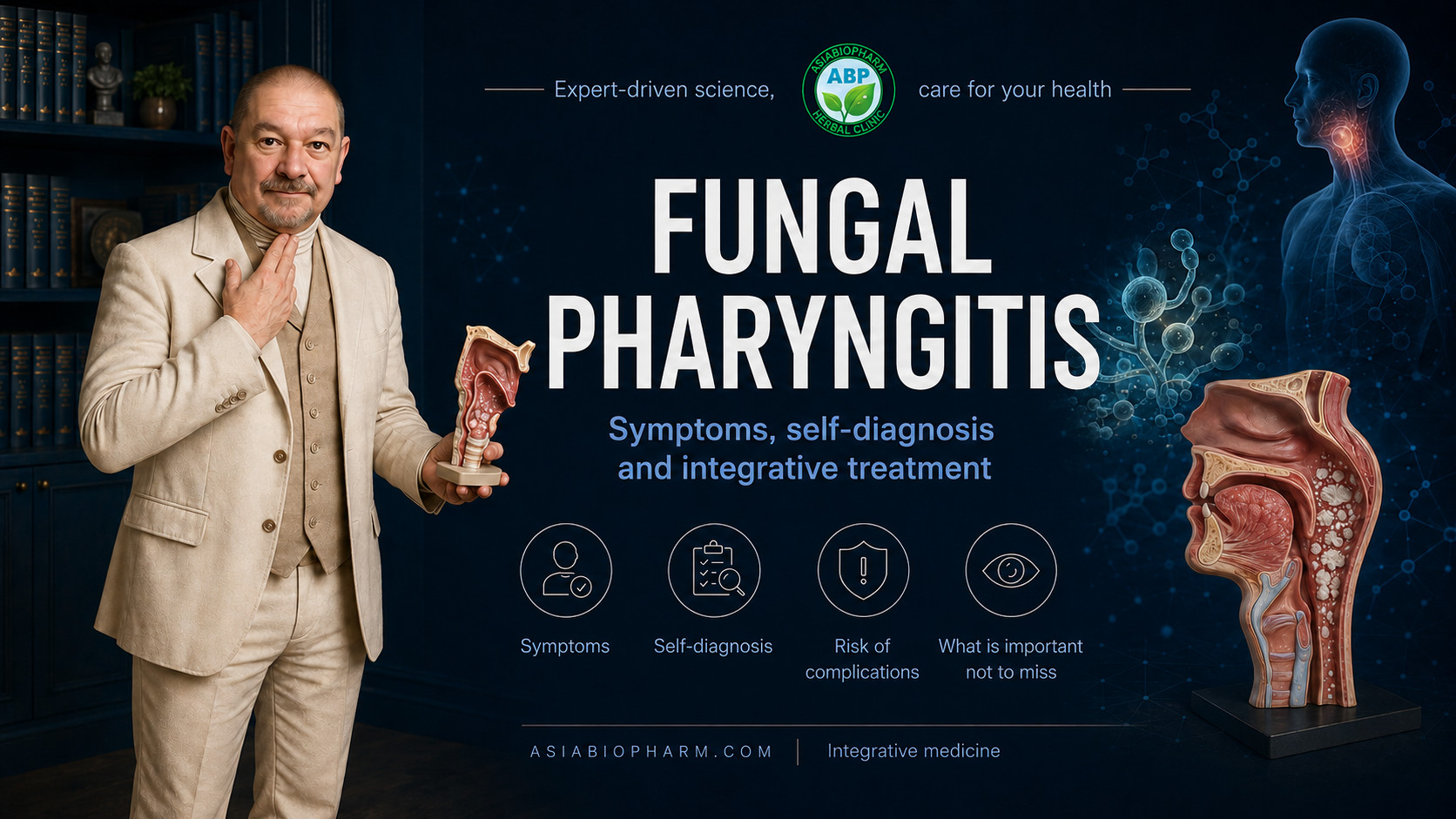
Fungal pharyngitis is an inflammatory lesion of the oropharyngeal mucosa, most commonly associated with excessive growth of yeast-like Candida fungi. It is usually not an infection acquired from outside the body, but rather an overgrowth of the body's own opportunistic flora after antibiotics, the use of inhaled or systemic glucocorticosteroids, in diabetes mellitus, immunodeficiency, severe dry mouth, smoking, wearing dentures, poor oral hygiene, malnutrition, or treatment for cancer. The main manifestations are throat irritation, burning, dryness, pain when swallowing, a foreign-body sensation, a whitish curd-like coating on the tongue, palate, tonsils, or posterior pharyngeal wall, an unpleasant taste, and bad breath. Redness without an obvious coating, cracks at the corners of the lips, hoarseness, dry cough, reduced appetite, and tenderness of the submandibular lymph nodes may also occur. High fever is not typical of uncomplicated candidal involvement. In infants, candidiasis often begins in the mouth and interferes with feeding; in adults, it is frequently associated with medications, diabetes, or smoking; in older adults, it may persist because of dentures, dry mucous membranes, and reduced immune defense. With appropriately selected treatment, noticeable relief usually occurs within the first few days, and the local process often resolves within one to two weeks; however, if the underlying cause is not corrected, it may recur quickly.
How to determine whether you have fungal pharyngitis
A fungal cause can be suspected if pain and burning developed during or after a course of antibiotics, steroid treatment, worsening diabetes, or against the background of immunodeficiency, and loose white coatings appeared in the mouth and throat at the same time. For an initial self-check, wash your hands, stand in front of a mirror in bright diffused light, and inspect the tongue, inner surfaces of the cheeks, palate, tonsils, and visible part of the posterior pharyngeal wall. Candidal coating can often be removed from an accessible area with a moist cotton swab, leaving a reddened and sometimes slightly bleeding surface, but films should not be deliberately scraped off and the tonsils must not be traumatized. The absence of a white coating does not exclude the erythematous form, in which marked redness, burning, and soreness predominate. The diagnosis is confirmed by an otorhinolaryngologist, dentist, or general practitioner: the physician evaluates the mucosa and risk factors and, if necessary, performs microscopic examination of a scraping, culture to identify the Candida species, and susceptibility testing to antifungal agents. In recurrent cases, blood glucose and glycated hemoglobin are checked, along with a complete blood count and possible causes of impaired immune function. Viral pharyngitis is more often accompanied by a runny nose and cough without a removable curd-like coating; streptococcal infection usually causes fever, severe pain, and dense purulent exudate; leukoplakia and lichen planus cannot be wiped away; with reflux, morning hoarseness, a sour taste, and burning without characteristic colonies predominate. A dense gray film that cannot be removed without bleeding requires urgent medical assessment to rule out diphtheria and other dangerous causes.
Red flags
Call emergency medical services immediately if breathing becomes progressively difficult, inspiration becomes noisy, there is a sensation of suffocation, the lips turn bluish, saliva cannot be swallowed and begins to drool, or swelling of the tongue and throat rapidly increases: these signs are dangerous because they may indicate impending airway obstruction. Urgent care is also required in cases of confusion, fainting, severe weakness with a drop in blood pressure, repeated vomiting, signs of severe dehydration, or bleeding from the mucosa. Severe pain behind the breastbone and pain as food passes down, especially in a person with HIV infection, neutropenia, after chemotherapy, or after transplantation, may indicate esophageal candidiasis; urgent assessment by a general practitioner, infectious disease specialist, or gastroenterologist is required. High fever, chills, unilateral bulging of a tonsil, inability to open the mouth, marked neck swelling, or rapid deterioration may indicate a bacterial complication, abscess, or another infection and require same-day examination by an ENT specialist. An infant should be examined by a pediatrician if the baby refuses the breast or bottle, urinates less often, becomes lethargic, or develops a fever. Pregnant women, older adults, and patients with uncontrolled diabetes, immunodeficiency, cancer, or severe liver or kidney disease should not rely solely on self-treatment even when symptoms are moderate.
Initial self-care methods
Until you are examined, reduce voice and physical strain, sleep for at least seven to eight hours, and avoid smoking, alcohol, and vaping. Keep the room temperature at 19–22 °C and relative humidity at 40–60 %, and ventilate the room for 10–15 minutes at least three times a day while avoiding a direct stream of cold air. If weakness is pronounced, stay at home; if your temperature is normal, gentle walking is acceptable provided you avoid chilling and strenuous exercise.
Food should be soft, warm, and non-traumatic to the mucosa: suitable options include puréed soups, well-cooked cereals, eggs, low-fat fish, poultry, unsweetened cottage cheese, and soft stewed vegetables. It is better to eat small portions four to five times a day. Temporarily exclude sweetened drinks and desserts, sticky sweets, very hot or cold foods, hot spices, vinegar, acidic juices, crackers, and hard foods. If there are no restrictions due to heart or kidney disease, an approximate daily fluid intake is about 30 ml per kilogram of body weight. Drink 150–200 ml of water or an unsweetened beverage at a temperature of 35–40 °C every two to three hours. In heart or kidney failure, edema, or when fluid restriction is required, the amount should be agreed with a physician; beverages should not be sweetened in diabetes.
For gentle gargling, prepare an isotonic saline solution: dissolve 4.5 g of plain table salt without flavorings in 500 ml of boiled water cooled to 35–38 °C. Use 50–100 ml of the solution and rinse the mouth and throat for 30–60 seconds three to four times a day, then spit it out. Rinsing mechanically removes some of the coating, moisturizes the mucosa, and reduces irritation, but it does not eliminate the cause of the disease. This procedure is unsuitable for small children and people with swallowing disorders. After using an inhaled steroid, rinse the mouth thoroughly with water every time and spit the water out. Removable dentures should be cleaned after meals and removed at night; the method of disinfection should be chosen according to the denture material. Keep the toothbrush dry and replace it after the active coating has resolved.
Do not cauterize the mucosa with iodine, hydrogen peroxide, alcohol, vinegar, concentrated baking soda, or essential oils, inhale oily mixtures through a nebulizer, forcibly scrape off the coating, warm the neck when fever is high, or start antibiotics or hormones on your own. Check your temperature, ability to drink and swallow, urine output, spread of the coating, and blood glucose if you have diabetes every day. If there is no improvement within 48–72 hours, the coating increases, or symptoms return after treatment, medical evaluation is required.
Possible progression and complications
Fungal pharyngitis does not have obligatory latent, prodromal, and sequential clinical stages. The process may begin with dryness and localized burning, then manifest as erythematous inflammation or loose coating and spread from the tongue and palate to the tonsils and posterior pharyngeal wall. In a person with normal immunity, the disease usually remains superficial, but severe immunodeficiency may lead to involvement of the larynx and esophagus. Recurrences are promoted by repeated antibiotic use, incorrect use of inhaled steroids, uncontrolled diabetes, dry mouth, dentures, smoking, nutritional deficiencies, failure to sanitize the oral cavity, and premature discontinuation of therapy. If these factors are not corrected, chronic burning, painful swallowing, reduced food intake and weight loss, mucosal fissures, secondary bacterial infection, esophageal candidiasis, and the development of Candida resistance to antifungal medications may occur. Disease appearing without an obvious cause can sometimes be the first reason to detect diabetes, a blood disorder, or immunodeficiency.
Integrative methods for treating fungal pharyngitis
An integrative regimen complements confirmed antifungal therapy, provides prolonged contact of active substances with the affected mucosa, reduces inflammation, and supports restoration of the epithelial barrier. All of the listed products are not used simultaneously. Priorities and dosage forms are selected according to the extent of the coating, the presence of erosions, dryness, bleeding, difficulty swallowing, comorbidities, and individual tolerance.
For localized accessible coatings, the preferred contact form is Mouth Gel KLO mucosal gel. Extracts of Terminalia chebula, licorice, and Andrographis provide astringent, anti-inflammatory, and potentially antifungal effects, while the xanthan base prolongs contact with the mucosa. The gel is applied after meals and before bedtime at the product-confirmed frequency of two to three times a day.
Mouth Gel KLO should not be used on bleeding ulcers or in cases of individual allergy to its components. Menthol and peppermint oil may cause burning, coughing, irritation, or increased swelling. If a pronounced reaction occurs, use should be discontinued. Compared with systemic azoles, a topical gel does not place a comparable burden on the liver, kidneys, heart, or drug-metabolizing system, but it does not replace an antifungal medication in extensive candidiasis or esophageal involvement.
With diffuse oropharyngeal involvement, Relief Mouth Ulcer powder is more convenient to use not as a dry powder but as a freshly prepared suspension. For rinsing, mix 0.5 g of powder in 50 ml of warm boiled water; if the mucosa is markedly dry, add 1 ml of glycerin. Rinse the mouth and throat for one to two minutes two to three times a day, then spit the preparation out. Prepare the suspension fresh each day.
For localized visible lesions, prepare a 10% gel: 1 g Relief Mouth Ulcer Powder, 0.2 g xanthan gum, 1 g glycerin, and purified water to a total weight of 10 g. Store the gel in the refrigerator for no longer than 72 hours and apply it only to accessible areas of the mucosa.
The product is contraindicated in cases of allergy to Quercus infectoria, Kaempferia galanga, nutmeg, turmeric, or other components of the formula. Its pronounced astringent effect may worsen dryness, tightness, and soreness of atrophic mucosa, so tolerance must be assessed individually.
ABP-153 oil infusion is intended primarily for mucous membranes and superficial and cavity inflammatory processes and provides prolonged contact of its active components with the epithelium. Its botanical complex includes Cinnamomum camphora, Andrographis paniculata, Barleria lupulina, Curcuma longa, Glycyrrhiza glabra, Zingiber cassumunar, Ocimum sanctum, Houttuynia cordata, Clinacanthus nutans, and Rhinacanthus nasutus.
ABP-153 is applied in a thin layer to accessible areas of the oropharynx between meals or before bedtime. Do not treat the throat deeply or blindly: this may trigger the gag reflex, injure the mucosa, or cause aspiration. The infusion should not be diluted with water for gargling and should not be placed in a nebulizer.
Menthol, camphor, borneol, and essential-oil components of ABP-153 may cause burning, coughing, hyperemia, or increased swelling. If a pronounced reaction occurs, use should be discontinued. ABP-153D containing 7% DMSO is not required for superficial fungal pharyngitis because enhanced transmembrane delivery into deeper tissues is not a therapeutic objective.
Pulmonaria officinalis in the form of a standardized 10% extract is used as an adjunct for dryness, throat irritation, soreness, and catarrhal inflammation. The aqueous rinse comes into direct contact with the mucosa, while its mucilaginous substances support the protective epithelial layer.
In cases of individual intolerance, Pulmonaria officinalis may cause burning, coughing, rash, and a local allergic reaction. It does not eliminate Candida to a clinically sufficient degree and does not replace targeted antifungal treatment.
Funton toothpaste is used for oral sanitation when there is coating on the tongue, gingival inflammation, dental plaque, or dental reservoirs of Candida. Regular oral sanitation reduces the likelihood of recolonization of the oropharynx after topical antifungal treatment.
The toothpaste should not be swallowed or applied directly to deep oropharyngeal erosions. It is contraindicated in people who are sensitive to eugenol, cinnamon compounds, menthol, camphor, or other aromatic components. Burning, mucosal irritation, contact stomatitis, and changes in taste perception may occur.
A standardized 10% extract of Azadirachta indica may serve as the main herbal product for internal use, complementing antifungal and anti-inflammatory support in recurrent disease.
Azadirachta may cause nausea, abdominal cramps, diarrhea, reduced appetite, and changes in blood glucose levels. When combined with glucose-lowering medications, glycemia should be monitored. The product is contraindicated in cases of individual intolerance and severe decompensation of liver or kidney function. Pregnancy, lactation, and childhood require a separate safety assessment. If a systemic azole is taken at the same time, the cumulative burden on the liver must be considered.
A standardized 10% extract of Boesenbergia rotunda complements anti-inflammatory, antimicrobial, and potentially antifungal effects. It is considered mainly in recurrent disease and when fungal involvement is combined with chronic mucosal inflammation.
Boesenbergia should be discontinued if stomach pain, nausea, heartburn, mucosal irritation, diarrhea, or an allergic reaction occurs. Pregnancy, lactation, and childhood require individual assessment. Complete information on compatibility with all systemic antifungal agents is unavailable, so it should not be added automatically to multicomponent pharmacotherapy.
Propolis 3800 may be used to support the local immune response and mucosal recovery when there is no allergy to bee products. It is contraindicated in people who have previously experienced edema, bronchospasm, urticaria, anaphylaxis, or another reaction to honey, propolis, pollen, or plant resins, as well as in patients with a severe allergic phenotype of bronchial asthma.
When anticoagulants or antiplatelet agents are used, combining them with propolis requires prior assessment of bleeding risk. Itching, rash, mucosal swelling, hoarseness, and bronchospasm may occur.
Vernonia cinerea is most appropriate when pharyngitis is combined with smoking, chronic respiratory tract irritation, or nicotine withdrawal syndrome. It may complement anti-inflammatory management of oral and oropharyngeal candidiasis in a patient who smokes.
Vernonia should not be used during an exacerbation of gastritis or peptic ulcer disease, in marked arterial hypotension, pregnancy, or lactation. Headache, dry mouth, bitterness, diarrhea, dizziness, and reduced blood pressure may occur. In smokers with pharyngitis, bronchopulmonary boluses may be considered as an alternative, but products with overlapping effects should not be prescribed simultaneously.
For pronounced inflammatory pain without red flags, the Five Root Compound anti-inflammatory mixture may be considered as a herbal alternative to escalating symptomatic NSAID use. This choice is especially relevant when there is a risk of gastric ulceration, kidney failure, elevated blood pressure, coagulation disorders, or NSAID-induced bronchospasm.
Five Root Compound does not replace a systemic antifungal in widespread candidiasis and does not eliminate the underlying cause of immunodeficiency. Compatibility with anticoagulants, antihypertensive drugs, glucose-lowering medications, and other anti-inflammatory products must be assessed individually.
High fever is not typical of limited fungal pharyngitis. If it develops, bacterial or viral coinfection, pneumonia, a deep purulent complication, or systemic candidiasis must be excluded. The question of using the Antipyretic Compound fever-reducing mixture should be decided only after the cause of the fever has been clarified.
Acanthus ebracteatus may be considered as an additional anti-inflammatory and secretolytic component when fungal pharyngitis is accompanied by cough, viscous secretions, and irritation of the lower respiratory tract. In isolated oropharyngeal candidiasis without bronchial symptoms, it is not considered a core component of the regimen.
Peppermint Mentha piperita, Chinese cinnamon Cinnamomum cassia, star anise Illicium verum, Stemona, and Bengal quince Aegle marmelos are not included in the core regimen. Their functions partly overlap with those of the selected products or are insufficiently targeted at fungal involvement of the oropharynx. Peppermint and cinnamon may additionally aggravate burning and dryness of inflamed mucosa.
The advantage of topical gels, rinses, and oil applications is their direct contact with the affected mucosa and lower systemic burden on the liver, kidneys, heart, nervous system, and endocrine system compared with systemic azoles. At the same time, herbal products may also cause allergy, irritation, effects on glycemia, blood pressure and coagulation, and drug interactions.
In immunodeficiency, extensive disease, difficult or painful swallowing, esophageal involvement, pronounced weight loss, or resistant Candida, topical and systemic herbal products are used only as adjuncts to targeted antifungal therapy.
What you need to know about standard protocols of modern medicine
Treatment of fungal pharyngitis begins with confirmation of the clinical form of candidiasis and correction of factors that promote excessive Candida growth. The physician evaluates the need for and justification of antibiotics and glucocorticosteroids, inhalation technique, blood glucose levels, immune status, and the condition of the teeth, gums, and dentures. For mild superficial disease, a topical antifungal is usually used. Systemic treatment is required in extensive or moderately severe disease, failure of topical therapy, pronounced immunodeficiency, pain behind the breastbone, difficulty swallowing, or suspected esophageal candidiasis. Dosages and duration of treatment are not provided here because they depend on age, body weight, location of the infection, Candida species and susceptibility, liver and kidney function, and drug interactions.
Nystatin in suspension form acts primarily on the surface of the mucosa and is absorbed only minimally from the gastrointestinal tract. It is used for mild candidiasis of the oral cavity and oropharynx, but it does not provide the tissue exposure required for esophageal candidiasis or systemic infection. Possible adverse effects include an unpleasant taste, burning, mucosal irritation, nausea, abdominal pain and cramps, diarrhea, skin rash, urticaria, and, rarely, facial swelling, bronchospasm, or a systemic allergic reaction.
Prolonged use of nystatin when the diagnosis is incorrect may delay recognition of resistant Candida, a bacterial lesion, leukoplakia, or another mucosal disorder. The drug is contraindicated in people with an allergy to nystatin or to excipients in the specific formulation. It should not be regarded as sufficient treatment for extensive candidiasis, esophageal involvement, or invasive infection.
Clotrimazole in the form of slowly dissolving oral lozenges provides prolonged local contact with the mucosa. Burning, soreness, dryness, altered taste, nausea, abdominal pain, headache, elevated liver enzymes, and contact allergic reactions may occur. Lozenges are unsafe for small children and for patients with impaired swallowing, severe weakness, or reduced consciousness because of the risk of choking and aspiration.
Even topical clotrimazole is partially absorbed and metabolized in the liver. Caution is required in liver disease and with prolonged use. Repeated short courses without confirmation of the causative organism may select less susceptible Candida strains and mask the underlying cause of recurrence.
Miconazole in an oromucosal form is used for mild to moderate candidiasis, but it has substantial potential for drug interactions. Possible adverse effects include irritation, burning, dry mucosa, altered taste, nausea, vomiting, diarrhea, abdominal pain, headache, elevated liver enzymes, and severe allergic reactions.
Miconazole inhibits the metabolism of warfarin and may sharply increase its anticoagulant effect. Consequences include an elevated international normalized ratio, bleeding from the gums and mucous membranes, nosebleeds, extensive hematomas, gastrointestinal, intracranial, and other dangerous bleeding. This interaction may occur even with oromucosal administration.
Miconazole may also enhance the effects of some sulfonylurea derivatives and cause severe hypoglycemia, increase the concentration of phenytoin, and interact with other drugs metabolized by hepatic enzymes. In liver disease, pregnancy, lactation, use of anticoagulants, and multidrug therapy, the medication should not be started without a physician.
Fluconazole is given orally for moderately severe and severe disease, failure of topical treatment, and esophageal candidiasis. It penetrates tissues well but creates a substantial systemic drug burden. Common adverse reactions include nausea, abdominal pain, diarrhea, dyspepsia, headache, dizziness, and rash.
The most dangerous adverse effects are toxic hepatitis, cholestasis, marked elevation of liver enzymes, and acute liver failure. Severe liver injury may develop without a clear relationship to dose or duration of treatment. Stevens–Johnson syndrome, toxic epidermal necrolysis, anaphylaxis, leukopenia, neutropenia, agranulocytosis, and thrombocytopenia may occur.
Fluconazole can prolong the QT interval and provoke torsades de pointes ventricular tachycardia, syncope, and sudden cardiac death. The risk is particularly high in patients with arrhythmias, heart failure, bradycardia, low potassium or magnesium levels, or concurrent use of other medicines that affect cardiac rhythm.
The drug is eliminated primarily by the kidneys, so with impaired renal function it can accumulate and requires individual adjustment of the treatment regimen. Fluconazole may enhance the effects of warfarin, some glucose-lowering medications, phenytoin, cyclosporine, tacrolimus, certain statins, and a number of psychotropic and antiarrhythmic drugs. It should not be started without medical supervision during pregnancy, in liver or kidney disease, cardiac rhythm disorders, electrolyte disturbances, or polypharmacy.
Self-directed use of short repeated courses of fluconazole suppresses susceptible strains and promotes selection of resistant Candida species, including organisms with cross-resistance to other azoles. This makes subsequent treatment more difficult and may require the use of more toxic reserve medications.
When there is resistance to fluconazole, a specialist may choose itraconazole, voriconazole, posaconazole, or an intravenous drug from the echinocandin group. Such treatment requires species identification of Candida, susceptibility assessment, and monitoring of liver and kidney function, cardiac rhythm, vision, the nervous system, and interactions with all medications being taken.
Itraconazole may cause nausea, abdominal pain, edema, arterial hypertension, hypokalemia, peripheral neuropathy, toxic hepatitis, and liver failure. It has a negative inotropic effect and may provoke or worsen decompensated heart failure. CYP3A4 inhibition creates dangerous interactions with certain statins, antiarrhythmics, anticoagulants, benzodiazepines, immunosuppressants, and other medications.
Voriconazole may cause blurred vision, photopsia, altered color perception, dizziness, confusion, hallucinations, peripheral neuropathy, toxic liver injury, and QT prolongation. Long-term use may lead to severe phototoxicity, accelerated skin damage, periostitis, and an increased risk of cutaneous squamous cell carcinoma. The drug has numerous interactions mediated through CYP2C19, CYP2C9, and CYP3A4.
Posaconazole may cause nausea, diarrhea, elevated liver enzymes, hypokalemia, QT prolongation, and severe interactions with medications metabolized by CYP3A4. Incorrect combinations with certain statins, immunosuppressants, antiarrhythmics, or sedatives may lead to a critical increase in their concentrations.
Echinocandins are administered intravenously in severe, extensive, or resistant disease. Possible adverse effects include infusion reactions, fever, chills, rash, bronchospasm, anaphylaxis, phlebitis, disturbances in blood electrolyte levels, and toxic liver injury. They require medical supervision and are not intended for self-treatment of limited superficial pharyngitis.
A withdrawal syndrome is generally not characteristic of antifungal drugs themselves; however, premature discontinuation of therapy allows part of the fungal population to persist, followed by renewed Candida growth, disease recurrence, and selection of less susceptible strains. A reliable percentage of complete recovery and freedom from recurrence over two years has not been established for fungal pharyngitis because the outcome depends on the Candida species, immune status, glucose level, mucosal condition, and elimination of the causes of excessive fungal growth.
Simultaneous or sequential use of several topical and systemic azoles, antibiotics, and inhaled or systemic glucocorticosteroids can create a cumulative burden on the liver, kidneys, cardiovascular, nervous, immune, and hematopoietic systems. Such therapy may cause drug-induced hepatitis, arrhythmia, bone marrow suppression, severe skin reactions, disruption of the microbiota, Candida resistance, and repeated recurrences. Alternative integrative approaches based on rationally selected topical and systemic herbal formulations make it possible to address inflammation, microbial burden, and mucosal recovery and generally do not exert such aggressive systemic effects as prolonged or combined use of chemically synthesized antifungal medications.
Why dosages and duration of treatment are not specified in the article
The same disease can be at different stages in different people, have different severity and complications, and coexist with other conditions. To select a dosage and duration of treatment, a specialist needs to assess the current phase of the disease, its duration, severity of symptoms, presence of chronic or recurrent disease, comorbid conditions, previous illnesses, age, body weight, the condition of the liver, kidneys, cardiovascular, nervous, endocrine, and other systems, as well as medications already being taken and possible interactions. A universal dosage for all patients may be insufficient and ineffective or excessive and dangerous. Therefore, the article describes possible treatment approaches but does not replace an individual clinical and pharmacological assessment. If necessary, you can ask a short question in the comments to this article, and in more complex cases you can book a consultation with a clinical pharmacologist specializing in integrative medicine using this link https://asiabiopharm.com/konsultaciii.
0 comments