
Clindamycin — side effects, severe diarrhea, and the risk of pseudomembranous colitis
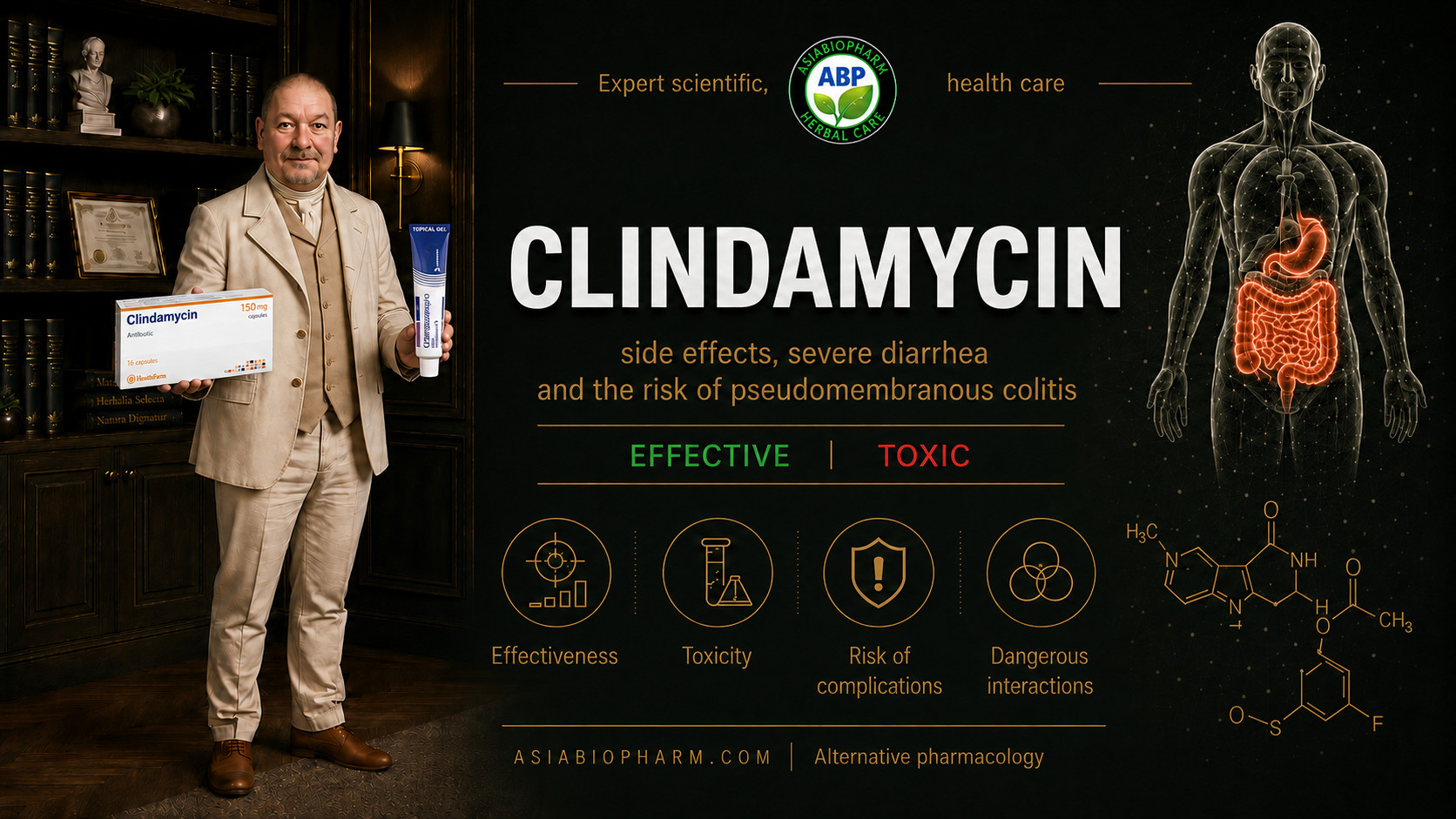
EFFECTIVE | TOXIC
Names under which clindamycin is available
The international nonproprietary name is clindamycin, Clindamycin. Pharmaceutical products contain clindamycin hydrochloride in capsules; clindamycin palmitate hydrochloride in granules and oral solutions; and clindamycin phosphate in injectable, topical, and vaginal formulations. Common brand names include Dalacin, Cleocin, Cleocin HCl, Cleocin Phosphate, Clindacin, Clindagel, Evoclin, and Clindesse. Combination topical products include clindamycin + benzoyl peroxide — Duac, Clindoxyl, Acanya, and equivalents; clindamycin + tretinoin — Ziana, Veltin, and equivalents. Simultaneous use of capsules, injections, vaginal products, and topical clindamycin preparations creates an additional medication burden, although systemic absorption differs substantially between formulations. Hydrochloride, phosphate, and palmitate are not different antibiotics but pharmaceutical derivatives of the same active substance.
Why clindamycin is considered harmless and where the real risk begins
The main danger of clindamycin is not ordinary nausea but disruption of the protective microbiota of the colon, allowing toxigenic strains of Clostridioides difficile to proliferate. The consequences may include severe watery diarrhea, pseudomembranous colitis, dehydration, toxic megacolon, intestinal perforation, sepsis, the need for colectomy, and death. This is why the official prescribing information carries the FDA’s most serious warning and states that clindamycin should be reserved for infections for which less toxic antibiotics are unsuitable. Colitis may begin not only during treatment but also more than two months after the last dose, which is why patients often fail to associate delayed diarrhea with a treatment course that has already ended.
A false sense of safety is created by the routine prescribing of clindamycin by dentists and dermatologists, the availability of topical formulations, and the rapid reduction of inflammation. However, repeated courses, use without a confirmed bacterial infection, and the combination of several antibiotics increase the risk of dysbiosis, superinfection, and selection of resistant microorganisms. Alcohol does not produce a specific disulfiram-like reaction with clindamycin, but it may worsen nausea, diarrhea, dehydration, and the burden on the liver.
Side effects during the first hours and days of treatment
Common reactions include nausea, abdominal pain and cramping, vomiting, an unpleasant or metallic taste, loose stools, and skin rash. A capsule swallowed with only a small amount of water or immediately before bedtime may become lodged in the esophagus and cause drug-induced esophagitis, painful swallowing, retrosternal pain, and an esophageal ulcer. Topical formulations may cause burning, dryness, peeling, and contact dermatitis; vaginal formulations may cause mucosal irritation and candidiasis.
Clinically significant diarrhea may develop within the first few days. Frequent watery stools, fever, increasing abdominal pain, marked weakness, mucus, or blood in the stool require evaluation for C. difficile infection. Antidiarrheal agents that suppress intestinal motility may retain toxins in the bowel and worsen the course of colitis.
Life-threatening reactions are rare but have been documented: anaphylaxis, angioedema, DRESS syndrome, Stevens–Johnson syndrome, toxic epidermal necrolysis, and acute generalized exanthematous pustulosis. Severe hypotension and circulatory arrest have been reported with rapid intravenous administration; therefore, injectable clindamycin must not be administered as an undiluted intravenous bolus.
Consequences of prolonged and repeated use
Clindamycin does not cause dependence, tolerance, or a classic withdrawal syndrome. Its cumulative risk is primarily associated with repeated disruption of the microbiota. Every unnecessary or repeated course increases the likelihood of antibiotic-associated diarrhea, candidiasis, colonization with resistant bacteria, and subsequent C. difficile infection. After discontinuation, the composition of the microbiota may take weeks or months to recover, and a previous episode of C. difficile colitis may recur.
Prolonged topical treatment of acne without benzoyl peroxide creates selective pressure on Cutibacterium acnes and other skin bacteria. As a result, clindamycin gradually loses effectiveness, while resistance may extend to other antibiotics in the lincosamide and macrolide groups.
During prolonged systemic treatment, blood counts and liver and kidney function should be monitored. Transient elevations of aminotransferases, jaundice, and rare idiosyncratic drug-induced liver injury may occur, usually developing within one to three weeks. Neutropenia, agranulocytosis, thrombocytopenia, and acute kidney injury have also been reported, although some hematologic reports do not allow the effect of the drug to be clearly distinguished from that of severe infection and concomitant therapy.
Contraindications and high-risk groups
An absolute contraindication is previously established hypersensitivity to clindamycin or lincomycin. A history of antibiotic-associated colitis or C. difficile colitis makes repeat prescribing particularly dangerous: even a short course may trigger a recurrence. Patients with inflammatory bowel disease and other disorders of the colon tolerate antibiotic-associated diarrhea less well and require a clear justification for every dose.
C. difficile infection develops more frequently and tends to be more severe in older adults, particularly after hospitalization, as well as in people with immunodeficiency, severe underlying disease, or recent use of other antibiotics. In severe hepatic impairment, the half-life of clindamycin is prolonged, so liver parameters should be monitored. Accumulation is usually less pronounced in severe renal dysfunction; however, dehydration caused by diarrhea can rapidly worsen kidney function.
Systemic clindamycin passes into breast milk and may disrupt the infant’s intestinal microbiota, causing diarrhea, candidiasis, and, rarely, blood in the stool. Injectable solutions containing benzyl alcohol are particularly dangerous for premature and newborn infants. Clindamycin penetrates cerebrospinal fluid poorly and should not be used to treat meningitis.
Dangerous drug interactions
Combining clindamycin with erythromycin is highly undesirable: pharmacodynamic antagonism has been demonstrated between them because both drugs bind to nearby sites on the bacterial 50S ribosomal subunit. This combination does not enhance the antibacterial effect but increases the medication burden.
Clindamycin has its own neuromuscular blocking activity and may potentiate the effects of rocuronium, vecuronium, succinylcholine, and other muscle relaxants. During anesthesia, this increases the risk of prolonged muscle weakness, respiratory depression, and delayed recovery of spontaneous ventilation. Such a combination requires anesthetic and neuromuscular monitoring.
Strong CYP3A4 and CYP3A5 inhibitors may increase clindamycin concentrations and the frequency of adverse reactions. Inducers of these enzymes, particularly rifampin, may reduce antibiotic concentrations and lead to treatment failure. Such combinations require assessment of the clinical response and signs of toxicity.
Sequential or simultaneous courses of clindamycin, cephalosporins, fluoroquinolones, carbapenems, and other antibiotics further increase the risk of C. difficile infection. Proton pump inhibitors do not constitute a direct pharmacokinetic interaction, but when used without clear indications they may increase the overall risk of intestinal infection.
Alcohol, caffeine, and nicotine have no proven specific interaction with clindamycin. However, if vomiting or diarrhea has already developed, alcohol increases dehydration and reduces treatment tolerability. Herbal preparations and dietary supplements that loosen the stool should not be considered irrelevant: they may mask the onset of antibiotic-associated colitis.
Patient errors
The most dangerous mistake is self-administering leftover capsules for toothache, an inflamed pimple, sore throat, or a “cold.” Clindamycin does not act against viruses, does not eliminate the source of an odontogenic infection without dental intervention, and does not replace drainage of an abscess. Prescribing it without a proven or reasonably suspected bacterial infection provides no benefit while preserving the full risk of severe colitis.
The dose should not be increased when a rapid effect is absent, dosing intervals should not be shortened, and the course should not be extended without medical guidance. Lack of improvement may indicate resistance of the pathogen, an incorrect diagnosis, a purulent focus inaccessible to the antibiotic, or the need for surgical source control. Additional capsules do not correct the diagnosis in such a situation.
Another mistake is stopping the course immediately after improvement or taking doses irregularly. This reduces the likelihood of eradicating susceptible bacteria and promotes selection of resistant strains. At the same time, the instruction to “finish the package at any cost” should not be followed mechanically: the development of watery or bloody diarrhea, a severe rash, swelling, or signs of liver injury requires immediate medical evaluation rather than disciplined continuation of a toxic exposure.
Capsules should be taken with a full glass of water and not while lying down. Using topical clindamycin for months without monitoring effectiveness and without a strategy to prevent resistance turns acne treatment into a selection experiment on one’s own skin.
Overdose and poisoning
No single toxic dose of clindamycin has been established in humans that would allow the severity of poisoning to be predicted in advance. Official documentation mainly provides animal data: substantial mortality was observed in mice after intravenous administration of 855 mg/kg and in rats after oral or subcutaneous administration of approximately 2618 mg/kg. These values must not be converted into an “acceptable” human dose. There is no specific antidote, and hemodialysis and peritoneal dialysis do not effectively remove clindamycin from the blood.
Acute overdose may cause nausea, vomiting, abdominal pain, diarrhea, weakness, rash, and impaired liver function. Rapid intravenous administration represents a separate poisoning scenario: it may cause severe hypotension, neuromuscular blockade, respiratory depression, and circulatory arrest. Treatment is supportive: discontinuation of administration, monitoring of respiration and hemodynamics, correction of fluids and electrolytes, and monitoring of liver function, kidney function, and the complete blood count.
Hidden overdose is more often associated not with a single massive dose but with shortened dosing intervals, incorrect calculation of a pediatric dose, simultaneous use of several clindamycin formulations, or continuation of treatment despite severe diarrhea. In this situation, the most dangerous complication may develop not within the first hours but days or weeks later as a result of toxin-mediated C. difficile colitis. Frequent watery stools, blood in the stool, fever, severe abdominal pain or distension, reduced urine output, and increasing weakness require urgent evaluation. Waiting “until the antibiotic leaves the body” is dangerous: by that point, the pathological process is already being sustained by toxins and intestinal inflammation, not only by the presence of clindamycin in the blood.
Integrative alternative and recovery after clindamycin
For mild or moderate uncomplicated inflammation without an abscess, necrosis, sepsis, severe intoxication, or deep bacterial tissue involvement, a combination of Andrographis paniculata, Houttuynia cordata, Lonicera japonica, and Forsythia suspensa may be considered. This combination is intended to reduce the inflammatory response, support local immune defense, and provide a moderate antimicrobial effect on mucous membranes. It may be used in stable, uncomplicated inflammatory conditions of the respiratory tract, oropharynx, and superficial tissues when there are no signs of invasive infection and no need for immediate systemic antibiotic therapy.
The herbal complex is not a direct pharmacological equivalent of clindamycin. It should not replace an antibiotic in cases of abscess, osteomyelitis, aspiration pneumonia, peritonitis, severe anaerobic infection, rapidly spreading cellulitis, necrotic tissue damage, or sepsis. In the presence of a purulent focus, it is also important to remember that neither clindamycin nor an herbal preparation can replace incision, drainage, and surgical debridement.
In certain clinical situations, the antimicrobial approach may be supplemented with preparations of Coptis chinensis or Berberis vulgaris, which contain berberine alkaloids. However, immediately after a course of clindamycin, they should not automatically be used in high-intensity regimens. Prolonged and pronounced antimicrobial exposure, even of plant origin, may further alter the intestinal microbiota and maintain selective pressure on microorganisms.
Cryptolepis buchananii is more appropriately considered for narrower infectious indications rather than as a universal substitute for clindamycin. Echinacea purpurea, Astragalus propinquus, and Pulmonaria officinalis may be used as components of immune and respiratory support, but they do not replace treatment of a confirmed invasive bacterial infection.
After a course of clindamycin has already been completed, the main objective is not to continue antimicrobial pressure but to restore the intestinal barrier, mucous membranes, metabolic resilience, and normal function of the organs involved in biotransformation. The primary restorative component may be colostrum — Colostrum. Immunoglobulins, lactoferrin, growth factors, and other biologically active proteins in colostrum provide a pharmacological rationale for supporting the intestinal epithelium and restoring intercellular junctions. Colostrum is not a treatment for active pseudomembranous colitis and should not be used instead of diagnosis and specific treatment of Clostridioides difficile infection.
In cases of watery diarrhea, fever, blood or mucus in the stool, increasing abdominal pain, and abdominal distension, any restorative regimen should be postponed until antibiotic-associated colitis has been ruled out. Attempting to treat such symptoms with colostrum, herbs, sorbents, or agents that suppress intestinal motility may delay necessary therapy.
An additional approach may be a metal and xenobiotic detoxification complex. In this context, detoxification support means assisting physiological biotransformation systems, antioxidant defenses, liver function, and renal excretion. It does not mean directly binding clindamycin or instantly “removing” it from the blood. After the drug is discontinued, it is eliminated by the body’s own enzymatic and excretory systems.
Hepatoprotective and antioxidant support may include Silybum marianum, turmeric, and Rehmannia glutinosa. Silybum marianum is particularly relevant in patients with a pre-existing hepatic burden or elevated liver enzymes. It does not replace discontinuation of the offending drug or laboratory monitoring. Turmeric provides anti-inflammatory and antioxidant support but requires caution in gallstone disease, a tendency to bleed, use of anticoagulants, and significant gastrointestinal irritation.
Antioxidant and metabolic support may be supplemented with polypore mushroom extract and Centella asiatica. Centella may be used in restorative regimens aimed at supporting microcirculation and regeneration of mucous membranes and damaged tissues. Hericium erinaceus may be appropriate as an additional means of supporting the gastrointestinal mucosa and neural regulation of the digestive system.
Orthosiphon is not an essential component of recovery after clindamycin. Unlike neomycin and other aminoglycosides, clindamycin does not have characteristic predictable dose-dependent nephrotoxicity. Orthosiphon may be considered in patients with concomitant urinary tract disorders or when gentle support of excretion is needed, but not in the presence of dehydration, severe diarrhea, or electrolyte loss. Increasing diuresis under such conditions may worsen the patient’s condition.
Thus, in mild uncomplicated inflammation, a combination of Andrographis paniculata, Houttuynia cordata, Lonicera japonica, and Forsythia suspensa may be used. After a course of clindamycin, priority should be given to restoring the intestinal barrier with colostrum, supporting biotransformation with a metal and xenobiotic detoxification complex, and providing individually selected hepatoprotective, antioxidant, and regenerative support.
Real effectiveness of clindamycin and medical errors
Clindamycin is indeed effective against a number of gram-positive bacteria and anaerobic microorganisms. It may be used for certain infections of the skin and soft tissues, bones and joints, lower respiratory tract, oral cavity, pelvic organs, and abdominal cavity when susceptibility of the pathogen has been confirmed or can be reasonably presumed.
The drug inhibits bacterial protein synthesis by binding to the 50S ribosomal subunit. In certain severe streptococcal and clostridial infections, clindamycin is used as part of combination therapy because of its ability to reduce bacterial toxin production. At the same time, it does not replace an antibiotic that directly eradicates the pathogen and does not eliminate the need for surgical debridement of necrotic tissue.
Clindamycin does not act against viruses, does not treat the common cold, does not eliminate the mechanical cause of dental pain, and should not be prescribed solely on the basis of the word “inflammation.” A reduction in swelling or redness does not always mean that the infection has been eradicated. In an abscess, an antibiotic does not replace drainage; in an infected tooth, it does not replace dental intervention; and in necrosis, it does not replace surgical debridement.
Common medical errors include prescribing without assessing the likely pathogen, failing to perform bacteriological testing in severe or recurrent disease, ignoring local bacterial resistance patterns, using an unjustifiably prolonged course, and prescribing clindamycin again to a patient who has previously had Clostridioides difficile colitis.
Prescribing clindamycin “just in case” for any dental, dermatologic, or respiratory complaint does not expand therapeutic options; it exchanges diagnostic uncertainty for a very real risk of severe intestinal injury.
When used topically for acne, clindamycin should not be used as prolonged monotherapy. To reduce the risk of selecting resistant strains, it is usually combined with benzoyl peroxide and the duration of treatment is limited. If a topical antibiotic is used for months without evaluating its effect, treatment gradually turns into a program for cultivating resistant microflora.
Safety monitoring during treatment
During a short course of clindamycin in a patient without severe comorbidities, it is necessary to monitor stool consistency, frequency of bowel movements, abdominal pain and distension, body temperature, skin reactions, difficulty swallowing, and signs of impaired liver function.
During prolonged treatment, repeated courses, severe infection, older age, or pre-existing liver or kidney disease, monitoring should include a complete blood count, ALT, AST, bilirubin, alkaline phosphatase, creatinine, estimated glomerular filtration rate, and electrolytes. In severe diarrhea, sodium, potassium, creatinine, and the degree of dehydration are particularly important.
Difficulty breathing, swelling of the face, tongue, or larynx, a widespread rash with blisters, skin detachment, or mucosal involvement, and high fever with enlarged lymph nodes and signs of internal organ involvement require immediate discontinuation of the drug and emergency medical evaluation.
Jaundice, dark urine, pale stools, severe itching, pain in the right upper abdomen, and a sharp increase in liver enzyme activity may indicate drug-induced liver injury. Reduced urine output, rising creatinine, marked weakness, and hypotension require evaluation for acute kidney injury, especially in the presence of dehydration caused by diarrhea.
Intestinal symptoms require particular attention. A single episode of loose stool does not by itself indicate pseudomembranous colitis. However, recurrent watery diarrhea, fever, leukocytosis, abdominal pain and distension, and mucus or blood in the stool require testing for toxigenic Clostridioides difficile.
Diarrhea may develop during treatment or several weeks after the last dose. Taking loperamide or other agents that suppress intestinal motility before infectious colitis has been ruled out may retain toxins in the bowel and increase the risk of toxic megacolon. Confirmed infection requires specific treatment. Herbal preparations, colostrum, sorbents, and probiotics are not substitutes for it.
Proper discontinuation of clindamycin
Clindamycin does not cause a classic withdrawal syndrome and does not require gradual dose reduction. Once an appropriately indicated course is completed, the drug is stopped immediately. Reducing the dose, taking it every other day, or stretching out the remaining capsules has no pharmacological rationale and creates subtherapeutic concentrations.
Missed doses and premature discontinuation of treatment may lead to persistence of the pathogen, recurrence of the disease, and selection of resistant microorganisms. However, the recommendation to “finish the antibiotic at any cost” is also incorrect. If anaphylaxis, a severe skin reaction, drug-induced liver injury, or Clostridioides difficile-associated diarrhea is suspected, clindamycin should be discontinued and the treatment plan reassessed.
After discontinuation, it is important to distinguish recurrence of the underlying infection from complications of antibiotic therapy. Reappearance of pain, swelling, purulent discharge, or fever may indicate an inadequately treated focus, resistance of the pathogen, or an incorrect initial diagnosis. Delayed diarrhea requires evaluation for antibiotic-associated colitis rather than automatic re-prescribing of clindamycin.
If the drug was used topically to treat acne, gradual discontinuation is likewise unnecessary. However, inflammatory lesions may return after treatment is stopped if the underlying mechanisms of the disease have not been addressed and appropriate maintenance therapy has not been selected.
A rational approach to treatment
Clindamycin is justified when a susceptible bacterial infection is present, activity against anaerobic or gram-positive pathogens is required, and the potential benefit outweighs the risk of severe disruption of the intestinal microbiota.
In deep infections, abscesses, necrotic processes, osteomyelitis, severe pneumonia, and systemic intoxication, herbal preparations should not replace antibiotics, surgical source control, or microbiological diagnosis.
For mild or moderate uncomplicated inflammation without signs of invasive bacterial infection, a combination of Andrographis paniculata, Houttuynia cordata, Lonicera japonica, and Forsythia suspensa may be used with mandatory monitoring of the patient’s condition over time.
After a course of clindamycin has already been completed, the main focus should be on restoring the intestinal barrier, mucous membranes, liver, and metabolic systems. For this purpose, colostrum, a metal and xenobiotic detoxification complex, Silybum marianum, turmeric, Rehmannia glutinosa, polypore mushroom extract, Centella asiatica, and Hericium erinaceus may be used.
The goal of an integrative approach is not to mechanically replace every antibiotic with an herbal preparation, but to reduce the number of unjustified prescriptions, minimize polypharmacy, preserve the intestinal microbiota, and restore the body after unavoidable medication-related stress.
If you have any questions about the topic of this article, you can ask a clinical pharmacologist in the comments or schedule an appointment using the link below: https://asiabiopharm.com/konsultaciii/
0 comments