
Aspirin — bleeding, stomach ulcers, poisoning and contraindications
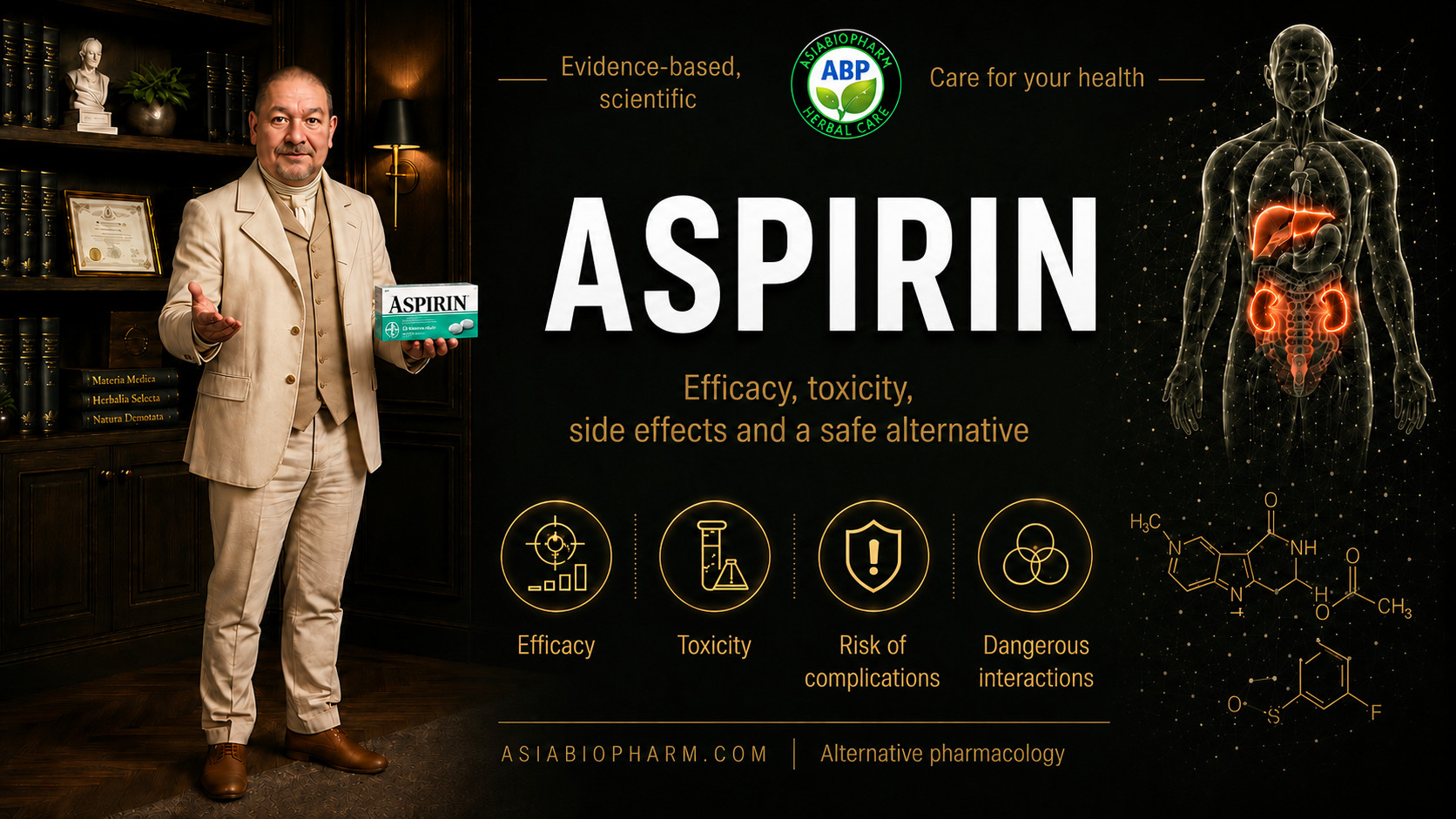
EFFECTIVE | TOXIC
Names under which aspirin is available
The international nonproprietary name of the medicine is acetylsalicylic acid; the Latin and English variants are Acetylsalicylic acid, Aspirin, ASA and acetylsalicylate. In pharmacies and medical records, the medicine may be found under the names Aspirin, Aspirin Cardio, Thrombo ASS, Acecardol, CardiASK, Upsarin UPSA, Aspirin Express and Bayer Aspirin. Doses of 75–100 mg are generally intended for antiplatelet therapy, whereas 325–500 mg formulations are used primarily as analgesic and antipyretic agents. Acetylsalicylic acid is also included in combination medicines: Cardiomagnyl contains it together with magnesium hydroxide; Citramon P, Askofen-P and certain Excedrin formulations contain it together with paracetamol and caffeine; classic Alka-Seltzer contains it together with sodium bicarbonate and citric acid. Taking several such products at the same time may unknowingly increase the total dose of acetylsalicylic acid and the risk of bleeding or salicylate poisoning. The exact composition of medicines sold under the same trade name may differ between countries, so attention should be paid not to the brand name but to the “active ingredient” line.
Why aspirin is considered harmless and where the real risk begins
Aspirin is sold without a prescription, has been kept in home medicine cabinets for decades and is perceived as an ordinary tablet “for a headache”, “for fever” or “to thin the blood”. However, even a low cardiological dose irreversibly suppresses platelet function, while analgesic doses additionally damage the protective mechanisms of the stomach and intestinal mucosa. As a result, bleeding may occur without severe preceding pain: the first manifestations may sometimes be weakness, dizziness, fainting, black stools or vomiting blood. The risk increases particularly with repeated use and when aspirin is combined with other NSAIDs, anticoagulants, glucocorticosteroids and alcohol. A low dose reduces the risk but does not eliminate it: a meta-analysis showed an approximately 70% relative increase in the incidence of major bleeding with low-dose aspirin.
Side effects after the first dose and a short course
Common early reactions include burning and pain in the epigastric region, nausea, dyspepsia, heartburn, microbleeding from the gastric mucosa, easy bruising and prolonged bleeding from minor injuries. Clinically significant complications include erosive gastritis, gastric or duodenal ulcer, gastrointestinal bleeding, bronchospasm in patients with aspirin-sensitive respiratory disease, urticaria, angioedema and deterioration of kidney function during dehydration or reduced renal blood flow. Life-threatening reactions include massive gastrointestinal bleeding, intracranial haemorrhage, anaphylaxis, severe bronchospasm and acute salicylate poisoning. An enteric coating may reduce direct gastric irritation but does not eliminate the systemic suppression of prostaglandins and platelets and therefore does not make aspirin safe for the gastrointestinal tract.
Consequences of prolonged and repeated use
With long-term use, mucosal damage may remain hidden and manifest as chronic blood loss, iron-deficiency anaemia, reduced haemoglobin, weakness and shortness of breath. Recurrent ulcers, repeated gastrointestinal bleeding and haemorrhagic complications after injuries or surgery may occur. The risk increases with the dose and duration of treatment but remains present even at 75–100 mg per day. Kidney function may deteriorate in older patients, in chronic kidney disease, dehydration, heart failure or with the simultaneous use of nephrotoxic medicines. Repeated use of high analgesic doses may lead to chronic salicylate intoxication: tinnitus, impaired hearing, rapid breathing, confusion, acid-base disturbances and renal failure. Aspirin does not cause physical dependence or a classic withdrawal syndrome, but the unauthorised discontinuation of prescribed antiplatelet therapy may restore platelet activity and increase the likelihood of thrombosis in a patient for whom the medicine was prescribed after a myocardial infarction, ischaemic stroke or coronary intervention.
Contraindications and high-risk groups
Aspirin is contraindicated in active gastrointestinal, intracranial or other clinically significant bleeding, active peptic ulcer disease, a severe allergic reaction to acetylsalicylic acid or other NSAIDs and aspirin-induced bronchospasm. The medicine is particularly dangerous for patients with a history of ulcer or gastrointestinal bleeding, coagulation disorders, thrombocytopenia, severe hepatic or renal failure, uncontrolled arterial hypertension and a high risk of falls or injuries. Acetylsalicylic acid must not be used in children and adolescents with influenza, chickenpox or another viral infection without a specific medical decision because of its association with Reye syndrome, a rare but severe disorder affecting the liver and brain. Before surgery and dental procedures, the use of aspirin must be reported: irreversible platelet suppression persists until new cells are formed. In late pregnancy, the medicine in anti-inflammatory doses may cause bleeding and adversely affect fetal circulation; low-dose use during pregnancy is permissible only for a specific obstetric indication.
Dangerous drug interactions
Aspirin is contraindicated or highly undesirable in the presence of active bleeding and simultaneous uncontrolled anticoagulant therapy. Warfarin, apixaban, rivaroxaban, dabigatran, heparins, clopidogrel, prasugrel and ticagrelor increase haemorrhagic risk; some combinations are used after stenting or in acute coronary syndrome, but only for strict indications and under medical supervision. Ibuprofen, naproxen, diclofenac, ketorolac and other NSAIDs increase the likelihood of ulcers, gastrointestinal bleeding and kidney damage; regular use of ibuprofen may additionally interfere with the antiplatelet effect of low-dose aspirin.
Glucocorticosteroids and selective serotonin reuptake inhibitors increase the risk of gastrointestinal bleeding. Alcohol damages the mucosa and increases haemorrhagic risk; official instructions specifically warn about the risk of gastric bleeding in people who consume three or more alcoholic drinks daily. Aspirin may increase methotrexate toxicity, enhance the effect of certain glucose-lowering agents and weaken the uricosuric effect of medicines used for gout. Ginkgo biloba, Salvia miltiorrhiza, Angelica sinensis, garlic in concentrated doses, grape seed extract and other products with antiplatelet potential must not simply be added to aspirin: the combination requires an assessment of the total bleeding risk.
Patient errors that turn ordinary use into a dangerous one
The most common error is the independent daily use of aspirin “to prevent a heart attack” without assessing cardiovascular and haemorrhagic risk. In a person without confirmed atherothrombotic disease, the expected preventive benefit may be comparable to the number of major bleeding events caused by the medicine. Increasing the dose when pain persists, shortening the dosing intervals, taking ibuprofen or naproxen at the same time, using aspirin after alcohol consumption and continuing treatment despite stomach pain, tarry stools or unexplained weakness are equally dangerous.
Hidden duplication occurs when ordinary aspirin is combined with Cardiomagnyl, Thrombo ASS, Citramon, Askofen or an effervescent combination medicine. Magnesium hydroxide in Cardiomagnyl does not neutralise the systemic risk of bleeding, and an enteric coating does not protect against platelet suppression. Another error is to regard tinnitus as harmless: with repeated use, it may be an early sign of salicylate toxicity.
Aspirin overdose and salicylate poisoning
The severity of poisoning must not be assessed solely by the number of tablets because it depends on body weight, dosage form, age, kidney function, acid-base status and the time elapsed since ingestion. An intake of approximately 150 mg/kg already requires urgent toxicological assessment; 150–300 mg/kg usually corresponds to mild or moderate poisoning, 300–500 mg/kg is associated with severe toxicity, and more than 500 mg/kg may be fatal. In older adults, children, patients with renal failure and in chronic accumulation, severe poisoning may occur at a lower calculated dose.
During the first hours, nausea, vomiting, abdominal pain, sweating, dizziness, rapid breathing, noise or ringing in the ears and impaired hearing occur. Direct stimulation of the respiratory centre then causes respiratory alkalosis, while uncoupling of oxidative phosphorylation leads to hyperthermia, dehydration, tissue hypoglycaemia and metabolic acidosis. As the condition progresses, agitation, confusion, delirium, seizures, pulmonary oedema, acute renal failure, coma and respiratory arrest develop. A shift of the blood towards an acidic environment increases the penetration of non-ionised salicylate into the brain, so the patient may deteriorate sharply even while the measured blood concentration is falling.
Enteric-coated tablets and dense masses of medicine in the stomach may delay absorption, so an early test result may be deceptively normal. Salicylate concentration is measured repeatedly together with blood gases, electrolytes, glucose, creatinine and acid-base parameters. There is no specific antidote. Treatment includes early decontamination when indicated, intravenous sodium bicarbonate to alkalinise the blood and urine, and correction of fluid, potassium and glucose levels. Urgent haemodialysis is required in impaired consciousness, pulmonary oedema, severe acidosis, renal failure, hypoxia, clinical deterioration or a high salicylate concentration. Pronounced symptoms must not be awaited: delay allows salicylate to enter the central nervous system and significantly worsens the prognosis.
A safe integrative alternative to aspirin
Aspirin cannot be replaced with a single universal herbal medicine because, in different clinical situations, it is used as an antipyretic, anti-inflammatory, analgesic or antiplatelet agent. For fever, acute inflammation of the respiratory tract and pain of inflammatory origin, the main alternative is the “5 Roots” Anti-inflammatory Mixture. It contains the roots of Harrisonia perforata, Capparis micracantha, Clerodendrum petasites, Ficus racemosa and Tiliacora triandra. The formula combines suppression of iNOS, pro-inflammatory cytokines and prostaglandin synthesis with antipyretic, analgesic, antioxidant and immunomodulatory effects. Unlike acetylsalicylic acid, it does not cause irreversible acetylating blockade of platelet COX-1 and therefore does not produce the prolonged haemorrhagic effect typical of aspirin. The mixture is most appropriate for mild to moderate acute pharyngitis, tonsillitis, rhinopharyngitis, bronchitis, influenza-like syndrome, fever and inflammatory pain when the condition does not require urgent diagnosis or a faster symptomatic agent.
For osteoarthritis, chronic pain in the joints, muscles, lower back, tendons and periarticular tissues, the Sahastara analgesic mixture is preferred. Its multi-component formula acts on COX-2, PGE₂, iNOS, NF-κB, TRPV1 and TRPA1 while simultaneously reducing inflammatory sensitisation, tissue oedema, peripheral nociception and musculoskeletal and visceral spasm. Sahastara acts more broadly than a simple salicylate and is not intended to suppress platelet function. It may be used as a standalone treatment for mild to moderate chronic musculoskeletal pain or as part of multimodal therapy for more pronounced osteoarthritis. The formula contains piperine and a number of pharmacologically active components, so in polypharmacy the possibility of altered bioavailability of concomitant medicines must be considered; in active ulcer disease and erosive gastritis, the product must not be regarded as automatically safe merely because of its herbal composition.
For relatively simple monotherapy of inflammatory pain, white willow bark — Salix alba may be used. Salicin is metabolised to salicylic acid more slowly than acetylsalicylic acid is absorbed, so the effect develops more gradually and is usually not accompanied by such a rapid rise in salicylate concentration. Clinical data support the use of standardised willow extracts for chronic low back pain and certain types of joint pain, but studies are limited and do not confirm universal equivalence to aspirin or other NSAIDs. Willow retains salicylate-related limitations: it must not be used in aspirin allergy, aspirin-induced bronchospasm, active ulcer disease, a marked tendency to bleed or without assessing compatibility with anticoagulants. It does not reproduce the irreversible antiplatelet effect of low-dose aspirin and is not a substitute for cardioaspirin.
Meadowsweet — Filipendula ulmaria is suitable for milder salicylate therapy in moderate inflammation, musculoskeletal pain and febrile syndromes. Its effect is produced not only by salicylate derivatives but also by flavonoids, phenolic acids and tannins, so its profile is not simply that of a weak copy of aspirin. Meadowsweet acts more gently and slowly but must not be used in salicylate allergy, aspirin-induced asthma or active bleeding. The presence of tannins does not justify prescribing it as a treatment for ulcers or regarding it as guaranteed to be safe when the gastric mucosa is damaged.
When aspirin is prescribed not for pain but to prevent thrombosis, the closest herbal approach is Salvia miltiorrhiza. Tanshinones and salvianolic acids affect platelet activation and aggregation, intraplatelet calcium, thromboxane formation, oxidative stress and endothelial function. However, the mechanism is not identical to the irreversible acetylation of COX-1, and the available clinical data do not support considering Salvia miltiorrhiza an equivalent standalone replacement for aspirin after myocardial infarction, ischaemic stroke, transient ischaemic attack or coronary stenting. Combining it with aspirin, clopidogrel, warfarin and other agents affecting haemostasis may increase bleeding and requires monitoring.
The real effectiveness of aspirin and common medical errors
Aspirin is genuinely effective as an analgesic, antipyretic and anti-inflammatory agent, but in these indications its use is limited by gastrointestinal toxicity, bleeding risk and the availability of alternatives with a more favourable safety profile. The most important modern indication is secondary prevention of atherothrombotic events in patients with established cardiovascular disease: previous myocardial infarction, ischaemic stroke, transient ischaemic attack, symptomatic peripheral arterial disease or certain coronary interventions. In these situations, irreversible platelet suppression is not a side effect but the therapeutic objective. Aspirin does not dissolve an existing clot, cleanse the blood vessels, treat the underlying cause of atherosclerosis or guarantee protection against a heart attack or stroke; it only reduces the probability of some platelet-dependent events. In primary prevention in a person without established cardiovascular disease, the absolute benefit is substantially smaller and may be offset by gastrointestinal or intracranial bleeding.
A common medical error is prescribing daily aspirin solely on the basis of age, hypertension, elevated cholesterol or the vague concept of “thick blood” without calculating cardiovascular and haemorrhagic risk. It is equally incorrect to prescribe the medicine for venous thrombosis as a substitute for full anticoagulation, use it for any headache or recommend it “for prevention” to a person with a history of ulcer disease, anaemia, uncontrolled hypertension or simultaneous NSAID use. Prescribing an enteric-coated formulation without analysing interactions and risk factors is not safety management but merely a cosmetic repair of a pharmacological problem.
Safety monitoring during treatment
During short-term aspirin use, it is necessary to monitor for pain or burning in the epigastric region, vomiting, unusual bruising, nosebleeds, prolonged bleeding from small wounds, tinnitus, impaired hearing, rapid breathing and allergic reactions. During long-term antiplatelet therapy, a complete blood count, haemoglobin, haematocrit and signs of occult blood loss should be assessed periodically; in patients with kidney disease, heart failure, dehydration or concomitant use of nephrotoxic medicines, creatinine and estimated glomerular filtration rate should be monitored. A fall in haemoglobin without an obvious cause requires exclusion of chronic gastrointestinal bleeding rather than the automatic prescription of iron while the blood loss continues.
Immediate medical assessment is required for black tarry stools, bright red blood in the stool, vomiting blood or material resembling “coffee grounds”, sudden severe headache, speech disturbance, facial asymmetry, weakness in a limb, loss of consciousness, severe shortness of breath, bronchospasm, swelling of the lips, tongue or larynx, a sharp reduction in urine output, confusion, hyperthermia, repeated vomiting and tinnitus after exceeding the dose. If overdose is suspected, deterioration must not be awaited: salicylate concentration and acid-base status may change more rapidly than the external clinical picture.
Proper discontinuation of aspirin
When aspirin is used as an analgesic or antipyretic, gradual dose reduction is not required: the medicine may be stopped immediately after the indication has resolved or if an adverse reaction occurs. Aspirin does not cause a classic withdrawal syndrome, drug dependence or a physiological need for gradual dose reduction.
The situation is different during long-term antiplatelet therapy. After treatment is stopped, new functionally active platelets enter the circulation every day, and the antiplatelet effect gradually diminishes over several days. Therefore, unauthorised discontinuation before dental treatment, surgery, travel or because of a small bruise may increase the risk of thrombosis in a patient after myocardial infarction, stroke or stenting. The decision to stop treatment must take into account the reason for prescribing aspirin, the time since the vascular event, the type of intervention and the actual bleeding risk. In clinically significant bleeding, the medicine is stopped immediately, but the cause of bleeding and the subsequent antithrombotic strategy must also be assessed.
A transition to Salvia miltiorrhiza must likewise not be carried out according to the principle of “aspirin today, herb tomorrow”. The herbal medicine does not provide a proven identical strength and duration of platelet blockade, while a period of simultaneous use may instead increase haemorrhagic risk. For anti-inflammatory indications, transition to the “5 Roots” Anti-inflammatory Mixture, the Sahastara analgesic mixture, Salix alba or Filipendula ulmaria does not require a special washout period, but the continuing suppression of already acetylated platelets after the last aspirin dose must be taken into account.
A rational approach to treatment
Aspirin is justified where its specific and predictable antiplatelet mechanism is required, primarily for secondary prevention of atherothrombotic complications. In these situations, the question is not whether the medicine is “chemical” or herbal, but how dangerous it would be for a particular patient to lose proven antithrombotic protection.
For fever, acute inflammation and inflammatory pain, the need specifically for aspirin is considerably lower. The “5 Roots” Anti-inflammatory Mixture makes it possible to act on the prostaglandin, cytokine and iNOS-dependent cascades without irreversibly suppressing platelets. In chronic joint and muscle pain, Sahastara provides multi-target anti-inflammatory and antinociceptive effects. Salix alba is suitable for more direct salicylate monotherapy of pain, while Filipendula ulmaria is suitable for a milder form of salicylate phytotherapy. Salvia miltiorrhiza may be considered in vascular-protective and antiplatelet combinations, but without sufficient grounds it must not replace aspirin after a vascular event.
The aim of an integrative approach is not to declare aspirin useless, but to stop using it where the haemorrhagic and gastrointestinal toxic cost exceeds the real benefit. The more precisely the therapeutic objective is defined, the less need there is for a universal tablet that simultaneously suppresses pain, fever, inflammation and the ability of blood to achieve platelet haemostasis.
If you have questions about this article, you may ask a clinical pharmacologist in the comments or book an appointment using the following link: https://asiabiopharm.com/konsultaciii/
0 comments