
Allergic Rhinitis: Symptoms, Diagnosis, and Treatment
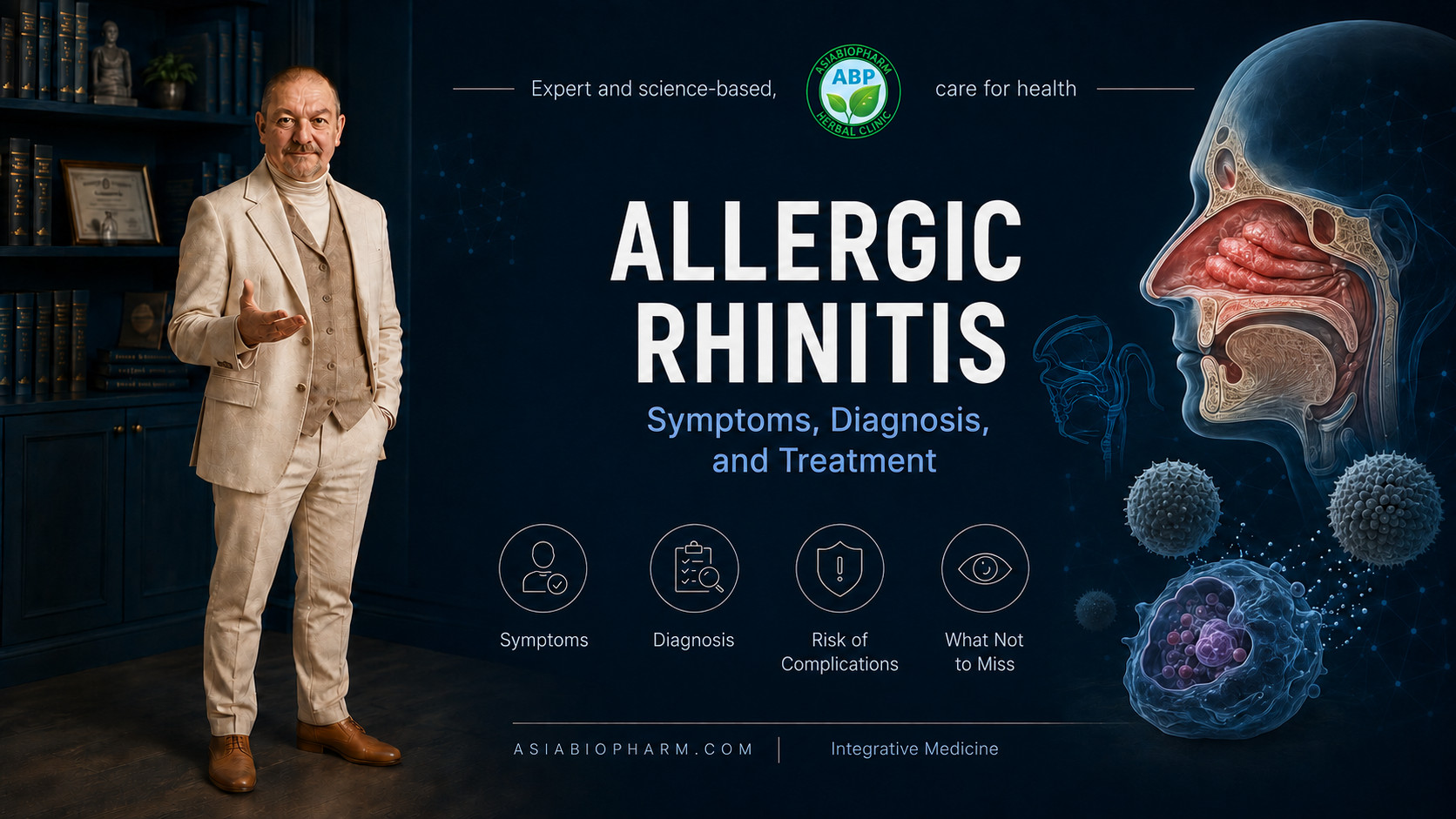
Allergic rhinitis manifests as recurrent bouts of sneezing, nasal itching, profuse clear watery discharge, and nasal congestion. Secondary symptoms include itching, redness, and watering of the eyes, throat irritation and itching, mucus draining down the back of the throat, occasional coughing, reduced sense of smell, a nasal voice, pressure or a blocked sensation in the ears, headache, fatigue, irritability, sleep disturbance, and reduced ability to work.
The condition is not transmitted from person to person. It develops as a result of an IgE-mediated reaction to inhaled allergens, including plant pollen, house dust mites, animal dander and secretions, mould spores, insect particles, or occupational allergens.
After exposure to the causative allergen, mast cells become activated and release histamine, leukotrienes, and other mediators. Later, eosinophils and other inflammatory cells migrate into the nasal mucosa.
The main target tissue is the nasal mucosa, although the process often also involves the conjunctiva, nasopharynx, and the area around the auditory tubes. Some patients also have bronchial hyperresponsiveness or bronchial asthma.
In children, typical signs include mouth breathing, noisy breathing and snoring, frequent rubbing of the nose, dark circles under the eyes, reduced attention, and poorer school performance. In children younger than two to three years, the diagnosis requires particularly careful verification because infectious and anatomical causes of rhinitis are more common in this age group.
In adults, sleep disturbance, reduced ability to work, and headaches often become the most prominent problems. In older adults, the symptoms may be less typical and may occur together with mucosal dryness, medication-induced rhinitis, and anatomical changes in the nose.
The reaction may begin within a few minutes of exposure to the allergen, while congestion may become more pronounced several hours later. The condition is classified as intermittent when symptoms occur on fewer than four days per week or for fewer than four consecutive weeks. It is classified as persistent when symptoms occur on more than four days per week and continue for more than four weeks.
Seasonal exacerbations continue while the relevant pollen is present. Perennial allergic rhinitis persists or recurs throughout the year.
How to Determine Whether You Have Allergic Rhinitis
The most characteristic presentation is a combination of nasal itching, repeated bouts of sneezing, clear discharge, and congestion that develops shortly after cleaning, contact with an animal, spending time in a dusty or damp room, working with certain substances, or going outdoors during the flowering season.
Watery eyes, eye itching, the absence of a high fever, and recurrence of the same reaction under the same circumstances also support an allergic cause.
For an initial self-assessment, you can keep a symptom diary for two to three weeks, noting when and where the symptoms occur, the weather, whether you were indoors or outdoors, contact with animals, cleaning activities, sleep in a particular room, occupational exposures, and any medicines taken.
A temporary reduction in symptoms after avoiding the suspected trigger provides additional evidence of a possible allergen but does not definitively confirm the diagnosis.
The doctor assesses the medical history, the nasal mucosa, the nature of the discharge, and the presence of conjunctivitis, asthma, and atopic diseases.
Causative sensitisation is identified using skin-prick testing or a blood test for specific IgE. A positive test indicates sensitisation, but the allergen is considered clinically relevant only when the result corresponds to the actual circumstances in which the symptoms develop.
If systemic tests are negative but there is convincing evidence of a local reaction, local allergic rhinitis may be present. Specialised nasal tests are used to confirm it.
Nasal endoscopy is required in cases of unilateral congestion, bleeding, suspected polyps, a foreign body, marked deviation of the nasal septum, or chronic rhinosinusitis.
Viral rhinitis is more often accompanied by a sore throat, general malaise, and sometimes fever, and usually resolves as a separate episode. Non-allergic vasomotor rhinitis is more commonly triggered by cold air, strong odours, smoke, alcohol, or spicy food and usually does not cause marked itching. Bacterial rhinosinusitis is more likely in the presence of severe facial pain, fever, and purulent discharge. Medication-induced rhinitis should be suspected in people who regularly use vasoconstrictor nasal drops.
Persistent unilateral drainage of completely clear fluid, particularly after a head injury or surgery, must not be regarded as ordinary allergy. Cerebrospinal fluid leakage must be ruled out.
Red Flags
Call emergency medical services immediately if there is increasing swelling of the lips, tongue, or throat, hoarseness, difficulty breathing in, wheezing, widespread urticaria, sudden severe weakness, a fall in blood pressure, confusion, or loss of consciousness. These may be signs of a systemic allergic reaction or anaphylaxis.
Severe shortness of breath, an attack of suffocation, inability to speak in complete sentences, bluish discolouration of the lips, or reduced oxygen saturation requires emergency care because the symptoms attributed to rhinitis may conceal a severe exacerbation of bronchial asthma.
A high fever, severe one-sided facial pain, and purulent or foul-smelling discharge require examination by an otorhinolaryngologist to rule out bacterial rhinosinusitis, a foreign body, or another purulent process.
Swelling of the eyelids, pain when moving the eyes, double vision, deterioration of vision, or protrusion of the eye may indicate that inflammation has spread into the orbit and requires urgent examination by both an otorhinolaryngologist and an ophthalmologist.
A severe headache, neck stiffness, repeated vomiting, seizures, drowsiness, or impaired consciousness requires emergency neurological and infectious disease assessment.
Recurrent nosebleeds, blood-stained discharge, persistent unilateral congestion, nasal deformity, or enlarged cervical lymph nodes require assessment by an otorhinolaryngologist to rule out a neoplasm or structural lesion.
After a head injury or surgery, persistent unilateral drainage of watery fluid with a salty taste requires urgent admission to hospital.
A child should be examined by a doctor if there is difficulty breathing, refusal to drink, unusual drowsiness, pauses in breathing during sleep, persistent unilateral nasal discharge, or suspected foreign body.
Pregnant women, older adults, and patients with immunodeficiency require early medical assessment if their condition deteriorates rapidly or if they develop fever, marked weakness, sinus pain, or lower respiratory symptoms.
Initial Self-Care Measures for Allergic Rhinitis
The first step is to reduce exposure to the suspected allergen as much as possible. During the pollen season, keep windows closed in dry, windy weather, ventilate rooms after rain or at times when pollen concentrations are lowest, change clothes after returning from outdoors, wash your face and hair, and do not dry laundry outside.
If you are sensitive to house dust, wash bed linen in hot water, use protective covers for the mattress and pillows, remove carpets and dust-collecting items from the bedroom, carry out damp cleaning, and use a vacuum cleaner with a high-efficiency filter.
Maintain indoor humidity at approximately 40–50 percent and keep the bedroom temperature at about 18–22 °C. Excessive humidity promotes the growth of mites and mould.
Avoid tobacco smoke, scented candles, aerosols, strong perfumes, and harsh household chemicals.
If nasal congestion is severe at night, sleep with the head of the bed slightly elevated. Physical activity is acceptable according to how you feel, but on days with a high pollen load it is better to exercise indoors.
A special elimination diet is not required for isolated allergic rhinitis. Nutrition should remain balanced and adequate. Temporarily limit alcohol, very hot foods, and products that consistently worsen congestion or cause itching in the mouth.
There is no need to force yourself to drink more fluids. In the absence of heart or kidney failure, drink room-temperature water according to thirst, in small portions. If you have been advised to restrict fluids, follow the amount prescribed by your doctor.
To remove allergens, a ready-made sterile 0.9 percent isotonic sodium chloride solution may be used as a spray or for nasal irrigation.
For high-volume irrigation, use approximately 100–250 ml of warm solution at a temperature of about 34–37 °C once or twice daily.
A homemade solution may be prepared using one cup, approximately 240 ml, of sterile, distilled, or previously boiled and cooled water. Add one teaspoon of a premixed blend consisting of three parts additive-free non-iodised salt and one part baking soda.
Ordinary unboiled tap water must not be used.
Lean over a sink, turn your head slightly to one side, breathe through your mouth, and gently introduce the solution into the upper nostril without applying strong pressure, allowing it to flow out through the lower nostril.
After the procedure, gently blow your nose. Rinse the device with safe water and allow it to dry completely.
Stop irrigation if severe pain, bleeding, fluid entering the ear, or worsening of the condition occurs. Irrigation should not be performed if the nasal passage is completely blocked, in acute otitis media, after recent surgery without the doctor’s permission, or if the person is unable to carry out the procedure safely.
Do not put onion or garlic juice, undiluted essential oils, alcohol-based tinctures, hydrogen peroxide, or other irritating substances into the nose. Do not warm the sinuses if there is pain or suspected purulent inflammation, and do not begin using vasoconstrictor nasal drops without medical supervision.
Monitor body temperature, the nature of the discharge and whether it is one-sided, facial pain, bleeding, eye symptoms, the onset of coughing, wheezing, and pauses in breathing during sleep.
If symptoms persist, disrupt sleep and daily activities, or recur regularly, consult an allergist or otorhinolaryngologist.
Stages and Possible Progression of Allergic Rhinitis
Allergic rhinitis has no infectious incubation or prodromal period.
After a sensitised person is exposed to an allergen, the early phase develops. Within minutes, histamine and other mediators are released, causing itching, sneezing, and watery rhinorrhoea.
Several hours later, a late phase may develop, involving cellular inflammation, swelling of the mucosa, and more persistent congestion.
With repeated exposure, chronic inflammation and increased mucosal reactivity develop. As a result, the nose begins to react more strongly not only to the allergen but also to cold air, smoke, odours, and changes in temperature.
Relapses are promoted by continued exposure to the causative allergen, high pollen exposure, house dust mites, dampness and mould, occupational allergens, tobacco smoke, air pollution, hereditary atopy, and concomitant bronchial asthma.
If the disease is not controlled, sleep disturbance, chronic fatigue, reduced concentration, and impaired ability to work may persist.
Possible complications include dysfunction of the auditory tubes, a blocked sensation in the ears, otitis media in children, rhinosinusitis, chronic mouth breathing, and poorer sleep quality.
Prolonged impairment of nasal breathing in a child may contribute to problems with sleep, behaviour, learning, and the development of malocclusion.
Allergic rhinitis is closely associated with bronchial asthma. The appearance of nocturnal cough, wheezing, shortness of breath during exertion, or attacks of suffocation requires assessment of pulmonary function.
Complete avoidance of the allergen may result in a prolonged absence of symptoms, but sensitisation often persists, so the disease may return after renewed exposure.
Integrative Treatment Approaches for Allergic Rhinitis
Integrative therapy should simultaneously address the systemic allergic response, local inflammation of the nasal mucosa, and associated disturbances in breathing, sleep, or lower airway function.
As the main systemic treatment, Allergy Mixture capsules may be used. They contain Andrographis paniculata, Schefflera leucantha, Murdannia loriformis, and additional herbal components.
The clinical aims of this formula are to reduce histamine release, decrease eosinophilic infiltration, regulate Th2/Th17 inflammation, and reduce mucosal swelling and bronchial hyperresponsiveness.
The product is taken orally with meals three times daily.
It does not contain vasoconstrictor sympathomimetics and therefore does not trigger the mechanism of medication-induced rhinitis or the rebound worsening of congestion associated with prolonged use of decongestants.
The absence of sedating antihistamine components reduces the risk of drowsiness, anticholinergic effects, and impaired concentration.
Possible adverse effects include dyspepsia, headache, reduced blood pressure, tachycardia, and allergic skin reactions.
The product is not used in cases of individual intolerance, during pregnancy or breastfeeding, in children under six years of age, or in severe cardiovascular disease.
Caution is required in autoimmune diseases and when it is used together with immunosuppressants, anticoagulants, antihypertensive medicines, or glucose-lowering drugs.
The second main product is Rhinitis and Rhinosinusitis Mixture capsules, containing Solanum indicum, Vitex trifolia, Croton oblongifolius, Blumea balsamifera, and Eleusine indica.
This formula acts mainly on inflammation of the nasal and paranasal sinus mucosa, reducing congestion, rhinorrhoea, postnasal drip, and cough associated with irritation of the upper airways.
Vitex trifolia complements the treatment by stabilising mast-cell membranes and reducing histamine release.
The mixture is taken orally three times daily before meals, allowing it to be separated in time from the first formula, which is taken with meals.
Possible adverse effects include nausea, abdominal pain, diarrhoea, mucosal irritation, and allergic rash.
If the recommended amount is substantially exceeded, the risk of irritant effects from Croton components and glycoalkaloid intoxication from Solanum increases.
Contraindications include acute ulcerative lesions of the stomach and duodenum, decompensated liver and kidney disease, pregnancy, breastfeeding, age under six years, and hypersensitivity to the ingredients.
The two main mixtures complement each other. The first primarily regulates systemic allergic inflammation, while the second acts on the respiratory target tissue, oedema, and secretory disturbances.
At the same time, gastrointestinal tolerability must be monitored, and other systemic anti-inflammatory formulas with similar mechanisms should not be added without clinical justification.
For local restoration of the nasal mucosa, ABP-153 Oil Infusion may be used, although in allergic rhinitis it is intended primarily for the period after the active exacerbation has subsided.
Its main aims are to reduce residual inflammation and dryness, restore the epithelial barrier, correct postnasal drip, and support the sense of smell.
The infusion is administered intranasally two to three times daily after the nasal passages have been cleansed.
During a phase of intense sneezing, profuse watery rhinorrhoea, and marked mucosal reactivity, menthol, camphor, eucalyptus, clove, and other aromatic components may cause burning or increase irritation. Tolerability should therefore be assessed before full use.
The infusion should not be administered at the same time as water-based antihistamine or corticosteroid nasal sprays, because the oily layer may alter their distribution and contact with the mucosa.
Nasal irrigation is performed first, followed by the prescribed water-based medicine, while ABP-153 is used in a separate time window.
The product does not contain DMSO and is suitable for a superficial mucosal target. The penetrating ABP-153D version is not required for allergic rhinitis.
The main limitations are individual sensitivity, local burning, hyperaemia, or increased discharge.
For short-term subjective relief of nasal congestion, Sukaya Herbal Inhaler containing menthol, camphor, borneol, and eucalyptus oil may be used.
Inhalations are performed several times daily when symptoms occur.
Menthol activates cold-sensitive TRPM8 receptors and creates a sensation of freer airflow, but it does not mechanically eliminate oedema or suppress the IgE-mediated reaction. The inhaler therefore remains a symptomatic adjunct.
It is contraindicated in children under six years of age, in severe bronchial asthma, and in people who are intolerant of aromatic ingredients.
Use should be discontinued if sneezing, rhinorrhoea, cough, throat irritation, or bronchospasm worsens.
Simultaneous active use of Sukaya Herbal Inhaler and ABP-153 Oil Infusion may create an excessive aromatic burden on the mucosa.
Type 2 Bronchial Asthma capsules containing Clerodendrum serratum are not indicated for every case of allergic rhinitis. They are used when Th2 inflammation, eosinophilia, elevated IgE, allergic rhinosinusitis, or concomitant atopic bronchial asthma has been confirmed.
The herbal components act on mast-cell stabilisation and the production of IL-4, IL-5, and IL-13.
The product is taken orally after meals in two to three divided doses.
It may be combined with maintenance asthma therapy, but it does not replace inhaled medicines or emergency treatments used to relieve bronchospasm.
Possible adverse effects include dyspepsia, diarrhoea, and allergic rash.
Contraindications include acute ulcerative lesions of the gastrointestinal tract, severe decompensated liver or kidney disease, and individual intolerance.
Safety data are insufficient for use during pregnancy, breastfeeding, and in children under six years of age.
In bronchial asthma with thick sputum that is difficult to expectorate, Bolus for Asthma with Difficult-to-Expectorate Sputum containing Solanum trilobatum may additionally be considered.
The boluses are allowed to dissolve slowly in the mouth three times daily. They provide mucolytic, expectorant, bronchodilator, and anti-inflammatory effects.
The product is not required in isolated rhinitis, dry allergic cough, or ordinary postnasal drip.
It is not an emergency treatment for an attack of suffocation.
Possible adverse effects include nausea, vomiting, abdominal pain, diarrhoea, and dizziness.
The product is not used in people who are allergic to plants of the nightshade family, during pregnancy or breastfeeding, or in children under six years of age.
When allergic rhinitis occurs together with atopic dermatitis, chronic bronchitis, or liver disease, Eclipta prostrata capsules may be used for their anti-inflammatory, antihistamine, antioxidant, and hepatoprotective effects.
They are taken with meals in two to three divided doses.
Possible adverse effects include dyspepsia, rash, skin itching, and dizziness.
When rhinitis occurs together with allergic asthma, urticaria, an intoxication-related component, or a hepatic component, Tiliacora triandra capsules may be considered. They are taken before meals in two to three divided doses.
They may cause drowsiness and a reduction in blood pressure. They are therefore unsuitable for patients with marked hypotension and require caution when used together with antihypertensive, hypnotic, sedative, or antihistamine medicines that depress the central nervous system.
The simultaneous inclusion of Eclipta prostrata, Tiliacora triandra, a Clerodendrum serratum product, and both main mixtures is usually unnecessary. Products are selected according to confirmed concomitant diseases and pathogenetic objectives rather than combined according to the principle of using the largest possible number.
If sleep is secondarily disturbed because of nocturnal congestion, Good Sleep Balm containing lavender, rosemary, and bergamot oils may be used.
A small amount is applied to the skin of the temples or behind the ears, mainly in the evening.
The product must not be applied to the nasal mucosa.
Before use, it is necessary to ensure that the aromas do not worsen rhinorrhoea, cough, headache, or bronchospasm.
Contraindications include allergy to essential oils and active dermatosis at the site of application.
Possible adverse effects include itching, erythema, contact dermatitis, headache, and nausea after excessive inhalation of aromatic substances.
Unlike vasoconstrictor drops, the herbal products listed above do not trigger the mechanism of ischaemic mucosal injury, medication-induced rhinitis, or marked rebound oedema after discontinuation.
They do not contain systemic glucocorticosteroids and therefore do not create the risks of hyperglycaemia, adrenal suppression, osteoporosis, cataracts, glaucoma, and systemic suppression of the immune response that are characteristic of repeated hormonal therapy.
The absence of first-generation antihistamines reduces the likelihood of pronounced drowsiness, cognitive slowing, mucosal dryness, urinary retention, rhythm disturbances, and falls in older adults.
At the same time, herbal origin does not rule out individual allergy, mucosal irritation, dyspepsia, changes in blood pressure, or drug interactions.
The treatment combination must therefore be determined not only by the diagnosis, but also by the specific allergen, the phase of the disease, the severity of oedema, the condition of the bronchi, gastrointestinal tract, liver, kidneys, and cardiovascular system, and the medicines already being used.
What You Need to Know About Standard Protocols in Modern Medicine
The basis of standard treatment for allergic rhinitis is limiting exposure to a confirmed allergen and using stepwise symptomatic pharmacotherapy.
Intranasal glucocorticosteroids, including mometasone, fluticasone, budesonide, beclometasone, and other medicines in this class, reduce nasal congestion, itching, sneezing, and rhinorrhoea, but they do not eliminate the underlying allergic sensitisation.
Mometasone may cause mucosal dryness and ulceration, nosebleeds, nasopharyngeal candidiasis, and delayed tissue healing after surgery or injury.
With long-term use, excessive dosing, or combination with other steroids, suppression of the hypothalamic-pituitary-adrenal axis, hypercortisolism, growth retardation in children, increased intraocular pressure, glaucoma, and cataracts may occur.
Fluticasone has particularly dangerous interactions with ritonavir, cobicistat, ketoconazole, and other potent CYP3A4 inhibitors. Hormone concentrations may rise sharply, leading to systemic Cushing syndrome and adrenal insufficiency.
Budesonide and beclometasone may also suppress the body’s own corticosteroid production during prolonged use, weaken local immune control, and mask fungal or bacterial infection.
No nasal steroid should be started without medical advice after recent surgery or nasal trauma, in the presence of unhealed mucosal ulcers, frequent nosebleeds, glaucoma, cataracts, or simultaneous systemic hormone therapy.
Intranasal antihistamines such as azelastine and olopatadine act more quickly than oral medicines, but they may cause a pronounced bitter taste, burning, dryness, mucosal damage, nosebleeds, headache, fatigue, drowsiness, and slowed reactions.
Azelastine may increase central nervous system depression when combined with alcohol, sleeping pills, tranquillisers, opioids, or sedating antihistamines.
If drowsiness occurs regularly, driving and operating machinery are unsafe.
Combination sprays containing fluticasone with azelastine or other combinations of a corticosteroid and an antihistamine carry the risks of both components at the same time. Bleeding and atrophic mucosal damage may occur together with sedation, while long-term use still carries a risk of systemic steroid toxicity.
Second-generation oral antihistamines mainly reduce itching, sneezing, and discharge, but they are much less effective against persistent nasal congestion.
Cetirizine and levocetirizine commonly cause drowsiness, fatigue, impaired concentration, dry mouth, and headache. In renal impairment, they may accumulate and intensify neurological adverse effects.
Loratadine and desloratadine are metabolised in the liver and may accumulate in severe hepatic impairment. Possible adverse effects include tachycardia, palpitations, mucosal dryness, urinary retention, elevated liver enzymes, and hypersensitivity reactions.
Fexofenadine may cause dizziness, nausea, insomnia, or drowsiness. Its absorption is markedly reduced by grapefruit, apple, and orange juice, as well as by antacids containing aluminium or magnesium.
Even second-generation medicines are not completely free from cardiac and neurological risks, particularly in renal or hepatic impairment, polypharmacy, and older age.
First-generation antihistamines, including diphenhydramine, chloropyramine, chlorpheniramine, hydroxyzine, and similar medicines, are unsuitable for long-term or regular treatment.
They cross the blood-brain barrier and cause drowsiness, cognitive slowing, impaired memory, reduced reaction speed, poor coordination, and an increased risk of road traffic accidents.
Their anticholinergic effects lead to pronounced mucosal dryness, thickening of bronchial secretions, constipation, urinary retention, tachycardia, impaired accommodation, and the triggering of an acute angle-closure glaucoma attack.
In older adults, the risks of confusion, delirium, falls, fractures, and worsening dementia are increased.
Hydroxyzine and some other medicines may prolong the QT interval and provoke dangerous ventricular arrhythmias.
Combining them with alcohol, benzodiazepines, sleeping pills, antipsychotics, opioids, or other sedatives may cause profound depression of consciousness and breathing.
Vasoconstrictor nasal medicines such as oxymetazoline, xylometazoline, naphazoline, and similar alpha-adrenergic agonists temporarily reduce swelling but do not suppress allergic inflammation.
Frequent or prolonged use leads to mucosal ischaemia, damage to the ciliated epithelium, dryness, crusting, bleeding, and medication-induced rhinitis.
Dependence on repeated administration develops. After the medicine is stopped, the blood vessels dilate sharply, the swelling becomes worse than it was initially, and the patient is forced to use the medicine more and more often.
Possible adverse effects include tachycardia, arrhythmia, elevated blood pressure, headache, insomnia, anxiety, tremor, and ischaemic complications.
These medicines are particularly dangerous in uncontrolled hypertension, rhythm disorders, ischaemic heart disease, glaucoma, thyrotoxicosis, pregnancy, and young children.
An overdose in a child may lead to depression of consciousness, impaired breathing, bradycardia, abrupt changes in blood pressure, and hospitalisation.
Pseudoephedrine has a systemic sympathomimetic effect and may cause severe insomnia, psychomotor agitation, anxiety, tremor, tachycardia, increased blood pressure, rhythm disturbances, urinary retention, and worsening glaucoma.
In susceptible patients, hypertensive crisis, myocardial ischaemia, and cerebrovascular disorders may occur.
The medicine must not be used without medical supervision in uncontrolled hypertension, severe cardiovascular disease, hyperthyroidism, angle-closure glaucoma, prostatic hyperplasia, pregnancy, or together with monoamine oxidase inhibitors or within two weeks after their discontinuation.
Intranasal ipratropium reduces only watery rhinorrhoea and has almost no effect on itching, sneezing, or swelling.
It may cause severe mucosal dryness, crusting, bleeding, sore throat, difficulty urinating, tachycardia, and anticholinergic disturbances.
If the aerosol enters the eyes, it may trigger increased intraocular pressure, pain, blurred vision, and an acute angle-closure glaucoma attack.
Particular caution is required in glaucoma, prostatic hyperplasia, and urinary tract obstruction.
Sodium cromoglicate has comparatively low systemic toxicity, but it is less effective than nasal corticosteroids and requires regular administration several times a day.
Possible adverse effects include burning, pronounced sneezing, cough, unpleasant taste, throat irritation, nosebleeds, and bronchospasm in susceptible patients.
In severe nasal congestion, the medicine may be poorly distributed over the mucosa and become almost ineffective.
Montelukast is not a preferred medicine for isolated allergic rhinitis.
Its use is justified mainly by concomitant bronchial asthma or an inability to use other treatments.
It may cause insomnia, nightmares, anxiety, panic reactions, irritability, aggression, attention disorders, depression, tremor, hallucinations, and suicidal thoughts or behaviour.
Neuropsychiatric disturbances may occur both during treatment and after discontinuation.
If there are any changes in sleep, behaviour, or mental state, the medicine should be stopped immediately and a doctor consulted.
Systemic glucocorticosteroids, including prednisolone, methylprednisolone, dexamethasone, and others, should not be used for regular treatment of allergic rhinitis.
Even a short course may cause insomnia, anxiety, irritability, psychosis, increased blood pressure and blood glucose, sodium and fluid retention, oedema, dyspepsia, erosive gastrointestinal injury, and reduced resistance to infection.
Repeated or prolonged courses lead to steroid-induced diabetes, obesity, muscle atrophy, osteoporosis, aseptic bone necrosis, ulcers and gastrointestinal bleeding, cataracts, glaucoma, thinning of the skin, poor wound healing, immune suppression, and reactivation of latent infections.
Adrenal suppression may result in dangerous adrenal insufficiency if the medicine is stopped abruptly or during surgery, infection, or another form of stress.
Starting treatment without medical supervision and abruptly discontinuing it after prolonged use are unacceptable.
Allergen-specific immunotherapy may reduce sensitivity to an identified allergen, but it can itself cause severe immune reactions.
Subcutaneous administration carries a risk of generalised urticaria, angioedema, bronchospasm, a fall in blood pressure, and anaphylaxis. It must therefore be performed only in a medical facility where immediate resuscitation can be provided.
Sublingual immunotherapy commonly causes itching, swelling, and burning in the mouth, throat irritation, abdominal pain, nausea, and exacerbation of eosinophilic oesophagitis. It is contraindicated in patients with this condition.
Uncontrolled asthma significantly increases the risk of a life-threatening systemic reaction.
No reliable universal percentage has been established for complete recovery and freedom from relapse over two years across all forms of allergic rhinitis and all treatment protocols.
The combined use of nasal corticosteroids, antihistamines, vasoconstrictors, systemic sympathomimetics, and intermittent courses of systemic glucocorticosteroids increases the cumulative burden on the mucous membranes, central nervous system, cardiovascular system, liver, kidneys, organs of vision, and the endocrine and immune systems.
Such therapy may simultaneously mask infection, provoke medication-induced rhinitis, intensify sedative and anticholinergic effects, increase blood pressure, and cause hormonal complications.
Individually selected integrative approaches based on herbal formulas may serve as an alternative to the continual escalation of chemically synthesised pharmacotherapy. These approaches act on inflammatory and allergic mechanisms and generally do not cause the same degree of aggressive systemic organ damage, medication dependence, and withdrawal syndrome associated with prolonged use of certain synthetic medicines.
Why Dosages and Duration of Treatment Are Not Specified in This Article
The same disease may present in different phases in different people, vary in severity, involve complications, and occur together with other conditions.
To determine the dosage and duration of treatment, a specialist must assess the current phase of allergic rhinitis, the duration and severity of symptoms, whether the course is seasonal or perennial, the causative allergen, the presence of rhinosinusitis, conjunctivitis, bronchial asthma, and atopic diseases, the patient’s age and body weight, the condition of the nasal mucosa, liver, kidneys, cardiovascular, nervous, endocrine, and other systems, as well as any chemical or herbal medicines already being taken.
A universal dosage may be insufficient and ineffective or, conversely, excessive and capable of causing mucosal irritation, dyspepsia, hypotension, drowsiness, or drug interactions.
The article therefore describes possible treatment approaches but does not replace an individual clinical and pharmacological assessment.
If necessary, you may ask a brief question in the comments under this article. In more complex cases, you may book a consultation with a clinical pharmacologist specialising in integrative medicine using the following link:
0 comments