
Xylometazoline — risks, side effects and dependence
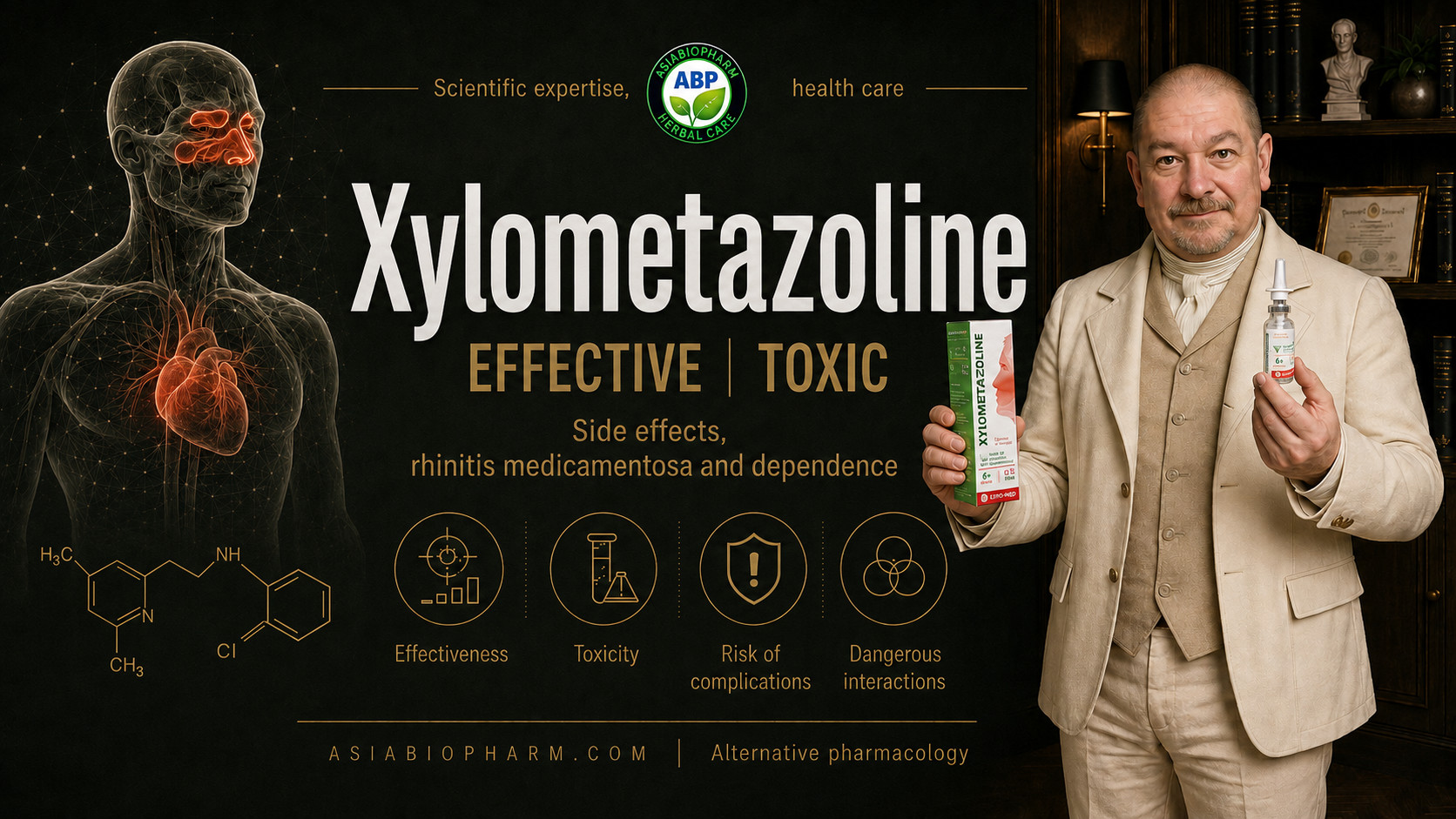
EFFECTIVE | TOXIC
Names under which xylometazoline is available: The international nonproprietary name is xylometazoline; the Latin spelling is xylometazoline. Medicinal products predominantly contain xylometazoline hydrochloride. The main dosage forms are nasal drops and metered-dose nasal sprays at concentrations of 0.05% or 0.1%. Common trade names in different countries include Otrivin, Otrivine, Galazolin, Xymelin, Snoop, Tizin Xylo, Rinostop, Rinomaris, Dlyanos, Olynth, Xylen, Xylometazoline, and other regional generics. Combination products may contain xylometazoline together with dexpanthenol, ipratropium bromide, or an antihistamine component. Using a single-ingredient xylometazoline product together with a combination nasal product may result in unrecognized duplication of xylometazoline. Xylometazoline should not be confused with oxymetazoline, naphazoline, or tetryzoline: these are different substances, although all belong to the group of topical vasoconstrictor α-adrenergic agonists and can cause similar complications.
Why xylometazoline is considered harmless and where the real risk begins: Xylometazoline creates a particularly convincing false sense of safety: after administration, the blood vessels in the nasal mucosa constrict rapidly, swelling decreases, and nasal breathing is restored within minutes for several hours. A person may perceive this as treatment of rhinitis, even though the drug does not eliminate the allergen, viral infection, inflammation of the paranasal sinuses, polyps, a deviated nasal septum, or another cause of nasal obstruction. Once the effect wears off, the swelling returns, and with repeated and prolonged use it may become more severe than it was initially. A cycle develops — “nasal congestion — administration — brief relief — even more pronounced congestion” — which can gradually progress to rhinitis medicamentosa and functional dependence on the nasal spray. The risk increases when the frequency of administration is increased, when an adult-strength concentration is used in a child, when several decongestants are used simultaneously, or when the solution is accidentally swallowed. Systemic absorption through the mucosa is possible, so the drug may affect not only the nose but also the cardiovascular and central nervous systems.
Side effects during the first hours and days of use: Common local reactions include burning, dryness, irritation of the mucosa, sneezing, nasal discomfort, and headache. If the mucosa is damaged, the dose is exceeded, or individual sensitivity is high, nosebleeds and increased rebound swelling after the drug’s effect wears off may occur. Clinically significant systemic reactions are related to α-adrenergic activity and include palpitations, tachycardia, increased blood pressure, dizziness, anxiety, tremor, and sleep disturbances. Paradoxically, especially in young children and after accidental ingestion of the solution, overdose may present not with agitation but with profound drowsiness, bradycardia, decreased body temperature, respiratory depression, and impaired consciousness. Rare life-threatening reactions include severe hypertension, marked cardiac arrhythmias, collapse, coma, and respiratory failure. The first manifestations may develop within minutes or hours after excessive intranasal administration or accidental ingestion.
Side effects with prolonged or repeated use: The main cumulative complication is rhinitis medicamentosa — persistent nasal congestion caused by the vasoconstrictor itself. With regular use, the vascular response becomes weaker, the duration of effect shortens, increasingly frequent administration is required, and marked rebound swelling develops when the next dose is missed. This is not a classic psychoactive substance dependence, but tolerance, physical reliance on the drug, and behavioral dependence can develop: the patient carries the spray at all times, wakes up at night to use it, and becomes anxious when the bottle is not nearby. Prolonged disruption of vascular regulation is accompanied by chronic swelling, hypersecretion, dryness, crusting, bleeding, and damage to the ciliated epithelium. In severe cases, the mucosa becomes pathologically altered, and recovery after discontinuation may take weeks or months. At the same time, the drug masks the underlying cause of nasal obstruction, so allergic rhinitis, chronic rhinosinusitis, nasal polyposis, or an anatomical obstruction may remain undiagnosed. Official product instructions generally limit continuous use to several days; use for more than seven days substantially increases the risk of rebound swelling.
Contraindications and high-risk groups: Xylometazoline is contraindicated in patients with hypersensitivity to the components of the drug, atrophic rhinitis, after transsphenoidal hypophysectomy, and after surgical procedures involving exposure of the dura mater. Uncontrolled use is particularly dangerous in severe arterial hypertension, ischemic heart disease, tachyarrhythmias, advanced atherosclerosis, and other conditions in which additional α-adrenergic vasoconstriction may provoke an increase in blood pressure, ischemia, or cardiac rhythm disturbances. In angle-closure glaucoma, sympathomimetic activity may increase intraocular pressure. In hyperthyroidism, diabetes mellitus, and pheochromocytoma, the response to an adrenergic agonist may be exaggerated and unpredictable. In patients with prostatic hyperplasia, sympathomimetics may worsen difficulty urinating. Young children are particularly sensitive to imidazoline decongestants: even a relatively small amount of solution, if administered incorrectly or swallowed, may cause depression of the central nervous system and respiration. Age restrictions vary depending on the concentration and the specific commercial product, so an adult-strength solution must not be used in a child simply because “these are just ordinary nasal drops.” During pregnancy, xylometazoline is generally not recommended because of its vasoconstrictor effect; during breastfeeding, it should be used only after an individual assessment by a healthcare professional.
Dangerous drug interactions: The combination of xylometazoline with monoamine oxidase inhibitors is contraindicated or strongly discouraged, including for up to fourteen days after discontinuation of these drugs, because sympathomimetic effects may be markedly intensified and blood pressure may rise to dangerous levels. Tricyclic and tetracyclic antidepressants may also enhance the cardiovascular effects of the drug. Concomitant use with pseudoephedrine, phenylephrine, ephedrine, oxymetazoline, naphazoline, and other systemic or topical decongestants increases the risk of tachycardia, hypertension, insomnia, and overdose. Combination with certain antihypertensive medications may make blood pressure control less predictable. Stimulants, large amounts of caffeine, nicotine, and psychoactive substances with sympathomimetic activity may further intensify palpitations, vascular spasm, and anxiety. Alcohol does not form a specific toxic metabolite with xylometazoline, but it may impair dose assessment, worsen dizziness, and contribute to repeated uncontrolled use. Unrecognized duplication is particularly dangerous: a person may use a xylometazoline spray while simultaneously taking a combination cold remedy containing the same ingredient or another adrenergic agonist.
Patient errors: The most common mistake is to use xylometazoline until the runny nose has completely resolved rather than limiting its use to a short period for temporary relief of severe nasal congestion. Because the drug works quickly, the patient may begin shortening the intervals between doses, increasing the number of administrations, and using it prophylactically before sleep or before leaving home. When rebound swelling develops, the worsening is mistakenly interpreted as persistence of the infection or aggravation of the allergy, after which the dose is increased even further. Other typical mistakes include using an adult-strength solution in a child, transferring the drug into an unlabeled bottle, using drops and spray together, taking cold tablets containing sympathomimetics at the same time, and sharing one bottle among several family members. The absence of immediate tachycardia or an increase in blood pressure may be perceived as evidence that the drug is harmless, even though rhinitis medicamentosa develops gradually. Incorrect spray technique and excessive tilting of the head backward increase drainage of the solution into the throat and the likelihood of swallowing it. An abrupt attempt to stop the drug after months or years of use is accompanied by severe rebound congestion, causing the person to return quickly to the previous pattern of use.
Overdose and poisoning: A universal “safe” or toxic dose of xylometazoline for all age groups has not been established: the concentration of the solution, the number of administrations, body weight, age, cardiovascular status, and whether the drug was swallowed all substantially affect the level of risk. In one observational series in children, severe symptoms were not recorded at reported doses below 0.4 mg/kg; however, the authors did not regard this level as guaranteed to be safe, and severe individual reactions to imidazoline drugs may occur at lower doses.
After excessive intranasal administration or ingestion, the initial symptoms may include pallor, sweating, nausea, headache, anxiety, palpitations, and increased blood pressure. The clinical picture may then change, with pronounced drowsiness, miosis, decreased body temperature, bradycardia, hypotension, respiratory depression, impaired consciousness, and coma. This alternation between stimulatory and depressant symptoms is associated with peripheral vasoconstriction, reflex cardiovascular responses, and the central effects of the imidazoline derivative. Unusual drowsiness in a child after exposure to nasal drops is a warning sign, not a reason to simply “let the child sleep.”
There is no specific antidote for xylometazoline. Treatment is supportive and includes monitoring of respiration, consciousness, body temperature, blood pressure, heart rate, and the electrocardiogram. Immediate toxicological and emergency medical care is required in cases of accidental ingestion, mistaken use of an adult-strength concentration in a child, pronounced drowsiness, breathing difficulties, cyanosis, seizures, collapse, severe bradycardia, or impaired consciousness. One should not wait for all symptoms to appear, induce vomiting without medical supervision, or attempt to counteract drowsiness with caffeine or stimulants. The bottle and packaging of the drug should be kept so that the concentration and the estimated amount of substance involved can be determined accurately.
Safe integrative alternative: Xylometazoline relieves nasal congestion quickly, but it acts only as a topical α-adrenergic agonist: it temporarily constricts the blood vessels of the nasal mucosa without eliminating allergic, infectious, or chronic inflammation. An integrative replacement strategy is based not on trying to find another instant vasoconstrictor stimulant, but on reducing inflammation, hypersecretion, allergic reactivity, and persistent swelling without causing rhinitis medicamentosa. The main systemic product is Rhinitis and rhinosinusitis, mixture in LH capsules. The complex contains Solanum indicum, Vitex trifolia, Croton oblongifolius, Blumea balsamifera, and Eleusine indica and is positioned for allergic and vasomotor rhinitis, acute and chronic rhinosinusitis, postnasal drip, and inflammatory diseases of the upper respiratory tract. Its therapeutic rationale is associated with the anti-inflammatory, antiallergic, mucolytic, and antimicrobial effects of its components; however, the clinical efficacy of the finished mixture itself cannot be considered equivalently proven by large comparative studies with xylometazoline.
The main topical component is ABP-153, used intranasally for local action on inflamed and damaged mucosa. Its role is particularly important during withdrawal of the vasoconstrictor, when irritation, dryness, and the inflammatory background need to be reduced without continuing stimulation of α-adrenergic receptors. ABP-153 should not be presented as a direct pharmacodynamic analogue of xylometazoline: it is not expected to restore nasal breathing within a few minutes, but it does not perpetuate the rebound vasodilation mechanism underlying drug dependence on a decongestant.
Kaempferia parviflora is included as an additional anti-inflammatory component in allergic, vasomotor, and hyperreactive phenotypes. Type 2 bronchial asthma, LH capsules is used not for every case of nasal congestion, but when allergic rhinitis is combined with eosinophilic inflammation, bronchial hyperreactivity, cough, or an asthmatic phenotype. This is a pathogenetic adjunct rather than a means of urgently relieving mechanical obstruction.
In chronic edematous-inflammatory conditions, the additional complex “Lymphoblock” is used: Houttuynia cordata, Murdannia loriformis, Ruscus aculeatus, and squalene 1000. Houttuynia and Murdannia primarily provide anti-inflammatory and antioxidant effects, Ruscus is used to reduce venous and tissue congestion, and squalene serves as a membrane-supporting and antioxidant component. The complex is not a rapid decongestant and should not be presented as a means of instantly restoring nasal breathing. Its purpose is to gradually reduce the chronic edematous background as part of the overall regimen. In arterial hypertension, cardiovascular disease, pregnancy, lactation, and concomitant use of medications, the components of the complex require individual assessment.
Complete replacement of xylometazoline is possible in uncomplicated allergic, vasomotor, or medication-induced rhinitis after the cause of nasal congestion has been clarified. In the presence of high fever, severe unilateral pain, purulent discharge, facial swelling, visual impairment, difficulty breathing, polyposis, or suspected anatomical obstruction, a herbal regimen must not replace diagnostic evaluation and necessary specialist treatment.
Actual effectiveness of xylometazoline: The drug genuinely reduces swelling of the nasal mucosa effectively and rapidly in acute rhinitis, allergy, and rhinosinusitis. Its advantage is the speed and predictability of its short-term decongestant effect. A contemporary review confirms the high efficacy of xylometazoline and the absence of convincing evidence of rhinitis medicamentosa when it is used briefly at recommended doses. The problem begins not with a single dose, but with repeated use beyond the permitted duration and with attempts to treat a disease with a vasoconstrictor spray that only temporarily masks it.
Xylometazoline does not treat viral infection, allergy, chronic rhinosinusitis, polyps, hypertrophy of the nasal turbinates, or a deviated nasal septum. It only temporarily reduces vascular engorgement of the mucosa. A common medical error is to recommend repeated courses without identifying the cause of persistent nasal congestion. Other errors include failing to limit the duration of use, ignoring hypertension and tachyarrhythmias, prescribing several decongestants simultaneously, and failing to establish a withdrawal plan for a patient who can no longer breathe without the spray. Prolonged use is associated with a shorter duration of effect, tolerance, and worsening rebound swelling.
Safety monitoring during treatment: During short-term use, the frequency of administration, duration of treatment, condition of the nasal mucosa, and, in patients with cardiovascular disease, blood pressure and heart rate should be monitored. Burning, dryness, crusting, bleeding, and the need to use the spray increasingly often indicate mucosal damage and the development of rhinitis medicamentosa. If nasal congestion persists after a short course has ended, evaluation for allergic rhinitis, rhinosinusitis, polyposis, turbinate hypertrophy, and anatomical obstruction is required rather than another bottle of decongestant.
Immediate medical attention is required in cases of pronounced drowsiness, confusion, breathing difficulties, cyanosis, fainting, severe bradycardia, severe tachycardia, or a marked increase or decrease in blood pressure. Such symptoms are particularly dangerous in a child after accidental ingestion or use of an adult-strength concentration. Delaying treatment may lead to depression of the central nervous system and respiration.
Proper discontinuation of xylometazoline: After a short course, the drug can be stopped immediately — no special gradual dose reduction is required. After prolonged use, abrupt discontinuation is safer than continuing the dependence, but it is often accompanied by pronounced rebound congestion. The first few days are usually the most difficult; improvement in the subjective sensation of nasal congestion may take several days, while recovery of the inflamed and swollen mucosa may take one to two weeks or longer. After months or years of use, complete restoration of vascular regulation in the nasal mucosa may take considerably longer.
Discontinuation may be performed all at once or gradually — first in one nostril and then in the other. The gradual approach may be psychologically easier to tolerate, but it prolongs exposure of the mucosa on the other side to the drug. Xylometazoline must not be replaced with oxymetazoline, naphazoline, or another α-adrenergic agonist: this merely changes the bottle rather than stopping the mechanism of rhinitis medicamentosa. At the same time, the underlying cause of nasal congestion should be treated, and topical agents that do not cause adrenergic vasoconstriction should be used.
Rational approach to treatment: Xylometazoline is justified when nasal breathing needs to be restored rapidly and temporarily in the presence of pronounced swelling. It is effective as a symptomatic medication but becomes toxicologically and clinically problematic when used regularly, prophylactically, or instead of proper diagnostic evaluation. In chronic, allergic, vasomotor, or medication-induced rhinitis, preference should be given to a regimen targeting inflammation, allergic reactivity, the condition of the mucosa, and persistent swelling: Rhinitis and rhinosinusitis LH, ABP-153, Kaempferia parviflora, for the appropriate phenotype — Type 2 bronchial asthma LH, and for chronic swelling — the “Lymphoblock” complex.
The goal of replacement is not to declare any herbal product an instant equivalent of a vasoconstrictor spray, but to interrupt the vicious cycle of vasoconstriction and rebound swelling, restore the mucosa, and address the cause of chronic nasal congestion. Xylometazoline remains a drug for short-term symptomatic relief, but it should not become an everyday means of being able to breathe.
If you have questions about the topic of this article, you can ask a clinical pharmacologist in the comments or schedule an appointment using the following link: https://asiabiopharm.com/konsultaciii/
0 comments