
What Is Integrative Medicine
What Is Integrative Medicine
The main goal of integrative medicine is, whenever possible, to identify the cause of a disease, that is, its etiology, determine the mechanisms that sustain the pathological process, and target those mechanisms directly. A symptom is viewed not as a disease in itself, but as a sign of an underlying disorder that needs to be investigated.
With a standard symptomatic approach, treatment is often aimed primarily at reducing pain, inflammation, spasms, anxiety, insomnia, or other manifestations of disease. This may be necessary, especially in acute conditions, but eliminating a symptom does not always mean eliminating the cause of the disease. An integrative approach combines symptom control with the search for etiological, metabolic, inflammatory, infectious, hormonal, nutritional, and psychological factors.
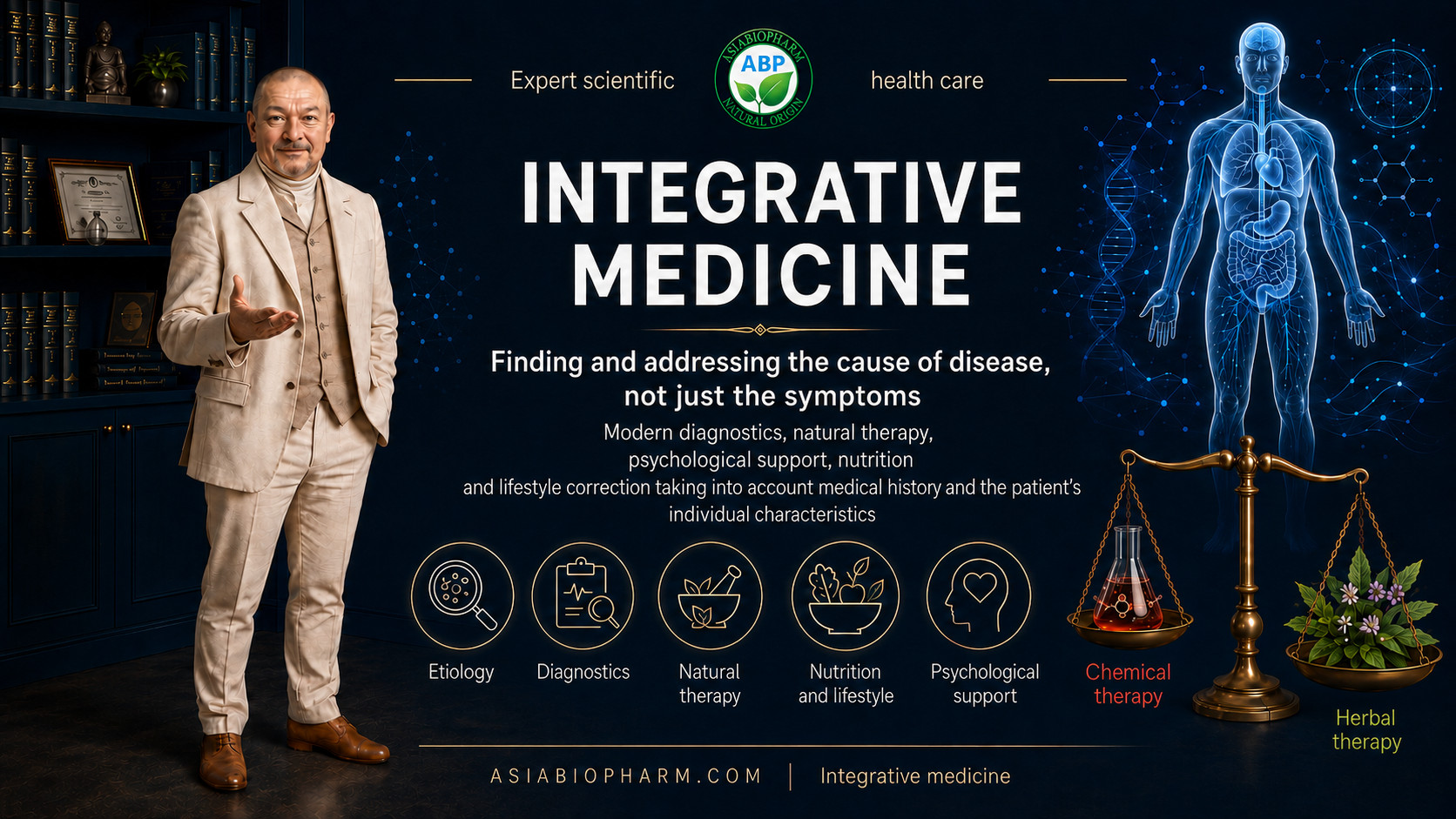
Integrative medicine is a comprehensive approach that combines modern diagnostics, herbal therapy, psychological support, dietary adjustments, and lifestyle modification, taking into account the patient's medical history and individual characteristics.
Identifying the Cause of Disease
Similar complaints in different patients may have completely different causes. For example, chronic fatigue may be associated with anemia, thyroid dysfunction, chronic infection, inflammation, nutrient deficiencies, sleep disorders, adverse effects of medications, or prolonged psychological stress.
Therefore, treatment should not be prescribed solely on the basis of a single symptom or the name of a diagnosis. The physician evaluates the history and progression of the disease, examination and test results, accompanying disorders, diet, lifestyle, medications being taken, and the body's response to previous treatment.
If the cause cannot be completely eliminated, therapy is directed at the main mechanisms of the disease, reducing its activity, preventing complications, and restoring impaired body functions.
Modern Diagnostics as the Basis of Treatment
Integrative medicine does not reject laboratory tests, instrumental diagnostic methods, or the achievements of modern pharmacology. On the contrary, without an accurate examination, it is impossible to determine the origin of symptoms and safely select appropriate treatment.
Blood tests and analyses of other biological materials, ultrasound, radiological, endoscopic, and other diagnostic methods are used. When necessary, synthetic medications, surgical treatment, and emergency medical care are also used.
The difference lies not in rejecting modern medicine, but in broadening the therapeutic approach and striving to address not only the manifestations of disease, but also its causes and mechanisms of development.
Medicines of Natural Origin
Medicines of natural origin have a special place in integrative therapy. They may be used independently or together with medicines from modern pharmacology, taking into account compatibility, indications, and contraindications.
Herbal medicines are produced from medicinal plants, dry and liquid extracts, infusions, oils, and individual biologically active compounds. They are used to influence inflammation, metabolism, digestion, and the nervous, endocrine, immune, cardiovascular, and other systems of the body.
Mineral preparations contain natural minerals, salts, macroelements, and trace elements. They are used in cases of confirmed deficiencies, disorders of mineral metabolism, and conditions associated with a lack of substances required by the body.
Medicines of animal origin are referred to as zoogenic preparations. They may contain substances obtained from animal tissues, organs, secretions, or products of animal biological activity.
Preparations obtained from insects are classified as entomological preparations. One of the best-known areas is apitherapy, which uses propolis, bee bread, royal jelly, bee venom, and other bee products.
Preparations obtained from fish, mollusks, crustaceans, sea urchins, sponges, and other aquatic organisms are classified as products of marine origin, or preparations derived from marine biological resources. They may contain proteins, peptides, lipids, polysaccharides, minerals, and other biologically active substances.
Why Natural Does Not Mean Harmless
The plant, mineral, or zoogenic origin of a preparation does not guarantee that it is completely safe. Natural substances have genuine pharmacological activity and may therefore have contraindications, cause adverse effects, and interact with other medications.
Some plants may alter blood clotting, while others may affect blood pressure, glucose levels, or the function of the liver, kidneys, or nervous system. Mineral substances can also cause toxic reactions when present in excessive amounts.
Therefore, integrative medicine is not uncontrolled self-treatment with herbs. It involves the evidence-based selection of preparations, calculation of doses, monitoring of tolerability, and evaluation of treatment outcomes.
Nutrition and Lifestyle
Nutrition can support health or contribute to the persistence of inflammation, metabolic disorders, and deficiencies. Therefore, diet is evaluated as one of the possible factors involved in the development and persistence of disease.
Dietary adjustments are made according to the diagnosis, food tolerance, digestive function, metabolism, and the body's needs. At the same time, sleep, physical activity, work and rest patterns, alcohol consumption, smoking, and other lifestyle factors are assessed.
The Patient's Psychological State
Psychological support is an important part of integrative medicine. Chronic stress, anxiety, emotional exhaustion, and sleep disorders may affect the nervous, endocrine, immune, and cardiovascular systems, intensify pain, and slow recovery.
This does not mean that a physical illness is considered imaginary or exclusively psychological. Psychological state is regarded as one of the real factors that may contribute to the development and course of a disease.
Individual Treatment Program
Integrative therapy is not based on a “one medicine for everyone” principle. Even patients with the same diagnosis may differ in the causes of their disease, accompanying disorders, medication tolerance, and rate of recovery.
Therefore, the treatment program is developed taking into account the patient's medical history, diagnostic results, age, metabolic characteristics, diet, psychological state, and previously received therapy.
Integrative medicine involves identifying and, whenever possible, eliminating the causes of disease, targeting the mechanisms of its development, and restoring body functions through modern diagnostics, herbal, mineral, zoogenic, and marine-derived preparations, as well as adjustments to nutrition, lifestyle, and the patient's psychological state.
You can ask questions and receive a consultation at the following link: Health and Psychology Consultations — support, diagnostics, and specialist recommendations
0 comments