
Viral Pharyngitis — Symptoms, Self-Diagnosis and Integrative Treatment
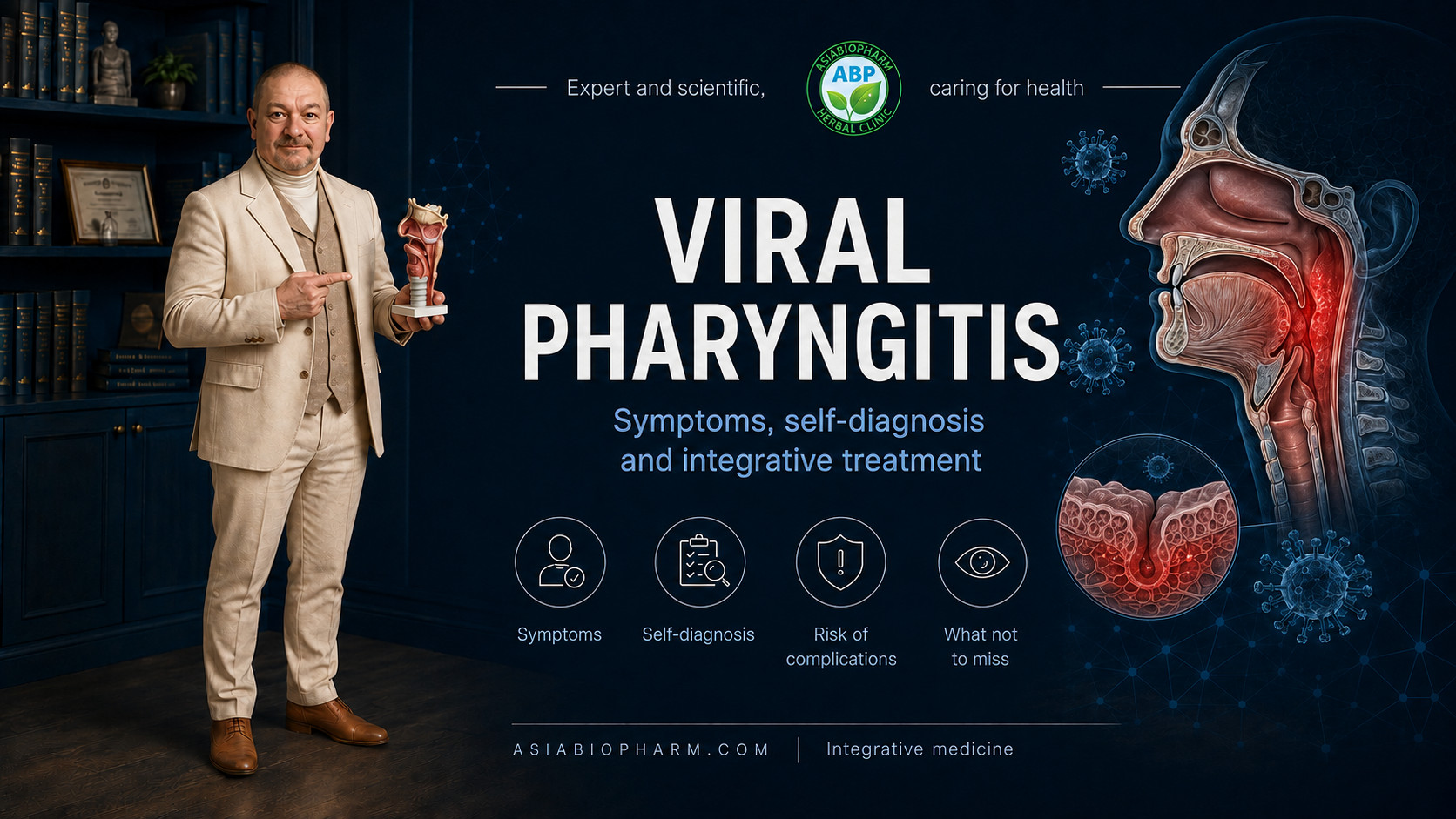
Viral pharyngitis is an acute inflammation of the pharyngeal mucosa that most commonly develops with rhinovirus, adenovirus, coronavirus, influenza, parainfluenza, enterovirus and other respiratory infections. Viruses are transmitted mainly through droplets of saliva and nasal secretions, contaminated hands and objects, after which they infect the epithelium of the nasopharynx and oropharynx. The first signs are a scratchy, dry, raw or sore throat, with pain that becomes worse when swallowing. Redness of the posterior pharyngeal wall, moderate enlargement of the tonsils, dry cough, hoarseness, runny nose, nasal congestion, postnasal drip, watery eyes, headache, weakness, body aches and fever may occur. Cough, runny nose and hoarseness are more suggestive of a viral cause, but do not confirm it definitively. In children, fever and systemic symptoms may be more pronounced; refusal to eat, nausea, loose stools or small mouth ulcers may sometimes occur. In older adults and patients with immunodeficiency, fever may remain low even when the illness is severe. Uncomplicated viral pharyngitis usually improves noticeably within a week, although cough, dryness and throat irritation may persist longer.
How to determine whether you have viral pharyngitis
Viral pharyngitis can be suspected when a sore throat develops gradually or rapidly together with a runny nose, cough, hoarseness, nasal congestion, conjunctivitis or general symptoms of an acute respiratory viral infection. In good lighting, only the visible part of the oropharynx may be examined: diffuse redness without marked unilateral distortion is more consistent with viral inflammation. The presence of an exudate alone does not prove that the infection is bacterial: it may occur with adenovirus infection, infectious mononucleosis and other conditions. Self-diagnosis can only help estimate the likelihood of a particular cause and does not replace medical evaluation. If sudden severe throat pain, high fever, tender cervical lymph nodes and tonsillar exudates predominate in the absence of cough and runny nose, medical examination and streptococcal testing are required. With prolonged weakness or marked enlargement of the lymph nodes, liver or spleen, infectious mononucleosis should be ruled out. Burning after meals, a sour taste and nighttime coughing may suggest reflux; recurrent throat irritation, itching, sneezing and clear nasal discharge may indicate allergy. To clarify the cause, a doctor may perform an examination, palpate the lymph nodes, use a rapid streptococcal test or throat culture and, when indicated, order tests for specific viral infections and a complete blood count.
Red flags
Urgent medical attention is required in the event of difficult or noisy breathing, a feeling that the throat is closing, bluish discoloration of the lips or reduced oxygen saturation: these signs may accompany swelling of the airways. Inability to swallow water or one’s own saliva, drooling, increasing unilateral pain, asymmetry of the throat, displacement of the uvula, a nasal or muffled voice, or inability to open the mouth widely require urgent examination by an otolaryngologist — a peritonsillar or retropharyngeal abscess must be excluded. Marked neck swelling, painful neck stiffness, severe headache, confusion, seizures, an unusual rash, coughing up blood and rapid deterioration are dangerous signs. Signs of dehydration — infrequent urination, dark urine, a dry tongue, dizziness and drowsiness — are especially dangerous in children and older adults. Medical examination is required for high or persistently elevated fever, repeated deterioration after temporary improvement, lack of positive change for several days, or throat pain lasting longer than a week. Pregnant women, young children, patients over 65 years of age, people with immunodeficiency, cancer, decompensated diabetes or severe heart, lung, liver or kidney disease should seek medical care earlier.
Initial self-care
During the first few days, adequate sleep, voice rest and temporary avoidance of intense exercise, alcohol, smoking and vaping are recommended. The room should preferably be ventilated regularly, with a temperature of approximately 18–22 °C and relative humidity of 40–60%. Air that is too dry worsens cough and mucosal injury, whereas excessive humidity promotes mold growth. Food should be soft and warm: suitable options include soups, porridge, stewed vegetables, yogurt if well tolerated, omelets, fish and fruit purées. Very hot, spicy, acidic, hard and excessively salty foods should temporarily be avoided. With reflux, late meals, coffee, chocolate, mint and fatty foods are undesirable.
In the absence of restrictions related to heart or kidney disease, the approximate total daily fluid intake is about 30 ml per kilogram of body weight, including beverages and liquid foods. It is more convenient to drink small portions of 150–250 ml every 1–2 hours. Water, weak tea, unsweetened compote or oral rehydration solution in the presence of sweating and poor food intake are appropriate. Drinks should be comfortably warm rather than scalding. In heart or kidney failure, the acceptable fluid intake should be determined by a doctor; people with diabetes should avoid sugary drinks.
For gargling, half a teaspoon of salt may be dissolved in approximately 250 ml of warm boiled water, and the throat may be gargled for 20–30 seconds several times during the day without swallowing the solution. This method is not suitable for children who cannot gargle safely. More concentrated saline solutions, alcohol, kerosene, vinegar, undiluted iodine, hydrogen peroxide and essential oils can burn and excessively dry the mucosa. In the presence of rhinitis, the nose may be irrigated with a ready-made isotonic saline solution; unboiled tap water must not be used to prepare a solution at home. Steam inhalation over a pot is not recommended because of the risk of burns, and antibiotics or hormones must not be administered through a nebulizer without a doctor’s prescription. Temperature, the ability to drink and swallow, urine output, breathing pattern and changes in pain should be monitored daily.
Course of the illness and possible complications
After infection, there is usually a short incubation period, followed by throat irritation, weakness and nasal symptoms. Throat pain and general symptoms are usually most pronounced during the first few days, after which gradual improvement begins in uncomplicated cases. Lack of improvement, a renewed rise in temperature or increasing unilateral pain requires reconsideration of the diagnosis. Possible complications include secondary bacterial tonsillopharyngitis, sinusitis or otitis media, spread of inflammation to the larynx, trachea and bronchi and, much less commonly, abscess formation and airway obstruction. Recurrent episodes may be associated not only with infections but also with chronic rhinitis, postnasal drip, allergy, gastroesophageal reflux, smoking, dry air, mouth breathing, occupational voice strain and impaired local mucosal defense. “Chronic viral pharyngitis” should not be diagnosed independently: persistent throat irritation requires investigation for another cause.
Integrative treatment of viral pharyngitis
ABP-153 oil infusion plays a central role in local therapy because the basic formula without DMSO is intended primarily for mucous membranes and for inflammatory processes involving cavities and superficial tissues. The infusion is applied with a swab to the inflamed mucosa of the accessible part of the oropharynx. This method provides direct contact between the composition and the inflamed area and combines local anti-inflammatory, analgesic, mucoprotective and reparative effects.
ABP-153 contains Andrographis paniculata, Houttuynia cordata, turmeric, licorice and aromatic plant components. When rhinitis, nasal congestion or postnasal drip is also present, the preparation is additionally used intranasally.
A soaked swab must not be inserted deeper than the area that can be clearly seen: this may trigger the gag reflex, injure the mucosa or result in aspiration. Self-application is unsuitable for young children, patients with impaired swallowing, reduced consciousness or marked pharyngeal swelling. Use should be stopped if severe burning, increasing swelling, hoarseness or impaired breathing occurs. The basic ABP-153 formulation, rather than the penetrating ABP-153D version containing DMSO, is used on the oropharyngeal mucosa.
Andrographis paniculata is considered the main systemic phytotherapeutic component for acute respiratory infection accompanied by sore throat. Its clinical evidence base for uncomplicated upper respiratory tract infections is stronger than that of most individual herbal extracts in this group. Andrographis may reduce the severity of pain, the inflammatory response and general symptoms.
Possible adverse effects include dyspepsia, abdominal pain, diarrhea, headache, skin rash and systemic allergic reactions. Andrographis should not be used during pregnancy. Caution is required in autoimmune diseases and with simultaneous use of immunosuppressants, anticoagulants, antiplatelet agents, antihypertensive medicines and glucose-lowering drugs. When a separate extract is combined with ABP-153, duplication of Andrographis paniculata should be taken into account.
Rhinacanthus nasutus may be included as an additional systemic component with an antiviral focus. Rhinacanthins and other compounds found in the plant have demonstrated laboratory activity against certain respiratory viruses and enteroviruses. This makes Rhinacanthus a pharmacologically justified component of an integrative regimen, but not a clinically proven treatment capable of completely curing viral pharyngitis.
Caution with Rhinacanthus nasutus is necessary during pregnancy and breastfeeding, in the presence of individual allergy or liver disease, and in patients receiving complex multidrug pharmacotherapy. If information about compatibility with medicines already being used is insufficient, Rhinacanthus should not be added automatically.
The “Cough and Hoarseness” bolus is used as a local slow-dissolving remedy for dry cough, hoarseness and irritation of the laryngopharynx. Emblica, licorice and honey provide prolonged contact with the mucosa, reducing dryness, soreness and the frequency of nonproductive cough. It is a more targeted option for pharyngitis and hoarseness than a bronchopulmonary bolus intended for smokers.
Boluses are unsuitable for young children and patients with impaired swallowing because of the risk of choking and aspiration. Caution is required in diabetes and in people allergic to honey. With significant systemic exposure, licorice may increase blood pressure, cause sodium retention, edema and reduced potassium levels. The risk increases when it is combined with diuretics, systemic glucocorticosteroids, digoxin and certain antiarrhythmic drugs.
Althaea officinalis is used as a mucoprotective agent for dryness, soreness and painful swallowing. Its mucilaginous polysaccharides coat the irritated epithelium and reduce its mechanical sensitivity. Althaea is a symptomatic and barrier-forming remedy rather than a direct antiviral agent.
The coating substances in Althaea may slow the absorption of medicines taken at the same time. It should therefore be separated in time from antiviral drugs, antibiotics when bacterial infection develops, and other medicines for which stable bioavailability is particularly important.
Pulmonaria officinalis may be used as an additional remedy for mucosal dryness, throat irritation, hoarseness and dry cough. Its therapeutic purpose is similar to that of Althaea, so simultaneous use of both plants is usually unnecessary. The choice depends on tolerability, the severity of cough and the composition of the rest of the regimen.
Propolis 3800 is considered an additional systemic agent with anti-inflammatory and immunomodulatory potential. Results obtained from studies of topical propolis sprays and solutions cannot be fully extrapolated to an oral formulation, so its role in this regimen is supportive.
The main contraindications are allergy to propolis, honey, pollen, plant resins and other bee products. Itching, urticaria, mucosal swelling, bronchospasm and anaphylactic reactions may occur. In patients with a pronounced allergic phenotype of bronchial asthma, propolis should not be used without prior assessment of tolerability.
In the presence of fever, chills, body aches and general intoxication, Antipyretic Compound may be used. When inflammatory pain and mucosal swelling predominate, Five Root Compound may be more appropriate.
These two formulations should not automatically be taken at the same time. The choice is determined by the predominant syndrome, the composition of the formulas, contraindications and the risk of duplication of anti-inflammatory components. Persistent high fever, the development of shortness of breath, unilateral pharyngeal swelling or difficulty opening the mouth requires medical evaluation and should not be masked by antipyretic therapy.
When pharyngitis is accompanied by itching in the nose and throat, frequent sneezing, clear discharge and other manifestations of allergic rhinitis, Allergy Mixture Capsules may be considered. The formulation already contains Andrographis paniculata and Murdannia loriformis, so separate extracts of Andrographis and Murdannia should not be added simultaneously unless there is an independent clinical reason to do so.
Houttuynia cordata may be used as an additional systemic anti-inflammatory component when the nasopharynx and lower respiratory tract are both involved, secretion is pronounced, or post-infectious inflammation is present. When it is used together with ABP-153, it should be remembered that Houttuynia cordata is already included in the oil infusion, although local and systemic exposure are not equivalent.
Houttuynia may cause dyspepsia, increased urination and allergic reactions. Caution is necessary in decompensated liver and kidney disease, active autoimmune disease and when it is combined with diuretics or immunosuppressants.
Acanthus ebracteatus may be considered when inflammation of the pharynx is accompanied by thick sputum and productive cough. In isolated viral pharyngitis without bronchial symptoms, it is not one of the main components of the regimen.
Illicium verum may be used as an additional component for cough and tracheal irritation. The presence of shikimic acid does not mean that the plant acts in the same way as oseltamivir. Reliable botanical identification of the raw material is necessary, and contamination with toxic Japanese star anise, Illicium anisatum, must be excluded.
An expanded anti-inflammatory herbal block may include Forsythia suspensa, Lonicera japonica and Scutellaria baicalensis. Such a combination is pharmacologically justified when inflammation of the upper respiratory tract is pronounced, but it is an extension rather than a mandatory addition to the basic regimen.
Results from studies of ready-made multicomponent formulas cannot automatically be attributed to each individual extract. Scutellaria requires caution in hypotension, liver disease and with the use of sedatives or anticoagulants. Simultaneously including Forsythia, Lonicera, Scutellaria, Andrographis, Houttuynia and Rhinacanthus without defining a separate purpose for each component creates excessive polyphytotherapy.
The advantage of a properly selected integrative program lies in combining direct local treatment of the mucosa, systemic phytotherapeutic support and correction of the predominant symptoms without unjustified use of antibiotics, systemic glucocorticosteroids and NSAIDs. This may reduce the risk of drug-related injury to the gastrointestinal tract, liver, kidneys and cardiovascular system.
Plant origin does not eliminate the possibility of allergy, drug interactions, duplication of components or the effects of licorice on blood pressure, edema and potassium concentration. The regimen should therefore be constructed according to the predominant symptoms, the identified pathogen, the condition of the liver, kidneys and cardiovascular system, the allergy history and medicines already being used.
What you need to know about standard protocols in modern medicine
The basis of treatment for confirmed viral pharyngitis is symptomatic therapy. Paracetamol is used to reduce pain and fever, but it does not act directly on the virus and does not shorten the duration of infection. It should not be taken by people who are allergic to it, and particular caution is required in liver disease, regular alcohol consumption, fasting, malnutrition and simultaneous use of several combination medicines.
The main danger of paracetamol is dose-dependent liver necrosis. Overdose, including inadvertent accumulation from several medicines containing paracetamol, may lead to acute liver failure, impaired blood clotting, encephalopathy, coma, the need for liver transplantation and death. The danger is increased by chronic alcohol use, inadequate nutrition, low body weight and simultaneous use of hepatotoxic medicines. Severe poisoning may produce few obvious symptoms during the first hours, so waiting for pain in the liver area is dangerous.
Ibuprofen and other nonsteroidal anti-inflammatory drugs reduce pain, swelling and fever by suppressing prostaglandin synthesis, but they can damage the mucosa of the stomach and duodenum. Possible complications include erosions, ulcers, occult or massive gastrointestinal bleeding, perforation of the stomach or intestinal wall and hemorrhagic shock. Severe bleeding may sometimes develop without preceding pain.
NSAIDs reduce renal blood flow, promote sodium and fluid retention, raise blood pressure and may cause edema, acute kidney injury and decompensation of heart failure. They may provoke bronchospasm, anaphylaxis, severe skin reactions, liver injury and thrombotic cardiovascular complications. The risk is particularly high with dehydration, fever, older age, chronic kidney disease and simultaneous use of diuretics, ACE inhibitors or angiotensin receptor blockers.
Ibuprofen and other NSAIDs should not be started without medical supervision in patients with an active ulcer, gastrointestinal bleeding, severe kidney or heart failure, NSAID-induced bronchospasm, coagulation disorders or in late pregnancy. Combination with anticoagulants, antiplatelet agents, systemic glucocorticosteroids and certain antidepressants sharply increases the risk of bleeding.
Acetylsalicylic acid is not used in children and adolescents with acute viral infection because of the risk of Reye syndrome. This rare but potentially fatal complication is associated with acute liver injury, cerebral edema, repeated vomiting, impaired consciousness, seizures, coma and possible death.
Topical lozenges and sprays containing benzydamine, flurbiprofen, lidocaine, benzocaine, chlorhexidine and other anti-inflammatory, anesthetic or antiseptic components may temporarily reduce pain but do not eliminate the viral infection. Burning, excessive dryness, numbness of the tongue and throat, altered taste, contact dermatitis, mucosal swelling and systemic allergic reactions may occur.
Local anesthetics may reduce pharyngeal sensation and weaken the protective swallowing reflex, increasing the risk of choking and aspiration of food or liquid. In rare cases, benzocaine causes methemoglobinemia with bluish skin discoloration, shortness of breath, weakness, tachycardia, hypoxia and impaired consciousness. Lozenges are contraindicated in young children because of the risk of aspiration into the airways. Sprays should not be used without proper control in the presence of marked swelling, impaired swallowing or a tendency to laryngospasm.
Nasal vasoconstrictors containing oxymetazoline, xylometazoline or naphazoline may temporarily reduce nasal congestion when rhinitis is also present, but they do not affect pharyngitis. Frequent or prolonged use causes mucosal ischemia, dryness, crusting, bleeding, tachyphylaxis and rhinitis medicamentosa. After the medicine is discontinued, swelling becomes more severe than it was initially, leading to dependence on repeated administration.
Systemic effects of nasal decongestants include tachycardia, arrhythmia, increased blood pressure, anxiety, tremor and insomnia. Particular caution is required in uncontrolled hypertension, ischemic heart disease, tachyarrhythmia, angle-closure glaucoma, hyperthyroidism, pregnancy and young children. Overdose in a child may cause depressed consciousness, impaired breathing, bradycardia and dangerous fluctuations in blood pressure.
Antibiotics do not act on viruses and do not shorten the duration of ordinary viral pharyngitis. They are prescribed only after confirmation or when there is a high clinical probability of a bacterial complication. Unjustified use may cause nausea, diarrhea, candidiasis, contact or systemic allergy, anaphylaxis, drug-related liver and kidney injury, suppression of blood formation and antibiotic-associated colitis.
Clindamycin, cephalosporins, amoxicillin with clavulanate and certain other antibiotics may trigger Clostridioides difficile infection with profuse diarrhea, dehydration, toxic megacolon, intestinal perforation, sepsis and death. Repeated unjustified treatment disrupts the normal microbiota and promotes the development of resistant bacteria, which may make the antibiotic ineffective during a later infection that is genuinely dangerous.
Systemic glucocorticosteroids are not a routine self-treatment for viral pharyngitis. They may rapidly reduce pain and swelling while simultaneously suppressing the antiviral immune response and masking secondary bacterial infection, formation of a peritonsillar abscess or another complication.
Even short-term use of systemic corticosteroids may cause hyperglycemia, increased blood pressure, fluid retention, insomnia, anxiety, irritability, psychosis, dyspepsia and increased susceptibility to infection. Repeated courses increase the risk of ulcerative and hemorrhagic gastrointestinal injury, steroid-induced diabetes, osteoporosis, cataracts, glaucoma, adrenal suppression and severe withdrawal syndrome.
Specific antiviral medicines are considered only when an infection for which an appropriate treatment exists has been confirmed. In influenza, neuraminidase inhibitors or other anti-influenza medicines may be used; possible adverse effects include nausea, vomiting, headache, neuropsychiatric reactions and rare severe skin complications. In COVID-19, certain antiviral regimens have numerous contraindications and drug interactions, particularly with antiarrhythmic agents, anticoagulants, anticonvulsants, statins, immunosuppressants and some psychotropic medicines. Self-prescribing such treatment without identifying the pathogen and reviewing the complete medication regimen is dangerous.
No single reliable percentage of complete recovery and absence of recurrence over two years has been established for all forms of viral pharyngitis. The outcome depends on the specific virus, immune system status, age, comorbidities, secondary bacterial infection and involvement of the lower respiratory tract.
Simultaneous use of paracetamol, NSAIDs, local anesthetics, vasoconstrictors, antibiotics and systemic glucocorticosteroids may create a combined burden on the liver, kidneys, gastrointestinal tract, cardiovascular, nervous, immune and hematopoietic systems, mask complications and provoke bleeding, drug-induced hepatitis, kidney failure, arrhythmia, dysbiosis and the development of resistant microflora. Alternative integrative approaches based on rationally selected herbal formulas can address inflammation, pain, swelling, cough and mucosal recovery and usually do not produce the same degree of aggressive systemic injury associated with unjustified or prolonged combined use of chemically synthesized medicines.
Why dosages and treatment duration are not specified
The same sore throat in different people may be associated with different viruses, stages of illness, degrees of inflammation and risks of complications. Selecting a dosage and duration of treatment requires assessment of how long the illness has lasted, body temperature, severity of pain, ability to swallow, airway status, the presence of rhinitis, cough, allergy, reflux and bacterial complications. Age, body weight, pregnancy, chronic liver, kidney, heart, vascular, neurological, endocrine and immune disorders, as well as chemical and herbal medicines already being used, must also be taken into account. A universal regimen may be insufficient or, conversely, excessive and dangerous. This article therefore describes therapeutic approaches but does not replace an individualized clinical and pharmacological assessment. If necessary, you may ask a short question in the comments to this article, while more complex cases can be discussed during a consultation with a clinical pharmacologist specializing in integrative medicine at https://asiabiopharm.com/konsultaciii.
0 comments