
Triamcinolone — How Dangerous It Is, Side Effects and Withdrawal Syndrome
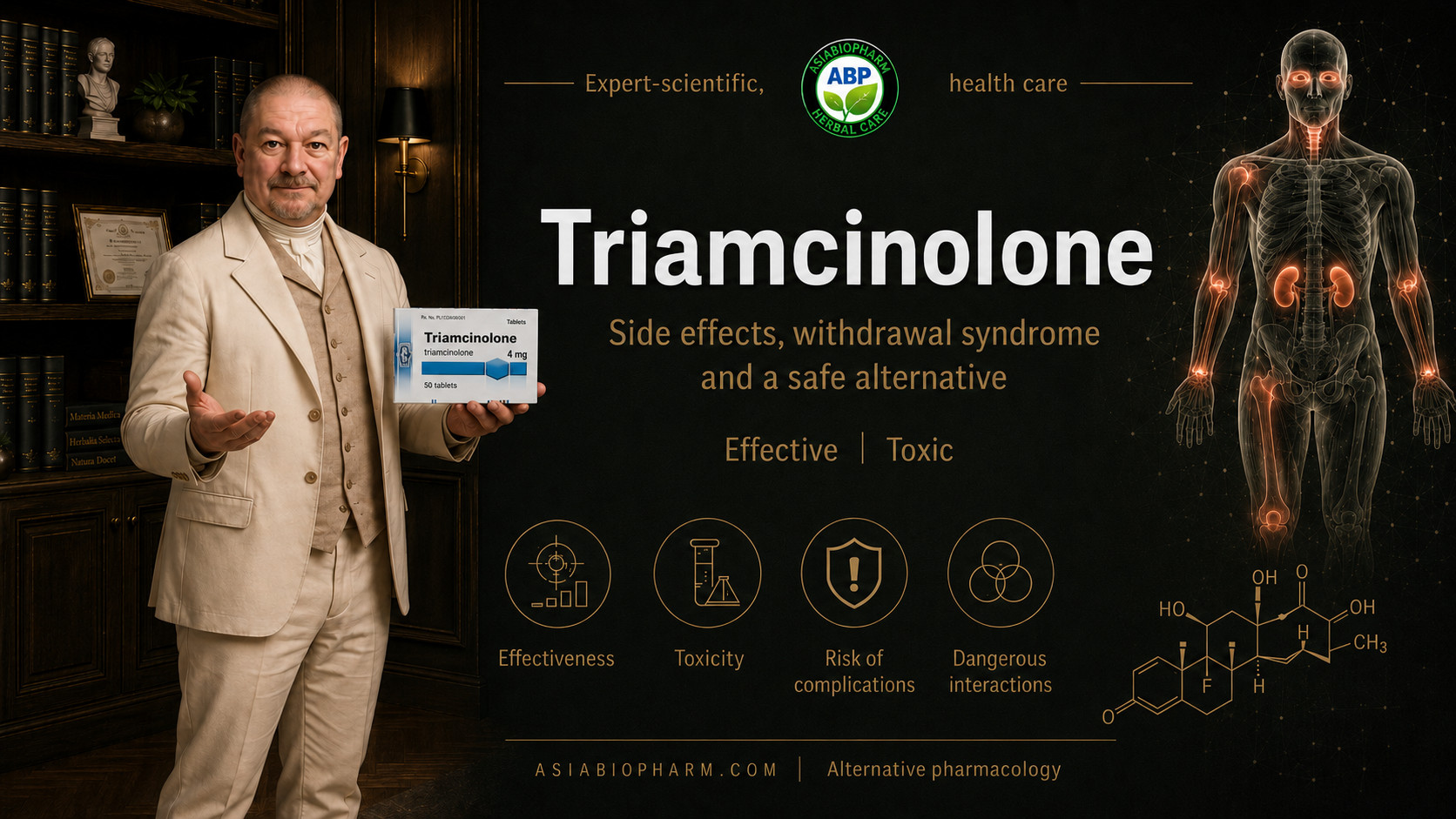
EFFECTIVE | TOXIC
What Names Triamcinolone Is Known By
The international nonproprietary name of the drug is triamcinolone; its Latin name is Triamcinolone. Medicinal products more commonly contain triamcinolone acetonide, which has a pronounced and prolonged glucocorticoid effect. In some countries, triamcinolone hexacetonide is also used for intra-articular administration. Instructions, medical records, and search queries may contain terms such as “triamcinolone,” “triamcinolone acetonide,” “triamcinolone ointment,” “triamcinolone cream,” “triamcinolone injections,” “triamcinolone suspension,” and “triamcinolone nasal spray.”
The drug is available as a cream, ointment, lotion, aerosol, nasal spray, dental adhesive paste, tablets, and suspensions for intramuscular, intra-articular, and intradermal administration. Common trade names include Kenalog, Kenalog-10, Kenalog-40, Kenalog-80, Polcortolon, Nasacort, Adcortyl, and Aristocort. The list of registered products and available dosage forms varies by country.
Triamcinolone acetonide is also contained in combination topical products with nystatin, neomycin, gramicidin, and other antimicrobial components. A patient may perceive such a product simply as an “antifungal ointment” or “antibacterial cream” and fail to take into account the glucocorticoid it contains. Simultaneous use of a combination ointment, a separate cream, a nasal spray, and an injectable formulation creates a hidden cumulative hormonal exposure.
Why Triamcinolone Is Considered Harmless and Where the Real Risk Begins
Triamcinolone rapidly reduces itching, redness, pain, swelling, and other visible manifestations of inflammation. It is precisely this rapid action that creates the false impression that the drug has eliminated the disease. In reality, it mainly suppresses the inflammatory and immune response, but it does not destroy bacteria, fungi, or viruses, eliminate an allergen, correct mechanical joint damage, or remove the underlying cause of an autoimmune process.
Against the background of temporary improvement, a fungal, bacterial, or herpetic infection may continue to develop because the glucocorticoid weakens local immune defense and partially masks symptoms. Redness and itching decrease, but the pathogen remains. When the effect of the drug weakens, the infectious process may become apparent over a larger area or in a more severe form. Systemic corticosteroids also increase susceptibility to new infections, can reactivate latent infections, and may make timely recognition of complications more difficult.
A topical formulation does not remain exclusively on the surface of the skin. Triamcinolone can be absorbed systemically, especially when applied over a large area, to damaged skin, skin folds, mucous membranes, or under an occlusive dressing. Prolonged use and occlusion increase the risk of hypothalamic-pituitary-adrenal axis suppression, hyperglycemia, and Cushing syndrome.
The injectable suspension has a particularly prolonged effect. After a single intramuscular dose of 60–100 mg, adrenal suppression may begin within 24–48 hours and persist for approximately 30–40 days. Once a depot dose has been administered, it cannot be removed or rapidly discontinued if an adverse reaction develops.
Side Effects With Short-Term Use
During the first hours and days after systemic or injectable administration, possible effects include increased blood glucose, sodium and fluid retention, edema, elevated blood pressure, decreased potassium concentration, increased appetite, insomnia, agitation, irritability, anxiety, and abrupt mood changes. In patients with diabetes mellitus, even short-term use can disrupt previously stable glycemic control.
After an intra-articular injection, there may be a temporary increase in pain and inflammatory reaction. More serious complications include infectious arthritis, tendon injury, localized subcutaneous tissue atrophy, depigmentation, and persistent tissue indentation at the injection site. Injection of the drug directly into a tendon increases the risk of tendon damage and rupture.
Triamcinolone injectable suspension is not intended for intravenous, intrathecal, or epidural administration. Accidental administration by an inappropriate route is associated with a risk of severe neurological complications. A depot suspension should also not be regarded as a drug that can be used arbitrarily in place of a soluble corticosteroid formulation.
During the first days of topical use, burning, dryness, irritation, itching, folliculitis, acneiform eruptions, perioral dermatitis, skin maceration, and allergic contact dermatitis may occur. Local reactions develop more frequently and are more pronounced under an occlusive dressing.
A rare but life-threatening complication is an anaphylactic reaction. Swelling of the face, tongue, or larynx, difficulty breathing, generalized urticaria, a sudden drop in blood pressure, and impaired consciousness require immediate medical attention.
Side Effects With Long-Term and Repeated Use
Prolonged or repeated use of triamcinolone can suppress the hypothalamic-pituitary-adrenal axis and reduce the body’s own cortisol production. The body gradually becomes dependent on an external supply of glucocorticoid, so abrupt discontinuation after long-term therapy can lead not only to recurrence of the disease but also to adrenal insufficiency.
Metabolic consequences include persistent hyperglycemia, steroid-induced diabetes mellitus, weight gain, changes in fat distribution, sodium retention, edema, arterial hypertension, and potassium loss. With prolonged systemic exposure, Cushing syndrome may develop, with a moon face, central obesity, muscle weakness, thinning of the skin, and a tendency to bruise.
Bone tissue is damaged gradually. Glucocorticoids reduce new bone formation, accelerate bone resorption, disrupt calcium metabolism, and increase the risk of osteoporosis and fractures. Aseptic necrosis of the femoral or humeral head may occur. This complication can persist after the drug is discontinued and may require surgical treatment.
Ocular effects may include increased intraocular pressure, glaucoma, posterior subcapsular cataract, and deterioration of vision. The risk increases with prolonged treatment, repeated injections, and application of the drug to the eyelids or skin around the eyes.
Prolonged topical use causes skin thinning, striae, telangiectasia, hypopigmentation, delayed healing, subcutaneous tissue atrophy, and increased susceptibility to secondary infection. Some atrophic changes persist for a long time, while pronounced striae and damage to subcutaneous tissue may be irreversible.
In children, systemic absorption of topical corticosteroids may be accompanied by adrenal suppression, delayed linear growth, and reduced weight gain. Official prescribing information also describes signs of intracranial hypertension, including headache and optic disc edema.
The absence of obvious side effects during the first few days does not mean that there is no long-term harm. Hyperglycemia, osteoporosis, glaucoma, and adrenal suppression may develop gradually and only be detected after a clinically significant disorder has already formed.
Contraindications and High-Risk Groups
Triamcinolone is particularly dangerous in the presence of an active untreated bacterial, viral, fungal, or parasitic infection. Suppression of the immune response increases the risk of pathogen spread while simultaneously making symptoms less noticeable. Use of a corticosteroid in an area of suspected infection is acceptable only after the diagnosis has been established and appropriate etiologic treatment has been prescribed.
In diabetes mellitus, the drug increases blood glucose and may require temporary adjustment of glucose-lowering therapy. Patients with prediabetes are also at risk of pronounced hyperglycemia, particularly after systemic administration or a depot injection.
In uncontrolled arterial hypertension, heart failure, and pronounced edema, sodium and fluid retention can worsen the condition. In hypokalemia, systemic therapy may further reduce potassium levels and increase the risk of muscle weakness and cardiac conduction disturbances.
In patients with osteoporosis, previous low-energy fractures, or a high risk of falls, prolonged use accelerates bone loss. Repeated intra-articular injections should also not be used as an endless substitute for determining the cause of joint pain.
In glaucoma and cataract, triamcinolone may accelerate deterioration of vision. Application of a topical formulation to the eyelids is particularly undesirable because of the proximity of ocular structures and the increased permeability of thin skin.
In patients with peptic ulcer disease, diverticulitis, and other gastrointestinal disorders, systemic glucocorticoids can worsen the course of the disease, especially when used simultaneously with nonsteroidal anti-inflammatory drugs or alcohol.
Patients with psychiatric disorders may experience insomnia, anxiety, euphoria, depression, confusion, and psychotic reactions. The risk increases with high doses and systemic administration.
During pregnancy, topical corticosteroids should not be used in large quantities, over extensive areas, or for prolonged courses without strict justification.
Dangerous Interactions
The combination of triamcinolone with strong CYP3A4 inhibitors, including ritonavir and cobicistat, is particularly dangerous. These drugs slow glucocorticoid metabolism and can increase systemic exposure many times over. Cushing syndrome and prolonged adrenal suppression have been described even after intra-articular, epidural, and other routes of administration that are mistakenly considered exclusively local. This combination is highly undesirable and requires selection of another corticosteroid or reconsideration of therapy.
Concurrent use of nonsteroidal anti-inflammatory drugs increases the risk of erosive and ulcerative gastrointestinal damage. Alcohol additionally irritates the mucous membrane, worsens glucose control, and increases the likelihood of dosing errors. Therefore, the combination of systemic triamcinolone with alcohol cannot be considered neutral.
Diuretics, amphotericin B, and other agents that lower potassium levels increase the risk of hypokalemia. With such combinations, laboratory monitoring of electrolytes is required, especially in patients with cardiovascular disease.
Triamcinolone weakens the effects of insulin and oral glucose-lowering agents. A patient may continue taking the usual dose of a glucose-lowering drug while blood glucose rises under the influence of the corticosteroid.
Interaction with anticoagulants can be unpredictable, so coagulation parameters must be monitored during systemic therapy. Concurrent use with other immunosuppressants increases the risk of infectious complications.
Live vaccines are contraindicated during treatment with immunosuppressive doses of systemic corticosteroids because the attenuated vaccine microorganism may cause a clinically significant infection. Inactivated vaccines may produce a weaker immune response.
Food usually does not cause a specific interaction with topical triamcinolone, but during systemic therapy a diet high in salt increases fluid retention and blood pressure. Caffeine may further aggravate insomnia, anxiety, and palpitations. Nicotine has no specific pharmacokinetic interaction, but it worsens vascular and bone health and impairs healing.
Herbal products and dietary supplements should not automatically be considered neutral either. Products that lower glucose, blood pressure, or potassium may alter the overall response to therapy. Products with immunomodulatory properties require separate assessment in autoimmune diseases and during concurrent immunosuppression.
Hidden duplication occurs when a triamcinolone-containing ointment, nasal spray, dental paste, injection, and combination cream are used simultaneously. The instructions may list different trade names, but the hormonal exposure is cumulative.
Patient Errors
One of the most common errors is using triamcinolone for any rash, itching, or redness without identifying the cause. The drug rapidly improves the appearance of the skin, so the patient continues treatment even when a fungal, bacterial, or herpetic infection is concealed beneath the inflammation.
Topical formulations are often applied more frequently than prescribed, in a thicker layer, or over a larger area. Some patients cover the treated area with plastic film or a tight dressing so that “the ointment absorbs better.” Occlusion does indeed increase absorption, but at the same time it increases the risk of skin atrophy and systemic adrenal suppression.
Prolonged use on the face, eyelids, groin folds, and axillary folds is dangerous. The skin in these areas is thinner, so atrophy, telangiectasia, and systemic absorption develop more rapidly.
After an intra-articular or intramuscular injection, patients often believe that they have received exclusively local treatment. In reality, depot triamcinolone can exert systemic effects for several weeks.
Repeated injections based on the principle that “the previous injection helped,” without clarifying the diagnosis, increase the risk of damage to the joint, tendon, bone tissue, and adrenal glands. Rapid pain relief does not prove that the cause of the disease has been eliminated.
A hidden error occurs when products with different trade names are used simultaneously. A patient may use a hormonal ointment, a nasal spray, and a combination product with nystatin without realizing that all of them contain triamcinolone.
Incorrect discontinuation is also a common error. After prolonged systemic therapy, the drug may be stopped abruptly, while after prolonged topical use on the face it may be suddenly discontinued at the first sign of improvement. This can lead to rebound inflammation or reveal suppressed adrenal function.
The over-the-counter availability of some topical formulations, familiarity with the name, and the absence of immediate complications after initial applications create a false sense of safety. Glucocorticoid toxicity depends not only on a single dose but also on the area of application, duration, dosage form, route of administration, and total hormonal exposure.
Overdose and Poisoning
There is no single universal acute toxic dose of triamcinolone that applies to all patients and dosage forms. Risk is determined by the route of administration, duration of use, size of the treated surface area, occlusion, age, comorbidities, and interactions.
Acute overdose most commonly manifests as pronounced hyperglycemia, elevated blood pressure, fluid retention, agitation, insomnia, psychiatric changes, and electrolyte disturbances. However, chronic overdose is more characteristic of glucocorticoids and develops with repeated injections, prolonged topical use, or simultaneous use of several hormonal formulations.
Over weeks and months, weight gain, a moon face, muscle weakness, persistently elevated blood pressure, hyperglycemia, edema, skin thinning, striae, frequent infections, osteoporosis, and visual disturbances may gradually develop. These symptoms are often perceived as separate diseases and may remain unassociated with the corticosteroid for a long time.
Topical overdose may occur when the drug is applied over a large area, used under a dressing, applied to a child, used on damaged skin, or used for a prolonged course. Official prescribing information states that topical corticosteroids may be absorbed in amounts sufficient to produce systemic effects.
After a single intramuscular dose of 60–100 mg, adrenal suppression may persist for up to 30–40 days, so repeat administration before full recovery of hypothalamic-pituitary-adrenal axis function increases the risk of cumulative hormonal exposure.
There is no specific antidote for triamcinolone. Management of overdose is based on stopping further exposure to the drug, monitoring glucose, electrolytes, and blood pressure, and treating complications that have developed. After a depot injection, it is impossible to stop further release of the drug that has already been administered.
Abrupt withdrawal after prolonged use is particularly dangerous. Weakness, dizziness, nausea, vomiting, abdominal pain, a drop in blood pressure, hypoglycemia, confusion, or loss of consciousness may indicate acute adrenal insufficiency. In such a situation, one should not wait for spontaneous improvement.
A Safe Integrative Alternative to Triamcinolone
No single universal herbal substitute can simultaneously replace triamcinolone ointment, nasal spray, intra-articular injection, and systemic formulation. An integrative alternative must be selected according to the specific therapeutic objective.
For limited noninfected dermatitis, eczema, and chronic skin inflammation, an ointment made from extracts of Nigella sativa — black seed and Scutellaria baicalensis — Baikal skullcap may be used.
To prepare 100 g of ointment, use 5 g of dry black seed extract, 5 g of dry Baikal skullcap extract, 70 g of coconut oil, 15 g of beeswax, and 5 g of lanolin.
Heat the coconut oil and beeswax in a water bath to approximately 55–60 °C until completely melted. Add the lanolin and mix. Separately triturate each dry extract thoroughly with a small amount of the warm base until a homogeneous paste without dry lumps is obtained. Gradually incorporate the resulting pastes into the main mixture while stirring continuously. Once the extracts are evenly distributed, cool the ointment to approximately 40 °C and transfer it into clean, dry dark-glass jars.
This preparation is an individualized extemporaneous formulation rather than a registered medicinal product with confirmed stability and standardized release. Dry extracts may not dissolve completely in the fatty base, so homogeneity, odor, color changes, and signs of separation should be assessed before use.
Apply a thin layer of the ointment to a small area of noninfected skin once or twice daily. Before the first full application, perform a patch test on an area of approximately 1 cm² and observe the reaction for at least 24 hours. If burning, itching, swelling, oozing, or redness increases, wash off the product and do not use it again. Black seed itself can cause allergic contact dermatitis.
The ointment should not be applied to the eyelids, mucous membranes, open wounds, deep fissures, ulcers, purulent lesions, active herpes, extensive oozing surfaces, or areas where a fungal infection is suspected. It should not be used to mask a rash of unknown origin. Widespread dermatitis, fever, pain, blisters, necrosis, purulent discharge, or rapid enlargement of the affected area requires diagnostic evaluation rather than continued application of an anti-inflammatory ointment.
The ointment should be stored in a tightly closed jar in a cool, dark place and protected from water contamination. For a homemade formulation without microbiological control, it is reasonable to prepare a small quantity and use it within 30 days. An unusual odor, mold, gas formation, separation, or pronounced color change is grounds for disposal.
Nigella sativa has anti-inflammatory and antioxidant properties. In a small clinical study of hand eczema, a topical product containing Nigella sativa reduced symptom severity and impairment of quality of life to an extent comparable with betamethasone. This does not prove equal efficacy in all dermatoses, but it supports the possibility of using black seed for limited noninfected inflammatory skin lesions.
Scutellaria baicalensis contains baicalin, baicalein, wogonin, and other flavonoids capable of influencing NF-κB, pro-inflammatory cytokines, and oxidative stress. The clinical evidence for topical use of Baikal skullcap is weaker than for Nigella sativa, so in this formulation it is considered a complementary component that reinforces the anti-inflammatory profile of the ointment.
For osteoarthritis, chronic joint pain, and stable inflammatory disorders of the musculoskeletal system, a standardized Boswellia serrata extract may serve as an oral alternative. Boswellic acids affect the 5-lipoxygenase pathway and leukotriene formation. A systematic review and meta-analysis showed reduced pain and improved joint function in osteoarthritis, although the quality and standardization of the products varied.
Boswellia serrata acts more slowly than intra-articular triamcinolone and cannot suppress pronounced synovitis as rapidly. It is suitable for mild or moderate chronic disease, stable osteoarthritis, and situations where there is a need to reduce reliance on repeated glucocorticoid injections.
In severe systemic inflammation, an active autoimmune flare, rapidly progressive joint damage, anaphylaxis, severe bronchospasm, or another unstable condition, herbal products do not replace the rapid action of a corticosteroid. The decision to substitute treatment in such cases should be made by the treating specialist.
The Real Effectiveness of Triamcinolone and Medical Errors
Triamcinolone is genuinely effective in conditions that require rapid suppression of the inflammatory and immune response. Topical formulations reduce itching and inflammation in corticosteroid-responsive dermatoses. Official indications for topical formulations include relief of inflammatory and pruritic manifestations of corticosteroid-responsive skin disorders.
Intra-articular administration can rapidly reduce pain, effusion, and synovitis. Systemic or intramuscular formulations may be used for certain severe allergic, inflammatory, and autoimmune conditions when oral treatment is impossible or inadequate.
The drug does not eliminate an infectious pathogen, allergen, mechanical overload of a joint, or the primary cause of an autoimmune disease. It suppresses the inflammatory response, so disappearance of symptoms cannot be equated with cure.
A depot injection provides a prolonged effect but at the same time deprives the physician of the ability to stop exposure rapidly. After administration, the drug continues to be released for several weeks, and adrenal suppression after a dose of 60–100 mg may persist for 30–40 days.
Prescribing triamcinolone for a rash of unknown origin is a medical error, especially without first excluding fungal, bacterial, and herpetic infection. Prolonged use of a potent topical formulation on the face, eyelids, and skin folds is no less dangerous.
Repeated intra-articular injections without clarifying the cause of pain, excluding infection, and assessing tendon condition turn symptomatic relief into a means of postponing proper diagnostic evaluation. The joint may indeed hurt less for some time, but cartilage does not begin to regenerate simply because hormonal therapy is powerful.
Ignoring diabetes mellitus, osteoporosis, glaucoma, arterial hypertension, drug interactions, and total glucocorticoid exposure is also an error. Prescribing different formulations by several specialists without checking their active ingredients creates a risk of hidden duplication.
Safety Monitoring During Treatment
With short-term limited use of a topical formulation over a small area, special laboratory monitoring is usually not required. The condition of the skin should be observed, and treatment should be stopped if inflammation worsens or if oozing, pus, vesicles, severe pain, or expansion of the affected area occurs.
With prolonged topical treatment, application over a large area, or use under an occlusive dressing, signs of systemic exposure should be assessed: weight gain, edema, elevated blood pressure, muscle weakness, hyperglycemia, and changes in appearance. If adrenal suppression is suspected, morning cortisol is measured and, if necessary, an adrenocorticotropic hormone stimulation test is performed. Official prescribing information recommends assessment of hypothalamic-pituitary-adrenal axis function when potent topical steroids are used over large areas or under occlusion.
During systemic therapy and repeated depot injections, blood pressure, body weight, edema, blood glucose, sodium, and potassium are monitored. Patients with diabetes mellitus require more frequent glycemic monitoring and may need adjustment of glucose-lowering therapy.
During prolonged treatment, bone health is assessed. Patients with risk factors for osteoporosis may require densitometry. If vision deteriorates, eye pain occurs, or therapy is prolonged, an ophthalmologic examination with measurement of intraocular pressure is required.
In children, growth and weight gain are monitored. Slowed growth, inadequate weight gain, low cortisol levels, and lack of response to adrenocorticotropic hormone stimulation may indicate systemic adrenal suppression.
Swelling of the face or larynx, difficulty breathing, a drop in blood pressure, impaired consciousness, repeated vomiting, severe weakness, abrupt deterioration of vision, pronounced hyperglycemia, high fever with signs of infection, and severe joint pain with fever after an injection require immediate discontinuation of further use and urgent medical assessment.
After intra-articular administration, a combination of severe pain, warmth, redness, restricted movement, and fever may indicate septic arthritis. Waiting in such a situation increases the risk of joint destruction and systemic spread of infection.
Correct Discontinuation of Triamcinolone and the Consequences of Stopping Treatment
After short-term limited use of a topical formulation, the drug can usually be stopped immediately. Recurrence of symptoms in this situation more often means that the underlying cause of the disease remains and that triamcinolone had only temporarily suppressed the inflammation.
After prolonged application of a potent corticosteroid, especially to the face, skin folds, a large area, or under an occlusive dressing, rebound redness, burning, itching, and rapid exacerbation of the dermatosis may occur. In such cases, the frequency of application is reduced gradually by increasing the intervals between applications or switching to a less potent formulation.
Systemic triamcinolone should not be stopped abruptly after a prolonged course. The rate of dose reduction depends on the initial dosage, duration of use, disease activity, and degree of adrenal suppression. There is no single tapering regimen suitable for all patients.
After a depot injection, it is effectively impossible to discontinue the drug that has already been administered. Triamcinolone continues to be released for several weeks. When endogenous cortisol production is suppressed, a severe infection, surgery, trauma, or other physiological stress may require additional glucocorticoid support.
Weakness, dizziness, nausea, vomiting, abdominal pain, a drop in blood pressure, hypoglycemia, confusion, or loss of consciousness after discontinuation may indicate adrenal insufficiency. This condition should not be confused with ordinary fatigue or spontaneous “detoxification of hormones from the body.”
Missed doses and abrupt cessation of treatment can simultaneously trigger recurrence of the underlying disease and a deficiency of endogenous cortisol. These processes must be distinguished because their treatment differs.
A Rational Approach to Using Triamcinolone
Triamcinolone is justified when rapid, pronounced, and predictable suppression of an inflammatory or immune response is necessary. In a severe allergic condition, active autoimmune inflammation, pronounced synovitis, and other clinically significant processes, its effect may be more important than the potential toxicological burden.
The drug should be used at the lowest effective dose and for the shortest necessary period. Repeated injections, prolonged topical application, and the combination of several glucocorticoid formulations require consideration of total exposure.
For limited noninfected skin inflammation, an ointment made from extracts of Nigella sativa and Scutellaria baicalensis may be used. For osteoarthritis, chronic joint pain, and stable inflammatory disorders of the musculoskeletal system, a standardized Boswellia serrata extract may be considered.
Herbal options should not mechanically replace triamcinolone in severe systemic inflammation, an active autoimmune process, anaphylaxis, pronounced bronchospasm, or rapidly progressive joint damage. The possibility of substitution is determined by the diagnosis, severity of the condition, and required speed of effect.
A rational integrative strategy does not mean completely abandoning glucocorticoids. It means avoiding unjustified and uncontrolled use. The goal is to reduce total hormonal exposure and the risks of adrenal suppression, tissue atrophy, metabolic disorders, and repeated symptomatic injections where a comparable therapeutic objective can be achieved by a less toxic approach.
If you have questions about the topic of this article, you can ask a clinical pharmacologist in the comments or schedule an appointment via the following link: https://asiabiopharm.com/konsultaciii/
0 comments