
Seborrheic dermatitis of the external ear — greasy yellow crusts, scaling, and itching inside and behind the ears
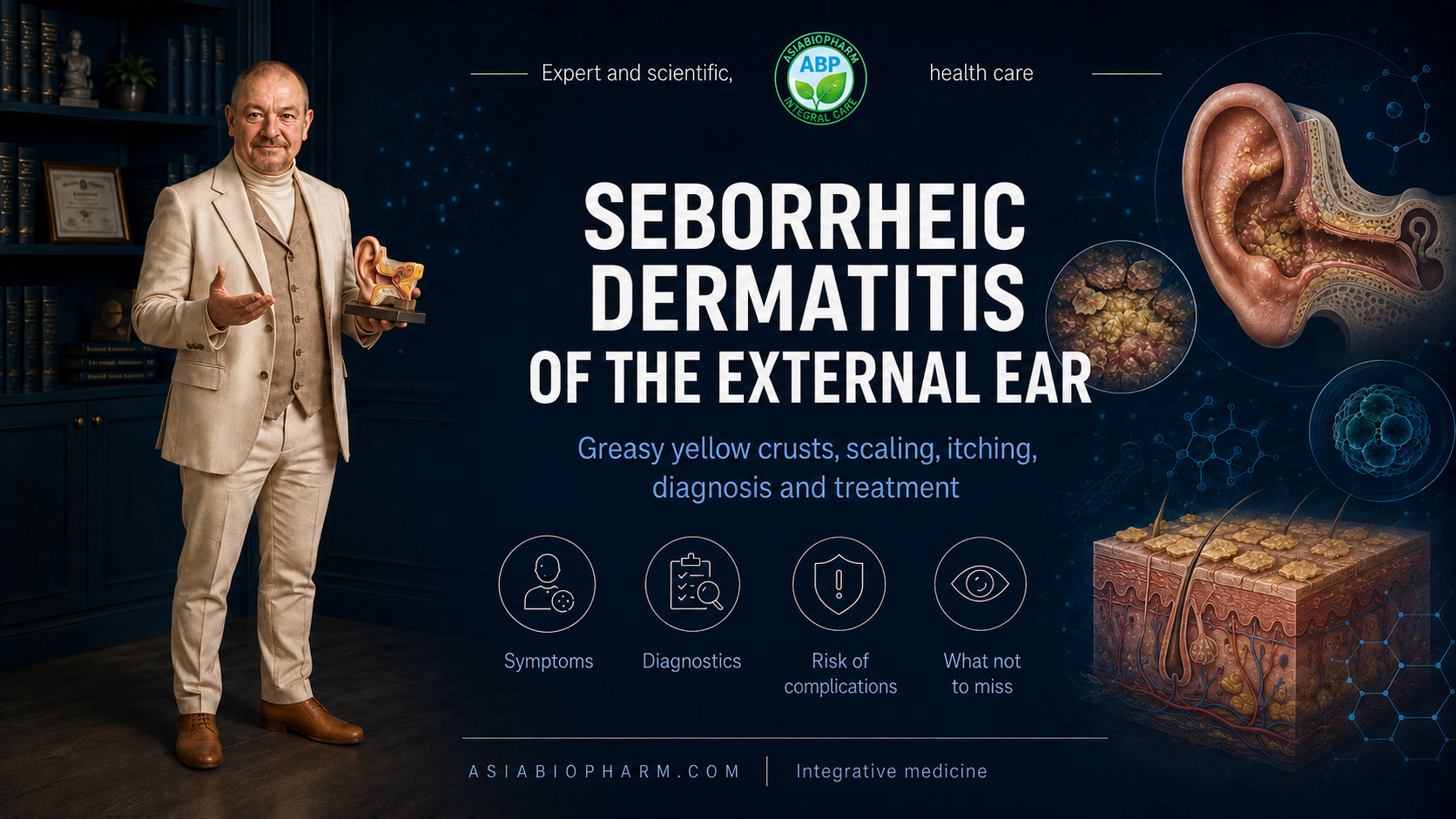
Seborrheic dermatitis of the external ear is a chronic, relapsing inflammation of the skin of the auricle, the fold behind the ear, the entrance to the ear canal, and sometimes its outer portion. The most characteristic signs are greasy whitish-yellow scales and crusts, moderate redness, itching, irritation, and flaking. Scratching can cause soreness, fissures, oozing, and secondary bacterial or fungal infection. The condition is not contagious and cannot be transmitted by touch. Its development is associated with impairment of the skin barrier, changes in the composition of sebum, an individual inflammatory response to Malassezia yeasts, and characteristics of local immunity. The scalp, eyebrows, glabellar area, nasolabial folds, and beard area are often affected at the same time. In infants, seborrheic manifestations most commonly occur on the scalp and usually gradually decrease; in adolescents and adults, the course is often chronic, with flare-ups associated with stress, cold weather, lack of sleep, increased skin oiliness, and comorbid conditions. In older adults, severe or suddenly developing lesions warrant an assessment of general health. A single flare-up may last from several days to several weeks, but sustained complete recovery with a guaranteed absence of recurrences usually does not occur.
How to determine whether you have seborrheic dermatitis of the external ear
The most typical presentation is a combination of greasy yellowish scales, moderate itching, and redness inside the auricle, at the entrance to the ear canal, and in the fold behind the ear, together with dandruff or similar scaling of the eyebrows, forehead, nasolabial folds, or beard area. For an initial self-check, inspect the auricle and the skin behind the ear in good lighting without inserting any instruments into the ear canal. The absence of severe pain, marked swelling, and purulent discharge is more consistent with dermatitis than with acute infectious otitis. The diagnosis is usually confirmed by a dermatologist or otorhinolaryngologist based on the appearance and distribution of the lesions, otoscopic findings, and examination of other seborrheic areas. If there is oozing, an unpleasant odor, unusual discharge, or no response to treatment, microscopic examination and culture of material may be required. Thick silvery scales, sharply demarcated plaques, and involvement of the elbows or knees are more characteristic of psoriasis; an association with earrings, earphones, hair dye, shampoo, or ear drops requires exclusion of contact dermatitis; severe pain, swelling of the ear canal, discharge, and tenderness when pressure is applied to the tragus require evaluation for otitis externa.
Red flags
Urgent examination by an otorhinolaryngologist is necessary if pain is increasing, the ear canal is markedly swollen, purulent or bloody discharge or an unpleasant odor appears, hearing suddenly decreases, dizziness develops, or body temperature rises, because these signs may indicate infectious otitis externa or otitis media. Rapidly spreading redness, hot and painful skin, swelling of the auricle, or swelling behind the ear may be manifestations of bacterial inflammation of the skin and soft tissues. Severe nighttime pain in a person with diabetes mellitus, immunodeficiency, cancer, or in someone taking immunosuppressants requires urgent evaluation because of the risk of severe invasive otitis externa. Blisters on the auricle or in the ear canal, facial muscle weakness, facial asymmetry, and impaired eye closure require urgent examination by an otorhinolaryngologist and a neurologist. Medical attention is also required if painful fissures, oozing, and crusts develop in an infant, if an older person's condition deteriorates rapidly, during pregnancy if inflammation is extensive, or if the eyelids and eyes are involved.
Initial self-care methods for seborrheic dermatitis of the external ear
Until you are examined, stop scratching the skin and do not use cotton swabs, hairpins, matches, or any other objects to clean the ear canal. Temporarily avoid in-ear headphones, earplugs, harsh shampoos, alcohol-based lotions, essential oils, hydrogen peroxide, concentrated vinegar, iodine, and homemade ear drops. The skin of the auricle and the fold behind the ear may be gently washed once a day with warm water at approximately 35–37 °C without vigorous rubbing, then patted dry with a soft cloth. Water and cleansing products must not be introduced into the ear canal. If dry scales are present on accessible skin, a thin layer of a neutral fragrance-free product may be used, but it should not be applied deep inside the ear, to oozing areas or purulent lesions, or when the condition of the eardrum is unknown. After showering, the external ear should be dried thoroughly without using a hot hair dryer. During a flare-up, adequate sleep, reduced stress, moderate physical activity, and protection of the ears from cold and prolonged moisture are helpful. No specific therapeutic diet has been proven effective; nutrition should remain balanced and adequate, while foods individually noticed to trigger symptoms may be temporarily excluded followed by reassessment. Fluid intake does not directly affect seborrheic inflammation and should be determined by thirst and the condition of the heart, kidneys, and glucose metabolism. If there is no improvement after five to seven days of gentle care, or if pain, discharge, oozing, or hearing loss develops, an in-person medical examination is required.
Stages and possible progression of seborrheic dermatitis of the external ear
Seborrheic dermatitis does not have the latent and prodromal stages characteristic of an infectious disease. It usually alternates between periods of remission and flare-ups. At first, the skin may become more oily or dry, followed by small scales, itching, and redness; with more pronounced inflammation, thick greasy crusts, fissures, and soreness may develop. Scratching damages the epidermal barrier and creates conditions for secondary otitis externa. Recurrences are promoted by cold and dry weather, stress, lack of sleep, excessive skin cleansing, constant use of devices inserted into the ear canal, excessive sweating, neurological disorders, immunodeficiency states, and inadequate control of seborrheic dermatitis of the scalp. With prolonged inflammation of the ear canal, chronic itching, thickening of the skin, narrowing of the canal, and intermittent hearing loss due to accumulation of scales and discharge may occur. A reliable rate of complete recovery and freedom from recurrence over two years has not been established.
Integrative treatment methods for seborrheic dermatitis of the external ear
The primary objective of integrative therapy is to locally reduce inflammation, itching, and scaling while restoring the epidermal barrier and preventing scratching, fissures, and secondary infection. When the external ear is affected locally, systemic herbal extracts are not automatically prescribed as a combination because the main clinical target remains the superficial skin of the auricle, the postauricular fold, and the accessible portion of the external ear canal. Before any medication is used inside the ear, otoscopy must be performed and the integrity of the eardrum confirmed.
The main topical preparation is ABP-153 oil infusion. The basic DMSO-free version is appropriate for superficial cutaneous and cavity-localized processes. The preparation may be applied to the skin of the auricle, the fold behind the ear, and the accessible portion of the external ear canal when the eardrum is intact.
The clinical objectives of ABP-153 are to reduce local inflammation, itching, and swelling, provide additional control of microbial and fungal burden, support epithelialization, and restore the skin's lipid barrier. Camphor, Andrographis paniculata, turmeric, licorice, cassumunar ginger, Houttuynia cordata, menthol, borneol, clove, eucalyptus, and other components provide combined anti-inflammatory, antipruritic, antiseptic, antifungal, and reparative effects.
The presence of discharge requires prior otoscopy and determination of its source. If the discharge is associated with otitis externa, the ear canal should first be cleaned. An oil-based composition applied over pus, fungal masses, or thick scales will not spread evenly and may interfere with free drainage.
ABP-153 must not be introduced into the ear canal if perforation of the eardrum is confirmed or suspected, if a ventilation tube is present, in purulent otitis media, with bloody discharge, a foreign body, severe dizziness, or after middle-ear surgery unless specifically approved by an otorhinolaryngologist. Camphor, menthol, borneol, clove, and eucalyptus may cause burning, hyperemia, increased itching, and a contact reaction. If symptoms worsen, use should be discontinued.
ABP-153D is not required for seborrheic dermatitis of the external ear. Enhanced transdermal delivery with DMSO does not correspond to the primary superficial target, while a damaged skin barrier increases the risk of uncontrolled penetration of dissolved substances.
Black seed Nigella sativa is used exclusively orally as a dry powdered standardized extract. The powder must not be diluted for instillation into the ear, applied to a wick, or mixed with ABP-153 or other topical preparations.
Nigella sativa may be used as an additional systemic approach in recurrent inflammatory dermatoses, particularly when seborrheic dermatitis of the external ear is accompanied by atopic dermatitis, psoriasis, allergic rhinitis, urticaria, or other inflammatory disorders of the skin and mucous membranes. Its clinical objective is to modulate systemic inflammatory, oxidative, and immune-reactive activity rather than directly eliminate Malassezia from the ear canal.
Black seed does not replace topical treatment of the skin or targeted antifungal therapy when an active fungal process has been confirmed. Possible adverse effects include nausea, abdominal discomfort, diarrhea, headache, lowering of blood pressure and blood glucose, and allergic reactions.
Caution is necessary during pregnancy, in people prone to arterial hypotension or hypoglycemia, and before surgical procedures. Nigella sativa may enhance the effects of glucose-lowering, antihypertensive, anticoagulant, and antiplatelet medications.
Turmeric Curcuma longa is used exclusively orally as a dry powdered extract. It must not be independently used as ear drops, diluted for irrigation of the ear canal, or applied directly to inflamed skin.
Turmeric may be considered an adjunctive systemic anti-inflammatory component in chronic, extensive, or combined dermatoses. Curcuminoids influence pro-inflammatory signaling pathways and oxidative stress, but their oral bioavailability is variable. Therefore, when involvement is limited to the external ear, the effect of topical therapy is more predictable than that of adding a separate oral extract.
Turmeric does not replace topical antifungal treatment. Possible adverse effects include nausea, heartburn, abdominal pain, and loose stools. Cases of drug-induced liver injury have been reported; therefore, if weakness, itching of the skin, dark urine, or jaundice develops, use should be discontinued.
The extract requires caution in liver disease, gallstone disease, biliary obstruction, acute pancreatitis, peptic ulcer disease, a tendency to bleed, and when anticoagulants or antiplatelet agents are used.
Baikal skullcap Scutellaria baicalensis is used exclusively orally as a dry powdered standardized extract. The powder must not be introduced into the ear canal or used to prepare homemade ear solutions.
Baikal skullcap may be included when recurrent inflammation is pronounced, especially when systemic anti-inflammatory, antiallergic, and antioxidant support is required. Baicalin, baicalein, and wogonin are involved in regulation of inflammatory mediators and immune reactivity.
Baikal skullcap should not automatically be prescribed together with black seed, turmeric, and Coptis. Simultaneous use of several extracts makes tolerability more difficult to assess and creates unnecessary duplication of anti-inflammatory and metabolic effects.
Possible adverse effects include nausea, drowsiness, slowed responsiveness, dizziness, muscle weakness, and lowered blood pressure. Use requires caution in liver disease and with concomitant use of sedatives, hypnotics, anticonvulsants, antihypertensives, anticoagulants, and immunosuppressants. If pronounced weakness, dark urine, skin itching, or jaundice develops, use should be stopped and liver function assessed.
Chinese goldthread Coptis chinensis in the form of a dry powdered extract is used exclusively orally. The powder must not be instilled into the ear, applied to a wick, or independently converted into a topical solution.
Berberine and other isoquinoline alkaloids provide systemic antimicrobial, anti-inflammatory, and anti-exudative effects. Coptis may be considered in pronounced seborrhea, when dermatitis is accompanied by inflammation at other sites, or when a secondary microbial component has been confirmed. For a small isolated area of seborrheic dermatitis of the external ear, it is not a first-line option.
Possible adverse effects include nausea, a bitter taste in the mouth, reduced appetite, abdominal pain, constipation or diarrhea, headache, hypotension, and hypoglycemia. Berberine may alter the activity of CYP3A4, CYP2D6, CYP2C9, and P-glycoprotein and affect the concentrations of drugs with a narrow therapeutic range.
Clinically significant interactions may occur with cyclosporine, tacrolimus, glucose-lowering drugs, antihypertensives, anticoagulants, and antiarrhythmics. Coptis is not used during pregnancy, lactation, or infancy.
If separate ready-made otic forms of Coptis are presented on the official page, they should be regarded as independent dosage forms distinct from the oral powder. Such a finished preparation may be used only according to its instructions, after otoscopy and confirmation that the eardrum is intact. The oral powdered extract is not an ear drop and cannot be used as a substitute for one.
The Five Root Compound anti-inflammatory mixture is used exclusively orally as an additional measure in pronounced inflammation, soreness, swelling, or a widespread allergic component. When there is a small localized area with moderate itching and scaling, its use is usually not a priority.
It contains Harrisonia perforata, Capparis micracantha, Clerodendrum petasites, Ficus racemosa, and Tiliacora triandra. The clinical objective of the formula is systemic reduction of inflammatory pain and mediator activity. It does not act directly on Malassezia and does not replace local cleansing and treatment of the skin.
The powdered mixture must not be introduced into the ear canal, applied to a wick, or used as an external paste. Possible adverse effects include nausea, abdominal pain, diarrhea, headache, and individual allergic reactions. Caution is required during pregnancy and lactation, in liver and kidney disease, and when nonsteroidal anti-inflammatory drugs, anticoagulants, glucocorticoids, or other multi-component anti-inflammatory agents are used concurrently.
For localized seborrheic dermatitis of the external ear, rational therapy includes gentle removal of accessible scales, control of Malassezia activity, reduction of inflammation, and restoration of the skin barrier. Among the products listed above, topical ABP-153 has the primary role. Oral extracts of black seed, turmeric, Baikal skullcap, and Coptis, as well as the Five Root Compound mixture, are selected not according to the principle of using as many agents as possible, but only when there is a specific pathogenetic rationale.
Black seed is more appropriate for a recurrent inflammatory-allergic background, turmeric for chronic or widespread systemic inflammation, Baikal skullcap for a pronounced immune-reactive and antiallergic component, Coptis for an additional microbial and metabolic component, and Five Root Compound for a pronounced inflammatory pain syndrome. Simultaneous use of all these extracts is usually unnecessary.
Compared with prolonged use of topical glucocorticoids, rationally selected herbal products do not cause the characteristic steroid-induced skin atrophy, telangiectasia, or hormonal withdrawal syndrome. Compared with unjustified antibiotics, they do not create the same selective pressure on bacterial microflora. However, plant origin does not exclude contact allergy, irritation, hepatotoxicity, hypotension, hypoglycemia, or interactions with medications.
What you need to know about standard protocols in modern medicine
Standard therapy for seborrheic dermatitis of the external ear usually includes topical antifungal agents, glucocorticoids, calcineurin inhibitors, keratolytic agents, and, when secondary infection has been confirmed, antibacterial or combination ear drops. These medications can rapidly reduce itching, redness, and scaling, but they do not eliminate the skin's tendency toward recurrent inflammation and do not remove the factors that maintain Malassezia activity. No reliable universal percentage of complete recovery and freedom from recurrence over two years has been established for any single treatment protocol.
Ketoconazole is used to suppress Malassezia and reduce greasy scaling. Topical formulations may cause burning, marked irritation, redness, itching, dryness, swelling, soreness, and allergic contact dermatitis. On skin that is already inflamed, scratched, or eroded, the reaction may be considerably stronger. Irritation caused by ketoconazole itself or by the formulation base is sometimes mistakenly interpreted as further progression of seborrheic dermatitis.
Systemic absorption of topical ketoconazole is usually low but may increase when it is applied to damaged skin, over a large area, under occlusion, or for prolonged periods. The risk of severe hepatotoxicity is incomparably lower than with the tablet form, but drug-induced liver injury and interactions cannot be completely disregarded when the skin barrier is impaired and other medications are used concurrently. Ketoconazole must not be independently introduced deep into the ear canal in the presence of pain or discharge, when the condition of the eardrum is unknown, after ear surgery, when a ventilation tube is present, or in young children.
Prolonged uncontrolled use of antifungal agents alters the local fungal and bacterial environment, promotes selection of less sensitive flora, and may mask another cause of scaling, including psoriasis, contact dermatitis, or chronic otomycosis. If treatment does not produce a sustained result, the diagnosis should be confirmed rather than repeatedly switching between topical antifungal agents.
Ciclopirox has antifungal and anti-inflammatory effects but may cause intense burning, erythema, swelling, oozing, soreness, contact sensitization, and deterioration of damaged epithelium. If blisters or erosions develop, itching sharply worsens, inflammation spreads, or marked swelling occurs, the medication should be discontinued. It must not be used inside the ear canal unless the integrity of the eardrum has been confirmed and the specific dosage form is suitable for intra-aural use.
Simultaneous use of ketoconazole, ciclopirox, alcohol-containing solutions, keratolytics, and other irritants sharply increases the risk of chemical dermatitis. With such combinations, it becomes impossible to determine which substance caused deterioration, while additional damage to the skin barrier makes bacterial and fungal infection easier to develop.
Hydrocortisone, betamethasone, mometasone, and other topical glucocorticoids rapidly suppress itching, hyperemia, and inflammation but do not eliminate the fungal component of seborrheic dermatitis. They reduce the external manifestations of the disease while simultaneously suppressing the local immune response. As a result, bacterial, fungal, or viral infection may continue to progress while symptoms are temporarily masked.
Repeated and prolonged use of topical steroids leads to skin atrophy, thinning of the epidermis, telangiectasia, hypopigmentation, increased fragility, fissures, and delayed healing. Steroid acne, perioral dermatitis, or steroid dermatitis may occur. Thinned skin of the external ear is more easily injured and prone to bleeding and becomes more susceptible to Malassezia, Candida, bacterial flora, and herpetic infection.
After glucocorticoids that have been used for a prolonged period are discontinued, a withdrawal syndrome may develop with a sharp increase in redness, burning, swelling, soreness, and itching. Dependence on repeated application may develop: without the hormone, symptoms return rapidly, and the patient is forced to use the medication increasingly often. Restarting the steroid temporarily suppresses the reaction but maintains atrophy and does not eliminate the original cause of dermatitis.
Systemic absorption increases when damaged skin or a large surface area is treated, when highly potent steroids are used, under occlusion, and during prolonged treatment. Suppression of the hypothalamic-pituitary-adrenal axis, disturbances of carbohydrate metabolism, elevated blood pressure, fluid retention, reduced local immunity, and impaired growth in children may occur. Uncontrolled use is particularly dangerous in young children, pregnant women, older patients, people with diabetes mellitus or immunodeficiency, and those with an active infection.
Tacrolimus and pimecrolimus are used as alternatives to steroids in chronic or recurrent inflammation. They do not cause typical steroid-induced skin atrophy but often provoke intense burning, pain, tingling, itching, a sensation of heat, and pronounced neurosensory irritation. These reactions are especially severe on scratched, eroded, and inflamed skin.
Local suppression of the immune response increases the risk of herpetic eruptions, folliculitis, bacterial infection, and fungal complications. Tacrolimus and pimecrolimus must not be applied to clearly infected, oozing, eroded, or traumatized skin or introduced deep into the ear canal without a physician's prescription. Treated areas must be protected from intense ultraviolet exposure.
Combination ear drops may contain an antibiotic, an antifungal agent, a glucocorticoid, and a local anesthetic. Such a combination can rapidly reduce pain, itching, and swelling, but at the same time it makes it difficult to determine which component caused irritation, allergy, a fungal complication, or another deterioration. Symptomatic relief does not confirm eradication of the causative organism.
Neomycin and other aminoglycoside antibiotics relatively often cause allergic contact dermatitis. The reaction manifests as increased itching, oozing, redness, swelling, and scaling. If such deterioration is mistakenly interpreted as insufficient antibiotic effectiveness, the medication may be continued and sensitization may become more pronounced.
If the eardrum is damaged, aminoglycosides can penetrate into the middle and inner ear and irreversibly damage the hair cells of the cochlea and vestibular apparatus. Consequences may include persistent hearing loss, tinnitus, dizziness, balance disorders, and chronic vestibular dysfunction.
Independent use of topical antibiotics without confirmed bacterial infection suppresses normal microflora, selects resistant bacteria, promotes Candida overgrowth, and may lead to superinfection. Severe irritation, swelling of the ear canal, contact allergy, and increased discharge may occur. When systemic antibiotics are prescribed without justification, they create additional risks of diarrhea, antibiotic-associated colitis, candidiasis, drug-induced liver and kidney injury, blood disorders, and severe skin reactions.
Systemic antifungal medications are usually not required for ordinary localized seborrheic dermatitis of the external ear. Their use may be justified only when a widespread, persistent, or invasive fungal process has been confirmed. Fluconazole, itraconazole, voriconazole, and other systemic azoles may cause drug-induced hepatitis, cholestasis, elevated liver enzymes, nausea, vomiting, abdominal pain, headache, severe skin reactions, and abnormalities in blood cell counts.
Some azoles prolong the QT interval and increase the risk of ventricular tachycardia, syncope, and sudden cardiac death. Itraconazole can impair myocardial contractility and cause decompensation of heart failure. Voriconazole can cause visual disturbances, phototoxicity, neurological reactions, and, with prolonged use, may increase the risk of severe skin damage.
Because of their effects on CYP450 enzymes, systemic azoles have numerous interactions with antiarrhythmics, anticoagulants, statins, immunosuppressants, sedatives, psychotropic medications, and other drugs. Such therapy must not be started without medical supervision, liver function testing, assessment of cardiac rhythm, and analysis of potential drug interactions.
Keratolytic and alcohol-containing products can reduce the density of greasy scales, but when they come into contact with inflamed, scratched, or eroded skin, they cause chemical irritation, severe burning, fissures, and increased oozing. Aggressive removal of scales disrupts the skin barrier, increases itching, and facilitates penetration by bacteria and fungi.
Salicylates may be absorbed systemically when applied over a large area, to damaged skin, or in young children. Possible effects include nausea, vomiting, tinnitus, rapid breathing, disturbances of acid-base balance, and toxic injury to the central nervous system. The risk increases with dehydration, renal failure, and concomitant use of other salicylates.
The main danger of self-treatment is that seborrheic dermatitis may be confused with bacterial otitis externa, otomycosis, psoriasis, allergic contact dermatitis, or damage to the eardrum. An anti-inflammatory medication may temporarily reduce redness and pain while masking a progressing infection. The appearance of discharge, an unpleasant odor, severe pain, swelling of the ear canal, hearing loss, tinnitus, or dizziness requires discontinuation of self-treatment and otoscopic examination.
Simultaneous or sequential use of antifungal medications, potent glucocorticoids, calcineurin inhibitors, antibiotics, keratolytics, and alcohol-containing solutions creates a cumulative burden on damaged skin. Such therapy can cause chemical and allergic dermatitis, epidermal atrophy, withdrawal syndrome, suppression of local immunity, fungal and bacterial superinfection, ototoxic hearing damage, and the development of resistant microflora. Alternative integrative programs based on rationally selected herbal formulas can target inflammation, itching, scaling, and restoration of the skin barrier and usually do not exert the same degree of aggressive local and systemic effects as prolonged or unjustifiably combined use of chemically synthesized medications.
Why the article does not specify dosages and duration of treatment
The same disease may present differently in different people, ranging from moderate dry scaling to pronounced inflammation, oozing, fissure formation, or secondary bacterial or fungal infection. The process may be limited to the fold behind the ear and the auricle or may extend into the external ear canal. The appropriate dosage form, route of administration, frequency of procedures, and whether a preparation may be introduced into the ear depend on these factors.
To select the dosage and duration of treatment, a specialist must assess the duration of the disease, severity of itching, inflammation and scaling, the area involved, the presence of pain, swelling, fissures and discharge, the condition of the eardrum, frequency of recurrences, disorders of the scalp and other seborrheic areas, age, body weight, pregnancy or lactation, and the condition of the liver, kidneys, cardiovascular, nervous, endocrine, immune, and digestive systems.
Diabetes mellitus, immunodeficiency, diseases of the liver and biliary tract, abnormalities of blood pressure, coagulation, and carbohydrate metabolism must be taken into account, as must any antifungal medications, antibiotics, glucocorticoids, anticoagulants, antiplatelet agents, antihypertensives, glucose-lowering drugs, sedatives, and immunosuppressants already being used.
A universal dosage for all patients may be insufficient and ineffective or excessive and dangerous. Excessive topical application may cause irritation, contact dermatitis, swelling of the ear canal, and increased itching. Unjustified systemic combinations of several extracts increase the risk of liver injury, gastrointestinal reactions, hypotension, hypoglycemia, and drug interactions. For this reason, the article describes possible therapeutic approaches but does not replace an individualized clinical and pharmacological assessment.
If necessary, you may ask a short question in the comments to this article, and in more complex cases you may schedule a consultation with a clinical pharmacologist specializing in integrative medicine via https://asiabiopharm.com/konsultaciii.
0 comments