
Pimecrolimus — How Dangerous It Is, Side Effects, and Consequences of Long-Term Use
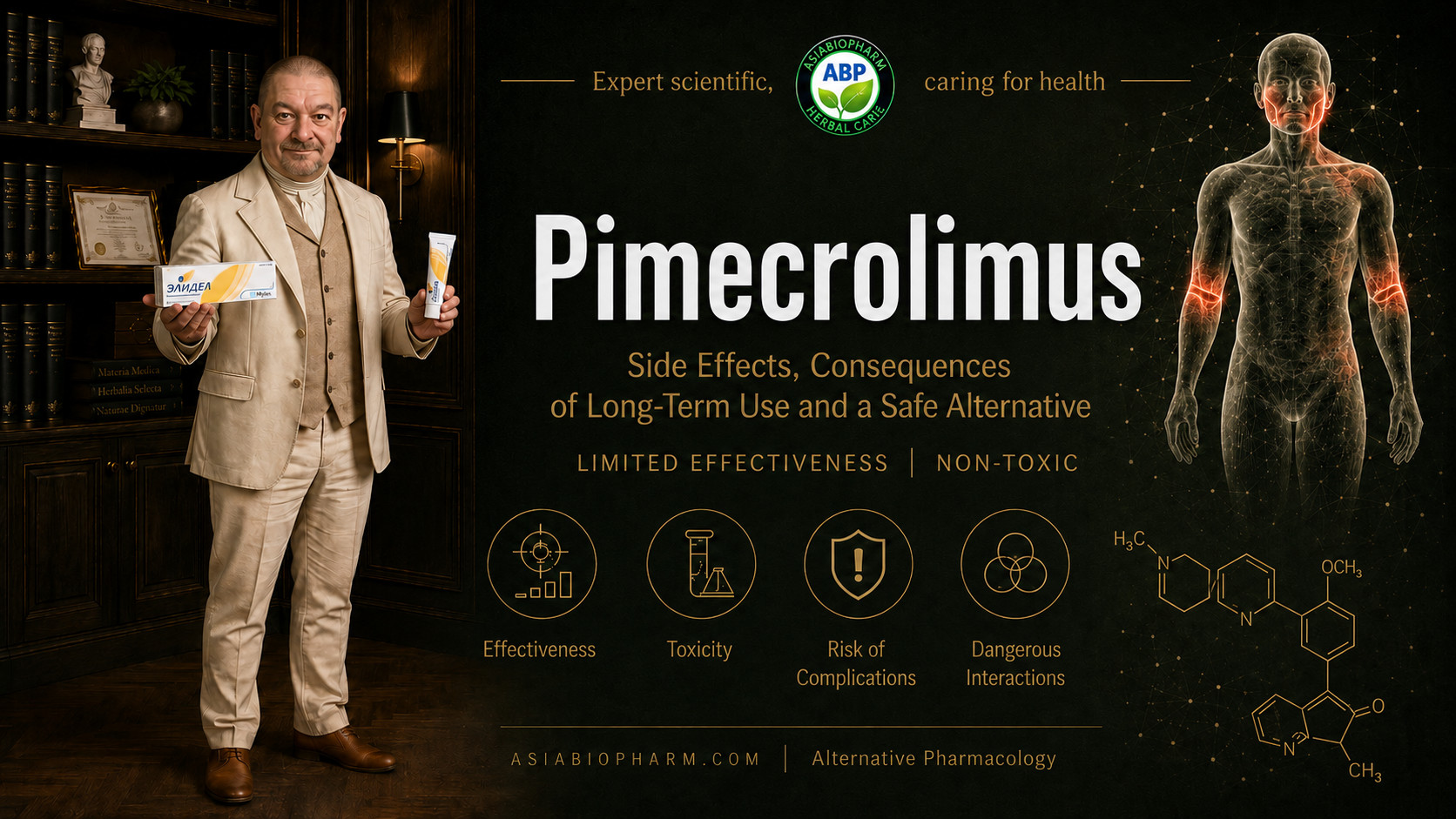
LIMITED EFFECTIVENESS | NON-TOXIC
What names pimecrolimus is sold under
The international nonproprietary name is pimecrolimus; the Latin spelling is pimecrolimus. Instructions for use and search queries may include such variants as “pimecrolimus 1%,” “pimecrolimus cream,” “pimecrolimus cream 1%,” and “pimecrolimus 10 mg/g.” The best-known trade name is Elidel. Generic medicines marketed as Pimecrolimus Cream 1% are also available in various countries. The dosage form is a cream for topical use; salt forms and preparations for systemic administration are not used in clinical practice. There are virtually no confirmed combination medicines containing pimecrolimus, so inadvertent duplication of the active ingredient is uncommon. However, patients may apply Elidel and a generic cream labeled Pimecrolimus at the same time without realizing that they contain the same active ingredient.
Why pimecrolimus is considered harmless and where the real risk begins
Pimecrolimus is often perceived as a completely safe “non-hormonal cream” because it is not a glucocorticosteroid and does not cause the skin atrophy characteristic of prolonged use of potent topical steroids. However, the absence of steroid-induced atrophy does not mean the absence of pharmacological activity: the drug locally suppresses calcineurin-dependent activation of T lymphocytes and the production of pro-inflammatory cytokines. Local anti-infective defenses may decrease in the treated area, burning may occur, irritation may worsen, and an existing viral infection may become activated. The risk increases when the cream is applied to infected, severely inflamed, or eroded skin, over large areas, under an occlusive dressing, or continuously for a prolonged period. The drug is intended for short and intermittent courses rather than continuous preventive application to healthy skin.
Side effects during the first hours and days of treatment
The most common reaction is burning, a sensation of heat, tingling, itching, soreness, or redness at the application site. These symptoms usually occur during the first few days, but severe or increasing burning should not automatically be regarded as normal “adjustment”: it may be caused by damage to the skin barrier, a contact reaction, bacterial infection, herpes, or an incorrect diagnosis. Folliculitis, skin irritation, rash, worsening dermatitis, and local infections may occur. Herpetic eruptions, eczema herpeticum, molluscum contagiosum, warts, and other viral skin lesions are clinically significant because the local immunomodulatory effect may make infection more difficult to control. Angioedema and anaphylactoid reactions occur rarely. Contact with mucous membranes causes marked irritation and burning.
Consequences of long-term and repeated use
Pimecrolimus does not cause typical steroid-induced atrophy, striae, telangiectasia, or suppression of the hypothalamic-pituitary-adrenal axis when used topically in the usual manner. Its systemic bioavailability is generally very low. The main long-term risk is not cumulative liver or kidney toxicity, but unjustified continuous suppression of the local immune response, masking of infection, and treatment of a condition whose diagnosis has not been confirmed. If the lesion does not improve within six weeks, the diagnosis should be reassessed rather than continuing application indefinitely.
The U.S. prescribing information retains a warning about isolated cases of lymphoma and skin cancer reported in users of topical calcineurin inhibitors and advises against continuous long-term use. However, a causal relationship has not been established. A large systematic review of 110 studies involving more than 3.4 million patients found no increase in overall cancer risk with pimecrolimus or tacrolimus use. Therefore, it is incorrect to present cancer as an established consequence of pimecrolimus, but the drug also should not be used continuously without a diagnosis or medical supervision.
Contraindications and high-risk groups
Pimecrolimus is contraindicated in patients with hypersensitivity to the active ingredient or any component of the cream. It should not be applied to areas with an active bacterial, fungal, or viral infection until appropriate treatment has been started. Applying it over herpetic vesicles, shingles, chickenpox, molluscum contagiosum, or eczema herpeticum is particularly dangerous.
The drug is not intended for patients with severe immunodeficiency or those receiving systemic immunosuppressive therapy because its safety in this group has not been sufficiently studied. Systemic absorption may increase in Netherton syndrome, generalized erythroderma, and other conditions involving severe impairment of the skin barrier. In the United States, use in children younger than two years is not approved. During pregnancy, the drug should be used only after assessing the need for treatment because high-quality data are insufficient. During breastfeeding, the cream must not be applied to the nipples or to areas that may come into contact with the infant’s mouth. It should not be applied to mucous membranes, open wounds, or potentially malignant or premalignant skin lesions.
Dangerous interactions
Because systemic absorption is low, clinically significant pharmacokinetic interactions with oral medicines are unlikely. Nevertheless, the safety of simultaneously applying other topical immunosuppressants to the same area has not been adequately studied. Pimecrolimus should not be combined independently with tacrolimus, potent topical glucocorticosteroids, cytostatic drugs, or intensive phototherapy on the same area without an agreed treatment regimen.
Alcohol can trigger a characteristic reaction: facial flushing, redness, a sensation of heat, itching, burning, rash, or swelling of the skin shortly after consumption. This is not liver toxicity and does not represent an increase in the concentration of the drug in the blood; it is a vascular-inflammatory reaction described with topical calcineurin inhibitors. During treatment, ultraviolet exposure should be limited, tanning beds should be avoided, and the drug should not be combined with therapeutic ultraviolet irradiation unless prescribed by a physician. There are no confirmed specific interactions with food, caffeine, or nicotine.
Patient mistakes
The most common mistake is to regard pimecrolimus as a universal non-hormonal cream for any redness or itching. It may be applied to fungal lesions, perioral dermatitis, rosacea, scabies, bacterial impetigo, or herpes, temporarily suppressing inflammation and delaying correct diagnosis. The second mistake is continuous application for months to the face, eyelids, neck, or skin folds without assessing the result. The third is increasing the amount of cream and the treatment area when a rapid effect is not achieved.
It is dangerous to apply the product under plastic film, a tight airtight dressing, or to weeping erosions: this may increase penetration of the drug and irritation. The cream must not be used on healthy skin “for prevention,” applied to new areas without clarifying the diagnosis, or continued when vesicles, crusts, pustules, or soreness appear. The absence of steroids in its composition does not make the drug a cosmetic product suitable for uncontrolled use.
Overdose and poisoning
No established toxic single dose exists for topical pimecrolimus. When applied correctly, systemic absorption is usually minimal, so a classic overdose involving liver, kidney, or central nervous system damage is not typical. The risk increases when very large areas are treated, the skin barrier is severely damaged, the drug is used under occlusion, it is applied frequently and repeatedly, or it is used in young children.
Excessive local use is primarily manifested by increased burning, redness, swelling, and irritation. If the cream accidentally gets into the eyes or onto mucous membranes, it should be removed and the area thoroughly rinsed with cool water. If the cream is swallowed, vomiting should not be induced and attempts should not be made to neutralize it with home remedies; a poison control center or medical professional should be contacted, particularly if a child has swallowed the drug. There is no specific antidote; treatment is symptomatic. Immediate medical attention is required for difficulty breathing, swelling of the face or larynx, generalized urticaria, impaired consciousness, or another severe systemic reaction.
A safe integrative alternative to pimecrolimus
For mild to moderate non-infected dermatitis, a cream formulation containing extracts of Nigella sativa, Scutellaria baicalensis, and Centella asiatica in a 4:4:3 ratio may be considered as a topical integrative alternative. Nigella sativa provides the main anti-inflammatory and antipruritic effect, Scutellaria baicalensis complements it through effects on pro-inflammatory signaling pathways and the allergic response, while Centella asiatica supports restoration of the epidermal barrier and reduction of dryness. A clinical study of a topical Nigella sativa preparation for hand eczema showed a reduction in lesion severity and an improvement in quality of life comparable to betamethasone; however, this small study cannot automatically be extrapolated to all forms of atopic dermatitis. Data on Centella asiatica mainly support its anti-inflammatory and barrier-restoring potential, whereas the clinical evidence base for Scutellaria baicalensis in atopic dermatitis remains limited.
The formulation should preferably be incorporated into a light emulsion base free of alcohol, fragrances, essential oils, menthol, and camphor. It should not be applied to weeping erosions, herpetic vesicles, pustules, or areas where a fungal infection is suspected. A patch test on a small area is necessary before first use because even plant extracts can cause irritation or allergic contact dermatitis; such reactions have been described, in particular, with Nigella sativa.
In widespread dermatitis, a pronounced allergic background, or when skin manifestations are combined with allergic rhinitis, Allergy Mixture capsules may additionally be considered. When dermatitis is combined with bronchial asthma or another pronounced respiratory Th2 inflammatory condition, Clerodendrum serratum or the Bronchial Asthma Type 2 complex may be discussed. These products are not direct pharmacological analogues of pimecrolimus and should not be presented as a proven equivalent replacement in severe or rapidly progressing atopic dermatitis.
Complete replacement of pimecrolimus is most realistic in limited, mild, stable inflammation without infection. With severe involvement of the face and eyelids, generalized disease, severe itching, sleep disturbance, secondary infection, or rapid deterioration, the decision to replace the drug should be made after clarifying the diagnosis and severity of the condition.
The real effectiveness of pimecrolimus
Pimecrolimus does reduce itching, redness, and inflammation in mild to moderate atopic dermatitis. It is particularly useful on the face, eyelids, neck, and skin folds, where prolonged use of topical glucocorticosteroids is associated with an increased risk of skin atrophy. The drug does not act immediately: burning and itching may begin to decrease during the first few days, but a pronounced clinical result is usually assessed over the following weeks.
Pimecrolimus does not correct a genetically determined skin barrier defect, allergen exposure, microbial colonization, or other causes of recurrent dermatitis. It temporarily suppresses inflammatory activity in the skin. After application is stopped, the disease may return if irritants, skin dryness, contact allergens, and associated inflammatory conditions have not been addressed.
The most justified use is mild to moderate atopic dermatitis, particularly on sensitive areas and when prolonged use of topical steroids is impossible or undesirable. Pimecrolimus is regarded as a second-line treatment or a steroid-sparing option rather than a universal cream for any itching and redness.
A medical error is prescribing pimecrolimus without excluding fungal infection, herpes, impetigo, rosacea, perioral dermatitis, and contact allergy. Another common mistake is continuing treatment for weeks despite a lack of effect without reassessing the diagnosis. Systematic evidence does not confirm an increased overall risk of cancer or lymphoma when topical calcineurin inhibitors are used appropriately, so frightening a patient with inevitable cancer is just as unprofessional as declaring the drug completely harmless.
Safety monitoring during treatment
With limited topical use of pimecrolimus, regular monitoring of liver function, kidney function, or a complete blood count is generally not required because systemic absorption of the drug is minimal. Monitoring should be primarily clinical: reduction in itching, redness, and the area of involvement is assessed, as well as the severity of burning after application, the appearance of vesicles, weeping, crusts, pustules, soreness, and spread of inflammation.
If there is no clear improvement within several weeks or the lesion persists for about six weeks, uncontrolled continuation of the course should be stopped and the diagnosis reassessed. Recurrences in the same area, thickening of the skin, a non-healing erosion, bleeding, or a change in pigmentation require particular attention: pimecrolimus should not be applied to undefined, premalignant, or malignant lesions.
The drug should be discontinued immediately if swelling of the face, lips, or larynx, difficulty breathing, generalized urticaria, a widespread vesicular rash, or signs of eczema herpeticum occur. Painful grouped vesicles, rapid spread of erosions, fever, and a sudden deterioration in general condition require urgent medical assessment because delaying treatment may lead to generalized infection.
Mild short-lived burning at the beginning of treatment is common, but severe pain, increasing swelling, or persistent burning should not be ignored. A contact reaction, skin barrier damage, and infection must be excluded.
Correct discontinuation of pimecrolimus
Pimecrolimus does not cause drug dependence, adrenal suppression, or a classic withdrawal syndrome, so gradual dose reduction is generally unnecessary. Once control has been achieved, the drug may be stopped immediately or changed to intermittent application if such a regimen was prescribed for relapse prevention.
The return of itching and redness after discontinuation does not indicate chemical dependence on pimecrolimus. More often, it represents a recurrence of the underlying dermatitis because the drug suppressed inflammation but did not correct the skin barrier defect or eliminate triggering factors. In this situation, continuous application should not automatically be restarted: skin care, contact irritants, allergens, infection, and the accuracy of the original diagnosis should be assessed.
Abrupt discontinuation does not cause a dangerous systemic condition. However, independently replacing pimecrolimus with irritating plant extracts, essential oils, alcohol-based tinctures, or fragranced cosmetic products may cause an exacerbation that is mistakenly interpreted as a withdrawal syndrome.
A rational approach to treatment
Pimecrolimus is justified when atopic inflammation on the face, eyelids, neck, or skin folds needs to be controlled without the risk of steroid-induced skin atrophy. It is effective when the diagnosis is correct, but it is not a universal treatment for skin inflammation and should not be used indefinitely when there is no benefit.
For mild stable dermatitis and when there is a need to reduce pharmacological burden, a cream combination of Nigella sativa, Scutellaria baicalensis, and Centella asiatica in a 4:4:3 ratio may be considered. Its advantage is the combination of anti-inflammatory activity with support for restoration of the skin barrier. Its limitations are a less complete clinical evidence base, the absence of standardized regimens for all forms of atopic dermatitis, and the risk of an individual contact reaction.
In severe inflammation, generalized atopic dermatitis, infection, involvement of a large area of skin, or rapid deterioration, the plant formulation should not replace necessary anti-inflammatory treatment. A rational integrative pharmacological approach does not mean mechanically rejecting a synthetic drug, but rather selecting the minimum sufficient therapy, restoring the skin barrier, eliminating triggering factors, and reducing unjustified long-term use of immunomodulators.
If you have questions about the subject of this article, you can ask a clinical pharmacologist in the comments or schedule an appointment via the following link: https://asiabiopharm.com/konsultaciii/
0 comments