
Phenytoin — Side Effects, Overdose, and Dangerous Drug Interactions
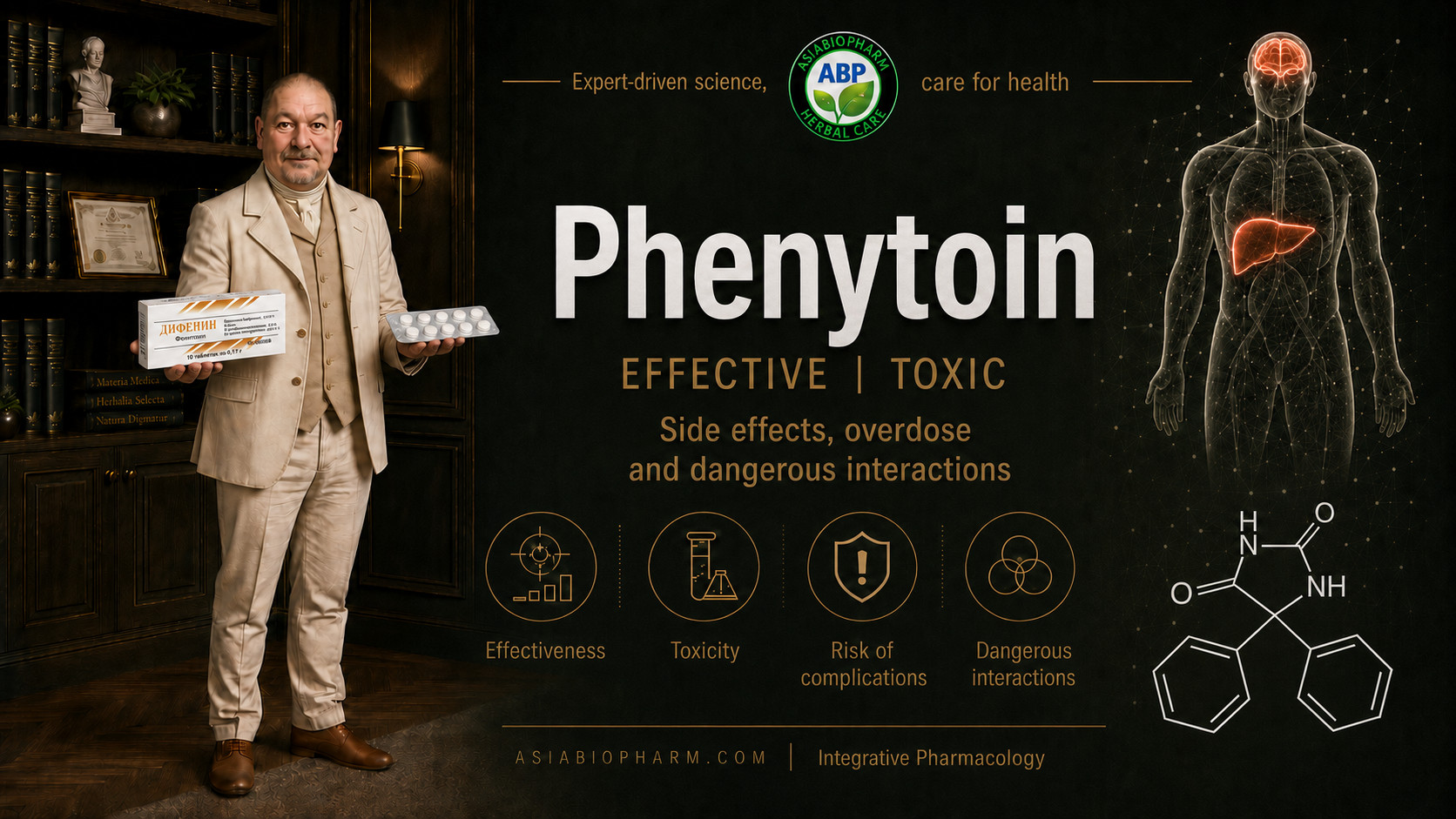
EFFECTIVE | TOXIC
Other Names for Phenytoin
The international nonproprietary name is phenytoin; the Latin spelling is Phenytoin. Medical instructions and documents may also use the names phenytoin sodium, 5,5-diphenylhydantoin, and diphenylhydantoin. Oral phenytoin is used either as the free acid or as the sodium salt: these forms contain different amounts of the active substance and therefore cannot automatically be substituted milligram for milligram. The main dosage forms are tablets, chewable tablets, extended-release capsules, suspension, and solution for intravenous administration. Trade names include Dilantin, Epanutin, Phenytek, and Phenytoin Sodium Flynn. Fosphenytoin — Fosphenytoin, Cerebyx, Pro-Epanutin — is a prodrug that is converted into phenytoin; it is dosed in milligrams of phenytoin equivalents. Unintentional duplication may occur when phenytoin, fosphenytoin, different brands, or different dosage forms are prescribed simultaneously, especially after a patient is transferred from inpatient to outpatient treatment.
Why a Familiar Anticonvulsant Can Become a Source of Real Risk
The main danger of phenytoin lies not only in its list of side effects, but also in its unpredictable accumulation. The enzymes responsible for its metabolism become saturated, so a small increase in the daily dose, a change in concomitant therapy, or a decrease in albumin concentration can disproportionately increase the amount of free phenytoin. The first signs of toxicity — unsteadiness, dizziness, drowsiness, slurred speech, double vision, and impaired coordination — can easily be mistaken for fatigue, progression of a neurological disorder, or the consequences of the seizure itself. A false sense of safety can also arise because the same dose may have been tolerated for months: after an infection develops, hypoalbuminemia occurs, liver disease appears, nutrition changes, or an interacting drug is added, that dose may become toxic without any intentional overdose. Alcohol further makes phenytoin concentrations less predictable, while abrupt discontinuation of treatment may cause more frequent seizures and status epilepticus.
Side Effects During the First Hours and Days of Treatment
The most common early reactions involve the central nervous system and are usually concentration-dependent: nystagmus, dizziness, ataxia, unsteady gait, dysarthria, impaired coordination, drowsiness, confusion, tremor, headache, and diplopia. They may occur after a loading dose, a rapid increase in dosage, a change in dosage form, or the addition of a metabolic inhibitor. Clinically significant effects include nausea, vomiting, decreased blood pressure, behavioral changes, memory impairment, and a paradoxical increase in seizure frequency during severe intoxication. During the first weeks, fever, rash, lymphadenopathy, eosinophilia, facial edema, and liver injury may develop as part of DRESS syndrome. Life-threatening reactions include Stevens–Johnson syndrome, toxic epidermal necrolysis, acute generalized exanthematous pustulosis, anaphylaxis, agranulocytosis, aplastic anemia, thrombocytopenia, and acute hepatotoxicity. Intravenous administration carries additional risks of severe hypotension, bradycardia, conduction disturbances, ventricular arrhythmias, cardiac arrest, and tissue injury with the development of “purple glove” syndrome; the risk increases when the recommended infusion rate is exceeded, but it is not completely eliminated even at the recommended rate.
Consequences of Long-Term and Repeated Use
With treatment lasting months or years, gingival hyperplasia is particularly characteristic and may be accompanied by bleeding, inflammation, difficulty maintaining oral hygiene, and progression of periodontal disease. Hirsutism, coarsening of facial features, acne, and other cosmetically significant changes may occur. Induction of hepatic enzymes accelerates vitamin D metabolism and is associated with reduced bone mineral density, osteopenia, osteoporosis, osteomalacia, and fractures. Disturbances in folate metabolism may contribute to macrocytosis and megaloblastic anemia. Peripheral polyneuropathy, decreased sensation and reflexes, and, with persistently elevated concentrations, chronic cerebellar dysfunction and atrophic changes in the cerebellum have been described. Chronic liver injury, lymphadenopathy, pseudolymphoma, and rare immune reactions, including a lupus-like syndrome, may occur. Some neurological manifestations diminish after the concentration is reduced or treatment is discontinued, but bone complications, periodontal disease, and severe nervous system damage may recover slowly or incompletely. Phenytoin does not cause typical drug dependence, but abrupt withdrawal after prolonged therapy is dangerous because of the risk of seizure recurrence and status epilepticus.
Contraindications and High-Risk Groups
Phenytoin is contraindicated in patients with hypersensitivity to phenytoin, other hydantoins, or any component of the product, as well as in patients who previously developed acute liver injury associated with its use. The intravenous formulation is contraindicated in sinus bradycardia, sinoatrial block, second- or third-degree atrioventricular block, and Adams–Stokes syndrome because of its ability to suppress cardiac conduction and myocardial contractility. In hepatic impairment, metabolism slows, while hypoalbuminemia, renal impairment, pregnancy, critical illness, and severe wasting increase the free pharmacologically active fraction: the total blood level may appear acceptable even though free phenytoin is already toxic. Clearance is often reduced in older adults, making a standard dose more likely to cause ataxia, confusion, and falls. Carriage of HLA-B*15:02, which is more common among people of South Asian and East Asian ancestry, is associated with an increased risk of severe skin reactions; CYP2C9 variants with reduced activity increase the likelihood of drug accumulation. During pregnancy, phenytoin is associated with a risk of congenital abnormalities and fetal hydantoin syndrome, but stopping treatment without medical supervision is also dangerous for both mother and fetus because of uncontrolled seizures.
Dangerous Drug Interactions
Contraindicated or practically unacceptable combinations include delavirdine: phenytoin sharply reduces its concentration, creating a risk of loss of antiviral efficacy and development of resistance. Combinations with drugs that substantially increase phenytoin levels are highly undesirable, including fluconazole, miconazole, voriconazole, amiodarone, certain macrolides, isoniazid, disulfiram, fluoxetine, fluvoxamine, sertraline, omeprazole, ticlopidine, and some anticancer agents; the consequences may include nystagmus, ataxia, confusion, falls, and coma. Valproates can displace phenytoin from protein binding while simultaneously altering its metabolism, so the total level may decrease while the free active concentration increases. Carbamazepine, phenobarbital, rifampicin, and chronic alcohol use may lower phenytoin levels and weaken anticonvulsant protection; acute alcohol intake, by contrast, may increase its concentration. Enteral nutrition and certain antacids reduce absorption and therefore require separation in time and monitoring of effectiveness. When folic acid is used to correct deficiency, it can in some cases accelerate phenytoin metabolism and reduce its level, so seizure control and drug concentration should be monitored.
Phenytoin itself is a potent enzyme inducer and can reduce the effectiveness of oral contraceptives, warfarin, direct oral anticoagulants, glucocorticoids, cyclosporine, tacrolimus, doxycycline, and certain antiretroviral, anticancer, and psychotropic drugs. Its interaction with warfarin is particularly unpredictable: initially, the anticoagulant effect may increase because of displacement from protein binding, and later decrease as a result of enzyme induction. Combination with other sedatives, opioids, benzodiazepines, antihistamines, and alcohol intensifies impaired coordination and depression of consciousness. Herbal enzyme inducers, especially St. John’s wort, may lower phenytoin concentrations and increase the risk of seizures. Starting or stopping any interacting drug requires assessment of the clinical condition and, as a rule, measurement of total or free phenytoin.
Patient Errors That Turn Treatment Into Intoxication
The most dangerous mistake is independently increasing the dose after a seizure or when there is no immediate effect. Phenytoin does not follow the simple logic of “double the dose — double the effect”: because its metabolism is saturable, even a small increase can cause a sharp rise in concentration. A missed dose must not be compensated for by taking several tablets, shortening dosing intervals, switching between suspension, conventional tablets, extended-release capsules, and the sodium salt without recalculating the dose, or simultaneously taking different phenytoin brands and fosphenytoin without recognizing that they involve the same active drug. Changing manufacturers also requires monitoring because differences in dosage form and bioavailability may disrupt seizure control or lead to toxicity. It is dangerous to ignore unsteadiness, nystagmus, slurred speech, and drowsiness while continuing the previous dose and driving a vehicle. Alcohol is not a neutral addition: acute and chronic use affect phenytoin concentrations differently, and stopping regular alcohol use can also alter drug levels. Finally, abruptly stopping treatment without medical supervision after a long seizure-free period does not prove recovery — it may result in a series of seizures or status epilepticus.
Phenytoin Overdose and Poisoning
No universal toxic dose of phenytoin has been established: the severity of poisoning depends on the dosage form, rate of absorption, duration of therapy, age, liver function, albumin concentration, genetic CYP2C9 activity, and concomitant medications. Therefore, not only a large single dose but also gradual accumulation during an otherwise routine treatment regimen may become dangerous. Clinical manifestations correlate better with blood concentration, although the relationship is not absolute. At a total level of approximately 20–30 mg/L, nystagmus usually appears; at 30–40 mg/L — ataxia, slurred speech, tremor, nausea, and impaired coordination; at 40–50 mg/L — pronounced drowsiness, confusion, and lethargy; above 50 mg/L, coma and, rarely, seizures may occur. In hypoalbuminemia, severe toxicity may develop at a substantially lower total level, making measurement of the free fraction necessary.
After an acute oral overdose, symptoms may be delayed, particularly with extended-release capsules or the formation of a drug concretion in the gastrointestinal tract. Nystagmus, dizziness, nausea, and unsteadiness appear first, followed by dysarthria, pronounced ataxia, vomiting, confusion, depressed consciousness, and coma. Severe hypotension and arrhythmias are much more characteristic of intravenous poisoning or excessively rapid infusion. There is no specific antidote. Treatment includes stopping further exposure to the drug, monitoring respiration, hemodynamics, and the electrocardiogram, serial measurement of phenytoin concentration, correction of complications, and observation until sustained clinical improvement occurs. Activated charcoal may be administered by medical professionals after a recent ingestion if the airway is protected; repeated doses may sometimes accelerate elimination, but they should not be used without medical supervision. Hemodialysis is considered only in exceptional severe cases because most phenytoin is protein-bound. Coma should not be awaited: the appearance of new ataxia, nystagmus, slurred speech, or marked drowsiness in a patient taking phenytoin already requires urgent assessment of the concentration and the reason for its accumulation.
Safe Integrative Alternative
The primary integrative alternative to phenytoin considered here is red fly agaric — Amanita muscaria in a standardized powder or extract form. Its anticonvulsant potential is associated primarily with muscimol, a direct agonist of GABA_A receptors that enhances inhibitory neurotransmission and reduces the ability of neuronal networks to generate hypersynchronous discharges. In experimental models, muscimol suppressed focal epileptiform activity and limited the spread of seizure discharges, although the outcome depended on the dose, model, and site of action. In the clinical practice of integrative medicine, microdosed preparations of red fly agaric may be considered for focal seizures, nocturnal seizure disorders, temporal lobe epilepsy, and focal seizures progressing to bilateral tonic-clonic seizures. This does not mean arbitrary consumption of fresh mushrooms, but rather a controlled dosage form made from reproducible raw material with gradual individualized selection of the minimum effective dose. Phenytoin blocks voltage-gated sodium channels and more rapidly suppresses the propagation of high-frequency discharges, whereas muscimol acts by enhancing central inhibition. Red fly agaric is therefore considered an independent alternative pharmacological pathway rather than a herbal copy of phenytoin.
The second essential option is common peony — Paeonia officinalis. In an open-label pilot study in children with drug-resistant epilepsy, use of a hydroalcoholic peony extract was associated with a reduction in seizure frequency of at least 50% in 62.5% of participants and at least 75% in 36.7%. The study was small and uncontrolled and evaluated adjunctive rather than replacement treatment, but it provides a direct clinical signal of antiepileptic activity in humans. Paeonia officinalis is most strongly supported for mixed forms of epilepsy, generalized convulsive seizures, focal seizures with bilateral spread, and childhood drug-resistant epilepsy. Its effects are associated with monoterpene glycosides, including paeoniflorin, enhancement of inhibitory neurotransmission, and reductions in neuroinflammation, excitotoxicity, and neuronal injury.
Paeonia anomala has a similar pharmacological profile and is traditionally used for seizures, increased nervous excitability, and sleep disturbances. It may reasonably be considered for generalized clonic and tonic-clonic seizures, myoclonic manifestations, focal seizures with generalization, and conditions in which seizure susceptibility is intensified by anxiety, emotional stress, and sleep deprivation. Experimental data on other species of the genus Paeonia show delayed onset of pentylenetetrazole-induced seizures, reduced seizure duration, and lower mortality; attenuation of the effect by flumazenil suggests involvement of the GABA_A-benzodiazepine receptor complex.
Polemonium coeruleum is considered an independent option for long-term reduction of seizure susceptibility, particularly in nocturnal seizures, epilepsy with an anxiety-autonomic aura, stress-induced exacerbations, and seizures triggered by sleep disturbance. Its significance is attributed to pronounced sedative and central inhibitory effects, reduction of psychovegetative excitation, and normalization of sleep. The modern clinical evidence base for Polemonium coeruleum is considerably smaller than that for phenytoin, but its practical use is not limited to symptomatic calming: in integrative pharmacology it is used specifically as a means of reducing pathological excitability of the central nervous system.
Complete replacement of phenytoin is most realistic when the disease is stable, there has been no recent status epilepticus, the seizure type is clearly established, and a gradual monitored transition is possible. With frequent generalized seizures, progressive epileptic encephalopathy, pregnancy, structural brain lesions, or a recent episode of status epilepticus, abrupt unsupervised substitution is unacceptable. This restriction is related not to the presumed “weakness” of herbal agents, but to the risk of rebound increases in seizure frequency after rapid discontinuation of phenytoin.
Actual Effectiveness of Phenytoin
Phenytoin is genuinely effective for focal seizures, including seizures with impaired consciousness and progression to bilateral tonic-clonic seizures, as well as generalized tonic-clonic seizures. Intravenous phenytoin or fosphenytoin is used for subsequent seizure control in status epilepticus after benzodiazepines. It is not a drug of choice for typical absence seizures and may not address myoclonic epilepsy or certain generalized genetic epilepsies.
The drug does not eliminate the cause of epilepsy: it stabilizes the inactivated state of voltage-gated sodium channels and prevents the propagation of high-frequency impulses. Therefore, discontinuing it restores the underlying seizure susceptibility if the pathological process persists. Expecting phenytoin to restore damaged neuronal networks, eliminate neuroinflammation, or cure structural epilepsy goes beyond pharmacology and amounts to assigning a sodium-channel blocker tasks it was never designed to perform.
Typical medical errors include prescribing phenytoin without accurately determining the seizure type, using it for absence or myoclonic epilepsy, mechanically increasing the dose without measuring the concentration, and ignoring albumin levels, liver and kidney function, and interacting drugs. Equally dangerous are switching between different dosage forms without dose recalculation, failing to monitor the patient after changes in concomitant therapy, and attempting to assess safety solely by total concentration in a patient with hypoalbuminemia.
Safety Monitoring During Treatment
Before long-term treatment is started, a complete blood count, ALT, AST, bilirubin, alkaline phosphatase, albumin, renal function, oral health, and the full list of medications being taken should be assessed. Phenytoin concentration is measured after steady state has been reached, when the dose or dosage form changes, when seizures or signs of toxicity appear, during pregnancy, in hypoalbuminemia, and when an interacting agent is added or withdrawn. A total concentration of 10–20 mg/L is generally used as a reference range, but when albumin is reduced or renal impairment is present, measurement of free phenytoin is preferable because a normal total level may conceal a toxic free fraction.
Nystagmus, newly developed unsteadiness, double vision, dysarthria, tremor, drowsiness, and confusion require unscheduled concentration testing and reassessment of the dose. Rash, fever, facial edema, enlarged lymph nodes, eosinophilia, jaundice, or dark urine may indicate DRESS syndrome or drug-induced liver injury and require immediate discontinuation of the drug with urgent medical evaluation. Blisters, epidermal detachment, and painful mucosal erosions raise suspicion for Stevens–Johnson syndrome or toxic epidermal necrolysis. Agranulocytosis, aplastic anemia, and thrombocytopenia may present with fever, infections, mucosal ulcers, petechiae, or bleeding. During intravenous administration, continuous monitoring of the electrocardiogram, blood pressure, and respiration is required because of the risk of hypotension, conduction disturbances, and ventricular arrhythmias.
During long-term treatment, the condition of the gums, bone mineral density in patients with risk factors, vitamin D, calcium, phosphorus, and alkaline phosphatase should be monitored. Progressive ataxia, reduced reflexes, sensory impairment, and persistent deterioration of coordination require evaluation for peripheral polyneuropathy and cerebellar toxicity. Expecting these symptoms to resolve spontaneously while maintaining the same dose increases the risk of falls, injuries, and irreversible neurological damage.
Proper Discontinuation of Phenytoin
Phenytoin must not be stopped abruptly after long-term use simply because seizures have not occurred for a long time. The absence of seizures may reflect the effectiveness of the drug rather than the disappearance of epilepsy. Sudden discontinuation may cause increased seizure frequency, a series of generalized seizures, and status epilepticus. The official prescribing information provides for gradual dose reduction except in cases of severe hypersensitivity, when rapid withdrawal and immediate substitution with another anticonvulsant are required.
There is no universal discontinuation regimen. The rate is determined by the initial dose, duration of treatment, type of epilepsy, electroencephalography findings, structural changes in the brain, seizure frequency before treatment, and the selected alternative. When switching to red fly agaric, peony, or Polemonium coeruleum, the new therapy should be introduced and evaluated before phenytoin is completely discontinued, although the specific sequence of transition is determined individually. Missing individual doses is also dangerous: fluctuations in concentration may disrupt seizure control long before the patient realizes what has happened.
A Rational Approach to Treatment
Phenytoin is justified when powerful and relatively rapid suppression of focal or generalized tonic-clonic seizures is required, when the drug already provides stable control, or when it is being used during an acute risk of recurrent seizures. Its strength is also its weakness: a narrow therapeutic range, nonlinear metabolism, enzyme induction, and cumulative toxicity require continuous pharmacological monitoring.
When epilepsy is stable but side effects are unacceptable, an independent integrative replacement may be considered. Red fly agaric is most logical for focal, nocturnal, and secondarily generalized seizures; common peony — for drug-resistant, childhood, and mixed epilepsy; Paeonia anomala — for generalized convulsive, myoclonic, and stress-dependent manifestations; Polemonium coeruleum — for nocturnal seizures, an anxiety-autonomic component, and seizures with a pronounced dependence on sleep and emotional stress.
The goal of an integrative approach is not to abandon effective anticonvulsant treatment for the sake of an attractive plant label, but to select an option suited to the type of epilepsy, reduce the toxicological burden, and maintain stable seizure control. In severe, complicated, or unstable disease, the speed and predictability of a synthetic drug may be necessary. In a stable condition, a justified substitution under clinical supervision may be possible.
If you have questions about the topic of this article, you can ask a clinical pharmacologist in the comments or schedule an appointment using this link: https://asiabiopharm.com/konsultaciii/
0 comments