
Paracetamol — Dangers, Side Effects, and Overdose
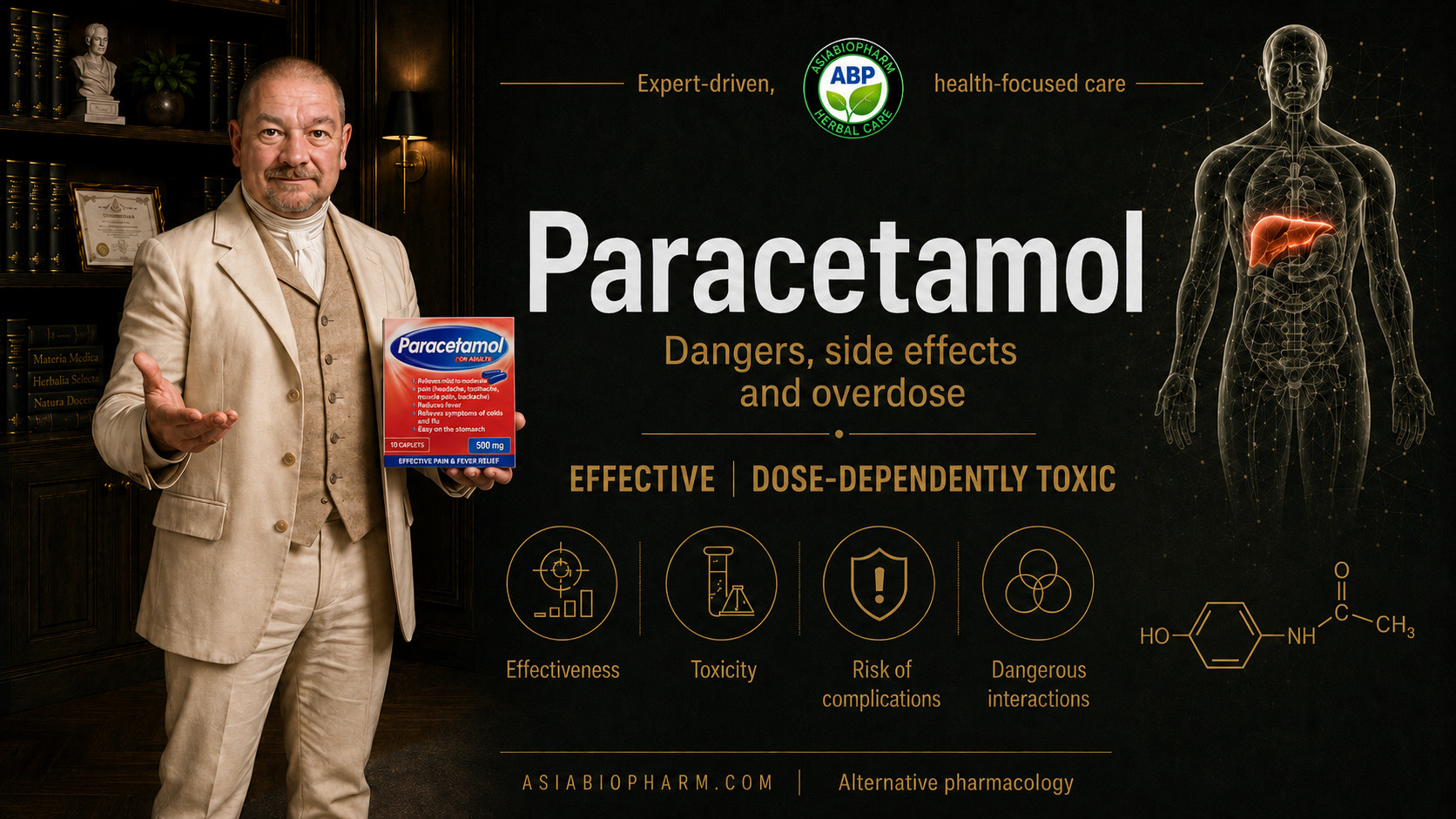
EFFECTIVE | DOSE-DEPENDENTLY TOXIC
Alternative Names and Medications Containing Paracetamol
Paracetamol may appear on the packaging under names other than its international nonproprietary name. In the United States and some other countries, it is known as acetaminophen, while imported combination medicines may use the abbreviation APAP. Single-ingredient paracetamol products include Panadol, Efferalgan, Calpol, Cefecon D, Perfalgan, and numerous medicines marketed directly under the name “Paracetamol.” Panadol and Efferalgan contain paracetamol as the active ingredient.
Combination remedies for colds, flu, headaches, and nasal congestion are particularly dangerous because paracetamol may be hidden among several ingredients. It is included in certain formulations of Theraflu, Fervex, Coldrex, Rinza, Solpadeine, Pentalgin, and other combination analgesics and cold remedies. For example, Fervex contains paracetamol, pheniramine, and ascorbic acid, while Rinza contains paracetamol, caffeine, phenylephrine, and chlorphenamine. Taking such a medicine together with regular paracetamol does not improve treatment of the underlying cause of the illness but can silently increase the total dose and the risk of toxic liver injury. Therefore, before using any cold powder, syrup, or tablet, it is necessary to check the “active ingredients” section rather than relying solely on the brand name.
Why Paracetamol Is Considered Harmless and Where the Real Risk Begins
Paracetamol is often perceived as an almost everyday household remedy: it is given to children and taken for headaches, toothache, fever, colds, and hangovers, sometimes without even being regarded as a serious medicine. The main danger of this attitude is the narrow margin between the familiar therapeutic dose and the amount capable of causing severe liver injury. A person may take paracetamol separately, then drink a cold remedy, take a “headache tablet,” or use a combination painkiller without realizing that several products contain the same active ingredient. The first signs of intoxication are often nonspecific or entirely absent: nausea, weakness, and discomfort may be mistaken for symptoms of infection, food poisoning, or a hangover. Meanwhile, the toxic metabolite NAPQI depletes glutathione stores and triggers hepatocyte necrosis. It is precisely the absence of immediate pain in the liver area that creates the most dangerous false sense of security. The FDA specifically warns that overdose symptoms may not appear until several days later and that severe cases may end in liver transplantation or death.
Side Effects During Short-Term Use
With short-term use, the most likely adverse effects are nausea, abdominal pain or discomfort, headache, and skin reactions, although pronounced side effects are uncommon at standard doses. Clinically significant effects include elevated liver transaminase activity, drug-induced liver injury, thrombocytopenia, and other disorders of blood cell production, which are rare but require discontinuation of the medicine and medical evaluation. Immediate hypersensitivity may occur after the first dose, including urticaria, angioedema, bronchospasm, and anaphylaxis. Rare severe skin reactions pose a separate threat, including Stevens–Johnson syndrome, toxic epidermal necrolysis, and acute generalized exanthematous pustulosis. They may begin with fever, skin tenderness, a blotchy rash, blistering, and mucosal involvement. Re-exposure after such a reaction is unacceptable. Even with a therapeutic intake of 4 g per day, asymptomatic increases in aminotransferases have been documented in some healthy individuals, so the absence of nausea, pain, or jaundice does not exclude early liver injury.
Side Effects During Long-Term or Repeated Use
Regular paracetamol use for weeks or months does not produce classic drug dependence or a specific withdrawal syndrome, but it can create a behavioral habit of constantly suppressing pain without identifying its cause. Repeated daily dose excesses are more dangerous than a single dosing error because intoxication develops gradually and may be difficult to recognize. A patient may experience only weakness, reduced appetite, nausea, or vague discomfort while liver injury is already progressing. The risk rises especially with fasting, inadequate nutrition, wasting, chronic alcohol use, and concurrent use of hepatic enzyme inducers. Prolonged use of maximum doses may be accompanied by persistent elevations of ALT and AST; after discontinuation, these changes are often reversible, but if massive necrosis develops, the consequences may include acute liver failure, encephalopathy, coagulopathy, multiorgan failure, and the need for transplantation. Long-term frequent use of analgesics has also been associated with kidney injury, although this risk is less clearly defined for paracetamol and depends substantially on the cumulative dose, concomitant medications, dehydration, and baseline kidney function. The absence of noticeable early reactions confirms only the absence of pronounced symptoms, not the absence of biochemical injury.
Contraindications and High-Risk Groups
Paracetamol is contraindicated in patients with confirmed hypersensitivity to the medicine and must not be used again after a severe skin or anaphylactic reaction. In severe active liver failure, self-medication is unacceptable because reduced capacity to detoxify reactive metabolites increases the likelihood of further hepatocyte injury. The risk is increased in patients with chronic alcohol abuse, prolonged fasting, anorexia, marked underweight, malabsorption, and depleted glutathione stores. The danger also rises in people taking several medicines at the same time because paracetamol may be hidden under different brand names. In children, the dose must be calculated according to body weight: using an adult tablet, confusing syrup concentrations, or calculating the dose “by age” without accounting for weight can result in a toxic dose. In people weighing less than 50 kg, using the maximum adult dose without recalculation is particularly dangerous. In severe renal impairment, dosing intervals need to be extended because metabolite elimination is slowed. Pregnancy itself is not an absolute contraindication, but it does not justify indefinitely prolonged use without establishing the cause of pain or fever.
Dangerous Interactions
Combining paracetamol with alcohol is highly undesirable, especially in people who regularly consume three or more alcoholic drinks per day, are fasting, or have liver disease. Chronic alcohol use induces CYP2E1, increasing the formation of toxic NAPQI, while poor nutrition simultaneously reduces glutathione stores. The FDA specifically warns about the risk of severe liver injury with this combination.
Long-term regular paracetamol use while taking warfarin may enhance the anticoagulant effect and increase the international normalized ratio; the combination requires INR monitoring, especially at doses of 2 g per day or more for several days. Occasional single-dose use is usually less significant.
Carbamazepine, phenytoin, phenobarbital, primidone, rifampicin, and certain other inducers of microsomal enzymes may accelerate formation of the reactive metabolite. This combination requires dose limitation, assessment of liver function, and avoidance of self-medication. There are pharmacokinetic grounds for increased caution when paracetamol is used together with isoniazid.
Concurrent use with other potentially hepatotoxic medicines, concentrated herbal extracts, or dietary supplements with established hepatotoxicity may increase the total burden on the liver. There is no universal prohibition applying to all herbal products: the specific composition is what matters.
The main source of hidden interaction is not pharmacological incompatibility but duplication. Paracetamol is found in cold powders, syrups, headache remedies, migraine medicines, combination analgesics, and some prescription combinations with opioids. The FDA recommends checking the composition of every medicine and not using several products containing acetaminophen, paracetamol, or the abbreviation APAP at the same time.
Patient Errors
The most common mistake is taking paracetamol as a remedy “for any fever” or “for any inflammation.” It reduces pain and fever but has virtually no clinically significant anti-inflammatory effect and does not treat the cause of infection, sinusitis, otitis, toothache, or arthritis. When the effect seems insufficient, the patient may increase the single dose, shorten the four- to six-hour intervals, or add a cold powder containing the same paracetamol.
The second mistake is assuming that different brand names represent different medicines. Four paracetamol tablets, several sachets of a combination cold remedy, and an evening headache tablet may silently exceed the permitted daily dose. The third mistake is taking the medicine after drinking alcohol, on an empty stomach, or after several days without adequate nutrition. The fourth is continuing treatment for weeks, suppressing recurrent headache, joint pain, or toothache without diagnosing the underlying condition. The fifth is relying on the absence of immediate symptoms: a person assumes that “if the liver does not hurt, everything is fine,” even though clinically significant liver injury may remain hidden for several days. Over-the-counter status, a familiar name, and use by all members of the family do not change its dose-dependent hepatotoxicity.
Overdose and Poisoning
In adults, a single dose of approximately 150 mg/kg or more is generally considered potentially toxic; for a person weighing 70 kg, this is approximately 10.5 g. However, smaller amounts may be dangerous in people with wasting, prolonged fasting, chronic alcohol use, liver disease, low body weight, or repeated daily dose excesses. In children, the threshold for acute toxicity is generally estimated at approximately 150–200 mg/kg, although individual variability is substantial. These figures must not be used to decide independently whether a dose already taken is “dangerous”: if an overdose is suspected, urgent contact with a poison control center or hospital is necessary.
During the first 0–24 hours, symptoms may be absent. Nausea, vomiting, sweating, pallor, weakness, and vague abdominal pain may occur. This temporary well-being is particularly deceptive. After 24–72 hours, nausea may decrease, but right upper quadrant pain may appear, along with elevated ALT, AST, bilirubin, and INR, as well as signs of liver injury and sometimes injury to the kidneys and pancreas. On the third to fourth day, injury may reach its maximum severity: jaundice, hypoglycemia, metabolic acidosis, bleeding, confusion, hepatic encephalopathy, cerebral edema, acute kidney failure, multiorgan failure, and death may occur. With a favorable course, recovery begins on the fourth day and may continue for several weeks.
After a single ingestion of a standard immediate-release formulation, the blood concentration of paracetamol is measured no earlier than four hours after ingestion and interpreted according to the time of ingestion using the Rumack–Matthew nomogram. The nomogram cannot be used when the time of ingestion is unknown, in repeated supratherapeutic dosing, after ingestion of an extended-release formulation, or after multiple exposures. In these situations, decisions are based on clinical findings, paracetamol concentration, ALT, AST, INR, creatinine, and other parameters.
The antidote is N-acetylcysteine. It replenishes glutathione stores and limits liver injury. Maximum effectiveness is achieved when treatment begins within the first eight hours: during this period, the medicine can almost completely prevent severe hepatotoxicity. After eight hours, effectiveness decreases, but N-acetylcysteine is still administered when indicated, including in patients who present late and in those who already have liver injury. One must not wait for jaundice, pain, or changes in consciousness: the appearance of these symptoms means that the most favorable therapeutic window has already been missed.
Hidden overdose occurs when several combination products are used at the same time, when dosing intervals are shortened, when the concentration of a pediatric syrup is misread, when an adult dose is used in a child or a person with low body weight, or when excessive doses are repeated for several days. The FDA emphasizes that severe liver injury may develop without early symptoms and may result in transplantation or death.
A Safe Integrative Alternative to Paracetamol
As a herbal alternative for fever, headache, myalgia, and general malaise associated with an uncomplicated acute respiratory infection, Antipyretic Compound — the Chantalila formula may be used.
It contains Kadsura coccinea, Atractylodes lancea, Atractylodes chinensis, Santalum album, Pterocarpus santalinus, Buchanania lanzan, Tinospora tuberculata, Dracaena loureiroi, and borneol. The formula is positioned as an antipyretic, analgesic, and anti-inflammatory remedy for symptomatic use in acute respiratory viral infections, uncomplicated influenza, and other conditions accompanied by moderate fever.
Paracetamol acts predominantly centrally by suppressing prostaglandin production in structures of the central nervous system, thereby reducing fever relatively quickly and relieving mild to moderate pain. Chantalila is a multicomponent formula whose effects are associated with a combination of antipyretic, anti-inflammatory, antioxidant, and analgesic properties of its herbal ingredients. Experimental studies support the anti-inflammatory, anti-ulcer, and antipyretic activity of the formula; in an animal study, the duration of its antipyretic effect was comparable to that of paracetamol. A small clinical study found no significant effect of a standard dose of Chantalila on platelet count or aggregation. However, large independent randomized studies sufficient to regard its evidence base as equivalent to that of paracetamol are still lacking.
Complete replacement of paracetamol with Antipyretic Compound is most justified in adults with moderate fever, headache, body aches, and myalgia associated with a mild uncomplicated respiratory infection and no signs of a life-threatening condition. The advantage of the formula is that it contains no paracetamol and therefore lacks paracetamol’s characteristic mechanism of NAPQI formation and dose-dependent centrilobular liver necrosis. This does not mean that the herbal medicine is absolutely non-toxic. The formula is contraindicated in cases of individual intolerance, severe liver disease, and suspected dengue fever; its safety during pregnancy, lactation, and in children under six years of age has not been sufficiently established. The product page also mentions the possibility of gastrointestinal discomfort and potential drug-induced liver injury if the dose is exceeded or Tinospora species are used for prolonged periods.
When the temperature is above 39–40 °C, or in the presence of altered consciousness, seizures, severe shortness of breath, neck stiffness, hemorrhagic rash, severe dehydration, hypotension, or suspected pneumonia, sepsis, meningitis, or dengue fever, diagnostic evaluation must not be replaced with a herbal antipyretic. In such situations, reducing fever is only a symptomatic measure, while prognosis depends on timely identification and treatment of the underlying cause.
The Real Effectiveness of Paracetamol
Paracetamol genuinely reduces fever and mild to moderate pain, including headache, toothache, muscle pain, postoperative pain, and pain associated with acute respiratory infections. Its effect usually begins within the first hour and lasts for several hours. The medicine does not destroy viruses or bacteria, eliminate the source of toothache, or treat sinusitis, otitis, tonsillitis, arthritis, or inflammatory tissue injury. It temporarily changes the perception of pain and the body’s temperature response but does not eliminate the cause of the disease.
For acute pain, the effectiveness of paracetamol depends on the specific condition. It is clinically useful for some types of mild to moderate pain, but for acute low back pain it performs little better than placebo, while in osteoarthritis its average effect is small and often does not reach a clinically meaningful level. Therefore, routine prescribing of paracetamol “for any pain” is not universally justified treatment.
For fever, paracetamol lowers body temperature, but the mere presence of an elevated temperature does not always require pharmacological suppression. In children, an antipyretic is justified primarily when there is significant discomfort rather than simply to obtain a normal reading on the thermometer. Paracetamol does not prevent febrile seizures and does not reduce the risk of bacterial complications.
Typical medical errors include prescribing paracetamol without determining the cause of prolonged pain or fever, using the maximum adult dose in patients with low body weight, liver disease, wasting, or regular alcohol consumption, overlooking paracetamol contained in combination products, and failing to monitor liver parameters during prolonged daily use. A separate clinical pattern is endlessly treating low back pain with paracetamol despite high-quality studies finding no meaningful benefit, while the liver continues faithfully metabolizing every tablet.
Safety Monitoring During Treatment
For occasional use of therapeutic doses in an adult without liver disease, special laboratory monitoring is usually unnecessary. The total amount of paracetamol from all tablets, syrups, cold powders, and combination painkillers must be taken into account each day.
Monitoring ALT, AST, bilirubin, the international normalized ratio, creatinine, and glucose is necessary during prolonged regular use, in liver disease, inadequate nutrition, alcohol dependence, use of microsomal enzyme inducers, or suspected repeated supratherapeutic dosing. Even therapeutic use of approximately 4 g per day may cause asymptomatic elevations of aminotransferases.
Repeated vomiting, increasing weakness, right upper quadrant pain, jaundice, dark urine, pale stools, bleeding, confusion, marked drowsiness, hypoglycemia, reduced urine output, or edema require immediate discontinuation and urgent medical assessment. A blistering rash, painful peeling of the skin, mouth ulcers, swelling of the face or throat, and difficulty breathing may indicate a severe skin or anaphylactic reaction. Waiting worsens the prognosis because the clinical manifestations of severe paracetamol poisoning occur later than biochemical liver injury.
If an overdose is suspected, paracetamol concentration and liver parameters should be measured, but diagnostic testing must not delay administration of N-acetylcysteine when more than eight hours have passed since a potentially toxic ingestion or when the exact time is unknown.
Proper Discontinuation of Paracetamol
Paracetamol does not cause physiological drug dependence or a classic withdrawal syndrome, so gradual dose reduction is unnecessary. It can be stopped immediately. The return of pain or fever after discontinuation usually reflects recurrence of symptoms of the underlying disease rather than pharmacological withdrawal.
The danger lies not in abrupt discontinuation but in the habit of restarting the medicine every time symptoms recur without identifying their cause. Recurrent headache may be maintained by excessive use of analgesics. Persistent fever may indicate a bacterial complication, inflammatory disease, thyrotoxicosis, a drug reaction, or another disorder in which further suppression of fever delays diagnosis.
When prolonged daily use is stopped, no special dose-reduction schedule is needed, but it is necessary to determine why the patient had been taking the medicine for weeks or months. Independently replacing one analgesic with another may simply exchange paracetamol’s hepatotoxic risk for the gastrointestinal, renal, and cardiovascular risks of nonsteroidal anti-inflammatory drugs.
A Rational Approach to Treatment
Paracetamol is justified when fever or mild to moderate pain needs to be reduced quickly and predictably and the medicine is used for a short course, at a calculated dose, and without hidden duplication. It is particularly useful when nonsteroidal anti-inflammatory drugs are contraindicated because of peptic ulcer disease, bleeding risk, kidney failure, or other limitations.
For moderate fever, headache, and body aches associated with an uncomplicated respiratory infection, paracetamol may be replaced with Antipyretic Compound if the patient has no contraindications to its ingredients. Such replacement eliminates the NAPQI-dependent mechanism of hepatotoxicity characteristic of paracetamol but does not remove the need to follow the recommended dose and duration of treatment. The current evidence base for Chantalila includes experimental studies and limited clinical data, so in severe, complicated, or unstable conditions, the decision to substitute it should be made by the treating healthcare professional.
The purpose of an integrative approach is not to reject paracetamol at any cost, but to stop using it automatically for every rise in temperature or episode of pain. A synthetic medicine is necessary when speed and predictability of action are important. A herbal alternative is preferable in mild and stable conditions when a comparable symptomatic goal can be achieved without the risk of hidden overdose and massive liver necrosis characteristic of paracetamol.
If you have questions about the topic of this article, you can ask a clinical pharmacologist in the comments or schedule an appointment using the following link: https://asiabiopharm.com/konsultaciii/
0 comments