
Otomycosis — severe itching deep in the ear, blockage, and black, white, or gray discharge
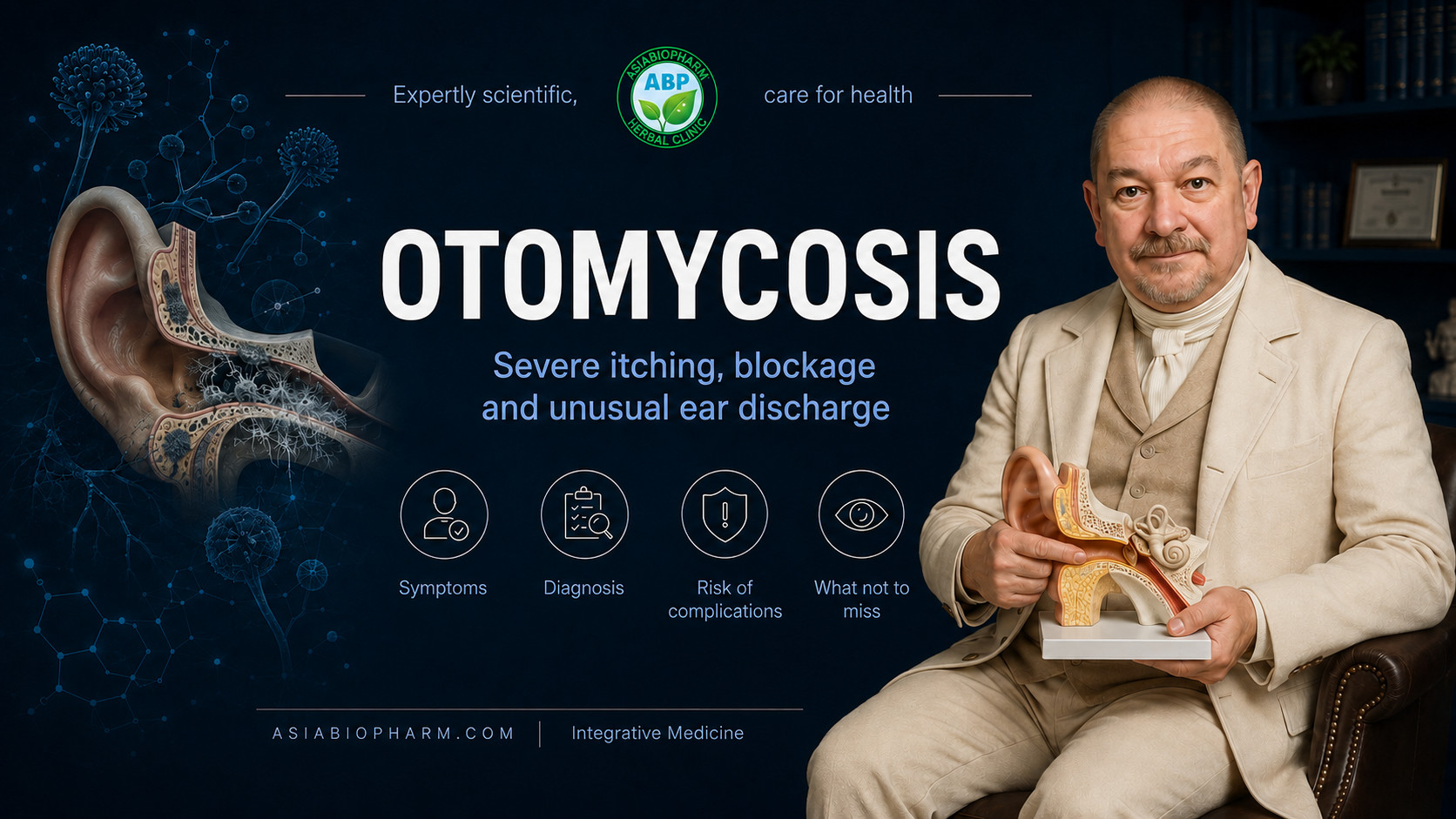
Otomycosis is a superficial fungal infection of the external auditory canal that less commonly spreads to the auricle and the outer surface of the eardrum. The most characteristic symptoms are persistent itching deep in the ear, a feeling of blockage, reduced hearing, flaking, moisture, and heterogeneous discharge. Black or dark-brown dots and masses are more common with fungi of the genus Aspergillus, white curd-like discharge may occur with Candida, while gray and greenish-gray discharge may be seen with other molds or mixed infection. The causative organism cannot be identified by the color of the discharge alone.
The condition develops not so much after “catching” the infection from another person as when the protective environment of the ear canal is disrupted. Contributing factors include a hot and humid climate, swimming, frequent use of earphones and hearing aids, skin injury from cotton swabs, scratching, dermatitis, uncontrolled use of antibacterial or hormonal ear drops, diabetes mellitus, and immunodeficiency. Acute symptoms usually last from one to three weeks, but if fungal masses are incompletely removed and moisture persists, the condition may become prolonged and recur. Children have narrower ear canals, so swelling and accumulation of discharge can impair hearing more quickly. In older adults and in patients with diabetes or immunodeficiency, it is particularly important to rule out deeper spread of the infection.
How to tell whether you have otomycosis
The most typical presentation is a combination of intense deep itching, increasing ear blockage, muffled hearing, and loose, flaky, or spot-like discharge of an unusual color. Pain is usually less pronounced than in acute bacterial otitis externa, but it becomes more severe when there is marked swelling, skin damage, or secondary bacterial infection. Tinnitus, a sensation of fluid moving in the ear, and increased tenderness when pressing on the tragus may also occur.
You can examine only the auricle and the visible part of the entrance to the ear canal yourself. Cotton swabs, tweezers, smartphone endoscopes, and other objects must not be inserted into the canal. The diagnosis is confirmed by an otorhinolaryngologist using otoscopy or otomicroscopy after careful removal of some of the discharge. In recurrent, severe, or persistent cases, microscopy and fungal culture are performed to identify the species and determine its susceptibility. Hearing assessment, confirmation of eardrum integrity, and blood glucose testing may also be required.
Bacterial otitis externa is more often dominated by pain, marked tenderness of the tragus, and purulent discharge. Dermatitis usually causes visible dryness, cracking, and flaking of the skin of the auricle or both ears. Profuse mucopurulent discharge following sudden severe pain may indicate otitis media with eardrum perforation. A dense homogeneous mass without marked inflammation may turn out to be an earwax plug. These conditions cannot be reliably distinguished without examination of the ear canal.
Red flags
Severe deep or nighttime pain that is clearly disproportionate to the visible changes requires urgent examination by an otorhinolaryngologist. It is particularly concerning in people with diabetes mellitus, cancer, HIV infection, those receiving immunosuppressive therapy, or those with severe wasting, because invasive otitis externa and involvement of the bones at the base of the skull must be ruled out.
High fever, rapidly increasing swelling of the auricle and surrounding tissues, redness spreading to the face or neck, foul-smelling discharge, and pronounced weakness may indicate a bacterial complication. Sudden significant hearing loss, dizziness, impaired balance, vomiting, weakness of the facial muscles, facial numbness, or a severe headache require urgent medical assessment.
Bleeding from the ear, suspected foreign body, trauma, exposure to a chemical substance, previous ear surgery, a ventilation tube in place, or possible eardrum perforation rule out self-treatment with any ear drops. A young child, an older patient, a pregnant woman, or a person with immunodeficiency should preferably be examined by a doctor at the first appearance of discharge or noticeable hearing loss.
Initial self-care measures for otomycosis
Until medical examination, the ear should be kept dry. Swimming should be temporarily avoided. During showering, the entrance to the ear may be covered with a small cotton ball lightly coated with petroleum jelly, without pushing it into the canal. Remove it immediately after showering. Visible discharge may be gently blotted with a dry sterile gauze pad only from the auricle and the very edge of the ear canal.
If water accidentally enters the ear, tilt the head with the affected ear downward and allow the fluid to drain out naturally. Brief drying with cool or barely warm air from a hair dryer is acceptable from a distance of at least 30 centimeters, without directing hot air into the ear canal. For pain, a cool dry cloth may be applied around the ear for 10 minutes without introducing water, ice, or medicinal substances into the canal.
Bed rest, a special diet, and increased fluid intake are not required for uncomplicated otomycosis. Normal food and fluid intake should be maintained, taking into account any heart or kidney disease and disorders of carbohydrate metabolism. During treatment, it is advisable to avoid in-ear earphones, earplugs, and a hearing aid in the affected ear if this can be done without compromising the patient’s safety. Earpieces that come into contact with the ear should be cleaned and dried according to the manufacturer’s instructions.
Do not irrigate the ear with water, hydrogen peroxide, alcohol, vinegar, baking soda, herbal decoctions, or oils. Do not attempt to remove fungal masses yourself using cotton swabs, matches, hairpins, tweezers, or a syringe. Until the eardrum has been examined, antifungal, antiseptic, antibacterial, analgesic, and oil-based products should not be instilled into the ear: some of them can cause severe pain if the eardrum is perforated and may damage structures of the middle and inner ear.
If itching, blockage, or discharge persists for more than 24 hours, examination by an otorhinolaryngologist is required. If treatment has already been started but there is no improvement within 48–72 hours or the symptoms worsen, repeat assessment, cleaning of the ear canal, and clarification of the causative organism are necessary.
Stages and possible progression of otomycosis
There is no formal staging system for non-invasive otomycosis. Usually, the protective skin barrier is disrupted first and the moisture level in the ear canal changes, followed by itching and a sensation of a foreign body. As fungi multiply, mycelium, spores, shed epithelium, and earwax accumulate, causing discharge, swelling, and conductive hearing loss.
If the ear canal is not thoroughly cleaned, medication does not make adequate contact with the affected skin. Symptoms may therefore improve temporarily and then return. Recurrence is promoted by moisture, continued trauma to the ear, dermatitis, use of contaminated earpieces, unjustified use of antibiotics and glucocorticosteroids, uncontrolled diabetes, and incomplete treatment.
Possible complications include bacterial superinfection, severe swelling with near-complete closure of the ear canal, temporary hearing loss, inflammation of the eardrum, and perforation. Deep invasive infection is rare and occurs mainly in people with diabetes or immunodeficiency, but it can spread to cartilage, the temporal bone, the skull base, and the cranial nerves.
Integrative treatment approaches for otomycosis
Integrative therapy is used only after otoscopy, confirmation that the eardrum is intact, and professional removal of fungal masses from the external auditory canal. If the canal remains filled with mycelium, shed epithelium, and discharge, topical agents cannot adequately reach the affected skin and treatment becomes less effective. Invasive disease, eardrum perforation, pronounced bacterial superinfection, hearing loss, dizziness, or involvement of the middle ear require a separate medical treatment strategy.
The main topical preparation during the active infectious phase is Jingdu ear drops. Chlorhexidine acetate and the herbal components of the formula provide antiseptic, antifungal, anti-inflammatory, anti-itch, and anti-edema effects. The drops are used after cleaning the ear canal and only when the eardrum has been confirmed to be intact.
Jingdu must not be used if the eardrum is perforated, if a ventilation tube is present, in purulent otitis media, after injury to the eardrum, in pronounced weeping dermatitis, or in people allergic to chlorhexidine, costus, borneol, or other components. If there is an undetected perforation, chlorhexidine entering the middle ear creates a risk of damage to the auditory and vestibular systems. Temporary burning, increased itching, redness, and contact irritation may occur.
Jingdu should not be mixed in the ear canal with chemical antifungal agents, antibiotic ear drops, alcohol-based solutions, or other antiseptics unless compatibility has been confirmed. Simultaneous administration of several active formulations increases moisture and the chemical burden on the damaged epithelium and makes it impossible to identify the cause of an adverse reaction.
ABP-153 oil infusion is suitable for superficial and cavity-localized otomycosis. Its purposes are to provide local anti-inflammatory and anti-itch effects, additional antimicrobial support, and restoration of damaged epithelium. The formula is used only after fungal masses have been removed and does not replace an active topical antifungal agent if a pronounced fungal process persists after debridement.
It is most reasonable to use ABP-153 not simultaneously with Jingdu or a chemical antifungal solution, but in a separate time window or after the active infectious phase has subsided. The oil base can alter the distribution of another medication and its contact with the skin of the ear canal. If there is abundant wet discharge, repeat cleaning is required first, because applying oil over exudate may interfere with even exposure of the affected surface.
ABP-153 is used only when the eardrum is intact. It is contraindicated in otitis media, when a ventilation tube is present, in the presence of a foreign body, with bloody discharge, and in people with individual intolerance to its components. Camphor, menthol, borneol, clove, eucalyptus, and other active substances may cause burning, redness, increased itching, and an allergic reaction. Use should be discontinued if pain, swelling, or discharge increases.
ABP-153D containing 7% DMSO is not used for ordinary superficial otomycosis. There is no need for enhanced transmembrane delivery in this situation, while penetration of DMSO and dissolved substances through damaged skin increases the risk of unwanted delivery of components into deeper tissues. The preferred topical form remains the basic ABP-153 without DMSO.
Nigella sativa is used exclusively orally as a standardized powdered extract. The powder must not be diluted for instillation into the ear, applied to a wick, or mixed with topical preparations.
The role of Nigella sativa in the regimen is related to its systemic anti-inflammatory, immunoregulatory, and potential antifungal support. The extract may be particularly appropriate in recurrent disease, when otomycosis is associated with allergic or eczematous dermatitis, diabetes mellitus, metabolic disorders, or slow recovery of the ear canal skin.
Oral Nigella sativa does not replace ear cleaning or topical antifungal treatment. Possible adverse effects include nausea, abdominal discomfort, diarrhea, headache, lowering of blood pressure and blood glucose, and allergic reactions. Caution is required during pregnancy, in people with individual intolerance, arterial hypotension, or a tendency toward hypoglycemia.
Nigella sativa may enhance the effects of glucose-lowering, antihypertensive, anticoagulant, and antiplatelet drugs. If such medications are used at the same time, individual assessment of compatibility is required.
The anti-inflammatory Five Root Compound is used exclusively orally and only when there is pronounced inflammatory pain, swelling, and tenderness of the external auditory canal. The powdered mixture must not be introduced into the ear, applied to a wick, or used to prepare a topical solution.
Five Root Compound provides systemic symptomatic anti-inflammatory and analgesic support, but it does not remove fungal masses and does not replace a topical antifungal agent. If otomycosis presents mainly with itching, a feeling of blockage, and fungal discharge without significant pain, inclusion of the compound is not essential.
Possible adverse effects include dyspepsia, abdominal pain, loose stools, and individual allergic reactions. The possibility of use should be assessed taking into account gastrointestinal, liver, and kidney disorders, pregnancy, breastfeeding, and the simultaneous use of anticoagulant, antihypertensive, and anti-inflammatory medications.
A rational topical regimen involves professional debridement and selection of one main preparation. Jingdu is appropriate for the active infectious phase when the eardrum is intact. ABP-153 is more suitable for subsequent anti-inflammatory, anti-itch, and reparative support after the fungal burden and amount of discharge have decreased. The preparations should not be mixed in a single instillation or layered on top of one another without clinical justification.
Topical use of Jingdu and ABP-153 produces a substantially lower systemic burden than prolonged administration of fluconazole, itraconazole, or voriconazole. This reduces the risk of drug-induced liver injury, QT interval prolongation, heart failure, neurological reactions, and numerous pharmacokinetic interactions.
Nigella sativa and Five Root Compound do not have the pronounced effect on the major metabolic enzymes characteristic of systemic azoles, but their use still requires consideration of individual tolerance, blood pressure, glucose level, coagulation, and concomitant medications. Plant origin does not eliminate the possibility of allergy, dyspepsia, or drug interactions.
An integrative regimen should not delay the use of a chemical topical antifungal agent if an active fungal process persists after professional cleaning, a resistant organism has been identified by laboratory testing, or the disease is progressing. In invasive infection, immunodeficiency, diabetes, middle-ear involvement, or lack of response to topical treatment, mycological testing and specialized antifungal therapy are required.
What you need to know about standard protocols of modern medicine
The cornerstone of otomycosis treatment is not simply instilling an antifungal drug, but thoroughly removing fungal masses under visual control. Micro-suction or careful instrumental cleaning of the external auditory canal is usually used. The procedure sometimes needs to be repeated because residual mycelium, shed epithelium, and discharge prevent adequate contact of the medication with the affected skin and sustain the infection. Self-cleaning with cotton swabs, metal objects, matches, or other implements traumatizes the epithelium, pushes fungal material deeper, and increases the risk of secondary bacterial inflammation.
Irrigation of the ear canal with water without prior medical examination is undesirable. Moisture supports the growth of Candida, Aspergillus, and other fungi, and if the integrity of the eardrum is unknown, fluid may enter the middle ear. Possible consequences include severe pain, dizziness, inflammation of the middle ear, and damage to the auditory or vestibular system.
Topical clotrimazole disrupts ergosterol synthesis in the fungal membrane and is active against many Candida and Aspergillus species. It is often used after the ear canal has been cleaned, but its effectiveness depends on the species and susceptibility of the organism, the dosage form, and complete removal of fungal masses. Burning, increased itching, redness, tenderness, swelling, flaking, and allergic contact dermatitis may occur. A pronounced reaction may sometimes be mistaken for worsening infection, although it may actually be caused by the drug itself or its solvent.
Systemic absorption of clotrimazole is usually low with limited topical application, but it may increase with erosions, weeping skin, skin damage, and prolonged treatment. Treatment should not be started independently when the integrity of the eardrum is unknown, after middle-ear surgery, when a ventilation tube is present, or in the presence of sudden hearing loss, dizziness, or bloody discharge. Even if the active substance has no pronounced systemic toxicity, the solvent and excipients may damage the middle-ear mucosa and structures of the auditory system.
Miconazole, econazole, bifonazole, ciclopirox, and other topical antifungal agents are selected according to the identified fungus and the availability of a suitable formulation for use in the ear. Common adverse reactions include burning, itching, dryness, swelling, tenderness, and contact allergy. Azole preparations differ in activity against individual species and strains, so mycological testing is necessary in recurrent or persistent cases.
Simultaneous use of several topical antifungal agents does not guarantee a stronger effect. On the contrary, it increases the chemical burden on damaged skin, raises the risk of contact dermatitis, and makes it difficult to determine which agent caused deterioration. Repeated empirical use of azoles without identifying the causative organism promotes selection of less susceptible fungal strains and development of cross-resistance.
Miconazole can affect the metabolism of warfarin even when applied topically to damaged skin. An elevated international normalized ratio, bleeding, bruising, and dangerous internal hemorrhage may occur. Caution is required in people using anticoagulants, antiepileptic drugs, or glucose-lowering medications.
Nystatin binds to ergosterol in the fungal membrane and is primarily active against Candida. It is not a universal treatment for Aspergillus and other molds. Use without identifying the causative organism may be ineffective and may delay prescription of an active treatment. Local burning, irritation, swelling, and allergic reactions may occur.
Low systemic absorption of nystatin does not eliminate the risks associated with administering it when the eardrum is perforated. The drug base, solvent, or suspended particles may cause inflammation of the middle ear, a vestibular reaction, and damage to hearing structures. Nystatin must not be instilled independently when a tympanostomy tube is present, after middle-ear surgery, or when the condition of the eardrum is unknown.
Acidifying and drying solutions can suppress fungal growth and reduce moisture in the ear canal, but alcohol, acetic acid, and concentrated antiseptics may cause intense burning and chemical irritation. With erosions, pain may increase, cracks may form, and epithelial recovery may be delayed. Preparing solutions at home with an inaccurate concentration increases the risk of chemical burns.
Alcohol- and acid-based solutions are contraindicated when eardrum perforation is possible, a ventilation tube is present, there has been previous middle-ear surgery, or there is pronounced dizziness or bloody discharge. Chlorhexidine and other potentially ototoxic antiseptics must not enter the middle-ear cavity. Contact with structures of the auditory system may damage hair cells, cause permanent hearing loss, and impair balance.
Systemic azole drugs fluconazole, itraconazole, and voriconazole are generally not required for ordinary superficial otomycosis. They are considered in invasive disease, spread of infection, severe immunodeficiency, middle-ear involvement, or resistance to adequate topical therapy. Use of a systemic antifungal without proven indications creates a disproportionately greater toxic burden than topical treatment.
Fluconazole may cause nausea, abdominal pain, diarrhea, headache, skin rash, toxic hepatitis, cholestasis, and acute liver failure. Severe bullous skin reactions, blood-cell abnormalities, and QT interval prolongation with ventricular tachycardia, fainting, and sudden cardiac death may occur. The drug is eliminated through the kidneys and requires dose adjustment in renal impairment.
Fluconazole interacts with warfarin, some glucose-lowering drugs, statins, phenytoin, cyclosporine, tacrolimus, and antiarrhythmic agents. Repeated self-directed short courses promote selection of resistant Candida strains and cross-resistance to other azoles.
Itraconazole may cause drug-induced liver injury, pronounced edema, increased blood pressure, hypokalemia, peripheral neuropathy, and numerous interactions through CYP3A4. It has a negative effect on myocardial contractility and may trigger or decompensate heart failure. The drug is particularly hazardous when combined with certain statins, antiarrhythmic drugs, anticoagulants, benzodiazepines, and immunosuppressants.
Voriconazole may cause visual disturbances, photopsia, altered color perception, dizziness, confusion, hallucinations, peripheral neuropathy, toxic liver injury, and QT interval prolongation. Long-term use may cause marked phototoxicity, bone damage, and an increased risk of cutaneous squamous cell carcinoma. The drug has numerous interactions through CYP2C19, CYP2C9, and CYP3A4.
Systemic azoles should not be started without medical supervision during pregnancy, in people with liver or kidney disease, cardiac rhythm disorders, electrolyte abnormalities, or those simultaneously taking anticoagulants, immunosuppressants, antiarrhythmic drugs, or psychotropic medications. Premature discontinuation does not cause a typical withdrawal syndrome, but it leaves viable fungal colonies behind, promotes recurrence, and contributes to development of resistance.
Antibacterial ear drops are used only when a mixed bacterial-fungal infection has been confirmed. Unjustified antibiotics suppress competing bacterial microflora and create conditions for further fungal growth. Neomycin and some other topical antibiotics can themselves cause pronounced allergic contact dermatitis.
Aminoglycoside drops containing neomycin, gentamicin, or other agents from this group are dangerous when the eardrum is damaged. Entry into the middle ear may cause irreversible damage to the cochlea and vestibular apparatus, permanent hearing loss, tinnitus, dizziness, and impaired balance.
Glucocorticosteroid ear drops rapidly reduce itching, swelling, and redness, but at the same time suppress local immune defenses. When used independently or for prolonged periods, they may mask progression of the infection, support fungal growth, thin the epithelium, delay healing, and increase the risk of recurrence. A visible reduction in inflammation does not mean that the causative organism has been eradicated.
With proper cleaning of the ear canal, elimination of excess moisture, and selection of an active topical antifungal agent, most superficial cases respond to treatment. However, there is no reliable universal percentage for complete cure and absence of recurrence over two years that applies to all fungal species and treatment regimens. The outcome depends on the causative organism, the condition of the eardrum, the quality of debridement, the presence of dermatitis, diabetes mellitus, immunodeficiency, and repeated water exposure.
Simultaneous or sequential use of multiple antifungal agents, antibiotics, antiseptics, acidic solutions, glucocorticosteroids, and systemic azoles may cause chemical skin injury, contact sensitization, suppression of local immunity, disruption of the microbiota, ototoxic hearing loss, drug-induced hepatitis, cardiac rhythm disturbances, and development of resistant fungal strains. Alternative integrative approaches based on rationally selected topical and oral herbal formulations make it possible to address fungal burden, inflammation, and epithelial recovery and generally do not exert the same aggressive systemic effects as unjustified combinations of chemically synthesized medications.
Why dosages and treatment duration are not specified in the article
The same disease may differ considerably between individuals in severity, duration, and depth of involvement and may be accompanied by bacterial superinfection, dermatitis, eardrum perforation, or recurrent disease. Selecting a dose and treatment duration requires assessment of the condition of the ear canal, the causative organism, the amount of discharge, the severity of swelling and pain, the integrity of the eardrum, and the presence of diabetes mellitus, immunodeficiency, and other conditions.
The specialist also considers age, body weight, liver and kidney function, the condition of the cardiovascular, nervous, endocrine, and immune systems, ear medications already being used, and possible drug interactions. A universal regimen may be insufficient in a resistant or mixed infection and excessive for a small superficial focus. Therefore, the article describes treatment approaches but does not replace an individualized clinical and pharmacological assessment. If necessary, you can ask a short question in the comments to this article, and in more complex cases you can schedule a consultation with a clinical pharmacologist specializing in integrative medicine via https://asiabiopharm.com/konsultaciii
0 comments