
Naphazoline — dangers, side effects, dependence and overdose
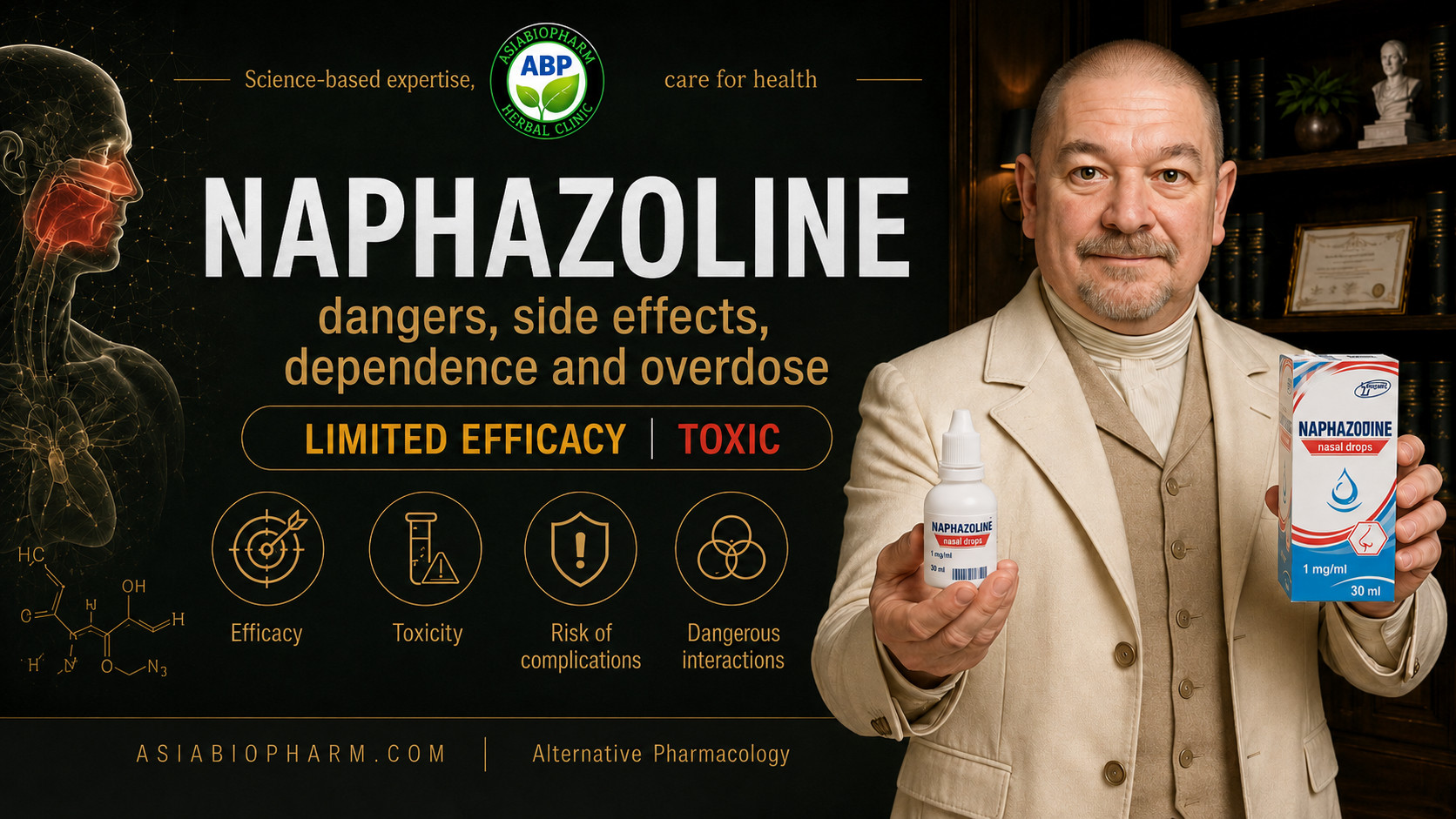
LIMITED EFFICACY | TOXIC
Names under which naphazoline is found: The international nonproprietary name is naphazoline; the Latin spelling is naphazoline. Medicinal products usually contain naphazoline hydrochloride. Russian-language instructions and search queries may use variants corresponding to “naphazoline,” “naphazoline hydrochloride,” “naphazoline drops,” “naphazoline spray,” and “eye drops containing naphazoline.” The best-known trade names of nasal products include Naphthyzin, Sanorin, Privine and Nafasolina; the specific range available depends on the country. Naphazoline is also included in some combination eye drops together with pheniramine, antazoline, zinc sulfate or other substances that reduce redness and allergic symptoms. Simultaneous use of nasal and ophthalmic products containing naphazoline may result in unnoticed duplication of the active ingredient and increase systemic adrenergic exposure.
Why naphazoline is considered harmless and where the real risk begins: Naphazoline rapidly constricts blood vessels in the mucous membrane and reduces nasal congestion or eye redness for several hours. This rapid effect creates the illusion that the underlying condition is being treated, although the drug does not eliminate infection, allergy, chronic inflammation, polyposis, a deviated septum or another cause of impaired nasal breathing. With repeated use, the duration of action decreases, the person instils the drug more frequently, and the return of swelling is mistakenly perceived as worsening of the runny nose. This creates a vicious cycle of vasoconstriction, rebound swelling and psychological or functional dependence on the bottle. Additional risks are associated with a high solution concentration, an excessive number of drops, swallowing the drug, use in young children and combination with other sympathomimetics. Systemic toxicity may begin with nonspecific symptoms such as weakness, drowsiness, pallor, sweating, headache or changes in heart rate, which is why the connection with ordinary nasal drops is often recognised late.
Side effects with short-term use: The most common local reactions are burning, dryness, mucosal irritation, sneezing and brief discomfort after instillation. Eye drops may cause burning, blurred vision, pupil dilation and increased intraocular pressure in predisposed patients. Clinically significant systemic reactions are associated with absorption of naphazoline through the mucous membrane: headache, nausea, palpitations, increased blood pressure, reflex bradycardia, weakness, dizziness and drowsiness. Toxic exposure may cause marked pallor, cold sweating, miosis, hypothermia, depressed consciousness, cardiac rhythm disturbances, hypotension or, conversely, persistent hypertension. Life-threatening reactions include severe central nervous system depression, hypoventilation, respiratory failure, coma and pulmonary oedema. Severe intoxication may develop particularly rapidly in children after accidental ingestion or excessive intranasal administration.
Side effects with prolonged and repeated use: Prolonged use of naphazoline causes tachyphylaxis — a gradual weakening of the vasoconstrictor response that leads the patient to increase the frequency and amount of each dose. Once the effect wears off, reactive vasodilation occurs, swelling increases and nasal congestion becomes even more pronounced. This is how rhinitis medicamentosa develops. The mucous membrane becomes chronically swollen, irritated, dry and vulnerable, mucociliary clearance is impaired, and crusting, reduced sense of smell and nosebleeds may occur. If the process persists for a long time, permanent mucosal hypertrophy may develop and prolonged treatment by an otorhinolaryngologist may be required. The term “Naphthyzin dependence” does not mean classical drug addiction, but it does include pronounced behavioural reinforcement, fear of being without the drops and physical rebound swelling after withdrawal. The absence of palpitations or other early systemic reactions does not make use for many months safe: local mucosal damage and drug-maintained congestion may progress unnoticed.
Contraindications and high-risk groups: Naphazoline is particularly dangerous for infants and young children because even a small amount of the solution may cause marked central nervous system depression, bradycardia, hypothermia and respiratory impairment. The drug is contraindicated or clinically undesirable in angle-closure glaucoma and a narrow anterior chamber angle because mydriasis and adrenergic effects may provoke a sharp increase in intraocular pressure. In patients with arterial hypertension, ischaemic heart disease, rhythm disorders, severe atherosclerosis and hyperthyroidism, systemic absorption may aggravate vascular and cardiac complications. In diabetes mellitus, sympathomimetic effects may worsen metabolic control. The risk is higher in elderly patients, in the presence of damaged or inflamed mucosa, when the recommended concentration is exceeded, when several vasoconstrictor drugs are used and when cardiovascular function is impaired. Patients with chronic nasal congestion require particular attention: continued use of naphazoline may mask allergy, chronic rhinosinusitis, polyps, vasomotor rhinitis or mechanical obstruction.
Dangerous interactions: Combining naphazoline with monoamine oxidase inhibitors is contraindicated or highly undesirable during their use and for at least two weeks after discontinuation because adrenergic effects may be excessively enhanced and blood pressure may rise dangerously. Tricyclic antidepressants, other sympathomimetics, stimulants, cold remedies containing phenylephrine or pseudoephedrine, as well as vasoconstrictor drops containing oxymetazoline, xylometazoline or tetryzoline increase the risk of palpitations, hypertension and cardiac rhythm disturbances. With non-selective β-blockers, the vascular response may become less predictable and may be accompanied by increased blood pressure and bradycardia. Caffeine, nicotine and psychostimulants may intensify cardiovascular reactions. Alcohol is neither a specific pharmacological antidote nor a direct antagonist of naphazoline: during intoxication it may worsen impaired consciousness, make symptoms more difficult to assess and increase the risk of aspiration. The most common hidden duplication occurs when nasal drops, eye drops for redness and combination cold remedies containing adrenomimetics are used simultaneously.
Patient errors: A typical mistake is to use naphazoline not for several days for short-term relief, but for weeks, months or years. As the duration of effect shortens, the patient increases the number of drops, shortens the intervals between doses, uses a more concentrated solution or carries the bottle at all times. Another mistake is to administer the drug to a child without observing exact age restrictions and measuring the volume, to use an adult-strength solution or to leave the bottle within the child’s reach. Pouring naphazoline into an unlabelled container is dangerous: cases have been reported in which it was accidentally swallowed after being mistaken for another solution. It should not be considered normal when the nose stops breathing without the drops after only a few hours: this is a characteristic sign of rebound swelling and possible rhinitis medicamentosa. Over-the-counter availability, low price and the long-standing familiarity of Naphthyzin are not evidence of safety. If the drug has to be used continuously, the problem is no longer a lack of vasoconstrictor drops but a disease of the mucous membrane or established dependence on the decongestant.
Naphazoline overdose and poisoning: There is no single everyday “safe” or toxic dose for naphazoline: severity depends on concentration, age, body weight, route of exposure, amount of solution swallowed, condition of the mucosa and concomitant diseases. A young child may develop severe symptoms after an amount that seems insignificant to an adult. During the first minutes or hours, burning, nausea, agitation, elevated blood pressure, pallor and sweating may occur, but central α₂-adrenergic and imidazoline effects then often predominate: drowsiness, slowed responsiveness, miosis, hypothermia, reduced heart rate, decreased blood pressure and respiratory depression. Impaired consciousness may progress to stupor and coma. Blood pressure during intoxication may be either elevated or reduced; arrhythmias, QT interval prolongation, pulmonary oedema and the need for mechanical ventilation are possible. There is no generally accepted specific antidote, and treatment is primarily supportive, with monitoring of respiration, haemodynamics, temperature, ECG, electrolytes and level of consciousness. If naphazoline has been swallowed, or if marked drowsiness, unusual pallor, cold sweating, a slow pulse, difficulty breathing or loss of consciousness occurs, spontaneous improvement must not be awaited: immediate toxicological and emergency medical care is required. Inducing vomiting without medical supervision is dangerous because of the risk of aspiration if consciousness becomes rapidly depressed.
A safe integrative alternative to naphazoline: Naphazoline rapidly reduces swelling by forcibly constricting blood vessels in the mucous membrane, but it does not eliminate inflammation, allergy, impaired mucociliary clearance or the cause of rhinosinusitis. Therefore, replacing it should not revolve around another vasoconstrictor substance but around local restoration of the mucous membrane and systemic action on the inflammatory process. The basis of the regimen is Rhinitis and Rhinosinusitis Mixture LH — a multi-component herbal preparation for systemic anti-inflammatory, secretolytic and symptomatic support in rhinitis and rhinosinusitis. The local component is ABP-153, administered intranasally to act on inflamed mucosa, viscous secretions, irritation and swelling without the tachyphylaxis and rebound congestion mechanism characteristic of α-adrenomimetics. In an allergic or vasomotor phenotype, Kaempferia parviflora is added. When rhinitis is combined with eosinophilic inflammation, bronchial hyperreactivity or an asthmatic phenotype, inclusion of Bronchial Asthma Type 2, Capsules LH, containing Clerodendrum serratum, is justified. The plant contains saponins, flavonoids, phenolic compounds and ursolic acid, although the clinical evidence base for this regimen is weaker than that for standard registered medicines; therefore, the claimed effects should be distinguished between pharmacological rationale, manufacturer data and clinical observations.
In persistent oedematous-inflammatory processes, impaired microcirculation and prolonged recovery, the Lymphoblock complex is additionally used: Plucao — Houttuynia cordata, Murdannia loriformis, Ruscus aculeatus and Squalene 1000. Lymphoblock is not an immediate substitute for vasoconstrictor drops and should not be expected to open the nasal passages instantly. Its role is additional anti-inflammatory, antioxidant, angioprotective and anti-oedematous support. Thus, the final sequence is as follows: Rhinitis and Rhinosinusitis Mixture LH — the main systemic therapy, ABP-153 — the main local treatment, Kaempferia parviflora — for an allergic and vasomotor component, Bronchial Asthma Type 2 LH — for Th2 inflammation and bronchial hyperreactivity, Lymphoblock — for persistent swelling and chronic inflammation. In severe obstruction, purulent rhinosinusitis, high fever, unilateral pain, polyps, an anatomical obstruction or severe asthma, this regimen does not replace examination and aetiotropic treatment.
The real effectiveness of naphazoline and errors in medical prescribing: Naphazoline does rapidly reduce blood filling of the mucosal vessels and temporarily facilitates nasal breathing. Its effect is symptomatic: it does not treat a viral or bacterial infection, eliminate an allergen, restore damaged mucosa or correct an anatomical obstruction. According to official instructions, the drug is intended for short-term relief of swelling in rhinitis and as an adjunct in certain ENT conditions.
The assessment “limited efficacy” reflects precisely this discrepancy between rapid subjective relief and failure to treat the cause. The drug may be justified for brief symptomatic use when swelling needs to be reduced quickly, but use for many days, and especially continuous use, turns therapy into maintenance of rhinitis medicamentosa. Medical prescribing errors include prescribing naphazoline without identifying the cause of chronic congestion, failing to limit the duration of treatment, using it in young children, ignoring hypertension, glaucoma and drug interactions, and replacing diagnostic evaluation with yet another vasoconstrictor. Prescribing it to a patient who already reports that “the nose does not breathe without the drops” is particularly questionable: in such a situation, increasing the dose mainly treats the consequences of the previous dose.
Safety monitoring during use: With short-term use, it is necessary to monitor the frequency of instillation, duration of effect and condition of the mucous membrane, as well as blood pressure and pulse in patients with cardiovascular disease. Worsening congestion after the effect wears off, the need to shorten intervals between doses, waking at night to use the drops, constantly carrying the bottle and inability to breathe without the drug indicate tachyphylaxis and rhinitis medicamentosa. Burning, marked dryness, crusting, reduced sense of smell and nosebleeds require discontinuation of uncontrolled use and examination of the mucous membrane.
Emergency care is required in the event of marked drowsiness, slowed responsiveness, unusual pallor, cold sweating, reduced body temperature, a slow or irregular pulse, a significant increase or decrease in blood pressure, difficulty breathing, seizures or loss of consciousness. These symptoms are particularly dangerous in a child after possible ingestion of the solution. It is unsafe to wait for the “full picture” of poisoning to develop: imidazoline decongestants can rapidly depress the central nervous system and respiration. Gastric lavage without medical supervision and inducing vomiting in a drowsy person increase the risk of aspiration.
Proper discontinuation of naphazoline: Naphazoline usually does not require special measures to prevent a dangerous systemic withdrawal syndrome, but abrupt discontinuation after prolonged use often causes pronounced rebound swelling. During the first few days, the patient may feel that nasal breathing has become worse than it was before treatment began. This is not evidence that the drug is necessary, but a manifestation of drug-maintained vasodilation and chronic inflammation of the mucous membrane.
After short-term use, naphazoline can be stopped immediately. After use lasting many weeks or months, the method of discontinuation is chosen according to the severity of rhinitis medicamentosa. Options include stopping it at once, discontinuing use first in one side of the nose and then the other, or gradually reducing the frequency of use, but extending this process should not turn into indefinite continuation of dependence. At the same time, the underlying cause of congestion must be treated and the mucous membrane restored. Persistent severe obstruction after discontinuation requires exclusion of allergic rhinitis, chronic rhinosinusitis, polyposis, turbinate hypertrophy and a deviated septum. Rhinitis medicamentosa after excessive use of topical decongestants is a recognised clinical condition.
A rational approach to treatment: Naphazoline is justified only when rapid, short-term reduction of mucosal swelling is required and contraindications and dangerous interactions have been excluded. Its strength is the speed of action. Its weakness is its exclusively symptomatic effect, rapid development of tachyphylaxis, risk of rhinitis medicamentosa and the possibility of severe systemic intoxication.
For recurrent or chronic congestion, it is preferable to address inflammation, allergy, impaired drainage of secretions and mucosal damage. In the approved integrative regimen, Rhinitis and Rhinosinusitis Mixture LH addresses this systemically and ABP-153 locally; Kaempferia parviflora, Bronchial Asthma Type 2 LH and Lymphoblock are added according to the specific disease phenotype. This does not mean that every herbal preparation is automatically safe or can replace diagnostic evaluation. The aim of the approach is to move away from chronic forced vasoconstriction and reduce the likelihood of rebound swelling, dependence on drops, polypharmacy and delayed mucosal damage.
If you have questions about the subject of this article, you can ask a clinical pharmacologist in the comments or book an appointment via the link: https://asiabiopharm.com/konsultaciii/
0 comments