
Mometasone — the risks of long-term use of ointment and nasal spray
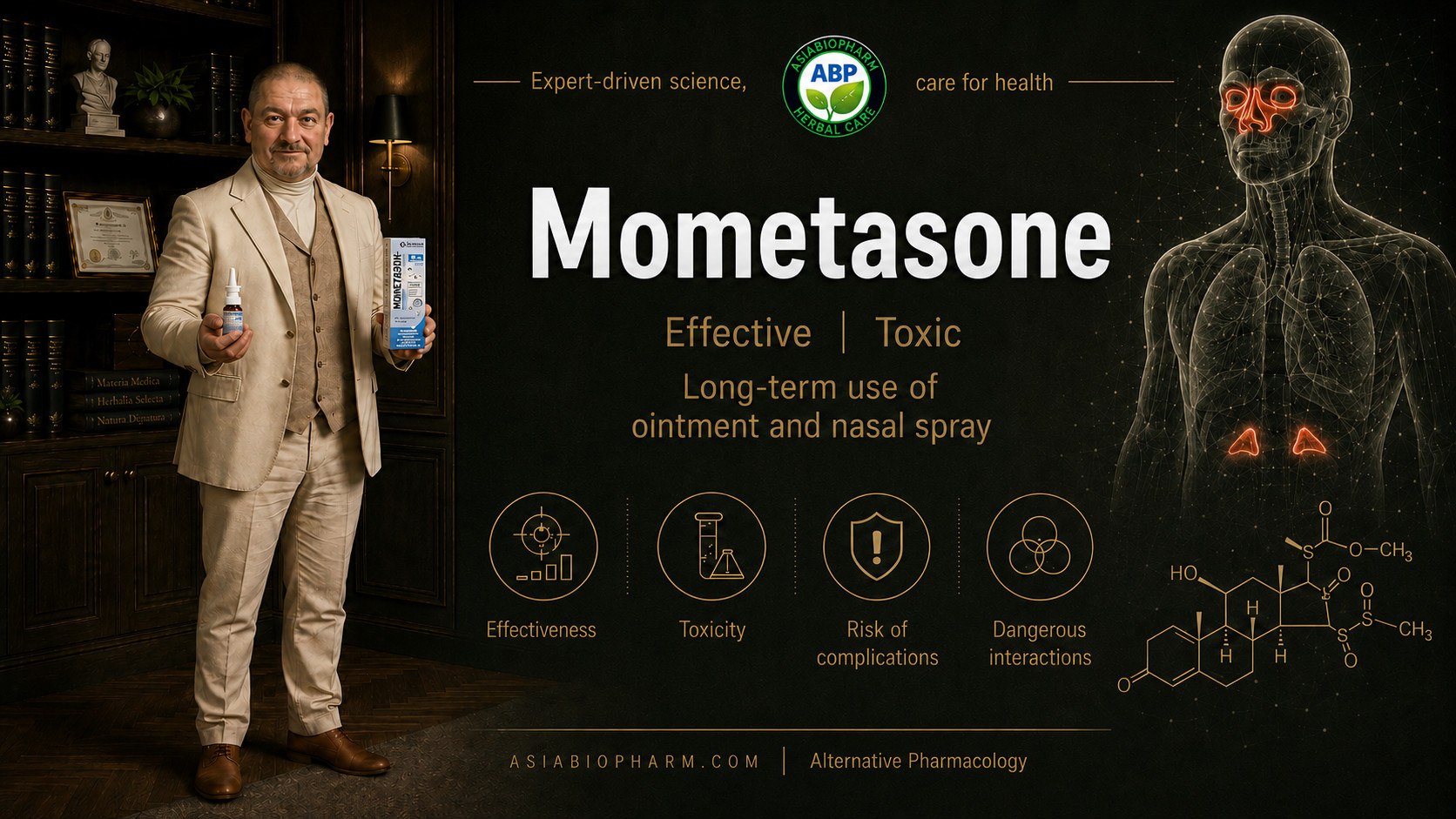
EFFECTIVE | TOXIC
Under what names is mometasone available
The international nonproprietary name is mometasone; in medicinal products, mometasone furoate is actually used, with the Latin variants mometasone and mometasone furoate, while mometasone furoate monohydrate is less commonly specified in nasal spray formulations. Topical forms are available as 0.1% cream, ointment, lotion, or solution; nasal spray usually contains 50 mcg of mometasone furoate per dose. Common trade names include Nasonex, Elocom, Momat, Momederm, Mometasone, Mometasone Sandoz, Mometasone Teva, Monovo, and Clarinaze. Mometasone is also included in combination products: Ryaltris with olopatadine, Dulera and Zenhale with formoterol, as well as inhaled combinations with indacaterol and glycopyrronium. Simultaneous use of an ointment, nasal spray, and inhaler may create a cumulative glucocorticoid burden even though the product names and routes of administration differ.
Why mometasone is considered harmless and where the real risk begins
Mometasone is often perceived as a “local hormone” that acts only in the skin or nasal mucosa. This is a dangerous oversimplification. The drug does indeed produce a predominantly local effect, but with prolonged use, application to a large surface area, use under a dressing, damage to the skin barrier, exceeding the nasal dose, or simultaneous use of several corticosteroids, some of the substance enters the systemic circulation. This may result in suppression of the hypothalamic-pituitary-adrenal axis, hypercortisolism, growth retardation in children, and adrenal insufficiency after treatment is discontinued. Pediatric experience is particularly illustrative: after application of 0.1% cream for approximately three weeks, adrenal suppression was detected in about 16% of children aged 6–23 months, while with ointment it was found in approximately 27% of examined children in this age group when the drug was applied to a substantial body surface area.
The absence of an immediate systemic reaction reinforces a false sense of safety. The skin becomes calmer and nasal breathing improves, so the drug is used for months, often without reassessing the diagnosis. Meanwhile, mometasone suppresses inflammation but does not eliminate the fungal, bacterial, or viral cause of the lesion. It may temporarily mask an infection while simultaneously weakening local immune defense and impairing tissue healing.
Side effects in the first hours and days of use
With topical use, the most typical effects are burning, itching, tingling, dryness, irritation, and folliculitis. Contact dermatitis, acne-like eruptions, skin maceration, and exacerbation of a hidden infection may occur. On the face, a potent corticosteroid may provoke perioral dermatitis and steroid-like rosacea. Application near the eyes creates a risk of the drug reaching the conjunctiva and increasing intraocular pressure in susceptible patients. Mometasone belongs to the potent topical corticosteroids, so the skin reaction depends not only on the amount of ointment but also on where it is applied: the face, groin, and axillary folds are considerably more vulnerable than the thicker skin of the trunk.
Nasal spray most commonly causes nosebleeds, irritation, burning, dryness of the mucosa, headache, and pain or irritation in the throat. Clinically significant complications include mucosal ulceration, candidiasis of the nose and throat, and delayed healing after nasal surgery or trauma. Immediate hypersensitivity reactions, including bronchospasm, angioedema, and anaphylaxis, occur rarely. Nosebleeds should not automatically be attributed to “dry air”: with prolonged spray use, they may reflect mucosal damage or incorrect direction of the spray toward the nasal septum.
Side effects with prolonged and repeated use
Prolonged application of mometasone to the skin leads to thinning of the epidermis and dermis, dilation of superficial blood vessels, and the appearance of telangiectasias, purpura, striae, and hypo- or hyperpigmentation. The skin becomes thin, is easily injured, heals slowly, and becomes less resistant to bacterial, fungal, and viral infections. Atrophic changes are particularly likely on the face, eyelids, genitals, in the groin and axillary folds, and under an occlusive dressing. Striae and pronounced telangiectasias may persist after discontinuation and may be partially irreversible.
With prolonged use over large areas, systemic effects are possible: Cushing syndrome, suppression of endogenous cortisol production, hyperglycemia, glucosuria, growth retardation, and inadequate weight gain in children. The risk increases when the skin barrier is disrupted, with occlusion, frequent application, and combination with other corticosteroids. The absence of visible signs of hypercortisolism does not exclude laboratory evidence of adrenal suppression.
Long-term use of nasal spray may sustain chronic dryness, erosion, and ulceration of the mucosa; perforation of the nasal septum has been described in extremely rare cases. Candidiasis, delayed postoperative healing, increased intraocular pressure, glaucoma, and cataracts may occur. The systemic bioavailability of intranasal mometasone is low, but the risk of systemic effects increases when the dose is exceeded, treatment continues for many months, individual sensitivity is increased, metabolic inhibitors are used, or other glucocorticosteroids are taken at the same time. In children receiving prolonged treatment, the potential slowing of linear growth must be taken into account.
Contraindications and high-risk groups
Mometasone is contraindicated in patients with confirmed hypersensitivity to the active substance or to components of the specific formulation. The topical preparation must not be applied to untreated bacterial, viral, fungal, or parasitic skin lesions, including herpes, chickenpox, shingles, cutaneous tuberculosis, syphilitic lesions, and rosacea. It is not intended for the treatment of common acne, perioral dermatitis, itching without inflammation, wounds, or ulcers. Use on the face, groin, and axillary areas requires particularly strict limitation because skin atrophy develops more rapidly in these locations.
Young children, patients with extensive dermatitis or marked impairment of the skin barrier, and people applying the drug under plastic film, a tight dressing, or a diaper have the highest risk of systemic absorption of topical mometasone. In children, the ratio of body surface area to body mass is higher, so application to the same relative surface area produces a greater systemic burden. For some European products, the duration of topical treatment in children is limited to three weeks, the treated area to no more than 10% of the body surface, and occlusion is excluded.
Intranasal mometasone must not be used in the presence of an untreated local infection of the nasal mucosa. After nasal surgery or trauma, it should not be used until the tissues have healed sufficiently. Patients with recurrent nosebleeds, septal ulcers, glaucoma, cataracts, tuberculosis of the respiratory tract, systemic infection, or immunodeficiency require particular monitoring. During pregnancy and breastfeeding, the drug is prescribed only after assessing the need for treatment and minimizing the dose and duration of therapy.
Dangerous interactions
The most clinically significant interaction is the combination of mometasone with potent CYP3A4 inhibitors. Ritonavir, cobicistat, and some antifungal azoles can reduce corticosteroid metabolism and increase systemic exposure. With prolonged concomitant use, the likelihood of hypercortisolism and adrenal suppression increases. Such a combination requires either avoiding an unjustified combination or medical monitoring for systemic hormonal effects.
The cumulative corticosteroid burden increases when mometasone ointment, nasal spray, inhalers, eye drops, intra-articular injections, or oral glucocorticosteroids are used simultaneously. The problem is not direct incompatibility between the formulations but the accumulation of their overall systemic effect. A patient may believe they are using different medicines “for the skin,” “for allergies,” and “for asthma,” although each of them suppresses the same hormonal axis.
Alcohol does not produce a specific acute pharmacokinetic reaction with mometasone, but it may increase mucosal dryness, make infection control more difficult, and worsen the course of dermatosis or rhinitis. Dietary supplements and herbal products should not automatically be considered compatible: agents that substantially affect CYP3A4 could theoretically alter systemic exposure to mometasone, although clinical data for most herbal combinations are insufficient. Hidden duplication is more likely to occur not between different trade names of mometasone, but between different glucocorticosteroids prescribed by several specialists.
Patient errors
The main mistake is turning a course of treatment into permanent suppression of symptoms. The ointment is applied to any redness without determining whether the cause is allergic dermatitis, a fungal infection, rosacea, or bacterial inflammation. Rapid disappearance of itching is interpreted as a cure, although the infection may remain active and continue spreading beneath skin that appears calm.
Applying a thick layer, increasing the treated surface area, using the drug more than once daily, applying it to the face and eyelids, using it under plastic film or a dressing, and continuing treatment for weeks without reassessing the diagnosis are dangerous. A diaper in a child effectively acts as an occlusive dressing and increases absorption. Mometasone should not be used as a universal cream for insect bites, itching, acne, or an unidentified rash.
Typical errors with nasal spray include exceeding the number of sprays, directing the spray toward the septum, failing to clean the applicator, continuing treatment despite recurrent bleeding, and attempting to treat a viral cold with it. Mometasone is not intended for ordinary nasal congestion caused by an acute respiratory infection. It does not act immediately like a vasoconstrictor: a meaningful effect develops gradually, so additional sprays during the first hours do not accelerate treatment but do increase exposure of the mucosa.
Overdose and poisoning
No single acute toxic dose has been established for mometasone comparable to the thresholds used for acute poisoning with some oral medications. Accidentally exceeding the number of nasal sprays on a single occasion usually does not cause immediate severe intoxication. The main danger is repeated and chronic overdose: applying the ointment to a large area, using it under occlusion, exceeding the recommended duration of treatment, repeatedly increasing the spray dose, and combining several corticosteroids.
Chronic excessive exposure may lead to hypercortisolism and adrenal suppression. Possible manifestations include muscle weakness, unusual fatigue, weight gain, rounding of the face, thinning of the skin, easy bruising, increased blood pressure, and elevated blood glucose. After abrupt discontinuation of excessive prolonged use, weakness, nausea, loss of appetite, dizziness, arterial hypotension, and hypoglycemia may occur because endogenous cortisol secretion has not recovered sufficiently. Severe adrenal insufficiency requires urgent medical care and systemic administration of glucocorticosteroids.
There is no specific antidote for mometasone. If systemic effects are suspected, morning cortisol is assessed and, if necessary, an ACTH stimulation test is performed. Management may include reducing the frequency of use, switching to a less potent corticosteroid, or gradually discontinuing treatment. Abrupt withdrawal after confirmed suppression of the hypothalamic-pituitary-adrenal axis is undesirable: in rare cases, temporary replacement therapy with a systemic glucocorticosteroid may be required.
Safe integrative alternative
It is impossible to select a single universal herbal substitute for mometasone because the ointment and nasal spray serve different therapeutic purposes. The topical form is used to suppress skin inflammation, whereas the nasal spray is used primarily to control allergic inflammation of the nasal mucosa. Therefore, an integrative alternative should consist of two separate approaches.
For dry atopic, allergic, or contact dermatitis without oozing, purulent infection, or extensive skin involvement, a topical ointment made from extracts of black seed — Nigella sativa, Baikal skullcap — Scutellaria baicalensis, and Gotu kola — Centella asiatica may be used.
To prepare 100 g of ointment, use 4 g of dry black seed extract, 4 g of dry Baikal skullcap extract, 3 g of dry Gotu kola extract, 69 g of coconut oil, 15 g of beeswax, and 5 g of lanolin.
Coconut oil, beeswax, and lanolin are heated in a water bath until completely melted. The mixture is removed from the heat and cooled to approximately 40–45 °C. The dry extracts are first triturated with a small amount of the liquid base until a homogeneous paste is obtained, then gradually incorporated into the main mixture with constant stirring. The finished ointment is transferred to a clean airtight container and stored in the refrigerator. Apply a thin layer to a limited area of intact skin after first performing a tolerance test.
Black seed has anti-inflammatory, antiallergic, and moderate antimicrobial effects. Baikal skullcap contains baicalin and baicalein, which can suppress pro-inflammatory signaling pathways and the release of mediators of allergic inflammation. Gotu kola contains asiaticoside, madecassoside, and other triterpene compounds that support repair, synthesis of extracellular matrix components, and restoration of the skin barrier.
This ointment does not cause the skin atrophy typical of potent topical glucocorticosteroids and does not suppress adrenal function. However, it acts more slowly than mometasone and should not be presented as an equivalent substitute during a severe exacerbation of atopic dermatitis, marked edema, extensive lesions, oozing, secondary infection, or rapid progression of the condition.
For allergic rhinitis, the main systemic alternative is Allergy Mixture capsules. It contains Andrographis paniculata, Schefflera leucantha, Murdannia loriformis, and other herbal components. The product is intended for allergic rhinitis, the allergic component of chronic rhinosinusitis, and respiratory diseases associated with allergic inflammation. Its components have anti-inflammatory, antihistamine-like, and immunomodulatory effects, including effects on NF-κB-dependent cytokine production, mast-cell mediator release, and the activity of eosinophilic inflammation.
ABP-153 may be used for local support of the mucosa. When using it, individual tolerance of aromatic and essential-oil components must be taken into account. The oil-based form must not be introduced deeply into the nose, used when the mucosa is markedly damaged or actively bleeding, or used immediately before sleep in patients with swallowing disorders and a risk of aspiration.
If allergic rhinitis is combined with chronic rhinosinusitis, postnasal drip, viscous secretions, or persistent inflammation of the paranasal sinuses, instead of simply increasing the dose of an antiallergic medication, it is reasonable to consider Rhinitis and Rhinosinusitis Mixture capsules.
Bronchial Asthma Type 2 capsules are not the primary substitute for intranasal mometasone. This product is appropriate only when allergic rhinitis is combined with bronchial asthma, bronchial hyperreactivity, or confirmed type 2 inflammation.
In mild or moderate stable allergic rhinitis, the herbal complex may be used independently while symptoms are monitored. In severe nasal obstruction, polypoid rhinosinusitis, significant impairment of sleep, smell, or breathing, frequent asthma exacerbations, or when rapid control of inflammation is required, mometasone should not be discontinued without consulting a specialist.
The real effectiveness of mometasone and medical errors
Mometasone is indeed effective for inflammatory dermatoses responsive to glucocorticosteroids, including atopic and allergic contact dermatitis. It rapidly reduces redness, itching, swelling, and inflammatory infiltration. The nasal formulation is effective for seasonal and perennial allergic rhinitis and is also used for nasal polyposis and some forms of chronic rhinosinusitis.
However, the drug does not eliminate the underlying cause of the disease. In allergic rhinitis, it suppresses the local inflammatory response but does not eliminate sensitization, exposure to the allergen, or systemic immune dysregulation. In dermatitis, it suppresses symptoms but does not automatically restore the skin barrier or eliminate the contact allergen, infection, or chronic irritation.
Mometasone should not be prescribed as a universal remedy for every rash or every case of nasal congestion. A fungal skin lesion treated with a hormonal ointment may become less visible externally while continuing to spread. Rosacea and perioral dermatitis may initially respond with reduced redness, followed by a more severe steroid-induced exacerbation. Nasal spray is not intended for immediate relief of congestion during a viral infection and does not replace diagnostic evaluation in cases of unilateral nasal obstruction, purulent discharge, bleeding, or persistent loss of smell.
Common medical errors include prescribing a potent topical corticosteroid without establishing the diagnosis, failing to limit the treated area and duration of use, recommending application to the face or skin folds as if they were ordinary body areas, ignoring simultaneous use of other glucocorticosteroids, and failing to monitor children.
With intranasal use, errors include automatically extending therapy for many months without examining the mucosa, ignoring recurrent bleeding, ulcers, and worsening vision, and prescribing the drug when infection is suspected without appropriate diagnostic evaluation.
Safety monitoring during treatment
With topical use, the condition of the skin must be monitored. The appearance of pronounced burning, increasing redness, oozing, pustules, painful fissures, dilated vessels, unusual pallor, skin thinning, or deterioration after an initial improvement requires reassessment of treatment.
When the drug is applied to large areas, used for a prolonged course, prescribed to a young child, used under occlusion, or combined with several corticosteroids, the risk of adrenal suppression must be taken into account. Clinical signs may include unusual weakness, loss of appetite, arterial hypotension, dizziness, nausea, and hypoglycemia. If suppression is suspected, morning cortisol levels are assessed and, if necessary, an ACTH stimulation test is performed.
When using nasal spray, the frequency of nosebleeds, the condition of the septum, and the appearance of ulcers, persistent burning, candidal plaques, or unusual pain must be monitored. The spray should be directed toward the outer wall of the nasal passage rather than toward the septum.
Patients with glaucoma, cataracts, increased intraocular pressure, or worsening vision require ophthalmologic monitoring. Blurred vision, rainbow-colored halos around lights, eye pain, or sudden loss of vision should not be attributed to fatigue while treatment is continued without examination.
Swelling of the face or larynx, difficulty breathing, a widespread severe skin reaction, pronounced muscle weakness, impaired consciousness, a sharp fall in blood pressure, and signs of acute adrenal insufficiency require emergency assessment.
Correct discontinuation of mometasone
After a short course of topical mometasone on a small area, the drug can usually be discontinued immediately. However, after prolonged daily application, especially to the face, skin folds, large areas of skin, or under occlusion, abrupt discontinuation may cause rebound redness, burning, itching, and exacerbation of dermatitis.
With long-term use, it is reasonable to reduce the frequency of application: first move from daily use to every other day, then to twice weekly, and only then discontinue the drug completely. At the same time, the skin barrier should be restored and the cause of inflammation addressed. The specific regimen depends on the potency of the drug, duration of treatment, treated surface area, and condition of the skin.
After discontinuation of a potent topical glucocorticosteroid, a pronounced rebound syndrome may develop. Intense redness, burning, and spread of inflammation beyond the original treatment area are particularly suspicious. In such a situation, simply applying an even larger amount of hormonal ointment again may temporarily suppress the symptoms but reinforce the skin's dependence on the drug.
Intranasal mometasone used at standard doses usually does not require gradual dose reduction. It can be stopped immediately, although symptoms of allergic rhinitis may return because the drug suppressed inflammation but did not eliminate its cause. The return of nasal congestion and sneezing is not necessarily a hormonal withdrawal syndrome.
Gradual discontinuation is particularly important after prolonged use of high doses, when intranasal, inhaled, and topical corticosteroids are combined, or when signs of adrenal suppression are present. In these cases, the discontinuation regimen is determined according to the total glucocorticoid burden and the results of hormonal monitoring.
A rational approach to treatment
Mometasone is justified when pronounced inflammation of the skin or nasal mucosa needs to be suppressed rapidly and predictably. A short, limited course may prevent scratching, skin damage, sleep disturbance, and progression of allergic inflammation.
The problem begins not with prescribing the drug itself, but when a potent local glucocorticosteroid becomes a permanent remedy for any redness or nasal congestion. Prolonged treatment without reassessing the diagnosis increases the risk of skin atrophy, mucosal damage, masking of infection, ocular complications, and systemic suppression of adrenal function.
In mild and stable dermatitis, it may be possible to switch to a topical combination of black seed, Baikal skullcap, and Gotu kola. For allergic rhinitis, systemic herbal therapy may include Allergy Mixture capsules, while local support may include ABP-153, taking into account the condition of the mucosa and tolerance of the components.
In rhinosinusitis, a complex should be selected that targets not only allergy but also inflammation of the paranasal sinuses. When rhinitis is combined with bronchial asthma, therapy should take inflammation throughout the respiratory system into account rather than being limited to a nasal spray.
The goal of an integrative approach is not necessarily to eliminate mometasone altogether, but to reduce the duration and surface area of its use, decrease the total glucocorticoid burden, restore the skin and mucosal barriers, and transition to less toxic maintenance therapy where clinically appropriate.
If you have questions about the topic of this article, you can ask a clinical pharmacologist in the comments or book an appointment via the following link: https://asiabiopharm.com/konsultaciii/
0 comments