
Hydroxyzine — Why Atarax Is Dangerous, Side Effects, Overdose, and Heart Rhythm Disturbances
EFFECTIVE | TOXIC
Names Under Which Hydroxyzine Is Available
The international nonproprietary name is hydroxyzine, Hydroxyzine. Medicinal products mainly contain hydroxyzine hydrochloride — Hydroxyzine hydrochloride, hydroxyzine HCl — while in some countries, particularly the United States, hydroxyzine pamoate — Hydroxyzine pamoate — is used. The principal brand names are Atarax, Vistaril, and Ucerax; the exact list depends on the country in which the product is registered. It is available as film-coated tablets, capsules, oral solutions and syrups, as well as a solution for intramuscular administration. Pamoate and hydrochloride are salts of the same active substance and must not be taken simultaneously as if they were different medications. No widely used modern fixed-dose combinations containing hydroxyzine have been identified, but duplication may occur when different brands, salts, or dosage forms are used at the same time. Cetirizine is an active metabolite of hydroxyzine, but it is not considered the same medication and must not be included when calculating the hydroxyzine dose.
Why Hydroxyzine Is Considered Harmless and Where the Real Risk Begins
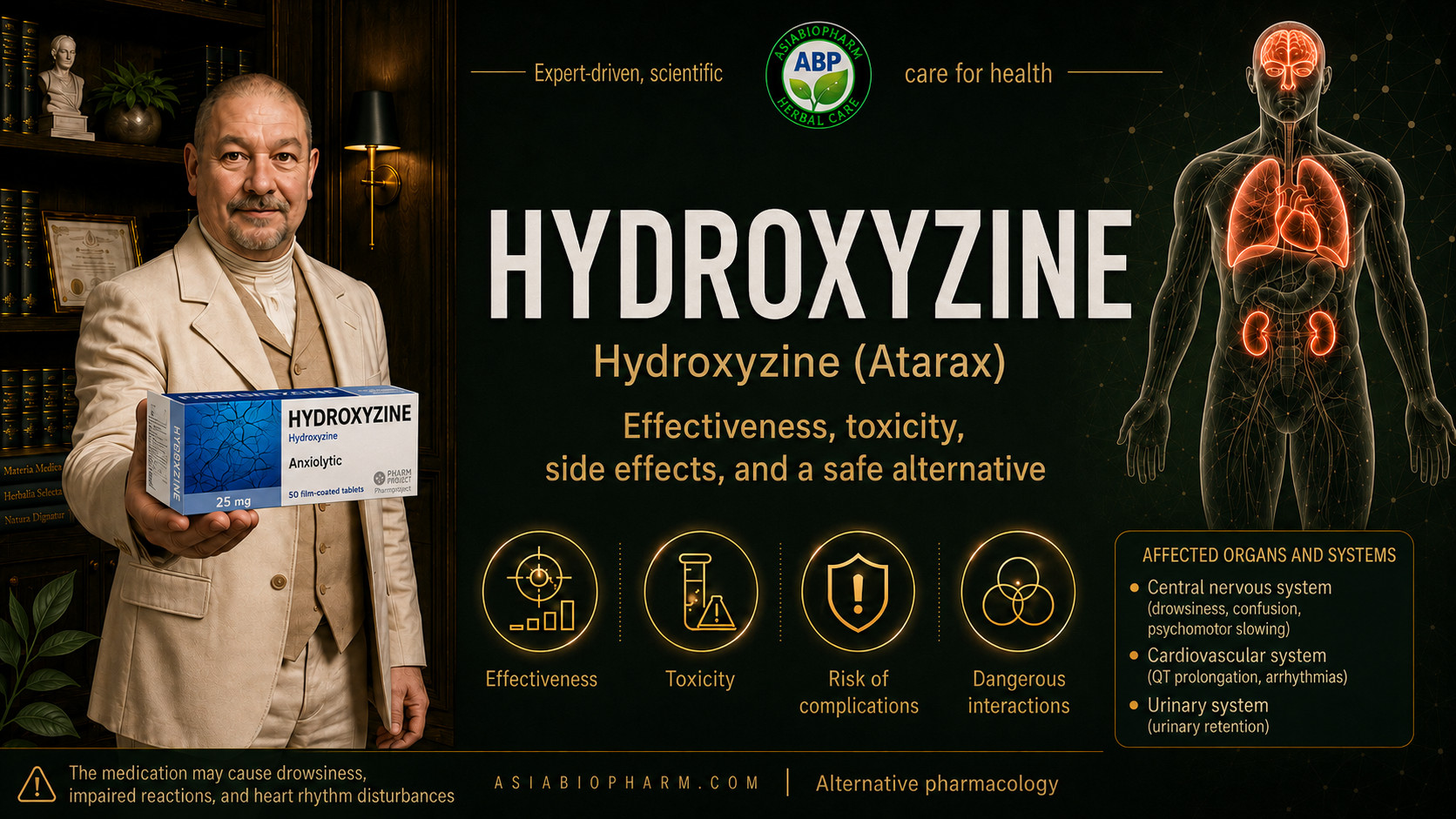
Hydroxyzine is often regarded as an ordinary remedy for “nerves,” itching, or sleep, although even a therapeutic dose can cause pronounced drowsiness, psychomotor slowing, dizziness, impaired coordination, and reduced reaction speed. A person may fail to associate a fall, road traffic accident, confusion, or brief loss of consciousness with the medication. A more serious danger is blockade of cardiac hERG channels, which can prolong the QT interval and lead to polymorphic ventricular tachycardia known as torsades de pointes. Particularly risky situations include taking another dose because of an “insufficient effect” and combining hydroxyzine with alcohol, sleeping pills, tranquillizers, opioids, or medications that affect heart rhythm. The first signs of toxicity — weakness, drowsiness, palpitations, and dizziness — are nonspecific and are therefore often mistaken for anxiety, fatigue, or symptoms of the underlying illness.
Side Effects After the First Dose and a Short Course
Common reactions occur within the first few hours: drowsiness, impaired concentration, psychomotor slowing, headache, dizziness, dry mouth, and fatigue. Clinically significant consequences include impaired ability to drive or operate machinery, falls, especially among older adults, reduced blood pressure, blurred vision, constipation, and difficulty urinating due to the anticholinergic effect. Paradoxical stimulation of the central nervous system is possible, including agitation, irritability, insomnia, tremor, or disorientation; in children, these reactions may be more noticeable than ordinary sedation. Life-threatening complications include a severe allergic reaction, profound depression of consciousness, seizures, QT prolongation, ventricular arrhythmia, and torsades de pointes. Cardiac risk depends not only on the dose but also on the baseline QT interval, heart rate, potassium and magnesium levels, liver and kidney function, and other medications taken at the same time.
Consequences of Long-Term and Repeated Use
The safety of regular hydroxyzine use over many months has been studied far less thoroughly than its short-term effects. For the treatment of anxiety, its effectiveness beyond four months has not been systematically confirmed in controlled studies. Automatically renewing the prescription therefore turns temporary symptomatic treatment into chronic sedation without reliably proven additional benefit. Repeated use may cause persistent daytime drowsiness and impair attention, memory, and psychomotor speed, while increasing the risk of falls and injuries. The anticholinergic burden is particularly unfavourable for older patients and may result in confusion, urinary retention, severe constipation, and decompensation of angle-closure glaucoma. Hydroxyzine is not considered a typical medication that causes physical dependence, and no specific, proven withdrawal syndrome has been established. However, behavioural reliance on its sedative effect may develop, while anxiety, itching, or insomnia that the medication only temporarily suppressed may return after discontinuation. The absence of pronounced reactions at the beginning of treatment does not rule out the gradual accumulation of functional impairment and drug interactions.
Contraindications and High-Risk Groups
Hydroxyzine is contraindicated in congenital or acquired QT prolongation, a previous episode of torsades de pointes, and the presence of major risk factors for ventricular arrhythmia. These include cardiovascular disease, a family history of sudden cardiac death, significant bradycardia, hypokalaemia, hypomagnesaemia, and the simultaneous use of medications that prolong the QT interval. The medication should not be prescribed during pregnancy, particularly in the early stages, or during labour. It is also not intended for use during breastfeeding unless breastfeeding is discontinued. In older adults, the elimination half-life may be prolonged and sensitivity to sedative and anticholinergic effects may increase. European regulators therefore do not recommend its routine use in this group and restrict the maximum daily dose. Liver or kidney impairment may increase exposure to hydroxyzine or its metabolite and require dose reduction. Angle-closure glaucoma, urinary retention, prostatic hyperplasia, markedly reduced intestinal motility, myasthenia gravis, and seizure disorders increase the likelihood of the corresponding complications.
Dangerous Drug and Everyday Combinations
Combinations with medications that prolong the QT interval are contraindicated or strongly undesirable. These include class IA and III antiarrhythmic drugs, certain macrolides and fluoroquinolones, some antipsychotics, antidepressants, antimalarial drugs, and antiemetics. The risk mechanism is the additive blockade of cardiac ion channels with the development of ventricular tachycardia, particularly in the presence of electrolyte disturbances. Alcohol, benzodiazepines, Z-hypnotics, opioids, sedating antihistamines, barbiturates, gabapentinoids, and other central nervous system depressants increase drowsiness, respiratory depression, reduced blood pressure, and loss of consciousness. CYP3A4/5 inhibitors may increase hydroxyzine concentrations; enzyme inducers may reduce its effect, but this does not make self-directed dose escalation acceptable. Diuretics, laxatives, and other agents that cause potassium or magnesium loss indirectly increase the arrhythmogenic risk. Herbal sedatives — valerian, passionflower, kava, and hops — may further intensify psychomotor slowing. Caffeine may subjectively reduce drowsiness, but it does not restore normal reaction speed or protect against arrhythmia. Nicotine does not neutralise the medication’s effects and may intensify palpitations and subjective anxiety.
Patient Errors When Using Hydroxyzine
A typical mistake is using Atarax simultaneously for anxiety, itching, and insomnia without adding up the total daily dose. It is equally dangerous to repeat a tablet after a short interval because sleep has not yet occurred or to take an additional dose during the night after waking. Hydroxyzine acts relatively quickly, usually within 15–30 minutes, but the duration of its sedative effect varies between individuals, and residual slowing may persist into the morning. Self-medication “on the advice of friends,” as well as combining it with alcohol, antidepressants, antipsychotics, or sleeping pills without checking the QT interval and possible interactions, creates a more serious risk than the original anxiety or insomnia itself. It is a mistake to regard the medication as safe merely because it is not a benzodiazepine and is not a classic narcotic drug. Unjustified prolongation of treatment can mask an anxiety disorder, chronic itching, adverse effects of other medications, or sleep disturbances that require diagnosis rather than endless pharmacological sedation.
Hydroxyzine Overdose and Poisoning
No single dose has been established at which poisoning is inevitable in every patient. Toxicity depends on age, body weight, liver and kidney function, cardiac condition, electrolyte status, and concomitant medications. It is therefore inappropriate to rely on a notional “dangerous number.” European recommendations restrict the maximum daily dose to 100 mg for adults and 50 mg for older adults. Exceeding these values does not automatically mean severe poisoning, but it increases systemic exposure and arrhythmogenic risk. Overdose usually presents with pronounced drowsiness, nausea, vomiting, tachycardia, tremor, confusion, agitation, hallucinations, depressed consciousness, and seizures. Hypotension, respiratory depression, QT prolongation, ventricular arrhythmias, and cardiac arrest may occur. During the first few hours, the person may appear only unusually sleepy, while a rhythm disturbance develops without clear warning signs. There is no specific antidote. Urgent assessment of vital functions, ECG monitoring, potassium and magnesium testing, and symptomatic treatment are required. Waiting for seizures or fainting to occur is dangerous. Vomiting must not be induced because of the risk of aspiration when consciousness is impaired. Hidden overdose may occur when Atarax, Vistaril, or another hydroxyzine product is taken simultaneously, when a child’s syrup dose is measured incorrectly, when dose intervals are shortened, or when elimination is reduced by kidney or liver impairment.
A Safe Integrative Alternative to Hydroxyzine
For allergic itching, urticaria, rhinitis, and other stable allergic conditions, Allergy Mixture, LH capsules may be considered the principal systemic alternative to hydroxyzine. The fundamental difference is that hydroxyzine mainly blocks H1 receptors, rapidly reduces itching, and simultaneously causes sedation, whereas the herbal complex is intended to provide broader regulation of mast-cell, eosinophilic, and cytokine-dependent inflammation. It should not reproduce the anticholinergic slowing, impairment of psychomotor reactions, and blockade of cardiac hERG channels characteristic of hydroxyzine. To strengthen control of IgE–FcεRI–Syk-dependent mast-cell degranulation, Kra Chai Dam may be included in the regimen, while pronounced 5-LOX- and leukotriene-dependent inflammation may warrant the use of Boswellia serrata. These agents are not emergency substitutes in anaphylaxis, laryngeal oedema, severe bronchospasm, or rapidly progressing urticaria.
When the nasal phenotype predominates, a more targeted choice is Rhinitis and Rhinosinusitis Mixture, LH capsules combined with the topical use of ABP-153. The ABP-153D formulation contains DMSO and requires stricter monitoring because enhanced transmembrane penetration also increases the probability of local irritation and systemic absorption of the active components. When allergic inflammation is accompanied by cough, bronchial hyperreactivity, eosinophilic infiltration, and mucus hypersecretion, Pinellia ternata is used. In a confirmed Th2/eosinophilic asthmatic phenotype, Bronchial Asthma Type 2, LH capsules are a more targeted option, while thick, difficult-to-expectorate sputum and bronchial obstruction may warrant the use of “Asthma with Tenacious Sputum” Bolus. This phenotype-based differentiation is pharmacologically more justified than using hydroxyzine as a universal tablet for every form of allergy.
Complete replacement of hydroxyzine may be possible in mild or moderate stable allergic itching, rhinitis, and chronic mast-cell–eosinophilic inflammation when the patient does not require immediate symptom suppression. In severe acute urticaria, the herbal regimen may be used as a pathogenetic adjunct but must not delay proven emergency treatment. These products are also not direct substitutes for hydroxyzine in anxiety disorders or insomnia: antiallergic complexes must not be presented as anxiolytics merely because hydroxyzine is prescribed both “for nerves” and for itching.
The Real Effectiveness of Hydroxyzine and Medical Errors
Hydroxyzine can genuinely reduce histamine-dependent itching and the manifestations of urticaria and allergic dermatoses. Its effect usually develops within the first few hours, but the medication does not eliminate the allergen, correct impaired immune tolerance, or suppress the entire range of mast-cell, leukotriene, and eosinophilic mechanisms involved in the disease. It temporarily blocks only part of the symptomatic pathway. The sedative effect is often perceived as additional efficacy: the patient scratches less because they are asleep or slowed down. This may be clinically convenient, but pharmacological efficacy and pharmacological sedation are not the same thing.
For anxiety, hydroxyzine can briefly reduce internal tension and autonomic arousal and make it easier to fall asleep, but it is not a treatment for long-term correction of the underlying cause of an anxiety disorder. Evidence concerning prolonged use is substantially limited. Indefinitely extending the course usually represents chronic use of a sedative adverse effect rather than proven maintenance therapy. For insomnia, the medication likewise does not correct circadian disturbances, sleep apnoea, depression, thyrotoxicosis, medication-induced stimulation, or behavioural causes of disturbed sleep.
Common medical errors include prescribing hydroxyzine without assessing a baseline ECG in patients with cardiac risk factors, combining it with other QT-prolonging agents, ignoring hypokalaemia and hypomagnesaemia, prescribing it to older patients without accounting for the anticholinergic burden, and using it for long periods as a universal remedy for anxiety, sleep, and itching. The European Medicines Agency confirms a small but definite risk of QT prolongation and torsades de pointes and recommends using the lowest effective dose for the shortest necessary period.
Safety Monitoring During Treatment
Before prescribing hydroxyzine, it is necessary to determine whether the patient has a history of fainting, unexplained episodes of palpitations, congenital QT prolongation, ventricular arrhythmias, bradycardia, heart failure, or sudden cardiac death among close relatives. An ECG is particularly important for patients with cardiovascular disease, previously documented QT prolongation, electrolyte disturbances, or the simultaneous use of antiarrhythmics, antipsychotics, antidepressants, macrolides, fluoroquinolones, or other medications with arrhythmogenic potential.
When risk factors are present, potassium and magnesium levels must be monitored. Hypokalaemia and hypomagnesaemia should be corrected before treatment begins because they reduce the electrical stability of the myocardium. In patients with impaired liver or kidney function, the relevant biochemical parameters should be assessed and the dose reconsidered: delayed elimination increases both the duration of the sedative effect and systemic exposure. In older patients, monitoring is required for confusion, impaired balance, falls, constipation, urinary retention, and deterioration of vision.
Fainting, sudden palpitations, irregular heartbeats, severe dizziness, seizures, profound confusion, respiratory depression, inability to awaken the patient, swelling of the face or larynx, and a generalised skin reaction require immediate discontinuation and urgent medical assessment. Waiting is particularly dangerous in the event of palpitations or fainting: torsades de pointes may stop spontaneously, creating a false impression of improvement, and then recur with progression to ventricular fibrillation. Contraindications related to QT prolongation, significant bradycardia, electrolyte disturbances, and the simultaneous use of arrhythmogenic medications are established in European regulatory recommendations.
Correct Discontinuation of Hydroxyzine
After a short course, hydroxyzine can usually be stopped immediately. A classic physiological withdrawal syndrome of the type associated with benzodiazepines, opioids, or certain antidepressants has not been established for hydroxyzine. Gradual dose reduction is therefore not pharmacologically mandatory for every patient. However, the absence of a specific withdrawal syndrome does not mean that nothing will change after discontinuation.
Itching, urticaria, anxiety, or insomnia may quickly return after the medication is stopped because hydroxyzine suppressed the manifestations without eliminating their cause. After prolonged evening use, the patient may subjectively experience poorer sleep, restlessness, and increased itching. More often, this represents a return of the original condition or loss of the familiar sedative effect rather than proven withdrawal.
If the medication has been taken daily for a long period mainly as a sleeping aid or anxiolytic, it may be practical to reduce the dose or frequency gradually in order to distinguish the return of symptoms from psychological reliance on the evening tablet. If arrhythmia, a severe anticholinergic reaction, an allergic reaction, or marked central nervous system depression is suspected, the medication should be stopped immediately. Replacing it independently with another sedating antihistamine is pointless because the anticholinergic and cardiac burden may remain.
A Rational Approach to Treatment
Hydroxyzine is justified when it is necessary to reduce pronounced itching, acute urticaria, or short-term anxious agitation relatively quickly, or to provide a sedative component of treatment, provided that the patient has no risk factors for QT prolongation, severe sedation, or anticholinergic complications. It should be used at the lowest effective dose and for the shortest necessary period. This is the principle established by regulators following the reassessment of data on the medication’s cardiotoxicity.
In chronic allergic inflammation, it is more rational to select therapy according to the predominant pathogenetic phenotype. Allergy Mixture, LH capsules are used as the basic systemic alternative; Kra Chai Dam for pronounced mast-cell activation; Boswellia serrata for leukotriene-dependent inflammation; Rhinitis and Rhinosinusitis Mixture, LH capsules and ABP-153 for the nasal phenotype; Pinellia ternata for cough, bronchial hyperreactivity, and mucus hypersecretion; Bronchial Asthma Type 2, LH capsules for Th2/eosinophilic asthma; and “Asthma with Tenacious Sputum” Bolus for thick sputum and bronchial obstruction.
The aim of this approach is not to deny the rapid action of a synthetic medication, but to avoid unjustified chronic sedation, anticholinergic burden, drug interactions, and arrhythmogenic risk where the allergic process can be controlled more specifically. In anaphylaxis, laryngeal oedema, severe bronchospasm, unstable asthma, or a rapidly progressing systemic reaction, herbal preparations do not replace emergency treatment.
If you have questions about the subject of this article, you can ask a clinical pharmacologist in the comments or book an appointment via the following link: https://asiabiopharm.com/konsultaciii/
0 comments