
Dupilumab — Side Effects, Conjunctivitis, Eosinophilia, and Consequences of Treatment
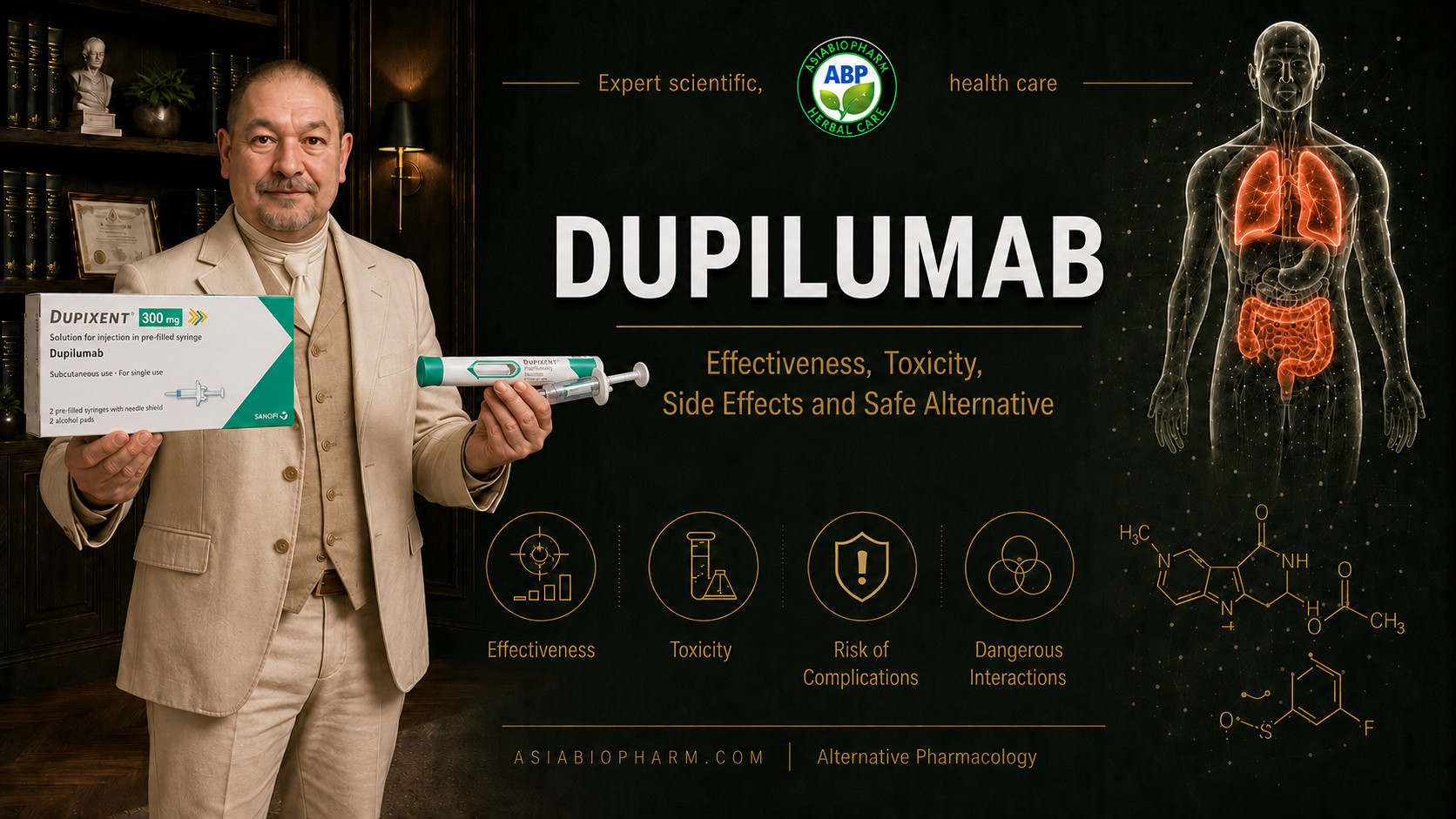
EFFECTIVE | NON-TOXIC
The assessment “non-toxic” means that no established classical dose-dependent hepatotoxicity, nephrotoxicity, cardiotoxicity, neurotoxicity, or bone marrow suppression has been identified. It does not mean that serious complications are absent: dupilumab can cause ocular surface disease, systemic hypersensitivity, arthralgia, psoriasiform reactions, and rare clinically significant eosinophilic disorders.
Drug Names, Trade Names, and Dosage Forms
The international nonproprietary name is dupilumab; the Latin and English spelling is dupilumab. The active substance is a recombinant fully human IgG4 monoclonal antibody directed against the α-subunit of the interleukin-4 receptor — IL-4Rα. There is no separate pharmacologically active salt of dupilumab. The main registered trade name is Dupixent. The drug is available as a solution for subcutaneous injection in prefilled syringes and prefilled pens in different dosage strengths. No combination medicinal products containing dupilumab together with another active substance are registered. Therefore, hidden duplication is associated not with different trade names, but with repeated administration of a syringe or pen, an error in the loading dose, uncoordinated administration at home and in a medical facility, or an attempt to compensate independently for a missed injection.
Why Dupilumab Is Considered Harmless and Where the Real Risk Begins
Dupilumab is often perceived as a safe “allergy injection” because it is not a systemic glucocorticosteroid, cytostatic agent, or traditional immunosuppressant, does not require universal continuous monitoring of liver enzymes and creatinine, and usually does not cause characteristic dose-dependent internal organ damage. This impression is incomplete. The drug interferes with the central pathway of type 2 inflammation and can simultaneously alter the immunologic state of the skin, mucous membranes, airways, ocular surface, and the distribution of eosinophils.
A person may not associate gradually increasing eye redness, burning, dryness, eyelid swelling, photophobia, or blurred vision with the injections. These manifestations are often mistaken for seasonal allergy, fatigue, or screen-related irritation, although they may represent dupilumab-associated ocular surface disease — conjunctivitis, blepharitis, keratoconjunctivitis, or keratitis. In studies of atopic dermatitis, conjunctivitis was reported much more frequently than in asthma and chronic rhinosinusitis, with published incidence rates ranging approximately from 4.7% to 22.1%.
An increase in eosinophils can be equally misleading. Dupilumab reduces IL-4/IL-13-dependent migration of eosinophils from the blood into tissues, but it does not destroy these cells or directly block their production. Therefore, the number of eosinophils in the blood may temporarily increase at the beginning of treatment. In most patients, this laboratory change does not lead to systemic disease. However, eosinophilia combined with fever, worsening breathing, pulmonary infiltrates, vasculitic rash, neuropathy, or cardiac symptoms requires exclusion of eosinophilic pneumonia and eosinophilic granulomatosis with polyangiitis.
Repeated administration does not immediately enhance the therapeutic effect because the action of a monoclonal antibody does not develop according to the principle of a rapidly acting antihistamine. Alcohol has no established direct pharmacokinetic interaction with dupilumab, but it may increase the risks associated with concomitant medications, including sedating antihistamines, systemic corticosteroids, and immunosuppressants. The first signs of complications are nonspecific, so the absence of an immediate severe reaction after the first injections does not prove that subsequent treatment will be completely safe.
Side Effects After the First Injection and During the First Weeks of Treatment
Common early reactions include pain, redness, itching, swelling, bruising, or induration at the site of subcutaneous injection. Depending on the disease, upper respiratory tract infections, headache, oral herpes, joint pain, and increased eosinophil counts are also reported. These reactions usually develop within the first hours or days after the injection or are detected during the first weeks of therapy.
Ophthalmic complications may begin with moderate itching, a gritty sensation, tearing, dryness, or eye redness. Conjunctivitis, blepharitis, meibomian gland dysfunction, keratoconjunctivitis, and keratitis may subsequently develop. Eye pain, photophobia, reduced visual acuity, and marked unilateral inflammation should not be considered an ordinary allergic reaction: such symptoms may indicate corneal involvement and require an ophthalmic examination. Post-marketing reports have described visual disturbances of varying duration, including severe cases that required discontinuation of the drug or surgical intervention.
Clinically significant early reactions include widespread urticaria, severe arthralgia, psoriasiform rash, herpetic lesions of the skin or mucous membranes, and marked eosinophilia with systemic symptoms. Herpetic reactions are more commonly represented by oral herpes; this does not mean that the drug causes a universal severe immunodeficiency, but reactivation of infection should be considered in a patient with painful grouped vesicles.
Life-threatening reactions are rare. These include anaphylaxis, angioedema, generalized urticaria with respiratory impairment, and other systemic hypersensitivity reactions. Swelling of the tongue, lips, face, or larynx, wheezing, sudden weakness, a fall in blood pressure, and impaired consciousness require immediate emergency care. Continuing home observation in the hope that the reaction will “go away on its own” is dangerous because airway obstruction can progress rapidly.
Consequences of Long-Term and Repeated Treatment
Dupilumab has not been shown to cause typical cumulative organ toxicity in which damage to the liver, kidneys, heart, or bone marrow predictably progresses with each dose. Nevertheless, prolonged treatment may be accompanied by persistent or recurrent ocular surface disease. In some patients, conjunctivitis is combined with chronic blepharitis, severe dry eye, keratitis, scarring changes of the conjunctiva, or persistent visual impairment. Most ophthalmic reactions can be treated without discontinuing biologic therapy, but delayed medical evaluation increases the likelihood of corneal damage.
Arthralgia may occur several days, weeks, or months after the first injection. During the post-marketing period, cases of severe pain and restricted mobility have been reported, sometimes requiring hospitalization. Psoriatic arthritis has been identified in some patients. New psoriatic eruptions have also been reported, including involvement of the scalp, palms, and soles. These reactions should not automatically be attributed to age, physical exertion, or “toxin release.”
Eosinophilia is usually transient, but the absence of symptoms during the first weeks does not exclude a later systemic complication. The most concerning situation is a patient with asthma whose dose of systemic corticosteroids is rapidly reduced after dupilumab is started. Corticosteroids may have been suppressing pre-existing eosinophilic vasculitis, and their withdrawal may make the disease clinically apparent. In such a case, dupilumab is not necessarily the sole cause, but the coincidence of treatment with increasing eosinophilia and pulmonary, cutaneous, neurologic, or cardiac symptoms requires immediate diagnostic evaluation.
Dupilumab does not cause tolerance, psychological or physical dependence, or a classic withdrawal syndrome. However, it controls rather than permanently eliminates the pathogenetic predisposition to type 2 inflammation. After therapy is discontinued, itching, skin inflammation, bronchial hyperreactivity, polyposis, dysphagia, or other manifestations of the underlying disease may return. The absence of severe adverse reactions during the first months does not guarantee that an ophthalmic, articular, or immunologic complication will not develop later.
Contraindications and High-Risk Groups
An absolute contraindication is known systemic hypersensitivity to dupilumab or to any excipient of the drug. A patient who has experienced anaphylaxis, angioedema, or another severe reaction after administration must not independently repeat the injection to check whether “the drug was really the cause.”
Patients with atopic dermatitis have an increased ophthalmic risk, especially those with severe baseline disease, pre-existing conjunctivitis, blepharitis, dry eye, or involvement of the eyelids or cornea. High baseline IgE is also considered a possible marker of increased risk of ocular surface disease, although it does not reliably predict a reaction in an individual patient. In the presence of significant ophthalmic disease, it is advisable to assess the condition of the eyes before treatment begins rather than after pain and reduced vision have already developed.
Patients with asthma, marked baseline eosinophilia, pulmonary infiltrates, systemic vasculitic symptoms, or suspected eosinophilic granulomatosis with polyangiitis require separate evaluation. Dupilumab is not intended for the treatment of acute bronchospasm or status asthmaticus. Its administration does not replace a rapid-acting bronchodilator and is not a reason for immediate discontinuation of maintenance inhaled therapy.
Existing helminth infection should be identified and treated before therapy is started. IL-4 and IL-13 are involved in antiparasitic immune defense, and patients with known helminth infections were not adequately represented in clinical trials. If such an infection develops during treatment and does not respond to antiparasitic therapy, dupilumab is temporarily discontinued until the helminth infection resolves.
Pregnancy and breastfeeding are not absolute contraindications, but the decision requires an individual assessment of benefit and risk. IgG monoclonal antibodies can cross the placenta, especially during the second half of pregnancy. Clinical data are gradually accumulating, but independent initiation or discontinuation of the drug during pregnancy is unacceptable.
Dangerous Drug and Immunologic Interactions
Dupilumab has not been shown to have a clinically significant effect on the major cytochrome P450 isoenzymes because a monoclonal antibody is not metabolized like an ordinary low-molecular-weight drug. No direct pharmacokinetic interactions with food, caffeine, nicotine, or alcohol have been established. This does not mean that every combination can be considered studied and safe: the main risk is associated not with the concentration of dupilumab in the blood, but with immunologic effects and concomitant therapy.
Strongly undesirable: administration of live and live attenuated vaccines during treatment. Routine vaccination should preferably be completed before therapy begins. Inactivated vaccines are not included in this restriction, but their effectiveness and timing should be assessed with consideration of the underlying disease and concomitant immunosuppression.
Requires gradual adjustment and medical supervision: systemic, inhaled, and topical glucocorticosteroids. Dupilumab should not become a reason for their abrupt withdrawal. After prolonged systemic therapy, rapid dose reduction may cause adrenal insufficiency, exacerbation of the underlying disease, and clinical manifestation of previously suppressed eosinophilic vasculitis.
Requires an individual decision: combination with other biologic agents, targeted immunomodulators, and systemic immunosuppressants. For many combinations, sufficient long-term safety data are lacking. Possible consequences are determined by the second drug and include infections, hematologic changes, liver or kidney injury, or other specific complications.
Alcohol has no proven direct interaction with dupilumab, but it may increase drowsiness when used together with sedating antihistamines, worsen asthma control, and increase the toxicity of methotrexate or other concomitant medications. Therefore, the statement “dupilumab is compatible with alcohol” is pharmacologically meaningless without analysis of the complete treatment regimen.
Specific interactions with herbal preparations and dietary supplements have not been sufficiently studied. Particular attention should be paid to multi-component products with undisclosed composition, preparations with immunostimulatory effects, and plants that can themselves cause hypersensitivity. In a patient with atopy, new itching, rash, or swelling after the addition of an herbal preparation should not automatically be attributed to dupilumab.
There are no combination products containing dupilumab. Hidden duplication occurs through erroneous use of several syringes or pens, repeated administration after uncertainty about whether the first injection was complete, incorrect calculation of the loading dose, or uncoordinated administration by the patient and a healthcare professional.
Patient Errors When Using Dupilumab
The first error is using dupilumab without a confirmed indication as a universal treatment for allergy, itching, cough, or elevated IgE. The drug is intended for specific diseases and phenotypes of type 2 inflammation. It does not treat all forms of urticaria, does not eliminate every cause of dermatitis, and does not replace diagnosis of fungal, parasitic, infectious, or contact disease.
The second error is increasing the dose or shortening the interval when a rapid effect is absent. Dupilumab is not an emergency medication. An additional injection will not stop an attack of suffocation, eliminate itching within a few minutes, or accelerate the disappearance of polyps. It creates excessive exposure, the consequences of which cannot be rapidly reversed.
The third error is taking incorrect action after a missed dose. A patient may administer a double dose, change the date without considering the prescribed regimen, or give a repeat injection after uncertainty about whether the injection pen worked. The correct algorithm depends on the prescribed dosing frequency and the timing of the missed dose; improvising with two doses is unacceptable.
The fourth error is ignoring eye symptoms. Redness and burning are treated with vasoconstrictor or antibacterial drops without examination, while injections are continued until photophobia and blurred vision develop. An antibiotic does not eliminate noninfectious inflammation of the ocular surface, and uncontrolled corticosteroid eye drops can increase intraocular pressure and worsen the course of herpetic infection.
The fifth error is abruptly discontinuing systemic corticosteroids after the first signs of improvement. Dupilumab does not instantly restore the function of the hypothalamic-pituitary-adrenal axis and does not guarantee immediate asthma control. Such an action may lead to adrenal insufficiency, exacerbation, and manifestation of systemic eosinophilic disease.
The sixth error is independently discontinuing the drug immediately after the skin clears or breathing improves. A clinical effect means suppression of the inflammatory pathway, not disappearance of the underlying predisposition. After therapy is discontinued, the disease may relapse, and restarting treatment will require assessment of the reason for discontinuation, the duration of the interruption, and the current severity of the condition.
The seventh error is assuming that a biologic drug cannot interact unfavorably with infection, vaccination, or herbal therapy. A patient may fail to tell the doctor about a live vaccine, helminth infection, another biologic agent, or a multi-component herbal preparation, making the assessment of adverse reactions considerably more difficult.
Dupilumab Overdose and Poisoning
No toxic single dose, cumulative toxic dose, or characteristic dose-dependent sequence of poisoning over hours or days has been established for dupilumab. There is no specific antidote. If an excessive dose is administered, the patient is monitored for adverse reactions and treated symptomatically.
Dupilumab overdose is fundamentally different from poisoning with paracetamol, opioids, or anticoagulants. No predictable latent hepatic necrosis, respiratory depression, or specific hemorrhagic syndrome has been described. However, the absence of an established toxic threshold does not make an additional injection safe. After subcutaneous administration, a monoclonal antibody gradually enters the systemic circulation and remains in the body for a prolonged period; gastric lavage, sorbents, and standard hemodialysis cannot remove the administered dose.
The most likely errors are administration of two syringes instead of one, misunderstanding of the loading dose, repeated use of a pen after uncertainty about whether the injection was complete, double administration after a missed dose, or uncoordinated administration at home and in the clinic. In children, an additional risk is selection of the dose without considering body weight and indication.
During the first minutes and hours after an erroneous dose, signs of hypersensitivity are monitored: urticaria, swelling of the face and airways, wheezing, dizziness, a fall in blood pressure, and a generalized reaction. Over the following days and weeks, local reactions, joint pain, ophthalmic symptoms, skin changes, and eosinophilia are assessed. There is no strictly established relationship between the magnitude of a single overdose and the probability of a specific delayed complication.
Impaired liver or kidney function is not considered a proven factor for rapid accumulation of dupilumab because the monoclonal antibody is degraded through proteolytic pathways rather than being eliminated predominantly by the liver or kidneys in unchanged form. However, clinical experience in severe organ failure is limited, so the consequences of a dosing error are assessed individually.
After a significant dosing error, the doctor should be informed of the exact name of the drug, the dosage of each syringe or pen, the number of devices administered, the time of injection, the patient’s body weight, the established indication, and concomitant medications. One should not wait for pronounced symptoms to develop: there is no specific time window for antidote therapy, but early observation makes it possible to recognize anaphylaxis and other complications in a timely manner.
Safe Integrative Alternative Based on the Type of Disease
There is no single herbal formula capable of replacing dupilumab for all of its indications. Dupilumab blocks the IL-4Rα receptor subunit shared by interleukins IL-4 and IL-13 and therefore acts on a central mechanism of type 2 inflammation. An integrative alternative should be selected according to the specific disease: atopic dermatitis, eosinophilic bronchial asthma, allergic rhinitis, chronic rhinosinusitis with polyps, or another form of Th2 inflammation.
As a basic systemic complex, a combination of black seed — Nigella sativa, Boswellia serrata, Baikal skullcap — Scutellaria baicalensis, and Atractylodes lancea may be considered. The components of the complex do not duplicate dupilumab at the level of direct IL-4Rα blockade, but they affect several related pathways: Th2 polarization, production of IL-4, IL-5, and IL-13, IgE-dependent mast cell activation, eosinophilic inflammation, the 5-lipoxygenase pathway, leukotriene formation, airway hyperreactivity, and the condition of the mucosal barrier.
Scutellaria baicalensis is the principal component that brings the combination closer to the mechanism of dupilumab. In experimental studies, baicalin, baicalein, and wogonin suppressed Th2 cytokines and STAT6-dependent signaling and reduced IgE and eosinophilic infiltration. Nigella sativa complements this effect through its influence on mast cells, IgE, eosinophils, and bronchial hyperreactivity. Boswellia serrata primarily limits 5-LOX-dependent leukotriene formation and is therefore particularly appropriate in bronchial asthma and chronic rhinosinusitis with polyps. Atractylodes lancea serves an auxiliary role associated with regulation of mucosal inflammation, mast cells, and the epithelial barrier.
In bronchial asthma with confirmed type 2 inflammation, a targeted addition is the “Bronchial Asthma Type 2” preparation based on Clerodendrum serratum. Its stated composition includes Clerodendrum serratum powder; mast cell stabilization, reduction of IgE, and suppression of IL-4, IL-5, and IL-13 production are claimed for it. In such a complex, Atractylodes lancea may be omitted: its auxiliary function is partially covered by the more targeted antiallergic effect of Clerodendrum serratum. An optimized option for stable type 2 asthma is Nigella sativa, Boswellia serrata, Scutellaria baicalensis, and Clerodendrum serratum.
For allergic rhinitis and chronic rhinosinusitis, it is reasonable to use “Rhinitis and Rhinosinusitis Mixture Capsules”. The preparation contains Solanum indicum, Vitex trifolia, Croton oblongifolius, Blumea balsamifera, and Eleusine indica; its pharmacologic profile includes anti-inflammatory, antiallergic, antimicrobial, mucolytic, and antispasmodic effects. In allergic rhinitis, it is rational to combine it with Scutellaria baicalensis and Nigella sativa. In chronic rhinosinusitis with polyps, a combination with Scutellaria baicalensis and Boswellia serrata is more appropriate. The preparation should not be used mechanically at the maximum dosage for prolonged courses: Solanum indicum contains steroidal glycoalkaloids, while plants of the Croton genus can irritate the mucous membranes and gastrointestinal tract.
In mixed allergic conditions, allergic cough, and combinations of Th2 and nonspecific inflammation, “Allergy Mixture Capsules” may be used. The disclosed part of the composition includes Andrographis paniculata, Schefflera leucantha, and Murdannia loriformis, but some components are designated only as other medicinal plants. Because the composition is not fully disclosed, this preparation should not be presented as an exact pharmacologic analogue of dupilumab. It is more rational to use it as a disease-specific addition to Scutellaria baicalensis without overloading the regimen by simultaneously prescribing several complexes with similar antiallergic activity.
In atopic dermatitis, systemic phytotherapy should be combined with restoration of the skin barrier and local control of inflammation. ABP-153, an oil-based herbal mixture for mucous membranes and skin, contains camphor, Andrographis paniculata, Curcuma longa, Glycyrrhiza glabra, Zingiber cassumunar, Houttuynia cordata, menthol, borneol, clove, eucalyptus, and four components of a proprietary formula. This preparation should not automatically be applied to any area of atopic skin. Camphor, menthol, eucalyptus, clove, and borneol can cause burning and contact irritation, especially in weeping lesions, marked barrier disruption, or when applied to the eyelids or around the eyes. Therefore, ABP-153 is acceptable only for local use, after tolerability has been tested, and away from areas of acute weeping inflammation.
Complete replacement of dupilumab should be considered only in mild or moderate stable disease when there are no severe exacerbations, systemic involvement, progressive decline in lung function, pronounced polyposis, or nutritional impairment caused by eosinophilic esophagitis. In severe type 2 asthma, uncontrolled atopic dermatitis, pronounced chronic rhinosinusitis with polyps, and eosinophilic esophagitis, herbal complexes may be used only as adjunctive therapy. In such cases, the decision to discontinue biologic therapy is made by the treating specialist.
Real Effectiveness of Dupilumab and Common Medical Errors
Dupilumab is genuinely effective in diseases whose pathogenesis is driven by type 2 inflammation. It is used for moderate to severe atopic dermatitis that is inadequately controlled with topical therapy; as maintenance treatment for moderate to severe asthma with an eosinophilic phenotype or dependence on oral corticosteroids; for chronic rhinosinusitis with nasal polyps; eosinophilic esophagitis; and several other registered indications.
In atopic dermatitis, the drug reduces itching, the extent and severity of skin inflammation, the number of exacerbations, and the need for topical anti-inflammatory agents. The clinical response does not develop immediately: itching may decrease during the first weeks, while substantial skin recovery is assessed over several months. Dupilumab controls the cytokine mechanism of the disease but does not eliminate inherited barrier dysfunction, sensitization, or external triggers.
In type 2 asthma, the drug reduces the frequency of severe exacerbations, improves lung function, and allows the need for systemic glucocorticosteroids to be reduced. It is not intended to relieve acute bronchospasm or status asthmaticus. If a patient uses dupilumab instead of an emergency inhaler, this is no longer innovative biologic therapy but an expensive error in choosing a drug with the wrong speed of action.
In chronic rhinosinusitis with polyps, dupilumab reduces polyp size, nasal congestion, loss of smell, and the need for systemic corticosteroids or repeat surgery. It does not eliminate anatomical causes of obstruction, bacterial infection, fungal disease, or other conditions that mimic or perpetuate rhinosinusitis.
A common medical error is prescribing dupilumab without confirming the diagnosis and the inflammatory phenotype. Elevated total IgE alone does not prove the need for IL-4Rα blockade. In asthma, the history of exacerbations, spirometry, blood eosinophils, FeNO, adherence to maintenance inhaled therapy, and exclusion of alternative causes of dyspnea should be considered. In dermatitis, contact allergy, scabies, dermatophytosis, lymphoproliferative skin disease, and uncontrolled infection should be excluded.
Another error is to regard disappearance of symptoms as a reason for immediate discontinuation of all concomitant treatments. Abrupt withdrawal of systemic corticosteroids may reveal adrenal insufficiency, an asthma exacerbation, or a previously suppressed eosinophilic disorder. Prescribing a biologic agent does not eliminate the need for appropriate stepwise adjustment of therapy.
Safety Monitoring During Treatment
Before treatment begins, the baseline severity of the disease and the parameters that will later be used to assess treatment effectiveness should be documented. In atopic dermatitis, the extent and severity of lesions, intensity of itching, and condition of the eyelids and ocular surface are recorded. In asthma, the frequency of exacerbations, need for systemic corticosteroids, symptom control, spirometry, blood eosinophils, and, when available, FeNO are assessed. In rhinosinusitis, the severity of polyposis, nasal obstruction, sense of smell, and need for corticosteroids or surgery are evaluated.
Dupilumab generally does not require mandatory continuous monitoring of liver enzymes, creatinine, or bone marrow parameters in all patients because classical hepato-, nephro-, and myelotoxicity are not characteristic of the drug. However, a complete blood count with differential is advisable before treatment and should be repeated if fever, worsening breathing, vasculitic rash, weakness, neuropathic pain, or other signs of a systemic eosinophilic process develop.
The eyes require particular attention. Conjunctivitis and keratitis occur more frequently in patients with atopic dermatitis; after the drug was registered, visual impairment associated with ocular surface inflammation was also reported. Persistent redness, pain, photophobia, purulent or mucous discharge, foreign-body sensation, marked dryness, or blurred vision requires an ophthalmic examination. Prolonged self-treatment with vasoconstrictor, antibiotic, or corticosteroid eye drops can mask a complication, increase intraocular pressure, or worsen the course of an infection.
In patients with asthma, eosinophilic pneumonia and eosinophilic granulomatosis with polyangiitis should be considered. Warning signs include increasing shortness of breath, cough, fever, new pulmonary infiltrates, vasculitic rash, numbness or weakness of the limbs, chest pain, and signs of cardiac involvement. Such conditions have been described predominantly in asthma and may coincide with reduction of the dose of oral corticosteroids.
Difficulty breathing, swelling of the tongue, face, or larynx, generalized urticaria, a fall in blood pressure, and other signs of anaphylaxis require immediate discontinuation of the drug and emergency medical care. A new widespread pustular or blistering rash, mucosal involvement, fever, or rapidly progressive epidermal detachment also requires urgent evaluation.
During the post-marketing period, new cases of psoriasis, arthralgia, and psoriatic arthritis have been described. Joint pain may occur several days or months after the first injection and has sometimes been accompanied by restricted mobility or hospitalization. Persistent joint symptoms require rheumatologic evaluation rather than being automatically attributed to age, weather, or the underlying allergic disease.
Proper Discontinuation of Dupilumab and Consequences of Stopping Treatment
Dupilumab does not cause physical dependence or a classic withdrawal syndrome. Gradual dose reduction is not required to prevent neurovegetative, hormonal, or psychological symptoms. If necessary, the drug can be discontinued without stepwise dose reduction, but the decision should take into account the prolonged persistence of the monoclonal antibody and the activity of the underlying disease.
The absence of a withdrawal syndrome does not mean the absence of consequences. After therapy is stopped, IL-4/IL-13 blockade gradually weakens, and atopic dermatitis, asthma, chronic rhinosinusitis with polyps, or eosinophilic esophagitis may relapse. The rate at which symptoms return is individual: in some patients, disease control persists for a long time, while in others itching, skin inflammation, nasal congestion, or bronchial hyperreactivity returns within weeks or months.
In severe asthma, independent discontinuation is particularly dangerous because of the risk of exacerbation and renewed need for systemic corticosteroids. Dupilumab should not be discontinued at the same time as abrupt withdrawal of inhaled or oral glucocorticosteroids. Their dose is reduced separately, gradually, and under monitoring of symptoms, lung function, and signs of systemic eosinophilic disease.
In cases of severe conjunctivitis, keratitis, anaphylaxis, eosinophilic pneumonia, suspected systemic vasculitis, or another serious reaction, the need to discontinue treatment is determined by the severity of the complication. An ophthalmic reaction does not always require permanent discontinuation: some patients continue therapy while receiving specialized eye treatment. Anaphylaxis or confirmed severe systemic hypersensitivity generally precludes re-administration without a specific decision by an allergist.
Transition to an herbal complex should not follow the principle of “the last injection today — an herbal preparation instead tomorrow,” but should occur after assessing the stability of remission, the severity of the underlying disease, and the risk of exacerbation. In mild or moderate stable disease, phytotherapy may be introduced as a supportive component before biologic therapy is discontinued. In severe disease, the integrative regimen is initially used as an adjunct, and the possibility of discontinuing dupilumab is assessed only after stable disease control has been confirmed.
A Rational Approach to Treatment
Dupilumab is justified when the disease has a confirmed IL-4/IL-13-dependent mechanism, is severe, is not controlled by standard therapy, causes repeated hospitalizations, requires systemic corticosteroids, or significantly impairs sleep, breathing, nutrition, and quality of life. Under such circumstances, the speed, selectivity, and predictability of biologic therapy are more important than the desire to replace any synthetic drug with an herbal remedy.
In mild or moderate stable allergic inflammation, in the absence of threatening exacerbations and with preserved respiratory function, a disease-specific integrative therapy may be considered. For type 2 asthma, the most justified complex is Nigella sativa, Boswellia serrata, Scutellaria baicalensis, and Clerodendrum serratum. For allergic rhinitis, Scutellaria baicalensis, Nigella sativa, and a targeted mixture for rhinitis and rhinosinusitis are used. In chronic rhinosinusitis with polyps, Scutellaria baicalensis, Boswellia serrata, and a disease-specific rhinosinusitis complex are more relevant. In atopic dermatitis, systemic control of inflammation should be combined with restoration of the skin barrier and carefully selected topical therapy.
Concomitant use of dupilumab and herbal preparations is acceptable only when their composition is known and there is no duplication, allergic reaction, or clinically significant interaction. A patient with an atopic disease may develop hypersensitivity not only to a monoclonal antibody but also to a plant extract. Natural origin does not provide immunologic immunity from adverse reactions.
The goal of an integrative approach is not to oppose biologic therapy to phytotherapy, but to reduce polypharmacy, the need for systemic corticosteroids, and the toxicologic burden where this can be done without losing disease control. Dupilumab is necessary in severe and uncontrolled type 2 inflammation. A disease-specific herbal alternative is acceptable in mild or moderate stable disease. Combined therapy may be used as a transitional or supportive option under clinical supervision.
If you have questions about the topic of this article, you can ask a clinical pharmacologist in the comments or make an appointment using the link: https://asiabiopharm.com/konsultaciii/
0 comments