
Diphenhydramine — Why It Is Dangerous, Side Effects and Overdose
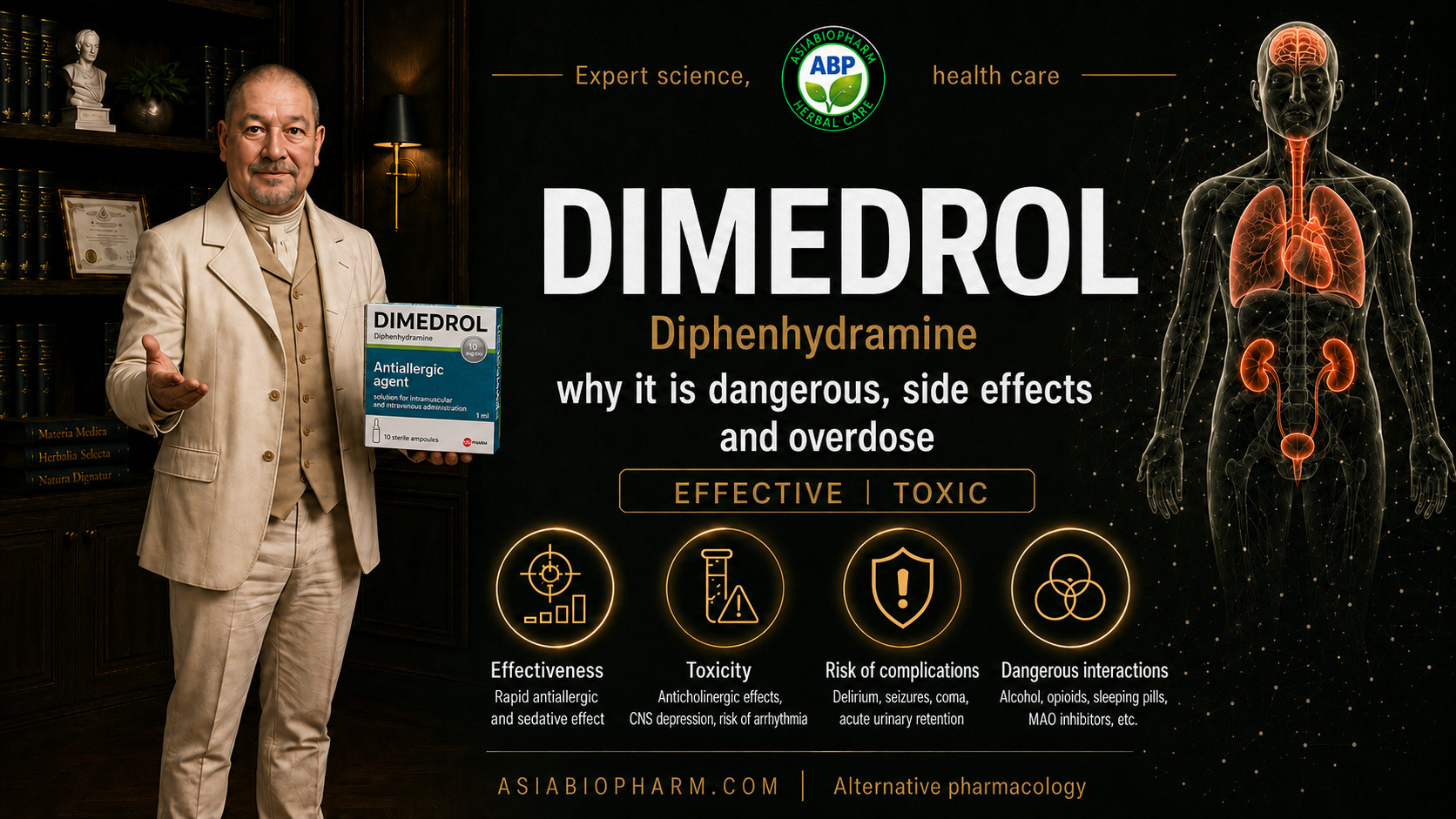
EFFECTIVE | TOXIC
Names Under Which Diphenhydramine Is Found
The international nonproprietary name is diphenhydramine; the Latin spelling is diphenhydramine. In medicinal products, diphenhydramine hydrochloride — diphenhydramine hydrochloride, diphenhydramine HCl — is predominantly used. In Russian-language instructions and medical documents, the names diphenhydramine, diphenhydramine hydrochloride and dimedrol are used. The main dosage forms are tablets, capsules, oral solution and syrup, solution for injection, and topical creams and gels. International brand names include Benadryl, Nytol, Sominex, Unisom SleepGels, Simply Sleep and ZzzQuil; the composition must be checked because in different countries some of these brands are used for products containing other active ingredients. Diphenhydramine is also included in numerous combination products for colds, cough, pain and insomnia together with paracetamol, phenylephrine, dextromethorphan, ibuprofen or naproxen. Taking a single-ingredient diphenhydramine product together with such a combination product creates hidden dose duplication. Instructions also specifically prohibit combining a systemic diphenhydramine product with any other product containing diphenhydramine, including some topical forms.
Why Diphenhydramine Is Considered Harmless and Where the Real Risk Begins
The main everyday danger of diphenhydramine is that marked pharmacological depression of the central nervous system is often mistaken for ordinary drowsiness. After a therapeutic dose, attention, reaction speed, coordination and the ability to drive may deteriorate, although the person often underestimates the degree of impairment. The drug is widely used for allergies, colds and insomnia, so taking a repeat dose, combining it with alcohol in the evening, or using several “night-time” products at the same time may not be perceived as poisoning. However, diphenhydramine crosses the blood-brain barrier, blocks central H1 receptors and has pronounced antimuscarinic activity. In the early stages, toxicity may present only as dry mouth, psychomotor slowing, dizziness or unusual agitation, after which the condition may progress to confusion, delirium, seizures and cardiac conduction disturbances. Alcohol, sleeping pills, tranquilizers and other CNS depressants intensify these effects.
Side Effects After the First Dose and a Short Course
Common reactions include pronounced drowsiness, reduced concentration, dizziness, muscle weakness, impaired coordination, dryness of the mucous membranes, blurred vision, nausea, constipation and difficulty urinating. These effects may begin within the first hours after administration and may persist longer than the expected sedative effect. Clinically significant effects include a fall in blood pressure, tachycardia, palpitations, extrasystoles, urinary retention, worsening of angle-closure glaucoma, confusion and paradoxical excitation, especially in children. In older adults, even a usual dose may cause acute cognitive decline, disorientation, delirium, falls and injury. Life-threatening reactions include anaphylaxis, severe depression of consciousness and respiration, seizures, marked hyperthermia, ventricular arrhythmias and pronounced widening of the QRS complex due to blockade of fast sodium channels. Rare hematological reactions — hemolytic anemia, thrombocytopenia and agranulocytosis — are also described in the instructions, although they are not typical manifestations of a standard short course.
Consequences of Long-Term and Repeated Use
Regular use of diphenhydramine as a sleep aid leads to tolerance to its sedative effect: the previous dose becomes less effective, prompting dose escalation or more frequent administration. With systematic use, the anticholinergic burden persists — working memory, attention, psychomotor reaction speed and learning ability may deteriorate; in older adults, the risk of confusion, falls and functional decline increases. Observational studies associate high cumulative exposure to strong anticholinergic agents, including first-generation antihistamines, with a higher incidence of dementia. This association does not prove that diphenhydramine itself inevitably causes dementia, but it is sufficient to rule out considering months or years of use harmless. Repeated use may mask chronic insomnia, sleep apnea, anxiety disorder, rhinitis, asthma or drug-induced sleep disturbance without addressing their cause. Abuse, psychological and physical dependence have been described, as have sweating, tachycardia, agitation, tremor, insomnia and other nonspecific autonomic symptoms after abrupt discontinuation of high chronic doses. The absence of pronounced drowsiness after another tablet more often indicates tolerance rather than disappearance of the toxic effect.
Contraindications and High-Risk Groups
Diphenhydramine is contraindicated in patients with hypersensitivity to the drug; the injectable form is also not intended for newborn or premature infants. In angle-closure glaucoma, mydriasis and antimuscarinic activity may provoke a sharp rise in intraocular pressure. In prostatic hyperplasia, bladder-neck obstruction and other disorders of urinary outflow, the drug increases the risk of acute urinary retention. In stenosing peptic ulcer, pyloroduodenal obstruction or intestinal obstruction, reduced gastrointestinal motility may worsen the obstruction. In bronchial asthma, chronic obstructive pulmonary disease and other conditions associated with viscous sputum, drying of secretions may impair their clearance. Older patients are particularly susceptible to delirium, orthostatic reactions, urinary retention, falls and cognitive deterioration. In children, the drug may cause excitation rather than sedation, as well as hallucinations and seizures; it must not be used intentionally to “put a child to sleep.” In epilepsy, cardiac rhythm disorders, QRS or QT prolongation, severe hepatic dysfunction, and when combined with other anticholinergic or sedative agents, toxicity may develop at a lower dose. During pregnancy and breastfeeding, use requires individual assessment rather than an everyday assumption that “it is only an antihistamine.”
Dangerous Drug and Everyday Interactions
Combining diphenhydramine with alcohol, opioids, benzodiazepines, barbiturates, Z-drugs, sedating antipsychotics, gabapentinoids and other CNS depressants is contraindicated or highly undesirable because it increases the risk of deep sedation, falls, aspiration, respiratory depression and impaired consciousness. Monoamine oxidase inhibitors prolong and intensify the anticholinergic effects of antihistamines, increasing the likelihood of hyperthermia, urinary retention, tachycardia, pronounced dryness of the mucous membranes and delirium. Combination with tricyclic antidepressants, paroxetine, certain antipsychotics, anticholinergic antiparkinsonian drugs, atropine, scopolamine and medications for overactive bladder adds to the overall anticholinergic burden. When drugs that affect cardiac conduction or prolong the QT interval are used concomitantly, especially in the presence of hypokalemia, the risk of arrhythmia increases. Combining diphenhydramine with cannabis, sedating dietary supplements and herbal remedies, including valerian, kava, hops and high doses of melatonin, is highly undesirable because drowsiness and psychomotor impairment may be additive. Caffeine may subjectively reduce drowsiness but does not restore coordination and does not eliminate anticholinergic impairment of attention. Nicotine is not a functional antidote either. Night-time cold and pain remedies create a separate risk when diphenhydramine is hidden in a combination with paracetamol, dextromethorphan, phenylephrine, ibuprofen or naproxen.
Patient Errors That Turn Ordinary Use Into Toxic Exposure
A typical mistake is taking diphenhydramine simultaneously “for allergies,” “for a cold” and “for sleep” without checking the composition of each product. Another mistake is repeating the dose after a short interval because sleep or symptom relief did not occur immediately. The drug may be taken after alcohol, before driving, together with a tranquilizer or painkiller, while the resulting slowing and drowsiness are regarded as normal fatigue. Parents may make errors when converting syrup doses into milliliters, use an adult concentration, or give the drug to a child specifically to induce sleep even though the instructions explicitly prohibit such use. A topical cream or gel may also contain diphenhydramine, so combining it with tablets creates additional exposure, especially when applied to a large or damaged area of skin. Another common mistake is extending its use as a sleep aid for weeks or months while gradually increasing the dose because of tolerance. Dangerous signs that are often ignored include pronounced dryness of the mucous membranes, inability to urinate, dilated pupils, increasing tachycardia, unusual agitation, incoherent speech, hallucinations and disorientation. Over-the-counter status does not turn a centrally acting anticholinergic drug into a dietary supplement.
Diphenhydramine Overdose and Poisoning
The severity of intoxication depends on the dose, age, concomitant medications and individual sensitivity. Toxicology reviews more commonly describe moderate symptoms at doses of approximately 300 mg and above, while severe manifestations — delirium, psychosis, seizures, coma and life-threatening arrhythmias — are particularly likely after ingestion of 1 g or more. These values are not “permissible limits”: dangerous toxicity may occur at a lower dose in a child, an older patient, a person with heart disease, or when diphenhydramine is combined with alcohol and other medications. During the first hours, dry mouth, flushed and dry skin, dilated pupils, blurred vision, tachycardia, urinary retention, reduced bowel sounds, restlessness or drowsiness may occur. This may be followed by hyperthermia, pronounced disorientation, visual hallucinations, aggression, anticholinergic delirium and seizures. In severe poisoning, sodium-channel blockade causes QRS widening, ventricular arrhythmias, hypotension, coma, respiratory arrest and cardiac arrest. There is no specific universal antidote for self-administration. Physostigmine is sometimes used by toxicologists in severe isolated anticholinergic delirium, but it is contraindicated when there are signs of conduction abnormalities and requires continuous monitoring. Intravenous sodium bicarbonate is used for QRS widening; seizures are treated with benzodiazepines, hyperthermia with active cooling, and respiratory failure by securing the airway and providing ventilation. Activated charcoal may be considered early only when the airway is protected. One should not wait for hallucinations or seizures to develop: suspected overdose requires immediate emergency toxicology care because deterioration may be rapid.
Safe Integrative Alternative to Diphenhydramine
For a mild or stable allergic condition, Allergy Mixture, LH capsules may be considered as a basic systemic antiallergic alternative. The fundamental difference from diphenhydramine lies in the therapeutic goal: diphenhydramine rapidly blocks H1 receptors and temporarily reduces itching, sneezing, rhinorrhea and other histamine-dependent symptoms, but at the same time penetrates the central nervous system and creates a pronounced sedative and anticholinergic burden. The herbal complex is intended not to pharmacologically “switch off” the patient, but to provide more prolonged modulation of the allergic and inflammatory response. It may therefore be potentially more appropriate for recurrent or chronic manifestations when diphenhydramine causes drowsiness, reduced concentration, constipation, urinary retention or the development of tolerance. However, the herbal complex should not be presented as having the same speed of action: in acute generalized urticaria, rapidly increasing edema, anaphylaxis or severe bronchospasm, it does not replace emergency therapy.
The choice of additional products should be determined by the clinical phenotype rather than by an attempt to prescribe the entire catalog to the patient at once. In pronounced IgE-dependent activation and mast-cell degranulation, the basic regimen may be supplemented with Kra Chai Dam, considering it a mechanism-oriented component associated with modulation of the IgE–FcεRI–Syk-dependent signaling cascade. When leukotriene-dependent inflammation, a bronchial component or chronic mucosal edema predominates, Boswellia serrata may be used; its boswellic acids inhibit the 5-lipoxygenase pathway and reduce the formation of pro-inflammatory leukotrienes. This is not equivalent to immediate H1 blockade, but rather a slower effect on one of the cascades that sustains inflammation.
In a nasal and rhinosinusitis phenotype, it is appropriate to combine the systemic regimen with Rhinitis and Rhinosinusitis, Mixture, LH Capsules and topical products ABP-153 or ABP-153D. This approach directly targets inflammation, edema and hyperreactivity of the nasal and paranasal sinus mucosa, whereas systemic diphenhydramine often reduces rhinorrhea at the cost of general drowsiness and drying of the mucous membranes. The ABP-153D version containing DMSO should be used with consideration of individual tolerability and the characteristics of local absorption.
When allergic inflammation is combined with cough, bronchial hyperreactivity, eosinophilic inflammation and mucus hypersecretion, Pinellia ternata should remain part of the regimen. Its therapeutic role is not to replace an H1 blocker as such, but to address a bronchopulmonary phenotype in which suppression of histamine-related symptoms alone is insufficient. In confirmed Th2 or eosinophilic bronchial asthma, a more targeted option is Bronchial Asthma Type 2, LH Capsules. In cases of viscous, difficult-to-expectorate sputum and bronchial obstruction, the “Asthma with Difficult-to-Expectorate Sputum” Bolus may be used. These products do not replace an inhaled bronchodilator, systemic glucocorticosteroids or other emergency therapy during a severe asthma attack.
Complete replacement of diphenhydramine is most justified in mild or moderate stable allergic rhinitis, recurrent seasonal allergy and chronic allergic inflammation when immediate pharmacological sedation is not required and there are no signs of anaphylaxis. In cases of pronounced skin itching, acute urticaria or a rapidly developing reaction, herbal products may be used only after the severity of the condition has been assessed and must not delay standard treatment. In anaphylaxis, epinephrine is the first-line medication; neither diphenhydramine nor herbal complexes can reliably reverse airway edema, hypotension and a systemic vascular reaction. The main criterion for choosing an alternative is its suitability for the clinical phenotype with a lower central anticholinergic burden, rather than mechanically replacing one tablet with another.
Real Effectiveness of Diphenhydramine and Medical Errors
Diphenhydramine does block H1 histamine receptors and can rapidly reduce itching, sneezing, rhinorrhea, tearing and some manifestations of an acute allergic reaction. Its effect begins relatively quickly, so the drug retains practical value in certain acute conditions, while the parenteral form may be used in medical practice when oral administration is impossible. However, the drug does not eliminate the cause of the allergy, does not suppress the full spectrum of Th2 inflammation and does not provide long-term control of chronic allergic disease. Its sleep-inducing effect is also a consequence of central nervous system depression rather than normalization of sleep architecture. Tolerance to this effect develops rapidly, so the use of diphenhydramine as a regular treatment for insomnia is pharmacologically unjustified. The Beers Criteria recommend avoiding oral diphenhydramine in older adults because of its pronounced anticholinergic activity and the risk of confusion, constipation, dry mucous membranes, falls and delirium.
Common medical errors include prescribing diphenhydramine for long-term treatment of allergic rhinitis despite the availability of less sedating antihistamines, using it as a regular sleep aid, failing to assess the total anticholinergic burden and ignoring the patient’s age. It is inappropriate to prescribe the drug to a person with urinary retention, angle-closure glaucoma or pronounced cognitive impairment, or together with several sedative medications without analyzing the risk. Another error is to regard diphenhydramine as the primary treatment for anaphylaxis. It may reduce skin manifestations but does not replace epinephrine and does not prevent airway obstruction or vascular collapse. Medical tradition sometimes keeps the drug in use longer than a reasonable benefit-to-risk balance would justify: familiarity with prescribing is a historical argument, not evidence that the therapy is optimal.
Safety Monitoring During Treatment
With a single dose or short-term use in an adult patient without risk factors, routine laboratory monitoring is generally not required. The level of alertness, ability to concentrate, coordination of movements, heart rate, blood pressure, urination and the severity of anticholinergic symptoms should be assessed. After the first dose, the patient should not drive, operate machinery or perform activities requiring a rapid response until individual sensitivity is known. Pronounced psychomotor slowing, confusion, paradoxical excitation, hallucinations, inability to urinate, intense palpitations or blurred vision require discontinuation of the drug and medical evaluation.
In older patients, those with cognitive impairment or polypharmacy, and during long-term use, the entire medication list and total anticholinergic burden should be reviewed regularly. What should be monitored is not the concentration of diphenhydramine in the blood but its clinical consequences: worsening memory, new falls, daytime drowsiness, constipation, urinary retention, disorientation and reduced functional independence. When the drug is used long-term as a sleep aid, the primary cause of the sleep disorder should be evaluated, including anxiety disorder, sleep apnea, chronic pain and drug-induced insomnia.
Emergency warning signs include seizures, loss of consciousness, marked agitation with delirium, high temperature, difficulty breathing, cyanosis, severe hypotension, and a very rapid or irregular pulse. If overdose is suspected, ECG assessment of QRS and QTc, continuous cardiac monitoring, and monitoring of temperature, electrolytes, acid-base status and respiratory function are required. Overdose may be accompanied by sodium-channel blockade, QRS widening, ventricular arrhythmias, seizures and coma; the FDA warns that high doses can lead to severe cardiac complications and death. Waiting for the person to “sleep it off” is dangerous: drowsiness may progress to coma, while agitation and hallucinations may progress to seizures and arrhythmia.
Proper Discontinuation of Diphenhydramine
After a single dose or a short course, diphenhydramine can usually be stopped immediately; special gradual dose reduction is not required. The return of itching, rhinorrhea or insomnia after discontinuation more often reflects persistence of the underlying condition rather than a classic withdrawal syndrome. This distinction is fundamental: recurrence of symptoms is not a reason to restart the drug automatically without clarifying the cause of the allergy or sleep disorder.
With long-term daily use, particularly at increased doses, abrupt discontinuation may be accompanied by rebound insomnia, anxiety, irritability, sweating, tremor, palpitations and increased subjective discomfort. In such a situation, it is more reasonable to reduce the dose gradually under medical supervision while simultaneously addressing the reason the drug had been used for months. There is no universal official dose-reduction regimen: the rate is determined by the initial dose, duration of use, presence of dependence and concomitant psychotropic or sedative medications.
When transitioning to an integrative antiallergic regimen, it should be taken into account that phytotherapeutic products generally do not reproduce the immediate speed of action of diphenhydramine. Therefore, in a stable condition, a planned transition followed by symptom assessment is possible, whereas an active allergic process may require a transition period and medical supervision. In severe allergy, bronchial asthma or anaphylaxis, independent discontinuation of standard therapy is unacceptable.
A Rational Approach to the Use of Diphenhydramine
Diphenhydramine is justified in situations where a rapid and predictable H1-blocking effect is required and where the physician consciously accepts the associated sedative and anticholinergic burden. It may be used for a short period in certain acute allergic reactions, but it should not become a routine daily remedy for rhinitis, itching or insomnia. Long-term use is particularly irrational in older adults, patients with cognitive impairment, glaucoma, urinary retention and a high medication burden. Current evidence emphasizes that its toxicity in overdose includes severe cardiac conduction disturbances, seizures, coma and death.
In a mild or stable allergic process where immediate intervention is not required, preference may be given to Allergy Mixture, LH Capsules with subsequent addition of phenotype-oriented components: Kra Chai Dam for IgE-dependent mast-cell activation, Boswellia serrata for leukotriene-dependent inflammation, Rhinitis and Rhinosinusitis LH, ABP-153 or ABP-153D for a nasal phenotype, Pinellia ternata for cough, bronchial hyperreactivity and mucus hypersecretion, Bronchial Asthma Type 2, LH Capsules for Th2 and eosinophilic asthma, and the “Asthma with Difficult-to-Expectorate Sputum” Bolus for viscous sputum and bronchial obstruction.
The goal of this approach is not to abandon effective emergency pharmacotherapy, but to stop using a strong centrally acting anticholinergic drug where the therapeutic objective can be achieved with a lower toxicological burden. Diphenhydramine remains a drug for limited clinical situations rather than a universal home remedy for allergies, sleep problems and colds.
If you have questions about the topic of this article, you can ask a clinical pharmacologist in the comments or schedule a consultation using this link: https://asiabiopharm.com/konsultaciii/
0 comments