
Digoxin — Side Effects, Overdose, and Life-Threatening Arrhythmias
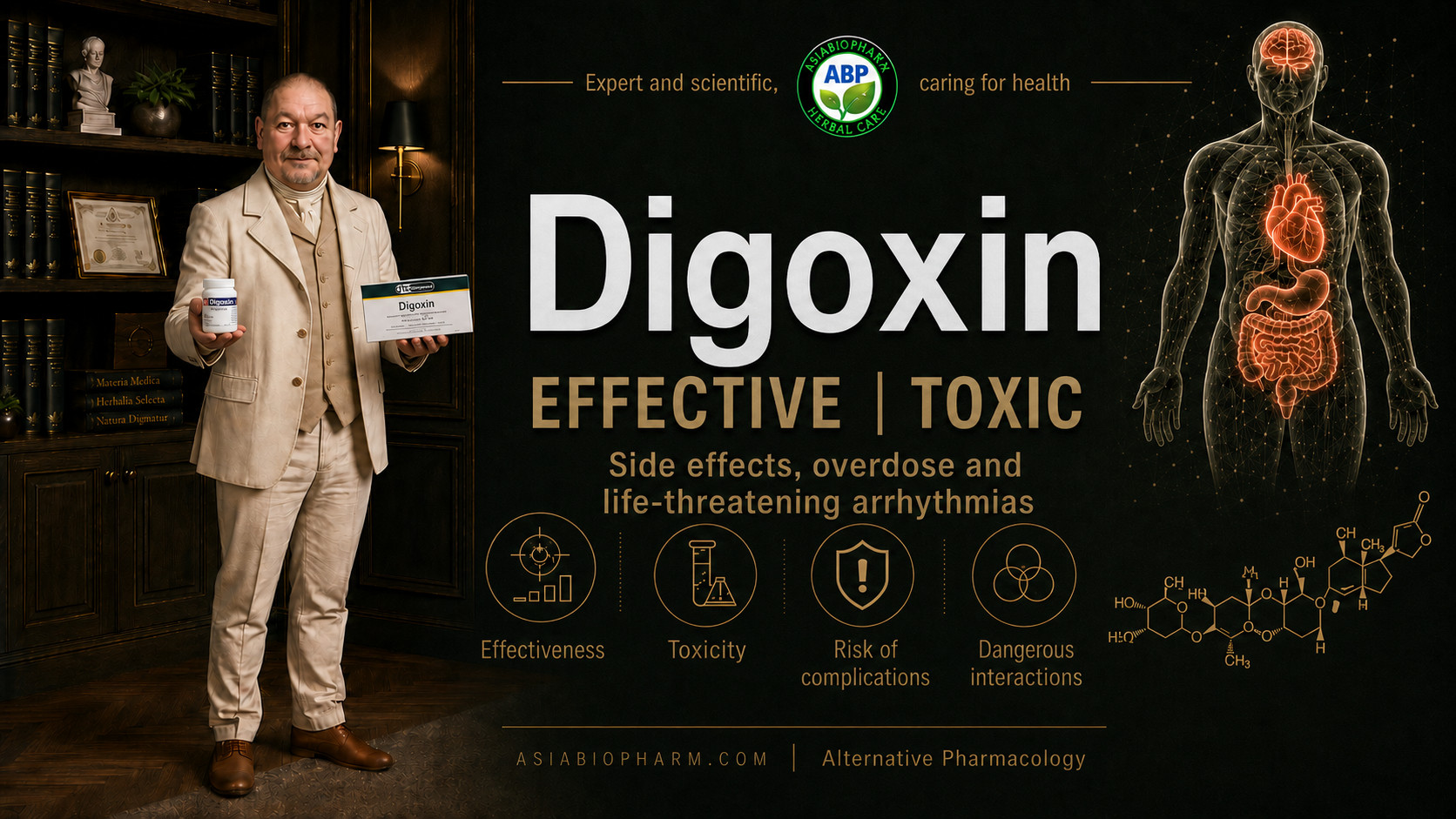
EFFECTIVE | TOXIC
Names Under Which Digoxin Is Available
The international nonproprietary name is digoxin, the Russian name is дигоксин, and the Latin form is Digoxinum. Instructions for use and medical documents may refer to Digoxin USP, Digoxin BP, Digoxin Ph. Eur., digoxin tablets, digoxin oral solution, digoxin pediatric elixir, and solution for intravenous administration. The main confirmed brand names are Lanoxin, Lanoxin PG, Lanoxin Paediatric Elixir, and Digox; numerous generic products are sold simply as Digoxin, with the manufacturer’s name specified. The standard active ingredient is digoxin itself, not its sodium or any other salt. Digitoxin is a different cardiac glycoside and is not a synonym for digoxin. The term “digitalis” refers to a group of cardiac glycosides rather than to a specific drug. In the reviewed registries of the United States, the United Kingdom, and Australia, modern digoxin formulations are predominantly single-ingredient products; hidden duplication is more likely to occur when different brands, tablets, and liquid formulations are used at the same time rather than through fixed-dose combination products.
Why Digoxin Is Considered Harmless and Where the Real Risk Begins
The main danger of digoxin lies in its narrow therapeutic range: the concentration that produces a clinical effect is relatively close to the concentration that causes toxicity. Toxicity develops more often at levels above 2 ng/mL, but severe cardiac rhythm disturbances may also occur at lower concentrations — especially in patients with impaired kidney function, hypokalemia, hypomagnesemia, hypercalcemia, low body weight, advanced age, or drug interactions. Early signs — loss of appetite, nausea, weakness, dizziness, and a general deterioration in well-being — can easily be mistaken for manifestations of heart failure. As a result, the patient, and sometimes even the physician, continues or even increases the dose of a drug that is already causing poisoning. Additional risks arise from different brand names, mistakenly replacing tablets with a liquid formulation without recalculating bioavailability, and prescribing a new medication that increases the concentration of digoxin.
Side Effects After Starting Treatment
Common early reactions include loss of appetite, nausea, vomiting, diarrhea, abdominal pain, fatigue, muscle weakness, headache, and dizziness. Clinically significant reactions include blurred vision, halos around light sources, impaired perception of yellow and green colors, confusion, apathy, anxiety, delirium, and hallucinations. Cardiac effects may include marked sinus bradycardia, sinoatrial block, prolonged AV conduction, ventricular extrasystoles, and a combination of several rhythm disturbances in the same patient.
Life-threatening toxicity may present with high-grade AV block, sinus node arrest, asystole, atrial tachycardia with block, accelerated junctional rhythm, bidirectional or conventional ventricular tachycardia, and ventricular fibrillation. Rare cases of intestinal ischemia and hemorrhagic necrosis of the intestinal wall have been described. After a loading dose or intravenous administration, complications may occur within the first hours; with regular daily use, they often develop after several days as the drug accumulates.
Consequences of Long-Term and Repeated Use
Digoxin does not cause classic drug dependence or tolerance, but during long-term treatment its safety can change dramatically even without any change in the prescribed dose. Reduced glomerular filtration, dehydration, infection, diarrhea, changes in thyroid function, or the addition of a P-glycoprotein inhibitor reduce drug elimination and can turn a previously appropriate maintenance dose into a toxic one. Chronic toxicity often develops insidiously: appetite gradually decreases, body weight falls, weakness, confusion, visual disturbances, bradycardia, AV block, or ventricular extrasystoles progressively develop.
Digoxin does not have typical cumulative hepatotoxicity or nephrotoxicity: the kidneys are primarily responsible for its elimination rather than being the main target of direct injury. The myocardium and the cardiac conduction system remain the principal targets. After the drug is discontinued and eliminated, most neurological, visual, and gastrointestinal reactions are reversible, but circulatory arrest, severe arrhythmia, or intestinal ischemia may lead to irreversible hypoxic organ damage. With prolonged use, gynecomastia, thrombocytopenia, and skin reactions are occasionally observed. The absence of pronounced symptoms during the first weeks does not prove that the same dose will remain safe if kidney function subsequently deteriorates or concomitant therapy changes.
Contraindications and High-Risk Groups
Digoxin is contraindicated in ventricular fibrillation and in confirmed hypersensitivity to digoxin or other digitalis preparations. In atrial fibrillation associated with Wolff–Parkinson–White syndrome, the drug may preferentially slow conduction through the AV node, redirect conduction through the accessory pathway, and provoke an extremely high ventricular rate that can progress to ventricular fibrillation. In sick sinus syndrome, pre-existing bradycardia, and incomplete AV block, digoxin may cause severe bradycardia or complete heart block.
In renal impairment, the elimination period is prolonged, so a standard dose accumulates and acts for longer. Advanced age, low body weight, and childhood increase the risk because of a smaller volume of distribution, variable sensitivity, and dosing calculation errors. Hypokalemia and hypomagnesemia increase the sensitivity of myocardial Na⁺/K⁺-ATPase to digoxin, while hypercalcemia increases intracellular calcium load and arrhythmogenicity. The risk rises after vomiting, diarrhea, intensive diuretic therapy, and dehydration. Digoxin should be avoided in myocarditis; it is generally not recommended in acute myocardial infarction and may worsen hemodynamics in hypertrophic obstructive, restrictive, and amyloid cardiomyopathy, constrictive pericarditis, and some conditions with preserved ejection fraction. A lower dose is usually required in hypothyroidism, while hypoxia and severe lung disease increase myocardial sensitivity to cardiac glycosides.
Dangerous Drug Interactions
Combination with dronedarone is highly undesirable: the drug significantly increases digoxin exposure, and a higher rate of sudden death has been reported when the two are used together. Amiodarone, quinidine, propafenone, verapamil, clarithromycin, erythromycin, itraconazole, ritonavir, and a number of other P-glycoprotein inhibitors may increase digoxin concentrations by 50–150% or more. Such combinations require prior measurement of digoxin concentration, reduction of its dose or extension of the dosing interval, and repeat monitoring after starting or discontinuing the interacting drug.
Beta-blockers, verapamil, diltiazem, and ivabradine have additive effects on the sinus and AV nodes, creating a risk of severe bradycardia and complete AV block. Loop and thiazide diuretics, corticosteroids, and stimulant laxatives increase toxicity through potassium and magnesium loss. Nonsteroidal anti-inflammatory drugs, ACE inhibitors, and angiotensin receptor blockers may secondarily increase digoxin levels if renal filtration worsens. Rapid intravenous administration of calcium in a digitalized patient may cause a serious arrhythmia; sympathomimetics increase arrhythmogenic risk.
Antacids, sucralfate, cholestyramine, foods high in bran, rifampicin, and St. John’s wort may reduce the absorption or concentration of digoxin and weaken its effect. This does not make the combination safe: after such an agent is discontinued, the digoxin concentration may rise again. Ginseng, eleuthero, ashwagandha, danshen, and some traditional preparations may interfere with certain immunoassays used to measure digoxin, creating a false impression of a therapeutic or toxic concentration. A direct pharmacokinetic interaction with moderate alcohol intake is not considered a major factor; however, alcohol-related dehydration, vomiting, hypomagnesemia, and rhythm disturbances substantially increase toxicological risk. The main form of hidden duplication is the use of two single-ingredient products under different names or the simultaneous use of tablets and a liquid formulation.
Patient Errors That Turn Treatment Into Poisoning
The most dangerous everyday error is confusion between milligrams and micrograms. A 0.25 mg tablet contains 250 mcg of digoxin; an error in the decimal point or interpreting “milligrams as micrograms” can increase the dose many times over. With the liquid form, additional risks arise from using the wrong solution concentration, using a household spoon instead of a dosing device, and repeating a dose when there is uncertainty about whether it has already been taken. Oral and intravenous formulations have different bioavailability, so they cannot be substituted in equal amounts without recalculation.
An additional tablet must not be taken because a rapid pulse, edema, or shortness of breath persists: digoxin is not a drug for immediate self-correction of symptoms. It is unacceptable to double the next dose after a missed dose, continue the previous regimen during repeated vomiting, diarrhea, dehydration, or a sharp reduction in urine output, or independently add amiodarone, an antibiotic, a diuretic, an NSAID, or a herbal preparation. It is especially dangerous to ignore nausea, loss of appetite, unusual weakness, visual changes, and a slowing pulse by attributing them to age or heart failure. Self-discontinuation followed by resumption of the previous dose may also lead to disease decompensation or repeated digitalization without taking changed kidney function into account.
Digoxin Overdose and Poisoning
There is no universal safe toxic dose. Intoxication can occur at a therapeutic dosage if elimination is impaired or myocardial sensitivity has changed. A concentration above 2 ng/mL is associated with an increased risk of toxicity, but the diagnosis cannot be excluded at a lower value. A sample taken less than six hours after the last dose may reflect the distribution phase and be misleading. In acute overdose, nausea, vomiting, loss of appetite, and marked weakness often appear first; hyperkalemia then develops, followed by conduction disturbances or ventricular arrhythmias. Maximum cardiac effects usually develop within 3–6 hours after ingestion and may persist for 24 hours or longer. In chronic poisoning, symptoms develop over days or weeks and may be limited to reduced appetite, confusion, visual disturbances, and gradually worsening bradycardia until AV block or ventricular tachycardia appears suddenly.
According to the antidote instructions, a potentially fatal acute ingestion is considered to be 10 mg or more in an adult, 4 mg or more than 0.1 mg/kg in a child, or a dose capable of producing a concentration of at least 10 ng/mL. These values are indications for emergency antidote treatment, not a safety threshold. Clinical observations cited in the digoxin instructions associate ingestion of 10–15 mg by adults with heart disease with approximately 50% mortality; ingestion of more than 25 mg without a specific antidote has been described as almost inevitably fatal. A substantially smaller dose may become critical in renal impairment, low body weight, hypokalemia, hypomagnesemia, hypercalcemia, or interaction with a P-glycoprotein inhibitor.
The specific antidote is digoxin-specific Fab antibody fragments, Digoxin Immune Fab, marketed as DigiFab. It is administered for ventricular tachycardia or fibrillation, progressive bradycardia, second- or third-degree AV block unresponsive to atropine, sinus node arrest, and hyperkalemia in the setting of rapidly progressive intoxication. The antidote should be given immediately once life-threatening toxicity is recognized: waiting for a delayed laboratory result may end in ventricular fibrillation or asystole. After Fab administration, standard measurement of total digoxin becomes unreliable because the assay measures both bound and free drug. Activated charcoal, electrolyte correction, atropine, temporary cardiac pacing, and antiarrhythmic therapy are performed only under continuous ECG monitoring. Hemodialysis removes virtually no digoxin. If overdose is suspected, vomiting must not be induced, “yellow vision” must not be awaited, and attempts should not be made to correct the condition at home.
Safe Integrative Alternative to Digoxin
The closest functional alternative is Kusimkhwan. Its cardiotonic effect is associated with an influence on Na⁺/K⁺-ATPase and intracellular calcium exchange — a mechanism fundamentally similar to that of digoxin. In long-term clinical observations, controlled microdosing and precise individualized titration produced a pronounced effect, including in severe cases, without registered adverse reactions. These data relate to practical clinical experience with this specific preparation and should not be mechanically extrapolated to toad venom, non-standardized bufadienolides, or other products of unknown composition. Kusimkhwan is prescribed by a cardiologist and is not intended for self-treatment.
The “CCC” cardiovascular mixture is a proprietary herbal formula with combined cardiotonic, antiarrhythmic, vascular, anti-edematous, and antihypoxic effects. It is most justified in chronic heart failure combining reduced contractility, venous congestion, edema, an ischemic component, and neurovegetative overload. Unlike digoxin, the mixture acts not on a single pharmacological target but on several components of cardiovascular dysfunction. In acute decompensation, unstable hemodynamics, or atrial fibrillation with a high ventricular rate, it is not regarded as an emergency self-administered replacement.
Erysimum diffusum, 10% standardized extract is a targeted herbal cardiotonic. The cardiac glycosides contained in Erysimum diffusum increase myocardial contractility by inhibiting Na⁺/K⁺-ATPase. Industrial standardization improves reproducibility of effect compared with ordinary plant powder, but does not turn the preparation into a neutral general tonic. Its use requires assessment of cardiac rhythm, conduction, kidney function, and concomitant therapy.
Crataegus monogyna is suitable for gentle long-term support in stable compensated heart failure, reduced exercise tolerance, and palpitations. Its effect develops more gradually and does not provide the same controlled slowing of AV conduction as digoxin. Terminalia arjuna may complement therapy through cardioprotective and moderate inotropic effects. Magnesium taurate is used to correct magnesium deficiency and reduce electrical instability of the myocardium, while Leonurus heterophyllus is used for sympathetically mediated tachycardia, palpitations, and neurovegetative overload.
Complete replacement of digoxin is not possible in every clinical situation. Kusimkhwan and standardized Erysimum diffusum are the closest to it in terms of cardiotonic mechanism. The “CCC” mixture is preferable when a comprehensive effect on heart failure is required. Crataegus monogyna, Terminalia arjuna, magnesium taurate, and Leonurus heterophyllus are primarily gentle or adjunctive options. In severe decompensation, marked tachysystole, conduction disorders, or unstable hemodynamics, the decision to replace digoxin is made only by a cardiologist. Digoxin increases myocardial contractility and slows conduction through the AV node; excessive exposure increases automaticity and the risk of dangerous arrhythmias through these same mechanisms.
The Real Effectiveness of Digoxin and Medical Errors
Digoxin is genuinely effective, but the scope of its rational use is considerably narrower than its historical reputation as a universal “heart medicine.” In chronic heart failure with reduced ejection fraction, it may reduce symptoms and the frequency of hospitalizations in patients who remain symptomatic despite standard therapy or who cannot tolerate some of its components. The drug does not eliminate the cause of heart failure, does not stop myocardial remodeling, and is not among the agents with independently proven mortality reduction. Modern guidelines regard it as an adjunctive rather than a foundational medication.
In atrial fibrillation, digoxin slows conduction through the AV node and reduces the ventricular rate mainly at rest. Its effect is weaker during physical exertion and high sympathetic activity. It does not restore sinus rhythm, eliminate an atrial thrombus, prevent stroke, or replace anticoagulant therapy. In modern guidelines, digoxin retains a role in rate control for selected patients, particularly when atrial fibrillation is combined with heart failure.
Common medical errors include prescribing digoxin for any tachycardia or shortness of breath without clarifying the rhythm and type of heart failure, using it in patients with preserved ejection fraction without a specific rationale, ignoring sick sinus syndrome and AV block, and failing to calculate kidney function or monitor electrolytes. Another error is increasing the dose because shortness of breath persists, even though it may be caused by anemia, ischemia, lung disease, valvular disease, or progression of heart failure. Pharmacology does not follow the principle “the heart is working poorly — add more digoxin”: once an effective concentration has been reached, further increases in exposure predominantly increase toxicity.
Safety Monitoring During Treatment
Before prescribing digoxin, ECG findings, heart rate and rhythm characteristics, sinus and AV node function, creatinine and estimated glomerular filtration rate, potassium, magnesium, and calcium should be assessed. During treatment, monitoring should be repeated after changes in kidney function, dehydration, pronounced diarrhea or vomiting, and after the initiation of diuretics, antiarrhythmic drugs, macrolide antibiotics, verapamil, amiodarone, or other agents capable of altering digoxin concentration or effect.
In heart failure, modern recommendations target a relatively low serum concentration — approximately 0.5 to less than 0.9 ng/mL. Values above 2 ng/mL are associated with increased toxicity without additional benefit; however, a normal laboratory result does not exclude intoxication. Blood for concentration measurement should be drawn no earlier than six hours after the last dose; otherwise, the result may reflect incomplete drug distribution and be falsely elevated. The value should be interpreted only together with the ECG, symptoms, kidney function, and electrolyte levels.
New marked bradycardia, syncope, increasing confusion, repeated vomiting, severe muscle weakness, disturbances in color vision, the appearance of multiple extrasystoles, AV block, or ventricular tachycardia require immediate discontinuation of the drug and urgent evaluation. It is dangerous to wait for the full set of classic symptoms to appear: severe arrhythmia may be the first manifestation of intoxication. If poisoning is suspected, home correction with potassium, magnesium, or antiarrhythmic drugs is unacceptable because treatment depends on the type of arrhythmia, potassium level, and the need for Digoxin Immune Fab.
Proper Discontinuation of Digoxin
Digoxin does not cause classic drug dependence, so special gradual dose reduction to prevent a withdrawal syndrome is usually not required. However, the absence of a withdrawal syndrome does not mean that the drug can be stopped arbitrarily. After discontinuation, the ventricular rate may increase in atrial fibrillation, shortness of breath may worsen, exercise tolerance may decrease, and fluid retention may recur in heart failure.
If signs of intoxication are present, digoxin is stopped immediately and an urgent evaluation is performed. For planned discontinuation, the cardiologist first assesses the reason for prescribing the drug, cardiac rhythm, ejection fraction, kidney function, electrolytes, and the composition of baseline therapy. Independent immediate replacement of digoxin with Kusimkhwan, the “CCC” mixture, Erysimum diffusum, or another cardiotonic is unacceptable: the products differ in pharmacokinetics, the strength of their effect on conduction, and duration of action. The transition is carried out according to an individualized clinical plan, without publication of universal dosing regimens.
A Rational Approach to Treatment
Digoxin is justified when its predictable positive inotropic effect and slowing of AV conduction are needed: in selected cases of symptomatic heart failure with reduced ejection fraction and for rate control in atrial fibrillation, especially when these conditions coexist. It should not be prescribed automatically to every patient with edema, shortness of breath, or a rapid pulse.
When the disease is stable and there is no need for emergency rate control, herbal preparations with a lower toxicological burden may be considered. Kusimkhwan is the closest microdosed functional alternative; the “CCC” mixture provides a comprehensive effect; standardized Erysimum diffusum is a targeted phytocardiotonic; Crataegus monogyna is used for gentler long-term support. Terminalia arjuna, magnesium taurate, and Leonurus heterophyllus complement treatment for specific indications.
The goal of an integrative approach is not the mechanical rejection of digoxin, but the selection of a treatment that corresponds to the severity and mechanism of the disease. In unstable heart failure or uncontrolled tachysystole, a synthetic drug may be necessary. In a stable condition, a controlled replacement may be possible. The combined use of several cardiotonic agents is permissible only on the decision of a cardiologist, because herbal origin does not exclude additive effects on cardiac contractility, automaticity, and conduction.
If you have questions about the topic of this article, you can ask a clinical pharmacologist in the comments or schedule an appointment via the link: https://asiabiopharm.com/konsultaciii/
0 comments