
Dexamethasone — Dangers, Side Effects, and Withdrawal Syndrome
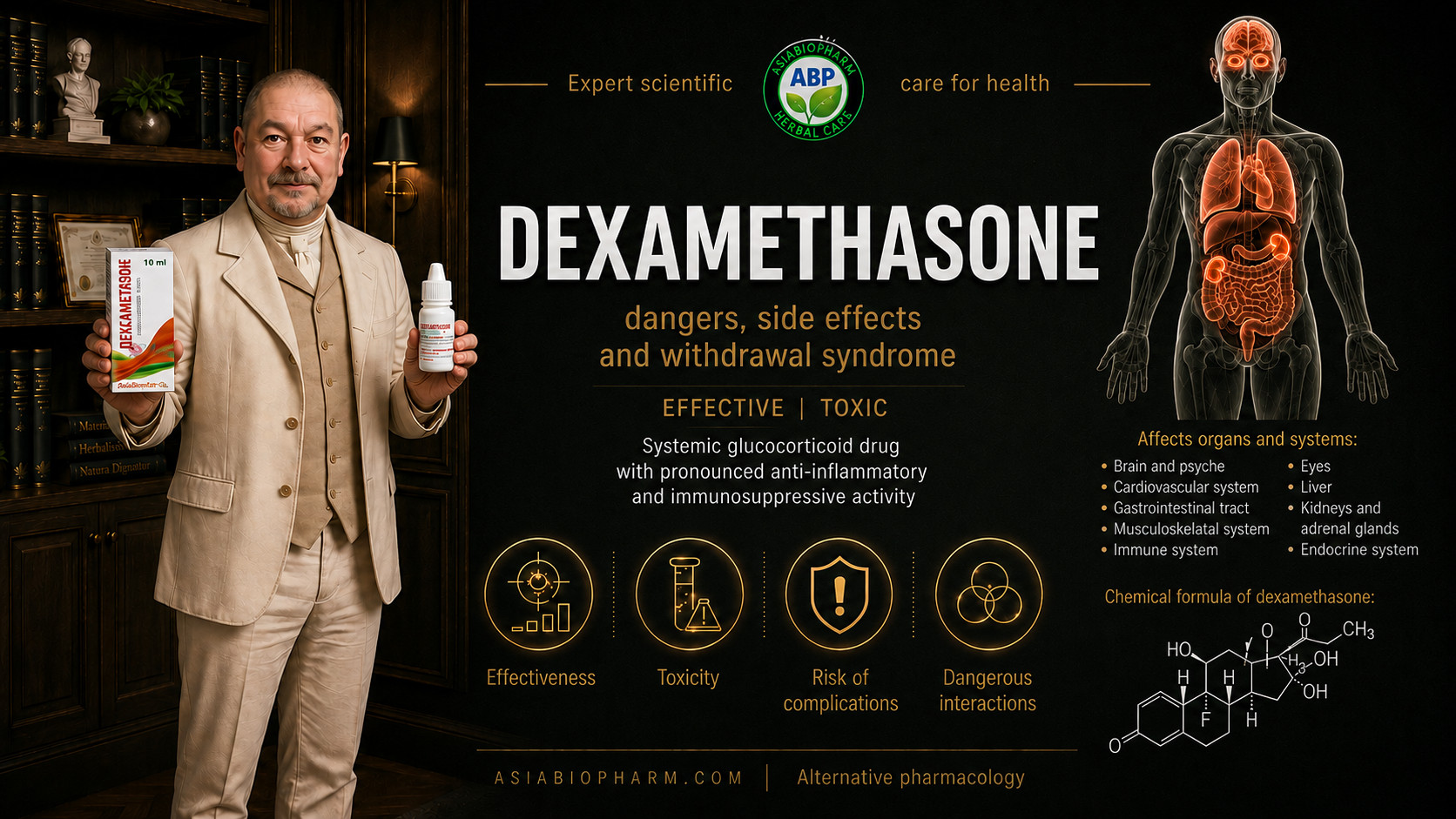
EFFECTIVE | TOXIC
Names Under Which Dexamethasone Is Available
The international nonproprietary name is dexamethasone, and the Latin name is dexamethasone. In medicinal formulations, the active substance may be listed as dexamethasone, dexamethasone sodium phosphate, or dexamethasone acetate. Available dosage forms include tablets, solutions and concentrates for injection, oral solutions or elixirs, eye drops and suspensions, ophthalmic ointments, ear preparations, and combined eye/ear products. The main trade names used in different countries include Dexamethasone, Dexamed, Dexazone, Decadron, DexPak, Dexamethasone Intensol, Maxidex, and Ozurdex. Combination products may contain dexamethasone together with antibiotics: tobramycin + dexamethasone — Tobradex; neomycin + polymyxin B + dexamethasone — Maxitrol; ciprofloxacin + dexamethasone — Ciprodex; gentamicin + dexamethasone — Dexa-Gentamicin and similar products. The simultaneous use of tablets, injections, ophthalmic, otic, and combination formulations may increase the total glucocorticoid exposure, even though the patient may perceive them as different medicines.
Why Dexamethasone Is Considered Harmless and Where the Real Risk Begins
Dexamethasone can rapidly reduce swelling, pain, itching, and inflammation, which is why subjective improvement is often mistaken for elimination of the underlying cause of the disease. In reality, the drug suppresses immune and inflammatory responses, may mask an infection, raise blood glucose levels, alter mood and sleep, delay the diagnosis of complications, and suppress the body’s own cortisol secretion. Repeated injections “for allergies,” independently extending the treatment course, using the drug for viral or bacterial infections without appropriate therapy, and combining several dexamethasone formulations are particularly dangerous. The first signs of complications — weakness, insomnia, irritability, increased blood pressure, thirst, frequent urination, or impaired vision — are nonspecific and are often not associated with the hormonal medication. The absence of an immediate severe reaction after the first injection does not mean that subsequent doses will have no consequences.
Side Effects After the First Dose and a Short Course
Common short-term reactions include insomnia, agitation, anxiety, irritability, increased appetite, dyspepsia, fluid retention, elevated blood pressure, and increased blood glucose levels. Clinically significant complications may develop within the first hours or days: severe hyperglycaemia, decompensation of diabetes mellitus, hypokalaemia, muscle weakness, exacerbation of peptic ulcer disease, sodium and fluid retention, worsening heart failure, psychosis, mania, severe depression, or delirium. The immunosuppressive effect may accelerate the progression of a bacterial, viral, fungal, or parasitic infection while simultaneously making its symptoms less noticeable. Life-threatening reactions are less common but include an anaphylactoid reaction, severe infection and sepsis, gastrointestinal perforation or bleeding, acute pancreatitis, severe electrolyte disturbances, and decompensation of a concomitant disease. A high dose and parenteral administration increase the likelihood of rapid systemic reactions, although a severe complication may also occur after a relatively short course in a vulnerable patient.
Ophthalmic formulations may cause burning, irritation, and temporary blurred vision. Prolonged or frequent use may increase intraocular pressure and lead to glaucoma with optic nerve damage, posterior subcapsular cataract, delayed corneal healing, and secondary bacterial, fungal, or viral infection. Perforation has been reported in cases of corneal or scleral thinning. Therefore, dexamethasone eye drops should not be regarded as a neutral remedy for any type of eye redness.
Side Effects During Long-Term or Repeated Use
Over a period of weeks or months, dexamethasone suppresses the hypothalamic–pituitary–adrenal axis. The adrenal glands reduce their own cortisol production, and the body becomes dependent on an external supply of glucocorticoids. At the same time, drug-induced Cushing syndrome, redistribution of body fat, a moon-shaped face, thinning of the skin, striae, easy bruising, delayed wound healing, arterial hypertension, steroid-induced diabetes, dyslipidaemia, and an increased risk of infection may develop. After discontinuation, metabolic disturbances may lessen, but restoration of cortisol secretion takes weeks or months and, in some patients, considerably longer.
Musculoskeletal complications include a negative calcium balance, osteoporosis, vertebral compression fractures, pathological fractures, loss of muscle mass, proximal steroid myopathy, and aseptic necrosis of the femoral or humeral head. Aseptic necrosis may occur even after relatively intensive repeated courses and may lead to irreversible joint destruction. Growth retardation may occur in children. Long-term treatment increases the risk of cataract, glaucoma, and secondary eye infections. Psychiatric consequences range from persistent insomnia and emotional lability to depression, mania, and psychotic episodes. The absence of pronounced early side effects does not protect against osteoporosis, adrenal suppression, or cataract, because these complications may develop for a long time without obvious symptoms.
Dexamethasone does not cause classic narcotic dependence, but it creates physiological dependence on an external glucocorticoid. To maintain the anti-inflammatory effect, continuation or an increase in dose may sometimes be required because of the activity of the underlying disease, which the patient may mistakenly interpret as “tolerance.” The drug may also mask progression of an infection, autoimmune process, or tumour-related complication by temporarily suppressing symptoms without eliminating the cause.
Contraindications and High-Risk Groups
Systemic dexamethasone is contraindicated in systemic fungal infections and in confirmed hypersensitivity to the drug or to components of a particular formulation. Live and live attenuated vaccines are contraindicated in patients receiving immunosuppressive doses of systemic glucocorticoids, because the weakened vaccine microorganism may cause infection and the expected immune response may be inadequate.
The risk is especially high in the presence of an active or latent infection, tuberculosis, strongyloidiasis, recent exposure to measles or chickenpox, diabetes mellitus, uncontrolled arterial hypertension, heart failure, hypokalaemia, peptic ulcer disease, diverticulitis, a recent intestinal anastomosis, osteoporosis, myasthenia gravis, glaucoma, or severe psychiatric disorders. During infection, dexamethasone may accelerate dissemination of the pathogen while simultaneously masking fever and inflammatory symptoms. In diabetes, it raises blood glucose and may increase the need for glucose-lowering therapy. In heart failure, sodium and fluid retention may worsen oedema and shortness of breath. In peptic ulcer disease, the combination with NSAIDs is particularly dangerous. Osteoporosis increases the likelihood of fractures, while glaucoma increases the risk of optic nerve damage.
Pregnancy, older age, and childhood are not universal absolute contraindications, but they require a careful assessment of benefits and risks. In children, growth suppression must be considered; in older adults, osteoporosis, diabetes, hypertension, sarcopenia, and infections must be taken into account. During pregnancy, prolonged or repeated systemic use is permitted only for clinical indications when the expected benefit outweighs the potential risk.
Dangerous Interactions
The combination of immunosuppressive doses of dexamethasone with live vaccines is contraindicated or highly undesirable. Concomitant use with strong CYP3A4 inhibitors — ritonavir, cobicistat, ketoconazole, itraconazole, clarithromycin, and several other drugs — may increase systemic exposure to dexamethasone and raise the risk of Cushing syndrome and adrenal suppression. Even inhaled, intranasal, ophthalmic, and topical formulations do not always remain exclusively local when used in such combinations. CYP3A4 inducers — rifampicin, carbamazepine, phenytoin, phenobarbital, primidone, and St John’s wort — may accelerate dexamethasone metabolism and reduce its effectiveness; after discontinuation of the inducer, the glucocorticoid concentration may rise again. Such combinations require dose assessment and clinical monitoring.
Concomitant use with NSAIDs, including ibuprofen, diclofenac, naproxen, ketorolac, and acetylsalicylic acid, increases the risk of gastrointestinal ulceration, bleeding, and perforation. Diuretics, amphotericin B, laxatives when misused, and other potassium-lowering agents increase the likelihood of hypokalaemia; against this background, the toxicity of cardiac glycosides rises. Dexamethasone raises blood glucose levels and may require adjustment of insulin and other glucose-lowering medications. Its interaction with warfarin is unpredictable, so more frequent monitoring of coagulation parameters is required.
Alcohol does not cause a specific chemical reaction with dexamethasone, but it increases irritation of the gastric mucosa, worsens control of blood glucose, sleep, and mental state, raises the likelihood of dosing errors, and is particularly dangerous when combined with NSAIDs. Caffeine may intensify insomnia, anxiety, palpitations, and elevated blood pressure. Nicotine further worsens cardiovascular and bone-related risks. Dietary supplements with pronounced hypoglycaemic, diuretic, laxative, or anticoagulant effects require assessment for interactions. St John’s wort may reduce dexamethasone concentrations through CYP3A4 induction.
Hidden duplication may occur when tablets or injections are used simultaneously with Maxidex, Tobradex, Maxitrol, Ciprodex, Dexa-Gentamicin, or their analogues. A local formulation usually produces a lower systemic burden, but frequent use, large doses, mucosal damage, or a prolonged course increases absorption.
Patient Errors When Using Dexamethasone
The most dangerous error is the independent use of injections as a universal remedy for allergies, pain, colds, high fever, or “inflammation.” Rapid relief creates the illusion that the drug is treating the disease, although it merely suppresses the body’s response. During an infection, such suppression may temporarily improve well-being while simultaneously facilitating dissemination of the pathogen.
Other common errors include repeating an injection when symptoms return, increasing the dose when there is no immediate result, shortening the intervals, extending the course, taking the drug in the evening and then trying to compensate for insomnia with sedatives, combining it with NSAIDs and alcohol, failing to monitor blood glucose and blood pressure, ignoring mental changes, and abruptly stopping long-term treatment. A separate problem is the use of leftover ampoules “according to the previous regimen” for a new illness without diagnostic evaluation.
The familiarity of the name and its widespread use in hospitals do not make the drug suitable for routine self-treatment. Dexamethasone is prescribed for severe conditions precisely because it has a powerful and predictable effect, not because it is physiologically neutral. The absence of an immediate complication after a single injection does not guarantee the safety of a repeated course.
Dexamethasone Overdose and Poisoning
No universal single “toxic dose” of dexamethasone has been established after which every patient develops the same pattern of poisoning. Toxicity is determined not only by the quantity of the drug, but also by the duration of the course, repeated administration, age, diabetes, infection, cardiovascular disease, electrolyte disturbances, and concomitant therapy. There is no specific antidote.
After an excessive single dose, agitation, insomnia, anxiety, elevated blood pressure and blood glucose, nausea, dyspepsia, fluid retention, and electrolyte changes may occur during the first hours. Over the following hours and days, severe hyperglycaemia, hypokalaemia, oedema, psychosis, decompensated heart failure, a gastrointestinal complication, or worsening of an infection may develop. However, dexamethasone is much more commonly associated not with classic acute poisoning from a single dose, but with hidden cumulative overdose caused by repeated injections, a prolonged course, or the simultaneous use of several dosage forms.
Chronic overdose presents with Cushingoid changes, muscle weakness, hypertension, hyperglycaemia, infections, osteoporosis, thinning of the skin, psychiatric disturbances, and suppression of adrenal function. Abrupt withdrawal after such exposure may result not in excess, but in a dangerous deficiency of cortisol.
Errors in paediatric dosing, the use of solutions with different concentrations, confusion between milligrams and millilitres, shortening the intervals between injections, and the simultaneous use of dexamethasone-containing medicines are particularly dangerous. If a clinically significant overdose is suspected, blood pressure, glucose, sodium, potassium, fluid balance, mental status, signs of infection, and evidence of gastrointestinal injury are assessed. Treatment is supportive and depends on the specific complications; waiting for overt Cushing syndrome or an adrenal crisis before seeking help is dangerous.
The content and sequence of the sections have been prepared in accordance with the approved core instruction.
Safe Integrative Alternative to Dexamethasone
The choice of a herbal alternative depends not on the name “dexamethasone” itself, but on the condition for which it was prescribed. In anaphylaxis, cerebral oedema, a severe exacerbation of an autoimmune disease, life-threatening airway swelling, marked bronchial obstruction, and other emergency conditions, phytotherapy does not provide a comparable speed or predictability of action. In such situations, dexamethasone is used as an intensive care medication, and attempting to replace it with herbal remedies may result in the loss of critically important time.
For local or moderately severe chronic inflammation of the skin and mucous membranes, ABP-153 may be considered as the main integrative alternative. It is an oil-based herbal mixture containing Cinnamomum camphora, Andrographis paniculata, Curcuma longa, Glycyrrhiza glabra, Zingiber cassumunar, Houttuynia cordata, menthol, borneol, clove, and eucalyptus. The components of the formulation have anti-inflammatory, antiseptic, anti-oedematous, reparative, and barrier-protective potential. Unlike systemic dexamethasone, the product is not intended to cause total suppression of the immune response and does not create the glucocorticoid burden on the hypothalamic–pituitary–adrenal axis that is characteristic of systemic steroids. At the same time, claims of efficacy for every condition indicated by the manufacturer require separate clinical assessment: the composition and pharmacological plausibility alone are not equivalent to the results of large comparative studies.
For oral supportive therapy in chronic inflammatory disorders of the musculoskeletal system, the most rational combination is Boswellia serrata and Curcuma longa. Boswellic acids act primarily on the leukotriene component of inflammation, while curcuminoids modulate NF-κB, COX-2, and the production of pro-inflammatory cytokines. This combination may be used for osteoarthritis, chronic joint pain, and a stable inflammatory process when immediate systemic immunosuppression is not required. Its effect develops more slowly than after a dexamethasone injection, but treatment is not accompanied by the suppression of cortisol secretion, steroid-induced diabetes, Cushingoid changes, and withdrawal syndrome characteristic of systemic glucocorticoids.
For limited non-infected inflammation of the skin, an ointment made from dry extracts of Nigella sativa and Scutellaria baicalensis may be used. A working formula for 100 g is as follows: dry Nigella sativa extract — 5 g, dry Scutellaria baicalensis extract — 5 g, coconut oil — 70 g, beeswax — 15 g, and lanolin — 5 g. The coconut oil and wax are melted in a water bath at 55–60 °C, after which the lanolin is added. The extracts are first triturated with a small amount of the warm base until a homogeneous paste is formed, then gradually added to the main mixture, stirred, cooled to approximately 40 °C, and transferred into sterile dark-glass jars. The final extract concentration is 10% — 5% of each extract. A higher concentration of Scutellaria should not be used because it increases the risk of contact irritation and an allergic reaction. The ointment is applied in a thin layer once or twice daily to a limited area after a preliminary skin test. It must not be applied to purulent lesions, open wounds, deep erosions, the eyelids, or mucous membranes.
When inflammation is accompanied by dryness, impaired skin barrier function, and delayed epithelialisation, the addition of Centella asiatica is advisable. A formulation containing 4 g Nigella sativa + 4 g Scutellaria baicalensis + 3 g Centella asiatica contains 11 g of extracts and is therefore an 11% ointment, not a 10% ointment. To achieve an exact 10% concentration in 100 g, 3.6 g of Nigella sativa, 3.6 g of Scutellaria baicalensis, 2.8 g of Centella asiatica, 70 g of coconut oil, 15 g of beeswax, and 5 g of lanolin should be used. Centella enhances the reparative properties of the formulation; however, this ointment should not be used for bacterial, fungal, or herpetic lesions without aetiotropic treatment.
After prolonged systemic dexamethasone therapy, Rehmannia glutinosa, Schisandra chinensis, Astragalus propinquus, and Silybum marianum may be considered. Rehmannia is used as a component of recovery regimens, Schisandra as adaptogenic support, Astragalus for immunometabolic correction, and Silybum primarily for liver support. These agents are not antidotes to dexamethasone, do not immediately restore cortisol secretion, and do not prevent an adrenal crisis. If suppression of the hypothalamic–pituitary–adrenal axis is suspected, appropriate dose reduction, assessment of morning cortisol, and, when indicated, an ACTH stimulation test are required.
The Real Effectiveness of Dexamethasone and Medical Errors
Dexamethasone is genuinely effective when a strong and rapid glucocorticoid effect is required: in cerebral oedema, severe allergic and inflammatory reactions, certain autoimmune diseases, exacerbations of multiple sclerosis, some haematological and oncological conditions, antiemetic therapy during chemotherapy, and prevention of postoperative nausea. It is also used in severe COVID-19 in patients who require oxygen support, but it is not intended for infection prevention or for treating mild disease without hypoxia. The drug reduces inflammation, oedema, and immune-mediated damage, but in many cases it does not eliminate the original cause of the disease. It may rapidly suppress symptoms, but the infection, allergen, autoimmune mechanism, or structural damage does not disappear as a result.
For ordinary back pain, a cold, an undiagnosed rash, fever, weakness, or “inflammation in general,” dexamethasone is not a rational universal solution. Rapid improvement after an injection is often perceived as proof that the prescription was correct, although the drug may just as quickly mask an infection, raise blood glucose, and suppress the body’s own cortisol secretion. Pharmacological potency is often used here instead of diagnosis: the symptom has disappeared, therefore the treatment is assumed to have succeeded. This is a convenient line of reasoning if one ignores the disease that continues to progress behind a temporarily lowered curtain.
Medical errors include prescribing systemic dexamethasone without an established indication, repeating injections without assessing the cumulative dose, an unjustifiably prolonged course, the absence of a withdrawal plan, use during infection without adequate antimicrobial therapy, and failure to consider diabetes mellitus, peptic ulcer disease, osteoporosis, glaucoma, and psychiatric history. Failure to monitor glucose, blood pressure, and electrolytes, combining dexamethasone with NSAIDs without assessing gastrointestinal risk, and prescribing a strong CYP3A4 inhibitor without reviewing glucocorticoid therapy are also errors.
Safety Monitoring During Treatment
Before starting a systemic course, it is necessary to assess the indication, expected duration of treatment, blood pressure, body weight, presence of oedema, blood glucose level, diabetes mellitus, active infection, history of peptic ulcer disease, psychiatric disorders, glaucoma, and osteoporosis. During repeated or prolonged treatment, blood pressure, fasting and postprandial glucose, glycated haemoglobin, potassium and sodium, body weight, oedema, muscle strength, skin condition, and signs of infection are monitored. In patients with diabetes, glycaemic monitoring is required from the first day, because dexamethasone may cause a delayed and prolonged rise in blood glucose.
When treatment continues for several weeks, the risk of osteoporosis and fractures is assessed; with long-term therapy, densitometry, assessment of calcium and vitamin D intake, and prevention of glucocorticoid-induced osteoporosis may be required. If the patient reports pain in the groin, hip, or shoulder, or restricted movement, aseptic necrosis must be excluded. When ophthalmic formulations are used for more than 7–10 days or in repeated courses, ophthalmological monitoring of intraocular pressure and the condition of the cornea and lens is required.
Immediate assessment is required in the event of high fever or a sharp deterioration despite muted inflammatory signs, marked thirst, frequent urination, confusion, a fruity odour on the breath, sudden severe muscle weakness, seizures, palpitations, black stools, vomiting blood, severe abdominal or back pain, sudden visual deterioration, psychosis, suicidal thoughts, swelling of the face or larynx, or difficulty breathing. After dose reduction, marked weakness, nausea, vomiting, abdominal pain, a fall in blood pressure, fainting, hypoglycaemia, and impaired consciousness are dangerous and may indicate adrenal insufficiency. Waiting for these symptoms to “pass after the hormones” may result in sepsis, gastrointestinal bleeding, metabolic decompensation, or an adrenal crisis.
Proper Dexamethasone Withdrawal and Withdrawal Syndrome
After a single dose or a very short course of dexamethasone, the drug can usually be discontinued without gradual dose reduction, provided that the patient had not previously received systemic glucocorticoids and there are no signs of adrenal suppression. After prolonged, repeated, or high-dose treatment, the drug must not be stopped abruptly. The likelihood of suppression of the hypothalamic–pituitary–adrenal axis depends on the dose, duration, timing of administration, repetition of treatment courses, and individual sensitivity; there is no universal withdrawal regimen suitable for every patient.
The dose is usually reduced more rapidly at first until it approaches the range corresponding to physiological glucocorticoid exposure, after which the reduction is carried out more slowly. Dexamethasone is a long-acting drug and suppresses morning ACTH secretion more strongly, so during prolonged therapy it may be necessary to switch to a shorter-acting glucocorticoid for the final stage of withdrawal. The specific regimen is determined by the initial dose, duration of treatment, activity of the disease, and the patient’s symptoms.
Withdrawal syndrome may present with weakness, fatigue, reduced appetite, nausea, muscle and joint pain, headache, sleep disturbances, low mood, and a low-grade fever. These symptoms may occur even when the cortisol level is still sufficient to prevent a crisis. Adrenal insufficiency may additionally present with hypotension, vomiting, abdominal pain, hypoglycaemia, dehydration, and impaired consciousness. At the same time, the disease for which dexamethasone was prescribed may worsen, so the return of symptoms must not automatically be attributed solely to “withdrawal syndrome.”
Morning cortisol is used to assess recovery of the hypothalamic–pituitary–adrenal axis, and if the result is inconclusive, dynamic testing is performed according to clinical indications. Herbal adaptogens do not make it possible to accelerate dose reduction safely and do not replace stress doses of glucocorticoids in confirmed adrenal insufficiency. During a severe infection, surgery, trauma, or marked physiological stress, the need for glucocorticoids may temporarily increase.
A Rational Approach to Treatment
Dexamethasone is justified when the strength, speed, and predictability of systemic anti-inflammatory or anti-oedematous action are required. It may be a life-saving medicine, but for that very reason it should not be used as a routine injection for pain, fever, allergies, or “general inflammation.” The less clearly defined the indication, the more difficult it is to justify the endocrine, metabolic, infectious, psychiatric, and skeletal toxic burden.
For mild or stable chronic inflammation of the skin and mucous membranes, preference may be given to ABP-153 or topical formulations based on Nigella sativa, Scutellaria baicalensis, and Centella asiatica. For chronic joint inflammation, Boswellia serrata and Curcuma longa may be used. Such options act more slowly and do not replace emergency hormonal therapy, but they may help reduce unjustified use of systemic steroids and the cumulative complications associated with them.
After a prolonged course of dexamethasone, Rehmannia glutinosa, Schisandra chinensis, Astragalus propinquus, and Silybum marianum may be used only as adjunctive recovery support after assessment of interactions and the activity of the underlying disease. The main purpose of an integrative approach is not to deny the effectiveness of dexamethasone, but to use it where its benefits genuinely outweigh its risks and not turn powerful intensive therapy into a routine way of temporarily switching off symptoms.
If you have questions about the subject of this article, you may ask a clinical pharmacologist in the comments or book an appointment via the following link: https://asiabiopharm.com/konsultaciii/
0 comments