
Desloratadine — Side Effects, Contraindications, and Why the Drug Can Be Dangerous
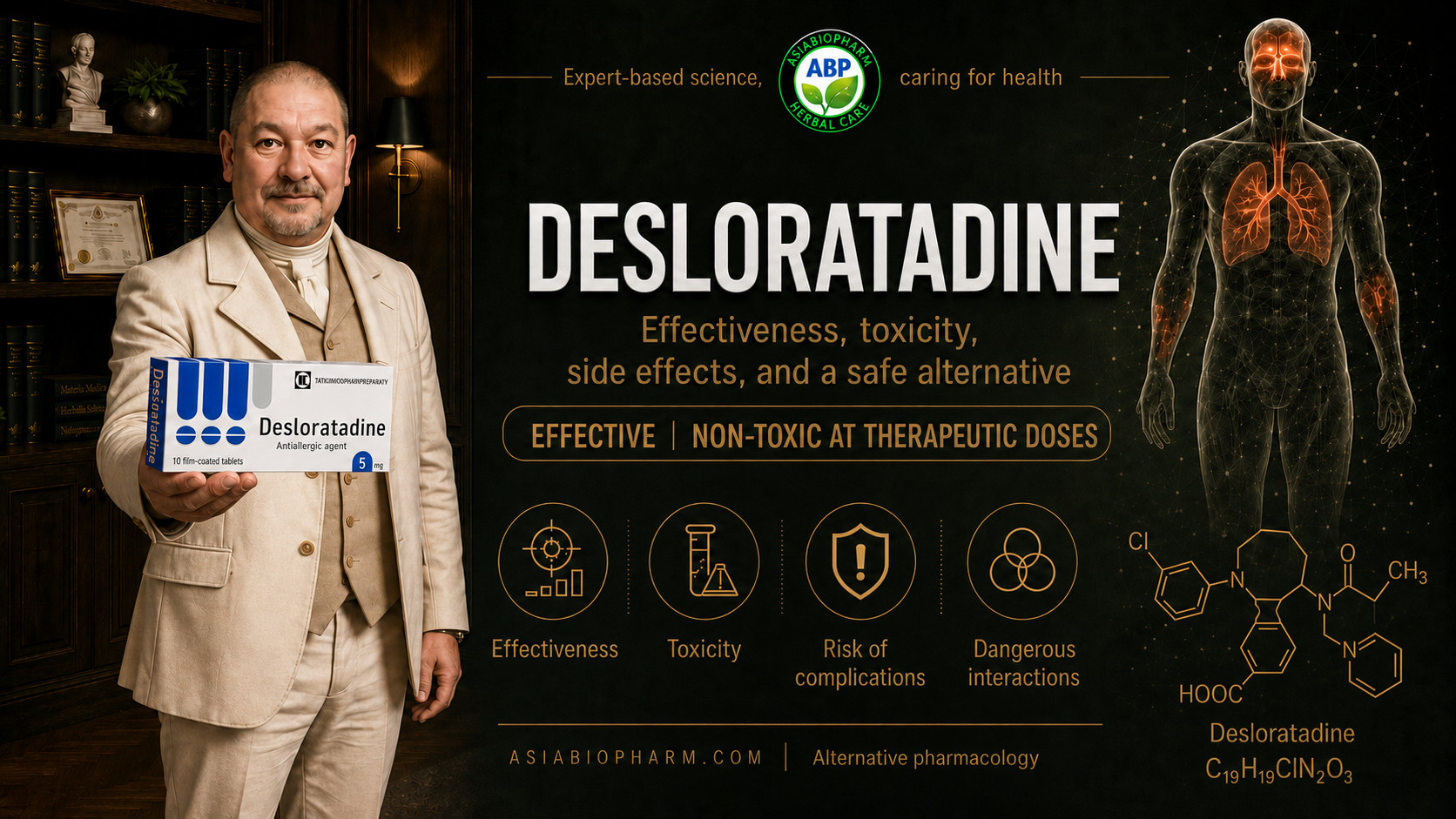
EFFECTIVE | NON-TOXIC AT THERAPEUTIC DOSES
Names Under Which Desloratadine Is Available
The international nonproprietary name is desloratadine; the Latin spelling is desloratadine. The active substance is an active metabolite of loratadine; the dosage form usually contains desloratadine without specifying a separate salt. The main dosage forms are film-coated tablets, orally disintegrating tablets, and an oral solution or syrup. Common brand names include Erius, Aerius, Clarinex, NeoClarityn, Dasselta, Desal, Lordestin, Ezlor, Blogir-3, Desloratadine-Teva, Desloratadine-KRKA, and other generic medicines. The combination products Aerinaze, Clarinex-D 12 Hour, and Clarinex-D 24 Hour contain desloratadine together with pseudoephedrine. They should not be regarded as ordinary desloratadine products: pseudoephedrine adds the risk of insomnia, elevated blood pressure, tachycardia, arrhythmias, urinary retention, and neurological complications.
Why Desloratadine Is Considered Harmless and Where the Real Risk Begins
Desloratadine is often perceived as an almost harmless allergy tablet because it is less likely to cause pronounced drowsiness than first-generation antihistamines, is taken once daily, and is frequently used without medical supervision. The real risk begins with repeated intake above the recommended dose, simultaneous use of several antihistamines, impaired liver or kidney function, combination with alcohol, and the use of combination products containing pseudoephedrine. Headache, fatigue, dry mouth, dizziness, palpitations, or drowsiness may mistakenly be attributed to allergies, overwork, or lack of sleep. Desloratadine is not considered markedly organotoxic at therapeutic doses; however, this does not rule out rare severe reactions such as anaphylaxis, angioedema, seizures, tachycardia, impaired liver function, and behavioural disorders.
Side Effects During the First Hours and Days of Treatment
The most common reactions include headache, fatigue, and dry mouth. Drowsiness, dizziness, nausea, dyspepsia, and myalgia have also been reported in some studies. These symptoms usually occur after the first doses or within several days and resolve after the drug is discontinued. Although desloratadine is marketed as a non-sedating antihistamine, individual drowsiness is possible; therefore, driving or operating machinery is dangerous until the individual response to the drug is known. Clinically significant rare reactions include tachycardia, palpitations, insomnia, psychomotor agitation, hallucinations, abdominal pain, vomiting, and increased liver enzyme and bilirubin levels. Life-threatening reactions include anaphylaxis, angioedema involving swelling of the lips, tongue, or larynx, severe shortness of breath, and seizures. If facial swelling, difficulty breathing, generalized urticaria, or impaired consciousness occurs, the next dose must not be taken.
Consequences of Long-Term and Repeated Use
Drug dependence, tolerance, a classic withdrawal syndrome, and typical cumulative toxicity affecting the liver, kidneys, heart, or nervous system have not been confirmed for desloratadine. At the standard dose of 5 mg per day, adverse reactions in clinical trials occurred only slightly more often than with placebo. However, prolonged use may mask persistent exposure to an allergen, chronic rhinosinusitis, drug-induced rhinitis, bronchial asthma, a food-related reaction, or another condition requiring separate diagnosis for months. Rare liver dysfunction, weight gain, increased appetite, drowsiness, behavioural reactions, and palpitations may remain unnoticed when the drug is taken habitually and without supervision. A sustained increase in dosage for chronic urticaria is acceptable only as part of a physician-directed strategy: independently increasing the dose does not turn a symptomatic medicine into treatment for the underlying cause of the disease. A toxic withdrawal syndrome is generally absent after discontinuation, but allergic symptoms may rapidly return because desloratadine blocks the effects of histamine rather than eliminating the source of allergic inflammation.
Contraindications and High-Risk Groups
An absolute contraindication is hypersensitivity to desloratadine, loratadine, or the excipients of the specific dosage form. Repeated use is dangerous after previous anaphylaxis, angioedema, or generalized urticaria. In severe renal impairment, elimination of the drug and its metabolites is delayed, so the dosing regimen must be adjusted; a similar adjustment is considered in impaired liver function. Patients with a personal or family history of seizures, especially young children, have an increased likelihood of a new seizure episode; the occurrence of seizures during treatment is grounds for discontinuing the drug. Tablets containing lactose are contraindicated in rare hereditary disorders of galactose metabolism, severe lactase deficiency, and glucose-galactose malabsorption. No significant teratogenic signal has been identified during pregnancy; however, as a precaution, the drug is recommended only when its use is clearly justified. Desloratadine is detected in breastfed infants when taken by the mother, and the effects of such exposure have not been conclusively established; therefore, a choice must be made between treatment and continued breastfeeding.
Dangerous Drug Combinations and Alcohol
Ketoconazole, erythromycin, azithromycin, fluoxetine, and cimetidine can increase the plasma concentration of desloratadine and its active metabolite. In controlled studies, this increase was not accompanied by a clinically significant deterioration in safety, so these combinations are not considered contraindicated. However, they require additional assessment in patients with liver or kidney disease, polypharmacy, or pronounced drowsiness and palpitations.
In a clinical study, alcohol did not intensify the psychomotor impairment caused by ethanol itself; however, alcohol intolerance and intoxication were reported after the drug entered the market. Therefore, the combination is highly undesirable until the individual response is known, particularly when driving, in patients with liver disease, or during simultaneous use of sedative medicines. Sleeping pills, tranquillizers, opioids, sedating antidepressants, and herbal products that depress the central nervous system may increase subjective drowsiness even when no specific pharmacokinetic interaction has been established.
The most dangerous situation is hidden duplication of treatment: simultaneous use of Erius, generic desloratadine, and a combination product such as Aerinaze or Clarinex-D. The latter products contain pseudoephedrine, which introduces additional contraindications and interactions with monoamine oxidase inhibitors, other vasoconstrictors, digoxin, and certain antihypertensive medicines. Such combinations may provoke a hypertensive crisis, tachyarrhythmia, insomnia, tremor, seizures, or urinary retention; their toxicity should not be attributed to desloratadine alone.
Patient Errors
A typical mistake is taking an additional tablet if a runny nose or itching has not resolved within a few minutes. The antihistamine effect of desloratadine develops approximately within the first hour and lasts for up to 24 hours. Therefore, shortening the interval between doses does not provide a proportionate increase in effect but does increase drug exposure. It is equally dangerous to use several “allergy” medicines simultaneously while relying on brand names and failing to check their active ingredients. Erius, Desal, Lordestin, or another generic product may contain the same desloratadine.
Patients often continue self-treatment for weeks or months without identifying the cause of persistent nasal congestion, cough, itching, or urticaria. As a result, the drug temporarily suppresses symptoms, while allergen exposure, asthma, chronic infection, a drug-related reaction, or an autoimmune process remains undiagnosed. Another mistake is treating a combination product containing pseudoephedrine as an ordinary antihistamine and using it for a prolonged period. Treatment with Aerinaze is recommended to be limited to approximately ten days because the effectiveness of pseudoephedrine may decrease with prolonged use, while cardiovascular and neurological risks persist.
Desloratadine Overdose and Poisoning
The precise single toxic dose of desloratadine in humans has not been established. Drowsiness was observed in studies using 10–20 mg per day. In healthy adults receiving 45 mg per day — nine times the standard dose — for ten days, no severe clinical complications were recorded. However, this does not prove that such a dose is safe for children, older patients, people with liver or kidney disease, or patients taking interacting medicines. In overdose, the usual adverse reactions are expected to become more pronounced: drowsiness or agitation, headache, dry mouth, dizziness, nausea, tachycardia, and palpitations. Rare post-marketing reactions — seizures, arrhythmias, behavioural disorders, anaphylaxis, and liver injury — mean that individual susceptibility must be considered rather than only the number of tablets swallowed.
There is no specific antidote. If an excessive dose was taken recently, standard measures aimed at removing the drug that has not yet been absorbed may be considered; subsequent treatment is symptomatic and supportive. Desloratadine and 3-hydroxydesloratadine are not removed by haemodialysis. One should not wait for pronounced symptoms if a child has accidentally taken the drug, several desloratadine-containing products have been used simultaneously, or the dose of a combination product containing pseudoephedrine has been exceeded. The toxicity of pseudoephedrine may manifest as agitation, insomnia, tremor, a significant rise in blood pressure, tachyarrhythmia, seizures, and cardiovascular collapse.
Please provide links to the medicines, extracts, or plants that should be analysed as an integrative alternative to desloratadine. The structure and sequence of the subsequent work follow the core instructions of the pharmacological series.
A Safe Integrative Alternative to Desloratadine
For mild to moderate allergic inflammation, Allergy Mixture, LH Capsules may be considered the main systemic alternative. Unlike desloratadine, which reversibly blocks peripheral H1 receptors and primarily reduces itching, sneezing, rhinorrhoea, and urticarial lesions, the herbal complex targets not only the histamine phase of the reaction but also the NF-κB and JAK/STAT inflammatory cascades, the Th2/Th17 response, eosinophilic infiltration, mucosal oedema, and bronchial hyperresponsiveness. It contains Andrographis paniculata, Schefflera leucantha, Murdannia loriformis, and additional herbal components. This multicomponent composition provides a pharmacological basis for course-based control of allergic inflammation, but it does not mean that the product acts as quickly or predictably as a standard dose of desloratadine. In acute itching, urticaria, or pronounced rhinorrhoea, a synthetic H1 blocker usually provides faster symptomatic relief; the herbal complex is more appropriate for stable disease, recurrent allergy, and situations requiring an effect on a broader inflammatory phenotype. The evidence base for the individual components and the pharmacological rationale are not equivalent to large comparative studies of the finished combination. Therefore, severe reactions, generalized urticaria, angioedema, and anaphylaxis are not situations in which an independent substitution with herbal treatment is appropriate.
When an immediate IgE-dependent reaction predominates, the basic regimen may be supplemented with Kra Chai Dam, considered as a means of limiting mast-cell activation and degranulation. In pronounced leukotriene-dependent inflammation, a bronchospastic component, chronic sinusitis, or insufficient control with histamine blockade alone, adding Boswellia serrata is pharmacologically justified: boswellic acids inhibit the 5-lipoxygenase pathway and reduce the formation of pro-inflammatory leukotrienes without duplicating the mechanism of desloratadine. In a nasal and rhinosinusitis phenotype, a more targeted option is Rhinitis and Rhinosinusitis Mixture, LH Capsules, with possible topical use of ABP-153. The ABP-153-D version contains DMSO, which enhances transmembrane and tissue delivery of the components; therefore, it requires particularly strict adherence to the method of application, cleanliness of the treated surface, and avoidance of arbitrary application to mucous membranes. For cough, bronchial hyperresponsiveness, eosinophilic inflammation, and mucus hypersecretion, Pinellia ternata should remain part of the regimen. In confirmed Th2/eosinophilic asthma, the specialized Bronchial Asthma Type 2, LH Capsules complex is used, while in thick, difficult-to-expectorate sputum and a bronchial obstructive component, Bolus “Asthma with Tenacious Sputum” is used. These products are selected according to the clinical phenotype and do not replace emergency treatment for bronchospasm or anaphylaxis.
The Real Effectiveness of Desloratadine and Medical Errors
Desloratadine is genuinely effective in allergic rhinitis and chronic idiopathic urticaria. It reduces sneezing, itching of the nose and eyes, rhinorrhoea, lacrimation, and the severity of urticarial lesions; its effect usually begins within approximately the first hour and lasts for about 24 hours. At the same time, the drug does not eliminate the allergen, alter the immunological cause of the disease, treat bacterial or viral rhinosinusitis, restore damaged mucosa, or control all mechanisms of bronchial asthma. It provides symptomatic H1 blockade rather than universal treatment for “allergy in general.” Lack of response to the standard dose should lead not to an endless increase in the number of tablets but to a reassessment of the diagnosis and inflammatory phenotype.
A common medical error is prescribing desloratadine for any nasal congestion, skin itching, or cough without confirming the allergic nature of the symptoms. In chronic rhinosinusitis, nasal polyps, non-allergic rhinitis, drug-induced rhinitis, asthma, infection, or a dermatological disorder, antihistamine monotherapy may produce only partial improvement or no improvement at all. Long-term prescribing is equally questionable when liver and kidney function have not been assessed in patients with relevant impairment, other medicines have not been reviewed, and it has not been clarified whether the patient is simultaneously taking loratadine, desloratadine, or a combination product containing pseudoephedrine. When a diagnosis of “something allergic” is treated for years with one tablet, the absence of diagnosis is sometimes called maintenance therapy. This does not make the pharmacology any more convincing.
Safety Monitoring During Treatment
Routine laboratory tests are generally not required when desloratadine is used for a short period by a healthy adult. The clinical response should be monitored for drowsiness, dizziness, pronounced dry mouth, unusual fatigue, agitation, insomnia, palpitations, skin rash, and worsening of the original symptoms. Until individual tolerability is established, driving and work requiring rapid psychomotor reactions should be avoided. During prolonged use, in liver or kidney disease, older age, polypharmacy, or the appearance of right upper abdominal pain, nausea, dark urine, or jaundice, it is reasonable to assess ALT, AST, alkaline phosphatase, total bilirubin, creatinine, and estimated glomerular filtration rate. Adjustment of the regimen is required when liver or kidney function is markedly reduced because the standard daily schedule may create excessive drug exposure.
Swelling of the lips, tongue, face, or larynx, difficulty inhaling, wheezing, generalized urticaria accompanied by a fall in blood pressure, loss of consciousness, seizures, pronounced tachycardia, abnormal heart rhythm, and a severe skin reaction require immediate discontinuation of the drug and emergency medical care. Waiting during progressive angioedema is dangerous because of possible airway obstruction, while taking another tablet instead of emergency treatment does not stop anaphylaxis that is already developing. When a combination product containing pseudoephedrine is used, blood pressure, pulse rate, insomnia, tremor, urinary retention, and signs of cerebrovascular complications should additionally be monitored.
Tolerability must also be monitored when using Allergy Mixture, LH Capsules. The product is contraindicated in patients with individual intolerance to its components; caution is required in severe cardiovascular disease, pregnancy, lactation, and autoimmune conditions. Exceeding the dose may cause diarrhoea, abdominal pain, nausea, vomiting, headache, reduced blood pressure, tachycardia, and allergic rashes. The low experimental acute toxicity of the components does not eliminate the risk of intolerance to a multicomponent product and does not justify independent dose escalation.
Correct Discontinuation of Desloratadine
Desloratadine may be stopped immediately: gradual dose reduction is not required because the drug does not cause physiological dependence or a classic withdrawal syndrome. Sneezing, rhinorrhoea, itching, urticaria, or other original symptoms may return after treatment is stopped. This is not drug withdrawal but restoration of disease activity after H1 blockade disappears. Symptoms may return within the first 24 hours or over the following several days, depending on the intensity of allergen exposure and the activity of inflammation.
A missed dose should not be compensated for by taking a double dose. If the drug has been used for months without an established cause of the symptoms, discontinuation should reasonably be combined with diagnostic assessment, including exclusion of persistent allergen exposure, chronic rhinosinusitis, asthma, food- or drug-related reactions, and other causes. When switching to Allergy Mixture, LH Capsules or a phenotype-based herbal complex, immediate discontinuation of desloratadine is not always required. In pronounced symptoms, a limited period of combined use may be acceptable while tolerability is assessed and the anti-inflammatory effect of the herbal regimen develops. Simultaneous use should not become indefinite polypharmacy: once the condition has stabilized, the need for each component should be reassessed.
In bronchial asthma, discontinuing desloratadine does not replace adjustment of basic anti-asthma therapy. Bronchial Asthma Type 2, LH Capsules, Pinellia ternata, and Bolus “Asthma with Tenacious Sputum” may be used as part of phenotype-guided supportive treatment, but abrupt independent discontinuation of prescribed inhaled medicines in unstable asthma may lead to a severe exacerbation.
A Reasonable Approach to Allergy Treatment
Desloratadine is justified when a rapid and predictable reduction of histamine-dependent symptoms of allergic rhinitis or urticaria is required. At the standard therapeutic dose, it has a favourable safety profile, rarely causes pronounced sedation, and is not associated with typical cumulative organ toxicity. However, the absence of high toxicity does not make it a universal treatment for chronic allergic inflammation and does not justify uncontrolled use for many months without diagnosis.
In mild or stable disease, recurrent seasonal symptoms, and situations requiring a broader effect on inflammatory mechanisms, preference may be given to Allergy Mixture, LH Capsules with individual additions according to the phenotype. Kra Chai Dam is used when a pronounced mast-cell and IgE-dependent reaction is present, Boswellia serrata in leukotriene-dependent inflammation, and Rhinitis and Rhinosinusitis Mixture, LH Capsules together with ABP-153 when nasal and rhinosinusitis symptoms predominate. ABP-153-D should be used only when there are indications for a formulation with enhanced tissue delivery and under controlled conditions. Pinellia ternata remains part of the regimen for cough, bronchial hyperresponsiveness, and mucus hypersecretion; Bronchial Asthma Type 2, LH Capsules are used for Th2/eosinophilic asthma; and Bolus “Asthma with Tenacious Sputum” is used for thick sputum and a bronchial obstructive component.
In acute generalized urticaria, angioedema, anaphylaxis, pronounced bronchospasm, or unstable asthma, herbal medicines must not delay emergency and maintenance therapy. Reasonable integrative pharmacology does not mean mechanically rejecting a synthetic medicine. It means using desloratadine where rapid H1 blockade is genuinely required and moving to a broader phenotype-based anti-inflammatory strategy where a chronic disease cannot be reduced to a single histamine receptor.
If you have questions about the subject of this article, you can ask a clinical pharmacologist in the comments or book an appointment using this link:
0 comments