
Colchicine — Side Effects, Overdose, and Dangerous Interactions
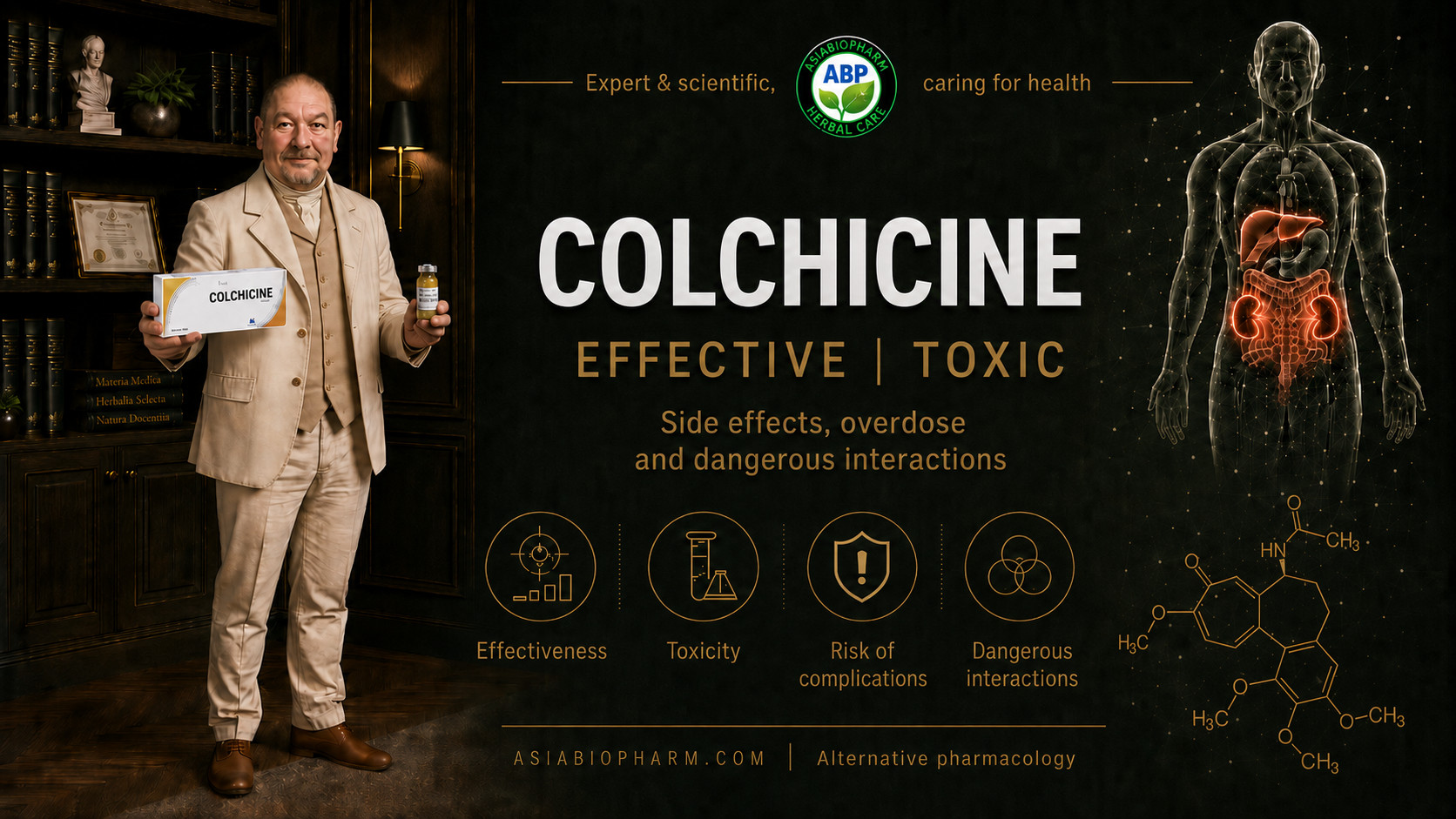
EFFECTIVE | TOXIC
Names, Brand Names, and Hidden Duplication of Colchicine
The international nonproprietary name is colchicine; in Russian, it is колхицин. Instructions for use, medical records, and search queries may contain the spellings Colchicine, Kolchicin, колхицин, and, less commonly, the transliteration «колхисин». The active substance is usually listed simply as colchicine, without the formation of therapeutically significant salts. The main dosage forms are tablets and capsules containing 0.5 or 0.6 mg, low-dose 0.5 mg tablets for cardiovascular indications, and an oral solution.
Common brand names in different countries include Colcrys, Mitigare, Gloperba, Lodoco, Colchicum-Dispert, Colchicine Opocalcium, Colchicine Houdé, Euro-Colchicine, JAMP-Colchicine, PMS-Colchicine, as well as generic products marketed as Colchicine or «Колхицин». There is also a combination product containing probenecid + colchicine, usually with 500 mg of probenecid and 0.5 mg of colchicine in a single tablet. A patient may regard it solely as a uric acid–lowering medication and overlook the colchicine it contains while simultaneously taking separate colchicine tablets. This hidden duplication is particularly dangerous because of the drug’s narrow therapeutic range.
Why Colchicine Is Considered Harmless and Where the Real Risk Begins
Colchicine is dangerous because the margin between its therapeutic effect and systemic poisoning is relatively narrow. It is not an ordinary painkiller and is not a medication that can be repeatedly taken until the pain disappears completely. It inhibits microtubule formation and disrupts cell division and intracellular transport not only in inflammatory cells but also in rapidly renewing tissues of the intestine, bone marrow, and hair follicles. When it accumulates, the drug can damage muscles, peripheral nerves, the liver, kidneys, heart, and hematopoietic system.
A false sense of safety arises because colchicine has been used for gout for a long time, its tablets contain only fractions of a milligram, and the first signs of toxicity — diarrhea, nausea, vomiting, and abdominal pain — can easily be mistaken for food poisoning or an ordinary gastrointestinal reaction. Repeated dosing, the combined use of several colchicine-containing products, impaired kidney or liver function, and the addition of medications that inhibit CYP3A4 or P-glycoprotein can turn a standard dose into a toxic one. Some severe and fatal interactions have occurred not because of intentional overdose, but after an ordinary dose of colchicine was prescribed together with an incompatible antibiotic or another inhibitor of its elimination.
Side Effects After the First Dose and a Short Course
The most common early reactions are loose stools, cramping abdominal pain, nausea, and vomiting. They may appear after the first few doses or within the first 24 hours. With colchicine, this is not always harmless dyspepsia: severe or worsening diarrhea may be the first sign of excessive drug exposure and requires stopping further uncontrolled use. Loss of fluids and electrolytes increases weakness, arterial hypotension, and the risk of acute kidney injury.
Clinically significant reactions during a short course include elevated AST and ALT activity, rash, purpura, muscle pain and weakness, sensory disturbances, and a reduction in white blood cell or platelet counts. Life-threatening toxicity may present with severe gastroenteritis, dehydration and shock, bone marrow suppression, pancytopenia, disseminated intravascular coagulation, metabolic acidosis, arrhythmias, liver injury, kidney injury, central nervous system involvement, and multiple organ failure. The risk rises sharply with excessive dosing, impaired kidney or liver function, and drug interactions that increase colchicine concentrations.
Side Effects with Long-Term or Repeated Use
During prolonged treatment, colchicine can accumulate and cause myopathy, neuromyopathy, and rhabdomyolysis. The typical presentation includes gradually worsening symmetrical weakness of the proximal muscles, pain, difficulty climbing stairs or rising from a chair, elevated creatine kinase, and numbness or tingling in the extremities. The risk is especially high in older patients, people with chronic kidney disease, and those taking statins, fibrates, cyclosporine, or other myotoxic drugs at the same time.
Symptoms often regress after colchicine is discontinued, but recovery may take several weeks to several months. Severe muscle injury accompanied by acute kidney failure can leave lasting consequences. Cumulative hematologic toxicity may manifest as leukopenia, granulocytopenia, thrombocytopenia, pancytopenia, and, in rare cases, aplastic anemia. Alopecia, elevated liver enzymes, sensorimotor polyneuropathy, temporary suppression of spermatogenesis, oligospermia, or azoospermia may also occur.
Tolerance and drug dependence are not characteristic of colchicine, and there is no classic withdrawal syndrome. However, the absence of diarrhea or other early reactions does not prove that accumulation is not occurring: neuromuscular or bone marrow toxicity may develop gradually even at therapeutic doses.
Contraindications and High-Risk Groups
Colchicine is contraindicated in patients with severe kidney or liver impairment who are also taking drugs that inhibit CYP3A4 and P-glycoprotein. Such combinations have been associated with life-threatening and fatal toxicity.
Severe chronic kidney disease slows colchicine elimination and increases the risk of neuromyopathy, rhabdomyolysis, cytopenia, and multiple organ injury. Hemodialysis does not effectively remove the drug. Liver failure reduces metabolic clearance and makes repeated dosing and drug interactions particularly dangerous.
Older patients are vulnerable even when laboratory values are formally within normal limits because of reduced renal functional reserve, polypharmacy, and an increased risk of muscle toxicity. In patients with pre-existing leukopenia, thrombocytopenia, bone marrow suppression, or severe hematologic disorders, the drug may worsen cytopenia. In hereditary neuromuscular disorders, pronounced myopathy, or pre-existing elevation of creatine kinase, the likelihood of severe neuromuscular toxicity increases.
In children, even several tablets may constitute a dangerous dose, so any accidental ingestion requires emergency toxicological assessment. Pregnancy and breastfeeding are not universally absolute contraindications, but prescribing should take into account the indication, dose, and individual risk rather than being based on self-medication.
Dangerous Drug and Food Interactions
Combinations of colchicine with strong inhibitors of CYP3A4 and P-glycoprotein are contraindicated or potentially fatal, especially in patients with impaired kidney or liver function. Among the most dangerous are clarithromycin, ketoconazole, itraconazole, posaconazole, voriconazole, cyclosporine, and several HIV protease inhibitors, including ritonavir-containing regimens. Inhibition of CYP3A4 and P-gp sharply increases systemic exposure to colchicine. Possible consequences include bone marrow suppression, rhabdomyolysis, multiple organ failure, and death.
Combinations with erythromycin, verapamil, diltiazem, fluconazole, grapefruit, and grapefruit juice are highly undesirable. They can reduce the metabolism or elimination of colchicine. If such a combination cannot be avoided, the dose or dosing frequency must be adjusted in advance and the patient monitored for signs of toxicity. Simply spacing the drugs apart in time is not sufficient: inhibition of enzymes and transporters persists for more than a few hours.
Statins, particularly simvastatin and atorvastatin, as well as fibrates, cyclosporine, and other myotoxic drugs, increase the risk of myopathy and rhabdomyolysis. The appearance of muscle pain, weakness, or dark urine requires immediate assessment of creatine kinase and kidney function. Concomitant use with digoxin also requires increased caution in older and multimorbid patients.
Alcohol has no proven specific pharmacokinetic interaction with colchicine; however, it worsens dehydration and gastrointestinal irritation, may impair liver function, and can provoke gout attacks. Therefore, this combination cannot be considered neutral. Caffeine and nicotine are not established causes of a sharp increase in colchicine concentration. Among dietary factors, grapefruit has clinically confirmed significance.
Dietary supplements and herbal products capable of affecting CYP3A4, P-gp, the liver, kidneys, or muscles should be assessed individually. There is no universally safe compatibility profile for them. Another common everyday mistake is taking separate colchicine tablets together with the probenecid + colchicine combination, creating hidden duplication of the dose.
Patient Errors That Turn Treatment into Poisoning
The most dangerous mistake is to take colchicine like an ordinary painkiller: repeating tablets at short intervals until the pain disappears completely. The drug does not act like a classic analgesic and is not intended to treat every type of joint pain. Increasing the dose does not make its anti-inflammatory effect proportionally stronger, but it rapidly increases the toxicological burden.
It is dangerous to use old high-dose regimens in which tablets were taken until the pain stopped or diarrhea appeared. In this situation, diarrhea does not indicate that the therapeutic limit has been reached; it means that toxic injury to the intestinal epithelium has already occurred.
Another mistake is to repeat a course during a new attack without taking into account the preventive dose already taken, kidney function, and medications added since the previous prescription. It is especially dangerous to take colchicine together with an antibiotic, antifungal agent, blood pressure medication, or antiviral therapy without checking for interactions. Continuing colchicine on your own after clarithromycin has been prescribed can lead to fatal intoxication.
Worsening diarrhea, vomiting, muscle weakness, numbness, fever, sore throat, bleeding, or reduced urine output must not be ignored. The absence of immediate complications after the first tablets does not mean that the next dose is safe: the severe organ phase of poisoning may develop after the initial gastrointestinal period. A missed dose must not be compensated for with a double dose.
Colchicine Overdose and Poisoning
There is no single dose that is guaranteed to be safe or absolutely fatal. The outcome depends on body weight, age, kidney and liver function, the timing of medical care, and interacting medications. Doses above 0.5 mg/kg are associated with an extremely high risk of severe poisoning, while doses above 0.8 mg/kg have traditionally been regarded as frequently fatal. However, severe and fatal cases have also been described with smaller amounts. Therefore, calculation based on a hypothetical lethal threshold cannot be used for observation at home.
Any substantial excess over the prescribed dose, accidental ingestion by a child, or combination with a strong CYP3A4 or P-gp inhibitor should be regarded as an emergency.
The first phase usually begins within several hours, often within 10–24 hours. Burning in the mouth or throat, nausea, repeated vomiting, severe abdominal pain, and watery diarrhea develop. These symptoms can create the false impression of ordinary gastroenteritis, while dehydration, electrolyte disturbances, arterial hypotension, and injury to the intestinal mucosa are developing at the same time.
The second phase develops approximately between the second and seventh days. Bone marrow function is suppressed, white blood cell and platelet counts fall, and infections and bleeding may occur. Metabolic acidosis, rhabdomyolysis, acute kidney and liver failure, disseminated intravascular coagulation, arrhythmias, cardiovascular collapse, respiratory failure, and multiple organ failure are possible. Death most often occurs during this phase.
If the patient survives beyond the seventh day, the recovery phase begins. Marked alopecia, prolonged muscle weakness, polyneuropathy, and gradual recovery of hematopoiesis may occur.
There is no specific antidote routinely available for standard clinical practice. Experimental antibodies against colchicine are not routinely accessible. Hemodialysis and hemoperfusion are of limited effectiveness because colchicine has a large volume of distribution and binds extensively to tissues.
Treatment is based on the earliest possible decontamination as determined by a toxicologist, intensive intravenous fluid and vasopressor support, correction of electrolyte disturbances and acidosis, and monitoring of hematopoiesis and liver, kidney, heart, and respiratory function. Mechanical ventilation and treatment of complications are used when necessary.
The most effective window for gastrointestinal decontamination is limited to the first few hours, so it is unsafe to wait for severe diarrhea, weakness, or impaired consciousness to appear. Even a patient who initially appears stable requires emergency hospitalization and observation for several days. Temporary improvement in gastrointestinal symptoms does not exclude subsequent bone marrow suppression and multiple organ failure.
Safe Integrative Alternative to Colchicine
The main integrative alternative is Hyperuricemia Gout Mixture Unlike colchicine, which primarily suppresses the inflammatory response to monosodium urate crystals but does not reduce uric acid concentration, this formula simultaneously targets hyperuricemia, joint inflammation, oxidative stress, and renal excretion of purine metabolism products.
Standardized Smilax glabra extract is aimed at inhibiting xanthine oxidase, reducing uric acid formation, attenuating inflammatory responses, and protecting kidney tissue. Smilax corbularia strengthens the anti-inflammatory component of the formula by suppressing the production of NO, TNF-α, and PGE₂. Combining the two extracts makes it possible to simultaneously reduce the metabolic basis of gout and the inflammatory response that occurs after urate crystal deposition. Colchicine does not have this breadth of pathogenetic action: it can stop neutrophil migration and activation, but it does not eliminate the hyperuricemia itself.
In mild to moderate hyperuricemia, during the intercritical period, in recurrent gouty arthritis, and in early urate nephropathy, a mixture of standardized Smilax glabra and Smilax corbularia extracts may be used as a complete course-based alternative to colchicine. Its effect develops less rapidly but addresses not only inflammation, but also the underlying conditions that contribute to recurrent attacks. In an early mild gout attack, the formula may be used on its own when the diagnosis has been confirmed and there are no signs of severe inflammation. In cases of intense pain, high fever, marked joint swelling, inability to bear weight on the affected limb, or suspected infectious arthritis, emergency anti-inflammatory treatment must not be replaced with extracts alone.
To strengthen the anti-inflammatory component, standardized extracts of Clerodendrum serratum, Curcuma aromatica, and Filipendula ulmaria may be used. Clerodendrum serratum is pharmacologically directed at reducing joint inflammation, swelling, and pain. Curcuma aromatica complements the formula through suppression of pro-inflammatory signaling pathways and antioxidant activity. Filipendula ulmaria contains salicylate and polyphenolic components that may reduce inflammatory pain; however, in peptic ulcer disease, salicylate intolerance, blood-clotting disorders, and during anticoagulant therapy, it should be included only after the risks have been assessed.
Standardized extracts of Cyathula officinalis and Humulus lupulus may complement the anti-inflammatory and joint-supporting components. Cyathula officinalis is appropriate in chronic pain, restricted mobility, and degenerative-inflammatory joint changes. Humulus lupulus provides an auxiliary anti-inflammatory and antioxidant effect but does not replace the main antihyperuricemic components.
Standardized extracts of Amaranthus spinosus and Polygonum aviculare may be used to support the urinary system and the elimination of metabolites. Amaranthus spinosus is particularly appropriate when hyperuricemia is accompanied by metabolic disorders. Polygonum aviculare may complement the formula in patients prone to fluid retention and increased urate burden on the urinary tract. These extracts should not be regarded as independent replacements for the core Smilax glabra and Smilax corbularia formula, but they make it possible to individualize the therapeutic combination.
Unlike colchicine, the mixture of standardized extracts does not have its characteristic narrow therapeutic range, does not cause the typical colchicine-associated myelosuppression, neuromyopathy, and multiple organ toxicity, and does not form potentially fatal combinations with CYP3A4 and P-glycoprotein inhibitors. This does not eliminate the need to consider allergies, kidney function, gastrointestinal status, anticoagulant use, and individual tolerance of the components. A lower toxicological burden does not mean that the formula should be taken indiscriminately or that all extracts should be added simultaneously without pharmacological justification.
Real Effectiveness of Colchicine and Prescribing Errors
Colchicine is genuinely effective in an acute gout attack, especially when taken during the first hours after the onset of pain, swelling, and redness. It disrupts microtubule formation, suppresses neutrophil migration, and inhibits inflammatory mechanisms associated with monosodium urate crystals. Inflammation usually begins to decrease within the first 24 hours, but the drug is not an ordinary analgesic and does not relieve every type of joint pain.
Colchicine is also used to prevent attacks when urate-lowering therapy is initiated, in familial Mediterranean fever, and for selected indications in recurrent pericarditis. A low-dose regimen for an acute attack provides an anti-inflammatory effect comparable to older high-dose regimens, while causing severe diarrhea, vomiting, and systemic toxicity much less frequently.
At the same time, colchicine does not inhibit uric acid formation, does not increase its excretion, does not dissolve tophi, and does not prevent the progression of gout if hyperuricemia persists. Using it for months instead of correcting purine metabolism is a pharmacologically elegant way of repeatedly putting out a fire without shutting off the fuel supply.
Common prescribing errors include giving colchicine for any joint pain without confirming gout, using outdated high-dose regimens, failing to adjust the dose when the glomerular filtration rate is reduced, and ignoring liver function and concomitant medications. It is particularly dangerous to prescribe colchicine without checking for clarithromycin, ritonavir, cyclosporine, azole antifungal agents, verapamil, diltiazem, statins, and fibrates.
Another typical error is prolonged preventive treatment without a complete blood count, assessment of kidney function, liver enzymes, and muscle symptoms. Colchicine may appear to be well tolerated for years and then manifest as neuromyopathy or cytopenia after kidney function worsens or an interacting medication is added. Under changed conditions, a therapeutic dose may remain therapeutic only on paper.
Safety Monitoring During Treatment
Before repeated or prolonged treatment, a complete blood count with white blood cell differential and platelets, creatinine, estimated glomerular filtration rate, AST, ALT, and bilirubin should be determined. At the same time, all prescription medications, antibiotics, antifungal and antiviral drugs, statins, fibrates, dietary supplements, and grapefruit should be reviewed. For a single low-dose course in a patient without risk factors, extensive laboratory monitoring is not always required, but kidney function and potential interactions should be known before treatment begins.
During long-term treatment, a complete blood count, creatinine, glomerular filtration rate, and liver parameters should preferably be monitored every three to six months. In older patients, those with chronic kidney disease, and after a dose change or the addition of a new medication, tests should be repeated after two to four weeks. Creatine kinase should be measured in cases of muscle pain, weakness, cramps, difficulty walking, dark urine, and when colchicine is combined with statins, fibrates, or cyclosporine.
The drug must be discontinued immediately if worsening diarrhea, repeated vomiting, severe abdominal pain, new muscle weakness, numbness of the extremities, dark urine, reduced urine output, jaundice, fever, sore throat, unusual bruising, or bleeding occurs. These signs may reflect not ordinary intolerance, but the onset of injury to the intestine, muscles, bone marrow, liver, or kidneys.
New clinically significant neutropenia, thrombocytopenia, or pancytopenia, rapid deterioration in kidney function, an increase in creatine kinase to more than five times the upper limit of normal, or any elevation accompanied by marked weakness or dark urine are grounds for immediate discontinuation. A significant rise in AST and ALT, especially when accompanied by jaundice, nausea, or impaired blood clotting, also requires treatment to be stopped and systemic toxicity to be ruled out.
After a suspected overdose, impaired consciousness, a fall in blood pressure, shortness of breath, arrhythmia, persistent vomiting, watery diarrhea, bleeding, or reduced urine output require emergency hospitalization. Waiting for pronounced symptoms worsens the prognosis because colchicine is rapidly distributed into tissues, while hemodialysis is practically unable to remove the drug once it has become tissue-bound.
Proper Discontinuation of Colchicine
Colchicine does not cause drug dependence and does not require gradual dose reduction. After a short course for an acute attack, it can be stopped immediately once the prescribed regimen has been completed. If diarrhea, vomiting, muscle weakness, cytopenia, liver injury, or kidney injury develops, the drug is discontinued immediately rather than tapered gradually.
The absence of a withdrawal syndrome does not mean that stopping treatment has no consequences. If colchicine was used to prevent attacks at the start of urate-lowering therapy, premature discontinuation may be followed by renewed gout attacks. This is not dependence on the drug, but ongoing urate crystallization and instability of the disease.
Discontinuation of preventive treatment should take into account the achieved uric acid level, how long it has remained stably reduced, the presence of tophi, and the frequency of recent attacks. In familial Mediterranean fever or recurrent pericarditis, stopping the drug on one’s own may lead to recurrence of the disease and its complications. In these situations, the absence of a classic withdrawal syndrome does not make abrupt discontinuation a reasonable approach.
A missed dose must not be compensated for with a double dose. If little time remains before the next scheduled dose, the missed tablet should simply be skipped. Replacing colchicine on one’s own with a mixture of extracts during a severe acute attack, without assessing the diagnosis, kidney function, and severity of inflammation, may also delay treatment of a complicated condition.
A Rational Approach to Treatment
Colchicine is justified when rapid and predictable suppression of confirmed gouty inflammation is required, when attacks need to be prevented at the start of urate-lowering therapy, or when treating a condition in which colchicine has an independent therapeutic role. In such situations, rejecting the drug solely because it is synthetic and toxic may be just as unreasonable as using it without control.
For hyperuricemia, intercritical gout, recurrent moderate inflammatory episodes, and the need for long-term metabolic correction, Hyperuricemia Gout Mixture is preferable. It targets not only the inflammatory symptom, but also uric acid formation, oxidative stress, and protection of kidney tissue.
Additional standardized extracts of Clerodendrum serratum, Curcuma aromatica, Filipendula ulmaria, Cyathula officinalis, Humulus lupulus, Amaranthus spinosus, and Polygonum aviculare make it possible to adapt the formula to the severity of joint inflammation, metabolic disturbances, and the condition of the urinary system. They should be selected according to the pharmacological objective rather than simply combined into one mixture according to the principle that “the more plants, the more therapeutic the formula.”
The combined use of colchicine and standardized extracts is acceptable for a limited period when it is necessary to suppress an acute attack rapidly while simultaneously beginning pathogenetic correction of hyperuricemia. Once the condition has stabilized, the need for colchicine should be reassessed so that temporary anti-inflammatory therapy does not become a permanent source of cumulative toxicity.
The goal of an integrative approach is not the mechanical rejection of an effective drug, but the selection of the minimum necessary toxicological burden. Colchicine should be used when its speed and potency are genuinely needed. A mixture of standardized extracts is preferable where the therapeutic objective can be achieved without the risk of myelosuppression, neuromyopathy, rhabdomyolysis, and potentially fatal drug interactions.
If you have questions about the topic of this article, you can ask a clinical pharmacologist in the comments or schedule an appointment using this link: https://asiabiopharm.com/konsultaciii/
0 comments