
Amoxicillin: Why It Can Be Dangerous, Side Effects, and Contraindications
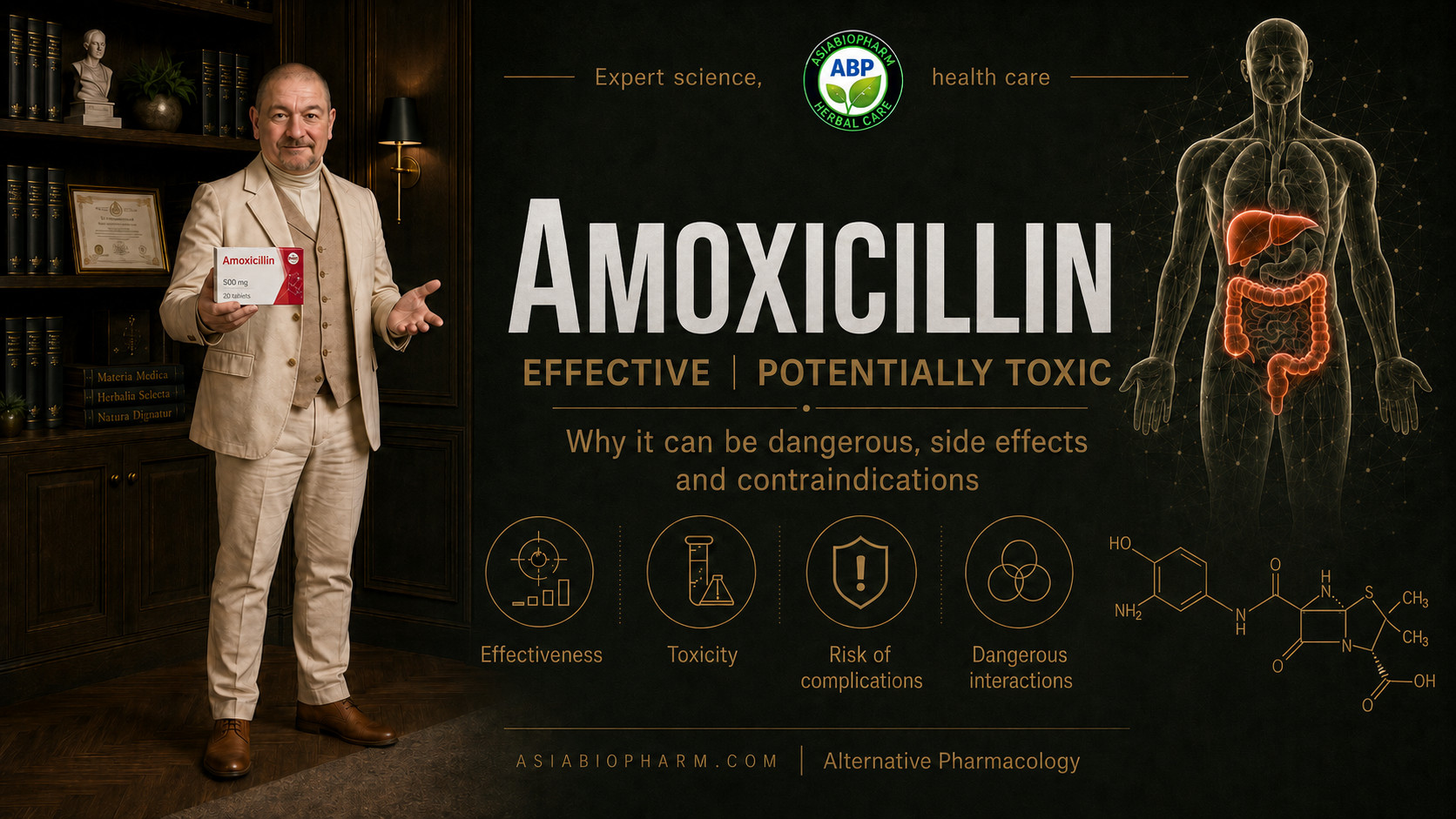
EFFECTIVE | POTENTIALLY TOXIC
Names Under Which Amoxicillin Is Available
The international nonproprietary name is amoxicillin; the Latin spelling is amoxicillin, with amoxycillin also encountered as an alternative form. Oral preparations usually contain amoxicillin trihydrate, while injectable formulations contain amoxicillin sodium.
Available dosage forms include capsules, conventional and dispersible tablets, chewable tablets, powder or granules for preparing an oral suspension, and powder for injections and infusions.
Common brand names include Amoxil, Flemoxin Solutab, Ospamox, Hiconcil, Amosin, and various regional generics. Amoxicillin is also included in combination products containing clavulanic acid, such as Amoxiclav, Augmentin, Panklav, Flemoklav Solutab, Ecoclav, and their equivalents.
A combination product should not be regarded as a “different antibiotic.” The amoxicillin it contains contributes to the total daily dose. Taking plain amoxicillin together with amoxicillin/clavulanate results in hidden duplication of the active ingredient.
Why Amoxicillin Is Considered Harmless and Where the Real Risk Begins
Amoxicillin is commonly prescribed for sore throat, cough, runny nose, otitis, sinusitis, and dental inflammation. As a result, many patients have developed the mistaken impression that it is an almost universal and relatively harmless antibiotic.
The real risk begins when treatment is started before the cause of the infection has been established. The drug has no effect on viruses, does not guarantee effectiveness against resistant bacteria, and should not be taken “just in case.”
At the same time, even the first dose can cause anaphylaxis, while a standard course may lead to severe diarrhea, antibiotic-associated colitis, a serious skin reaction, or drug-induced liver injury. The absence of complications during a previous course does not rule out a reaction when the drug is used again.
Particularly dangerous practices include using leftover tablets, independently repeating an old prescription, or taking plain amoxicillin together with a clavulanic acid combination product.
The first signs of an adverse reaction—weakness, nausea, loose stools, rash, or itching—are nonspecific. Patients may therefore continue treatment until a more serious complication develops.
Side Effects During the First Hours and Days of Treatment
The most common adverse reactions to amoxicillin are diarrhea, nausea, vomiting, and skin rash. They occur in more than 1% of patients, but they should not automatically be considered minor. Repeated watery stools can lead to dehydration, while a newly developing rash may be the first sign of a progressive drug reaction.
Clinically significant complications include urticaria, severe itching, angioedema, drug-induced fever, stomatitis, mucosal candidiasis, taste disturbances, elevated liver enzyme activity, and antibiotic-associated diarrhea.
Amoxicillin disrupts the intestinal microbiota and creates conditions for excessive growth of Clostridioides difficile. Pseudomembranous colitis may present with watery diarrhea, abdominal pain, fever, leukocytosis, and blood in the stool. Symptoms may begin either during treatment or after the course has ended.
Life-threatening reactions include anaphylaxis with a drop in blood pressure, bronchospasm, and laryngeal edema; Stevens–Johnson syndrome; toxic epidermal necrolysis; DRESS syndrome with eosinophilia and internal-organ involvement; and acute generalized exanthematous pustulosis.
Drug-induced enterocolitis has also been reported, particularly in children. Several hours after a dose, repeated vomiting may occur, sometimes accompanied by diarrhea, lethargy, low blood pressure, and dehydration. Typical skin or respiratory manifestations of allergy may be absent.
Less commonly, hemolytic anemia, thrombocytopenia, leukopenia, agranulocytosis, interstitial nephritis, crystalluria, and seizures may occur. Seizures are more likely when drug concentrations are high, in severe renal impairment, when the dose has not been adjusted, or following an overdose.
Consequences of Prolonged and Repeated Use
Amoxicillin is generally not intended for uncontrolled repeated courses or unjustifiably prolonged treatment. The longer the antibacterial pressure continues, the greater the likelihood of suppressing susceptible microflora and selecting resistant microorganisms.
The consequences may include superinfection, candidiasis, recurrent diarrhea, and reduced antibiotic effectiveness during a subsequent illness. Using amoxicillin without a proven or reasonably suspected bacterial infection provides no therapeutic benefit and increases the risk of antimicrobial resistance.
Repeated exposure increases the likelihood of sensitization. A person who previously tolerated the drug may later develop an immediate allergic reaction.
A prolonged course may be accompanied by changes in the complete blood count, elevated transaminases, cholestatic or mixed drug-induced liver injury, interstitial nephritis, and impaired renal function.
Most of these changes are reversible if the drug is discontinued promptly. However, severe colitis, anaphylaxis, toxic epidermal necrolysis, or acute kidney injury may require hospitalization and can have long-lasting consequences.
Amoxicillin does not cause pharmacological dependence, tolerance, or a classic withdrawal syndrome. However, frequent and indiscriminate use creates another form of loss of effectiveness: bacterial resistance.
Stopping treatment while a bacterial infection is still present may lead not to “withdrawal,” but to the return of symptoms, incomplete suppression of the pathogen, and the development of complications.
Contraindications and High-Risk Groups
An absolute contraindication is a previous severe hypersensitivity reaction to amoxicillin or another beta-lactam antibiotic, including penicillins and cephalosporins. Such reactions include anaphylaxis, Stevens–Johnson syndrome, and other severe skin injuries.
Re-exposure after a confirmed severe reaction may trigger a faster and more serious response.
In renal impairment, amoxicillin is eliminated more slowly. Unless the dose is reduced or the dosing interval is extended, the drug concentration rises, increasing the risk of neurotoxicity, seizures, crystalluria, and acute kidney injury.
When the glomerular filtration rate is below 30 mL/min, the dosing regimen must be reconsidered. Certain high-dose formulations are unsuitable for such patients.
In infectious mononucleosis, amoxicillin frequently causes a widespread maculopapular rash. Prescribing it for an undifferentiated sore throat without ruling out Epstein–Barr virus infection is therefore a common error.
Such a rash does not always indicate a true lifelong allergy to penicillins, but the drug must be discontinued and the patient medically evaluated.
Particular caution is required in patients with bronchial asthma, multiple drug allergies, a history of antibiotic-associated colitis, liver disease, severe dehydration, or reduced urine output.
In severe vomiting or diarrhea, drug absorption becomes unpredictable, while fluid loss simultaneously increases the risk of renal crystalluria.
Pregnancy itself is not a contraindication. Amoxicillin may be used when there is a justified clinical indication. It passes into breast milk in small amounts and may cause diarrhea, candidiasis, or sensitization in the infant.
The decision should be based on the actual need for an antibiotic rather than the common assumption that the drug is completely harmless.
Dangerous Interactions
Combining amoxicillin with probenecid reduces renal tubular secretion of amoxicillin and increases its concentration in the blood. This interaction is sometimes used intentionally, but unsupervised use may increase toxicity, especially in patients with impaired renal function.
Allopurinol increases the likelihood of skin rashes. If a rash develops, it should not automatically be dismissed as an “ordinary” reaction. Progressive hypersensitivity and severe cutaneous reactions must be ruled out.
Amoxicillin may reduce the renal elimination of methotrexate and increase its toxicity. Potential consequences include bone marrow suppression, mucositis, and liver or kidney injury. This combination requires assessment of the doses, renal function, and laboratory monitoring. It may be highly undesirable during high-dose methotrexate therapy.
In patients taking warfarin or other vitamin K antagonists, increased prothrombin time and international normalized ratio have been reported during antibiotic treatment. A possible mechanism involves changes in the intestinal microbiota, diet, and vitamin K metabolism. INR monitoring and, where necessary, anticoagulant dose adjustment are required.
Simultaneous use of bacteriostatic antibiotics, including tetracyclines, macrolides, and chloramphenicol, may theoretically weaken the bactericidal action of amoxicillin. The clinical significance depends on the infection and the specific combination. A second antibiotic should therefore not be added independently in an attempt to “strengthen” treatment.
There is insufficient convincing evidence that amoxicillin directly reduces the effectiveness of hormonal contraceptives. However, vomiting and severe diarrhea may impair absorption of an oral contraceptive. In this situation, the instructions provided for a missed or incompletely absorbed tablet should be followed.
Alcohol does not produce a specific disulfiram-like reaction with amoxicillin, but this does not make the combination safe. Alcohol may worsen nausea, diarrhea, and dehydration, make an allergic reaction more difficult to assess, reduce adherence to the treatment regimen, and place additional strain on the body in the presence of liver disease.
Hidden duplication occurs when amoxicillin is taken together with Augmentin, Amoxiclav, Flemoklav, or other amoxicillin/clavulanate preparations. The amount of amoxicillin from all products must be added together.
Patient Errors
The most common mistake is to start taking amoxicillin for any fever, sore throat, cough, runny nose, or toothache without establishing a bacterial cause. Most respiratory infections are viral, and an antibiotic neither shortens their duration nor automatically prevents complications.
The second mistake is choosing the dose based on an old prescription, advice from acquaintances, or the number of capsules left over. The regimen depends on the location of the infection, the suspected pathogen, disease severity, age, body weight, and renal function.
Pediatric suspensions are available in different concentrations per 5 mL. Using a familiar volume from a different bottle may therefore result in a substantial dosing error.
Dosing intervals must not be shortened, and a double dose must not be taken in an attempt to reduce pain or fever more quickly. Amoxicillin is not an antipyretic or an analgesic. The absence of an immediate symptomatic effect does not mean that another capsule is needed.
It is dangerous to prolong the course independently, restart the antibiotic after a brief improvement, give the drug to another family member, keep a prepared suspension longer than the stated storage period, or use leftovers from a previous illness.
Failing to recognize an increasing rash, swelling, difficulty breathing, or severe diarrhea may result in a medical emergency.
The opposite mistake is stopping treatment independently after the first signs of improvement while the bacterial infection has not yet been suppressed. The duration of therapy should be determined by the diagnosis and clinical response, not by the number of tablets in the package or the subjective feeling that the patient is “already better.”
Overdose and Poisoning
No single toxic dose of amoxicillin has been established that applies equally to all patients. Studies of calls to poison control centers found that a single intake of less than 250 mg/kg in children was generally not associated with significant symptoms.
However, this figure is not an acceptable dose and does not rule out severe allergy, renal failure, or individual toxicity. Official prescribing information states that overdose may cause gastrointestinal symptoms, fluid and electrolyte disturbances, crystalluria, and renal failure.
During the first few hours, nausea, vomiting, abdominal pain, and diarrhea usually develop. Fluid loss reduces urine volume and increases the antibiotic concentration within the renal tubules.
Amoxicillin crystals may then precipitate in the urine, causing hematuria, lower back pain, urinary retention, and acute kidney injury. The risk is higher with a large dose, dehydration, acidic urine, pre-existing renal impairment, and failure to adjust the regimen.
With substantial accumulation, particularly in renal dysfunction, agitation, confusion, myoclonus, and seizures may occur. Allergic reactions are not linearly dose-dependent: anaphylaxis may develop even after an ordinary therapeutic amount.
Hidden overdose may occur when several brands of amoxicillin are used simultaneously, plain amoxicillin is combined with amoxicillin/clavulanate, doses are taken too frequently, a suspension is prepared incorrectly, or a child’s dose is miscalculated.
In renal impairment, overdose may develop gradually even when the standard regimen is used.
There is no specific antidote. Vomiting should not be induced, and treatment should not be delayed until seizures or complete cessation of urine output occur.
Further doses should be withheld pending medical assessment. The amount taken and the time of ingestion should be established, and fluid and electrolyte status and renal function should be monitored. Amoxicillin is removed by hemodialysis, which may be used in severe poisoning or marked renal failure.
An Integrative Alternative to Amoxicillin
In mild or moderate uncomplicated inflammation of the upper respiratory tract, when the bacterial nature of the disease has not been confirmed, amoxicillin is often prescribed unnecessarily.
In such situations, a combination of Andrographis paniculata, Scutellaria baicalensis, and Houttuynia cordata may be considered a reasonable integrative alternative.
Unlike amoxicillin, this combination does not act by inhibiting bacterial cell-wall synthesis. Instead, it simultaneously targets the inflammatory response, the activity of certain microorganisms, mucosal swelling, secretion, and the immune response.
Andrographis is the principal systemic component. Its best-supported indications include acute pharyngitis, tonsillopharyngitis, rhinopharyngitis, and uncomplicated respiratory infections.
Clinical evidence more strongly supports reductions in sore throat, cough, fever, and symptom duration than guaranteed eradication of a specific bacterial pathogen.
Therefore, andrographis may replace an unjustifiably prescribed antibiotic in a viral or undifferentiated respiratory illness, but it should not automatically replace amoxicillin in a clinically or laboratory-confirmed susceptible bacterial infection.
Scutellaria baicalensis complements the combination through baicalin, baicalein, and wogonin, compounds with anti-inflammatory and experimentally demonstrated antimicrobial activity.
Houttuynia cordata is directed primarily at inflammation and excessive secretion in the respiratory mucosa. Its antibacterial and antiviral effects are well represented in preclinical studies, but the current clinical evidence is insufficient to regard it as an independent equivalent of a beta-lactam antibiotic.
For rhinitis and rhinosinusitis, a more targeted option is the systemic use of the “Rhinitis and Rhinosinusitis” mixture together with topical ABP-153.
This combination targets swelling, inflammation, impaired drainage of secretions, and the condition of the mucous membrane. It is especially appropriate in viral, allergic, post-viral, or uncomplicated inflammation where amoxicillin has no confirmed target.
Complete replacement of amoxicillin is unacceptable in bacterial pneumonia, pyelonephritis, sepsis, abscess, phlegmon, bacterial meningitis, severe odontogenic inflammation, or confirmed streptococcal infection when the pathogen is susceptible to the drug.
In such conditions, phytotherapy may be used only as an adjunct. Any decision to discontinue the antibiotic must be based on the diagnosis, disease severity, microbiological testing, and clinical progress.
Plant origin does not mean complete safety. Andrographis may cause allergic and gastrointestinal reactions. There are also data suggesting a possible increase in ALT activity in some patients.
For this reason, the composition and regimen should be assessed individually in patients with liver disease, during pregnancy, in polypharmacy, and during prolonged use.
The Real Effectiveness of Amoxicillin
Amoxicillin is genuinely effective against susceptible bacteria because it disrupts peptidoglycan synthesis in the bacterial cell wall and causes the death of actively multiplying microorganisms.
Its use is justified in certain forms of acute bacterial sinusitis, otitis media, streptococcal tonsillopharyngitis, community-acquired pneumonia, urinary tract infections, skin infections, and as part of Helicobacter pylori eradication regimens.
Effectiveness depends not on the intensity of pain or fever, but on the susceptibility of the pathogen, the site of infection, an adequate drug concentration, and the correct duration of treatment.
Amoxicillin does not treat influenza, acute respiratory viral infections, most cases of acute bronchitis, allergic rhinitis, or other conditions not caused by susceptible bacteria.
It is not an anti-inflammatory, antipyretic, or analgesic drug. If a patient begins to feel better after several days, this does not always prove that the antibiotic was effective. Many viral infections begin to improve spontaneously within the same timeframe.
The main prescribing error is to use amoxicillin “just in case” without assessing the likelihood of a bacterial infection.
Other errors include using the drug against a resistant pathogen, failing to adjust the dose in severe renal impairment, choosing an incorrect treatment duration, ignoring a previous allergy to beta-lactams, and prescribing it in infectious mononucleosis.
Using an antibiotic without a proven or reasonably suspected bacterial infection does not provide the expected benefit and increases the selection of resistant microorganisms.
Amoxicillin remains an important and predictable drug when prescribed for the correct indication. However, trying to treat every inflammatory condition with it turns an antibiotic from a therapeutic tool into an expensive means of disrupting the microbiota, causing a rash, and teaching bacteria to resist future treatment.
Safety Monitoring During Treatment
Before starting treatment, it is necessary to clarify any previous reactions to amoxicillin, ampicillin, penicillins, and cephalosporins, assess renal function, review the list of medicines being taken, and consider the likelihood of infectious mononucleosis.
In severe renal impairment, the dosing regimen must be adjusted because amoxicillin is eliminated primarily by the kidneys and may accumulate.
During a short, uncomplicated course in a patient without comorbidities, regular laboratory testing is usually not required.
During prolonged treatment, repeated courses, liver or kidney disease, advanced age, or combination therapy with potentially toxic drugs, it is reasonable to monitor the complete blood count, creatinine, estimated glomerular filtration rate, ALT, AST, bilirubin, and alkaline phosphatase.
Difficulty breathing, swelling of the lips, tongue, or larynx, a drop in blood pressure, generalized urticaria, blistering or peeling skin, painful oral erosions, or marked weakness with fever and a widespread rash require immediate discontinuation of the drug and emergency medical care.
These may be signs of anaphylaxis, Stevens–Johnson syndrome, toxic epidermal necrolysis, or DRESS syndrome.
Repeated watery diarrhea, blood in the stool, cramping abdominal pain, and fever require evaluation for antibiotic-associated colitis.
It is dangerous to suppress this type of diarrhea independently with loperamide. Retention of toxins and intestinal contents may worsen the course of colitis.
Dark urine, jaundice, severe itching, and pale stools may indicate drug-induced liver injury.
Reduced urine output, blood or crystals in the urine, lower back pain, and edema require assessment of renal function.
Seizures, myoclonus, or confusion are particularly dangerous in renal impairment and at high drug concentrations. Amoxicillin can be removed from the bloodstream by hemodialysis.
Failure to improve within the expected clinical period, persistent high fever, worsening pain, shortness of breath, or the appearance of a new focus of infection require reassessment of the diagnosis.
Possible causes include a viral illness, a resistant pathogen, an abscess, inappropriate targeting of therapy, or an infection for which amoxicillin was unsuitable from the outset.
Correct Discontinuation of Amoxicillin
Amoxicillin does not cause physical dependence or a classic withdrawal syndrome, so gradual dose reduction is not required. The drug is stopped immediately after the prescribed course is completed.
In the event of a severe allergic reaction, progressive rash, signs of liver or kidney injury, or antibiotic-associated colitis, the next dose should not be taken before urgent medical assessment.
In such a situation, continuing the antibiotic merely to formally complete the course may be more dangerous than stopping it.
Stopping treatment independently after the first signs of improvement is also incorrect. In a confirmed bacterial infection, this may result in persistence of the pathogen, return of symptoms, and complications.
However, the rigid instruction to “finish the entire package no matter what” is also wrong. Treatment duration should be determined by the diagnosis and the prescribed course, not by the size of the package.
If the diagnosis is reconsidered and the illness is found not to be bacterial, a doctor may discontinue amoxicillin before the originally planned course has ended.
Stopping an unnecessary antibiotic does not cause a rebound syndrome. The return of fever or pain after discontinuation is usually related to the underlying illness, an incorrect diagnosis, or inadequate infection control rather than pharmacological dependence.
A Rational Approach to Treatment
Amoxicillin is justified when a susceptible bacterial pathogen is present and predictable systemic antibacterial therapy is required.
In these circumstances, refusing the antibiotic in favor of phytotherapy alone may lead to spread of the infection, abscess formation, organ involvement, or sepsis.
In viral rhinopharyngitis, most cases of acute bronchitis, allergic and post-viral inflammation, uncomplicated rhinitis, and rhinosinusitis, amoxicillin often does not address the therapeutic problem.
In such cases, it is more rational to target inflammation, swelling, secretion, mucosal condition, and the immune response with Andrographis paniculata, Scutellaria baicalensis, Houttuynia cordata, the specialized “Rhinitis and Rhinosinusitis” mixture, and topical ABP-153.
The goal of an integrative approach is not to label a plant-based product as an antibiotic or to reject necessary treatment.
The objective is to avoid using amoxicillin where bactericidal action is not required, reduce the toxicological burden, preserve the microbiota, and decrease the selective pressure that promotes antibiotic resistance.
If you have questions about the subject of this article, you may ask a clinical pharmacologist in the comments or book an appointment using the following link:
0 comments