
Acute Diffuse Otitis Externa — the Ear Hurts When the Tragus Is Pressed, Feels Blocked, and Hearing Is Reduced
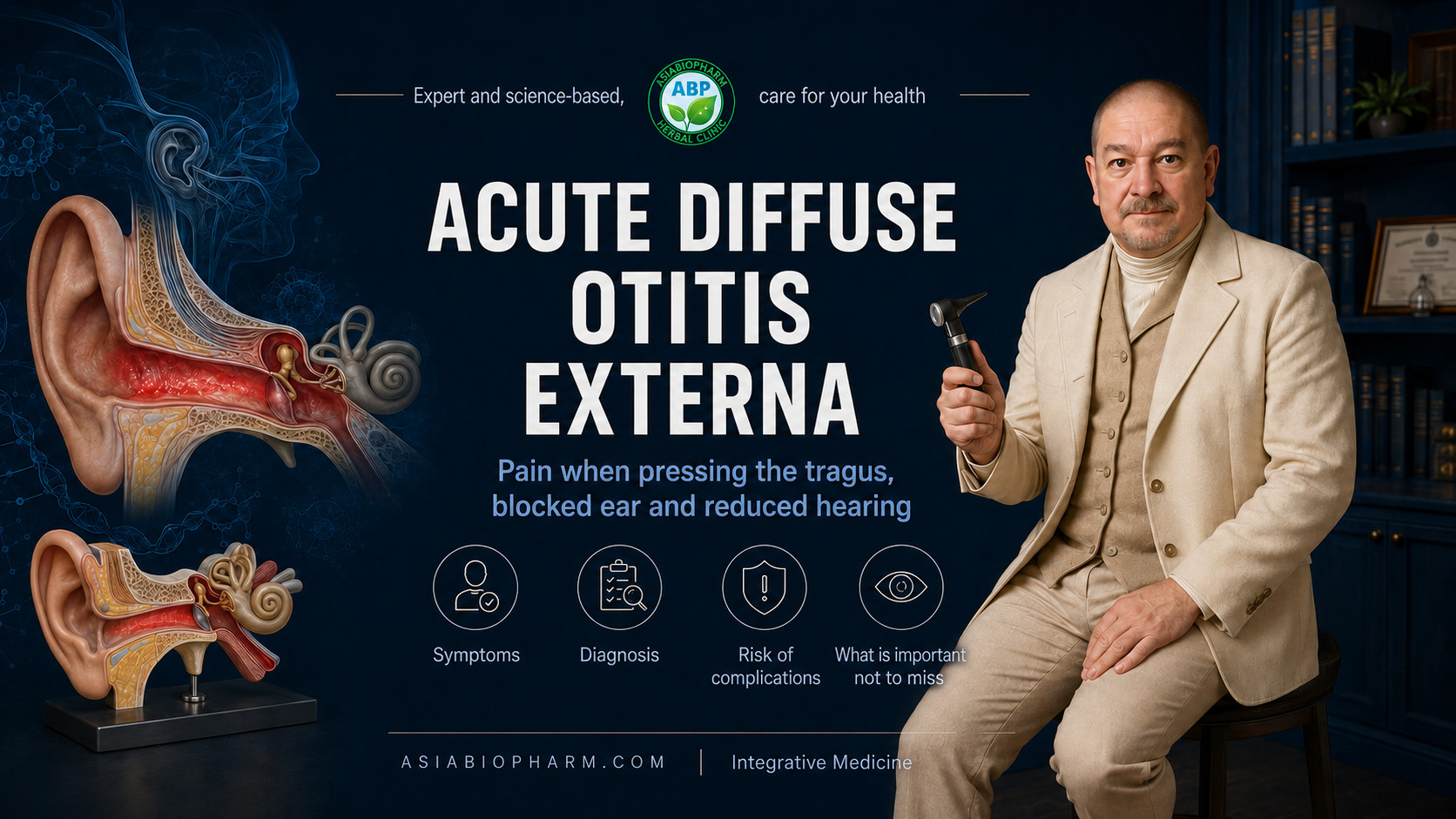
What happens in acute diffuse otitis externa. Acute diffuse otitis externa is inflammation of the skin of the external auditory canal, most often developing after water enters the ear, prolonged exposure to a humid climate, traumatic ear cleaning, scratching of the skin, or the use of in-ear headphones, earplugs, or hearing aids. Damage to the protective skin barrier and a reduction in earwax create conditions for bacterial growth, predominantly Pseudomonas aeruginosa and Staphylococcus aureus.
The condition usually begins rapidly: itching or irritation appears inside the ear, followed by increasing pain, swelling, a blocked sensation, discharge, and temporary hearing loss. Pain becomes worse when the tragus is pressed, the auricle is pulled, during chewing, or when trying to lie on the affected side. Hearing becomes reduced because the ear canal narrows and discharge and shed epidermal cells accumulate, not because of damage to the auditory nerve.
In children, otitis externa often develops after swimming; in adults, after self-cleaning of the ears. In older patients and people with diabetes mellitus or immunodeficiency, the risk of deeper spread of infection increases. With timely treatment, the first signs of improvement usually appear within two to three days, while the main symptoms resolve in approximately one to one and a half weeks.
How to determine whether it is otitis externa
The most characteristic finding is a combination of pain inside the ear with marked tenderness when the tragus is pressed or the auricle is moved. Itching, a feeling of pressure, swelling, clear or purulent discharge, unpleasant odor, pain during chewing, and reduced hearing may occur at the same time.
The diagnosis is confirmed by an otorhinolaryngologist during otoscopy. The physician assesses swelling and redness of the skin, the presence of discharge, the condition of the tympanic membrane, and whether inflammation has spread beyond the ear canal. If there is a significant amount of discharge, careful professional cleaning is required. Bacteriological testing is usually performed in recurrent disease, diabetes mellitus, immunodeficiency, unusual discharge, or lack of response to initial treatment.
In otitis media, inflammation is located behind the tympanic membrane, and pressure on the tragus usually does not cause such pronounced pain. A furuncle of the ear canal is a localized painful swelling, whereas diffuse otitis externa involves a substantial area of the skin. Predominant itching, the appearance of white, gray, or black material, and lack of response to antibacterial drops require exclusion of otomycosis. Vesicles on the auricle, dizziness, or facial muscle weakness may indicate herpetic involvement.
Red flags
Urgent examination by an ENT physician is required for severe or rapidly worsening pain, especially at night, when the intensity of pain is disproportionate to visible changes and responds poorly to analgesics. In an older person or a patient with diabetes mellitus, cancer, or immunodeficiency, this may be an early manifestation of necrotizing otitis externa with involvement of the temporal bone and skull base.
Fever, marked weakness, redness and swelling of the auricle, skin around the ear, cheek, or neck may indicate that the infection has spread beyond the ear canal. Tenderness and swelling behind the ear, protrusion of the auricle, and severe headache require exclusion of mastoiditis and other deep complications.
Immediate medical attention is required for dizziness, balance disturbance, repeated vomiting, sudden significant hearing loss, double vision, difficulty swallowing, hoarseness, facial numbness, or impaired facial movements. Bloody discharge after a blow, diving, or an attempt to remove a foreign body may indicate injury to the ear canal or tympanic membrane.
A young child should be examined by a physician if there is marked irritability, refusal to eat, fever, or ear discharge. During pregnancy, the choice of both otic and systemic medications also requires individual assessment.
Initial self-care
Until the ear is examined, it should be kept dry. Swimming, diving, steam baths, saunas, earplugs, in-ear headphones, and the hearing aid on the affected side should temporarily be avoided. During showering, the entrance to the ear may be gently covered with a cotton ball lightly coated with petroleum jelly without pushing it into the canal. The cotton ball should be removed immediately after the shower.
Only fluid that has already drained onto the auricle may be gently blotted with a clean tissue. Cotton swabs, matches, hairpins, and other objects must not be used. The ear must not be irrigated with water, hydrogen peroxide, alcohol, vinegar, chlorhexidine, or herbal infusions. Until the tympanic membrane has been examined, boric alcohol, camphor oil, concentrated essential oils, and drops left over from a previous illness should not be instilled.
Sleeping on the healthy side without compressing the inflamed ear is more comfortable. Physical activity should temporarily be reduced if it increases pain or sweating. No special diet is required, and fluid intake can remain normal. Additional fluids are needed only in cases of fever or inadequate intake, taking heart and kidney conditions into account.
Moderate dry warmth applied externally may sometimes temporarily reduce pain, but warming is contraindicated in purulent discharge, high fever, marked swelling, diabetes mellitus, and suspected spread of infection. If pain increases, hearing continues to worsen, or there is no improvement within 48–72 hours after prescribed treatment has been started, repeat medical evaluation is required.
How the disease may progress
Acute diffuse otitis externa does not have a sequence of distinct clinical stages. Usually, after damage or maceration of the skin, itching and discomfort develop, followed by pain, redness, diffuse swelling, and discharge. With pronounced swelling, the ear canal may become almost completely closed, causing a blocked sensation and temporary conductive hearing loss.
Recurrent episodes are promoted by regular swimming, a hot and humid climate, the habit of cleaning the ears, eczema, psoriasis, seborrheic dermatitis, allergy to cosmetic products or headphone materials, narrowing of the ear canal, and prolonged use of a hearing aid.
Without adequate treatment, complications may include a furuncle, cellulitis of the surrounding tissues, perichondritis of the auricle, chronic otitis externa, and persistent narrowing of the ear canal. The most dangerous complication is necrotizing otitis externa with osteomyelitis of the skull base, which occurs predominantly in patients with diabetes and immunodeficiency.
Integrative treatment methods for acute diffuse otitis externa
Selection of local therapy begins with otoscopy, assessment of the tympanic membrane, and professional cleaning of the external auditory canal. If the integrity of the tympanic membrane is unknown, perforation is suspected, a drainage tube is present, or there has been trauma, bloody discharge, marked dizziness, sudden hearing loss, or signs of otitis media, the otic preparations listed below should not be used.
First, pus, exudate, shed epithelium, and other material must be removed, the bacterial, fungal, or eczematous nature of the inflammation determined, and the degree of swelling assessed. Several ear preparations should not be mixed together or instilled one after another without a specifically designed regimen: this increases moisture in the ear canal, increases the chemical burden on damaged skin, complicates assessment of treatment response, and makes it impossible to identify which component caused irritation or allergy.
Main local therapy during the active infectious phase
Jindu Ear Drops are the most specifically targeted local preparation for the active infectious phase of bacterial otitis externa. The formulation contains chlorhexidine acetate, Erionota torus larval extract, Saussurea costus root, Dendrobium nobile stem, Vitex trifolia fruit, Cyathula officinalis root, magnetite, borneol, and other components.
The combination provides antiseptic, anti-inflammatory, anti-edematous, antipruritic, and reparative effects. The drops are instilled directly into the external auditory canal only after it has been cleaned and the integrity of the tympanic membrane has been confirmed.
Jindu Ear Drops must not be used in cases of tympanic membrane perforation, a drainage tube, pronounced weeping dermatitis, or individual intolerance to chlorhexidine, costus, borneol, dendrobium, vitex, or other ingredients. If chlorhexidine passes through a perforation into the middle-ear cavity, there is a risk of toxic damage to the auditory and vestibular systems.
Short-term burning, soreness, hyperemia, increased itching, and allergic contact dermatitis may occur. Jindu must not be mixed in the ear canal with other antiseptic, antibiotic, oil-based, or herbal drops.
Local anti-inflammatory and reparative therapy
ABP-153 Oil Infusion is used in diffuse otitis externa as a ready-made multi-component topical herbal mixture intended for superficial and cavity processes. It contains camphor, Andrographis paniculata, Curcuma longa, Glycyrrhiza glabra, Zingiber cassumunar, Houttuynia cordata, menthol, borneol, clove, eucalyptus, and additional botanical ingredients.
The formula combines anti-inflammatory, antimicrobial, antifungal, anti-edematous, analgesic, antipruritic, and reparative effects. In otitis externa, ABP-153 may be introduced into the ear canal or applied using a sterile wick only when the tympanic membrane is intact.
It is most rational to use ABP-153 not simultaneously with Jindu Ear Drops, but after the active infectious phase has subsided, to continue anti-inflammatory treatment, control residual itching and swelling, and support restoration of damaged skin. In the presence of active purulent discharge, debridement should be performed first: an oil base applied over pus and shed epithelium does not reach the skin evenly and may interfere with free drainage.
Camphor, menthol, borneol, clove, and eucalyptus may cause burning, hyperemia, increased itching, or a contact reaction in sensitive patients. If pain, swelling, discharge, or irritation increases, use should be discontinued.
ABP-153 must not be mixed with Jindu or other otic preparations in a single instillation. If sequential use is necessary, an interval should be maintained between products and the skin reaction monitored.
ABP-153D is not required for superficial otitis externa. Deep penetrative delivery with DMSO does not correspond to the primary therapeutic target, which is the skin of the external auditory canal.
Oral antimicrobial and anti-inflammatory support
All powdered botanical extracts listed below are intended for oral use only. They must not be diluted for instillation into the ear, applied to a wick, introduced into the ear canal, or independently converted into ear drops.
Chinese Coptis Coptis chinensis is used orally as a powdered standardized extract. Berberine and related alkaloids provide systemic antimicrobial, anti-inflammatory, anti-exudative, and anti-biofilm activity.
Coptis may be considered as an additional systemic component in pronounced bacterial inflammation, recurrent otitis externa, coexisting inflammation of other mucous membranes, or the presence of metabolic factors that support infection. It does not replace cleaning of the ear canal, ear drops, or a necessary systemic antibiotic when infection spreads.
Possible adverse effects include a bitter taste, nausea, reduced appetite, abdominal pain, constipation or diarrhea, headache, and reductions in blood pressure and glucose levels. Berberine affects CYP3A4, CYP2D6, CYP2C9, and P-glycoprotein and may alter concentrations of drugs with a narrow therapeutic range.
Potential interactions of coptis with glucose-lowering, antihypertensive, anticoagulant, antiarrhythmic, and immunosuppressive medications must be considered. Coptis should not be used during pregnancy, breastfeeding, or infancy.
Baikal Skullcap Scutellaria baicalensis is used orally as a powdered standardized extract. Baicalin, baicalein, wogonin, and other flavonoids participate in regulation of inflammatory mediators, reduce exudation, and provide systemic anti-inflammatory, antiallergic, antimicrobial, and potentially antifungal support.
Baikal skullcap is more appropriate when there is marked inflammation, swelling, hyperemia, itching, an eczematous component, or a tendency for otitis externa to recur. It is not an ear drop and must not be applied directly into the ear canal.
Possible adverse effects include nausea, dizziness, drowsiness, slowed responsiveness, muscle weakness, and decreased blood pressure. Liver function should be assessed during use. Baikal skullcap should not be used in decompensated liver failure or in patients with individual intolerance.
Possible enhancement of the effects of hypnotic, sedative, anxiolytic, and antihypertensive medications must be considered. Caution is required when it is used together with anticoagulants, antiplatelet agents, and glucose-lowering medications.
Black Seed Nigella sativa is used orally as a powdered standardized extract. Thymoquinone and other active constituents provide systemic anti-inflammatory, antioxidant, immunomodulatory, and moderate antimicrobial effects.
Black seed is most appropriate during recovery, when eczematous inflammation, dryness, and scaling of the skin persist, when there is a tendency toward repeated episodes after swimming, or when otitis externa is associated with an allergic background, diabetes mellitus, or other metabolic disorders.
Powdered black seed extract is not an ear oil, must not be instilled into the ear canal, and must not be applied to a wick. During an active purulent process, it may be used only as additional oral support rather than as a substitute for local antibacterial therapy.
Possible adverse effects include gastric discomfort, nausea, diarrhea, headache, allergic reactions, and reductions in blood pressure and glucose levels. Additive effects with antihypertensive and glucose-lowering medications, anticoagulants, and antiplatelet agents must be considered.
Turmeric Curcuma longa is used orally as a powdered standardized extract. Curcuminoids provide systemic anti-inflammatory, antioxidant, and reparative support and may be used after acute infectious activity has decreased, when inflammation, itching, and skin damage persist.
Turmeric is already included in the topical ABP-153 Oil Infusion, although the local content in the finished topical composition and systemic oral administration are not fully equivalent. Nevertheless, a separate oral turmeric extract should be added only when there is a distinct clinical indication in order to avoid unjustified multi-component therapy.
Powdered Curcuma longa extract must not be diluted for instillation into the ear or applied directly to the skin of the ear canal. Possible adverse effects include heartburn, nausea, abdominal pain, and loose stools.
Turmeric is contraindicated in biliary obstruction, acute pancreatitis, and exacerbation of gallstone disease. Caution is required in peptic ulcer disease, a tendency to bleeding, and concomitant use of anticoagulants or antiplatelet agents.
Systemic management of pain, swelling, and fever
Five Root Compound Anti-Inflammatory Mixture is used orally as an additional treatment for pronounced inflammatory pain, swelling, and tenderness of the ear canal. It contains Harrisonia perforata, Capparis micracantha, Clerodendrum petasites, Ficus racemosa, Tiliacora triandra, and other components.
The formula has systemic anti-inflammatory, analgesic, and antioxidant effects and may reduce the need for frequent use of NSAIDs. It does not replace professional debridement of the ear canal or local antibacterial therapy.
For moderate itching without pronounced pain or swelling, Five Root Compound is not an essential component. Dyspepsia and individual hypersensitivity may occur. During pregnancy, breastfeeding, childhood, liver or kidney disease, and use of anticoagulant, antihypertensive, or other anti-inflammatory medications, individual assessment is required.
Antipyretic Compound is used orally only when fever, chills, body aches, and general inflammatory intoxication are confirmed. Fever is not characteristic of limited superficial otitis externa, so this mixture is not part of the mandatory basic regimen.
Fever is a reason to exclude otitis media, spread of infection to the auricle and surrounding tissues, mastoiditis, or necrotizing otitis externa. An antipyretic should not mask progression of infection.
Routine simultaneous use of Antipyretic Compound and Five Root Compound is generally unnecessary because their anti-inflammatory and analgesic effects partly overlap. The formula should be selected according to the predominant syndrome.
Antipyretic Compound is contraindicated in individual intolerance to its ingredients. If dengue fever is suspected or severe liver disease is present, the cause of the fever must first be clarified.
Product for external use only outside the ear canal
Aromatic Cooling Oil Sukaya is used externally only for a separate accompanying headache or pain in the neck and occipital region. Menthol activates cold-sensitive TRPM8 receptors and produces a counterirritant analgesic effect.
The oil is applied to intact skin of the temples, occipital area, and neck. It must not be introduced into the ear canal or applied to an inflamed auricle, erosions, cracks, mucous membranes, or the eye area. Aromatic Cooling Oil Sukaya does not treat bacterial otitis externa.
Principles for building the treatment combination
Only one selected ready-made topical formulation should be used inside the ear canal: primarily Jindu Ear Drops during the active bacterial phase, or ABP-153 after discharge and infection severity have decreased, for anti-inflammatory and reparative support. These preparations should not be mixed in a single instillation.
All powdered extracts — Chinese coptis, Baikal skullcap, black seed, and turmeric — are used exclusively orally. They are not otic formulations and must not be independently converted into solutions, oils, suspensions, or drops for use in the ear canal.
Oral extracts should be selected for a specific clinical purpose: coptis for a pronounced bacterial and recurrent process, Baikal skullcap for a strong inflammatory-allergic and eczematous component, black seed for an allergic or metabolic background and during recovery, and turmeric for persistent systemic inflammation and the need for reparative support. Simultaneous use of all extracts is generally unnecessary.
Botanical products make it possible to target inflammation, microbial burden, and skin recovery with less systemic burden on the gastrointestinal tract, liver, kidneys, and cardiovascular system compared with prolonged use of systemic NSAIDs and antibiotics. Natural origin does not eliminate the possibility of allergy, dyspepsia, effects on blood pressure, glycemia and coagulation, or drug interactions.
In severe bacterial disease, spread of infection beyond the ear canal, diabetes mellitus, immunodeficiency, or suspected necrotizing otitis externa, integrative therapy does not replace professional cleaning, microbiological testing, or necessary systemic antibacterial therapy.
Prevention of recurrent otitis externa
The main preventive measure is preservation of the natural protective barrier of the ear canal. Earwax is not contamination: it maintains an acidic environment, prevents excessive moisture of the skin, and suppresses microbial growth. Cotton swabs should be used only to clean the visible part of the auricle and must not be inserted into the ear canal.
After swimming, it is enough to tilt the head, allow water to drain out naturally, and gently dry the auricle. The head should not be shaken vigorously, and tissues, swabs, or other objects should not be inserted into the ear.
People prone to otitis externa should use an appropriate swimming cap, regularly dry hearing-aid earmolds, and clean headphones. Tight earplugs must not injure the skin or trap moisture. Preventive acidifying or oil-based drops are acceptable only after the integrity of the tympanic membrane has been confirmed and the product has been individually selected.
Eczema, psoriasis, seborrheic dermatitis, and contact dermatitis should be treated between infectious exacerbations because cracks and damaged epithelium become entry points for bacteria and fungi. In recurrent episodes, narrowing of the ear canal, chronic otomycosis, allergy to drop ingredients, and inadequate glucose control should be excluded.
Frequently asked questions
Why does pressing the tragus hurt so much?
The tragus is connected to the skin and cartilaginous portion of the external auditory canal. When it is pressed, the inflamed skin shifts and stretches, producing the characteristic sharp pain.
Will hearing return after treatment?
In uncomplicated otitis externa, hearing loss is usually related to swelling and accumulation of discharge. After the ear canal is cleaned and inflammation decreases, hearing generally returns. If it remains reduced, the tympanic membrane, middle ear, and inner ear should be examined.
Can I rinse the ear with hydrogen peroxide myself?
No. Hydrogen peroxide can increase irritation and maceration of inflamed skin. If the condition of the tympanic membrane is unknown, fluid may enter the middle ear and cause pain, dizziness, and complications.
Can several medications be instilled one after another?
Not without a specifically designed regimen. Sequential use of several drops increases moisture and chemical exposure, raises the risk of contact dermatitis, and makes it difficult to determine which product is effective or causing deterioration.
Can coptis, Baikal skullcap, black seed, or turmeric powder be diluted and instilled into the ear?
No. These powdered extracts are intended exclusively for oral use. A self-prepared solution is not a sterile otic formulation, may contain insoluble particles, may injure the skin or remain in the ear canal, and can cause irritation or an additional infection.
Why should an oral antibiotic not be started immediately?
In uncomplicated otitis externa, a local preparation produces a higher concentration directly in the inflamed ear canal. A systemic antibiotic increases the overall drug burden and the risks of diarrhea, hepatotoxicity, drug interactions, and bacterial resistance. Oral or injectable antibiotics are required when infection spreads or the risk of complications is high.
What you should know about standard modern medical protocols
The basis of treatment for uncomplicated acute diffuse bacterial otitis externa is professional cleaning of the ear canal and local antimicrobial therapy. Pus, exudate, shed epithelium, and cerumen interfere with even contact of drops with the inflamed skin, so treatment is less effective without debridement. In marked swelling, an ENT physician may insert a special ear wick or turunda to deliver medication into the narrowed canal.
A wick should not be inserted deeply into the ear without medical supervision: this may injure the skin, push discharge toward the tympanic membrane, increase pain, and create conditions for the spread of infection.
Ofloxacin and ciprofloxacin in the form of ear drops act against the main bacterial pathogens of otitis externa, including Pseudomonas aeruginosa and Staphylococcus aureus. Certain formulations may be used when the tympanic membrane is damaged, but the specific preparation should be selected only after otoscopy. Not every drop containing a fluoroquinolone should automatically be considered safe for the middle ear: concentration, solvent, excipients, and the officially approved route of administration all matter.
The most common adverse effects of topical fluoroquinolones are burning, itching, pain, dryness, irritation, a blocked sensation, and local allergic reactions. When the skin is severely damaged, systemic absorption may increase. Repeated or unjustified use suppresses susceptible microflora, promotes selection of resistant bacteria, and creates conditions for fungal superinfection. As a result, subsequent infection may respond less well to both topical and systemic fluoroquinolones.
The combination of ciprofloxacin with dexamethasone simultaneously targets susceptible bacterial flora, inflammation, and swelling. The corticosteroid component can rapidly reduce pain, itching, and hyperemia, but this symptomatic suppression of the inflammatory response does not mean that the infection has been fully eliminated.
Dexamethasone reduces local immune activity and may mask an ongoing bacterial process, development of a fungal infection, or spread of infection beyond the ear canal. Repeated and prolonged use promotes thinning of the skin, slows epithelialization of erosions, increases fragility, contributes to contact dermatitis, and alters the local microflora. When used without justification, the hormonal component may transform the disease into a chronic, less obvious form.
Drops containing neomycin, polymyxin B, and hydrocortisone should be used only when the tympanic membrane has been confirmed to be intact. Neomycin relatively often causes allergic contact dermatitis, which manifests as increased itching, swelling, weeping, hyperemia, and scaling. This reaction is often mistakenly interpreted as worsening of the bacterial infection, after which the medication is continued and sensitization becomes more pronounced.
Neomycin belongs to the aminoglycoside class of antibiotics. If it enters the middle ear through a perforation, it may irreversibly damage the hair cells of the cochlea and vestibular apparatus. Consequences may include permanent hearing loss, tinnitus, dizziness, and impaired coordination and balance. The risk increases with prolonged use, repeated courses, and the presence of middle-ear inflammation.
Polymyxin B may cause pronounced local irritation and contact allergy. Hydrocortisone rapidly reduces inflammation, but prolonged use promotes fungal growth, slows skin recovery, and masks antibiotic failure. Combination drops should not be used prophylactically or continued after signs of allergy or otomycosis appear.
Acetic acid solutions acidify the environment of the ear canal and may be used in a mild superficial process. An acidic environment inhibits the growth of a number of bacteria and fungi, but damaged skin may react with pronounced burning. Pain may increase, and dryness, chemical irritation, fissures, and further disruption of the skin barrier may occur.
Vinegar- and alcohol-containing solutions must not be used without medical supervision in cases of marked inflammation, bloody or purulent discharge, trauma, a tympanostomy tube, previous middle-ear surgery, or unknown integrity of the tympanic membrane. Entry of acid or alcohol into the middle ear may cause severe pain, an inflammatory reaction, dizziness, and toxic injury to the auditory and vestibular systems.
For pain relief, paracetamol or nonsteroidal anti-inflammatory drugs may be used. Paracetamol does not affect the bacterial infection; it only reduces pain and fever. Its main danger is dose-dependent toxic liver injury.
Exceeding the total daily dose, taking several combination medicines containing paracetamol at the same time, regular alcohol consumption, liver disease, fasting, and inadequate nutrition may lead to massive hepatic necrosis, acute liver failure, impaired blood clotting, encephalopathy, coma, the need for liver transplantation, and death. During the first hours of severe poisoning, pronounced symptoms may be absent.
Ibuprofen and other NSAIDs reduce inflammatory pain but may damage the gastric and intestinal mucosa. Erosions, ulcers, occult or massive gastrointestinal bleeding, and perforation of the stomach or intestinal wall may occur. Severe bleeding sometimes develops without significant preceding pain.
NSAIDs reduce renal blood flow, cause sodium and fluid retention, raise blood pressure, and may lead to edema, acute kidney failure, or decompensated heart failure. Bronchospasm, anaphylaxis, drug-induced liver injury, severe skin reactions, and an increased risk of thrombotic cardiovascular complications may occur.
Ibuprofen and other NSAIDs should not be started without medical supervision in patients with ulcer-related bleeding, severe renal impairment, decompensated heart failure, NSAID-induced bronchospasm, or coagulation disorders. Combination with anticoagulants, antiplatelet agents, systemic glucocorticosteroids, and certain antidepressants sharply increases the risk of bleeding. During pregnancy, use must be agreed with a physician.
Systemic antibiotics are usually unnecessary in uncomplicated otitis externa. A local preparation produces a substantially higher concentration directly at the site of inflammation, while an oral antibiotic increases the overall toxic burden and does not always achieve an adequate concentration in the skin of the ear canal.
Systemic therapy is considered when inflammation spreads to the auricle and surrounding tissues, fever or pronounced intoxication develops, adequate local treatment is impossible, or the patient has diabetes mellitus, immunodeficiency, or suspected deep necrotizing disease. Unjustified use of a systemic antibiotic may cause nausea, diarrhea, candidiasis, allergic reactions, anaphylaxis, toxic liver and kidney injury, antibiotic-associated colitis, and development of resistance.
Systemic ciprofloxacin may cause tendon inflammation and rupture, and injury may occur during treatment or weeks to months after treatment has ended. The risk is particularly high in older patients, those with renal impairment, and those using systemic glucocorticosteroids at the same time.
Fluoroquinolones may cause peripheral neuropathy with pain, burning, numbness, and muscle weakness. In some cases, nerve damage becomes prolonged or irreversible. Anxiety, insomnia, confusion, hallucinations, psychotic reactions, seizures, glycemic disturbances, toxic liver injury, and severe antibiotic-associated diarrhea may occur.
Ciprofloxacin may prolong the QT interval and provoke cardiac arrhythmias. It interacts with antiarrhythmic drugs, anticoagulants, theophylline, certain glucose-lowering agents, tizanidine, and preparations containing calcium, magnesium, iron, or zinc. It should not be used without medical supervision in patients with pronounced arrhythmias, severe heart disease, renal failure, or complex multidrug therapy.
In patients with diabetes mellitus, immunodeficiency, and severe continuous pain, especially when it becomes worse at night, necrotizing otitis externa must be excluded. This is a deep infection capable of spreading to the temporal bone, skull base, and cranial nerves. Attempting to treat such a process with ear drops alone delays diagnosis and creates a risk of permanent neurological injury, sepsis, and death.
A reliable percentage for complete recovery and absence of recurrence over two years has not been established for a single treatment protocol for acute diffuse otitis externa. The outcome depends on elimination of water exposure and trauma, preservation of the skin barrier, the presence of eczema or otomycosis, glucose control, proper cleaning of the ear canal, and susceptibility of the causative organism.
Simultaneous or sequential use of several antibiotic, hormonal, antiseptic, and acidic ear drops together with systemic NSAIDs and antibiotics may cause chemical injury to the skin, contact sensitization, suppression of local immunity, fungal superinfection, bacterial resistance, ototoxic hearing loss, tendon and nerve injury, drug-induced hepatitis, renal failure, and gastrointestinal bleeding. Alternative integrative methods based on rationally selected local and systemic botanical formulas make it possible to address inflammation, microbial burden, swelling, and epithelial recovery and generally do not exert the same aggressive local and systemic effects as unjustified combined use of chemically synthesized medications.
Why the article does not specify dosages and duration of treatment
The same case of otitis externa may vary in severity, may be bacterial, fungal, eczematous, or mixed in nature, and may be accompanied by different degrees of swelling and skin damage. Choosing a treatment regimen requires information about the condition of the tympanic membrane, presence of discharge, extent of inflammation, age, body weight, allergic reactions, diseases of the liver, kidneys, cardiovascular and endocrine systems, and medications already being used.
A universal regimen may be insufficient for severe infection or excessive for mild inflammation. Therefore, the article describes therapeutic approaches but does not replace otoscopy and individualized clinical and pharmacological assessment.
If necessary, you may ask a short question in the comments to this article, and in more complex cases you may book a consultation with a clinical pharmacologist specializing in integrative medicine at https://asiabiopharm.com/konsultaciii.
0 comments