
Chlorhexidine — How Dangerous It Is, Side Effects and Consequences of Frequent Use
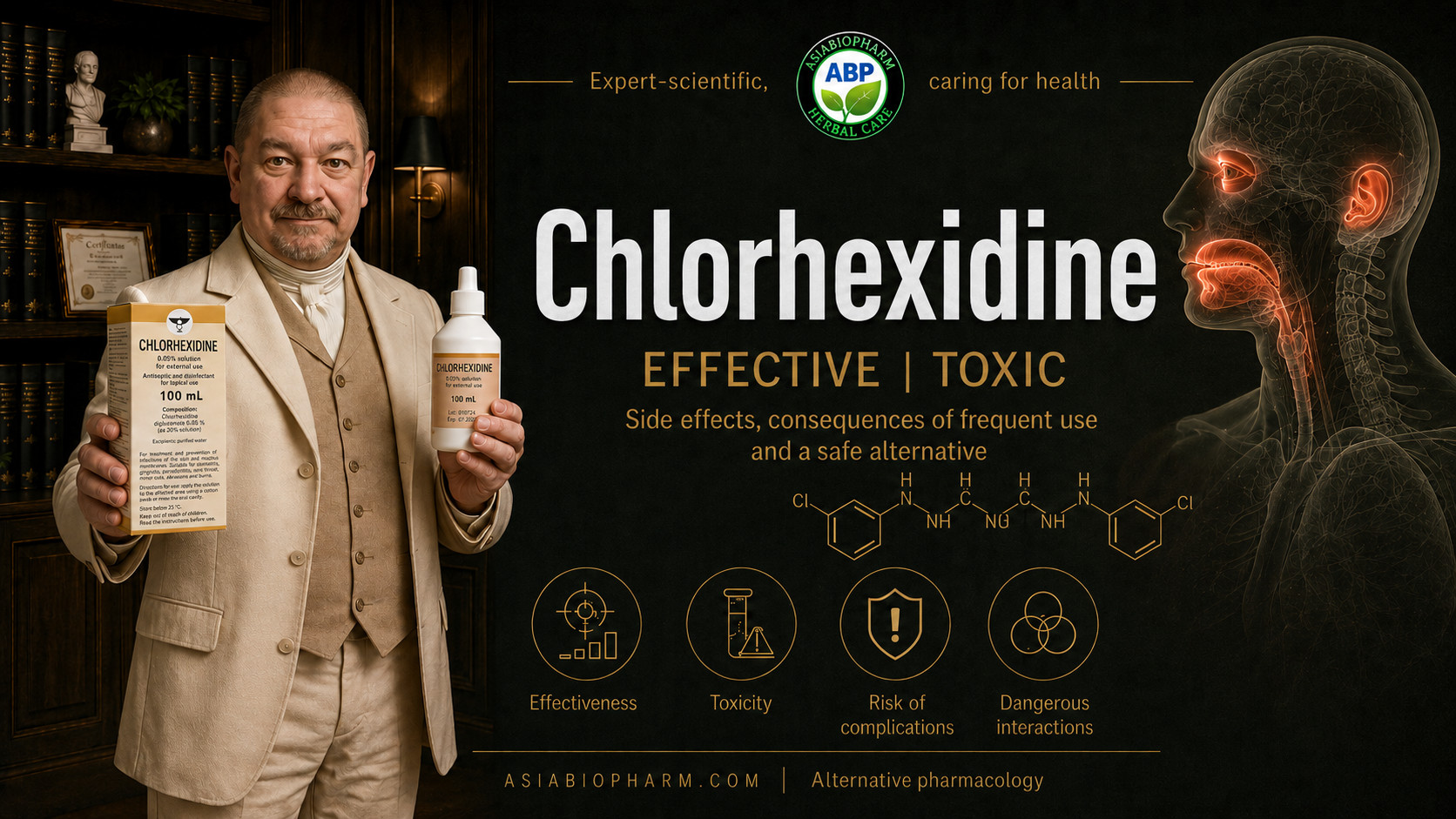
EFFECTIVE | TOXIC
What names chlorhexidine is known by: the international nonproprietary name is chlorhexidine. Medical instructions and documents may use the forms Chlorhexidine, Chlorhexidinum, chlorhexidine gluconate, chlorhexidine digluconate, chlorhexidine acetate, and chlorhexidine hydrochloride. The main dosage forms include aqueous and alcohol-based solutions for external use, oral rinses, gels, sprays, wipes, sponges, dressings, vaginal suppositories, skin antiseptics, and coatings for medical devices. Major trade names used in different countries include Chlorhexidine, Chlorhexidine Bigluconate, Hexicon, Amident, Peridex, PerioGard, Corsodyl, Paroex, Hibiclens, and ChloraPrep. Chlorhexidine is also included in combination products and medical devices: Sebidin contains chlorhexidine and ascorbic acid, some formulations of Anti-Angin Formula contain chlorhexidine, tetracaine, and ascorbic acid, certain dental solutions combine chlorhexidine with other antiseptics, while surgical dressings, catheters, sponges, and gels may contain chlorhexidine without its name being displayed on the front of the package. Simultaneous use of a solution, spray, lozenges, dental gel, and a medical device can create hidden repeated exposure to the same substance, although classic systemic overdose from such a combination is unlikely.
Why chlorhexidine is considered harmless and where the real risk begins: the main danger of household chlorhexidine use is not liver or kidney damage, but direct injury to tissues for which a particular solution was not intended. The skin, oral mucosa, cornea, and structures of the middle and inner ear have different levels of sensitivity, so a solution suitable for intact skin should not automatically be used in the throat, nose, eyes, deep wounds, or ear canal. Chlorhexidine damages microbial membranes, but at high concentrations, with prolonged exposure, and through direct contact with vulnerable tissues, it also has a cytotoxic effect on human cells. The first signs of injury are nonspecific: burning, dryness, tongue numbness, altered taste, redness, itching, or soreness are often mistakenly considered a normal “disinfecting effect.” Repeated use increases the contact burden and may lead to irritant dermatitis, mucosal desquamation, and sensitization. Alcohol-containing solutions pose an additional risk because users often focus only on the chlorhexidine concentration and overlook the damaging effect of the alcohol base. Its widespread availability, low cost, and over-the-counter status create the false impression that the solution can be used on any tissue and for any length of time.
Side effects with short-term use: common reactions depend on the dosage form and application site. On the skin, burning, dryness, erythema, itching, and irritant contact dermatitis may occur. In the mouth, a bitter or metallic taste, altered taste perception, dryness, tingling, tongue numbness, soreness, superficial epithelial sloughing, and gum irritation may develop within the first few days. For chlorhexidine solutions intended for oral use, stomatitis, gingivitis, glossitis, ulcerative changes, dry mouth, paresthesia, hypoesthesia, tongue swelling, mucosal desquamation, and inflammation of the salivary glands have been officially described. The most common reactions to rinsing are staining of the teeth and tongue, increased formation of supragingival calculus, and altered taste perception. The official DailyMed labeling lists these complications among the main adverse effects of oral chlorhexidine solution.
A clinically significant complication is chemical injury to the eye. Chlorhexidine is toxic to the corneal epithelium, so contact with the solution can cause intense pain, photophobia, keratitis, epithelial defects, and persistent visual impairment. Alcohol-based and concentrated solutions are particularly dangerous. Use of chlorhexidine around the face, eyes, and eyelids requires physical eye protection because simply closing the eyelids is not sufficient if a large amount of solution flows underneath them.
Entry of chlorhexidine through a perforated tympanic membrane or through surgical access to the middle ear is associated with a risk of cochlear and vestibular toxicity. Tinnitus, dizziness, impaired balance, and hearing loss may occur. A review of experimental and clinical data shows that ototoxicity depends on concentration and the duration of contact with the round window membrane. A review of chlorhexidine ototoxicity confirms the danger when the substance reaches structures of the inner ear.
A life-threatening reaction is immediate allergy. Anaphylaxis may develop within minutes after application to the skin, mucosa, or a wound, after a dental procedure, or after contact with a catheter, gel, dressing, or surgical sponge containing chlorhexidine. Initial signs may include generalized itching, urticaria, flushing, swelling of the face, lips, or tongue, hoarseness, bronchospasm, severe weakness, and dizziness. This may be followed by a drop in blood pressure, impaired consciousness, and anaphylactic shock. Official instructions for dental solutions specifically mention reports of anaphylaxis and other serious allergic reactions.
Side effects with prolonged or repeated use: when oral rinses are used for weeks or months, local adverse effects accumulate. Brown staining can develop on the teeth, tongue, fillings, crowns, and other restorations. It is associated with the fixation of pigmented food and bacterial compounds on surfaces rather than necessarily with destruction of the enamel, but professional removal may be required. On rough restorations, discoloration can sometimes be difficult to remove. In a six-month study cited in the official labeling, a measurable increase in staining of the anterior teeth was observed in 56% of chlorhexidine users compared with 35% in the control group, while pronounced staining occurred in 15% compared with 1%.
Repeated rinsing increases supragingival calculus formation and can perpetuate dryness, burning, desquamative stomatitis, tongue soreness, and taste disturbances. In most patients, taste changes are reversible after discontinuation, although rare cases of persistent impairment of taste perception have been described in postmarketing surveillance.
Chlorhexidine does not cause euphoria, drug dependence, tolerance, or a classic withdrawal syndrome. The main long-term risk is masking an underlying disease. Rinsing may temporarily reduce plaque, bleeding, or odor, but it does not eliminate calculus, a periodontal pocket, caries, pulpitis, a periapical abscess, a traumatic filling, candidiasis, or a mucosal neoplasm. The return of symptoms after discontinuation is often mistakenly interpreted as proof that continuous use is necessary, whereas the untreated underlying cause actually remains.
Repeated application to the skin may lead to contact sensitization. The initial reaction may be limited to itching, erythema, or eczema, but subsequent exposure through a wound, mucosa, or medical device may trigger an immediate systemic reaction. The absence of complications after dozens of previous uses does not rule out allergy in the future.
No characteristic cumulative hepatotoxicity, nephrotoxicity, cardiotoxicity, or hormonal disorders have been established with standard topical use. Chlorhexidine is poorly absorbed from the gastrointestinal tract and through intact skin, so its toxicological profile is determined mainly by local tissue damage, allergy, and the danger of direct exposure to the eye, middle ear, respiratory tract, and deep tissues.
Contraindications and high-risk groups: an absolute contraindication is confirmed hypersensitivity to chlorhexidine or to any component of the specific dosage form. Previous urticaria, generalized itching, swelling, bronchospasm, a sharp fall in blood pressure, or an unexplained reaction during surgery, catheterization, or a dental procedure warrants considering chlorhexidine as a hidden allergen. After a systemic reaction, not only repeat use of the solution but also the use of chlorhexidine-containing dressings, sponges, catheters, gels, and lubricants is dangerous.
The product is contraindicated for contact with the brain, meninges, and structures of the middle or inner ear. Chlorhexidine must not be instilled into the ear canal unless the integrity of the tympanic membrane has been confirmed. Pain, purulent discharge, trauma, previous ear surgery, and the presence of a ventilation tube increase the likelihood that the solution may pass beyond the tympanic membrane and cause ototoxicity.
Skin formulations must not be applied to the eyes or cornea. Preparation of the skin of the face and scalp before surgery is particularly hazardous because the solution can run beneath the eyelids and remain in prolonged contact with the eye. Alcohol-based solutions must not be used on mucous membranes, in the ear canal, on large eroded surfaces, or near ignition sources until they have dried completely.
Premature and newborn infants have a thin epidermal barrier and therefore face an increased risk of chemical burns and pronounced irritation. For dental solutions, safety and effectiveness in children may not be sufficiently established; there is also a risk of swallowing and alcohol intoxication if the solution contains ethanol.
Damaged mucosa, severe stomatitis, mucositis after chemotherapy or radiotherapy, extensive dermatitis, deep wounds, and burns increase the contact of chlorhexidine with viable tissues. Under these conditions, the product may worsen cytotoxic injury and delay epithelialization, so the choice of formulation and concentration should be determined by the clinical objective rather than by the household principle that “stronger is better.”
Dangerous interactions: chlorhexidine must not be mixed with sodium hypochlorite in an endodontic canal. Direct contact produces a difficult-to-remove colored precipitate that can block dentinal tubules and complicate treatment. These solutions require intermediate irrigation and a professional protocol.
Self-directed combination of chlorhexidine with hydrogen peroxide, alcohol-based antiseptics, iodine-containing solutions, acids, alkalis, and other local disinfectants on the same mucosa or wound surface is highly undesirable. Such combinations rarely provide a clinically useful increase in efficacy but increase the risk of irritation, dryness, chemical injury, and delayed epithelial recovery.
Anionic surfactants, including sodium lauryl sulfate found in many toothpastes, reduce the activity of cationic chlorhexidine. Simultaneous use decreases its binding to tissues and makes the antiseptic effect less predictable. Therefore, an oral chlorhexidine solution should not be used directly together with toothpaste or mixed with other mouthwashes.
Combining chlorhexidine with alcohol does not cause a typical systemic drug interaction because topical chlorhexidine is barely absorbed. However, alcohol-containing solutions used in the setting of alcohol consumption, smoking, dehydration, and dry mouth can increase mucosal irritation. Coffee, tea, red wine, tobacco, and other intensely pigmented products increase the degree of tooth staining during prolonged treatment.
Caffeine and nicotine do not alter the concentration of chlorhexidine in the blood, but nicotine worsens periodontal health, masks gum bleeding, and increases the risk that a patient will replace proper diagnosis with continuous rinsing. Clinically significant systemic interactions with most medications, dietary supplements, and herbal products have not been established with topical use. The main danger is associated with local use of several irritating agents and hidden duplication of chlorhexidine in different formulations.
Simultaneous use of a solution, dental gel, lozenges, spray, and chlorhexidine-containing devices does not create the classic additive dose seen with a systemic drug, but it increases the area, frequency, and duration of exposure. The consequences include irritation, mucositis, altered taste, tooth staining, and an increased risk of sensitization.
Patient errors: the most common error is using the same solution for the skin, mouth, throat, nose, ears, eyes, genitals, deep wounds, and burns. Concentration, solvent, and excipients differ fundamentally between formulations. A solution for intact skin may contain alcohol and a concentration unsuitable for mucous membranes.
The second error is rinsing the mouth and throat for months without dental or otorhinolaryngological evaluation. A temporary reduction in odor and inflammation creates an illusion of treatment while caries, a periodontal pocket, an abscess, candidiasis, chronic trauma, or a neoplastic process continues to progress.
The third error is increasing the concentration, volume, frequency, and contact time when a rapid effect is not achieved. Using more chlorhexidine does not turn it into a treatment for the cause of the disease, but it does increase the likelihood of chemical irritation and mucosal damage.
The fourth error is self-irrigation of the ear canal. A patient cannot reliably assess the integrity of the tympanic membrane, and the risk of perforation is particularly high with otitis, trauma, or after surgery. Entry of chlorhexidine into the middle ear may lead to irreversible hearing loss.
The fifth error is continuing use after burning, ulcers, mucosal sloughing, tongue swelling, urticaria, or difficulty breathing occurs. An allergic reaction is not “adaptation” and should not be tested again. The next exposure may cause more severe anaphylaxis.
The sixth error is pouring the solution into an unlabeled bottle or storing it next to drinking water. This increases the risk of ingestion, especially by children and older patients. It is equally dangerous to mistake the solution for saline and use it to rinse the eye, nasal cavity, or a medical system.
The seventh error is believing that chlorhexidine must be tapered gradually after discontinuation. There is no special withdrawal regimen. The return of odor, plaque, or bleeding indicates persistence of the disease, not dependence.
Overdose and poisoning: a universal toxic dose of chlorhexidine for humans has not been established. Severity depends on concentration, amount, ethanol content, age, body weight, route of exposure, and whether the solution enters the respiratory tract. Because chlorhexidine is poorly absorbed from the gastrointestinal tract, accidental ingestion of a small amount of a standard dental solution is more likely to cause nausea, abdominal pain, vomiting, and mucosal irritation than systemic organ toxicity.
The official labeling for a 0.12% oral solution states that ingestion of approximately 30–60 mL by a small child weighing about 10 kg may cause gastrointestinal symptoms or signs of alcohol intoxication if the product contains ethanol. Medical attention is required if a small child ingests more than 120 mL or develops signs of intoxication. These values apply to a specific solution containing 11.6% alcohol and cannot be extrapolated to concentrated skin preparations.
During the first minutes, a sharply unpleasant taste, burning in the mouth and throat, nausea, coughing, and vomiting may occur. During the first hours after substantial ingestion, abdominal pain, repeated vomiting, drowsiness, dizziness, and impaired coordination may increase, especially if the solution contains ethanol. In children, dangerous intoxication may develop after a smaller absolute volume.
The most serious complication is aspiration. Entry of the solution into the trachea and bronchi causes direct chemical injury to lung tissue. Early symptoms include bouts of coughing, choking, hoarseness, and wheezing. Chemical pneumonitis, hypoxemia, and pulmonary edema may develop over the following hours. Vomiting must therefore not be induced: repeated passage of the liquid through the pharynx increases the risk of aspiration.
If chlorhexidine enters the eye, symptoms appear immediately or within the first few hours: pain, tearing, photophobia, foreign-body sensation, and reduced vision. Even if the pain decreases after brief rinsing, corneal injury may continue to progress.
If chlorhexidine passes through a perforated tympanic membrane, sudden pain, tinnitus, dizziness, nausea, impaired balance, and abrupt hearing loss may occur. The consequences may become irreversible, so waiting for spontaneous recovery is unsafe.
There is no specific antidote. Urgent toxicological assessment is required after ingestion of a concentrated solution, an unknown quantity, ingestion by a child, or the development of coughing, choking, repeated vomiting, drowsiness, or impaired consciousness. If the product enters the eye, immediate prolonged rinsing with water and ophthalmological examination are required. If it enters the ear when tympanic membrane perforation is possible, urgent examination by an otorhinolaryngologist is required. If urticaria, facial swelling, hoarseness, bronchospasm, or a fall in blood pressure occurs, treatment for anaphylaxis must be started immediately.
A safe integrative alternative: for external treatment of the skin, infected abrasions, superficial wounds, pyoderma, secondarily infected dermatitis, microbial eczema, superficial burns, dermatophytosis, and cutaneous candidiasis, Mangosteen Antiseptic — Yagarcidine Antiseptic Solution may be an alternative. The product is an aqueous solution of Garcinia mangostana L. pericarp extract; 100 mL contains 10 g of mangosteen extract and purified water. It contains neither chlorhexidine nor alcohol.
The pharmacological activity of the extract is associated with xanthones, proanthocyanidins, catechins, flavonoids, and tannins. Xanthones interfere with microbial membrane and enzymatic processes, polyphenols reduce oxidative stress, and tannins exert astringent and barrier effects on damaged skin. The extract combines antimicrobial, antifungal, anti-inflammatory, and reparative effects, so it not only reduces the microbial burden but also supports tissue recovery. The pharmacological rationale is based on experimental studies of Garcinia mangostana xanthones; clinical experience with topical use is broader than the body of large randomized studies of the finished solution.
In terms of the speed of standardized surgical antisepsis, chlorhexidine remains more predictable: it rapidly damages microbial membranes and persists on the skin. Mangosteen Antiseptic acts more gently, combining an antimicrobial effect with anti-inflammatory and wound-healing activity. This advantage is particularly important when inflamed skin requires repeated treatment, as an aggressive alcohol base or the cytotoxic effect of a synthetic antiseptic may increase irritation.
Complete substitution is possible for routine external treatment of small abrasions, superficial bacterial and fungal skin lesions, microbial eczema, secondarily infected dermatitis, and superficial burns without systemic signs of infection. In chronic ulcers, pronounced suppuration, abscesses, phlegmon, necrosis, diabetic foot, and rapidly spreading inflammation, the product is used as part of comprehensive treatment after diagnosis because a topical antiseptic does not replace surgical debridement or systemic therapy.
For preoperative skin preparation, treatment of vascular catheters, and other high-risk medical procedures, substitution should be determined by the infection-control protocol. In these situations, the standardized rapid action of chlorhexidine may be necessary. Mangosteen Antiseptic is intended for external use; it should not automatically be used in the eyes, middle ear, deep cavities, or instead of a solution specifically registered for oral use.
In terms of safety, the botanical alternative does not cause chlorhexidine-specific anaphylaxis, tooth staining, taste alteration, or chlorhexidine-related ototoxicity. The absence of alcohol reduces burning and tissue dehydration. Individual hypersensitivity to mangosteen, itching, redness, and irritation may occur, so local tolerance should be assessed during the first application. The product page states that systemic toxicity has not been identified with external use and that the main likely complications are local hypersensitivity reactions.
The real effectiveness of chlorhexidine: chlorhexidine is genuinely effective as a topical antiseptic. Its cationic molecule binds to negatively charged components of the bacterial cell wall and cytoplasmic membrane, increases membrane permeability, and causes leakage of intracellular components. At higher concentrations, coagulation of cytoplasmic contents occurs. The product acts mainly against vegetative forms of bacteria and shows activity against a number of yeast-like fungi, but it is not a universal agent against all viruses, spores, and biofilms.
When used for skin preparation before invasive procedures, chlorhexidine is valuable because of its rapid action and residual activity after drying. However, effectiveness depends on concentration, alcohol base, contact time, skin contamination, and correct application technique. Increasing the concentration without an indication raises tissue toxicity rather than guaranteeing a better clinical result.
In dentistry, chlorhexidine reduces dental plaque and the severity of gingivitis as an adjunct to mechanical oral hygiene. In a Cochrane systematic review, four to six weeks of use resulted in a moderate reduction in gingivitis, while the clinical significance of the additional benefit in mild inflammation was considered limited. Tooth staining increased substantially. The Cochrane systematic review confirms efficacy against plaque and gingivitis but does not justify continuous use.
Chlorhexidine does not treat caries, pulpitis, periodontitis, periapical abscesses, calculus, deep periodontal pockets, or anatomical causes of chronic infection. It does not restore damaged mucosa and does not replace mechanical plaque removal, surgical drainage, root canal treatment, or correction of a traumatizing dental restoration or appliance.
Common medical errors include prescribing rinses without diagnosing the cause of bleeding and pain, excessively prolonged courses, failure to warn about staining and taste disturbance, use of a skin formulation on mucous membranes, ignoring a previous allergic reaction, use around the ears and eyes without protection, and including chlorhexidine in treatment when the main problem is not superficial microbial contamination but a closed purulent focus.
Monitoring liver and kidney function is not required during standard topical use because systemic absorption is minimal. Ordering such tests “to monitor chlorhexidine” has no pharmacological rationale. What needs to be monitored are the tissues directly exposed to the product and any allergic reactions.
Safety monitoring during treatment: with external use, the skin should be inspected daily. Increasing burning, pain, erythema, swelling, weeping, blisters, erosions, or spread of a rash require immediate discontinuation and removal of residual solution with water. If inflammation continues to worsen after discontinuation, chemical burn, allergic dermatitis, and progression of infection should be ruled out.
When chlorhexidine is used in the mouth, the mucosa, tongue, taste perception, tooth staining, and calculus formation should be assessed. Superficial staining does not require emergency discontinuation, but it indicates a need to reconsider the duration of the course and arrange professional oral hygiene. Painful ulcers, pronounced desquamation, tongue swelling, difficulty swallowing, persistent numbness, and worsening taste impairment require discontinuation of the product.
Laboratory monitoring is not necessary during standard topical use. After substantial ingestion of an alcohol-containing solution by a child, consciousness, breathing, blood oxygen saturation, and signs of alcohol intoxication should be monitored. In cases of aspiration, pulse oximetry, assessment of blood gases, and lung imaging are required according to clinical indications.
Emergency warning signs include difficulty breathing, hoarseness, generalized urticaria, swelling of the lips, tongue, face, or larynx, severe weakness, a fall in blood pressure, and loss of consciousness. Waiting is dangerous because anaphylaxis can progress to airway obstruction and shock within minutes.
Eye pain, photophobia, blurred vision, and inability to open the eye after contact require immediate irrigation and urgent ophthalmological assessment. Corneal damage may continue to progress even after the initial burning sensation subsides.
Tinnitus, dizziness, impaired balance, and hearing loss after chlorhexidine enters the ear canal require urgent otorhinolaryngological examination and audiometry. Delay increases the likelihood of missing irreversible inner-ear injury.
After ingestion of a concentrate, repeated vomiting, coughing, choking, confusion, and drowsiness are dangerous. Self-treatment with sorbents and waiting for severe symptoms may delay the diagnosis of aspiration and chemical pneumonitis.
Proper discontinuation of chlorhexidine: chlorhexidine can be stopped immediately. There is no need to gradually reduce the concentration, frequency of rinsing, or number of applications. The product does not cause physical dependence or a withdrawal syndrome.
After prolonged rinsing is stopped, plaque, odor, gum bleeding, and inflammation may return. These symptoms reflect restoration of the original microbial burden or persistence of the underlying dental disease rather than a pharmacological rebound. They may appear within several days after discontinuation and persist until the cause is treated.
In cases of irritation, ulcers, desquamation, and taste disturbance, the product should be discontinued immediately. Most local reactions gradually subside once exposure stops, but staining of the teeth and restorations may require professional removal, while rare persistent taste disturbances may require additional evaluation.
After urticaria, swelling, bronchospasm, or anaphylaxis, repeat use is completely prohibited. An allergy to chlorhexidine should be recorded in the medical documentation, and the dentist, surgeon, anesthesiologist, and other healthcare personnel should be informed before catheters, dressings, gels, or antiseptic solutions are used.
Self-directed replacement of chlorhexidine with another aggressive antiseptic without assessing the indication does not solve the problem. For external treatment of small skin injuries, it may be possible to switch to Mangosteen Antiseptic if there is no individual hypersensitivity and the condition falls within its indications.
A rational approach to use: chlorhexidine is justified when a rapid standardized antimicrobial effect, residual activity, and predictable reduction in microbial contamination are required. This applies to certain surgical and dental procedures, short-term treatment of gingivitis, and specific situations covered by the instructions for the particular formulation.
The product is not intended for continuous household sterilization of the body. Daily treatment of the mouth, throat, nose, ears, skin, and any injury without a diagnosis increases the risk of local toxicity and creates a dangerous habit of replacing treatment of the underlying disease with an antiseptic.
During preoperative preparation, catheter treatment, and other high-risk procedures, the benefits of chlorhexidine may outweigh the risks if it is used professionally, at the correct concentration, and with protection of the eyes and ears. In such situations, rejecting an effective antiseptic solely because it is synthetic is irrational.
For small superficial skin injuries, infected abrasions, microbial eczema, secondarily infected dermatitis, and superficial fungal skin lesions, Mangosteen Antiseptic can provide a comparable external treatment option without chlorhexidine sensitization, alcohol-related irritation, tooth staining, or taste disturbance. In deep infections, abscesses, phlegmon, diabetic ulcers, and systemic symptoms, a topical product can only be part of comprehensive treatment.
The aim of rational alternative pharmacology is not to replace a strong drug with a weak one based on a formal distinction, but to use a treatment that provides sufficient effectiveness with the lowest possible toxicological burden. Chlorhexidine should remain a tool for specific indications rather than a universal pharmacy liquid for everyday self-treatment.
If you have questions about the subject of this article, you can ask a clinical pharmacologist in the comments or book an appointment at the following link: https://asiabiopharm.com/konsultaciii/
0 comments