
Vasomotor Rhinitis: Causes of Persistent Nasal Congestion
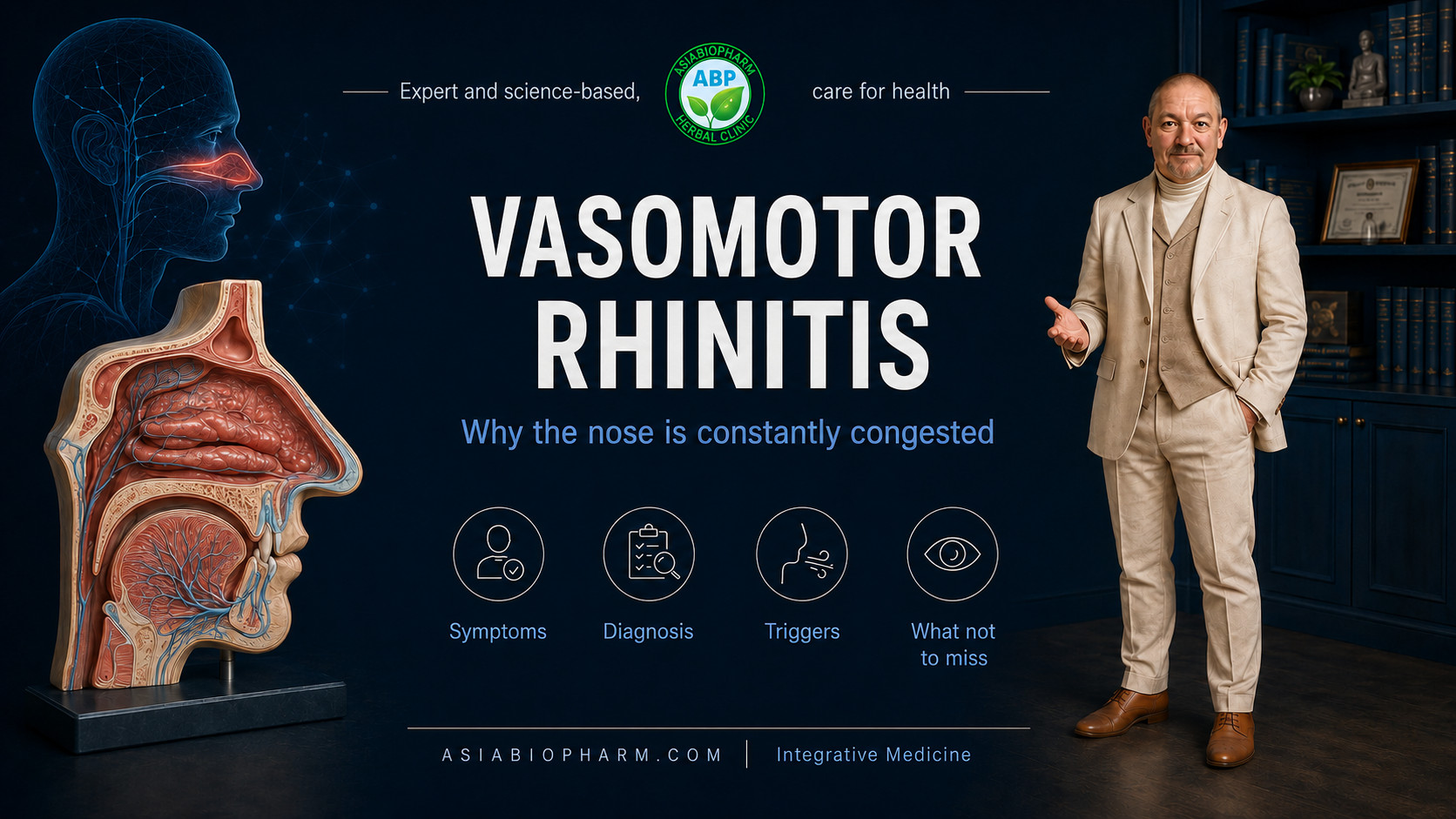
Vasomotor rhinitis is a chronic, noninfectious and nonallergic disorder of the regulation of the nasal mucosa. In modern classifications, it is more commonly referred to as idiopathic nonallergic rhinitis or nonallergic rhinopathy. Its main manifestations are persistent or intermittent nasal congestion, watery discharge, mucus dripping down the back of the throat, sneezing attacks, reduced sense of smell, a sensation of pressure in the nose, and impaired sleep. Unlike allergic rhinitis, the condition is not associated with systemic IgE sensitization. Its underlying mechanisms include nasal hyperreactivity and disturbances in the autonomic and neurosensory regulation of blood vessels, glands, and the cavernous tissue of the nasal turbinates. Triggers may include cold or dry air, sudden temperature changes, tobacco smoke, perfumes, household chemicals, dust, air pollution, alcohol, spicy food, physical exertion, stress, and hormonal fluctuations. There is no infectious pathogen, so vasomotor rhinitis is not contagious. In children, this diagnosis is made only after allergy, enlarged adenoids, a foreign body, and anatomical abnormalities have been excluded; in older adults, watery rhinorrhea is more often the predominant symptom. The condition usually follows a prolonged course lasting many years, while an individual exacerbation may persist from several hours to several weeks. The exact average duration and a reliable probability of complete resolution of symptoms have not been established.
How to determine whether you have vasomotor rhinitis
A characteristic feature is recurrent worsening of nasal breathing after exposure to nonspecific irritants such as cold, air conditioning, smoke, strong odors, humidity, hot or spicy food, alcohol, or emotional stress. Nasal congestion often alternates from one side to the other and becomes worse at night and when lying down; when lying on one side, the lower side of the nose usually becomes more congested. The discharge is typically clear and watery, while pronounced itching of the nose and eyes, tearing, and a clear seasonal pattern are less characteristic than in allergy. For an initial self-assessment, it is useful to keep a symptom diary and record the time, body position, weather, food, odors, medications, and duration of each reaction. The diagnosis is made by an otolaryngologist or allergist after examination, anterior rhinoscopy or nasal endoscopy, and exclusion of allergic sensitization by skin testing or specific IgE testing. Persistent obstruction may require computed tomography of the paranasal sinuses, assessment of the nasal septum and turbinates, and evaluation of medications, hormonal factors, and occupational exposures. Persistent unilateral congestion is more suggestive of an anatomical obstruction, polyp, foreign body, or neoplasm; thick purulent discharge, facial pain, and fever require exclusion of rhinosinusitis; long-term use of vasoconstrictor nasal drops suggests rhinitis medicamentosa. Negative allergy tests alone do not confirm vasomotor rhinitis: local allergic rhinitis also exists, in which systemic tests may remain negative.
Red flags
Urgent consultation with an otolaryngologist is required for persistent unilateral nasal congestion, especially when accompanied by bloody or foul-smelling discharge, recurrent nosebleeds, unilateral facial pain or swelling, numbness, loosening of the upper teeth, or enlarged cervical lymph nodes, because such signs require exclusion of a mass lesion. Visual impairment, double vision, protrusion of the eye, pain with eye movement, or eyelid swelling require emergency care because inflammation or a mass lesion may have spread into the orbit. Severe headache, neck stiffness, confusion, seizures, and focal neurological symptoms are indications for calling emergency medical services. High fever, rapidly increasing facial pain, purulent discharge, and marked deterioration in general condition are not typical of vasomotor rhinitis and require exclusion of infection. Sudden nasal congestion accompanied by swelling of the lips, tongue, or larynx, wheezing, and suffocation may be a manifestation of anaphylaxis. In a child, unilateral congestion with foul-smelling discharge should first raise suspicion of a foreign body. During pregnancy, newly developed severe nasal congestion must be distinguished from pregnancy rhinitis, preeclampsia, and adverse effects of medications. In immunocompromised patients, after surgery on the nose or paranasal sinuses, and in older adults, rapid deterioration requires earlier medical evaluation.
Initial self-care methods for vasomotor rhinitis
At the first stage, the most likely triggers should be avoided for 10–14 days: tobacco smoke, scented candles, perfumes, aerosol household chemicals, dust, sudden temperature changes, direct airflow from an air conditioner, alcohol, and excessively spicy food. It is advisable to ventilate the room several times a day, maintain a temperature of approximately 19–22 °C and relative humidity of 40–50%; excessive humidity is undesirable because it promotes the growth of mold and mites. Sleeping with the head of the bed elevated by 10–15 centimeters may help, especially if congestion worsens when lying down. Moderate physical activity is acceptable if it does not provoke pronounced rhinorrhea or shortness of breath. No special diet is required, but if attacks are triggered by food, spicy seasonings, very hot dishes, and alcohol should be temporarily avoided. Normal fluid intake should be maintained, primarily water at room temperature in small portions, approximately 1.5–2 liters per day, provided there is no cardiac, renal, or other reason to restrict fluids. Increased fluid intake does not eliminate vascular swelling but helps prevent excessive thickening of secretions.
For nasal irrigation, a ready-made sterile 0.9% isotonic sodium chloride solution may be used. With pronounced discharge, irrigation with 100–240 ml once or twice daily is acceptable. For home preparation, approximately 2.25 g of pure sodium chloride without fragrances or other additives is dissolved in 250 ml of sterile, distilled, or previously boiled and cooled water. Unboiled tap water must not be used. The irrigation device should be washed and completely dried after each use. Irrigation should be stopped if pain, bleeding, severe ear blockage, or hearing impairment occurs; after surgery, it should be performed only on the recommendation of the surgeon. Onion juice, garlic juice, concentrated essential oils, alcohol-based tinctures, hydrogen peroxide, and other irritating substances should not be instilled into the nose. Steam inhalation over boiling water does not affect the mechanism of the disease and carries a risk of burns. For two weeks, the side of congestion, the nature of the discharge, bleeding, sense of smell, relationship to triggers, and use of vasoconstrictor medications should be monitored. If persistent obstruction remains, disrupts sleep, or requires regular use of nasal drops, examination by an ENT physician is necessary.
Stages and possible progression of vasomotor rhinitis
Vasomotor rhinitis has no latent or prodromal periods. The disease may initially manifest as isolated reactions to triggers, then become more frequent or develop into persistent nasal hyperreactivity. Chronicity is promoted by prolonged exposure to smoke, industrial aerosols, and strong odors, uncontrolled use of decongestants, hormonal disturbances, gastroesophageal reflux, anatomical narrowing of the nasal passages, and coexistence with allergic rhinitis. Persistent swelling of the inferior nasal turbinates impairs sleep, promotes mouth breathing, throat dryness, snoring, daytime fatigue, reduced concentration, and decreased sense of smell. Ventilation of the paranasal sinuses and auditory tubes may become impaired, leading to recurrent episodes of rhinosinusitis and middle-ear dysfunction. Vasomotor rhinitis itself usually does not cause fever, purulent tissue destruction, or severe systemic intoxication. Persistent unilateral obstruction, intense pain, and progressive loss of smell require reconsideration of the diagnosis.
Integrative methods for treating vasomotor rhinitis
An integrative regimen should simultaneously target the nasal mucosa, the venous sinusoids of the inferior turbinates, capillary permeability, pathological secretion, and immune-lymphatic regulation. The choice of components depends on whether congestion or rhinorrhea predominates, reactions to cold, food, and odors, blood pressure, the presence of an allergic or postinfectious component, and the condition of the epithelial barrier.
Local therapy. ABP-153 oil infusion is administered intranasally two to three times daily to reduce local inflammation, swelling, dryness, and pathological secretion. The basic version without DMSO is appropriate for superficial mucosal and intranasal localization of vasomotor rhinitis. ABP-153D is not required because enhanced delivery into deeper tissues is not the primary therapeutic objective.
Menthol, camphor, borneol, eucalyptus, clove, and other active components of ABP-153 may cause burning, sneezing, or a temporary increase in reactive nasal congestion. If pronounced irritation, swelling, or increased rhinorrhea occurs, treatment should be discontinued. The oil infusion should not be administered simultaneously with water-based nasal sprays: the prescribed aqueous medication should be used first, while ABP-153 should be moved to a separate time window.
Venous tone and lymphatic drainage. A standardized extract of butcher's broom Ruscus aculeatus is taken orally twice daily. Ruscogenins increase the tone of venous and lymphatic vessels and reduce capillary permeability, exudation, and blood stasis in the cavernous tissue of the nasal turbinates.
Butcher's broom is not a direct vasoconstrictor adrenergic agonist and does not cause rhinitis medicamentosa. However, caution is necessary in arterial hypertension and when it is used together with decongestants, sympathomimetics, antihypertensive medications, and other agents that affect vascular tone or blood pressure. Possible adverse effects include dyspepsia, headache, changes in blood pressure, and individual allergic reactions.
Mucosa, secretion, and inflammatory exudate. A dry extract of Houttuynia cordata is taken orally twice daily. The small amount of Houttuynia in ABP-153 does not produce comparable systemic exposure, so the oral form is considered an independent component.
Houttuynia is particularly appropriate when vasomotor rhinitis coexists with allergic, postinfectious, or rhinosinusitis-related inflammation, pronounced secretion, and mucosal swelling. Possible adverse effects include dyspepsia, increased urination, and allergic reactions. Caution is necessary in decompensated liver and kidney disease, active autoimmune disorders, and during treatment with diuretics or immunosuppressants.
Immune-lymphatic regulation. A dry extract of Murdannia loriformis is taken orally twice daily. It complements the regimen through immunomodulatory and anti-inflammatory effects aimed at reducing inflammatory exudate and mucosal reactivity.
Direct clinical studies of Murdannia loriformis in vasomotor rhinitis are insufficient, so its role in the regimen is based on its pharmacological properties rather than on proven direct vasoconstrictor activity. In patients prone to arterial hypotension, as well as in acute pancreatitis, cholangitis, pregnancy, and lactation, individual safety assessment is necessary. Possible adverse effects include dyspepsia, weakness, reduced blood pressure, and individual allergic reactions.
Membrane and antioxidant support. Squalene is taken orally with food. After intestinal absorption, it is incorporated into chylomicrons and transported through the lymphatic pathway, supporting lipid membranes and antioxidant defense.
Squalene is not an independent lymphatic drainage or vasoconstrictor agent and does not replace butcher's broom. It is considered a component of membrane and restorative support. The product should not be used in cases of individual intolerance to fish, seafood, or sulfites. Possible adverse effects include dyspepsia, nausea, and allergic reactions.
Mucosal immunity and barrier restoration. Colostrum is taken orally in two divided doses. It may be appropriate in allergic or postinfectious phenotypes, frequent respiratory tract infections, and signs of impaired intestinal and respiratory mucosal barriers.
The immunoglobulins, lactoferrin, and regulatory peptides in colostrum support local immune protection of the mucous membranes. In isolated neurovegetative rhinitis without an infectious or allergic component, colostrum is not considered an essential core component of the regimen.
Colostrum is contraindicated in allergy to cow's milk proteins and galactosemia. In pronounced lactase deficiency, the residual lactose content of the specific product should be taken into account. Possible adverse effects include bloating, dyspepsia, diarrhea, and allergic reactions.
This combination does not cause the tachyphylaxis, mucosal ischemia, rhinitis medicamentosa, and pronounced rebound swelling characteristic of prolonged use of intranasal alpha-adrenergic agonists. It does not contain systemic glucocorticosteroids or anticholinergic medications and therefore does not create their characteristic risks of adrenal suppression, glaucoma, cataracts, urinary retention, and pronounced mucosal dryness.
At the same time, plant origin does not rule out allergic reactions, dyspepsia, changes in blood pressure, or drug interactions. The composition of the regimen is selected according to the predominant phenotype of vasomotor rhinitis, severity of swelling and secretion, blood pressure, liver and kidney function, allergy history, and medications already being taken.
What you need to know about standard protocols in modern medicine
Intranasal antihistamines azelastine and olopatadine act on H1 receptors and partially reduce the local neuroinflammatory response, so they may reduce sneezing, rhinorrhea, and some nasal congestion even when allergy has not been confirmed. They do not correct impaired vascular regulation of the mucosa and usually provide only symptomatic control.
Azelastine may cause a pronounced bitter taste, burning, dryness, irritation, crusting, nosebleeds, headache, fatigue, dizziness, and drowsiness. With prolonged use on damaged mucosa, there remains a risk of chronic irritation and contact sensitization. Drowsiness and slowed reaction time increase the risk of road traffic accidents and injuries when operating machinery. Combination with alcohol, sleeping pills, tranquilizers, opioids, and other sedative medications increases central nervous system depression.
Olopatadine may also cause burning, dryness, an unpleasant taste, nosebleeds, headache, and a local allergic reaction. Intranasal antihistamines should not be started independently after nasal surgery or trauma, in the presence of unhealed mucosal erosions or ulcers, significant bleeding, or unexplained unilateral nasal congestion. During pregnancy, lactation, and in children, age restrictions and information for the specific dosage form must be taken into account.
Intranasal glucocorticosteroids — fluticasone, mometasone, budesonide, beclomethasone, and others — reduce inflammatory swelling and obstruction, but their effect may be incomplete in purely neurogenic or rhinorrhea-dominant vasomotor rhinitis. These medications do not restore normal autonomic regulation of the blood vessels in the nasal turbinates.
Local complications include burning, dryness, soreness, crusting, nosebleeds, mucosal ulceration, delayed healing, nasopharyngeal candidiasis, and, rarely, perforation of the nasal septum. Directing the spray toward the nasal septum increases the risk of trauma and bleeding. Prolonged suppression of local immunity may mask bacterial or fungal infection and contribute to its persistence.
With prolonged use, excessive dosing, simultaneous use of several hormonal medications, or combination with strong CYP3A4 inhibitors, systemic accumulation of a glucocorticosteroid may occur. Consequences include adrenal suppression, hypercortisolism, growth retardation in children, impaired carbohydrate metabolism, increased intraocular pressure, glaucoma, and cataracts. The combination of fluticasone with ritonavir or cobicistat is particularly dangerous: pronounced Cushing syndrome and secondary adrenal insufficiency may occur.
Intranasal corticosteroids should not be started until tissues have completely healed after surgery, trauma, or ulcerative mucosal injury. Special assessment is required in glaucoma, cataracts, severe infection, frequent nosebleeds, pregnancy, childhood, and when using ritonavir, cobicistat, ketoconazole, or other strong CYP3A4 inhibitors.
Intranasal ipratropium bromide inhibits cholinergic stimulation of the glands and is most effective in profuse watery rhinorrhea, including food-induced, cold-induced, and age-related forms of rhinitis. It has almost no effect on vascular congestion, does not restore the sense of smell, and does not address the underlying dysregulation of the venous sinusoids.
Common adverse reactions to ipratropium include pronounced dryness, burning, irritation, crusting, and nosebleeds. If the aerosol enters the eyes, pupil dilation, pain, blurred vision, increased intraocular pressure, and an acute attack of angle-closure glaucoma may occur. Systemic anticholinergic reactions include palpitations, tachycardia, dry mouth, constipation, difficulty urinating, and acute urinary retention.
Ipratropium should not be started independently in angle-closure glaucoma, prostatic hyperplasia, bladder neck obstruction, or simultaneously with other medications with pronounced anticholinergic effects. Combination with first-generation antihistamines, certain antidepressants, antipsychotics, and antiparkinsonian medications increases the risk of urinary retention, constipation, tachycardia, and visual disturbances.
Combining an intranasal antihistamine with a glucocorticosteroid may reduce a mixed symptom complex more effectively, but it also combines the risks of both components: local mucosal injury and bleeding occur alongside drowsiness and possible systemic hormonal effects. A glucocorticosteroid combined with ipratropium is used when rhinorrhea persists, but it may significantly increase dryness, crusting, and nosebleeds.
Oral antihistamines are usually of limited effectiveness in pure vasomotor rhinitis because the condition is not caused by a systemic histamine reaction. Sedating first-generation medications additionally cause drowsiness, cognitive slowing, dryness of the mucous membranes, constipation, urinary retention, visual disturbances, falls in older adults, and dangerous potentiation of the effects of alcohol, sleeping pills, and opioids.
Antibiotics do not treat vasomotor rhinitis. Their unjustified use disrupts the microbiota, promotes candidiasis, antibiotic-associated diarrhea and colitis, allergic reactions, drug-induced liver and kidney injury, and bacterial resistance. Systemic glucocorticosteroids are also not standard treatment: they may temporarily reduce swelling but create a risk of hyperglycemia, increased blood pressure, psychiatric disturbances, immune suppression, ulcerative and hemorrhagic complications, osteoporosis, and adrenal insufficiency. Antileukotriene medications generally do not provide sufficient clinical benefit in nonallergic rhinitis, while montelukast is additionally associated with a risk of insomnia, nightmares, anxiety, depression, aggression, and suicidal thoughts.
Vasoconstrictor nasal medications oxymetazoline, xylometazoline, naphazoline, and other alpha-adrenergic agonists rapidly reduce swelling but do not restore impaired mucosal regulation. With regular use, tachyphylaxis, mucosal ischemia, reactive hyperemia, and rhinitis medicamentosa develop. After discontinuation, congestion becomes worse than it was initially, forcing the patient to increase both the frequency and amount of medication used.
Prolonged use of decongestants damages the ciliated epithelium, causes dryness, crusting, bleeding, atrophic changes, and chronic dependence on repeated administration. Systemic effects include tachycardia, arrhythmia, increased blood pressure, headache, anxiety, tremor, and insomnia. In children, overdose may cause depressed consciousness, bradycardia, respiratory impairment, and abrupt fluctuations in blood pressure.
Oral pseudoephedrine is also only a short-term symptomatic treatment. It may increase blood pressure and heart rate and provoke arrhythmia, myocardial ischemia, tremor, anxiety, insomnia, psychomotor agitation, and urinary retention. It should not be started without a physician in uncontrolled hypertension, ischemic heart disease, arrhythmia, hyperthyroidism, angle-closure glaucoma, prostatic hyperplasia, pregnancy, or together with monoamine oxidase inhibitors or within two weeks after discontinuing them.
When hypertrophy of the inferior nasal turbinates has been confirmed and conservative treatment is insufficient, radiofrequency reduction of the turbinates, submucosal turbinoplasty, or treatment targeting the posterior nasal nerve may be considered. Surgery should not replace diagnostic evaluation for allergic rhinitis, medication dependence on decongestants, polyps, chronic rhinosinusitis, a neoplastic process, or a deviated nasal septum.
Surgical complications include bleeding, infection, severe pain, prolonged crusting, adhesions, scarring, sensory disturbances, deterioration of the sense of smell, and recurrent turbinate hypertrophy. Damage to neural structures may cause persistent dryness, numbness, or atypical pain. Excessive tissue removal creates a risk of empty nose syndrome, in which a wide nasal passage is paradoxically accompanied by a sensation of suffocation, air hunger, severe dryness, sleep disturbance, anxiety, and a profound reduction in quality of life.
A reliable percentage of complete recovery and absence of recurrence for two years has not been established for either medical or surgical treatment of vasomotor rhinitis. Most standard medications temporarily suppress individual symptoms but do not fully correct the neurovegetative and vascular dysregulation of the nasal mucosa.
Prolonged combined use of nasal corticosteroids, antihistamines, ipratropium, vasoconstrictor medications, and systemic sympathomimetics may cause chronic mucosal damage and excessive dryness, nosebleeds, rhinitis medicamentosa, hormonal complications, visual disturbances, urinary retention, tachycardia, increased blood pressure, insomnia, and medication dependence. Alternative integrative methods based on individually selected botanical formulations can target inflammation, vascular tone, capillary permeability, secretion, and mucosal restoration and generally do not exert the same aggressive local and systemic effects as prolonged combined use of chemically synthesized medications.
Why dosages and duration of treatment are not specified in the article
The same disease may have different mechanisms, severity, and duration in different people. The term “vasomotor rhinitis” may encompass neurovegetative, medication-induced, hormonal, occupational, or mixed rhinitis, as well as combinations with allergy, rhinosinusitis, polyps, or anatomical narrowing of the nasal passages.
Selecting dosages and the duration of therapy requires assessment of the predominant symptoms, the condition of the mucosa and nasal turbinates, and the presence of inflammatory exudate, venous stasis, and impaired lymphatic drainage. Age, body weight, blood pressure, allergy history, and the condition of the liver, kidneys, cardiovascular, endocrine, and immune systems must also be taken into account.
Medications already being used are also particularly important. Intranasal decongestants may maintain medication-induced congestion, butcher's broom may affect vascular tone and blood pressure, and immunomodulatory botanical products require coordination with immunosuppressive therapy. Therefore, a single universal regimen may be insufficient for one patient and excessive for another.
The article outlines possible directions of therapy but does not replace an individualized clinical and pharmacological assessment. A short question can be asked in the comments to the article, while patients with chronic congestion, several coexisting conditions, or a complex medication regimen may schedule a consultation with a clinical pharmacologist specializing in integrative medicine.
0 comments