
Theophylline — side effects, overdose, tachycardia and dangerous interactions
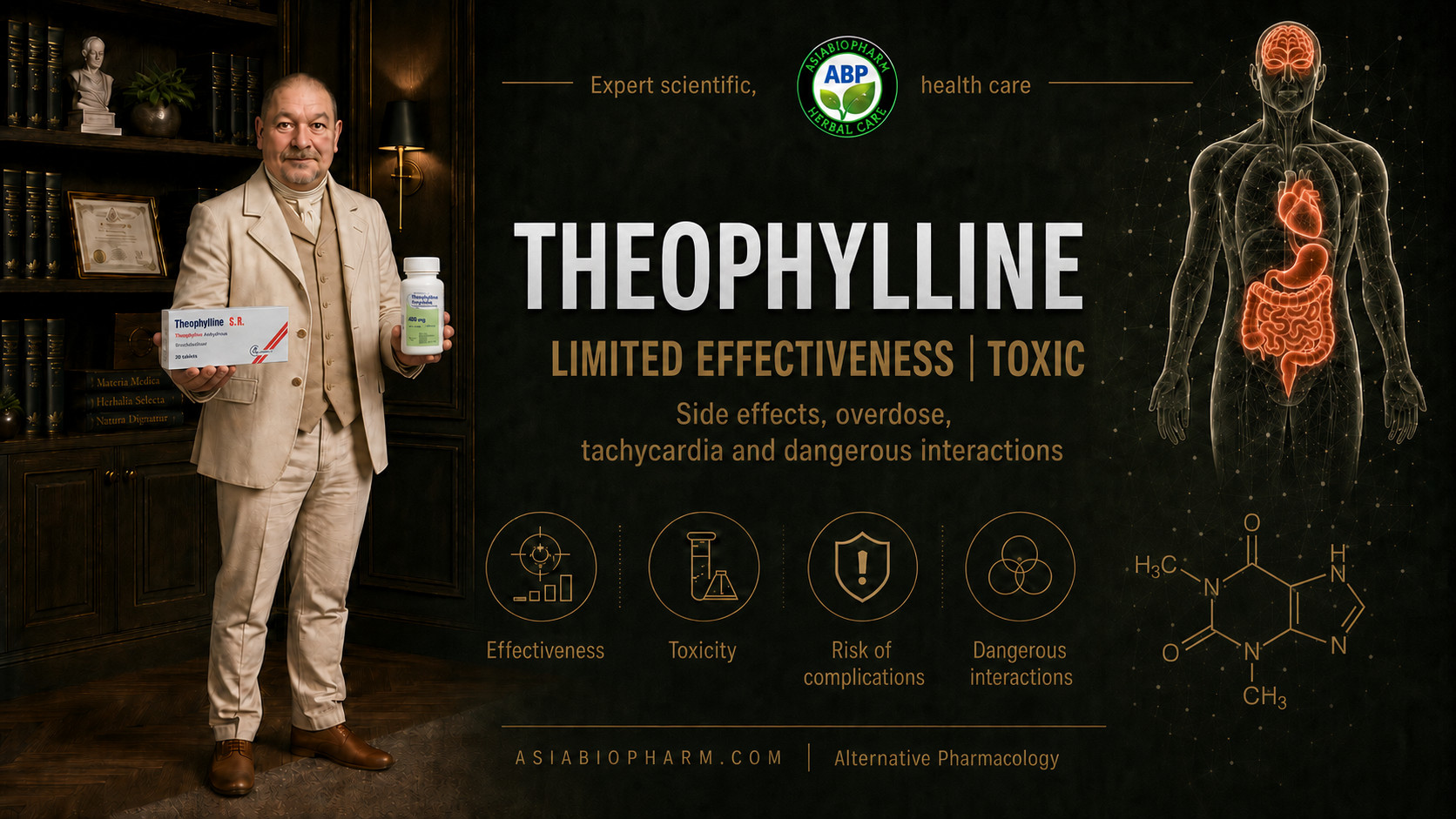
LIMITED EFFECTIVENESS | TOXIC
Names, dosage forms and hidden duplication
The international nonproprietary name is theophylline, Theophylline; the chemical name is 1,3-dimethylxanthine. Drug documentation may refer to Theophylline anhydrous and to extended-release, prolonged-release or sustained-release theophylline. The main dosage forms are tablets, capsules and oral solution; long-acting preparations are also available. Trade names in different countries include Theo-24, Uniphyl, Theochron, Elixophyllin, Slo-Phyllin and other regional brands. Aminophylline is a complex of theophylline with ethylenediamine and serves as a source of theophylline after administration; it therefore has to be included when calculating the total xanthine exposure. Duplication can occur when theophylline and aminophylline are used simultaneously, when several prolonged-release preparations are taken together, or when medicines for bronchial obstruction are used without the patient checking their composition. Caffeine, theobromine and other methylxanthines are not theophylline, but they can intensify its stimulant and toxic effects.
Why theophylline is considered harmless and where the real risk begins
Theophylline was used for decades in bronchial asthma and chronic obstructive pulmonary disease, so it is often perceived as a familiar medicine “for opening the bronchi.” The main problem is the narrow interval between an effective and a toxic concentration: a dose that was previously well tolerated can cause intoxication after fever, liver disease, decompensated heart failure, smoking cessation or the introduction of an interacting medicine. The first signs — nausea, insomnia, anxiety, tremor and palpitations — are nonspecific and can easily be mistaken for an infection, a panic reaction or worsening of the underlying disease. Taking another tablet while shortness of breath persists does not accelerate safe bronchodilation, but it can raise the concentration to a level at which arrhythmias and seizures occur. There is no universal dose that is equally effective and safe for every patient.
Side effects during the first hours and days of treatment
Common early reactions include nausea, vomiting, epigastric pain, diarrhea, headache, insomnia, irritability, anxiety, tremor, increased urination and sinus tachycardia. Even these manifestations should not automatically be regarded as acceptable “adaptation”: they may be early signs of an excessive drug concentration. Clinically significant complications include intractable vomiting with dehydration and hypokalemia, marked tachycardia, a fall in blood pressure, hyperglycemia, metabolic disturbances, and supraventricular or ventricular arrhythmias. Life-threatening reactions include epileptic seizures, severe ventricular rhythm disturbances, hemodynamic collapse and rhabdomyolysis. Seizures and arrhythmias can occur without a prolonged period of obvious warning symptoms, particularly with chronic accumulation of the drug.
Consequences of long-term and repeated use
At a stable therapeutic concentration, theophylline is not characterized by classic irreversible cumulative hepato- or nephrotoxicity, but long-term treatment creates a persistent risk of sudden accumulation when clearance changes. Recurrent nausea, reflux, insomnia, tremor, palpitations and anxiety may persist for months, impairing nutrition, sleep and cardiovascular exercise tolerance. Pharmacodynamic tolerance to some effects may develop, but it does not protect against severe intoxication. Theophylline usually does not cause drug dependence or a specific withdrawal syndrome. The main danger of stopping treatment is not withdrawal, but the return of bronchial obstruction in a patient whose condition was genuinely dependent on the drug. The absence of adverse reactions at the beginning of treatment does not guarantee continued safety: theophylline clearance can change sharply during infection, fever, aging, changes in smoking habits or the addition of another medicine.
Contraindications and high-risk groups
An absolute contraindication is hypersensitivity to theophylline or to components of the particular dosage form. The drug is especially dangerous in uncontrolled tachyarrhythmias and seizure disorders because it stimulates the myocardium and lowers the seizure threshold. In liver disease, severe heart failure, pulmonary edema, sepsis, prolonged high fever and older patients, clearance may decrease, leading to accumulation of ordinary doses. Newborns and young children are at increased risk because of age-related metabolic characteristics, as are patients with severe hypoxia. Reduced protein binding can increase the proportion of pharmacologically active free theophylline: toxicity in this situation is possible even when the total serum concentration formally remains within the usual therapeutic range.
Dangerous drug and food interactions
Combinations that reduce the metabolic clearance of theophylline are highly undesirable: ciprofloxacin and some other fluoroquinolones, erythromycin and clarithromycin, cimetidine, fluvoxamine, zileuton and a number of other metabolic inhibitors. They can raise the drug concentration to toxic levels and require dose reassessment and laboratory monitoring. Ketamine combined with theophylline or aminophylline may further lower the seizure threshold. Rifampicin, carbamazepine, phenytoin and tobacco smoke accelerate the elimination of theophylline and reduce its effect; after the inducing drug is discontinued or smoking is stopped, clearance decreases, so the previous dose may become toxic. Coffee, energy drinks, strong tea, guarana, mate, cola and other sources of methylxanthines intensify tachycardia, tremor, agitation and insomnia. Alcohol can unpredictably alter tolerability, impair dose control and mask early symptoms of intoxication. Prolonged-release tablets must not be chewed or crushed: disruption of the release system can lead to rapid delivery of the dose and toxicity.
Patient errors that turn treatment into intoxication
A typical mistake is taking an additional tablet for shortness of breath without considering that oral theophylline is not an optimal medicine for immediate relief of an acute attack. Equally dangerous are shortening the dosing intervals, using immediate-release and prolonged-release forms at the same time, combining theophylline with aminophylline, chewing prolonged-release tablets and independently returning to a previously used high dose after a break. Patients often fail to tell their doctor about smoking or smoking cessation, antibiotics, antidepressants, anticonvulsants, caffeine and herbal stimulants. It is a mistake to assume that a dose tolerated in the past will remain safe during influenza, high fever, worsening heart failure or impaired liver function. Continuing the drug in the presence of repeated vomiting, tremor and palpitations is especially dangerous: these symptoms may precede seizures and life-threatening arrhythmias.
Theophylline overdose and poisoning
There is no single acute dose of theophylline after which poisoning inevitably develops in every patient: toxicity is determined by the release formulation, absorption rate, age, body weight, smoking, liver and cardiac function, body temperature, concomitant medicines and previous long-term use. The risk of adverse effects rises noticeably at serum concentrations above 20 mcg/mL; at higher levels, the probability of severe arrhythmias and seizures increases. However, with chronic accumulation, severe toxicity may occur at a lower concentration than after a single acute overdose, and when protein binding is reduced, it may occur even at a total concentration of 10–20 mcg/mL. During the first hours, nausea, repeated vomiting, abdominal pain, tremor, agitation, insomnia and tachycardia usually appear. Hypokalemia, hyperglycemia, metabolic acidosis, hypotension, supraventricular and ventricular arrhythmias, seizures, hyperthermia and rhabdomyolysis may subsequently develop. With a prolonged-release formulation, the peak of toxicity may be delayed, so the temporary absence of severe symptoms does not exclude continuing absorption. There is no specific antidote. Treatment includes immediate discontinuation of the drug, serial measurement of theophylline concentrations, continuous ECG and electrolyte monitoring, correction of metabolic disturbances, anticonvulsant and antiarrhythmic therapy; multiple-dose activated charcoal is used in appropriate cases, and extracorporeal removal of the drug may be required in severe poisoning. It is unsafe to wait for seizures or pronounced arrhythmia: once they occur, the prognosis deteriorates sharply.
A safe integrative alternative to theophylline
For stable bronchial obstruction, the most pharmacologically justified approach is a combination of standardized plant extracts with different targets. The basis may be Coleus forskohlii: forskolin activates adenylate cyclase, increases the concentration of cAMP and directly relaxes bronchial smooth muscle, thereby partly reproducing the final bronchodilator mechanism of theophylline without its pronounced antagonism of adenosine receptors and its narrow therapeutic range. A suitable second component is Solanum trilobatum, for which clinical data have shown improvements in pulmonary function parameters, cough, shortness of breath and sputum expectoration in mild to moderate bronchial asthma. Nigella sativa complements the formula with moderate bronchorelaxant, antihistamine and anti-eosinophilic activity, while Tylophora indica is aimed primarily at allergic inflammation and bronchial hyperreactivity. Additional experimentally supported components may include Schefflera leucantha Capsules, Achyranthes aspera and Ferula assa-foetida, which have demonstrated relaxation of tracheal musculature, although the clinical evidence base remains limited. For bronchospasm with thick, difficult-to-expectorate sputum, a practical ready-made formulation is the “Asthma with Tenacious Sputum” bolus, while for a combination of bronchospasm, dry cough and mucosal irritation, the “Dry Cough and Dryness” bolus is available. Such an integrative alternative is primarily suitable for mild or stable disease, preventive control of bronchial hyperreactivity and reducing the need for a systemic bronchodilator. It is not intended for self-treatment of a severe asthma attack, progressive respiratory failure or an acute exacerbation of COPD.
The real effectiveness of theophylline and prescribing errors
Theophylline does dilate the bronchi and can moderately improve ventilatory parameters, nighttime symptoms and exercise tolerance in some patients with chronic bronchial obstruction. However, it does not eliminate the underlying inflammation in asthma, is not the preferred medicine for rapid relief of an acute attack and has no unique effect that cannot be achieved with more predictable inhaled medicines. The current GINA strategy classifies oral theophylline as not recommended because of its weak efficacy in asthma and frequent adverse reactions; theophylline and aminophylline are also not recommended during asthma exacerbations. In COPD, a moderate bronchodilator effect is possible, but modern inhaled β₂-agonists and muscarinic receptor antagonists are more effective and have a more manageable treatment profile; methylxanthines are not recommended during acute exacerbations because of significant toxicity. The most common prescribing errors are use without spirometric confirmation of bronchial obstruction, substitution for maintenance anti-inflammatory therapy, failure to measure blood concentrations, and failure to account for smoking, fever, liver function and interacting medicines. Prescribing theophylline “just in case” means choosing a drug that requires toxicological monitoring for an effect that modern inhaled therapy usually provides more rapidly and predictably.
Safety monitoring during treatment
Before long-term treatment is started, heart rate, blood pressure, the presence of arrhythmias and seizure disorders, liver disease, heart failure, smoking status and all concomitant medicines should be assessed. Theophylline concentration is measured after steady state has been reached, usually approximately three days after treatment is started or the dose is changed, and also when nausea, repeated vomiting, tremor, insomnia, agitation or tachycardia develops. Measurement should be repeated after an interacting medicine is started or discontinued, after smoking cessation, during prolonged fever and when liver or cardiac function deteriorates. Bronchodilation is observed at approximately 5–20 mcg/mL, but above 20 mcg/mL the frequency and severity of toxic reactions increase markedly. At 15–19.9 mcg/mL, dose reduction should already be considered; at 20–24.9 mcg/mL, a reduction is required; at 25–30 mcg/mL, the next dose should be omitted and substantial dose correction is necessary; a level above 30 mcg/mL requires management as an overdose. When intoxication is suspected, ECG, potassium, magnesium, glucose, acid-base status, creatine kinase and serial theophylline concentrations are monitored. Intractable vomiting, marked tachycardia, irregular heartbeat, falling blood pressure, confusion, seizures, hyperthermia and worsening shortness of breath require immediate medical attention. Waiting is particularly dangerous with prolonged-release formulations: the concentration may continue to rise after the first symptoms have already appeared.
Correct discontinuation of theophylline
Theophylline does not cause classic drug dependence or a specific withdrawal syndrome, so pharmacologically mandatory gradual dose reduction is usually unnecessary. However, abrupt discontinuation can reveal or worsen bronchial obstruction that the drug was partly controlling. Shortness of breath, wheezing, nighttime cough and reduced exercise tolerance may return as the drug concentration falls during the first day or over several days. Therefore, in a stable patient, theophylline is discontinued after disease control has been assessed and an adequate replacement regimen has been established at the same time. It should not simply be stopped in a patient with marked bronchial obstruction without ensuring access to an inhaled bronchodilator and, in asthma, anti-inflammatory therapy. Independent replacement of a prolonged-release formulation with herbal preparations during an exacerbation is particularly dangerous: plant extracts act more slowly and do not guarantee emergency restoration of bronchial patency. Modern asthma therapy should retain an inhaled glucocorticosteroid component because a bronchodilator alone does not control airway inflammation.
A rational approach to treatment
Theophylline may remain justified in selected clinical situations: confirmed chronic bronchial obstruction, insufficient availability of suitable inhaled medicines, intolerance to them, or a documented individual benefit when regular monitoring of drug concentrations is possible. It should not be used as a universal tablet for cough, shortness of breath or any form of wheezing. In mild and stable disease, systemic toxicological burden may be reduced by using a standardized combination of Coleus forskohlii, Solanum trilobatum, Nigella sativa and Tylophora indica, supplemented when necessary with herbal formulations for dry cough or thick sputum. In severe asthma, marked COPD exacerbation, hypoxemia and progressive respiratory failure, agents with rapid, dose-dependent and predictable effects are required; an herbal alternative in such situations may be used only as an adjunct after the patient's condition has stabilized. The purpose of an integrative approach is not the mechanical rejection of a synthetic drug, but the elimination of unjustified theophylline use, reduction of the risk of arrhythmias, seizures and drug interactions, and selection of less toxic therapy where the clinical condition permits it.
If you have questions about the subject of this article, you can ask a clinical pharmacologist in the comments or schedule an appointment via this link: https://asiabiopharm.com/konsultaciii/
0 comments