
Prednisone — Dangers, Side Effects, and Consequences of Long-Term Use
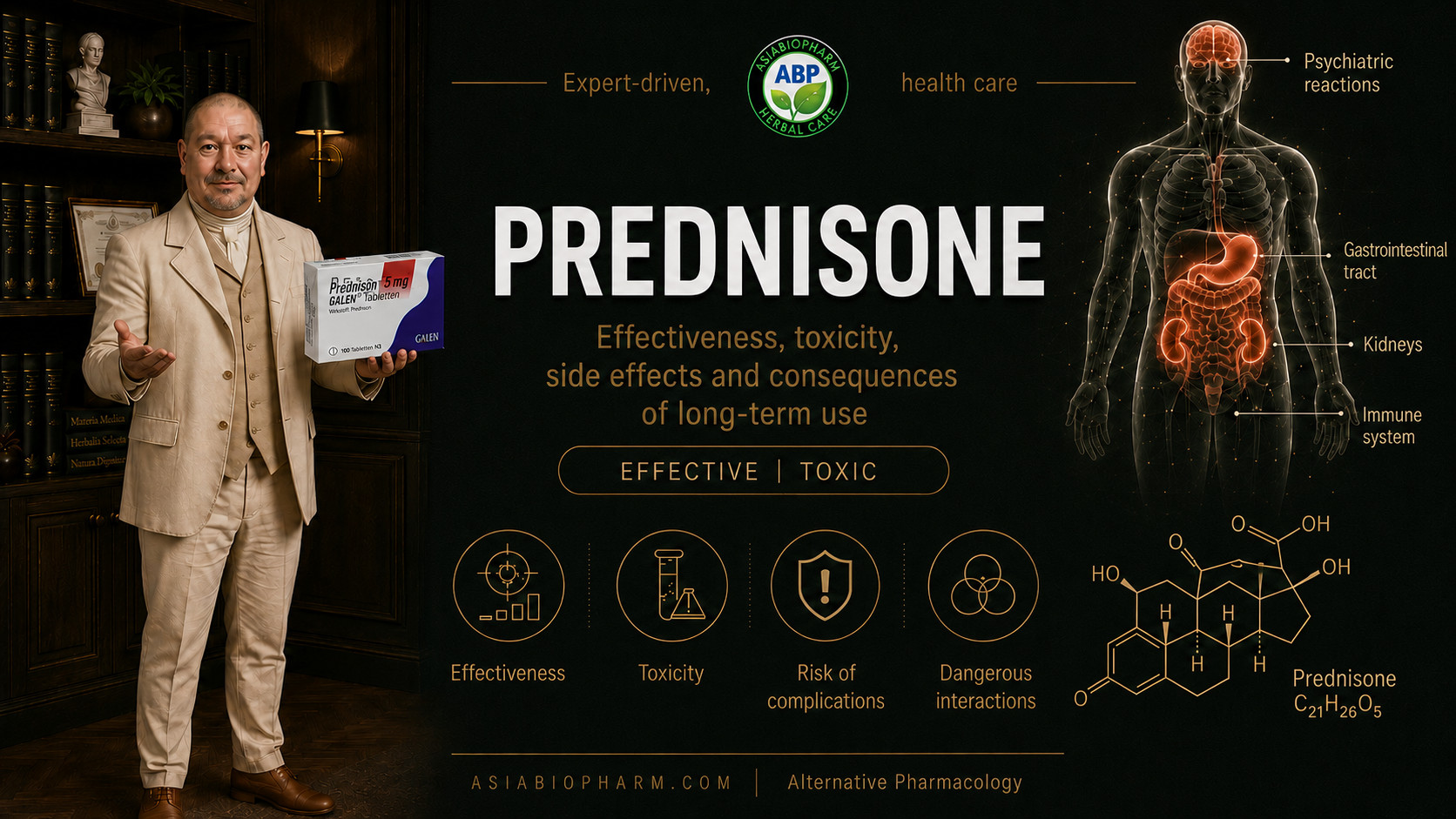
EFFECTIVE | TOXIC
Names under which prednisone is found
The international nonproprietary name is prednisone, and the name used in Russian is prednisone. Medical documents and international prescribing information may use the variants Prednisone, Prednisonum, and Prednison. Prednisone is a prodrug: in the liver, it is converted into the active metabolite prednisolone; however, these substances cannot be considered fully interchangeable without dose conversion and consideration of liver function. The main dosage forms are immediate-release and delayed-release tablets and, less commonly, oral solutions. The best-known brand names in various countries include Rayos, Deltasone, Sterapred, Prednisone Intensol, Orasone, Meticorten, and Liquid Pred. Prednisone is used in combination medicinal products much less frequently than prednisolone; therefore, when checking for hidden duplication, it is necessary to look not only at the brand name but also at the “active ingredient” line. It is especially important not to take prednisone simultaneously with prednisolone, methylprednisolone, dexamethasone, or other systemic glucocorticoids unless specifically prescribed by a physician: this is not literal duplication of the same substance, but it results in cumulative glucocorticoid exposure and toxicity.
Why prednisone is considered harmless and where the real risk begins
Prednisone rapidly reduces inflammation, pain, swelling, itching, and allergic manifestations, so improvement is often perceived as proof that the medication “worked” and can be used again without medical supervision. In reality, it can simultaneously mask an infection, increase blood glucose and blood pressure, cause sodium and fluid retention, reduce potassium levels, and alter mental state. A patient may not associate insomnia, anxiety, weakness, swelling, thirst, frequent urination, or worsening vision with the course of treatment they have started. Repeated courses increase cumulative glucocorticoid exposure, while simultaneous use of other hormonal medications creates a risk of hidden pharmacological duplication. Alcohol, nonsteroidal anti-inflammatory drugs, diuretics, antidiabetic medications, and drugs that affect CYP3A4 can substantially alter the safety profile of treatment.
Side effects during the first hours and days of treatment
Common early reactions include increased appetite, insomnia, irritability, anxiety, mood changes, dyspepsia, heartburn, fluid retention, edema, increased blood pressure, and elevated blood glucose. Even a short course can cause marked hyperglycemia in a patient with diabetes or prediabetes, decompensation of heart failure due to sodium and water retention, and hypokalemia when combined with diuretics. Clinically significant complications include exacerbation of peptic ulcer disease, gastrointestinal bleeding — especially when NSAIDs are taken simultaneously, acute psychiatric reactions including mania, depression, aggression, confusion, or psychosis, increased intraocular pressure, and activation of a latent infection. Life-threatening reactions are less common but include anaphylactoid reactions, severe infection or sepsis due to suppression of the immune response, severe electrolyte disturbances, and decompensation of cardiovascular disease. The risk increases with the dose, but in an individual patient a severe reaction may occur even at the beginning of treatment.
Consequences of long-term or repeated use
When used for weeks or months, prednisone suppresses the hypothalamic-pituitary-adrenal axis and can cause drug-induced Cushing syndrome: central weight gain, a moon-shaped face, thinning of the skin, striae, easy bruising, muscle weakness, and impaired wound healing. At the same time, the risk of diabetes mellitus, arterial hypertension, dyslipidemia, infections, cataracts, and glaucoma increases. Bone loss begins within the first months of therapy; prolonged treatment can lead to osteoporosis, vertebral compression fractures, pathological fractures, and aseptic necrosis of the femoral or humeral head. Steroid myopathy with loss of muscle mass, thinning of the skin, tendon ruptures, growth retardation in children, menstrual irregularities, and reduced reproductive function are also possible. Some metabolic changes are reversible after discontinuation, but fractures, osteonecrosis, cataracts, some ophthalmic injuries, and substantial loss of muscle mass may have long-lasting or irreversible consequences. The absence of noticeable reactions at the beginning of a course does not rule out adrenal suppression or gradual bone damage.
Contraindications and high-risk groups
Formal contraindications include systemic fungal infections and confirmed hypersensitivity to the components of the medication. In active bacterial, viral, parasitic, or latent infection, prednisone can suppress symptoms while simultaneously accelerating the spread of the pathogen; tuberculosis, chickenpox, measles, strongyloidiasis, and herpetic eye disease are particularly dangerous. In diabetes mellitus, the medication can sharply worsen glycemic control. In patients with peptic ulcer disease, diverticulitis, or a recent intestinal anastomosis, the risk of bleeding and perforation increases. In heart failure, severe hypertension, kidney disease, and a tendency toward edema, sodium and fluid retention can lead to decompensation. In osteoporosis, a history of low-energy fractures, or osteonecrosis, the likelihood of further bone destruction increases. Glaucoma and cataracts may progress. Patients with a history of psychosis, bipolar disorder, severe depression, or steroid-induced psychiatric reactions are at increased risk of recurrence. Live vaccines are contraindicated at immunosuppressive doses because of the risk of vaccine-associated infection and an inadequate immune response.
Dangerous drug interactions
Administration of live vaccines is contraindicated or highly undesirable during treatment with immunosuppressive doses of prednisone. Combination with NSAIDs, including ibuprofen, diclofenac, naproxen, and acetylsalicylic acid, is highly undesirable: damage to the gastric mucosa is additive, increasing the risk of ulcers and bleeding. Diuretics, amphotericin B, and other potassium-lowering agents require laboratory monitoring because hypokalemia increases the risk of muscle weakness and cardiac glycoside toxicity. CYP3A4 inhibitors — clarithromycin, certain azole antifungal agents, ritonavir, and cobicistat — can increase the systemic effects of the glucocorticoid; CYP3A4 inducers, including rifampicin, carbamazepine, phenytoin, and phenobarbital, can reduce its effectiveness. Insulin and oral glucose-lowering medications often require dose adjustment because of steroid-induced hyperglycemia. During anticoagulant therapy, coagulation parameters must be monitored because the effect can change unpredictably. Combination with fluoroquinolones increases the risk of tendinopathy and tendon rupture. Alcohol is not an absolute pharmacokinetic contraindication, but it increases gastrointestinal irritation, worsens glucose control, and may aggravate psychiatric reactions. St. John’s wort can induce CYP3A4 and weaken the effect of the medication; licorice and agents with pronounced mineralocorticoid effects can worsen hypokalemia, edema, and elevated blood pressure.
Patient errors when using prednisone
The most dangerous mistake is to repeat a course independently after previously experiencing rapid relief without determining the cause of the symptoms. Prednisone may temporarily suppress inflammation but cannot eliminate an infection, mechanical injury, allergen, autoimmune process, or another underlying disease. Increasing the dose when the effect is insufficient raises the risk of hyperglycemia, psychiatric reactions, fluid retention, and immunosuppression but does not guarantee that the underlying problem will be resolved. Shortening the intervals between doses, taking prednisone and prednisolone simultaneously, or switching between different glucocorticoids without dose conversion creates a hidden overdose. Extending a “five-day course” for several additional weeks can lead to adrenal suppression, after which abrupt discontinuation becomes dangerous. Ignoring fever, abdominal pain, black stools, severe weakness, thirst, visual disturbances, mental changes, or signs of infection is also a mistake. The absence of an immediate complication after the first tablets does not confirm the safety of repeated courses.
Prednisone overdose and poisoning
No single acute toxic dose of prednisone has been established that applies to all patients. An acute accidental overdose is generally less dangerous than chronic excessive dosing, but large amounts can cause severe hyperglycemia, agitation, insomnia, psychosis, elevated blood pressure, fluid retention, hypokalemia, nausea, and gastrointestinal bleeding. During the first hours, symptoms may be nonspecific — anxiety, headache, thirst, weakness, and palpitations; over the following day, edema may increase, diabetes or heart failure may decompensate, and psychiatric disturbances and infectious complications may develop. Chronic overdose develops gradually and may manifest as Cushing syndrome, muscle atrophy, osteoporosis, hypertension, diabetes, suppression of immunity, and adrenal suppression. A smaller dose may be dangerous in a child, an older patient, a person with diabetes, heart failure, severe hypertension, peptic ulcer disease, or someone simultaneously taking CYP3A4 inhibitors. There is no specific antidote; treatment is supportive and determined by clinical manifestations, electrolyte levels, glucose, blood pressure, and concomitant medications. Vomiting should not be induced without medical supervision, and long-term prednisone must not be stopped abruptly: after chronic excessive dosing, sudden discontinuation may precipitate acute adrenal insufficiency.
Safe integrative alternative to prednisone
For localized inflammatory diseases of the skin and mucous membranes in which systemic glucocorticoid therapy is not required, ABP-153 may be considered the main integrative alternative. Its purpose is to reduce local inflammation, swelling, irritation, and tissue damage without systemic suppression of the hypothalamic-pituitary-adrenal axis, steroid-induced hyperglycemia, osteoporosis, or generalized immunosuppression. In mild to moderate stable inflammatory conditions, oral preparations of Boswellia serrata and Curcuma longa may additionally be used. Boswellic acids primarily affect the 5-lipoxygenase pathway and leukotriene formation, while curcuminoids modulate NF-κB, COX-2, and the production of pro-inflammatory cytokines. This combination acts more slowly than prednisone and is not suitable for managing anaphylaxis, severe exacerbations of bronchial asthma, systemic vasculitis, autoimmune crises, cerebral edema, or other life-threatening conditions; however, in chronic stable inflammation it may reduce the need for repeated hormonal courses. Clinical evidence for boswellia and curcuminoids is most convincing in joint diseases; automatically extrapolating their effectiveness to all conditions for which prednisone is prescribed is pharmacologically incorrect.
For limited dry, itchy, noninfected skin lesions, an ointment made from dry extracts of Nigella sativa and Scutellaria baicalensis may be used. A working formulation per 100 g is: dry Nigella sativa extract — 5 g, dry Scutellaria baicalensis extract — 5 g, coconut oil — 70 g, beeswax — 15 g, lanolin — 5 g. The coconut oil and wax are melted in a water bath at 55–60 °C, lanolin is added, followed by the extracts previously triturated with a small amount of the warm base. After uniform mixing, the mass is cooled to approximately 40 °C and placed into sterile dark-glass jars. The final concentration of extracts is 10% — 5% of each. The ointment is applied in a thin layer 1–2 times daily to a limited area of noninfected skin after a preliminary skin test. It must not be applied to purulent lesions, open wounds, deep erosions, eyelids, or mucous membranes.
When inflammation is accompanied by dryness, cracks, and delayed restoration of the epidermal barrier, a formulation containing Nigella sativa, Scutellaria baicalensis, and Centella asiatica is appropriate. To maintain a final extract concentration of 10%, it is reasonable to use, per 100 g of ointment, Nigella sativa — 4 g, Scutellaria baicalensis — 3 g, Centella asiatica — 3 g, coconut oil — 70 g, beeswax — 15 g, and lanolin — 5 g. The original ratio of 4 + 4 + 3 g contains 11 g of extracts and actually produces an 11% ointment. Centella asiatica enhances the reparative orientation of the formulation but does not make the topical product equivalent to systemic prednisone.
After prolonged glucocorticoid use, supportive therapy may include Rehmannia glutinosa, Schisandra chinensis, Astragalus propinquus, and Silybum marianum. These plants may be used for metabolic, adaptogenic, immunomodulatory, and hepatoprotective support, but they are not an antidote to prednisone and do not instantly restore suppressed adrenal function. In steroid-induced adrenal insufficiency, the main measures remain controlled dose reduction, assessment of clinical symptoms, and, when indicated, measurement of morning cortisol or a stimulation test. A herbal complex must not be used in place of necessary glucocorticoid replacement therapy in confirmed adrenal insufficiency.
Real effectiveness of prednisone and medical errors
Prednisone is genuinely effective in conditions in which severe inflammation or an abnormal immune response must be suppressed rapidly: severe allergic reactions, exacerbations of bronchial asthma, certain autoimmune and rheumatic diseases, inflammatory bowel diseases, hematological disorders, and selected nephrological conditions. It can reduce edema, pain, bronchial obstruction, inflammatory infiltration, and immune-mediated tissue damage within several hours or days. However, prednisone usually does not eliminate the underlying cause of the disease: it suppresses the inflammatory response and can create an impression of recovery while an infection, allergen, autoimmune process, or structural damage continues to act.
Common medical errors include prescribing systemic prednisone for localized inflammation that can be treated topically, repeating courses without clarifying the diagnosis, and failing to establish the minimum effective dose and a predetermined duration of treatment. Equally dangerous are failure to consider diabetes mellitus, arterial hypertension, osteoporosis, a history of peptic ulcer disease, infections, and drug interactions, as well as failure to monitor glucose, blood pressure, electrolytes, and bone health. Prescribing prednisone “just in case” is a convenient way to rapidly suppress symptoms while simultaneously postponing diagnosis of the disease that caused them.
Safety monitoring during treatment
Before a prolonged course, blood pressure, body weight, fasting glucose or HbA1c, potassium, concomitant infections, ophthalmological history, and risk factors for osteoporosis should be assessed. During treatment, blood pressure, edema, body weight, appetite, sleep, mood, muscle strength, and signs of infection are monitored. In patients with diabetes or prediabetes, glucose should be monitored more frequently from the first days of treatment. When prednisone is combined with diuretics, cardiac glycosides, or other agents that affect electrolytes, potassium monitoring is required. During long-term therapy, fracture risk and bone mineral density are assessed; if a patient reports pain in the hip or shoulder joint, osteonecrosis should be ruled out.
Immediate assessment is required for high fever or infection without the usual inflammatory response, black stools, vomiting blood, severe abdominal pain, sudden deterioration of vision, severe shortness of breath, generalized edema, confusion, psychosis, sudden severe muscle weakness, marked hyperglycemia, and signs of anaphylaxis. After dose reduction, increasing weakness, a fall in blood pressure, nausea, vomiting, abdominal pain, hypoglycemia, dehydration, and altered consciousness are dangerous — they may be manifestations of acute adrenal insufficiency. Delaying medical attention in such a situation increases the risk of circulatory collapse and adrenal crisis.
Correct discontinuation of prednisone
A course lasting less than 3–4 weeks can usually be stopped without gradual dose reduction because the likelihood of clinically significant suppression of the hypothalamic-pituitary-adrenal axis over such a period is low. Exceptions are possible with frequent repeated courses, recent prolonged steroid therapy, high doses, evening administration, or clinical signs of adrenal suppression. After use for longer than 3–4 weeks, prednisone is usually tapered gradually, especially at doses above the physiological equivalent — approximately 4–6 mg of prednisone per day. As the physiological dose is approached, dose reduction is performed more slowly because it is at this stage that recovery of endogenous cortisol secretion becomes clinically significant.
There is no universal tapering regimen. It depends on the initial dose, duration of treatment, activity of the underlying disease, and signs of adrenal insufficiency. Abrupt discontinuation after a prolonged course can cause weakness, myalgia, arthralgia, nausea, decreased appetite, hypotension, hypoglycemia, fever, and exacerbation of the underlying disease. These conditions can resemble one another, so independently returning to the previous dose or accelerating the taper makes assessment more difficult. During a severe infection, surgery, trauma, or another physiological stress, a patient with suppressed adrenal function may temporarily require increased glucocorticoid support.
A rational approach to prednisone use
Prednisone is justified when rapid, powerful, and predictable suppression of dangerous inflammation or immune-mediated injury is required. During a severe asthma exacerbation, a systemic autoimmune process, a pronounced allergic reaction, and other acute conditions, an attempt to replace it solely with herbal remedies can result in lost time and progression of the disease. However, in localized skin inflammation, stable chronic joint disease, and other conditions that do not threaten vital organs, a systemic glucocorticoid should not automatically become the first choice.
In a mild or moderate stable condition, ABP-153, a topical ointment containing Nigella sativa and Scutellaria baicalensis, and an oral combination of Boswellia serrata and Curcuma longa may be used. During prolonged steroid therapy, herbal preparations may be used additionally to reduce the overall medication burden and support recovery, but not instead of safe tapering and monitoring of adrenal function. The aim of an integrative approach is not to abandon effective treatment, but to use prednisone only when its pharmacological potency is genuinely necessary and not to pay for temporary suppression of symptoms with diabetes, osteoporosis, infections, and hormonal dependence.
If you have questions about the subject of this article, you can ask a clinical pharmacologist in the comments or schedule an appointment using this link: https://asiabiopharm.com/konsultaciii/
0 comments