
Contact dermatitis of the ear canal — itching, redness and swelling after earphones, hearing aids or ear drops
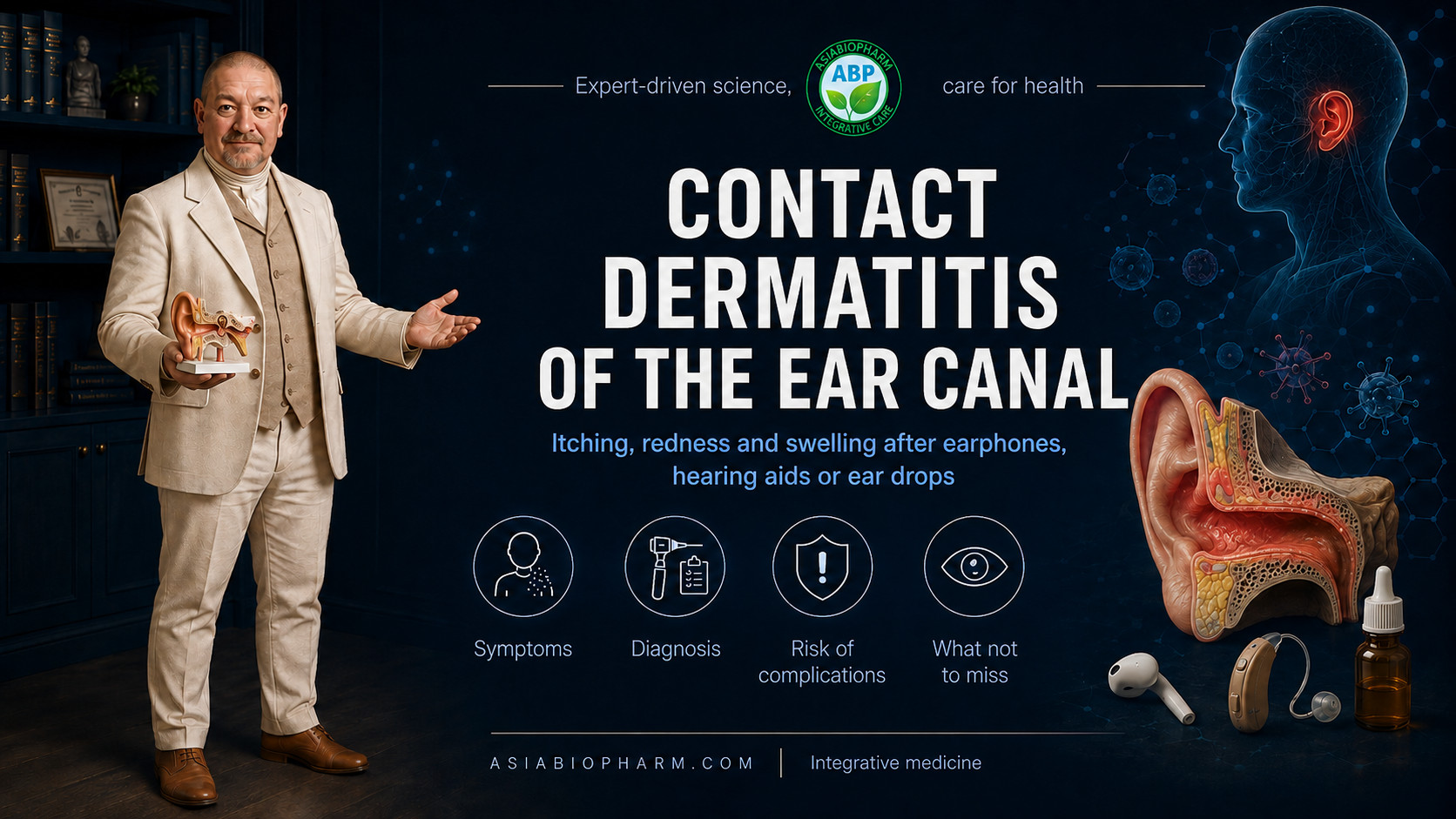
Contact dermatitis of the ear canal is an inflammatory reaction of the skin of the external auditory canal that occurs after direct contact with an irritant or allergen. The first symptoms are usually intense itching, redness, burning, a sensation of dryness or moisture inside the ear, and moderate swelling. Later, scaling, cracks, clear discharge, crusting, a feeling of blockage, and temporary hearing loss due to swelling or accumulation of epidermal debris may occur. Possible causes include silicone and acrylate components of in-ear earphones and earmolds, metals, dyes, rubber, device-cleaning products, cosmetics, shampoos, hair dyes, preservatives, fragrances, as well as antibiotics, anesthetics, and other ingredients of ear drops. The allergic form develops as a result of a delayed immune reaction after sensitization, whereas the irritant form results from friction, pressure, sweat, moisture, frequent cleaning, and damage to the protective skin barrier. The primary target is the epidermis of the external auditory canal; sometimes the inflammation spreads to the auricle, the postauricular fold, and the adjacent skin of the neck. The condition is not contagious. In children, inflammation can worsen more rapidly because of the narrow ear canal and scratching; in adults, it is often associated with earphones and cosmetic products; in older people, it is commonly related to hearing aids, dryness, and thinning of the skin. Once the cause is eliminated, a mild flare usually subsides within several days, but if exposure continues or the allergy is pronounced, symptoms may persist for weeks and become recurrent.
How to determine whether you have contact dermatitis of the ear canal
The most characteristic sign is the appearance of itching, redness, and swelling shortly after using new earphones, a hearing aid, earplugs, a cleaning product for these devices, or ear drops. The reaction may precisely follow the shape of an earmold or spread over the area where drops have flowed. The allergic form typically causes pronounced itching, bright erythema, swelling, oozing, and possible spread beyond the area of direct contact; the irritant form is more often accompanied by burning, dryness, painful cracks, and gradually increasing thickening and roughness of the skin. For an initial self-assessment, the onset of symptoms should be compared with the use of a specific device or medication, the accessible part of the auricle should be inspected in good lighting, and contact with the suspected trigger should be temporarily stopped. The ear must not be examined deeply with a cotton swab, camera, or any other object. The diagnosis is confirmed by otoscopy and examination by a dermatologist or otorhinolaryngologist. If reactions recur, patch testing is performed with materials from the device, cosmetic ingredients, and components of previously used medications. Bacterial otitis externa more often causes increasing pain, tenderness when the tragus is pressed, purulent discharge, and an unpleasant odor; fungal infection may be accompanied by severe itching and characteristic white, gray, or black debris; atopic and seborrheic dermatitis are usually present on other areas of the skin as well. Allergy to acrylates and other earmold materials has been confirmed by clinical observations and patch testing.
Red flags
Severe or rapidly worsening pain, purulent or bloody discharge, an unpleasant odor, fever, sudden deterioration of hearing, dizziness, nausea, balance disturbance, swelling of the entire auricle, or swelling of the tissues around the ear require urgent examination by an otorhinolaryngologist because they may indicate a secondary infection, extensive otitis externa, damage to the tympanic membrane, or involvement of deeper structures. Blisters, one-sided weakness of the facial muscles, facial asymmetry, or severe pain with a rash may indicate possible involvement of the facial nerve and require urgent medical assessment. Shortness of breath, swelling of the lips, tongue, or face, generalized urticaria, weakness, and a drop in blood pressure after the use of ear drops or contact with a new material may be manifestations of a systemic allergic reaction — emergency medical assistance is required. Patients with diabetes mellitus, immunodeficiency, cancer, a history of transplantation, or severe wasting should not delay seeking medical attention if they develop severe nighttime pain or if inflammation spreads beyond the ear canal. A child should be examined by a doctor if there is marked swelling, crying when the ear is touched, discharge, fever, or a change in behavior. Pregnant women, older people, and patients who have previously undergone ear surgery should discuss any ear medications with a doctor.
Initial self-care methods for contact dermatitis of the ear canal
The use of suspected earphones, earplugs, earmolds, hearing aids, and ear drops should be stopped immediately, except for medications whose discontinuation must first be agreed with the treating physician. If a hearing aid is continuously required, a temporary alternative method of hearing support and replacement of the earmold material should be discussed with an audiologist as soon as possible. The ear should be kept dry; swimming should be avoided; shower water should not be directed into the ear canal; and cotton swabs, hairpins, cameras, hydrogen peroxide, alcohol, vinegar, essential oils, concentrated herbal solutions, and homemade ear drops should not be used. If water accidentally enters the ear, the head should be tilted to allow the liquid to drain out freely, and only the outer part of the ear should be gently blotted with a clean tissue. A hair dryer, warming compress, and hot air must not be used because they increase dryness, irritation, and the risk of burns.
A clean, cool, dry cloth may be applied to the outer part of the auricle, but not deeply into the ear canal, for five to ten minutes to reduce itching and swelling. If there is oozing, discharge, suspected tympanic membrane damage, or a history of ear surgery, no liquids or topical products should be introduced into the canal before examination. A special diet is usually not required. Normal balanced nutrition and adequate intake of protein and fluids should be maintained unless there are restrictions related to heart or kidney disease. Alcohol, very spicy foods, and hot drinks are best temporarily limited if they aggravate itching and flushing of the skin. Sleep and physical activity may be maintained at the usual level, but overheating, intense sweating, and prolonged wearing of headwear that covers the ear should be avoided. If symptoms do not improve within two to three days after removal of the suspected irritant, persist for more than a week, or recur every time the device is used, examination by an otorhinolaryngologist or dermatologist is required. Keeping water out of the ear, avoiding cotton swabs, and discontinuing the hearing aid until the inflammation subsides are basic measures in the management of ear canal dermatitis.
Stages and possible progression of contact dermatitis of the ear canal
The condition does not have obligatory latent, prodromal, or sequential clinical stages. An allergic reaction usually develops after a period of sensitization and repeated contact with the causative substance; the irritant form may occur after the first intense exposure or develop gradually with repeated friction, moisture, and cleaning. In the acute phase, itching, redness, swelling, small blisters, and oozing predominate. With a prolonged process, dryness, scaling, cracking, and thickening of the skin become more pronounced. Persistent scratching damages the epidermal barrier and facilitates secondary bacterial or fungal infection. Swelling, crusts, and discharge may mechanically obstruct the ear canal and temporarily reduce hearing. Recurrence is promoted by continued exposure to the allergen, inability to stop using a hearing aid, reuse of the same earmold after treatment, repeated use of sensitizing ear drops, atopic dermatitis, psoriasis, seborrheic dermatitis, excessive moisture, sweating, and traumatic cleaning of the ear. If the cause is not eliminated, the inflammation may develop into chronic otitis externa with persistent itching, thickening of the skin, narrowing of the canal, and recurrent infectious exacerbations.
Integrative methods for treating contact dermatitis of the ear canal
The main preparation for integrative support in contact dermatitis of the ear canal is the ABP-153 oil infusion. It is given priority as the basic DMSO-free version, intended primarily for superficial inflammatory processes of the skin, mucous membranes, and cavities.
The clinical objectives of ABP-153 use are to reduce local inflammation, itching, and swelling, support epithelialization, restore the skin barrier, and reduce the risk of secondary microbial complications. Its composition includes camphor, Andrographis paniculata, Curcuma longa, Glycyrrhiza glabra, Zingiber cassumunar, Houttuynia cordata, menthol, borneol, clove, eucalyptus, and additional botanical components.
ABP-153 is suitable for a superficial dry or moderately inflamed process when the tympanic membrane is intact. The penetrating ABP-153D version is not required for contact dermatitis of the ear canal because deep transdermal delivery is not the main therapeutic objective, and the use of DMSO would increase requirements for surface cleanliness and the condition of the skin barrier.
ABP-153 must not be introduced into the ear canal before otoscopy if there is pathological discharge, bleeding, severe pain, ear trauma, pronounced oozing, confirmed or suspected perforation of the tympanic membrane, a ventilation tube, or a history of middle-ear surgery. In allergic contact dermatitis, an individual reaction to any component of the formula must be ruled out.
Camphor, menthol, borneol, clove, eucalyptus, and other active components may cause burning, hyperemia, increased itching, or swelling in a sensitive patient. If symptoms worsen, use should be discontinued. The first application should not coincide with continued exposure to the causative earphones, earmold, hearing aid, or ear drops because topical therapy will remain ineffective if the allergen is not eliminated.
Jindu ear drops are not a primary treatment for noninfected contact dermatitis. Their antiseptic and antifungal effects may be considered only in cases of confirmed or reasonably suspected secondary bacterial or fungal complications.
Jindu is contraindicated in perforation of the tympanic membrane, the presence of a drainage tube, pronounced oozing dermatitis, allergy to chlorhexidine, camphor, costus, or other components, and in children under six years of age. Preventive use without otoscopy and diagnosis is not appropriate because chlorhexidine and botanical components may intensify irritation of damaged skin and contribute to persistent contact sensitization.
Nigella sativa in the form of a standardized powdered extract for oral use may be considered as an additional systemic component in pronounced allergic and inflammatory reactions, particularly when ear dermatitis is combined with atopic dermatitis, allergic rhinitis, urticaria, or bronchial hyperreactivity.
Thymoquinone and other components of Nigella sativa provide anti-inflammatory, immunomodulatory, and antihistamine-related effects but do not eliminate the causative contact allergen. Possible adverse effects include dyspepsia, diarrhea, headache, reduced blood pressure and blood glucose levels, and allergic reactions.
Nigella sativa requires caution during pregnancy, in individuals prone to hypotension or hypoglycemia, in coagulation disorders, and during concomitant use of glucose-lowering or antihypertensive medications, anticoagulants, and antiplatelet agents.
Curcuma longa in the form of a standardized powdered extract for oral use may be used as an additional anti-inflammatory component in widespread, pronounced, or recurrent inflammation. For a small localized lesion, its clinical priority is lower than that of eliminating the allergen and selecting appropriate topical therapy.
Turmeric does not act directly on the causative material and should not be considered a substitute for topical treatment. Possible adverse effects include heartburn, nausea, abdominal pain, and loose stools. It is contraindicated in biliary obstruction, acute pancreatitis, and exacerbation of gallstone disease. Caution is required in ulcerative lesions of the gastrointestinal tract, a tendency to bleeding, and the use of anticoagulants or antiplatelet agents.
Scutellaria baicalensis in the form of a standardized powdered extract for oral use may be considered when inflammatory and immune-reactive components are pronounced, especially in recurrent disease and when dermatitis is combined with other allergic disorders.
Baicalin, baicalein, and wogonin participate in the regulation of pro-inflammatory signaling pathways and the release of mediators of allergic inflammation. Possible adverse effects include nausea, drowsiness, psychomotor slowing, dizziness, muscle weakness, and reduced blood pressure.
Use of Scutellaria requires assessment of liver function. It should not be used in decompensated hepatic failure or in cases of individual intolerance. The possibility of enhanced effects of sedatives, hypnotics, anxiolytics, antihypertensive and glucose-lowering medications, anticoagulants, and antiplatelet agents must be taken into account.
Coptis chinensis in the form of a standardized powdered extract for oral use is not a first-line preparation for isolated noninfectious contact dermatitis. It should be considered only when a secondary bacterial or fungal complication has been confirmed or when there are other clinical indications for berberine-containing therapy.
Possible adverse effects include nausea, a bitter taste in the mouth, abdominal pain, constipation or diarrhea, decreased appetite, reduced blood pressure, and reduced blood glucose levels. Berberine alters the activity of CYP3A4, CYP2D6, CYP2C9, and P-glycoprotein and may increase concentrations of cyclosporine, tacrolimus, and a number of other medications.
Coptis requires caution in liver disease, pronounced hypotension, hypoglycemia, and during concomitant use of anticoagulants, antiarrhythmic, antihypertensive and glucose-lowering medications, and drugs with a narrow therapeutic range. It should not be used during pregnancy, breastfeeding, or infancy.
The anti-inflammatory mixture Five Root Compound may be used as an additional remedy in pronounced inflammation, swelling, and soreness when systemic anti-inflammatory support is required. In localized itching without pain, significant swelling, or a generalized inflammatory syndrome, its use is not obligatory.
Five Root Compound does not replace elimination of the allergen or topical restoration of the skin barrier. Before use, individual sensitivity to its components, liver and kidney disease, gastrointestinal pathology, pregnancy, breastfeeding, and concomitant use of anticoagulant, antihypertensive, and other anti-inflammatory medications should be taken into account.
The antipyretic mixture Antipyretic Compound is not used for uncomplicated contact dermatitis of the ear canal because the condition itself does not cause fever, chills, or systemic intoxication.
Fever, increasing pain, purulent discharge, and spread of swelling beyond the ear canal may indicate a secondary bacterial infection or the development of otitis externa. In such a situation, medical examination is required rather than symptomatic reduction of fever alone.
The oil infusion Aromatic Cooling Oil Sukaya is not intended for introduction into the ear canal and is not a treatment for contact dermatitis. It may be used only for an independent accompanying headache or cervical-occipital tension in accordance with its established method of external application.
Aromatic Cooling Oil Sukaya should be applied away from the inflamed ear, eyes, mucous membranes, cracks, and damaged skin. Menthol, camphor, and aromatic components may intensify irritation of contact-sensitized skin.
When the potential clinical relevance is comparable, priority is given to ABP-153 because its oil-based form and therapeutic orientation correspond to superficial inflammation of the skin of the ear canal. Simultaneous use of all the listed products is not required.
The optimal combination is determined by the causative allergen, the degree of dryness, swelling, and oozing, the condition of the tympanic membrane, the presence of secondary infection, the allergy history, and medications already being taken. One primary topical preparation is selected at a time, while systemic components are added only when there is a separate clinical indication.
What you need to know about standard protocols of modern medicine
The basis of treatment for contact dermatitis of the ear canal is identification and complete elimination of the causative material or chemical substance. If the reaction is associated with a hearing aid, earphones, or earplugs, it may be necessary to make an earmold from a different material, change its shape, reduce pressure on the skin, perform regular professional cleaning, and check for residues of detergents and disinfectants. If a reaction to ear drops is suspected, the medication is discontinued and its complete composition is documented because sensitization may be caused not only by the active substance but also by an antibiotic, preservative, solvent, fragrance, stabilizer, or component of the pharmaceutical base.
Topical glucocorticosteroids — hydrocortisone, betamethasone, mometasone, and other medications in this class — rapidly reduce itching, redness, swelling, and eczematous inflammation but do not eliminate the causative allergen. If contact with the irritant continues, the hormone temporarily suppresses symptoms while skin damage persists and may manifest as another pronounced flare after treatment is discontinued.
Even short-term use of topical glucocorticosteroids may cause burning, dryness, soreness, irritation, and contact allergy to the active ingredient itself or to components of the vehicle. Repeated or prolonged use leads to thinning of the skin, epidermal atrophy, telangiectasia, hypopigmentation, increased fragility, formation of cracks, and delayed healing. Damaged skin becomes more susceptible to bacterial and fungal infection.
Glucocorticosteroids suppress the local immune response and may mask bacterial otitis externa, candidal or aspergillus otomycosis, and herpetic lesions. An apparent reduction in redness and itching does not mean that the infection has been eliminated. Continuing hormonal therapy without antimicrobial treatment may lead to spread of the pathogen, chronicity of the process, and development of an attenuated clinical presentation.
Topical hormonal products should not be introduced deeply into the ear canal without medical supervision when the condition of the tympanic membrane is unknown or when there is purulent or fungal discharge, an unpleasant odor, severe pain, oozing, bleeding, herpetic vesicles, or significant skin damage. If an unsuitable dosage form enters the middle ear through a perforation, inflammation, dizziness, and damage to structures of the auditory system may occur.
Systemic absorption from a small intact surface is usually limited but rises sharply in children, in the presence of erosions, oozing, disruption of the skin barrier, use of a highly potent steroid, and prolonged treatment. Suppression of adrenal function, signs of hypercortisolism, impaired carbohydrate metabolism, and growth retardation in children may occur. Abrupt withdrawal after prolonged use of a potent steroid may be accompanied by reactive worsening of itching, redness, burning, and swelling.
Solutions of aluminum acetate and other astringents may be used by a physician in cases of pronounced oozing and exudation. They reduce surface moisture but do not eliminate the allergic cause of the disease. Possible adverse effects include intense burning, excessive dryness, skin tightness, increased scaling, development of painful cracks, and additional chemical irritation.
The use of astringent solutions requires confirmation that the tympanic membrane is intact and precise selection of the concentration and dosage form. Preparing a concentrated solution independently may cause a chemical burn of the skin of the ear canal. In dry contact dermatitis without oozing, astringents may worsen the condition of the skin barrier.
Tacrolimus and pimecrolimus are topical calcineurin inhibitors and are sometimes prescribed by a dermatologist for chronic or recurrent inflammation when repeated steroid use is undesirable. They do not cause the typical steroid-related atrophy of the skin but often provoke pronounced burning, a sensation of heat, tingling, itching, hyperemia, and soreness, especially during the first days of treatment.
Local suppression of the immune response by tacrolimus and pimecrolimus may facilitate reactivation of herpes infection, development of folliculitis, and secondary bacterial or fungal infection. They must not be applied to purulent, oozing, herpetically affected, or clearly infected skin without medical evaluation. Deep application into the ear canal without otoscopy is unacceptable.
Antihistamines may temporarily reduce itching and improve sleep but do not eliminate the contact-related cause or restore the skin barrier. First-generation sedating medications — diphenhydramine, chloropyramine, hydroxyzine, and similar agents — cross into the central nervous system and cause drowsiness, cognitive slowing, memory impairment, reduced reaction speed, and impaired coordination.
The anticholinergic effects of sedating antihistamines cause dryness of mucous membranes, thickening of bronchial secretions, constipation, urinary retention, tachycardia, and impaired accommodation. In older people, the risk of confusion, delirium, falls, and fractures increases. Some medications may prolong the QT interval and provoke dangerous cardiac arrhythmias. Combination with alcohol, hypnotics, benzodiazepines, opioids, and other sedatives may cause profound depression of consciousness and respiration.
Antibacterial ear medications are prescribed only when a secondary bacterial infection has been confirmed. They do not treat contact dermatitis and should not be used prophylactically. Neomycin is one of the most common medication-related contact allergens and may cause increased itching, swelling, oozing, redness, and scaling, which may mistakenly be interpreted as worsening of the underlying disease.
Aminoglycoside antibiotics — neomycin, gentamicin, framycetin, and others — must not be used without confirmation that the tympanic membrane is intact. If they penetrate into the middle ear, they may irreversibly damage the hair cells of the cochlea and vestibular apparatus. Consequences may include persistent hearing loss, tinnitus, dizziness, impaired coordination, and balance disturbances.
Prolonged or repeated use of topical antibiotics disrupts the microbiota of the ear canal, promotes fungal growth, and contributes to the selection of resistant bacteria. Combined drops containing an antibiotic and a glucocorticosteroid temporarily reduce inflammation, but when used without adequate justification they simultaneously maintain sensitization, mask infection, suppress local immunity, and create conditions for otomycosis.
Antifungal medications are used only in confirmed or clinically probable otomycosis. Clotrimazole, miconazole, and other topical azoles may cause burning, pain, dryness, swelling, and allergic contact dermatitis. Use of an antifungal medication without confirming the diagnosis may complicate mycological testing and delay identification of an allergy to ear drops, an earmold, or another contact substance.
A reliable percentage of complete recovery and absence of recurrence over two years has not been established for all forms of contact dermatitis of the ear canal. The outcome depends primarily on accurate identification and complete elimination of the causative allergen or irritant. Pharmacological suppression of inflammation while exposure continues usually provides only temporary improvement.
Comprehensive and prolonged use of topical glucocorticosteroids, calcineurin inhibitors, antibiotics, antiseptics, antifungal agents, and sedating antihistamines may simultaneously cause skin atrophy and chemical damage, suppression of local immunity, contact sensitization, disruption of the microbiota, fungal superinfection, drug resistance, ototoxic hearing damage, and systemic neurological complications. Alternative integrative approaches based on individually selected botanical formulas make it possible to address inflammation, itching, and restoration of the skin barrier and generally do not have such aggressive local and systemic damaging effects as prolonged combined use of chemically synthesized medications.
Why dosages and duration of treatment are not specified in the article
The same disease may occur at different stages in different people, vary in severity and complications, and coexist with other conditions. To select the dosage and duration of treatment, a specialist must assess the current phase of the disease, its duration, the severity of symptoms, the presence of a chronic or recurrent course, associated conditions, previous illnesses, age, body weight, the condition of the liver, kidneys, cardiovascular, nervous, endocrine, and other systems, as well as medications already being taken and possible interactions. In disorders of the ear canal, it is additionally necessary to confirm the integrity of the tympanic membrane and rule out bacterial or fungal infection. A universal dosage for all patients may be insufficient and ineffective or excessive and dangerous. Therefore, the article describes possible directions of therapy but does not replace an individualized clinical and pharmacological assessment. If necessary, you may ask a short question in the comments to this article, and in more complex cases you may book a consultation with a clinical pharmacologist specializing in integrative medicine using the link https://asiabiopharm.com/konsultaciii.
0 comments