
Candidal Otomycosis — the Ear Itches and White Curd-Like Discharge Comes from the Ear Canal
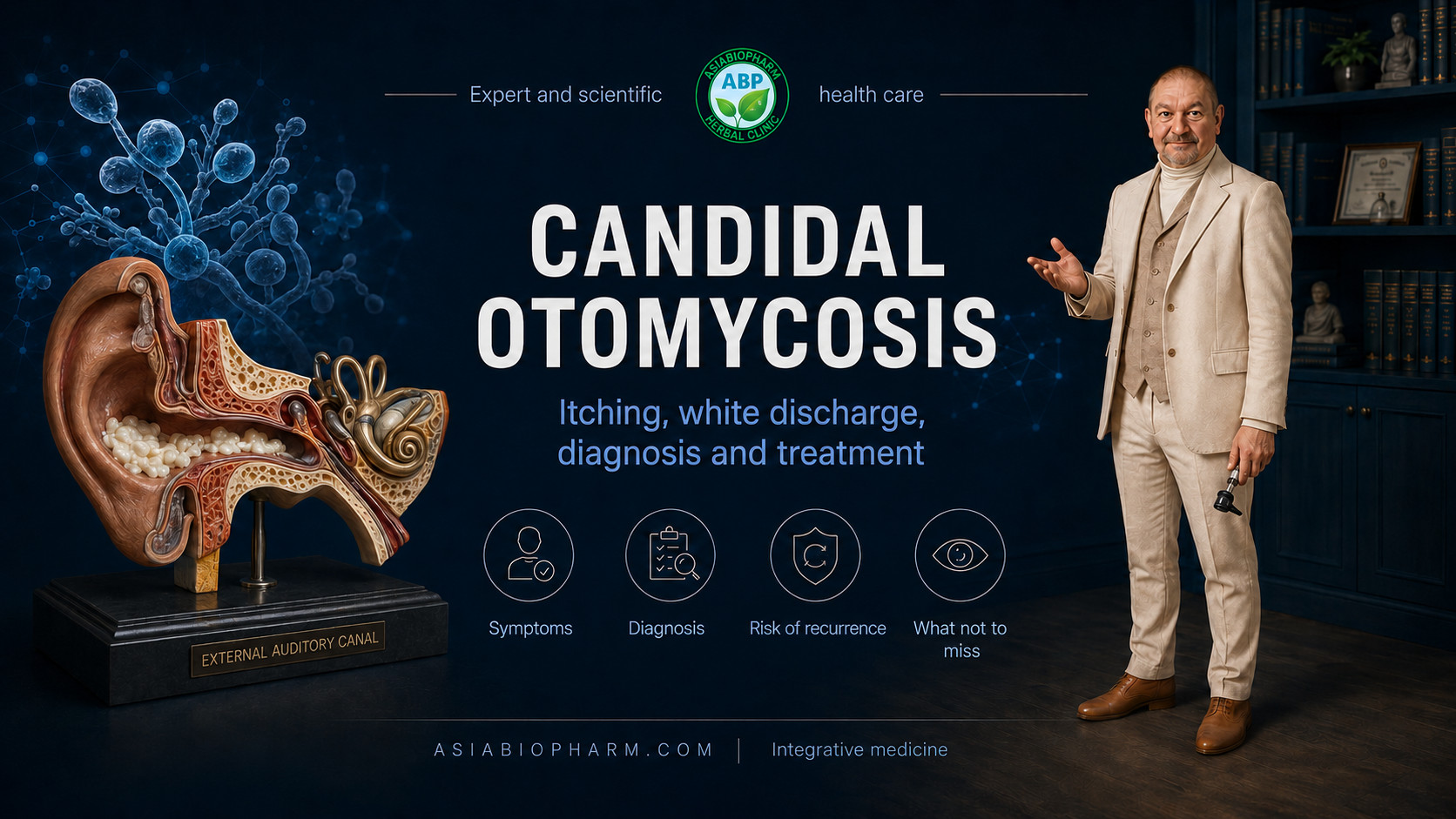
Candidal otomycosis is a fungal inflammation of the external auditory canal, most characteristically associated with severe itching, white or cream-colored curd-like discharge, a sensation of moisture, and a blocked ear. Moderate pain or burning, skin peeling, tinnitus, and reduced hearing due to the accumulation of fungal material may also occur. Candida is usually not transmitted from person to person but overgrows when the protective barrier of the ear canal is disrupted after water exposure, trauma from cotton swabs, removal of earwax, or the use of topical antibiotics or glucocorticosteroids. The risk is increased by a hot and humid climate, hearing aids, eczema, diabetes mellitus, and immunodeficiency. The main target tissue is the epithelium of the external auditory canal; less commonly, the process reaches the tympanic membrane. The condition is less common in children but requires particularly careful selection of ear preparations. Older adults, patients with diabetes, and people with reduced immunity have a higher risk of prolonged and complicated disease. With timely cleaning of the ear and appropriately selected therapy, an uncomplicated episode usually resolves within one to three weeks.
How to Determine Whether You Have Candidal Otomycosis
A combination of deep itching, ear blockage, and thick white discharge may suggest Candida, particularly if symptoms appeared after swimming, staying in a hot and humid climate, prolonged use of antibacterial ear drops, or frequent cleaning of the ear. However, the causative organism cannot be identified by the color of the discharge alone. At home, only the appearance of discharge at the entrance to the ear canal, the presence of pain, body temperature, and changes in hearing can be assessed. Cotton swabs, cameras, tweezers, or other objects must not be inserted into the ear for examination.
The diagnosis is confirmed by an otorhinolaryngologist using otoscopy or otomicroscopy. The physician assesses the condition of the skin, the amount of fungal material, and the integrity of the tympanic membrane, and collects discharge for microscopy and, when necessary, culture with susceptibility testing. Candida is identified as budding yeast cells and pseudohyphae. Aspergillus otomycosis more often produces gray, black, or greenish flocculent material; bacterial otitis externa usually causes more pronounced pain, swelling, and yellowish-green discharge; eczema is dominated by dryness, fissures, and scaling without characteristic curd-like material. Persistent foul-smelling discharge, blood, or progressive hearing loss requires exclusion of chronic otitis media, perforation, and cholesteatoma.
Red Flags
Urgent evaluation by an otorhinolaryngologist is required for sudden or increasing pain, especially pain that is worse at night and disproportionate to the visible changes. In a patient with diabetes or immunodeficiency, this may indicate spread of infection into deeper tissues and bone. High fever, pronounced weakness, purulent or bloody discharge, rapidly increasing swelling of the ear, or redness of the surrounding skin requires exclusion of a bacterial complication.
Immediate medical attention is required if dizziness, impaired balance, sudden hearing deterioration, severe headache, swelling behind the ear, facial asymmetry, or weakness of the facial muscles develops. These signs may accompany involvement of the middle or inner ear, the mastoid process, or the facial nerve. A young child, an older adult, a pregnant woman, or a patient who has undergone transplantation, chemotherapy, or treatment with immunosuppressants should be examined by a physician without attempts to instill medications into the ear independently.
Initial Self-Care Measures
Until the ear is examined, it should be kept dry. Swimming, diving, baths, saunas, and the use of in-ear headphones should temporarily be avoided. During a shower, the entrance to the ear canal can be protected with a small cotton ball lightly coated with petroleum jelly without pushing it inward; the protection should be removed immediately after the shower. Visible discharge may be gently blotted with dry sterile gauze only from the auricle and the very entrance to the ear canal. The ear must not be irrigated with water, saline solution, or a syringe.
When discharge is present, it may be more comfortable to sleep on the side of the affected ear, placing a clean cotton cloth on the pillow and changing it daily. Physical activity is acceptable according to how the person feels, provided that it does not involve water exposure or intense sweating. The room should be ventilated; a comfortable temperature is approximately 20–24 °C, with relative humidity of 40–60%. There is no special antifungal diet for localized otomycosis. A normal balanced diet is recommended; in diabetes mellitus, glucose control is particularly important. If there are no restrictions related to the heart or kidneys, an ordinary fluid intake is sufficient — approximately 1.5–2 liters of water and unsweetened beverages at room temperature per day.
Alcohol, vinegar, hydrogen peroxide, boric acid, plant or essential oils, antifungal creams, or antibiotics must not be instilled into an ear that has not been examined. The ear must not be heated, the ear canal must not be tightly plugged with cotton, and discharge must not be scraped out or the skin scratched. Until medical evaluation, body temperature, pain intensity, the amount and color of discharge, hearing, and the appearance of dizziness should be monitored. Even in the absence of red flags, it is advisable to see an otorhinolaryngologist within the next 24 hours because, without professional removal of fungal material, topical preparations often do not reach the affected epithelium.
Stages and Possible Progression of Candidal Otomycosis
There is no generally accepted sequential classification of candidal otomycosis into latent, prodromal, and pronounced stages. The disease usually begins with itching and a sensation of moisture, followed by an increasing amount of white discharge, ear blockage, and reduced hearing. Symptoms may improve rapidly after cleaning of the ear canal, but fungal material remaining in skin folds and on the tympanic membrane creates conditions for recurrence.
Chronic disease is promoted by persistent moisture, uncontrolled use of antibiotics and hormonal ear drops, epithelial trauma, dermatitis, hearing aids, diabetes mellitus, and inadequate cleaning of the ear canal. Without therapy, inflammation may intensify, a bacterial infection may develop, dense plugs may form, the ear canal may narrow, and persistent conductive hearing loss may occur. Perforation of the tympanic membrane, involvement of the middle ear, and invasive spread are uncommon and occur primarily in patients with immunodeficiency or decompensated diabetes.
Integrative Treatment Methods for Candidal Otomycosis
An integrative treatment approach begins with otomicroscopy, confirmation that the tympanic membrane is intact, and professional cleaning of the ear canal. Herbal preparations should not be applied over dense curd-like material, fungal deposits, or exudate because these substances prevent the active components from contacting the affected epithelium. Pronounced pain, purulent discharge, hearing loss, dizziness, or suspected middle-ear involvement requires repeat examination by an otorhinolaryngologist.
Jindu Ear Drops are a priority topical preparation for candidal otitis externa. Chlorhexidine acetate, costus, borneol, dendrobium, vitex, and other components provide antiseptic, antifungal, antipruritic, anti-inflammatory, and anti-edematous effects. The confirmed frequency of use for mild candidal otitis externa is twice daily. Jindu Ear Drops are contraindicated in tympanic membrane perforation, the presence of a tympanostomy tube, pronounced weeping dermatitis, allergy to chlorhexidine, camphor, costus, or other components, and in children younger than six years. Burning, soreness, hyperemia, increased itching, and contact dermatitis may occur. If an unrecognized perforation is present, chlorhexidine entering the middle ear creates a risk of toxic damage to the structures of the auditory system.
ABP-153 Oil Infusion is intended mainly for superficial and cavity processes and is used intra-auricularly only after professional cleaning of the ear canal and confirmation that the tympanic membrane is intact. In otomycosis, a frequency of use of twice daily has been confirmed. Camphor, Andrographis paniculata, Curcuma longa, licorice, Zingiber cassumunar, Houttuynia cordata, menthol, borneol, clove, and eucalyptus provide antifungal, anti-inflammatory, antipruritic, antiseptic, and reparative effects. Local burning, hyperemia, increased itching, swelling, and individual allergic reactions may occur.
ABP-153 and Jindu Ear Drops should not be mixed during the same instillation. They are selected as alternatives or used sequentially according to the amount of discharge, moisture in the ear canal, the condition of the epithelium, and tolerability. ABP-153D is not required for superficial candidal otomycosis: enhanced DMSO-mediated delivery into deep tissues does not correspond to the primary local target and increases the requirements for surface cleanliness and safety.
Coptis chinensis is used orally as a standardized 10% extract. Berberine and related alkaloids demonstrate antifungal activity and affect Candida membranes, cellular metabolism, and fungal biofilms. Coptis is considered primarily in recurrent disease, when otomycosis is combined with candidiasis of other mucous membranes, and when metabolic risk factors are present. Nausea, a bitter taste in the mouth, abdominal pain, constipation or diarrhea, reduced appetite, headache, lowered blood pressure, and reduced glucose levels may occur. Berberine affects CYP3A4, CYP2D6, CYP2C9, and P-glycoprotein and can alter concentrations of cyclosporine, tacrolimus, and other medications. Interactions with glucose-lowering and antihypertensive agents, anticoagulants, antiarrhythmic medications, and drugs with a narrow therapeutic index are clinically important. Coptis is not used during pregnancy, breastfeeding, or infancy.
Scutellaria baicalensis is used orally as a standardized 10% extract. Baicalein and baicalin demonstrate anti-inflammatory, anti-Candida, and antibiofilm activity, so the extract may complement topical therapy when inflammation, swelling, itching, and a tendency to recurrence are pronounced. Scutellaria is not used in cases of individual intolerance or decompensated hepatic failure. Nausea, dizziness, drowsiness, psychomotor slowing, muscle weakness, and reduced blood pressure may occur. Caution is required when it is combined with sedatives, sleeping medications, anxiolytics, antihypertensive drugs, anticoagulants, and antiplatelet agents.
Nigella sativa is used orally as a standardized 10% extract. Thymoquinone and other components provide anti-inflammatory, immunomodulatory, and potentially antifungal supportive effects. The extract may be particularly appropriate when recurrent otomycosis is combined with allergic inflammation, diabetes mellitus, metabolic disorders, or candidiasis of other mucous membranes. Gastric discomfort, nausea, diarrhea, headache, reductions in blood pressure and glucose, and allergic reactions may occur. Additive effects with antihypertensive and glucose-lowering medications, anticoagulants, and antiplatelet agents must be taken into account.
Curcuma longa is used orally as a standardized 10% extract to reduce the inflammatory response and support tissue recovery. Curcuminoids affect inflammatory signaling pathways, oxidative stress, and Candida membrane structures; in experimental models, they may increase the susceptibility of certain fungal strains to azoles.
Contraindications include biliary obstruction, acute pancreatitis, exacerbation of gallstone disease or peptic ulcer disease, and individual intolerance. Heartburn, nausea, abdominal pain, and loose stools may occur. Caution is required in people prone to bleeding and when anticoagulants or antiplatelet agents are used simultaneously.
Five Root Compound Anti-Inflammatory Mixture is considered only when there is pronounced inflammatory pain, swelling, and tenderness of the ear canal. In candidal otomycosis manifested mainly by itching and white curd-like discharge without pronounced pain, adding the mixture is not mandatory. Five Root Compound does not replace cleaning of the ear canal or topical antifungal treatment. When several systemic herbal formulas are used simultaneously, duplication of anti-inflammatory components and effects on blood pressure, coagulation, the liver, and medications already being taken must be excluded. The advantage of a rational local integrative approach is direct action on the affected epithelium of the ear canal with a lower systemic burden on the liver, kidneys, gastrointestinal tract, cardiovascular system, and nervous system. Topical herbal combinations do not create the multitude of hepatic enzyme-mediated interactions typical of systemic azoles and do not carry the characteristic systemic hepatotoxicity and QT-interval prolongation risk associated with fluconazole.
Oral herbal extracts make it possible to address the inflammatory, immune, and metabolic background but do not replace professional removal of fungal material, confirmation of Candida, or restoration of normal conditions in the ear canal. Herbal origin does not eliminate the possibility of local irritation, allergy, effects on blood pressure, glucose, and coagulation, or drug interactions. One primary topical formulation is selected at a time, while systemic components are added only when there is a separate clinical indication.
What You Need to Know About Standard Protocols in Modern Medicine
The foundation of treatment for candidal otomycosis is thorough cleaning of the external auditory canal under visual control. Microaspiration and careful instrumental removal of curd-like material, mycelium, desquamated epithelium, and discharge are commonly used. The procedure sometimes has to be repeated because residual fungal colonies prevent the medication from contacting the skin and support recurrence. Self-cleaning with cotton swabs, metal objects, or other devices injures the epithelium, pushes material deeper, and increases the risk of secondary bacterial infection. Irrigation with water is undesirable: moisture promotes Candida growth, and if the condition of the tympanic membrane is unknown or if it is perforated, fluid may enter the middle ear and cause inflammation, dizziness, pain, and damage to the auditory system.
Topical clotrimazole disrupts ergosterol formation in the Candida cell membrane and is often used after cleaning of the ear canal. It may cause severe burning, soreness, redness, swelling, weeping, increased itching, scaling, and allergic contact dermatitis. Prolonged application to damaged skin may maintain chemical irritation, delay recovery of the epithelial barrier, and create a clinical appearance resembling persistent fungal infection.
Systemic absorption of clotrimazole is usually low when it is applied to a limited area of intact skin but increases in the presence of erosions, ulcers, pronounced inflammation, and prolonged use. The medication should not be introduced independently when the integrity of the tympanic membrane is unknown if the specific formulation is not intended for otic use. Entry of the solution and its excipients into the middle ear may cause severe irritation, a vestibular reaction, and potential damage to auditory structures.
Nystatin binds to ergosterol in the fungal membrane and is active primarily against Candida. It is considered only when the candidal nature of the disease has been confirmed and a formulation suitable for the ear canal is available. Burning, pain, itching, hyperemia, swelling, and local allergic reactions may occur. Persistent irritation of damaged skin may intensify inflammation and contact dermatitis.
Nystatin must not be used in the presence of tympanic membrane perforation, an inserted tympanostomy tube, or an unknown condition of the middle ear without a decision by an otorhinolaryngologist. Low systemic absorption does not eliminate the risk of local toxic effects of the solvent or excipients on the middle-ear mucosa and structures of the auditory system. The medication does not act against bacterial coinfection and does not replace repeat cleaning of the ear canal.
Other topical azoles, including miconazole and econazole, may be used after otoscopy and mycological confirmation of Candida. They may cause burning, pain, dryness, itching, hyperemia, swelling, and contact dermatitis. Simultaneous application of several topical antifungal agents does not guarantee stronger antifungal activity but increases the chemical burden on damaged epithelium and makes it more difficult to identify the substance responsible for an allergic reaction.
Miconazole can inhibit warfarin metabolism even when used topically, particularly on damaged skin. An increase in the International Normalized Ratio, mucosal bleeding, hematomas, and dangerous internal bleeding may occur. Patients receiving warfarin, other anticoagulants, or medications with a narrow therapeutic index should not begin treatment without clinical pharmacological assessment.
Oral fluconazole is not the usual first choice for limited external candidal otomycosis. It is considered in persistent recurrent disease, spread of the infection, pronounced immunodeficiency, coexistence with candidiasis at other sites, or confirmed susceptibility of the causative organism. The medication creates a systemic burden and may cause nausea, abdominal pain, diarrhea, headache, dizziness, and skin rash.
Critically dangerous complications of fluconazole include toxic hepatitis, cholestasis, acute liver failure, Stevens–Johnson syndrome, toxic epidermal necrolysis, leukopenia, neutropenia, agranulocytosis, and thrombocytopenia. The medication can prolong the QT interval and provoke torsades de pointes ventricular tachycardia, syncope, and sudden cardiac death. The risk is increased by arrhythmia, heart failure, bradycardia, hypokalemia, hypomagnesemia, and concomitant use of other medications that prolong the QT interval.
Fluconazole is eliminated primarily by the kidneys and accumulates in renal failure. It enhances the effects of warfarin, certain glucose-lowering medications, phenytoin, cyclosporine, tacrolimus, certain statins, and several antiarrhythmic agents. It should not be started independently during pregnancy, in liver or kidney disease, cardiac rhythm disorders, electrolyte disturbances, or when multiple medications are being used.
Repeated short courses of fluconazole without identifying the Candida species and its susceptibility suppress susceptible colonies and promote selection of resistant strains. Cross-resistance to other azoles may develop, after which treatment may require more toxic systemic medications.
Unjustified use of antibacterial ear drops worsens otomycosis: antibiotics suppress competing bacterial microflora and create conditions for further Candida growth. Neomycin and other topical antibiotics may cause pronounced contact sensitization, manifested by increased itching, weeping, swelling, and redness.
Aminoglycoside antibiotics can have irreversible ototoxic effects if they enter through a damaged tympanic membrane. Damage to the hair cells of the cochlea and vestibular apparatus may occur, resulting in persistent hearing loss, tinnitus, dizziness, impaired coordination, and balance disorders.
Combination drops containing glucocorticosteroids rapidly reduce itching and swelling but simultaneously suppress local immune defense, mask progression of the infection, and create conditions for further Candida growth. Prolonged use leads to thinning of the epithelium, delayed healing of erosions, contact dermatitis, and secondary bacterial or fungal infection. A hormonal component without adequate antifungal treatment may convert the disease into a chronic, less obvious form.
Premature discontinuation of therapy leaves viable Candida colonies and leads to renewed fungal growth. Repeated empirical use of azoles without mycological monitoring increases the risk of resistance and complicates subsequent treatment. A reliable percentage of complete recovery and absence of recurrence over a two-year period has not been established for candidal otomycosis.
Simultaneous or sequential use of several topical antifungal agents, antibiotics, antiseptics, glucocorticosteroids, and systemic fluconazole may cause chemical damage to the skin of the ear canal, contact sensitization, suppression of local immunity, disruption of microflora, ototoxicity, hepatotoxicity, cardiac rhythm disturbances, and the development of resistant Candida. Alternative integrative approaches based on rationally selected topical and systemic herbal formulas make it possible to address fungal burden, inflammation, and epithelial recovery and generally do not exert the same aggressive systemic and local damaging effects as prolonged or combined use of chemically synthesized medications.
Why Dosages and Duration of Treatment Are Not Specified in the Article
The same disease may vary considerably between individuals in severity and complications and may follow an acute, chronic, or recurrent course. To select a dosage and duration of treatment, a specialist must assess the amount of fungal material, the condition of the epithelium and tympanic membrane, duration of the disease, results of microscopy and culture, age, body weight, the presence of diabetes mellitus, immunodeficiency, diseases of the liver, kidneys, cardiovascular, nervous, and endocrine systems, as well as medications already being taken and potential interactions.
A universal dosage may be insufficient and ineffective or excessive and irritating. Therefore, the article describes directions of therapy but does not replace an individualized clinical pharmacological assessment. If necessary, you can ask your brief question in the comments to this article, and in more complex cases you can arrange a consultation with a clinical pharmacologist specializing in integrative medicine at https://asiabiopharm.com/konsultaciii.
0 comments