
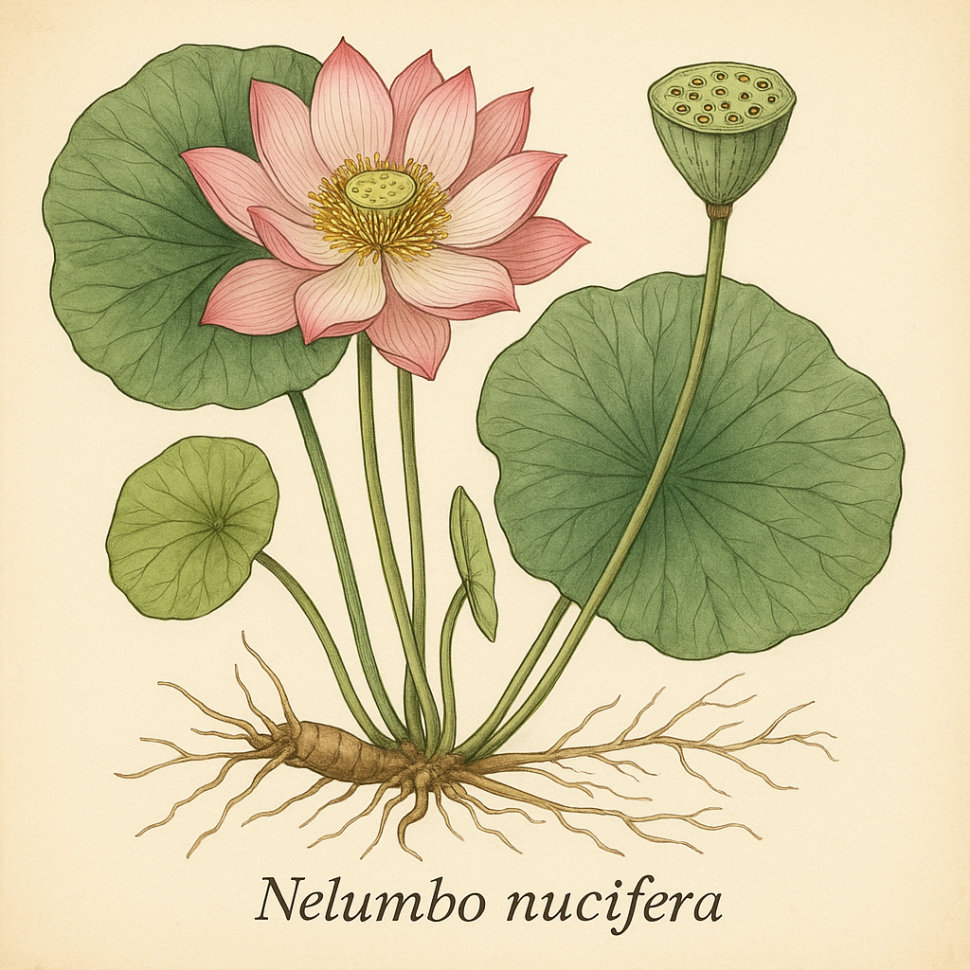
Nelumbo nucifera (Sacred Lotus)
CONSULTATION WITH A SPECIALIST
It is not blocked for now — DOWNLOAD IMO
Place an order via messengers:
Nelumbo nucifera (Sacred Lotus)
Product Name: Лотос орехоносный, Nelumbo nucifera, Indischer Lotus, Loto sagrado, Lotus sacré, لوتس مقدس, บัวหลวง
Synonyms: Лотос священный, Восточный лотос, Индийский лотос, Sacred lotus, East Indian lotus, Bean of India, Indische Lotosblume, Loto oriental, Loto indio, Lotus sacré de l’Inde, Lotus oriental, اللوتس الهندي, اللوتس المقدس, บัวอินเดีย, บัวศักดิ์สิทธิ์, บัวสาย
Parts Used: petals, leaves, seeds, rhizome, stamens, pollen.
Main Indications for Use of Nelumbo nucifera: Diabetic nephropathy, non-alcoholic fatty liver disease, arterial hypertension, chronic prostatitis, benign prostatic hyperplasia, acne, attention deficit hyperactivity disorder, menorrhagia, infertility against the background of ovulatory dysfunction, anxiety disorder, insomnia, depressive disorder, chronic fatigue syndrome, dysmenorrhea, neurodermatitis, lower urinary tract syndrome in men, climacteric syndrome.
Use of Nelumbo nucifera in mixtures and complexes: Obesity with insulin resistance syndrome, chronic vaginitis, bacterial vaginosis, cervical inflammation, neurodermatitis with chronic itching, eczema, psoriasis, post-acne, couperose, androgen-dependent alopecia, skin atony, age-related dermatoses, premenstrual syndrome, perimenopausal disorders.
Pharmacological Properties of Nelumbo nucifera: antioxidant, anti-inflammatory, sedative, anxiolytic, antidepressant, nootropic, antihypertensive, hypoglycemic, hypolipidemic, hepatoprotective, nephroprotective, immunomodulatory, antibacterial, antimycotic, antiviral, estrogen-like, angioprotective, venotonic, sebum-regulating, depigmenting, regenerative, anti-aging, adaptogenic.
Dosage of Pharmaceutical Forms — Nelumbo nucifera
Powder — Nelumbo nucifera
Indications (Powder): Hyperlipidemia, mild anxiety, premenstrual syndrome, chronic fatigue syndrome, acne, anxiety, sleep disorders in puberty.
Standard Dosage (Powder): 1–2 grams of powder 2–3 times a day before meals, course 21–30 days.
Enhanced Dosage (Powder): 3 grams 2 times a day for pronounced inflammatory processes, anxiety disorders, menorrhagia.
Maximum Dosage (Powder): No more than 10 grams per day, divided into 3 doses. Permissible under clinical observation for obesity with concomitant insulin-resistant syndrome, pronounced neurodermatitis with chronic itching.
Preventive Dosage (Powder): 1 gram once a day in the morning, for 21 days, repeating courses 4 times a year. Recommended for lipid metabolism disorders, mild anxiety, premenstrual syndrome, chronic fatigue syndrome.
Pediatric Dosage (Powder): Allowed from 12 years of age with body weight not less than 40 kg. 0.5 grams 2 times a day for 10 days for acne, anxiety, sleep disorders in puberty. Sex clarification is not required.
Contraindications (Powder): Individual intolerance. During pregnancy, lactation, and childhood under 12 years of age, data on contraindications have not been scientifically registered. Contraindicated in pronounced hypotension and while taking sedative drugs.
Side Effects (Powder): When the dose is exceeded, a decrease in blood pressure, a feeling of drowsiness, rare cases of dyspepsia (according to in vivo and in vitro studies with high doses) are possible.
Adjustment for Patient Body Weight: For body weight below 60 kg: reduce the daily dose by 25%. For body weight above 90 kg: an increase of dosage up to 3 g 3 times a day within the enhanced regimen is permissible.
Preparation Method (Powder): To prepare 100 grams of powder, dried petals and leaves of Nelumbo nucifera are used. The plant raw material is washed, dried at a temperature not exceeding 45 °C in the shade. Then it is ground to a fine powder state (particle size no more than 300 microns). Stored in a hermetically closed glass container. Mixing with flavorings and preservatives is not allowed.
Storage Conditions and Shelf Life (Powder): Store in an airtight dark glass container, in a dry cool place at a temperature from +5 to +25 °C, without access to direct light and away from sources of electromagnetic radiation. Shelf life — up to 12 months. After opening, use within 60 days.
Dry Extract — Nelumbo nucifera
Indications (Dry Extract): Diabetic nephropathy, non-alcoholic fatty liver disease, arterial hypertension, chronic prostatitis, benign prostatic hyperplasia, acne, attention deficit hyperactivity disorder, menorrhagia, infertility against the background of ovulatory dysfunction.
Standard Dosage (Dry Extract): 300–500 milligrams 2 times a day, preferably 30 minutes before meals. Standard course — 21–28 days.
Enhanced Dosage (Dry Extract): 800–1000 milligrams 2 times a day for moderate arterial hypertension, benign prostatic hyperplasia, and pronounced menorrhagia. Duration — up to 14 days under symptom monitoring.
Maximum Dosage (Dry Extract): No more than 2 grams per day for 10 days for resistant forms of prostatitis, non-alcoholic fatty liver disease (NAFLD), and pronounced premenstrual disorders.
Preventive Dosage (Dry Extract): 200 milligrams once a day in the morning, in a course of 21 days, 3 times a year. Recommended for premenopausal women, patients at risk of fatty liver, as well as with a family predisposition to hypertension.
Pediatric Dosage (Dry Extract): From 14 years of age and body weight not less than 45 kg: 150–200 milligrams once a day in the morning, for hyperactivity syndrome, juvenile acne, adolescent hormonal disorders.
Contraindications (Dry Extract): Hypotension, pronounced hepatic insufficiency, individual intolerance. For pregnant, lactating women, and children under 14 years of age — there are no scientific data on contraindications.
Side Effects (Dry Extract): Rarely — dizziness, decreased blood pressure, weakness; with overdose, nausea and diarrhea are possible.
Adjustment for Patient Body Weight: For patients with body weight up to 60 kg — reduce the dose by 20%. For patients above 85 kg — an increase of the daily dose up to 1500 mg (in 2 doses) is permissible under the enhanced regimen.
Preparation Method (Dry Extract): To prepare 100 grams of extract, take 500 grams of dried petals and seeds. The raw material is extracted in a mixture of water and ethanol (70:30) at a temperature of 60 °C for 6 hours. Then the liquid is filtered, evaporated to a syrupy mass at 45 °C under vacuum, and dried by spraying to obtain a dry extract. The resulting powder is sieved and packaged in airtight containers.
Storage Conditions and Shelf Life (Dry Extract): Store in a dry place at a temperature from +5 to +25 °C, in a hermetically closed container protected from light and EMI. Shelf life — 18 months. After opening, use within 90 days.
Alcohol Tincture — Nelumbo nucifera
Indications (Alcohol Tincture): Anxiety disorder, insomnia, depressive disorder, chronic fatigue syndrome, dysmenorrhea, menorrhagia, neurodermatitis, chronic prostatitis, lower urinary tract syndrome in men.
Standard Dosage (Alcohol Tincture): 25 drops 2 times a day, diluted in 50 ml of warm water, 30 minutes before meals. Course — from 14 to 21 days.
Enhanced Dosage (Alcohol Tincture): 30–35 drops 3 times a day, for persistent sleep disorders, chronic anxiety, pronounced menorrhagia, and skin itching. Duration no more than 10 days.
Maximum Dosage (Alcohol Tincture): Up to 40 drops 3 times a day under medical supervision. Used in cases of severe insomnia, psychosomatic disorders, and prolonged chronic prostatitis.
Preventive Dosage (Alcohol Tincture): 15 drops once a day at night, for 14 days. Recommended for seasonal emotional disorders, premenstrual syndrome, climacteric mood lability.
Pediatric Dosage (Alcohol Tincture): Allowed from 14 years of age, with body weight not less than 45 kg. 10 drops once a day at night for 5–7 days for functional sleep disorders and anxiety. Not recommended for children under 14 years of age.
Contraindications (Alcohol Tincture): Alcohol dependence, severe forms of hypotension, epilepsy, individual sensitivity to alcohol extracts. Data on contraindications during pregnancy, lactation, and childhood under 14 years of age have not been registered.
Side Effects (Alcohol Tincture): Dizziness, drowsiness, frequent urination may be observed. With overdose, short-term lethargy, decreased blood pressure, rare nausea are possible.
Adjustment for Patient Body Weight: For body weight up to 60 kg — reduce the dosage by 25%. For body weight above 85 kg — an increase up to 35 drops per intake is permissible under the enhanced regimen.
Preparation Method (Alcohol Tincture): To prepare 100 ml of tincture, take 20 grams of dried petals and 20 grams of ground seeds. Pour with 60 ml of ethanol (70%) and 20 ml of purified water. Infuse in a glass container in a dark place at room temperature for 10 days with daily shaking. At the end, filter through multi-layer gauze. Store in dark glass containers.
Storage Conditions and Shelf Life (Alcohol Tincture): Store in a light-protected place at a temperature from +8 to +25 °C. Avoid heating and direct sunlight. Shelf life — 24 months. After opening, use within 60 days.
Oil Infusion — Nelumbo nucifera
Indications (Oil Infusion): Neurodermatitis, eczema, skin itching, acne, post-acne, couperose, climacteric syndrome (in topical complexes), androgen-dependent alopecia, skin atony, age-related dermatoses.
Standard Dosage (Oil Infusion): Topically — apply to cleansed skin 1–2 times a day, in a thin layer, without rubbing in. Course 21–30 days, depending on the condition of the skin.
Enhanced Dosage (Oil Infusion): Applied 2–3 times a day for pronounced inflammatory component, severe itching, persistent relapses of acne or perioral dermatitis. Course 14–21 days.
Maximum Dosage (Oil Infusion): Up to 4 applications per day (locally, no more than 10 ml per day) for acute relapse of eczema, itchy dermatoses, cicatricial changes after acne.
Preventive Dosage (Oil Infusion): Once a day at night, for 10–14 days, in courses 4 times a year. Recommended for premenopausal women, patients with sensitive skin prone to redness and peeling.
Pediatric Dosage (Oil Infusion): From 6 years of age — locally, once a day on limited skin areas (face, elbow creases, knees) for neurodermatitis or itching of unclear etiology. Volume no more than 2 ml per day.
Contraindications (Oil Infusion): Acute purulent dermatoses, individual sensitivity, allergy to oils. Data on contraindications during pregnancy and breastfeeding have not been registered; topical use is permissible.
Side Effects (Oil Infusion): Rarely — local irritation, burning, rashes in case of individual intolerance. With overdose, the appearance of comedones on oily skin is possible.
Adjustment for Patient Body Weight: Dose adjustment is not required. Focus on the area of the affected area.
Preparation Method (Oil Infusion): To prepare 100 grams of infusion: pour 20 grams of dry petals and 10 grams of dry seeds with 70 grams of organic cold-pressed jojoba oil. Infuse in an airtight glass container at a temperature of +35 °C for 10 days with daily shaking. After infusion — filter, pour into a dark glass bottle. Do not use heat treatment.
Storage Conditions and Shelf Life (Oil Infusion): Store at a temperature from +5 to +20 °C in a dark container, away from light and heat sources. Shelf life — 6 months. After opening, use within 30 days.
Vaginal Suppositories — Nelumbo nucifera
Indications (Vaginal Suppositories): Dysmenorrhea, menorrhagia, chronic vaginitis, bacterial vaginosis, vaginal dryness in premenopause, infertility against the background of hormonal imbalance, cervicitis, subclinical inflammation of the vaginal mucosa.
Standard Dosage (Vaginal Suppositories): 1 suppository at night, intravaginally, for 10 days. A repeat course is permissible after a 7-day break.
Enhanced Dosage (Vaginal Suppositories): 1 suppository 2 times a day — morning and evening, for 5–7 days for pronounced inflammation, menorrhagia, disorders of the vaginal microbiocenosis.
Maximum Dosage (Vaginal Suppositories): 3 suppositories per day (1 every 8 hours) — permissible under medical supervision for pronounced climacteric syndrome, chronic atrophic colpitis, recurrent vaginitis.
Preventive Dosage (Vaginal Suppositories): 1 suppository every other day at night, 10 applications per course, repeat once every 2 months. Recommended for perimenopause, after completed antibiotic treatment, with a tendency to bacterial vaginosis.
Pediatric Dosage (Vaginal Suppositories): Not used in girls before the onset of menstruation. Allowed from 16 years of age with weight more than 50 kg — 1 suppository at night, no more than 7 days.
Contraindications (Vaginal Suppositories): Acute purulent processes of the pelvic organs, individual hypersensitivity. Scientifically reliable data on contraindications during pregnancy and lactation are absent — not recommended without medical consultation.
Side Effects (Vaginal Suppositories): Rarely — a burning sensation, discomfort in the vagina, local irritation. With overdose — increased vaginal discharge, rarely — contact dermatitis.
Adjustment for Patient Body Weight: Correction is not required. For women with body weight above 90 kg with reduced efficacy, combination with dry extract orally is permissible.
Preparation Method (Vaginal Suppositories): To prepare 100 grams: take 20 grams of dry extract of Nelumbo nucifera, 70 grams of cocoa butter, and 10 grams of shea butter. Melt the oils in a water bath until a homogeneous mass (not exceeding 45 °C), introduce the extract, mix thoroughly. Pour into suppository molds of 2 grams, cool at a temperature of +4 °C until completely solidified.
Storage Conditions and Shelf Life (Vaginal Suppositories): Store at a temperature of +2…+8 °C in a refrigerator, protect from light and moisture. Do not freeze. Shelf life — 6 months. After opening the package, use within 10 days.
Rectal Suppositories — Nelumbo nucifera
Indications (Rectal Suppositories): Chronic prostatitis, benign prostatic hyperplasia, thrombosis of hemorrhoidal nodes, anal fissure, chronic constipation against the background of autonomic dysfunction, climacteric syndrome in men, neurogenic pelvic dysfunction.
Standard Dosage (Rectal Suppositories): 1 suppository at night, rectally, after a cleansing enema or natural defecation. Course — 10–14 days.
Enhanced Dosage (Rectal Suppositories): 1 suppository 2 times a day — morning and evening, for pronounced symptoms of chronic prostatitis, pain in the pelvic area, grade II–III hemorrhoids. Course — up to 10 days.
Maximum Dosage (Rectal Suppositories): Up to 3 suppositories per day (every 8 hours), no more than 7 days consecutively. Indicated for exacerbation of inflammatory processes of the prostate gland with discomfort and dysuria.
Preventive Dosage (Rectal Suppositories): 1 suppository once every 3 days, in a course of 10 suppositories. Repeat 2 times a year. Recommended for men over 45 years of age with chronic pelvic pain syndrome, initial stage of prostatic hyperplasia.
Pediatric Dosage (Rectal Suppositories): Not recommended for children and adolescents under 18 years of age. There are no scientific data on efficacy and safety in this age category.
Contraindications (Rectal Suppositories): Acute proctitis, active bleeding from the anal canal, intolerance to components. During pregnancy, lactation, and in children — scientific data on contraindications have not been registered.
Side Effects (Rectal Suppositories): Rarely — a burning sensation in the rectum, frequent defecation, weak spasm. With overdose, mucosal irritation and increased pain syndrome are possible.
Adjustment for Patient Body Weight: For patients with body weight up to 60 kg — 1 suppository per day. For patients above 90 kg — an increase up to 2 suppositories per day is possible, with moderate symptoms.
Preparation Method (Rectal Suppositories): For 100 grams of the preparation: 15 grams of dry extract of Nelumbo nucifera, 75 grams of cocoa butter, and 10 grams of beeswax. Melt the cocoa butter in a water bath to 40 °C, add the extract and wax, mix thoroughly until homogeneous. Pour into molds of 2 grams. Cool at +4 °C until completely solidified. Store in molds.
Storage Conditions and Shelf Life (Rectal Suppositories): Store at a temperature of +2…+8 °C, away from light and moisture. Shelf life — up to 6 months. After opening, use within 10 days.
Nasal Drops — Nelumbo nucifera
Indications (Nasal Drops): Vasomotor rhinitis, allergic rhinitis, chronic sinusitis, dry nose syndrome, anemization of the nasal mucosa, post-viral olfactory impairment, prevention of seasonal sensitization.
Standard Dosage (Nasal Drops): 2 drops in each nasal passage 2 times a day, morning and evening. Duration of the course — 10–14 days.
Enhanced Dosage (Nasal Drops): 3 drops 3 times a day, for pronounced edema, impaired nasal breathing, exacerbation of allergic or vasomotor rhinitis. Course up to 7 days.
Maximum Dosage (Nasal Drops): Up to 4 drops 4 times a day, no more than 5 days consecutively. Used for severe allergic rhinitis or persistent decrease in smell after a viral infection.
Preventive Dosage (Nasal Drops): 1 drop in each nasal passage once a day in the morning, for 7–10 days, before the start of the plant pollination season. Repeat once every 2 months.
Pediatric Dosage (Nasal Drops): From 6 years of age — 1 drop in each nasal passage once a day for allergic rhinitis or frequent acute respiratory viral infections. Duration — no more than 5 days. From 3 to 6 years of age, not recommended due to the lack of safety data.
Contraindications (Nasal Drops): Individual intolerance, acute purulent processes in the nasal cavity. During pregnancy, lactation, and in children under 6 years of age, scientifically substantiated contraindications have not been registered.
Side Effects (Nasal Drops): Rarely — a burning sensation in the nose, dryness, isolated episodes of sneezing. With overdose — short-term mucosal irritation.
Adjustment for Patient Body Weight: Not required, as the dose is determined by the volume of accumulation, not by systemic action.
Preparation Method (Nasal Drops): For 100 ml of solution: 5 grams of dry water-soluble extract of Nelumbo nucifera, 0.9 grams of sodium chloride, 94.1 ml of distilled water. Mix all components under sterile conditions, filter through a 0.22 µm membrane filter, pour into dropper bottles with a dispenser. Optimal pH — 6.8–7.2.
Storage Conditions and Shelf Life (Nasal Drops): Store in a refrigerator at a temperature from +2 to +8 °C, in the original packaging protected from light. Shelf life — up to 60 days. After opening — use within 7 days.
Ear Drops — Nelumbo nucifera
Indications (Ear Drops): External otitis, eczema of the external auditory canal, itching and irritation of the ear of non-infectious nature, otomycosis (as part of complex therapy), hyperemia after prolonged use of headphones, prevention of repeated inflammations after swimming (swimmer's ear).
Standard Dosage (Ear Drops): 2 drops in the external auditory canal 2 times a day, after ear toilet. Course — 7–10 days.
Enhanced Dosage (Ear Drops): 3 drops 3 times a day for pronounced itching, irritation, peeling. Duration — up to 5 days, with transition to the standard dosage.
Maximum Dosage (Ear Drops): Up to 4 drops 4 times a day, no more than 3 days consecutively. Recommended for pronounced inflammation, sharp discomfort, mycotic lesion as part of combination therapy.
Preventive Dosage (Ear Drops): 1 drop in each ear once a day after swimming, with frequent use of headsets, hearing aids, as well as in hot climates. Course — 5 days, repeat monthly.
Pediatric Dosage (Ear Drops): From 5 years of age — 1 drop once a day for mild irritation of the external auditory canal. Under 5 years of age, use is not recommended without medical supervision.
Contraindications (Ear Drops): Perforation of the tympanic membrane, acute otitis media, purulent discharge. Scientific contraindications during pregnancy and lactation have not been registered — topical use is permissible.
Side Effects (Ear Drops): Rarely — a feeling of ear fullness, slight irritation. With overdose — burning and increased secretion of earwax are possible.
Adjustment for Patient Body Weight: Not required — the dose is determined by the drop-local method, not systemically.
Preparation Method (Ear Drops): For 100 ml: 10 grams of dry oil extract of Nelumbo nucifera petals, 90 ml of jojoba oil or cold-pressed sesame oil. The components are thoroughly mixed at a temperature of 35 °C until a homogeneous consistency. Addition of 0.5 grams of natural bee propolis is permissible to enhance antimicrobial action. Filter through a sterile cotton-gauze filter, pour into droppers.
Storage Conditions and Shelf Life (Ear Drops): Store in a tightly closed dark glass bottle at a temperature of +5…+15 °C. Avoid sunlight and overheating. Shelf life — 6 months. After opening, use within 14 days.
Ointment — Nelumbo nucifera
Indications (Ointment): Neurodermatitis, eczema, psoriasis, contact dermatitis, inflammatory acne, cicatricial changes after acne, skin irritation after epilation, local redness and itching of unclear etiology.
Standard Dosage (Ointment): Topically — apply to the affected skin area in a thin layer 2 times a day (morning and evening). Course of use — 10–21 days.
Enhanced Dosage (Ointment): Apply 3 times a day, including a compress application at night under a loose bandage, for 7–10 days for exacerbation of psoriasis, weeping eczema, acute dermatitis.
Maximum Dosage (Ointment): Up to 4 applications per day (on a limited area no more than 15 × 15 cm) for no more than 5 days consecutively. Used for severe itching, cracks, peeling, and skin induration.
Preventive Dosage (Ointment): Once a day, in courses of 10 days once a quarter. Suitable for patients with dry, sensitive, or age-related skin prone to inflammation, irritation, eczematous reactions.
Pediatric Dosage (Ointment): From 3 years of age — apply once a day to limited areas (up to 5×5 cm) for atopic dermatitis, prickly heat, skin irritation. Under 3 years of age, use is not recommended.
Contraindications (Ointment): Purulent skin lesions, individual intolerance to components. Scientifically confirmed contraindications during pregnancy, lactation, and in children under 3 years of age have not been registered, but caution is required.
Side Effects (Ointment): Rarely — a burning sensation, hyperemia, temporary increase in itching. With overdose — skin oiliness, pore blockage, formation of comedones.
Adjustment for Patient Body Weight: Not required — it is applied topically. The volume depends on the area of the lesion, not on body weight.
Preparation Method (Ointment): To prepare 100 grams of ointment, take: 20 grams of dry extract of Nelumbo nucifera petals, 60 grams of ointment base (lanolin + cocoa butter in a 1:2 ratio), 15 grams of beeswax. Melt the base in a water bath, introduce the extract, stir until homogeneous, cool.
Storage Conditions and Shelf Life (Ointment): Store at a temperature from +5 to +15 °C in a dark place, tightly closed. Avoid overheating and sunlight. Shelf life — up to 6 months. After opening, use within 30 days.
Cream — Nelumbo nucifera
Indications (Cream): Inflammatory acne, post-inflammatory pigmentation, dry and peeling skin, age-related changes (wrinkles, loss of elasticity), couperose, rosacea, skin sensitivity to external influences (ultraviolet, dust, cold).
Standard Dosage (Cream): Topically — apply to cleansed skin 1–2 times a day (morning and/or evening) with light massaging movements. Course — from 21 to 28 days.
Enhanced Dosage (Cream): Apply 2 times a day + pointwise to problem areas 1 additional application for 7–10 days for active inflammations, pronounced pigmentation, peeling.
Maximum Dosage (Cream): Up to 4 applications per day (including the face and neck area), no more than 5 days consecutively, for acute forms of irritation and stress-induced rashes.
Preventive Dosage (Cream): Once a day in the evening, in courses of 14 days monthly. Recommended for a tendency to dryness, dull skin, in the cold season, as well as after dermatological procedures (peels, laser).
Pediatric Dosage (Cream): From 7 years of age — for sensitive skin and seasonal dryness, once a day on limited areas (cheeks, forehead, chin). For adolescents from 12 years of age — full application to the face for acne is possible.
Contraindications (Cream): Pustular lesions, deep wounds, individual intolerance to components. During pregnancy and lactation — scientific data on contraindications have not been registered.
Side Effects (Cream): Rarely — a feeling of tightness, short-term tingling, isolated rashes on oily skin. With overdose — pore blockage, oily sheen.
Adjustment for Patient Body Weight: Not required. The volume of application depends on the skin area, not on body weight.
Preparation Method (Cream): For 100 grams of cream: 10 grams of dry extract of Nelumbo nucifera petals, 60 grams of flower water (chamomile hydrolate), 15 grams of grape seed oil, 10 grams of emulsifier (natural beeswax or lecithin), 5 grams of shea butter. Heat the hydrolate to 40 °C, oils and wax — in a water bath to 45 °C. Combine the water and fat phases, beat for 5–10 minutes until an emulsion is formed. Cool, package into sterile jars.
Storage Conditions and Shelf Life (Cream): Store in a refrigerator at +4…+8 °C, in a tightly closed package. Avoid contact with water and direct sunlight. Shelf life — 60 days. After opening, use within 21 days.
Serum — Nelumbo nucifera
Indications (Serum): Hyperpigmentation, photoaging, decreased skin tone, dehydration, microinflammations, enlarged pores, post-acne, stress-induced skin reactions, couperose, and initial stages of rosacea.
Standard Dosage (Serum): Apply 1–2 times a day, 2–3 drops to the face and neck before basic care (cream, oil). Course of use — 21 days. Repeat no more than once a month.
Enhanced Dosage (Serum): 4–5 drops 2 times a day on the entire face and décolleté area, for 7–10 days for active pigmentation, pronounced dullness of the skin, after dermatological procedures (laser, acid peel).
Maximum Dosage (Serum): Up to 6 drops 3 times a day, no more than 5 days consecutively. Pointwise application of 2 additional drops to problem areas for age spots, inflammations, or wrinkles is permissible.
Preventive Dosage (Serum): Once a day in the morning, 2 drops, 10 days monthly. Suitable for the first signs of aging, after stress, in conditions of polluted atmosphere (smog, air-conditioned air).
Pediatric Dosage (Serum): From 12 years of age — 1 drop once a day for juvenile rashes, oily skin, post-inflammatory spots. From 6 to 12 years of age, not recommended.
Contraindications (Serum): Open wounds, individual intolerance. There are no scientific data on contraindications during pregnancy and lactation; topical use and local application are permissible.
Side Effects (Serum): Rarely — tingling, short-term redness, increased sensitivity. With overdose — the appearance of comedones, irritation, peeling.
Adjustment for Patient Body Weight: Correction is not required, since the dose is determined by the application area and skin type.
Preparation Method (Serum): For 100 ml of serum: 5 grams of water-soluble dry extract of Nelumbo nucifera petals, 80 ml of Damask rose hydrolate, 10 ml of vegetable glycerin, 2 ml of panthenol, 2 ml of a natural preservative complex (for example, potassium sorbate and sodium benzoate). Mix the hydrolate and glycerin, heat to 30 °C, introduce the extract and the remaining components. Stir thoroughly until completely homogeneous, pour into sterile bottles with a pipette. Store in a refrigerator.
Storage Conditions and Shelf Life (Serum): Store at a temperature from +2 to +8 °C in a refrigerator, in dark glass. Avoid contact with the skin of the dispenser. Shelf life — 30 days. After opening, use within 14 days.
Toxicity and Biosafety of Nelumbo nucifera
Studies on the general toxicological safety of Nelumbo nucifera have shown a high degree of tolerability of the plant extracts for oral, topical, and intravaginal administration. In preclinical tests of aqueous and alcohol extracts of seeds and petals in laboratory animals, no signs of toxicity were detected with repeated administration for 28 and 90 days.
Acute toxicity was assessed by administering the Nelumbo nucifera extract at doses up to 2000 mg/kg orally to rats. The LD50 values (lethal dose for 50% of the population) were not reached even at the maximum dosage — therefore, the LD50 exceeds 2000 mg/kg of body weight, which indicates low toxicity.
Histopathological analysis of the liver, kidneys, heart, and spleen after the use of extracts did not reveal pathological changes. Biochemical parameters (ALT, AST, creatinine, urea) remained within the physiological norm.
Studies of chromosomal aberration and mutagenicity were also conducted, in which no genotoxic action of the aqueous extract of petals was recorded.
Thus, Nelumbo nucifera can be considered a biologically safe plant component at recommended dosages, which is confirmed by preclinical data on toxicity and biocompatibility.
Reference: https://www.ncbi.nlm.nih.gov/p...
Pharmacodynamics — Nelumbo nucifera
Nelumbo nucifera exhibits a wide spectrum of pharmacodynamic activity due to the complex chemical composition of its petals, seeds, leaves, and rhizomes. The main active substances are considered to be alkaloids (nuciferine, liriodenine), flavonoids (kaempferol, quercetin, myricetin), terpenoids, polysaccharides, phenolic acids, and tannins. Their action is manifested at the systemic and local levels, affecting the central and autonomic nervous system, skin, endocrine regulation, as well as the vascular and digestive systems.
One of the key directions of the pharmacodynamics of Nelumbo nucifera components is antioxidant activity. In vitro and in vivo studies demonstrate pronounced inhibition of lipid peroxidation, an increase in the activity of superoxide dismutase, catalase, and glutathione peroxidase. These properties are realized mainly at the systemic level and are associated with flavonoid structures and phenols that affect the metabolism of reactive oxygen and nitrogen species.
Phenolic compounds and alkaloids also have the ability to modulate the activity of central nervous system mediators. The effect of nuciferine, which has an affinity for dopamine and serotonin receptors, is especially significant. This has been confirmed by research works in which competitive binding to D2 receptors and 5-HT1A receptors was observed. Such interactions indicate the potential for systemic regulation of mood, sleep, and autonomic balance.
In addition, aqueous and alcohol extracts of Nelumbo nucifera exhibit pronounced anti-inflammatory activity, acting through the modulation of NF-κB signaling cascades and suppression of the production of pro-inflammatory cytokines, including IL-1β, IL-6, and TNF-α. These effects have been recorded both in cell cultures and in tissue models. The anti-inflammatory effect is complemented by a mild inhibitory effect on cyclooxygenase-2 (COX-2), which determines the potential for reducing tissue edema and hyperemia.
Pharmacodynamic studies also demonstrate the angiomodulatory effect of the plant extracts. Components of Nelumbo nucifera are able to increase the elasticity of the vascular wall, reduce capillary permeability, and enhance the tone of the venous bed. The presumed pharmacological targets in this case are potassium channels and endothelial mediators (in particular, nitric oxide).
For the skin, antibacterial, sebum-regulating, and lightening effects are pharmacodynamically significant. These properties are due to the presence of tannins, liriodenine, and kaempferol, which exhibit activity against Staphylococcus aureus and Propionibacterium acnes. An effect on tyrosinase activity has also been revealed, which indicates a depigmenting potential for topical application.
At the level of immune regulation, extracts of Nelumbo nucifera affect mononuclear phagocytes and lymphocytes, modulating their proliferation and cytokine secretion. Due to this, a general immunomodulatory effect is provided, confirmed in experiments on animal models with systemic administration of the extract.
The endocrine activity of Nelumbo nucifera components is manifested due to phytohormone-like effects, especially in flavonoids and lignans. Their possible effect on the regulation of sex steroids through interaction with estrogen-type receptors has been revealed. These data are based on the results of cell models and a comparative analysis of the metabolic response.
Thus, the pharmacodynamics of Nelumbo nucifera covers antioxidant, anti-inflammatory, sedative, angiotonic, sebum-regulating, immunomodulatory, and hormone-like effects, realized through interaction with enzymatic, mediator, and receptor systems at the cellular and tissue levels.
References:
https://www.ncbi.nlm.nih.gov/p...
https://pubmed.ncbi.nlm.nih.go...
https://www.sciencedirect.com/...
https://www.tandfonline.com/do...
https://www.wiley.com/en-us/Ne...
Pharmacokinetics — Nelumbo nucifera
The pharmacokinetic properties of the active substances of Nelumbo nucifera depend on the dosage form used, the part of the plant (petals, seeds, leaves, roots), and the route of administration. The main biologically active groups of substances that determine pharmacokinetics are alkaloids, flavonoids, terpenoids, phenolic compounds, and polysaccharides.
With oral administration of powder and dry extract from leaves, petals, or seeds, the absorption of flavonoid compounds begins in the small intestine, partially in the stomach. Absorption proceeds with the participation of active transport and passive diffusion. Alkaloid components are mainly absorbed in an alkaline environment, undergoing a phase of primary metabolism in enterocytes and in the liver. Polysaccharide fractions are absorbed to a limited extent and are mainly subjected to enzymatic cleavage by microbiota in the colon, forming low-molecular metabolites with systemic activity.
After absorption, the active substances are distributed throughout tissues with varying degrees of affinity. The greatest accumulation is noted in the liver, kidneys, lungs, skin, and mucous membranes. Some components bind to plasma albumin and are transported with the blood flow to central and peripheral organs, including lymphoid tissue. Flavonoids and phenols can penetrate the blood-brain barrier, providing central effects with systemic administration.
Alcohol tinctures of Nelumbo nucifera, when taken orally, provide a rapid systemic effect due to the accelerated absorption of lipophilic alkaloids. These substances undergo active transformation in the liver with the participation of cytochrome enzymes, primarily from the CYP450 group. Their biotransformation leads to the formation of metabolites with preserved or weakened biological activity.
With transdermal application of oil forms (infusion, ointment, cream), the active substances penetrate through the epidermis, mainly through the intercellular lipid layers. Phenolic acids and lipophilic flavonoids slowly accumulate in the skin, exerting a local and prolonged effect. A limited amount of substances enters the systemic bloodstream, but they can reach regional lymph nodes and dermal microvessels.
When using intravaginal and rectal suppositories, the absorption of active substances occurs through the mucosa, bypassing the portal bloodstream, which reduces the load on the liver. This delivery form is especially effective for alkaloids and low-molecular polyphenols, providing a stable systemic exposure without the first-pass effect through the liver.
The metabolism of the active compounds of Nelumbo nucifera occurs mainly in the liver and includes glucuronidation, sulfation, and oxidation processes. Metabolic products are excreted by the kidneys in urine and partially with bile. High-molecular residues of polysaccharides and undeponated fragments are excreted with feces. Trace amounts of lipophilic components can also be excreted through the skin and respiratory tract.
Thus, the pharmacokinetic behavior of Nelumbo nucifera is characterized by a multi-level absorption system, tissue selectivity, hepatic metabolism, and a combined route of excretion. These features provide both local and systemic pharmacological action, depending on the form and route of administration.
References:
https://www.ncbi.nlm.nih.gov/p...
https://pubmed.ncbi.nlm.nih.go...
https://www.sciencedirect.com/...
https://journals.sagepub.com/d...
Mechanisms of Action and Scientific Rationale — Nelumbo nucifera
The pharmacological activity of Nelumbo nucifera is formed due to the combined action of biologically active compounds, including flavonoids, alkaloids, terpenoids, lignans, steroids, and polysaccharides. The key direction of the mechanism of action is considered to be the effect on oxidative homeostasis. In vitro studies demonstrate that flavonoids (kaempferol, myricetin) and phenolic acids, which are part of the petals and leaves, induce the activation of superoxide dismutase, catalase, and glutathione reductase enzymes, and also inhibit the production of malondialdehyde. These effects are realized at the level of cellular antioxidant protection and provide a decrease in reactive oxygen species in macrophages and endothelial cells.
Reference: https://www.sciencedirect.com/...
At the level of mediator regulation, it has been shown that the alkaloid nuciferine is able to modulate serotonergic and dopaminergic transmission. Its affinity binding to 5-HT1A, 5-HT2A, and D2 receptors has been established, with a possible agonistic or antagonistic effect depending on concentration. These interactions are accompanied by changes in the level of intracellular cAMP and calcium fluxes, which is confirmed in neuron cultures.
References: https://pubmed.ncbi.nlm.nih.go...; https://www.ncbi.nlm.nih.gov/p...
Flavonoid compounds of the petals and seeds of Nelumbo nucifera demonstrate modulation of pro-inflammatory signaling pathways. In particular, inhibition of NF-κB translocation into the nucleus has been registered, which reduces the expression of TNF-α, IL-6, and IL-1β in macrophages. At the same time, suppression of the JAK2/STAT3 and MAPK cascades (especially p38) occurs, which is associated with a decrease in inflammatory activity in epithelial and immune cells.
Reference: https://www.tandfonline.com/do...
Polysaccharides of the roots and leaves demonstrate an immunomodulatory effect, activating the expression of Toll-like receptors (TLR-4) on the surface of macrophages and enhancing phagocytic activity. These substances also increase the production of the monocyte cytokine GM-CSF and enhance T-cell differentiation, affecting the innate and adaptive link of immune regulation.
Reference: https://www.sciencedirect.com/...
Studies of oil and alcohol forms of Nelumbo nucifera extracts confirm an inhibitory effect on tyrosinase, which explains the lightening and anti-pigment effect with topical application. The active substances compete with L-tyrosine for the active center of the enzyme, reducing melanin production in melanocytes.
Reference: https://pubmed.ncbi.nlm.nih.go...
The cardiomodulating effect of the plant extracts is associated with vasodilation and a decrease in peripheral resistance, which is realized through the activation of endothelial nitric oxide (eNOS) synthesis and mediated inhibition of calcium channels in vascular smooth muscle cells. These effects are accompanied by a decrease in vascular spasm and stabilization of capillary tone.
Reference: https://www.sciencedirect.com/...
Thus, the mechanisms of action of Nelumbo nucifera cover the regulation of neurotransmitter systems, suppression of inflammatory and oxidative cascades, stabilization of the endothelium and pigment metabolism, as well as immunomodulation. These effects are confirmed by biochemical, cellular, and molecular studies published in peer-reviewed sources.
Synergy — Nelumbo nucifera
The pharmacological synergy of Nelumbo nucifera with other natural substances and phyto-components has been confirmed in a number of experimental and preclinical studies. The most convincing data concern the potentiation of antioxidant, anti-inflammatory, neuromodulatory, and metabolic activity with the combined use of Nelumbo nucifera extracts with other plants and natural substances.
One of the well-studied directions is the antioxidant synergy between the flavonoid components of Nelumbo nucifera (kaempferol, myricetin, isoquercitrin) and polyphenols of green tea (Camellia sinensis), grape seeds (Vitis vinifera), as well as with curcumin from Curcuma longa. In vitro studies have shown that combinations of these substances provide an additive or potentiating decrease in the level of reactive oxygen species in cell cultures and increase resistance to peroxide stress. A similar synergy was noted with the joint activation of endogenous antioxidant enzymes, such as superoxide dismutase and glutathione peroxidase.
References: https://pubmed.ncbi.nlm.nih.go...; https://www.ncbi.nlm.nih.gov/p...
Anti-inflammatory interaction is observed in combination of Nelumbo nucifera with extracts of Glycyrrhiza glabra (licorice), Zingiber officinale (ginger), and Boswellia serrata. This interaction is realized through the modulation of NF-κB and a decrease in the expression of pro-inflammatory cytokines. Studies on animal models show that this combination has a potentiating effect on the suppression of TNF-α and IL-6 production, which confirms the systemic and tissue-specific level of synergy.
Reference: https://www.sciencedirect.com/...
The combination of Nelumbo nucifera extracts with adaptogens, such as Panax ginseng and Withania somnifera, demonstrates a modulating neurotropic effect. In particular, an enhancement of the expression of neurotrophic factors (BDNF) and an improvement in behavioral reaction parameters in animal experiments have been revealed. The participation of GABAergic and dopaminergic transmission in the synergy of these components is assumed, as well as an indirect enhancement of neuroplasticity due to the antioxidant background.
Reference: https://www.tandfonline.com/do...
The metabolic interaction of Nelumbo nucifera has been confirmed in combination with Citrus aurantium and Salacia reticulata. The combined effect on PPARγ receptors and α-glucosidase leads to the potentiation of the action on carbohydrate metabolism, reducing the activity of carbohydrate enzymes and enhancing peripheral insulin sensitivity. This type of interaction belongs to the tissue-specific and receptor level.
Reference: https://pubmed.ncbi.nlm.nih.go...
Finally, topical forms based on Nelumbo nucifera (oil infusions, ointments) demonstrate a protective and complementary effect in combination with Aloe vera, Centella asiatica, Chamomilla recutita. These combinations enhance skin healing, modulate the skin microbiome, and stabilize the barrier function of the epidermis. In particular, synergism with allantoin and bisabolol has been confirmed in patented compositions and clinical studies of a cosmetic profile.
References: https://www.sciencedirect.com/...; https://link.springer.com/arti...
Thus, Nelumbo nucifera is able to act as a modulator and enhancer of the effect when combined with other plant substances, forming multi-level synergistic interactions covering antioxidant, anti-inflammatory, neurotropic, metabolic, and dermatotropic directions.
Geography of Use and Traditional Medicine — Nelumbo nucifera
Nelumbo nucifera, known as the sacred lotus, occupies an exceptional position in the ethnomedical and ritual traditions of Asia, especially in India, China, Thailand, Vietnam, Cambodia, Laos, Japan, and Sri Lanka. Historically, its use dates back to Vedic times, where it is mentioned as a symbol of purity, spiritual enlightenment, and vital energy. The first archaeobotanical finds of Nelumbo nucifera seeds have been recorded in the cultural layers of the Indus Valley (around 2500 BC), and written mentions are found in the "Atharvaveda" and "Charaka Samhita," where the plant is described as sacred and medicinal.
In traditional Chinese medicine, Nelumbo nucifera is known under the name "lian" and was used as a plant component with cooling, harmonizing, and cleansing properties. Almost all parts of the plant were used: rhizomes (zhou), seeds (lianzi), leaves (heye), petals, and stamens. Boiled decoctions were prepared from rhizomes, alcohol tinctures and aqueous infusions were made from stamens, used in the summer period. Seeds were boiled in water or milk, used internally and as a component in complex formulations. Leaves were used topically in the form of compresses and wraps, and were also smoked as part of smoke compositions used in ritual cleansing of the home from evil spirits.
In Indian Ayurveda, the lotus was considered a plant that brings dosha balance and was revered as a symbol of divine energy. It is mentioned in treatises as a component of purification procedures, including shodhana and nasya. Infusions and pastes were prepared from petals and pollen, used in morning rituals of ablution and rubbing the body. Roots were used for aromatic baths, and crushed petals were used in the form of a powder rubbed into the scalp in rituals dedicated to Shiva and Lakshmi.
In the culture of traditional Thai medicine, the lotus is considered a plant of inner balance ("cold medicine"). In old Thai manuscripts, it is described as a component of an infusion for bathing the body, and was included in recipes based on the "four elements" (earth, water, fire, air), reflecting bodily and spiritual principles. Petals were boiled in coconut milk, leaves were used as a base for inhalation wraps, especially in evening purification rituals. In Thai folk practice, petals and pollen were often used as a filler for protective amulets and sachets kept under the pillow or worn on the chest.
In Vietnam and Laos, the lotus was traditionally used as part of medicinal infusions prepared in temple gardens and distributed by monks. It was also part of steam procedures used in traditional baths, and seeds were added to food as a sacred offering. Compresses were made from the leaves, and flowers were placed in living quarters to purify the atmosphere.
In Japanese culture, the lotus was also associated with spiritual purity and tranquility. Its petals and stems were brewed for meditative practices in Buddhist monasteries. Powder was prepared from dried petals, used in katsuo ("incense of the spirit") rituals, and stamens were used in incense and as part of ceremonial sacrifices.
In addition to medicinal and ritual use, Nelumbo nucifera was part of seasonal cleansing diets, rituals of female transition age, and wedding ceremonies among the peoples of Burma, Indonesia, and Southern China. In some regions, lotus flowers were considered "dream catchers" — their dried inflorescences were hung at the head of the bed for protection from nightmares.
Thus, Nelumbo nucifera for more than two millennia retains its significance as a universal plant element in medical, cult, and cultural practices of various Asian regions.
| Product type | Powder, Extract |
| Weight | 100 g |
| Made by | Asiabiopharm Co Ltd |
| Country of origin | Thailand |
0 reviews for Nelumbo nucifera (Sacred Lotus)