
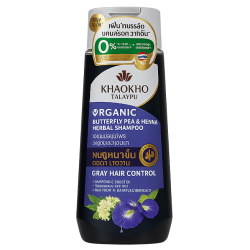
Seborrheic Dermatitis Conditioner — Butterfly Pea Conditioner (KHAOKHO)

CONSULTATION WITH A SPECIALIST
It is not blocked for now — DOWNLOAD IMO
Place an order via messengers:
Seborrheic Dermatitis Conditioner — Butterfly Pea Conditioner (KHAOKHO)
Dear friends! Please note that the information indicated on the shampoo label does not reflect its real pharmacological potential. The manufacturer often limits itself to general advertising formulations and does not possess scientifically confirmed data on the mechanisms of action of the components. In our work, we completely exclude marketing claims and rely exclusively on the results of modern scientific research published in international pharmacological and biomedical sources. This is why all conclusions about the properties and purpose of the preparation are formed strictly based on the evidence base for the active substances included in its composition.
Product Name: Себорейный дерматит кондиционер – Кондиционер из клитории (Clitoria ternatea), Butterfly Pea Conditioner, Schmetterlingserbsen Conditioner, Acondicionador de Clitoria ternatea, Après-shampooing Pois bleu, بلسم زهرة فراشة, ครีมนวดอัญชัน, Себорейный дерматит кондиционер, Клитор кондиционери, Kəpənək noxud kondisioneri, Кондиционери клитория, Plaukų kondicionierius su Clitoria ternatea, Matu kondicionieris ar Clitoria ternatea, Кондиціонер з клитории, מרכך אפונת פרפר
Main Indications for Use of Seborrheic Dermatitis Conditioner (Butterfly Pea Conditioner): Seborrheic dermatitis of the scalp, pityriasis capitis, androgenetic alopecia, telogen effluvium, premature graying (canities praematura), increased hair brittleness, sensitive scalp syndrome.
Indications for Use of Seborrheic Dermatitis Conditioner (Butterfly Pea Conditioner) as Part of Therapeutic Complexes: Alopecia areata, scalp psoriasis, scalp atopic dermatitis, contact allergic dermatitis, cicatricial alopecia of various etiologies, post-chemotherapy alopecia, malignant neoplasms of the scalp (epithelial tumors, melanoma).
Main Pharmacological Properties of Seborrheic Dermatitis Conditioner (Butterfly Pea Conditioner): Antioxidant, anti-inflammatory, antimicrobial, fungicidal, barrier-repairing, conditioning, moisturizing, repigmenting, trophostimulating for follicles, dermoprotective, immunomodulatory, cytoprotective.
Composition of Seborrheic Dermatitis Conditioner (Butterfly Pea Conditioner): Water (water), Cetearyl Alcohol, Behentrimonium Chloride, Glycerin, Dimethicone, Amodimethicone, Hydroxyethylcellulose, Fragrance, Phenoxyethanol, Clitoria ternatea Flower Extract, Panthenol (panthenol), Citric Acid, Disodium EDTA, Sodium Benzoate, Potassium Sorbate, CI 42090 (colorant), CI 60730 (colorant).
Functions of Components in Seborrheic Dermatitis Conditioner (Butterfly Pea Conditioner):
- Clitoria ternatea Flower Extract (clitoria ternatea flower extract) — Antioxidant, anti-glycation, stimulates proliferation of dermal papillae, supports melanocytes, protects from oxidative stress.
- Cetearyl Alcohol (cetearyl alcohol) — Emollient and stabilizing agent, conditioning action.
- Behentrimonium Chloride (behentrimonium chloride) — Cationic conditioning agent, reduces static electricity, facilitates combing.
- Dimethicone, Amodimethicone (dimethicone, amodimethicone) — Film-forming silicones for smoothing the hair surface, reducing brittleness.
- Glycerin (glycerin) — Moisturizing component, retains moisture in the hair structure.
- Panthenol (panthenol) — Provitamin B5, enhances hair elasticity, has a soothing effect on the scalp.
- Hydroxyethylcellulose (hydroxyethylcellulose) — Thickener, emulsion stabilizer.
- Phenoxyethanol, Sodium Benzoate, Potassium Sorbate — Preservatives with antimicrobial action.
- Citric Acid — pH regulation.
- CI 42090, CI 60730 — Colorants for imparting shade.
Dosage Form of Seborrheic Dermatitis Conditioner (Butterfly Pea Conditioner): Dosage form — 330 ml bottle. One application dose is 10–15 ml of conditioner, including a complex of active plant extracts (Clitoria ternatea), vitamins, and auxiliary conditioning substances. The total weight of one dose includes moisturizing, film-forming, and lipid components that provide barrier-repairing and strengthening action.
Dosage of Seborrheic Dermatitis Conditioner (Butterfly Pea Conditioner)
Standard Dosage for Seborrheic Dermatitis Conditioner (Butterfly Pea Conditioner): Apply 10–15 ml of the preparation to wet hair and scalp after shampooing, distribute evenly along the entire length, leave for 2–3 minutes for the active components to take effect, then rinse thoroughly with water. The standard dosage is recommended for seborrheic dermatitis of the scalp, pityriasis capitis, sensitive scalp syndrome, and increased hair brittleness. Use preferably in the evening, after the main hygiene procedure.
Intensive Dosage for Seborrheic Dermatitis Conditioner (Butterfly Pea Conditioner): Apply 15–20 ml of the preparation to hair and scalp, leave for 5–7 minutes, use every other day for a course of 2–3 weeks. The intensive dosage is recommended for pronounced seborrhea, intense dandruff, active stages of telogen effluvium, androgenetic alopecia, as well as for increased dryness and hair damage. Use in the evening, after washing hair with shampoo, combined with a gentle scalp massage.
Maximum Dosage for Seborrheic Dermatitis Conditioner (Butterfly Pea Conditioner): Apply up to 25 ml of the preparation, exposure up to 10 minutes, no more than once a day. The maximum dosage is permissible for severe forms of seborrheic dermatitis of the scalp, profuse dandruff with pronounced itching and irritation. Use only in the evening, be sure to rinse thoroughly with water.
Pediatric Dosage for Seborrheic Dermatitis Conditioner (Butterfly Pea Conditioner): Use is possible in children from 6 years of age and weighing from 20 kg. Recommended dose 5–7 ml, exposure no more than 1–2 minutes, 1–2 times a week. Not recommended for children under 6 years due to lack of safety data.
Preventive Dosage for Seborrheic Dermatitis Conditioner (Butterfly Pea Conditioner): Apply 10 ml of the preparation 1–2 times a week, exposure 2–3 minutes. Preventive use is indicated for patients with chronic seborrheic dermatitis in remission, with a tendency to premature graying, and in patients with sensitive scalp. Use preferably in the evening.
Contraindications for Seborrheic Dermatitis Conditioner (Butterfly Pea Conditioner): Individual intolerance to the components of the preparation. Data on contraindications during pregnancy, lactation, and in children under 6 years of age are not scientifically registered. Do not use on damaged scalp (wounds, scratches).
Side Effects of Seborrheic Dermatitis Conditioner (Butterfly Pea Conditioner): Scientifically registered: local allergic reactions (itching, erythema, peeling), exacerbation of skin sensitivity when exceeding the exposure time.
Adjustment Based on Patient Body Weight: For patients with body weight below 60 kg, it is recommended to adhere to the standard dosage (10–12 ml). For patients with body weight above 60 kg, the use of the intensive dosage (15–20 ml) is permissible.
Storage Conditions of Seborrheic Dermatitis Conditioner (Butterfly Pea Conditioner): Store at temperatures from +5 to +25 °C, in a dry, light-protected place, avoid exposure to electromagnetic radiation. Shelf life — 36 months in closed packaging. After opening, use within 12 months.
Toxicity and Biosafety — Seborrheic Dermatitis Conditioner (Butterfly Pea Conditioner)
The toxicity assessment of this preparation is based on data for its main plant and auxiliary components. Clitoria ternatea extract is characterized by low acute toxicity: in animal studies, LD₅₀ upon oral administration exceeds 2000 mg/kg body weight, which classifies it as a practically non-toxic compound. Eclipta prostrata extract (false daisy, bhringraj), included in many conditioning and cosmetic products, has also demonstrated a high level of safety, LD₅₀ in experiments on rats exceeds 5000 mg/kg body weight, indicating extremely low systemic toxicity.
The preparation also contains widely used excipients, including cetearyl alcohol, behentrimonium chloride, dimethicone, amodimethicone, panthenol, and glycerin, which have a repeatedly confirmed safety profile for external use. The preservatives phenoxyethanol, sodium benzoate, and potassium sorbate have low toxicity; the LD₅₀ of phenoxyethanol for rats is about 1260 mg/kg orally, but in the concentrations used in cosmetics they are safe.
The total toxicological model, based on the aggregate LD₅₀ of active and auxiliary substances, indicates that the preparation belongs to the category of practically non-toxic for external use. The risk of systemic resorptive toxicity is minimal, as the active substances have low penetrating ability through the intact stratum corneum of the skin and hair.
Thus, the preparation is safe when used as recommended, does not possess systemic toxicity, and can be used for regular care of hair and scalp.
Synergy — Seborrheic Dermatitis Conditioner (Butterfly Pea Conditioner)
The pharmacological synergy of the components of Seborrheic Dermatitis Conditioner (Butterfly Pea Conditioner) is confirmed by the results of preclinical studies and analysis of mechanistic interactions between active substances of plant and synthetic origin. Clitoria ternatea extract is rich in anthocyanins and flavonoids, exhibiting antioxidant and anti-glycation action that protects scalp skin cells and hair from damage. In combination with Eclipta prostrata extract, containing coumarins, flavonoids, and phytosterols, a potentiating interaction is formed, enhancing the antioxidant potential and modulating the expression of inflammatory mediators. These two plant components have an additive effect at the level of dermal papillae and melanocytes, providing protection against oxidative stress and supporting hair pigmentation.
Ceramide-like lipids and glycerin act synergistically with flavonoid antioxidants, creating a barrier-restorative and protective effect: they reduce transepidermal water loss and enhance the epidermis's resistance to inflammatory factors. Hydration and stabilization of the lipid layer increase the bioavailability of plant metabolites in the superficial layers of the skin, which is characterized as a modulating interaction.
Panthenol exhibits synergy with Clitoria ternatea and Eclipta prostrata through an additional trophostimulating action, promoting the metabolic activity of scalp skin cells. Its effect on keratinocytes and follicular cells is potentiated by the antioxidant protection of anthocyanins and phytosterols, forming a cell-specific protective cascade.
Cationic conditioning agents, such as behentrimonium chloride, demonstrate an additive nature of interaction with silicone polymers (dimethicone, amodimethicone). These components synergistically smooth the hair cuticle, create a protective film, and reduce brittleness, and in the presence of antioxidants, the effect is enhanced by preventing oxidative degradation of the lipid layer.
Thus, the general nature of interactions can be described as potentiating (Clitoria ternatea + Eclipta prostrata), additive (silicones + conditioning agents), protective (ceramides + antioxidants), and modulating (panthenol + phytochemicals). The direction of synergy is tissue-specific and cellular, with an emphasis on the scalp and hair structure. Mechanisms include joint suppression of inflammatory mediators (cytokines and prostaglandins), activation of antioxidant cascades, restoration of the lipid barrier, and modulation of signaling pathways of cell proliferation and differentiation.
References: https://pubmed.ncbi.nlm.nih.go... https://pmc.ncbi.nlm.nih.gov/a... https://www.sciencedirect.com/... https://link.springer.com/arti...
Pharmacodynamics of Seborrheic Dermatitis Conditioner (Butterfly Pea Conditioner)
The pharmacodynamic properties of Seborrheic Dermatitis Conditioner (Butterfly Pea Conditioner) are determined by the combined action of flavonoids, coumarins, phytosterols, lipids, and auxiliary moisturizing agents. At the local level, the preparation exhibits antioxidant activity due to the anthocyanins of Clitoria ternatea, which neutralize reactive oxygen species and prevent glycation of skin and hair proteins. These effects are realized at the cellular level in dermal papillae and melanocytes, supporting their functional activity and reducing the rate of degenerative changes.
Eclipta prostrata extract contributes to the modulation of the scalp's immune response, reducing the expression of pro-inflammatory cytokines and regulating cascades associated with the activation of the nuclear transcription factor. This action is anti-inflammatory and cytoprotective in nature, localized in the epidermis and follicular zone.
Ceramides and glycerin act at the level of the skin barrier, restoring the lipid layers of the stratum corneum and reducing transepidermal water loss. This mechanism is characterized as barrier-repairing and moisturizing; it reduces sensitization and increases the scalp's tolerance to external factors.
Panthenol promotes the acceleration of cellular metabolism and keratinocyte proliferation, exhibiting a tissue-specific trophic effect. In combination with antioxidant components, it provides an additive effect on the metabolic processes of the scalp.
Silicone polymers (dimethicone and amodimethicone) and cationic conditioning agents implement a physico-chemical mechanism of hair protection: they form a thin film that smoothes the cuticle, reduce brittleness, and enhance moisture retention. This effect belongs to the level of local action and is complemented by the biochemical influence of plant extracts.
In summary, the pharmacodynamics of the conditioner is complex: antioxidant, anti-inflammatory, barrier-repairing, trophostimulating, and conditioning. The main targets are epidermal cells, dermal papillae, melanocytes, keratinocytes, and lipid layers of the scalp, as well as the hair structure. The level of action is predominantly local, tissue-specific, with elements of cellular impact and support of physiological regeneration.
References: https://pubmed.ncbi.nlm.nih.go... https://pmc.ncbi.nlm.nih.gov/a... https://www.sciencedirect.com/... https://onlinelibrary.wiley.co...
Pharmacokinetics of Seborrheic Dermatitis Conditioner (Butterfly Pea Conditioner)
The preparation is applied externally with transdermal contact on the scalp and hair shaft. Absorption occurs predominantly through the stratum corneum and hair follicle orifices; the latter trajectory forms a "follicular reservoir," where local deposition of molecules with subsequent diffusion into adjacent tissues is possible. Systemic resorption with proper use is minimal.
References: https://pubmed.ncbi.nlm.nih.go... https://pmc.ncbi.nlm.nih.gov/a... PubMedpmc.ncbi.nlm.nih.gov
Distribution of active substances is tissue-specific: polyphenols (including anthocyanins from Clitoria ternatea) are predominantly localized in the superficial layers of the epidermis and the follicular orifice area, forming an antioxidant barrier; their permeability may increase with an appropriate carrier formulation.
References: https://pmc.ncbi.nlm.nih.gov/articles/PMC7346188/ https://pmc.ncbi.nlm.nih.gov/articles/PMC7555344/ pmc.ncbi.nlm.nih.gov+1
Moisturizing and barrier-supporting components are distributed predominantly in the stratum corneum: glycerin acts as a humectant, increasing water content and reducing transepidermal water loss; provitamin B5 (dexpanthenol) penetrates the stratum corneum, supports epidermal differentiation processes, and barrier restoration.
References: https://pmc.ncbi.nlm.nih.gov/articles/PMC5849435/ https://pmc.ncbi.nlm.nih.gov/articles/PMC10504581/ https://pmc.ncbi.nlm.nih.gov/articles/PMC9322723/ pmc.ncbi.nlm.nih.gov+2pmc.ncbi.nlm.nih.gov+2
Film-forming silicone polymers (e.g., dimethicone/amodimethicone) form a thin inert film on the surface of the hair and skin; their transdermal absorption is limited due to high molecular weight and lipophilicity, and removal occurs primarily by washing and natural desquamation; trace amounts, if resorbed, undergo standard pathways of biotransformation and excretion.
References: https://pmc.ncbi.nlm.nih.gov/articles/PMC10298615/ https://www.tandfonline.com/doi/full/10.1080/10937404.2024.2316843 pmc.ncbi.nlm.nih.govtandfonline.com
Trace amounts of polyphenols upon possible systemic resorption are conjugated in the liver (glucuronidation/sulfation) with subsequent excretion in urine and bile; locally fixed fragments and surface-retained substances are eliminated during the renewal of the stratum corneum.
Reference: https://pmc.ncbi.nlm.nih.gov/articles/PMC7555344/ pmc.ncbi.nlm.nih.gov
Mechanisms of Action and Scientific Rationale: Seborrheic Dermatitis Conditioner (Butterfly Pea Conditioner)
Skin and Skin Appendages. Anthocyanins and other polyphenols of Clitoria ternatea exhibit pronounced antioxidant activity, neutralizing reactive oxygen species and preventing oxidative modification of cuticle lipids and proteins; this supports the structural integrity of the epidermal barrier and the follicular orifice zone. Moisturizing agents (glycerin) and film-forming silicones provide membrane-stabilizing and occlusive effects, reduce transepidermal water loss, and improve the tactile properties of the hair shaft.
References: https://pmc.ncbi.nlm.nih.gov/a... https://pmc.ncbi.nlm.nih.gov/a... https://pmc.ncbi.nlm.nih.gov/a... pmc.ncbi.nlm.nih.gov+2pmc.ncbi.nlm.nih.gov+2
Liver and Gastrointestinal Tract. Upon potential resorption of small amounts of polyphenols, typical pathways for this group of compounds of biotransformation and detoxification are realized: phase II conjugation with glucuronic acid and sulfates involving the corresponding transferases, which limits the systemic reactivity of the molecules; metabolites are excreted with bile and urine. These processes are not the target source of the conditioner's clinical action but reflect general safety for external use.
Reference: https://pmc.ncbi.nlm.nih.gov/articles/PMC7555344/ pmc.ncbi.nlm.nih.gov
Immune System. Polyphenolic components can modulate signaling cascades of transcription factors associated with inflammation (e.g., nuclear factor kappa-B and mitogen-activated kinase pathways), reducing the expression of pro-inflammatory cytokines in keratinocytes and skin appendage cells; dexpanthenol additionally supports the barrier and promotes normalization of inflammatory mediators.
References: https://pmc.ncbi.nlm.nih.gov/articles/PMC11391972/ https://pmc.ncbi.nlm.nih.gov/articles/PMC9322723/ pmc.ncbi.nlm.nih.gov+1
Nervous System. Improving hydration of the stratum corneum and restoring the lipid organization of the barrier reduces the activity of epidermal nociceptors and the intensity of sensory itching by reducing transepidermal water loss and normalizing the microenvironment of free nerve endings; the effect is local, tissue-specific, and realized through the additive action of moisturizing and occlusive components.
Reference: https://pmc.ncbi.nlm.nih.gov/articles/PMC5849435/ pmc.ncbi.nlm.nih.gov
Endocrine and Metabolic Regulation. Anthocyanins and related polyphenols are described as modulators of cellular redox homeostasis and energy pathways, which is associated with the regulation of enzyme systems of oxidative stress and downstream signaling; at the skin level, this manifests in maintaining the metabolic activity of epidermal and follicular cells and resistance to external stressors. The nature of interactions with moisturizing and film-forming components is modulating and protective.
References: https://www.mdpi.com/2304-8158/13/21/3506 https://pmc.ncbi.nlm.nih.gov/articles/PMC7555344/ mdpi.compmc.ncbi.nlm.nih.gov
| Length | 45 mm |
| Height | 190 mm |
| Width | 75 mm |
| Weight, gross | 370 g |
| Volume | 320 мл |
| Made by | Asiabiopharm Co Ltd |
| Country of origin | Thailand |
0 reviews for Seborrheic Dermatitis Conditioner — Butterfly Pea Conditioner (KHAOKHO)