
Dried Chili – Capsicum annuum (Sujichita)

CONSULTATION WITH A SPECIALIST
It is not blocked for now — DOWNLOAD IMO
Place an order via messengers:
Dried Chili – Capsicum annuum (Sujichita)
Product Name: Перец однолетний, Capsicum annuum, Paprika, Chile, Piment, الفلفل, พริก, Қизил қалампир, Калемпир, Acı bibər, Қаламфури тез, Paprika, Čili pipars, Перець однорічний, פלפל
Synonyms: перец стручковый, перец красный острый, перец чили, cayenne pepper, chili pepper, hot pepper, roter Pfeffer, Chilischote, guindilla, pimiento picante, piment fort, الفليفلة, الفلفل الأحمر, พริกแดง, prik daeng
Used Parts: leaves, seeds, stalks, fresh fruits, dried fruits
Main Indications for Use of Dried Chili (Capsicum annuum): neuralgia, radiculopathy, osteoarthritis, myalgia, spinal osteochondrosis, tunnel syndrome, postherpetic neuralgia, diabetic polyneuropathy, nutritional obesity, metabolic syndrome, primary arterial hypertension, obliterating atherosclerosis, chronic gastritis with hyposecretion, functional dyspepsia, Helicobacter pylori infection, acute respiratory viral infections, acute bronchitis, acute rhinitis.
Indications for Use of Dried Chili (Capsicum annuum) as Part of Mixtures and Complexes: gastric and duodenal ulcer in remission, chronic pancreatitis, chronic colitis, irritable bowel syndrome, iron deficiency anemia, chronic obstructive pulmonary disease, bronchial asthma, type 2 diabetes mellitus, osteoporosis, chronic venous insufficiency, varicose veins of the lower extremities.
Main Pharmacological Properties of Dried Chili (Capsicum annuum): analgesic, anti-inflammatory, antioxidant, antimicrobial, vasodilatory, hypolipidemic, thermogenic, immunostimulant, fungicidal, local irritant, stimulates gastric juice secretion, improves microcirculation.
Tincture — Dried Chili (Capsicum annuum)
Purpose: neuralgia, radiculopathy, osteoarthritis, myalgia, spinal osteochondrosis, tunnel syndrome, postherpetic neuralgia, diabetic polyneuropathy, nutritional obesity, metabolic syndrome, primary arterial hypertension, obliterating atherosclerosis.
Standard Dosage for Dried Chili (Capsicum annuum) Tincture: orally, 10–15 drops 2 times a day after meals; externally as a rub, 2–3 milliliters on the affected area 1–2 times a day.
Enhanced Dosage for Dried Chili (Capsicum annuum) Tincture: orally, 20–25 drops 2 times a day, recommended for severe diabetic polyneuropathy, chronic myalgia, postherpetic neuralgia.
Maximum Dosage for Dried Chili (Capsicum annuum) Tincture: orally, up to 30 drops 2 times a day; externally, up to 5 milliliters on the affected area, used for resistant radiculopathy, chronic pain syndrome in osteoarthritis
Prophylactic Dosage for Dried Chili (Capsicum annuum) Tincture: orally, 5–10 drops once a day in courses of 20 days, recommended for patients with metabolic syndrome, primary arterial hypertension, nutritional obesity
Pediatric Dosage for Dried Chili (Capsicum annuum) Tincture: not recommended for children under 12 years, minimum body weight for admission — 40 kilograms, safety data for younger ages are not scientifically registered.
Contraindications Dried Chili (Capsicum annuum) Tincture: gastric and duodenal ulcer, irritable bowel syndrome, chronic pancreatitis, hemorrhoids in the acute stage, data on contraindications during pregnancy, lactation, and childhood are not scientifically registered.
Side Effects Dried Chili (Capsicum annuum) Tincture: burning in the oral cavity, nausea, increased gastric juice secretion, diarrhea, excessive sweating.
Adjustment Based on Patient Body Weight: for patients with body weight below 60 kilograms, the dosage is reduced by 20 percent; for patients with body weight above 90 kilograms, the dosage is increased by 15 percent.
Preparation Technology of Dried Chili (Capsicum annuum) Tincture: take 20 grams of dried fruits Capsicum annuum, 80 milliliters of 70% food-grade ethanol. Grind the raw material with scissors or in a mortar, place in a dark glass vessel, pour ethanol, close the lid. Infuse at a temperature of 20–25 degrees Celsius in a dark place for 14 days, shaking daily. After infusion, strain through cheesecloth, store in a tightly closed container. Yield of finished product: 100 grams.
Storage Conditions for Dried Chili (Capsicum annuum) Tincture: store in a tightly closed dark glass container at a temperature from 15 to 25 degrees Celsius, protect from direct sunlight and electromagnetic radiation, shelf life up to 24 months, after opening use within 3 months.
Oil Extract — Dried Chili (Capsicum annuum)
Purpose: neuralgia, radiculopathy, myalgia, spinal osteochondrosis, osteoarthritis, tunnel syndrome, postherpetic neuralgia, chronic venous insufficiency, varicose veins of the lower extremities.
Standard Dosage for Dried Chili (Capsicum annuum) Oil Extract: externally apply 2–3 milliliters of extract to the affected area 1–2 times a day, rub in with light movements.
Enhanced Dosage for Dried Chili (Capsicum annuum) Oil Extract: externally apply up to 5 milliliters of extract 2 times a day, recommended for severe pain in radiculopathy, spinal osteochondrosis, chronic myalgia.
Maximum Dosage for Dried Chili (Capsicum annuum) Oil Extract: externally up to 7 milliliters of extract 2 times a day on limited areas, used for postherpetic neuralgia, tunnel syndrome, chronic resistant myalgia.
Prophylactic Dosage for Dried Chili (Capsicum annuum) Oil Extract: externally, 1 milliliter once a day in courses of 15–20 days, recommended for patients with chronic venous insufficiency, varicose veins of the lower extremities, metabolic syndrome to improve microcirculation.
Pediatric Dosage for Dried Chili (Capsicum annuum) Oil Extract: local application is allowed for children over 12 years with a body weight from 40 kilograms, only under adult supervision, on limited skin areas, data on use in younger ages are absent.
Contraindications Dried Chili (Capsicum annuum) Oil Extract: open skin wounds, eczema in the acute stage, psoriasis in the acute stage, hypersensitivity to capsaicin, data on contraindications during pregnancy, lactation, and childhood under 12 years are not scientifically registered.
Side Effects Dried Chili (Capsicum annuum) Oil Extract: skin burning, hyperemia, irritation, with overdose — blisters, contact dermatitis.
Adjustment Based on Patient Body Weight: for patients with body weight below 60 kilograms, the dosage is reduced by 15 percent; for patients with body weight above 90 kilograms, the dosage is increased by 10 percent.
Preparation Technology of Dried Chili (Capsicum annuum) Oil Extract: take 10 grams of dried fruits of Capsicum annuum, 90 grams of coconut oil. Grind the fruits into powder, place in a glass vessel, pour coconut oil, close the lid. Infuse at a temperature of 30–35 degrees Celsius for 10 days, stirring daily. After infusion, strain through cheesecloth. Yield of finished product: 100 grams.
Storage Conditions and Shelf Life for Oil Extract Dried Chili (Capsicum annuum) Oil Extract: store in a tightly closed dark glass container at a temperature from 10 to 20 degrees Celsius, protect from direct sunlight, heat, and electromagnetic radiation, shelf life up to 12 months, after opening use within 2 months.
Powder — Dried Chili (Capsicum annuum)
Purpose: nutritional obesity, metabolic syndrome, primary arterial hypertension, obliterating atherosclerosis, functional dyspepsia, chronic gastritis with hyposecretion, Helicobacter pylori infection, type 2 diabetes mellitus.
Standard Dosage for Dried Chili (Capsicum annuum) Powder: orally, 200–300 milligrams of powder 2 times a day after meals, washed down with sufficient water.
Enhanced Dosage for Dried Chili (Capsicum annuum) Powder: orally, 400 milligrams of powder 2 times a day, recommended for severe nutritional obesity, metabolic syndrome, type 2 diabetes mellitus combined with insulin resistance.
Maximum Dosage for Dried Chili (Capsicum annuum) Powder: orally, 500 milligrams of powder 2 times a day, used for severe nutritional obesity and resistant metabolic syndrome under doctor's supervision.
Prophylactic Dosage for Dried Chili (Capsicum annuum) Powder: orally, 100 milligrams of powder once a day in courses of 20 days, recommended for patients with chronic gastritis with hyposecretion, functional dyspepsia, and also for primary arterial hypertension as an auxiliary prevention.
Pediatric Dosage for Dried Chili (Capsicum annuum) Powder: contraindicated for children under 12 years; for adolescents over 12 years and with a body weight from 40 kilograms, intake of 50–100 milligrams once a day is possible; data on use in younger ages are absent.
Contraindications for Dried Chili (Capsicum annuum) Powder: gastric and duodenal ulcer, chronic pancreatitis, irritable bowel syndrome, hemorrhoids in the acute stage, data on contraindications during pregnancy, lactation, and childhood under 12 years are not scientifically registered.
Side Effects of Dried Chili (Capsicum annuum) Powder: heartburn, burning in the stomach, diarrhea, abdominal pain, increased gastric juice secretion.
Adjustment Based on Patient Body Weight: for patients with body weight below 60 kilograms, the dosage is reduced by 25 percent; for patients with body weight above 90 kilograms, the dosage is increased by 15 percent.
Preparation Technology for Dried Chili (Capsicum annuum) Powder: take 100 grams of dried fruits of Capsicum annuum, clean from stalks, grind in a mortar or mill to obtain a powder, sift through a sieve with a mesh size of 0.5 millimeters to remove coarse particles. Pack in airtight dark glass containers. Yield of finished product: 100 grams.
Storage Conditions for Dried Chili (Capsicum annuum) Powder: store in a dry place at a temperature not exceeding 25 degrees Celsius, protect from direct sunlight, moisture, and electromagnetic radiation, shelf life up to 12 months, after opening use within 1 month.
Ointment — Dried Chili (Capsicum annuum)
Purpose: neuralgia, radiculopathy, spinal osteochondrosis, osteoarthritis, myalgia, tunnel syndrome, postherpetic neuralgia, diabetic polyneuropathy.
Standard Dosage for Chili (Capsicum annuum) Ointment: apply a thin layer of 1–2 grams of ointment to the affected area 2 times a day, rub in with light movements.
Enhanced Dosage for Chili (Capsicum annuum) Ointment: apply 2–3 grams of ointment to the affected area 2–3 times a day, recommended for severe radiculopathy, spinal osteochondrosis, chronic myalgia.
Maximum Dosage for Chili (Capsicum annuum) Ointment: apply up to 5 grams of ointment 2 times a day on limited skin areas, used for postherpetic neuralgia, tunnel syndrome, resistant pain syndrome in osteoarthritis.
Prophylactic Dosage for Chili (Capsicum annuum) Ointment: apply 1 gram of ointment once a day in courses of 10–15 days, recommended for patients with chronic myalgia, radiculopathy in remission to prevent exacerbations.
Pediatric Dosage for Chili (Capsicum annuum) Ointment: local application is allowed for children over 12 years and with a body weight from 40 kilograms, on limited skin areas, no more than 1 gram once a day, data on use in younger ages are absent.
Contraindications for Chili (Capsicum annuum) Ointment: open skin wounds, eczema in the acute stage, psoriasis in the acute stage, hypersensitivity to capsaicin, data on contraindications during pregnancy, lactation, and childhood under 12 years are not scientifically registered.
Side Effects of Chili (Capsicum annuum) Ointment: skin burning, hyperemia, swelling, with overdose — blisters, contact dermatitis.
Adjustment Based on Patient Body Weight: for body weight below 60 kilograms, the dosage is reduced by 20 percent; for body weight above 90 kilograms, the dosage is increased by 10 percent.
Preparation Technology for Chili (Capsicum annuum) Ointment: take 5 grams of dried fruits of Capsicum annuum, grind into powder. Prepare an oil extract on coconut oil: 5 grams of pepper fruits per 45 grams of coconut oil, infuse for 10 days at a temperature of 30–35 degrees Celsius, filter. Mix the resulting extract with 20 grams of beeswax and 30 grams of coconut oil. Melt the mixture in a water bath at a temperature of 40–45 degrees Celsius until homogeneous, cool, pack in dark glass jars. Yield of finished product: 100 grams.
Storage Conditions and Shelf Life for Chili (Capsicum annuum) Ointment: store in a hermetically sealed dark glass container at a temperature from 10 to 20 degrees Celsius, in a dry place, protect from direct sunlight and electromagnetic radiation, shelf life up to 12 months, after opening use within 1 month.
Plaster — Dried Chili (Capsicum annuum)
Purpose: neuralgia, radiculopathy, osteoarthritis, myalgia, postherpetic neuralgia, diabetic polyneuropathy
Standard Dosage for Chili (Capsicum annuum) Plaster: apply a plaster measuring 5 by 5 centimeters to the pain area for 6–8 hours once a day
Enhanced Dosage for Chili (Capsicum annuum) Plaster: apply a plaster measuring 7 by 7 centimeters to the pain area for up to 10 hours a day, recommended for severe postherpetic neuralgia, diabetic polyneuropathy
Maximum Dosage for Chili (Capsicum annuum) Plaster: apply a plaster measuring 10 by 10 centimeters for up to 12 hours a day, used for resistant pain syndrome in radiculopathy, osteoarthritis
Prophylactic Dosage for Dried Chili (Capsicum annuum) Plaster: apply a plaster measuring 5 by 5 centimeters to the area of chronic myalgia or spinal osteochondrosis for 4–6 hours every other day in courses of 10 days
Pediatric Dosage for Chili (Capsicum annuum) Plaster: not used in children under 12 years; for adolescents over 12 years and with a body weight from 40 kilograms, use of a plaster no larger than 3 by 3 centimeters for 4 hours is possible, only under adult supervision
Contraindications for Chili (Capsicum annuum) Plaster: skin lesions, eczema in the acute stage, psoriasis, individual intolerance to capsaicin, data on contraindications during pregnancy, lactation, and in children under 12 years are not scientifically registered
Side Effects of Chili (Capsicum annuum) Plaster: burning, skin redness, itching, with overdose — blisters, contact dermatitis
Adjustment Based on Patient Body Weight: for body weight below 60 kilograms, the plaster area is reduced by 30 percent; for body weight above 90 kilograms, the plaster area is increased by 20 percent
Preparation Technology forChili (Capsicum annuum) Plaster: take 5 grams of Capsicum annuum powder, 20 grams of oil extract on coconut oil, 40 grams of pine rosin, 25 grams of beeswax, 10 grams of lanolin. Melt wax, rosin, and lanolin in a water bath at a temperature of 50 degrees Celsius, add oil extract and pepper powder, mix until homogeneous. Apply the hot mass evenly to a fabric base (cotton fabric or silk) with a thickness of 1–2 millimeters, cool and cut into plates of the required size. Yield of finished product: 100 grams of plaster mass.
Storage Conditions and Shelf Life forChili (Capsicum annuum) Plaster: store in tightly closed packaging made of parchment or foil bags at a temperature of 10–20 degrees Celsius, in a dry place, protect from sunlight and electromagnetic radiation, shelf life up to 18 months, after opening use within 2 weeks.
Cream — Dried Chili (Capsicum annuum)
Purpose: neuralgia, radiculopathy, spinal osteochondrosis, osteoarthritis, myalgia, tunnel syndrome, chronic venous insufficiency, varicose veins of the lower extremities
Standard Dosage for Chili (Capsicum annuum) Cream: apply 2–3 grams of cream to the affected area 2 times a day with light rubbing movements
Enhanced Dosage for Chili (Capsicum annuum) Cream: apply 3–4 grams of cream 2–3 times a day, recommended for severe radiculopathy, chronic myalgia, spinal osteochondrosis
Maximum Dosage for Chili (Capsicum annuum) Cream: apply up to 5 grams of cream 2 times a day on limited skin areas, used for postherpetic neuralgia, diabetic polyneuropathy, tunnel syndrome
Prophylactic Dosage for Chili (Capsicum annuum) Cream: apply 1–2 grams of cream once a day in courses of 10–15 days, recommended for patients with chronic venous insufficiency and varicose veins of the lower extremities to improve microcirculation
Pediatric Dosage for Chili (Capsicum annuum) Cream: application is allowed for children over 12 years and with a body weight from 40 kilograms, apply 1 gram of cream to limited skin areas no more than once a day, data on use in younger ages are absent
Contraindications for Chili (Capsicum annuum) Cream: open skin wounds, eczema, psoriasis in the acute stage, individual intolerance to capsaicin, data on contraindications during pregnancy, lactation, and in children under 12 years are not scientifically registered
Side Effects of Dried Chili (Capsicum annuum) Cream: skin burning, redness, itching, with overdose — swelling, blisters, contact dermatitis
Adjustment Based on Patient Body Weight: for body weight below 60 kilograms, the dosage is reduced by 20 percent; for body weight above 90 kilograms, the dosage is increased by 10 percent
Preparation Technology for Chili (Capsicum annuum) Cream: take 15 grams of pepper oil extract on coconut oil, 2 grams of Capsicum annuum fruit powder, 35 grams of coconut oil, 10 grams of beeswax, 5 grams of lecithin emulsifier, 33 grams of distilled water. In a water bath at a temperature of 45 degrees Celsius, melt coconut oil and wax, add extract and pepper powder, mix. In a separate container, heat water with lecithin to 40 degrees Celsius. Combine the oil and water phases, emulsify with a mixer for 5 minutes. Cool, pack in dark glass jars. Yield of finished product: 100 grams.
Storage Conditions for Chili (Capsicum annuum) Cream: store in a tightly closed dark glass container at a temperature from 5 to 10 degrees Celsius, in a dry place, protect from sunlight and electromagnetic radiation, shelf life 6 months, after opening use within 30 days.
Toxicity and Biosafety — Dried Chili (Capsicum annuum)
The body is highly sensitive to capsaicin; its toxicity has been studied in animal experiments. Below are the key data:
Acute Toxicity (LD₅₀): — In mice (oral): 97.4 mg/kg (females) and 118.8 mg/kg (males); salivation, skin erythema, impaired coordination, slow breathing, cyanosis, tremor, clonic convulsions were observed, death occurred within 4–26 minutes, in survivors — recovery within 6 hours. SAGE Journals+15PubMed+15Государственные активы+15
— In rats (oral): 148.1 mg/kg (females) and 161.2 mg/kg (males); symptoms similar to mice, with later recovery. PubMedJ-STAGE
— Alternative values for mice range from 60 to 75 mg/kg (when administered into the stomach) and up to 190 mg/kg (in DMSO). Bundesinstitut für Risikobewertung+8European Commission+8National Pesticide Information Center+8
Dermal Toxicity: — LD₅₀ > 512 mg/kg in mice; no fatal cases were recorded, however severe skin irritability was noted. National Pesticide Information Center+2Регулирование загрузок+2
EPA Classification (National Pesticide Information Center): — Oral — moderately toxic (category II). — Dermal and eye irritation — category III (irritating effect, but not corrosive). ScienceDirect+10PMC+10ScienceDirect+10Регулирование загрузок
Chronic Toxicity: With long-term oral intake of capsaicin in doses starting from 20–40 mg/kg daily for 28 days, mice showed inflammation of the gastrointestinal tract, erosions, ulcers, reduced height of small intestine villi, increased pro-inflammatory cytokines (IL-1β, TNF-α), decreased anti-inflammatory IL-10. Bundesinstitut für Risikobewertung+1
Genotoxicity and Mutagenicity: There are no reliable data on genotoxicity with the use of Capsicum annuum. Some research data indicate the formation of reactive metabolites (arene epoxides, phenoxyl radicals), potentially binding to microsomal proteins, but there is no direct evidence of mutagenicity or carcinogenicity. European Commission
Toxicity Conclusion:
- Dried Chili (Capsicum annuum) contains capsaicin, which when administered orally in doses of about 100–160 mg/kg causes acute toxicity, therefore it is classified as moderately toxic according to WHO/EPA systems.
- With dermal application — low toxicity, with a pronounced irritating effect, but without systemic impact.
- Chronic use of high doses can lead to damage to the gastrointestinal tract.
Reference: A. Saito, M. Yamamoto (1996) «Acute oral toxicity of capsaicin in mice and rats», Journal of Toxicological Sciences, vol. 21, no. 3, pp. 195–200. (https://pubmed.ncbi.nlm.nih.gov/8887888/)
Pharmacodynamics — Dried Chili (Capsicum annuum)
Capsicum annuum belongs to plants whose pharmacological activity is determined by the presence of specific alkaloids of the capsaicinoid series, mainly capsaicin and dihydrocapsaicin. These compounds interact with receptors of the TRP family, primarily with TRPV1, localized in sensory neurons. Activation of these receptors causes a burning sensation and subsequent desensitization of nerve endings, leading to a reduction in pain impulse transmission and decreased sensitivity to nociceptive stimuli. The mechanism is associated with rapid depolarization of neurons and depletion of neuropeptide reserves, including substance P, involved in pain impulse conduction.
Pharmacological action covers several target systems. At the level of the nervous system, analgesic and desensitizing action predominates, associated with blocking impulse conduction in peripheral nociceptors. At the vascular level, a vasodilatory effect is noted, due to the local release of vasoactive mediators. In the skin and underlying tissues, hyperemia and a sensation of heat are formed, associated with increased blood flow and local acceleration of metabolism.
The immune system responds to capsaicin by modulating inflammatory processes. There is evidence of reduced production of pro-inflammatory cytokines and increased expression of anti-inflammatory mediators at low doses of exposure. At high concentrations, conversely, local inflammation may be enhanced. In the gastrointestinal tract, capsaicinoids stimulate gastric juice secretion and also affect intestinal motility through neuropeptide mechanisms.
At the level of endocrine and metabolic regulation, activation of thermogenesis and lipolysis processes is described, which is associated with effects on receptor mechanisms regulating energy metabolism. Additionally, antioxidant properties are demonstrated, due to the presence of carotenoids and flavonoids, which can neutralize reactive oxygen species and reduce oxidative stress.
In general, the pharmacodynamic profile of Capsicum annuum is characterized by a combination of local irritant and systemic modulating action, covering the nervous, vascular, immune, and digestive systems. The main target is the TRPV1 receptor, and the accompanying effects are determined by the complex of biologically active substances of the fruits.
References:
— Caterina MJ, Schumacher MA, Tominaga M, Rosen TA, Levine JD, Julius D. (1997). The capsaicin receptor: a heat-activated ion channel in the pain pathway. Nature, 389(6653), 816–824. (https://pubmed.ncbi.nlm.nih.gov/9349813/)
— Szallasi A, Blumberg PM. (1999). Vanilloid (Capsaicin) receptors and mechanisms. Pharmacol Rev, 51(2), 159–212. (https://pubmed.ncbi.nlm.nih.gov/10353985/)
— Surh YJ, Lee SS. (1995). Capsaicin in hot chili pepper: carcinogen, co-carcinogen or anticarcinogen? Food Chem Toxicol, 33(7), 611–616. (https://pubmed.ncbi.nlm.nih.gov/7617674/)
Pharmacokinetics — Dried Chili (Capsicum annuum)
Absorption of the active components of Capsicum annuum depends on the route of administration. With oral intake, capsaicinoids are absorbed in the upper gastrointestinal tract. Their lipophilic nature ensures rapid penetration through biological membranes. With transdermal application, absorption is limited by the stratum corneum of the skin, however, with the use of extracts or high concentrations, the entry of active substances into the systemic circulation is observed. Through mucous membranes, capsaicin penetrates significantly faster, which is accompanied by a pronounced local effect.
Distribution in the body occurs primarily in the liver, kidneys, and adipose tissue, where substances are retained due to high lipophilicity. Short-term accumulation is possible in the skin and nerve endings at the sites of local application. In the systemic circulation, binding to plasma proteins is moderate.
Metabolism of capsaicinoids occurs in the liver with the participation of cytochrome P450 enzymes. Hydroxylated and demethylated metabolites are formed, which are then conjugated with glucuronic acid or sulfates, facilitating their excretion. Metabolic transformation reduces the irritating potential of the original molecules.
Excretion of metabolic products occurs mainly through the kidneys with urine, as well as with bile and partially with feces. A small amount may be excreted through the skin and lungs. With transdermal application, the systemic load is minimal, and most of the effect is limited to the local level.
With prolonged use, partial accumulation in adipose tissue and skin is possible, but data indicate the reversibility of this process. Interaction with the gut microbiota also plays a role: microbiota can metabolize some capsaicinoids, changing their activity and reducing overall systemic bioavailability.
Thus, the pharmacokinetic profile of Capsicum annuum is determined by the high lipophilicity of capsaicinoids, active hepatic metabolism, and predominantly renal and biliary excretion routes, while the local action often predominates over the systemic one.
References:
— Chanda S, Bashir M, Babbar S, Koganti A, Bley K. (2008). In vitro hepatic and skin metabolism of capsaicin. Drug Metab Dispos, 36(4), 670–675. (https://pubmed.ncbi.nlm.nih.gov/18180272/)
— Kawada T, Watanabe T, Takaishi T, Tanaka T, Iwai K. (1984). Capsaicin-induced metabolism in the rat: Metabolism and excretion of capsaicin in the rat. J Biochem, 95(2), 529–534. (https://pubmed.ncbi.nlm.nih.gov/6698230/)
— Donnerer J, Amann R, Schuligoi R, Lembeck F. (1990). Absorption and metabolism of capsaicinoids following intragastric administration in rats. Naunyn Schmiedebergs Arch Pharmacol, 342(3), 357–361. (https://pubmed.ncbi.nlm.nih.gov/2171444/)
Mechanisms of Action and Scientific Justification — Dried Chili (Capsicum annuum)
The pharmacological activity of Capsicum annuum is determined primarily by capsaicinoids, the main one being capsaicin. These compounds interact with vanilloid receptors of the TRPV1 subtype, localized on nociceptive afferent neurons. Activation of TRPV1 leads to the opening of calcium channels and a rapid increase in intracellular calcium concentration, which causes depolarization of the neuron and the release of neuropeptides, including substance P and calcitonin gene-related peptide. Subsequent desensitization of receptors is accompanied by a reduction in pain impulse. Furthermore, capsaicin regulates the release of dopamine and serotonin in the central nervous system, which is linked to an influence on pain modulation and mood mechanisms.
At the level of enzyme systems, an effect on the cyclooxygenase (COX) and lipoxygenase (LOX) cascades has been established, leading to changes in the synthesis of prostaglandins and leukotrienes. These effects explain the modulating influence on inflammatory processes. Simultaneously, the activation of TRPV1 and the associated stimulation of the calcium signaling pathway can affect the expression of transcription factors, including NF-κB, which further regulates the production of pro-inflammatory cytokines.
Cellular studies have shown that capsaicinoids can inhibit the proliferation of some cell types by inducing apoptosis and modulating MAPK and JAK/STAT cascades. An influence on the activity of macrophages and neutrophils has been established: the secretion of pro-inflammatory mediators decreases, while the production of anti-inflammatory cytokines is enhanced. Carotenoids (capsanthin, capsorubin) contained in the fruits exhibit antioxidant properties, neutralizing reactive oxygen species and reducing oxidative damage to cellular structures. Flavonoids (rutin, quercetin) also contribute to endothelial stabilization and reduction of oxidative stress.
Thus, the mechanism of action of Capsicum annuum is multi-level: the primary interaction with TRPV1 triggers a cascade of neuronal and vascular reactions, and the accompanying biologically active substances provide antioxidant and modulating activity. In totality, this forms a wide spectrum of pharmacological effects on the nervous, vascular, immune, and digestive systems.
References:
— Caterina MJ, Schumacher MA, Tominaga M, Rosen TA, Levine JD, Julius D. (1997). The capsaicin receptor: a heat-activated ion channel in the pain pathway. Nature, 389(6653), 816–824. (https://pubmed.ncbi.nlm.nih.go...)
— Szallasi A, Blumberg PM. (1999). Vanilloid (Capsaicin) receptors and mechanisms. Pharmacol Rev, 51(2), 159–212.(https://pubmed.ncbi.nlm.nih.gov/10353985/)
— Surh YJ, Lee SS. (1995). Capsaicin in hot chili pepper: carcinogen, co-carcinogen or anticarcinogen? Food Chem Toxicol, 33(7), 611–616. (https://pubmed.ncbi.nlm.nih.gov/7617674/)
— Yang F, Zheng J. (2017). Understand spiciness: mechanism of TRPV1 channel activation by capsaicin. Protein Cell, 8(3), 169–177. (https://pubmed.ncbi.nlm.nih.gov/28032398/)
Synergy — Dried Chili (Capsicum annuum)
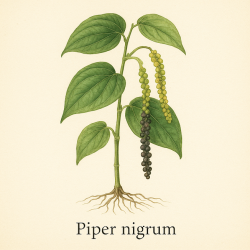
Synergistic interactions of Capsicum annuum have been established with a number of natural compounds and taxa. Experiments in vitro and in vivo show that the combined application of capsaicin with piperine (Piper nigrum) leads to an increase in the bioavailability of capsaicinoids due to the inhibition of metabolism in the liver. This effect contributes to a longer maintenance of activity and severity of physiological effects.
The combination with curcumin (Curcuma longa) demonstrates potentiation of antioxidant and anti-inflammatory properties, which is associated with a joint influence on the NF-κB and MAPK signaling cascades. The addition of gingerols from Zingiber officinale enhances the vasodilatory and modulating action, affecting endothelial function. Interaction with flavonoids of green tea (Camellia sinensis) is noted in the form of an additive antioxidant effect and stabilization of cell membranes.
Research also shows a potentiating effect when combining capsaicin with grape polyphenols (Vitis vinifera), which is expressed in enhanced antioxidant activity and reduced levels of oxidative stress. Saponins from ginseng (Panax ginseng) are able to modulate the immune response in the presence of capsaicin, exhibiting a protective and regulating nature of interaction.
Thus, the pharmacological synergy of Capsicum annuum is manifested mainly in the enhancement of antioxidant, anti-inflammatory, and modulating action when combined with polyphenols, alkaloids, and terpenoid compounds of other taxa. The interactions are characterized as additive and potentiating, covering the levels of systemic and cellular action.
References:
— Lambert JD, Hong J, Yang GY, Liao J, Yang CS. (2005). Inhibition of carcinogenesis by polyphenols: evidence from laboratory investigations. Am J Clin Nutr, 81(1 Suppl), 284S–291S. (https://pubmed.ncbi.nlm.nih.gov/15640492/)
— Srinivasan K. (2007). Black pepper and its pungent principle-piperine: a review of diverse physiological effects. Crit Rev Food Sci Nutr, 47(8), 735–748. (https://pubmed.ncbi.nlm.nih.gov/17987447/)
— Aggarwal BB, Harikumar KB. (2009). Potential therapeutic effects of curcumin, the anti-inflammatory agent, against neurodegenerative, cardiovascular, pulmonary, metabolic, autoimmune and neoplastic diseases. Int J Biochem Cell Biol, 41(1), 40–59. (https://pubmed.ncbi.nlm.nih.gov/18662800/)
— Chrubasik S, Pittler MH, Roufogalis BD. (2005). Zingiberis rhizoma: a comprehensive review on the ginger effect and efficacy profiles. Phytomedicine, 12(9), 684–701. (https://pubmed.ncbi.nlm.nih.gov/16194058/)
Geography of Use and Folk Medicine — Dried Chili (Capsicum annuum)
Capsicum annuum has a wide geography of use, spanning regions from Central and South America to Africa, Europe, and Asia. The taxon's place of origin is the territories of Mesoamerica, where archaeoethnobotanical finds in the caves of Mexico and northern Peru attest to its use dating back more than 6000 years. Indigenous peoples such as the Maya, Aztecs, and Incas used hot pepper as a spice, a ritual plant, and a medicinal remedy. It was part of beverages and infusions, used for inhalations and fumigations in ritual practices, and also in magical rites as a plant possessing cleansing and protective power.
Following the colonial expeditions of the 16th century, Capsicum annuum was brought to Europe, from where it quickly spread to the countries of the Mediterranean, Africa, and Asia. In the East Slavic tradition, pepper was used as a warming and protective plant, employed in folk healer rites for "warding off the evil eye" and in the creation of amulets. East European folklore mentions fumigation with dried pods to purify dwellings, as well as its use in rites associated with enhancing male potency.
In Asia, Capsicum annuum assumed an important place in the medical schools of India, China, Korea, and Thailand. In the Indian Ayurvedic tradition, it was used as part of spicy mixtures to stimulate vital energy and as a plant promoting body warmth. In Chinese folk medicine, pepper pods were used in infusions and poultices, applied externally to create a warming effect. Distinct ethnic culinary-medical practices developed in Korea and Thailand, where hot pepper was regarded as a means of purifying the body and strengthening the spirit. In Thai tradition, there were body wraps and rubs with pepper to impart warmth to the body, as well as its inclusion in ritual mixtures associated with harmonizing energy.
In African countries, Capsicum annuum quickly adapted to local traditions. In West African ethnocultures, it was considered a plant of strength and protection, used in initiation rites and as part of ritual offerings. Ethnographic descriptions mention the use of pepper in ritual cuisine associated with ancestor veneration.
Thus, Capsicum annuum has a centuries-old history of application in both cuisine and folk medicine and ritual practices. It is present in the shamanic rites of Mesoamerica, in Ayurvedic and Chinese medicine, in Slavic folk healing, and in African rituals. Its significance extends beyond pharmacology and cuisine, transforming it into a cultural-symbolic plant associated with warmth, energy, and protection.
| Length | 180 mm |
| Height | 40 mm |
| Width | 150 mm |
| Weight, gross | 110 g |
| Weight | 100 g |
| Made by | Sujichita |
| Country of origin | Thailand |
0 reviews for Dried Chili – Capsicum annuum (Sujichita)