
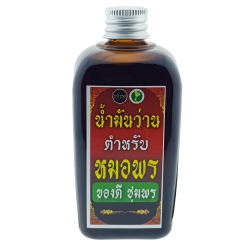
Oil Infusion for Migraine and Headache – Aromatic Cooling Oil (Sukaya)


CONSULTATION WITH A SPECIALIST
It is not blocked for now — DOWNLOAD IMO
Place an order via messengers:
Oil Infusion for Migraine and Headache – Aromatic Cooling Oil (Sukaya)
Product Name: Мигрень и головная боль масляный инфуз, Aromatic Cooling Oil, Öl-Infus bei Migräne und Kopfschmerzen, Infusión oleosa para migraña y dolor de cabeza, Infusion huileuse pour la migraine et les maux de tête, تسريب زيتي للصداع النصفي والصداع, น้ำมันอินฟิวส์สำหรับไมเกรนและอาการปวดหัว, Мигрень ва бош оғриғи ёғли инфуз, Баш оорусу жана мигрен үчүн майлуу инфуз, Miqren və baş ağrısı üçün yağlı infuz, Инфузияи равған барои мигрен ва дарди сар, Aliejinė infuzija nuo migrenos ir galvos skausmo, Eļļas infūzija pret migrēnu un galvassāpēm, Масляна інфузія від мігрені та головного болю, אינפוזיית שמן למיגרנה וכאבי ראש
Main Indications for Use of Aromatic Cooling Oil: Migraine, tension headache, myofascial pain syndrome of the cervico-occipital region, skin itching from insect bites, common cold rhinitis with subjective nasal congestion, somatoform stress disorder with autonomic manifestations.
Indications for Use of Aromatic Cooling Oil as Part of Therapeutic Complexes: Chronic migraine, chronic daily headache, cervicogenic headache, chronic craniocervical myalgia, atopic dermatitis with itching, allergic rhinitis, bronchial asthma, chronic obstructive pulmonary disease, malignant neoplasms of the brain, malignant neoplasms of the skin, generalized anxiety disorder.
Main Pharmacological Properties of Aromatic Cooling Oil: analgesic, antipruritic, anti-inflammatory, cooling, vasodilating, anxiolytic, aromatherapeutic, dermoprotective.
Composition of Aromatic Cooling Oil: Jojoba Oil, Menthol, Propylene Glycol, Fragrance.
Functions of the Components in Aromatic Cooling Oil:
- Jojoba Oil — emollient, improves skin barrier functions, possesses anti-inflammatory properties, facilitates penetration of active substances;
- Menthol — activator of TRPM8 channels, provides cooling and analgesic effect, reduces itching, contributes to headache relief;
- Propylene Glycol — solvent and humectant, enhances penetration of active substances through the skin;
- Fragrance — aromatic composition, potentiates psychoemotional relaxation through olfactory mechanisms.
Product Form of Aromatic Cooling Oil: Roller bottle 5 ml, containing an oil infusion based on jojoba oil with menthol, propylene glycol, and an aromatic composition; net weight in the bottle is 5 g ± 5%.
Dosage of Aromatic Cooling Oil
Standard Dosage for Aromatic Cooling Oil: For adults, it is recommended to apply with the roller applicator to the skin of the temples, back of the head, and posterior neck 2–3 times daily for tension headache and mild migraine attacks. Use at the first symptoms, with light circular motions. Special conditions of use: no need to link with food intake, optimal during daytime, possible combination with massage or aromatherapy.
Enhanced Dosage for Aromatic Cooling Oil: More frequent application up to 4–5 times daily is allowed for pronounced myofascial pain syndrome of the cervico-occipital region, for moderate migraine attacks, or for persistent skin itching due to insect bites. Conditions of use: local application, no more frequently than every 2–3 hours, avoid contact with eyes and mucous membranes.
Maximum Dosage for Aromatic Cooling Oil: No more than 6–7 local applications within 24 hours. Used for intense headache attacks, migraine with moderate pain syndrome, or for pronounced itching not relieved by the standard dosage. Specifics: do not apply to large skin areas, avoid combination with other potent menthol-containing products.
Pediatric Dosage for Aromatic Cooling Oil: Permitted for use in children over 12 years old weighing more than 40 kg. Recommended: 1 application to the temporal or occipital area no more than 1–2 times daily for tension headache. For younger children (under 12 years), no scientifically registered data on efficacy and safety exist.
Preventive Dosage for Aromatic Cooling Oil: Regular application once a day to temples and neck is possible for patients with chronic cervicogenic pain syndromes, mild migraine without aura, chronic stress, and somato-vegetative manifestations. Duration of preventive use — in courses of 10–14 days, followed by a break of at least 7 days.
Contraindications of Aromatic Cooling Oil: Individual hypersensitivity to menthol, propylene glycol, or aromatic compositions; presence of skin lesions, dermatitis, and eczema at the application site. Scientifically registered data on contraindications during pregnancy, lactation, and use in children under 12 years are not available.
Side Effects of Aromatic Cooling Oil: With overdose or excessively frequent application, development of irritant contact dermatitis, erythema, skin burning, cold allodynia is possible. In rare cases, hypersensitivity reactions to propylene glycol and fragrances have been described.
Adjustment Based on Patient Body Weight: For patients weighing less than 60 kg, it is recommended to limit the number of applications to 3 times daily; for patients weighing over 60 kg, the use of standard and enhanced dosages is permissible.
Storage Conditions and Shelf Life of Aromatic Cooling Oil: Store in a tightly closed bottle at a temperature from +5 to +25 °C, in a place protected from direct sunlight, avoid exposure to heat sources and electromagnetic radiation. Shelf life — 36 months from the production date. After opening the package, use within 6 months.
Toxicity and Biosafety — Aromatic Cooling Oil
A product for external use with low acute toxicity upon dermal application; model assessment based on components indicates that the mixture is not subject to classification for acute dermal toxicity (GHS, ATE_dermal ≫ 5000 mg/kg). Key data on active ingredients: menthol — LD₅₀ (rat, per os) 2600–3300 mg/kg; LD₅₀ (rabbit, dermal) > 5000 mg/kg; propylene glycol — LD₅₀ (rat, per os) approximately 20,000 mg/kg, LD₅₀ (rabbit, dermal) ≈ 20,800 mg/kg; jojoba oil — low acute toxicity, LD₅₀ (rodents, per os) typically > 5000 mg/kg, in some reports up to ~74,000 mg/kg; "Fragrance" has no single LD₅₀ (a mixture of aromatic components), but is a frequent skin sensitizer (prevalence of sensitization to test "fragrance mix" in the population can reach several percent). Reference: download.basf.comsigmaaldrich.comwestliberty.educir-safety.orgPMC+1onlinelibrary.wiley.com
The model of cumulative dermal toxicity (GHS ATE approach, additivity formula: 1/ATE_mixture = Σ(Cᵢ/ATEᵢ)) with conservative assumptions for a typical roller-form (mass fractions: menthol 5–10%, propylene glycol 10–15%, "fragrance" 1–1.5%, the rest — jojoba oil) gives: scenario A (5% menthol, 10% PG) ATE_dermal ≈ 35,500 mg/kg; scenario B (10% menthol, 15% PG) ATE_dermal ≈ 24,900 mg/kg. Both values are significantly above the 5000 mg/kg threshold (category 5), therefore the mixture is "not classified" for acute dermal toxicity; the risk of systemic toxicity with correct local application is minimal. Reference: International Labour Organizationera-environmental.comchemsafetypro.com
Additionally: menthol is described to cause local irritation and "cold" allodynia in excess; for propylene glycol and fragrances — rare cases of contact allergy/irritation; local reactions unrelated to systemic toxicity are possible with individual sensitivity. Reference: carlroth.comwestliberty.educontactderm.org
Synergy — Aromatic Cooling Oil
The combination of L-menthol, liquid jojoba wax, and propylene glycol forms a complementary system for topical application. L-menthol activates cold-sensitive TRPM8 channels on peripheral sensory fibers, inducing a pronounced cooling sensory input that modulates nociceptive transmission and reduces pain intensity; this is confirmed for topical menthol by clinical and experimental data. Simultaneously, menthol can act as a skin penetration modifier, transiently altering lipid domains of the stratum corneum, improving transdermal delivery of a range of molecules. Propylene glycol works as a co-solvent and humectant component, additionally increasing the solubility and diffusion of terpenes through the epidermal barrier; its effect is additive to that of menthol. Jojoba, being a mixture of wax esters similar in properties to sebum, forms a thin semi-occlusive film, reduces transepidermal water loss, and exhibits anti-inflammatory activity (ex-vivo shows reduced production of IL-6/IL-8/TNF-α), providing "protective" synergy: supports the barrier, softens the potential irritability of the composition, and stabilizes the sensory effect of menthol. At the level of microcirculation, local thermosensory and neurovascular responses to menthol are accompanied by increased skin blood flow, which may enhance the subjective feeling of "relief" in the application area; this component of the effect supports the final sensory modality of the formula. Outside the infusion composition, literature describes examples of potentiating combinations of menthol with other terpenoid components: methyl salicylate demonstrates additive-potentiating influence on skin sensory modulation and thermoregulatory responses upon topical application, while eucalyptol is characterized by a high ability to enhance skin penetration and can act as a delivery modulator in multicomponent topical systems. Collectively, the interactions can be characterized as potentiating (TRPM8 sensory modulation + improved delivery of actives), additive (combined influence of terpenes on the stratum corneum barrier), and protective (emollient-anti-inflammatory profile of jojoba, reducing the likelihood of local reactivity), with the effect shift towards local (cutaneous-neurosensory) level of action.
References: onlinelibrary.wiley.comPMC+2PMC+2PubMed+1ScienceDirect+1journals.sagepub.comFrontiers+1mdpi.com
Pharmacodynamics of Aromatic Cooling Oil
The pharmacodynamic profile is determined by the predominant influence of L-menthol on TRPM8 channels of peripheral sensory endings. Their activation causes a pronounced cold signal, triggering a counter-irritant mechanism, reducing subjective pain intensity, and partially desensitizing nociceptive fibers; experimental models also show a reduction in cortical somatosensory potentials associated with pain after topical application of 10% menthol solutions. In parallel, neurovascular skin responses are activated: increased skin blood flow in the application area and modification of thermoregulatory reactions are recorded, forming the characteristic sensation of coolness. The impact on sensory cascades also affects itch transmission: TRPM8 activation inhibits itch conduction, acting as a physiological antagonist to pruritogenic signals. The carrier modulates the kinetics of local action: propylene glycol improves the solubility and diffusion of terpenes through the stratum corneum, accelerating the onset of the sensory effect; menthol itself can increase percutaneous absorption of substrates due to reversible alteration of intercellular epidermal lipids. Liquid jojoba wax provides emollient and barrier-supporting action: reduces transepidermal water loss, improves physiological indicators of the skin barrier, and exhibits anti-inflammatory activity (reduction of pro-inflammatory cytokines in an ex-vivo model), contributing to comfort and tolerability upon repeated applications. As a result, the composition implements a complex of local effects: sensory modulation at the level of TRP channels, neurovascular changes in skin blood flow, improvement of percutaneous delivery of active molecules by the co-solvent, and support of the structural-functional state of the epidermal barrier by the emollient base.
References: mdpi.comonlinelibrary.wiley.com; PMC+2PMC+2ScienceDirect+1
Pharmacokinetics of Aromatic Cooling Oil
Upon transdermal application, the main active substances of the product are absorbed primarily through the stratum corneum of the skin. L-menthol, belonging to the group of monoterpenes, penetrates the epidermal barrier due to lipophilicity and the ability to temporarily alter the structure of intercellular lipids. Distribution after penetration is limited to the upper layers of the dermis and superficial microcirculation, corresponding to the localized nature of the action. A small portion of menthol may enter systemic circulation and undergo metabolism in the liver involving monooxygenase complex enzymes, hydroxylation, and subsequent conjugation with glucuronic acid. The main routes of metabolite excretion are the kidneys via urine and partially the lungs in the form of volatile fractions.
Propylene glycol upon topical application is also absorbed through the skin in limited amounts, distributed primarily in the interstitial fluid, and oxidized in the liver to form lactate, pyruvic acid, and other metabolites that are incorporated into physiological energy cycles. Elimination occurs predominantly via urine.
Jojoba oil, being a mixture of wax esters, is practically not absorbed into systemic circulation upon external use. Its action is limited to the skin surface, where it forms a thin protective layer, reduces transepidermal water loss, and performs the function of a carrier for more active lipophilic components.
The aromatic composition may be partially absorbed through the skin and mucous membranes upon inhalation of volatile fractions. These substances are metabolized in the liver involving cytochrome P450 enzymes and excreted by the kidneys or lungs.
Thus, the pharmacokinetic profile of the product is determined by local action on cutaneous receptor structures, with minimal systemic exposure and predominant metabolism of components in the liver upon entry into the bloodstream, with excretion via kidneys and lungs.
References: PubChem – Menthol PubChem – Propylene Glycol ScienceDirect – Jojoba oil properties SpringerLink – Dermal absorption of terpenes
Mechanisms of Action and Scientific Rationale: Aromatic Cooling Oil
Liver and Gastrointestinal Tract. Metabolism of terpenes included in the product, in particular menthol, is carried out with the participation of cytochrome P450 enzymes, ensuring their rapid detoxification and excretion. Propylene glycol in the body is oxidized to metabolites incorporated into energy metabolism cycles, exhibiting additive interaction with main metabolic pathways. Jojoba oil stabilizes membrane structures of epithelial cells, exerts lipotropic and membrane-stabilizing action on the skin surface.
References: PubChem – Menthol metabolism; PubChem – Propylene Glycol metabolism
Immune System. Jojoba reduces the expression of pro-inflammatory cytokines (IL-6, TNF-α) in cellular models, confirming its modulating and anti-inflammatory effect. Menthol, acting on TRPM8 receptors, influences neuroimmune interaction, reducing the activity of inflammatory mediators and affecting local immune cells of the skin. The nature of interaction can be characterized as modulating, with action at the cellular and tissue level.
References: ScienceDirect – Jojoba oil anti-inflammatory; SpringerLink – Menthol TRPM8 immunomodulation
Nervous System. The main target mechanism of menthol is activation of TRPM8 channels of sensory neurons. This causes a sensory cold sensation, modulates pain signal transmission, and suppresses neuropeptide cascades involved in the formation of pain and itch. The influence on the nervous system manifests at cellular and tissue levels, the effect is of modulating and potentiating nature.
References: PMC – TRPM8 and menthol action; Wiley – Menthol analgesic properties
Endocrine and Metabolic Regulation. Propylene glycol participates in metabolic pathways, being processed into lactate and pyruvic acid, which are incorporated into the Krebs cycle. These processes are of additive nature and do not lead to accumulation of toxic metabolites under normal use. The lipophilic base of jojoba exerts a stabilizing influence on lipid metabolism in the skin, preserving its barrier properties and regulating local fatty acid metabolism.
References: SpringerLink – Propylene Glycol metabolism; ScienceDirect – Jojoba oil lipid effects
| Length | 3 mm |
| Height | 10 mm |
| Width | 3 mm |
| Weight, gross | 40 g |
| Weight | 5 g |
| Made by | Sukaya |
| Country of origin | Thailand |
0 reviews for Oil Infusion for Migraine and Headache – Aromatic Cooling Oil (Sukaya)