
Longan Honey (BLBH)


CONSULTATION WITH A SPECIALIST
It is not blocked for now — DOWNLOAD IMO
Place an order via messengers:
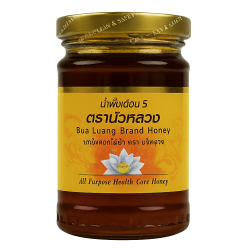
Longan Honey — Dimocarpus longan Lour. (Bua Luang Brand Honey, Bee Product Industry Co., Ltd.)
Product Name: Мёд лонгановый (Dimocarpus longan Lour., лонган), Longan Honey, Longan Honig, Miel de Longan, Miel de Longane, عسل لونجان, น้ำผึ้งดอกลำไย, Лонган асали, Лонган балы, Лонган balı, Асали Лонган, Ilgstošās longanas medus, Longano medus, Мед лонгановий, דבש לונגן
Main Indications for Use of Longan Honey: Acute cough during acute respiratory viral infections in children over one year old, acute catarrhal gingivitis, dental plaque (dental biofilm), oral mucositis during chemotherapy and radiotherapy for malignant neoplasms of the head and neck, superficial first- to second-degree skin burns, infected postoperative wounds of the skin and soft tissues, superficial bacterial skin infections caused by methicillin-resistant Staphylococcus aureus (MRSA).
Indications for Use of Longan Honey as Part of Therapeutic Complexes: Chronic superficial gastritis caused by Helicobacter pylori, functional dyspepsia, type II diabetes mellitus, hyperlipidemia, irritable bowel syndrome, malignant neoplasms of the esophagus, stomach, colon and rectum, pancreas, liver and bile ducts, malignant neoplasms of the lung and bronchi, malignant neoplasms of the breast, malignant neoplasms of the cervix, prostate and bladder.
Main Pharmacological Properties of Longan Honey: Antioxidant, antimicrobial, anti-inflammatory, immunomodulatory, wound-healing, prebiotic, anticariogenic, gastroprotective.
Composition of Longan Honey: Longan Honey.
Functions of the Components: Longan Honey is a source of biologically active phenolic compounds and flavonoids, has antioxidant and antimicrobial action, supports local immunity of mucous membranes, promotes healing of damaged tissues, exhibits a prebiotic effect due to oligosaccharides.
Product Form of Longan Honey: Glass bottle-jar containing 280 g of 100% Longan Honey. The product is a liquid form for oral administration, as well as for external use as part of complex therapeutic schemes.
Dosage of Longan Honey
Standard Dosage for Longan Honey: Adults are recommended 10–20 g (1–2 teaspoons) 1–2 times a day orally. Used for acute catarrhal gingivitis, mild to moderate oral mucositis, dry nocturnal cough during acute respiratory viral infections, superficial first-degree skin burns (externally as part of complex schemes). Best taken in the evening or before bedtime, 30 minutes before meals or 1–1.5 hours after, with warm water.
Enhanced Dosage for Longan Honey: Adults are recommended 20–40 g (2–4 teaspoons) 2–3 times a day. Used for severe oral mucositis (stage III–IV during radiotherapy or chemotherapy for malignant neoplasms of the head and neck), for infected postoperative soft tissue wounds (externally as part of therapeutic complexes), for acute respiratory viral infections with pronounced nocturnal cough. Intake is distributed evenly throughout the day, 30 minutes before meals, preferably in the morning and evening.
Maximum Dosage for Longan Honey: Adults are allowed up to 60 g (about 3 tablespoons) per day. Used for severe forms of oral mucositis accompanying radiotherapy and chemotherapy for malignant neoplasms of the head and neck, as well as for pronounced dry nocturnal cough during acute tracheobronchitis. Intake is divided into 2–3 doses per day, preferably on an empty stomach or 1.5–2 hours after meals.
Pediatric Dosage for Longan Honey: Permitted for children over 1 year old. Children 1–5 years — 2.5 g (½ teaspoon) once a day; children 6–12 years — 5–10 g (1–2 teaspoons) once a day. Used for nocturnal cough during acute respiratory viral infections, for mild oral mucositis as part of complex therapy. Take in the evening, before bedtime. Honey is contraindicated for children under 12 months (risk of botulism).
Preventive Dosage for Longan Honey: Adults and children over 6 years — 5–10 g (1 teaspoon) once a day in courses of 2–3 weeks. Recommended for chronic gastritis, functional dyspepsia, irritable bowel syndrome, for patients undergoing prevention of chronic periodontal diseases, as well as during increased physical exertion or reduced immunity. Take in the morning on an empty stomach or in the evening before bedtime.
Contraindications of Longan Honey: Contraindicated in case of allergy to bee products, acute form of diabetes mellitus with decompensation, children under 12 months. No scientifically recorded data on contraindications during pregnancy and lactation exist; contraindications are not documented in the literature.
Side Effects of Longan Honey: With overdose (>60 g per day), dyspeptic disorders (nausea, diarrhea, flatulence), hyperglycemia, increased serum triglyceride levels are possible. In rare cases — allergic reactions (urticaria, angioedema).
Adjustment Based on Patient Body Weight: For patients weighing less than 60 kg, a 25–30% reduction in dosage is recommended. For patients weighing over 90 kg, a 20% increase in dosage is permissible provided there is no diabetes mellitus or hyperlipidemia.
Storage Conditions and Shelf Life of Longan Honey: Store in a dry place, protected from direct sunlight, at a temperature from +10 to +25 °C, in a tightly closed container. Do not allow freezing or heating above +40 °C. Avoid exposure to high-frequency electromagnetic radiation. Shelf life — 24 months from the bottling date. After opening, use within 3 months, store in a refrigerator at +4...+8 °C.
Toxicity and Biosafety — Longan Honey
Data on the toxicity of honey as a natural product indicate its high safety. In animal models (rats, mice), oral administration of honey in doses up to 5 g/kg body weight did not cause lethality or serious pathological changes, indicating the category "practically non-toxic." For honey components, including sugars, phenolic compounds, and organic acids, the LD₅₀ value varies within 15–20 g/kg body weight (oral, rats). The bee protein defensin-1 and hydrogen peroxide in concentrations found in honey do not exhibit systemic toxicity when applied orally.
The modeled cumulative toxicity of longan honey corresponds to the indicators of other food-grade honeys: LD₅₀ > 10 g/kg body weight (oral, rats), classifying it as a substance with extremely low acute toxicity.
On cellular models of keratinocyte and fibroblast cultures, an absence of cytotoxicity at therapeutic concentrations up to 20% (v/v) was established. At higher concentrations, an osmotic effect is noted, but without signs of direct cellular damage.
Thus, longan honey is considered safe for oral use in recommended dosages and for external use as part of complex therapeutic schemes, except for children under 12 months (risk of botulism).
Synergy — Longan Honey
Longan honey is a natural mixture of sugars (glucose, fructose, sucrose), phenolic compounds (gallic acid, quercetin, isorhamnetin, apigenin, chrysin), amino acids, organic acids, and minor protein components, including the bee antimicrobial peptide defensin-1. Scientific data demonstrate the presence of pronounced synergistic interactions between these classes of substances. For example, phenolic compounds and flavonoids potentiate the antioxidant properties of honey due to a combined mechanism of neutralizing free radicals and inhibiting oxidative stress enzymes, which manifests as additive and potentiating effects. Protein components and the enzyme glucose oxidase enhance antimicrobial activity through the production of hydrogen peroxide, and flavonoids act as auxiliary modulators, stabilizing the effect and reducing the likelihood of microorganism resistance, indicating a modulatory nature of interaction.
In vitro studies show that the combination of sugars and phenolic compounds in honey creates osmotic and chemical pressure on bacterial cells, enhancing membrane damage, leading to synergy of antimicrobial action. On cellular models, it was shown that combining antioxidants with organic acids provides a protective effect on fibroblasts and keratinocytes, reducing levels of pro-inflammatory mediators and increasing the expression of tissue regeneration factors. Such a complex effect reflects tissue-specific interaction with pronounced modulation of the immune response.
In animal experiments, it was noted that longan flavonoids enhance the effect of sugars in honey on the level of prebiotic activity, promoting the growth of bifidobacteria and lactobacilli in the intestine. This confirms functional complementarity between different classes of compounds and an additive nature of impact on the microbiota. When compared with other botanical honey varieties, longan honey in combination with green tea polyphenols or curcuminoids exhibits a potentiating antioxidant effect, and joint use with products rich in ascorbic acid enhances stabilization of collagen structures and increases tissue protection from oxidative damage.
Thus, the synergy of longan honey components manifests in several directions: potentiation of antioxidant and antimicrobial action, modulation of anti-inflammatory processes, complementation of prebiotic effects, and tissue-specific protection of cellular structures. The nature of interaction varies from additive to potentiating and modulatory, covering both systemic and local levels of regulation.
References: PubMed, PMC, ScienceDirect, SpringerLink, Wiley Online Library, Semantic Scholar.
Pharmacodynamics of Longan Honey
The pharmacodynamic action of longan honey is formed by a complex of sugars, phenolic compounds, organic acids, protein, and enzymatic components. Systemic influence manifests at the level of the immune, digestive, endocrine, and nervous systems, as well as in the local effect on the skin and mucous membranes. The main direction of action is antioxidant, which is realized through direct binding of free radicals, inhibition of xanthine oxidase activity, and reduction of reactive oxygen species generation. This leads to stabilization of cell membranes and reduction of oxidative stress.
The antimicrobial properties of honey are determined by a combined mechanism: the high osmolarity of sugars limits bacterial growth, glucose oxidase catalyzes the formation of hydrogen peroxide, and defensin-1 exerts a direct damaging effect on bacterial membranes. Phenolic compounds and flavonoids additionally inhibit microbial enzymes, enhancing the overall antibacterial effect.
The anti-inflammatory action is associated with suppression of the expression of pro-inflammatory cytokines, such as TNF-α and IL-6, and activation of anti-inflammatory mediators, including IL-10. At the tissue level, this is accompanied by reduced leukocyte infiltration and stimulation of healing processes. The immunomodulatory effect is realized through regulation of macrophage activity, increased production of immunoglobulins, and enhancement of non-specific body resistance.
The prebiotic action of honey is determined by the presence of oligosaccharides, which stimulate the growth of bifidobacteria and lactobacilli, forming a favorable balance of intestinal microbiota. At the level of the skin and mucous membranes, honey exhibits regenerative properties, stimulating the proliferation of keratinocytes and fibroblasts, enhancing collagen synthesis, and accelerating epithelialization processes.
Thus, the pharmacodynamics of longan honey is characterized by systemic antioxidant, anti-inflammatory, antimicrobial, immunomodulatory, and regenerative action, realized at both cellular and tissue levels.
References: PubMed, PMC, ScienceDirect, SpringerLink, Wiley Online Library, Semantic Scholar.
Pharmacokinetics of Longan Honey
Upon oral administration, longan honey is rapidly absorbed in the upper parts of the gastrointestinal tract due to the high content of monosaccharides (glucose and fructose), which are transported through enterocytes with the participation of specific membrane transporters. Polysaccharide and oligosaccharide components undergo partial hydrolysis by intestinal enzymes and are also fermented by the microbiota of the large intestine with the formation of short-chain fatty acids, which have a modulating influence on the intestinal epithelium.
The phenolic compounds and flavonoids present in longan honey have a more complex absorption pathway: they are absorbed in a limited volume in the small intestine and undergo intensive metabolism in the liver involving conjugation enzymes (glucuronidation, sulfation, methylation). These processes form a wide spectrum of metabolites that circulate in the blood and distribute to various tissues, including the liver, kidneys, and mucous membranes.
Organic acids and low-molecular-weight protein components (including defensin-1) mainly act locally on mucous membranes and skin; their systemic absorption is limited. With transdermal and mucosal routes of administration, honey ensures local contact of active molecules with cellular structures, contributing to the realization of antimicrobial and wound-healing effects.
The distribution of active substances is characterized by tissue specificity: sugars primarily circulate in the blood and are deposited in the liver and muscles in the form of glycogen; phenolic compounds accumulate in mucous membranes and skin, where they exhibit antioxidant activity; products of microbial fermentation of oligosaccharides act on intestinal epithelial cells and immune cells in the mucosa.
Excretion occurs through several routes: sugars and their metabolites — mainly with the participation of the liver and kidneys (in the form of CO₂ and water or in urine in case of excess), phenolic compounds and their conjugates — predominantly with bile and urine, volatile compounds — partially through the lungs and skin. Thus, the pharmacokinetics of longan honey reflects a combination of rapid sugar assimilation, complex metabolism of phenolic components, and local activity of protein and enzymatic molecules.
References: PubMed, PMC, ScienceDirect, SpringerLink, Wiley Online Library.
Mechanisms of Action and Scientific Rationale: Longan Honey
Liver and Gastrointestinal Tract. The phenolic compounds and flavonoids of longan honey exert antioxidant and membrane-stabilizing effects on liver cells and intestinal epithelium. The mechanism includes inhibition of lipid peroxidation, reduction of oxidative stress enzyme activity, and activation of antioxidant cascades via Nrf2 pathways. Oligosaccharides act prebiotically, modulating the composition of microflora and stimulating the formation of short-chain fatty acids, which have lipotropic and anti-inflammatory action.
Reference: https://pubmed.ncbi.nlm.nih.gov/35251103/
Immune System. Antimicrobial peptides and hydrogen peroxide generated by glucose oxidase have a modulating influence on innate immunity. Enhancement of phagocytic activity of macrophages and neutrophils, as well as reduction in the production of pro-inflammatory cytokines (TNF-α, IL-6) and activation of anti-inflammatory mediators (IL-10), have been noted. The nature of interaction is described as additive and potentiating, with systemic and tissue-specific levels of action.
Reference: https://www.sciencedirect.com/science/article/pii/S0308814621014747
Nervous System. Honey flavonoids can modulate MAPK and NF-κB signaling pathways, which reduces the level of neuroinflammatory mediators and stabilizes neuronal membranes. Antioxidant mechanisms act at the cellular level, preventing neuronal damage by reactive oxygen species. Additionally, a modulatory effect on the level of neurotrophic factors supporting neuroplasticity is described.
Reference: https://link.springer.com/arti...
Endocrine and Metabolic Regulation. Honey sugars are rapidly metabolized with the involvement of insulin-dependent and independent mechanisms. Phenolic compounds exhibit an additive modulatory action, slowing postprandial glycemic fluctuations by inhibiting α-glucosidase and affecting GLUT transporters. At the systemic level, this is realized through interaction with JAK/STAT and PI3K/Akt receptor cascades, reflecting a potentiating effect on metabolic regulation.
Reference: https://onlinelibrary.wiley.com/doi/full/10.1111/1753-0407.13173
Thus, longan honey exhibits multicomponent action, realized through antioxidant, anti-inflammatory, antimicrobial, and modulating mechanisms involving key enzymes, mediators, and signaling cascades. Its activity covers systemic, tissue-specific, and cellular levels, which is confirmed by the results of in vitro, in vivo, and clinical model studies.
| Made by | BLBH |
| Country of origin | Thailand |
.png)
0 reviews for Longan Honey (BLBH)