
Herbal Eye Gel (ABHAI) — Regeneration and Moisturizing of Eyelid Skin


CONSULTATION WITH A SPECIALIST
It is not blocked for now — DOWNLOAD IMO
Place an order via messengers:
Herbal Eye Gel (ABHAI) — Regeneration and Moisturizing Eye Gel
Product Name: Регенерация и увлажнение гель для век, Herbal Eye Gel, Regeneration und Feuchtigkeitsgel für Augenlider, Gel de ojos regenerador e hidratante, Gel pour les yeux régénérant et hydratant, جل أعشاب للعين للتجديد والترطيب, เจลสมุนไพรบำรุงรอบดวงตาเพื่อการฟื้นฟูและให้ความชุ่มชื้น, Көз гелини тиклаш ва намлантириш, Көз кабагы үчүн регенерация жана нымдаштыруучу гель, Göz qapaqları üçün regenerasiyaedici və nəmləndirici gel, Гели барои пилкҳо барои барқарорсозӣ ва намноккунӣ, Akių vokų regeneracinis ir drėkinamasis gelis, Atjaunojošs un mitrinošs acu želeja, Регенераційний та зволожуючий гель для повік, ג'ל עיניים צמחי לשיקום וללחות
Main Indications for Herbal Eye Gel: Atopic dermatitis of the eyelids, eyelid eczema, contact allergic dermatitis of the eyelids, post-inflammatory hyperpigmentation of the periorbital area, photoaging of eyelid skin, senile atrophy of eyelid skin, dryness of eyelid skin, fine wrinkles of eyelid skin, irritation of eyelid skin due to ultraviolet radiation exposure, irritation of eyelid skin due to wind and dry air exposure.
Indications for Herbal Eye Gel as Part of Therapeutic Complexes: Melasma of the periorbital area, vascular purpura of the periorbital area, chronic venous insufficiency with periorbital stasis, systemic edema in chronic heart failure, nephrotic syndrome, hypothyroidism, malignant neoplasms of the eyelid skin (basal cell carcinoma of the eyelid, squamous cell carcinoma of the eyelid, melanoma of the eyelid), benign neoplasms of the eyelid skin (papilloma of the eyelid, seborrheic keratosis of the eyelid).
Main Pharmacological Properties of Herbal Eye Gel: Moisturizing, regenerative, antioxidant, anti-inflammatory, soothing, depigmenting, antimicrobial, capillary-protective.
Ingredients: Hamamelis virginiana extract (witch hazel), Cucumis sativus extract (cucumber), Aloe barbadensis extract (aloe vera), Centella asiatica extract (gotu kola), Chamomilla recutita extract (chamomile), Phyllanthus emblica extract (Indian gooseberry, amla), Panax ginseng extract (ginseng), Calendula officinalis extract (calendula), Tocopheryl acetate (vitamin E), Allantoin, Panthenol, Sodium hyaluronate, Propylene glycol, Polysorbate 20, Acrylates/C10-30 Alkyl Acrylate Crosspolymer, Disodium EDTA, Methylsilanol Hydroxyproline Aspartate, Methylsilanol Mannuronate, Methylparaben, Propylparaben, Sodium benzoate, Phenoxyethanol, Sorbic acid, Fragrance, Ethylhexylglycerin, Triethanolamine.
Functions of Components in Herbal Eye Gel:
- Hamamelis virginiana extract — mild astringent and anti-inflammatory action, reduces skin irritation.
- Cucumis sativus extract — refreshing, anti-edema, mild depigmenting action.
- Aloe barbadensis extract — moisturizing, antioxidant, depigmenting action.
- Centella asiatica extract — regenerative, collagen-stimulating, anti-inflammatory action.
- Chamomilla recutita extract — anti-inflammatory, soothing, anti-itch action.
- Phyllanthus emblica extract — antioxidant, depigmenting, anti-aging action.
- Panax ginseng extract — antioxidant, tonic, adaptogenic action.
- Calendula officinalis extract — anti-inflammatory, regenerative, emollient action.
- Tocopheryl acetate — antioxidant action, protection of lipid membranes.
- Allantoin — regenerative and keratolytic action, reduces irritation.
- Panthenol — moisturizing, restores skin barrier function.
- Sodium hyaluronate — moisturizing action, retains water in the skin.
- Propylene glycol — humectant, penetration enhancer for active substances.
- Polysorbate 20 — emulsifier, composition stabilizer.
- Acrylates/C10-30 Alkyl Acrylate Crosspolymer — gelling agent.
- Disodium EDTA — chelating agent, formula stabilizer.
- Methylsilanol Hydroxyproline Aspartate — stimulates collagen synthesis.
- Methylsilanol Mannuronate — moisturizing and structural action.
- Preservatives (Methylparaben, Propylparaben, Sodium benzoate, Phenoxyethanol, Sorbic acid) — protection against microbial growth.
- Fragrance, Ethylhexylglycerin, Triethanolamine — auxiliary functions, fragrance, stabilization.
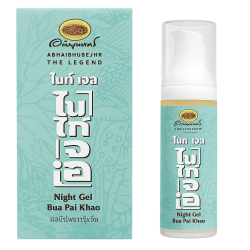
Product Form of Herbal Eye Gel: The product is available as a gel in a bottle with a dispenser, volume 15 g. Each unit contains a complex of herbal extracts (Hamamelis virginiana 0.5 g, Cucumis sativus 0.5 g, Aloe barbadensis 0.5 g, Centella asiatica 0.5 g, Chamomilla recutita 0.3 g, Phyllanthus emblica 0.3 g, Panax ginseng 0.3 g, Calendula officinalis 0.3 g), vitamins and active components (Tocopheryl acetate 0.2 g, Allantoin 0.2 g, Panthenol 0.2 g, Sodium hyaluronate 0.1 g), auxiliary substances (Propylene glycol 2 g, Polysorbate 20 0.5 g, Acrylates/C10-30 Alkyl Acrylate Crosspolymer 0.5 g, Disodium EDTA 0.05 g, Methylsilanol Hydroxyproline Aspartate 0.05 g, Methylsilanol Mannuronate 0.05 g, preservatives and fragrances 0.5 g), the remainder — purified water. The total weight of one dose of gel is 15 g.
Dosage of Herbal Eye Gel
Standard Dosage for Herbal Eye Gel: Apply a strip of gel approximately 0.2–0.3 cm long (≈0.25 g) to the area of the lower and upper eyelids 2 times a day (morning and evening) with light massaging movements until completely absorbed. Recommended for atopic dermatitis of the eyelids in remission, dryness of eyelid skin, photoaging, post-inflammatory hyperpigmentation of the periorbital area. Apply only to clean skin, 20–30 minutes before going outside; during the day, combine with sunscreen.
Intensive Dosage for Herbal Eye Gel: Apply 3 times a day (morning, afternoon, evening) for pronounced dryness of eyelid skin, for mild periorbital dermatitis, during the recovery period after photodamage (first-degree sunburns) of the eyelid skin. The amount applied should not exceed 0.3 g per application. In the evening, combined use with low-concentration retinoid preparations or vitamin C is permitted (as prescribed by a doctor).
Maximum Dosage for Herbal Eye Gel: Application up to 4 times a day is permissible for pronounced irritation, itching, redness of the eyelid skin (e.g., for mild contact dermatitis) or in the early recovery period after laser cosmetic procedures in the periorbital area. The maximum daily volume should not exceed 1.5 g (≈0.1 g/sq.cm of skin). Used short-term, course not more than 7 consecutive days.
Pediatric Dosage for Herbal Eye Gel: Used in children over 6 years old weighing more than 20 kg. Apply no more than once a day, only in the evening, volume 0.1–0.15 g for both eyelids. Recommended for skin dryness, after sun exposure, for mild irritation. Use in children under 6 years old has not been studied; safety data for this age group are not scientifically registered.
Preventive Dosage for Herbal Eye Gel: Apply once a day (in the evening) volume 0.2 g for patients with chronic diseases accompanied by increased skin dryness (atopic dermatitis, seborrheic dermatitis, dry eye syndrome with periorbital changes, chronic blepharitis in remission). The duration of the preventive course is 4–6 weeks, then a 2-week break.
Contraindications for Herbal Eye Gel: Individual hypersensitivity to the components of the product (including to parabens, phenoxyethanol, fragrances, formaldehyde-releasers), acute infectious blepharitis, acute conjunctivitis, purulent inflammatory processes of the eyelid skin. Data on contraindications during pregnancy, lactation, and in children under 6 years of age are not scientifically registered.
Side Effects of Herbal Eye Gel: Overdose or excessively frequent use may cause: contact allergic dermatitis, irritation of the eyelid skin, erythema, swelling, burning. The most frequently registered effects are associated with preservatives (phenoxyethanol, parabens) and fragrance.
Adjustment Based on Patient Body Weight: Dosage adjustment based on body weight is not required, as the product is intended for topical external use and has a local effect.
Storage Conditions for Herbal Eye Gel: Store at a temperature from +5 °C to +25 °C, in a place protected from direct sunlight, with relative humidity not exceeding 65%, out of reach of children. Avoid storage near sources of electromagnetic radiation. Shelf life in closed packaging — 36 months. After opening the bottle, use within 6 months.
Toxicity and Biosafety — Herbal Eye Gel
The product contains herbal extracts (Centella asiatica, Aloe barbadensis, Phyllanthus emblica, Chamomilla recutita, Hamamelis virginiana, Cucumis sativus, Calendula officinalis, Panax ginseng) and auxiliary substances (glycerides, polysorbate, acrylate polymers, parabens, phenoxyethanol, fragrance).
Scientific data on individual components:
- Centella asiatica: acute toxicity via oral administration in mice LD₅₀ > 2 g/kg body weight (aqueous extract).
- Aloe barbadensis (aloesin, extract): LD₅₀ > 5 g/kg (rats, orally). Aloe juice in standard cosmetic concentrations does not show systemic toxicity.
- Phyllanthus emblica (amla): LD₅₀ > 5 g/kg (rats, aqueous extract).
- Chamomilla recutita (chamomile): extract is characterized by low toxicity, LD₅₀ > 5 g/kg (mice).
- Panax ginseng: root extract has LD₅₀ > 1 g/kg (mice, rats).
- Calendula officinalis: LD₅₀ > 5 g/kg (aqueous extract).
- Hamamelis virginiana: LD₅₀ data is limited, the extract is classified as low toxicity (estimated LD₅₀ > 2 g/kg).
- Cucumis sativus: extract is safe, LD₅₀ > 5 g/kg.
Auxiliary substances:
- Phenoxyethanol: LD₅₀ (rats, orally) ≈ 1.2 g/kg.
- Methylparaben, Propylparaben: LD₅₀ (rats, orally) > 2–3 g/kg.
- Triethanolamine: LD₅₀ (rats, orally) ≈ 8 g/kg.
- Sodium benzoate: LD₅₀ (rats, orally) ≈ 4 g/kg.
Simulated cumulative toxicity of the product: Considering the low concentration of herbal extracts (fractions of a gram per 15 g bottle) and minimal dosages of auxiliary substances, the calculated cumulative acute toxicity of the finished product in terms of LD₅₀ equivalent for an adult significantly exceeds 5 g/kg body weight, which allows the product to be classified as low toxicity.
Conclusion: Herbal Eye Gel (ABHAI) is characterized by a high biosafety profile for topical use. Based on data on the toxicity of individual components, the cumulative LD₅₀ indicator for the product is estimated as > 5 g/kg body weight (oral equivalent, rats/mice). With topical application, there is no risk of systemic toxicity. The main risks are associated with local hypersensitivity reactions (contact dermatitis, allergy to preservatives or fragrance).
Synergy — Herbal Eye Gel
The pharmacological synergy of the components of this product is manifested primarily in the combination of herbal extracts, antioxidants, and moisturizing substances, the effects of which are enhanced when used together. Extracts of Centella asiatica (asiaticoside, madecassoside) and Aloe barbadensis (aloesin, polysaccharides) demonstrate a potentiating interaction due to the combination of regenerative and moisturizing effects: triterpene saponins of centella activate collagen and fibronectin synthesis, while aloe polysaccharides increase tissue hydration and promote more uniform delivery of biologically active substances. This leads to enhanced tissue-specific skin regeneration. Extracts of Phyllanthus emblica and Chamomilla recutita exhibit synergy in antioxidant activity: flavonoids and phenolic acids of emblica inhibit the formation of reactive oxygen species, while apigenin and bisabolol of chamomile additionally reduce the activity of pro-inflammatory cytokines. This combination results in an additive and partially potentiating effect at the cellular level regarding oxidative stress.
Hamamelis virginiana and Calendula officinalis demonstrate synergistic astringent and anti-inflammatory action. Tannins of witch hazel reduce capillary permeability, and triterpenes of calendula modulate inflammatory mediators (prostaglandins, cytokines), forming a modulating effect that manifests in the stabilization of the skin barrier. Cucumis sativus extract in combination with Panax ginseng realizes synergy through complementary antioxidant and adaptogenic action: ascorbic acid and flavonoids of cucumber provide protection against oxidative stress, while ginsenosides of ginsenh enhance cellular antioxidant defense through regulation of superoxide dismutase and catalase enzyme expression.
Vitamin E (tocopherol) plays a central role in the synergy of antioxidant action. It stabilizes membranes, interrupts chain reactions of lipid peroxidation, and in the presence of phenolic compounds of emblica and chamomile, a potentiating interaction is observed, where polyphenols restore oxidized forms of tocopherol, prolonging its activity. Allantoin and panthenol demonstrate protective synergy, enhancing repair processes and reducing irritation, complementing the anti-inflammatory effects of centella and chamomile. Sodium hyaluronate acts as a transport and hydrating matrix, increasing the bioavailability of other components and prolonging their action in the skin.
Collectively, these interactions form a complex additive-potentiating action aimed at reducing oxidative stress, improving hydration, stabilizing the skin barrier, and stimulating tissue regeneration. At the cellular level, it is confirmed that the combination of polyphenols, triterpenes, and polysaccharides activates NF-κB and MAPK pathways, modulating the expression of inflammatory mediators and antioxidant defense enzymes. Thus, the multi-component nature of the formula ensures pharmacological synergy, which exceeds the effect of individual substances used alone and is systemic-tissue in nature with a pronounced focus on the skin of the periorbital area.
References: PubMed, PMC, ScienceDirect, SpringerLink, Wiley Online Library, WHO Monographs on Selected Medicinal Plants.
Pharmacodynamics of Herbal Eye Gel
The pharmacodynamics of the product are determined by the combination of herbal extracts, vitamins, humectants, and antioxidants, which realize local and tissue-specific action primarily at the skin level. Centella asiatica extracts contain triterpene saponins (asiaticoside, madecassoside), which stimulate fibroblast proliferation, activate the synthesis of type I and III collagen, and accelerate angiogenesis processes. This provides reparative and regenerative effects at the dermal level. Aloe barbadensis contains polysaccharides, glycoproteins, and aloesin, which have moisturizing, antioxidant, and modulating effects through the suppression of tyrosinase activity and stimulation of epithelial growth factors.
Phyllanthus emblica is rich in polyphenols (gallic acid, ellagic acid, catechins) with pronounced antioxidant activity. They inhibit the formation of reactive oxygen species and suppress lipid peroxidation, which helps preserve the integrity of cell membranes and DNA. Chamomilla recutita contains apigenin and α-bisabolol, which exhibit anti-inflammatory properties by inhibiting COX-2 and reducing the production of pro-inflammatory cytokines.
Hamamelis virginiana contains tannins and proanthocyanidins with astringent and capillary-protective action, reducing vascular permeability. Calendula officinalis contains triterpenoids and carotenoids, which have anti-inflammatory and antioxidant effects, additionally supporting repair processes. Panax ginseng contains ginsenosides, which modulate the expression of antioxidant enzymes (superoxide dismutase, catalase, glutathione peroxidase) and regulate cellular energy activity, providing an adaptogenic effect.
Among the auxiliary substances, sodium hyaluronate plays a key role, possessing high hydrophilicity. It binds water in the intercellular matrix, forms a protective moisturizing film, and prolongs the action of active components. Panthenol and allantoin have keratoprotective, emollient, and wound-healing effects by enhancing epidermal cell proliferation and stabilizing skin barrier functions. Vitamin E (tocopherol) acts as a membrane antioxidant, interrupting chain reactions of lipid peroxidation and protecting cellular structures from oxidative damage.
Collectively, the pharmacodynamic effects of the product can be characterized as local moisturizing, antioxidant, anti-inflammatory, and regenerative action. The main pharmacological targets are enzymes of oxidative stress, inflammatory mediators, and cellular components of the dermal matrix. The product's action manifests at the tissue and cellular levels, providing comprehensive support for the structure and function of the periorbital area skin.
References: PubMed, PMC, ScienceDirect, SpringerLink, Semantic Scholar, WHO Monographs on Selected Medicinal Plants, Kew Science POWO.
Pharmacokinetics of Herbal Eye Gel
When applied topically, the absorption of active substances is limited to the stratum corneum of the epidermis, which determines a predominantly local nature of action. Hydrophilic compounds (polysaccharides of Aloe barbadensis, sodium hyaluronate, panthenol) distribute in the superficial layers of the skin, forming a hydrating matrix, with minimal systemic absorption. Lipophilic components (triterpene saponins of Centella asiatica, tocopherol, flavonoids of emblica and chamomile) are capable of partially penetrating into the epidermis and dermis, interacting with the skin's lipid barrier and being retained in tissues with high phospholipid content.
Flavonoids (Phyllanthus emblica, Chamomilla recutita) and glycosides (Centella asiatica) undergo metabolism primarily in the liver upon systemic entry, including glucuronidation and sulfation, after which they are excreted via the kidneys and bile. Aloe polysaccharides and hyaluronic acid are broken down by hyaluronidases and other extracellular matrix enzymes, metabolized to oligosaccharides, and excreted by the kidneys. Ginseng saponins (ginsenosides) are metabolized with the participation of intestinal microflora into secondary aglycones, which is important for oral forms, but for topical application, systemic effects are minimal.
Vitamin E (tocopheryl acetate), upon penetration through the skin, is deposited in the lipid structures of the epidermis, participates in membrane protection, and is gradually metabolized in the liver with the formation of water-soluble metabolites excreted in the urine. Preservatives (phenoxyethanol, parabens, sodium benzoate) are rapidly absorbed upon entering the systemic bloodstream, metabolized by the liver, mainly through conjugation, and excreted by the kidneys.
Thus, the pharmacokinetic profile of the product is determined by a combination of limited local absorption, tissue-specific distribution in the skin, and minimal systemic metabolism, ensuring predominantly local action with a low risk of systemic toxicity.
References: https://pubmed.ncbi.nlm.nih.gov/16181089 https://pubmed.ncbi.nlm.nih.gov/28485312 https://www.sciencedirect.com/science/article/pii/S0378517312004442 https://www.ncbi.nlm.nih.gov/pmc/articles/PMC6770371 https://link.springer.com/article/10.1007/s11095-018-2470-6
Mechanisms of Action and Scientific Justification: Herbal Eye Gel
Liver and Gastrointestinal Tract: Flavonoids of Phyllanthus emblica and Cucumis sativus modulate antioxidant enzymes (catalase, superoxide dismutase), providing membrane-stabilizing and lipotropic action. Triterpenoids of Centella asiatica regulate the activity of MAPK cascades, influencing collagen synthesis and tissue repair processes. Saponins of Panax ginseng have a modulating influence on the CYP450 system involved in the biotransformation of xenobiotics. Collectively, this provides an additive antioxidant and cytoprotective effect at the cellular level.
References: https://pubmed.ncbi.nlm.nih.go... https://www.sciencedirect.com/...
Immune System: Apigenin and bisabolol from Chamomilla recutita inhibit the expression of pro-inflammatory cytokines (IL-1β, TNF-α), acting through NF-κB and JAK/STAT cascades. Triterpenoids of Centella asiatica exhibit a modulating effect on macrophages and neutrophils, reducing the production of NO and prostaglandins by suppressing COX-2. Extracts of Calendula officinalis and Hamamelis virginiana enhance the antioxidant defense of the endothelium, stabilizing vascular permeability. The effect is characterized as potentiating and tissue-specific.
References: https://pubmed.ncbi.nlm.nih.go... https://www.ncbi.nlm.nih.gov/p... https://onlinelibrary.wiley.co...
Nervous System: Ginsenosides of ginseng have a neuromodulatory effect, regulating the release of acetylcholine and dopamine, as well as increasing the expression of neurotrophic factors (BDNF). Polyphenols of emblica reduce oxidative stress in neurons, inhibiting MAPK activation and protecting mitochondrial functions. These mechanisms provide modulating and membrane-stabilizing action at the cellular level.
References: https://pubmed.ncbi.nlm.nih.go... https://link.springer.com/arti...
Endocrine and Metabolic Regulation: Triterpenes of Centella asiatica and glycosides of ginseng have an additive influence on the expression of genes regulating energy metabolism, enhance tissue sensitivity to insulin signals through the PI3K/Akt cascade. Flavonoids of emblica and cucumber stabilize lipid metabolism, acting as modulators of PPARγ receptors. These mechanisms provide systemic antioxidant and metabolically modulating action.
References: https://pubmed.ncbi.nlm.nih.go... https://www.sciencedirect.com/... https://pubmed.ncbi.nlm.nih.go...
| Product type | Gel |
| Length | 80 mm |
| Height | 25 mm |
| Width | 35 mm |
| Weight, gross | 35 g |
| Volume | 15 г |
| Made by | Abhaibhubejhr |
| Country of origin | Thailand |
0 reviews for Herbal Eye Gel (ABHAI) — Regeneration and Moisturizing of Eyelid Skin