
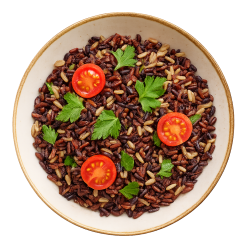
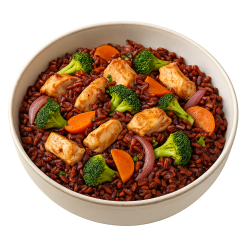
Organic Thai Hom Nin Black Rice (GN)


CONSULTATION WITH A SPECIALIST
It is not blocked for now — DOWNLOAD IMO
Place an order via messengers:
Organic Thai Hom Nin Black Rice (GN)
Product Name: Рис Хом Нин (Oryza sativa L., Hom Nin Rice, Schwarzer Jasminreis, Riz Jasmin Noir, Arroz Jazmín Negro, ข้าวหอมนิล)
Synonyms: black jasmine rice, black aromatic rice, black Thai rice, organic Hom Nin rice.
Parts Used: grain (whole, unpolished), bran, germ.
Product Nutritional Value: carbohydrates, dietary fiber, proteins, fats, B vitamins, vitamin E, iron, zinc, magnesium, phosphorus, potassium, anthocyanins.
Main Beneficial Properties of the Product: antioxidant action, anti-inflammatory action, support of the cardiovascular system, lowering cholesterol levels, improvement of intestinal function, strengthening immunity, prevention of anemia, regulation of blood sugar levels.
Beneficial for the Following Conditions: anemia (D64), dyslipidemia (E78), type 2 diabetes (E11), obesity (E66), hypertensive disease (I10), atherosclerosis (I70), chronic gastritis (K29), irritable bowel syndrome (K58).
Contraindicated for the Following Conditions: celiac disease (K90.0), individual intolerance to rice or cereals (T78.1), gout (M10), chronic renal failure (N18).
Culinary Use: boiling as a side dish, preparation of porridges, pilaf, soups, desserts, baked goods based on rice flour, beverages, noodles, fermented products.
Forms and Processed Products: whole grain, groats, flour, noodles, fermented products.
Geography of use and food traditions
Hom Nin rice is a traditional Thai variety, bred as a hybrid of aromatic jasmine rice Hom Mali with local black varieties. The variety became widespread due to its high anthocyanin content and characteristic dark purple grain color. In Thailand, Hom Nin rice is consumed both in everyday meals and in ceremonial and festive dishes, symbolizing prosperity and health. In the northern and northeastern provinces, it is used to prepare porridges, snacks, sweet desserts, and beverages. In recent decades, this variety has become popular outside Thailand, especially among supporters of healthy eating in Europe, the USA, and Middle Eastern countries. In ethnographic tradition, black rice was considered "healing" and "ritual," served on special family and religious holidays. In modern organic agriculture, Hom Nin is positioned as a functional product rich in antioxidants and is actively used in wellness cuisine.
Toxicity and Food Safety
Hom Nin rice does not contain gluten, is safe for most people, but may cause reactions in cases of individual intolerance. It contains phytates, which may reduce mineral absorption, but their level is minimized with proper culinary processing.
Product composition: 100% organic Hom Nin rice variety
Organic Rice and Its Difference from Conventional Rice
Organic rice is a product grown under strict control without the use of synthetic fertilizers, pesticides, herbicides, and chemical growth stimulants. Its production follows international organic farming standards, involving the preservation of biodiversity, soil fertility, and minimization of environmental impact.
Conventional rice, which makes up the majority of world production, is typically grown using mineral fertilizers, insecticides, and herbicides. These methods allow for higher yields and reduced production costs, but in the long term, they can have a negative impact on ecosystems and soils, as well as increase the risks of residual chemical content in the final product.
Key Differences between Organic and Conventional Rice:
- Cultivation methods. Organic rice is cultivated without agrochemicals, using green manure, compost, and natural plant protection methods. Conventional rice relies on intensive use of chemical agents.
- Grain quality. Organic rice retains a richer micronutrient profile, has a natural aroma and soft texture. Conventional rice may lose some nutrients due to chemical processing.
- Health impact. Organic rice contains no residual traces of pesticides and is preferable for people with sensitive digestion, children, and those who follow a healthy diet. Conventional rice is not considered dangerous with systematic consumption but may contain trace amounts of agrochemicals.
- Environmental aspect. Organic production supports natural ecosystems and biodiversity, and also helps reduce the carbon footprint. Conventional intensive rice farming is often associated with soil degradation and high water consumption.
- Certification and price. Organic rice undergoes international certification (e.g., EU Organic, USDA Organic, Fair Trade), confirming its origin and quality. Conventional rice does not require such certifications and is available at a lower price.
Conclusion: Organic rice is a choice in favor of environmentally sustainable agriculture, a safe product, and a richer flavor. Although its cost is higher compared to conventional rice, more and more consumers worldwide are choosing the organic option as an element of healthy eating and a conscious lifestyle.
Culinary Recipes with OrganicThai Hom Nin Black Rice
Recipe 1. Italian Black Rice Risotto with Cuttlefish Ink
- Ingredients: Hom Nin rice — 200 g, cuttlefish ink — 10 g, shallot — 50 g, dry white wine — 100 ml, fish broth — 500 ml, olive oil — 30 ml, Parmesan — 40 g, salt — 2 g.
- Preparation method: Sauté shallot in oil, add rice and wine. Gradually add broth, stirring. At the end, mix in cuttlefish ink, bring to a creamy consistency and sprinkle with Parmesan
- Nutritional value per serving: 290 kcal, protein — 10 g, fat — 8 g, carbohydrates — 45 g
- Culinary features: A Venetian variation of seafood risotto, with an unusual deep flavor and black color.
Recipe 2. Peruvian Ceviche with Black Rice
- Ingredients: Hom Nin rice — 150 g, sea bass fillet — 200 g, lime juice — 50 ml, red onion — 50 g, chili pepper — 10 g, cilantro — 15 g, boiled corn — 100 g, salt — 2 g.
- Preparation method: Boil the rice and cool. Dice the fish, marinate in lime juice for 15 minutes. Mix the fish with onion, corn, chili, and cilantro, serve with rice.
- Nutritional value per serving: 230 kcal, protein — 20 g, fat — 6 g, carbohydrates — 28 g.
- Culinary features: A classic Andean dish in an author's interpretation with the addition of black rice.
Recipe 3. Japanese Onigiri with Black Rice, Miso and Nori
- Ingredients: Hom Nin rice — 200 g, miso paste — 20 g, nori sheets — 2 pcs., sesame — 10 g, salt — 1 g.
- Preparation method: Boil the rice and cool. Form triangular balls, placing a little miso paste in the center. Wrap with nori, sprinkle with sesame.
- Nutritional value per serving: 190 kcal, protein — 6 g, fat — 4 g, carbohydrates — 35 g.
- Culinary features: Japanese street food in an unusual version with black rice instead of white.
Recipe 4. Moroccan Black Rice with Dried Fruits and Spices
- Ingredients: Hom Nin rice — 250 g, raisins — 40 g, dried apricots — 50 g, almonds — 30 g, cinnamon — 2 g, cardamom — 2 g, honey — 20 g, butter — 20 g, water — 500 ml.
- Preparation method: Boil the rice in water with spices, then add dried fruits and almonds. Drizzle with melted honey and butter when serving.
- Nutritional value per serving: 310 kcal, protein — 7 g, fat — 10 g, carbohydrates — 52 g.
- Culinary features: A combination of sweet and spicy flavors characteristic of North African cuisine.
Recipe 5. Filipino Dessert "Puto" with Black Rice
- Ingredients: Hom Nin rice — 200 g (soaked overnight), coconut milk — 150 ml, sugar — 50 g, baking powder — 5 g, salt — 1 g.
- Preparation method: Grind the rice into a paste, mix with coconut milk, sugar, salt, and baking powder. Pour into molds and steam for 20–25 minutes.
- Nutritional value per serving: 240 kcal, protein — 4 g, fat — 6 g, carbohydrates — 45 g.
- Culinary features: Traditional Filipino rice cakes in a black version.
Recipe 6. French Dessert "Riz au Lait" with Black Rice and Violet Syrup
- Ingredients: Hom Nin rice — 180 g, milk — 500 ml, sugar — 60 g, vanilla — 1 bean, violet syrup — 20 ml, 30% cream — 100 ml.
- Preparation method: Cook the rice in milk with vanilla until soft, add sugar. Cool and mix with lightly whipped cream and syrup. Serve chilled.
- Nutritional value per serving: 280 kcal, protein — 6 g, fat — 10 g, carbohydrates — 42 g.
- Culinary features: A classic French milk rice pudding with an unusual purple hue and floral aroma.
| Length | 150 mm |
| Height | 40 mm |
| Width | 130 mm |
| Weight, gross | 1024 g |
| Weight | 1 kg |
| Made by | GN |
| Country of origin | Thailand |
.png)
0 reviews for Organic Thai Hom Nin Black Rice (GN)