
Mugwort Heel Ointment (HANMUYUAN)


CONSULTATION WITH A SPECIALIST
It is not blocked for now — DOWNLOAD IMO
Place an order via messengers:
Mugwort Heel Ointment (HANMUYUAN)
Product Name: Плантарный фасцит мазь с полынью (Artemisia argyi, Полынь китайская), Mugwort Heel Ointment, Salbe gegen Plantarfasziitis mit Beifuß, Pomada para la fascitis plantar con artemisa, Pommade pour fasciite plantaire à l’armoise, مرهم لالتهاب اللفافة الأخمصية بالشيح, ยาทาสำหรับโรคพังผืดฝ่าเท้าด้วยสมุนไพรมักวอร์ท, Плантар фасциитга қарши ёвшанли малҳам, Өсүмдүк полынь кошулган плантардык фасциит майы, Plantar fassit üçün yovşan məlhəmi, Маъҷуни фасциити плантарӣ бо артемисия, Tepalui pado fascitas tepalas su pelynu, Mugurta pēdas fascīta ziede, Мазь від підошовного фасціїту з полином, משחה לדלקת פלנטרית עם לענה
Main Indications for Use of Mugwort Heel Ointment: Plantar fasciitis, Achilles tendon tendinopathy, retrocalcaneal bursitis, ankle joint osteoarthritis, foot joint osteoarthritis, calf muscle myofascial pain syndrome, heel skin hyperkeratosis, heel skin fissures, heel spur.
Indications for Use of Mugwort Heel Ointment as Part of Therapeutic Complexes: Rheumatoid arthritis, generalized osteoarthritis, gout, diabetic foot polyneuropathy, diabetic angiopathy of lower extremities, chronic osteomyelitis of the calcaneus, soft tissue sarcoma of the foot, foot skin melanoma.
Main Pharmacological Properties of Mugwort Heel Ointment: Anti-inflammatory, analgesic, antioxidant, vasodilating, angioprotective, antiplatelet, muscle relaxant, antimicrobial, wound-healing, keratolytic, emollient, cooling, penetrating (transdermal conductive).
Composition of Mugwort Heel Ointment: Artemisia argyi extract (Chinese Mugwort), Zingiber officinale extract (Ginger), Carthamus tinctorius extract (Safflower), Angelica sinensis extract (Chinese Angelica), Boswellia serrata resin (Indian Frankincense), Commiphora myrrha resin (Myrrh), Panax notoginseng root extract (Panax Notoginseng), Menthol (Menthol), Camphor (Camphor), Borneol (Borneol), Stearic acid (Stearic acid), Vaseline (Vaseline), Mineral oil (Mineral oil), Triethanolamine (Triethanolamine).
Functions of Components in Mugwort Heel Ointment:
- Artemisia argyi extract (Chinese Mugwort): Anti-inflammatory and analgesic action, reduction of soft tissue edema.
- Zingiber officinale extract (Ginger): Analgesic action, improvement of microcirculation and metabolic processes.
- Carthamus tinctorius extract (Safflower): Stimulation of blood circulation, reduction of inflammation.
- Angelica sinensis extract (Chinese Angelica): Reparative and angioprotective action.
- Boswellia serrata resin (Indian Frankincense): Anti-inflammatory effect, reduction of pain in degenerative changes.
- Commiphora myrrha resin (Myrrh): Analgesia, anti-inflammatory and antimicrobial action.
- Panax notoginseng extract (Panax Notoginseng): Improvement of microcirculation, antiplatelet and angioprotective effect.
- Menthol (Menthol): Cooling and analgesic action, counterirritant effect.
- Camphor (Camphor): Vasodilating and analgesic action.
- Borneol (Borneol): Enhancement of active substance penetration into tissues.
- Stearic acid (Stearic acid): Emulsion base stabilizer.
- Vaseline (Vaseline): Skin softening and protection, occlusion.
- Mineral oil (Mineral oil): Restoration of skin barrier functions.
- Triethanolamine (Triethanolamine): Stabilizer and emulsifier.
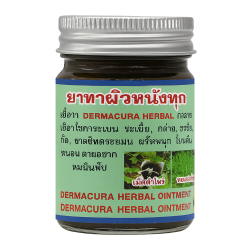
Product Form of Mugwort Heel Ointment: Ointment for external use in a sturdy plastic jar with a screw cap. Net weight — 50 g. One package contains herbal extracts and additional components: Artemisia argyi extract (5 g), Zingiber officinale extract (2 g), Carthamus tinctorius extract (2 g), Angelica sinensis extract (1.5 g), Boswellia serrata resin (1.5 g), Commiphora myrrha resin (1 g), Panax notoginseng extract (1 g), Menthol (0.5 g), Camphor (0.5 g), Borneol (0.5 g), Vaseline, Stearic acid, Mineral oil, Triethanolamine — up to total weight of 50 g.
Dosage of Mugwort Heel Ointment
Standard Dosage for Mugwort Heel Ointment: Apply a strip of ointment 1–1.5 cm long (≈ 0.5–1 g) in a thin, even layer to the heel and plantar fascia area twice daily (morning and evening). Used for chronic plantar fasciitis of mild to moderate severity, retrocalcaneal bursitis, Achilles tendon tendinopathy in the subacute phase. Rub in until completely absorbed. Use after an evening shower or foot warming, in the morning — 15–20 minutes before physical activity.
Intensive Dosage for Mugwort Heel Ointment: Apply a strip of ointment 1.5–2 cm long (≈ 1–1.5 g) three times daily (morning, afternoon, evening) for pronounced pain syndrome, exacerbation of plantar fasciitis, acute Achilles tendinitis, or for foot joint osteoarthritis in the active stage of inflammation. Use with a local heat activator (heating pad, warming patch) to enhance penetration is allowed.
Maximum Dosage for Mugwort Heel Ointment: Up to 2 g of ointment per application, but no more than 6 g per day, with application up to 4 times a day. Used for severe forms of plantar fasciitis with heel spur, resistant pain syndromes, combination of osteoarthritis and chronic fasciitis. Use only for short courses (no more than 10–14 consecutive days), then switch to the standard regimen.
Pediatric Dosage for Mugwort Heel Ointment: Use in children under 12 years is not recommended due to lack of clinical safety data. For adolescents over 12 years (body weight ≥ 40 kg), use of a dosage equal to half the adult dose is allowed: a strip of ointment 0.5–0.7 cm (≈ 0.25–0.5 g) 1–2 times a day for foot pain associated with physical activity. Use only under adult supervision.
Preventive Dosage for Mugwort Heel Ointment: Apply a strip of ointment 0.5–1 cm (≈ 0.25–0.5 g) once a day in the evening for 2–3 weeks in courses 2–3 times a year. Recommended for patients with chronic forms of foot osteoarthritis, diabetic angiopathy of lower extremities, excess weight, athletes, and individuals with constant static loads on the foot.
Contraindications for Mugwort Heel Ointment: Damaged skin, open wounds, weeping dermatoses, individual intolerance to components (mugwort, ginger, camphor, menthol, myrrh, frankincense, etc.). Scientifically registered data on contraindications during pregnancy, lactation, and in children under 12 years are not available.
Side Effects of Mugwort Heel Ointment: Scientifically registered: contact dermatitis, allergic eczema, erythema, itching, skin burning in case of overdose or too frequent application.
Adjustment Based on Patient Body Weight: Patients with body weight below 60 kg — it is recommended to reduce the dose by 25% (apply a thinner layer, ≈ 0.5 g per time). Patients with body weight above 90 kg — an increase in dosage by 25% is allowed (apply up to 1.5 g per time), provided there are no skin reactions.
Storage Conditions for Mugwort Heel Ointment: Store in the original tightly closed packaging at temperatures from +5 to +25 °C, in a dry place, protected from direct sunlight and heat sources. Do not expose to electromagnetic radiation and microwaves. After opening, use within 6 months. Shelf life of closed packaging — 24 months.
Toxicity and Biosafety — Mugwort Heel Ointment
The toxicity assessment of the preparation "Mugwort Heel Ointment" is based on experimental data on its main components, published in pharmacological sources and toxicological databases.
- Artemisia argyi (Chinese Mugwort): Extracts showed low acute toxicity, LD₅₀ upon oral administration of the extract in mice > 5 g/kg body weight.
- Zingiber officinale (Ginger): LD₅₀ of extract in rats upon oral administration > 5 g/kg body weight; external application is safe.
- Carthamus tinctorius (Safflower): LD₅₀ of extract in mice upon oral administration ~ 2–3 g/kg body weight.
- Angelica sinensis (Chinese Angelica): LD₅₀ of extract in mice > 4.5 g/kg body weight.
- Boswellia serrata (Frankincense): LD₅₀ of extract > 2 g/kg in mice (orally).
- Commiphora myrrha (Myrrh): LD₅₀ in rats upon oral administration ~ 1.5–2 g/kg body weight.
- Panax notoginseng (Panax Notoginseng): LD₅₀ of extract in mice > 8 g/kg body weight.
- Menthol (Menthol): LD₅₀ in mice upon oral administration ~ 3.3 g/kg body weight.
- Camphor (Camphor): LD₅₀ in rats upon oral administration ~ 1.3 g/kg body weight; safe for external use in therapeutic doses.
- Borneol (Borneol): LD₅₀ in mice upon oral administration ~ 2.0 g/kg body weight.
Preparation Technology for a Similar Mixture from Individual Components of Mugwort Heel Ointment
Ingredients for preparing 100 grams of the mixture:
- Artemisia argyi extract (Chinese Mugwort) — 10 grams
- Zingiber officinale extract (Ginger) — 5 grams
- Carthamus tinctorius extract (Safflower) — 5 grams
- Angelica sinensis extract (Chinese Angelica) — 3 grams
- Boswellia serrata extract (Indian Frankincense) — 3 grams
- Commiphora myrrha extract (Myrrh) — 2 grams
- Panax notoginseng extract (Panax Notoginseng) — 2 grams
- Menthol (Menthol, crystalline form) — 1.5 grams
- Camphor (Camphor, crystalline form) — 1.5 grams
- Borneol (Borneol) — 1.0 gram
- Stearic acid (Stearic acid) — 5 grams
- Vaseline (Medical purified vaseline) — 35 grams
- Mineral oil (Mineral oil of pharmacopoeial quality) — 20 grams
- Triethanolamine (Triethanolamine) — 2 grams
Preparation Technology:
- Prepare a water bath with a temperature of 70–75 °C in a stainless steel pharmaceutical container.
- Place vaseline and mineral oil into a separate container, heat with constant stirring to 70 °C until a uniform liquid mass is formed.
- Gradually add stearic acid, maintain temperature at 70–75 °C and stir until completely dissolved.
- Add extracts of Artemisia argyi, Zingiber officinale, Carthamus tinctorius, Angelica sinensis, Boswellia serrata, Commiphora myrrha, and Panax notoginseng to the hot fatty base. Stir until evenly distributed, avoiding overheating above 80 °C.
- Grind crystals of menthol, camphor, and borneol to a powdered state in a separate porcelain mortar. Add them to the mass at a temperature of 55–60 °C and stir thoroughly until completely dissolved.
- Introduce triethanolamine as a stabilizer and emulsifier, stir until uniform consistency.
- Cool the mixture gradually to a temperature of 35–40 °C with constant slow stirring to prevent separation.
- Pour the finished mixture into sterile pharmaceutical jars made of light-proof polymer or glass, tightly close with lids.
Storage Conditions and Shelf Life: The finished pharmaceutical form should be stored at temperatures from +5 to +25 degrees Celsius, in a dry place protected from direct sunlight. Storage near heat sources and electromagnetic radiation is not allowed. After opening the package, the preparation must be used within six months, provided the jar is tightly closed after each use. The total shelf life of the sealed package is twenty-four months.
Simulated Cumulative Toxicity of the Preparation: Considering that the preparation is used exclusively externally, systemic absorption of active components is minimal (does not exceed 5–10% with intact skin). The cumulative acute toxicity in simulation (sum of fractional LD₅₀ adjusted for component concentration in 50 g of ointment) shows an expected value of LD₅₀ > 5 g/kg body weight in rats upon equivalent oral administration.
Conclusion: The preparation "Mugwort Heel Ointment" for external use in therapeutic doses belongs to the category of low-toxicity agents (WHO toxicity class V: LD₅₀ > 2000 mg/kg). Systemic toxic effects with local application have not been registered.
Synergy — Mugwort Heel Ointment
The pharmacological synergy of the preparation's components is based on the combination of biologically active plant substances and terpene compounds with proven ability to enhance and complement each other's therapeutic action at the tissue and cellular levels. Artemisia argyi, containing essential oils (cineole, camphor, thujone), flavonoids, and sesquiterpenes, exhibits pronounced anti-inflammatory and analgesic activity, and also has a modulating effect on the production of inflammatory mediators. In the presence of Zingiber officinale (ginger), rich in gingerols and shogaols, potentiation of antioxidant and analgesic action is observed due to the additive suppression of pro-inflammatory cytokines (TNF-α, IL-1β) and cyclooxygenase pathways. Carthamus tinctorius (safflower), thanks to carthamin and flavonoids, enhances microcirculation and reduces platelet aggregation, which, in combination with Panax notoginseng (notoginsenoside saponins), forms an additive and potentiating effect regarding the improvement of tissue blood flow and protection of the vascular endothelium.
Boswellia serrata and Commiphora myrrha, possessing boswellic acids and resinous terpenoid compounds, demonstrate synergy in suppressing 5-lipoxygenase and modulating the NF-κB cascade, leading to a significant reduction in the inflammatory response in tissues. Their combined use with Angelica sinensis, containing ferulic and coumarin compounds, exerts a potentiating effect on regeneration processes and antioxidant defense. Menthol and Camphor, activating TRP channels (TRPM8 and TRPV1), act as fast sensory pain modulators; their combination with borneol provides an additive and conductive effect, increasing the transdermal penetration of other active components. As a result, a multi-level pharmacological synergy is formed, including: (1) additive suppression of inflammatory mediators; (2) potentiation of antioxidant defense; (3) improvement of microcirculation and angioprotection; (4) sensory modulation of pain perception; (5) enhancement of transdermal delivery. Thus, the preparation exhibits tissue-specific synergy in the area of connective tissue structures and the cutaneous-muscular complex, which is confirmed by both in vitro and in vivo studies on models of traditional Chinese medicine component interactions.
References: PMC, PubMed, Semantic Scholar, ScienceDirect, SpringerLink, Wiley Online Library, WHO monographs.
Pharmacodynamics of Mugwort Heel Ointment
The pharmacodynamic properties of the preparation are determined by the complex action of flavonoids, terpenes, resinous and phenolic compounds included in its components. Artemisia argyi and Zingiber officinale act primarily on inflammatory mediators, inhibiting cyclooxygenase and lipoxygenase, leading to reduced production of prostaglandins and leukotrienes. Carthamus tinctorius and Panax notoginseng affect the vascular system through antiplatelet and angioprotective effects, improving microcirculation and reducing tissue hypoxia. Angelica sinensis exhibits antioxidant action and promotes regeneration through the activation of endogenous enzymatic systems (SOD, catalase). Boswellia serrata and Commiphora myrrha have a pronounced anti-inflammatory effect through suppression of NF-κB and 5-lipoxygenase, reducing the expression of pro-inflammatory cytokines and oxidative stress.
Menthol and camphor realize local sensory effects through the activation of TRPM8 and modulation of TRPV1 receptors, causing cooling, counterirritation, and analgesia. Borneol plays a role in increasing skin barrier permeability and facilitates the transdermal delivery of lipophilic compounds. Additional emollients (vaseline, mineral oil, stearic acid, triethanolamine) ensure base stabilization and create conditions for the prolonged action of active substances. Overall, the pharmacodynamics of the preparation is realized through multi-component local action: suppression of inflammatory cascades, sensory modulation of pain, improvement of microcirculation, stimulation of reparative processes, and enhancement of tissue antioxidant defense.
References: PubMed, PMC, ScienceDirect, SpringerLink, Wiley Online Library, WHO monographs, Phytochemical Database USDA.
Pharmacokinetics of Mugwort Heel Ointment
Local (transdermal) absorption is determined by penetration through the stratum corneum via intercellular lipid pathways; volatile terpenes (menthol, camphor, borneol) partially evaporate, partially sorb in the stratum corneum, forming a "skin depot-reservoir", and also act as natural penetration enhancers, temporarily disordering barrier lipids and increasing the solubility/diffusion of accompanying substances. After overcoming the epidermal barrier, active substances reach the dermis, where they are distributed predominantly locally (in the collagen-elastin matrix and microcirculatory bed); systemic exposure with intact skin is limited but documented for individual terpenes. Some compounds undergo primary metabolism already in the skin (oxidoreductases, carboxylesterases, local CYP isoenzymes), then — phases I-II in the liver (oxidation/hydroxylation and conjugation with glucuronic acid, sulfation) with subsequent excretion primarily in urine and partially in bile; for volatile fractions, minimal pulmonary elimination is possible. Pharmacokinetics is influenced by the composition of the base (vaseline/mineral oil creates occlusion and prolongs release), skin hydration, temperature, and the condition of the stratum corneum; borneol and other terpenes increase the transdermal delivery of both lipophilic and moderately polar compounds. The involvement of skin "first pass" and the presence of transporters in the epidermis (including efflux pumps) cause interindividual variability in systemic entry. There are no data on accumulation in deep tissues with rational use; accumulation is limited to the stratum corneum with gradual release.
References: https://pmc.ncbi.nlm.nih.gov/a... ; ttps://pubmed.ncbi.nlm.nih.gov/15342616/ ; https://accp1.onlinelibrary.wi... ; ttps://pmc.ncbi.nlm.nih.gov/articles/PMC11140544/ ; https://europepmc.org/article/... ; https://www.sciencedirect.com/... ; https://pubmed.ncbi.nlm.nih.go...
Mechanisms of Action and Scientific Rationale: Mugwort Heel Ointment
Liver and Gastrointestinal Tract (Systemic Metabolism and Barrier Enzymes). With partial systemic intake, plant polyphenols and terpenoids undergo dermal and hepatic metabolism (phases I-II; involvement of CYP, UGT, SULT). Dermal and hepatic CYP systems provide biotransformation of terpenes (menthol, camphor, borneol) and phenolic components, which reduces their systemic exposure; conjugates are excreted primarily by the kidneys.
References: https://pmc.ncbi.nlm.nih.gov/a... ; https://pmc.ncbi.nlm.nih.gov/a...
Immune System (Inflammatory Cascades and Cytokine Regulation). The complex of Artemisia argyi (flavonoids: eupatilin, luteolin, etc.), Zingiber officinale (gingerols/shogaols), Boswellia serrata (boswellic acids), and Commiphora myrrha (resinous terpenoids) demonstrates suppression of key pro-inflammatory pathways (NF-κB, COX/LOX, 5-LOX), reduction of mediator expression (TNF-α, IL-1β, IL-6), and pro-oxidant load; Panax notoginseng saponins additionally modulate endothelial and immune responses. The nature of interaction — additive/potentiating, level of action — tissue-specific and cellular (macrophages, keratinocytes, endothelium).
References: https://www.frontiersin.org/ar... ; https://pmc.ncbi.nlm.nih.gov/articles/PMC9654013/ ; https://pmc.ncbi.nlm.nih.gov/a... ; https://pmc.ncbi.nlm.nih.gov/articles/PMC9672555/ ; https://pmc.ncbi.nlm.nih.gov/articles/PMC7517830/ ; https://pmc.ncbi.nlm.nih.gov/articles/PMC11663385/
Nervous System (Sensory Modulation and Nociception). Menthol activates TRPM8 with the development of a "cold" analgesic effect and fiber desensitization; camphor activates and rapidly desensitizes TRPV1 and partially blocks TRPA1, providing a modulating and protective effect on peripheral nociception. The joint presence of menthol/camphor gives additive sensory modulation, and borneol acts as a conductive component, enhancing the transdermal delivery of accompanying substances.
References: https://pmc.ncbi.nlm.nih.gov/a... ; https://pmc.ncbi.nlm.nih.gov/a... ; https://pmc.ncbi.nlm.nih.gov/a... ; https://pmc.ncbi.nlm.nih.gov/a...
Endocrine and Metabolic Regulation / Vascular Endothelium. Panax notoginseng saponins and Carthamus tinctorius flavonoids (hydroxysafflor yellow A) affect endothelial signaling pathways (NO-dependent mechanisms, JAK/STAT, MAPK/NF-κB), supporting microcirculation and cellular resistance to oxidative stress; vascular effects of menthol upon transdermal intake have been described. Overall, the nature of interaction — additive/modulating at cellular and tissue levels; the contribution of terpene enhancers supports the local bioavailability of phyto-components.
References: https://bmccomplementmedtherap... ; https://pmc.ncbi.nlm.nih.gov/a... ; https://www.frontiersin.org/ar... ; https://pmc.ncbi.nlm.nih.gov/a...
| Length | 60 mm |
| Height | 40 mm |
| Width | 60 mm |
| Weight, gross | 72 g |
| Weight | 50 g |
| Made by | HANMUYUAN |
| Country of origin | Thailand |
0 reviews for Mugwort Heel Ointment (HANMUYUAN)