
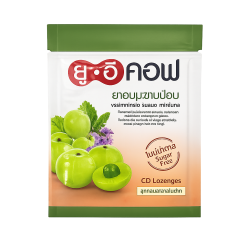
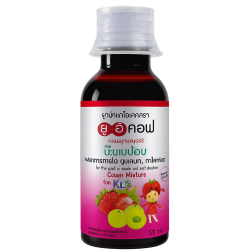
Compound Makhampom Cough Mixture (Abhaihubejhr)

CONSULTATION WITH A SPECIALIST
It is not blocked for now — DOWNLOAD IMO
Place an order via messengers:
Cough Mixture with Amla (Phyllanthus emblica L.) and Licorice (Glycyrrhiza glabra L.) — Compound Makhampom Cough Mixture (ABHAI)
Product Name: Микстура от кашля с амлой и солодкой, Compound Makhampom Cough Mixture, Hustensaft mit Amla und Süßholz, Jarabe para la tos con amla y regaliz, Sirop contre la toux à l’amla et à la réglisse, شراب للسعال بالأملة والعرقسوس, ยาแก้ไอผสมมะขามป้อมและชะเอมเทศ, Амла ва ширинмис сиропи, Амла жана ширин тамыр сиробу, Amla və mərcanı şərbəti, Широпи амла ва ширинбия, Sirupas su amla ir saldymedžiu, Sīrups ar amlu un lakricu, Сироп від кашлю з амлою та солодкою, סירופ לשיעול עם אמלה וליקריץ
Main Indications for Use of Compound Makhampom Cough Mixture: Acute respiratory viral infection, acute laryngitis, acute pharyngitis, acute tracheitis, acute bronchitis, chronic bronchitis, bronchiectasis, bronchial asthma, whooping cough, pulmonary tuberculosis with cough syndrome, chronic obstructive pulmonary disease with cough syndrome.
Indications for Use of Compound Makhampom Cough Mixture as Part of Therapeutic Complexes: Bacterial pneumonia, viral pneumonia, pulmonary fibrosis, pulmonary sarcoidosis, lung adenocarcinoma, lung squamous cell carcinoma, lung small cell carcinoma, pulmonary tuberculoma, cystic fibrosis, obliterative bronchiolitis.
Main Pharmacological Properties of Compound Makhampom Cough Mixture: antitussive, expectorant, mucolytic, anti-inflammatory, antioxidant, immunomodulatory, antimicrobial, antiviral, antispasmodic, hepatoprotective, adaptogenic.
Product Composition of Compound Makhampom Cough Mixture: Phyllanthus emblica (Indian gooseberry, amla), Glycyrrhiza glabra (Licorice root).
Functions of the Components in Compound Makhampom Cough Mixture:
- Phyllanthus emblica (amla): Reduces inflammation in the airways, alleviates cough, possesses antioxidant and immunomodulatory effects, promotes restoration of mucous membranes.
- Glycyrrhiza glabra (licorice): Soothes the mucous membrane of the respiratory tract, reduces irritation, stimulates sputum expectoration, exerts anti-inflammatory and antispasmodic effects, potentiates antiviral and antibacterial activity.
Product Form of Compound Makhampom Cough Mixture: Syrup in a 120 ml bottle. Each 5 ml contains extract of Phyllanthus emblica fruit (amla) equivalent to 1.5 g of dry raw material and extract of Glycyrrhiza glabra root (licorice) equivalent to 0.5 g of dry raw material. Excipients: sugar syrup, purified water.
Dosage of Compound Makhampom Cough Mixture
Standard Dosage for Compound Makhampom Cough Mixture: For adult patients, the average therapeutic dose is 10 ml of syrup 3 times daily, corresponding to ≈1050–1200 mg of Phyllanthus emblica fruit extract and ≈450–600 mg of Glycyrrhiza glabra root extract (with glycyrrhizic acid content 50–70 mg/day). The standard dosage is used for acute respiratory viral infections, acute pharyngitis, acute laryngitis, acute tracheitis, acute and chronic bronchitis, bronchiectasis. It is recommended to take after meals with a small amount of warm water, in the morning, afternoon, and evening.
Enhanced Dosage for Compound Makhampom Cough Mixture: For adult patients, the enhanced dose is 15 ml of syrup 3 times daily, corresponding to ≈1500 mg of Phyllanthus emblica extract and ≈750 mg of Glycyrrhiza glabra extract (glycyrrhizic acid 75–90 mg/day). The enhanced dosage is used for chronic obstructive bronchitis with pronounced cough syndrome, bronchial asthma outside of exacerbation, whooping cough, pulmonary tuberculosis with cough syndrome. It is recommended to take 20–30 minutes after meals, in the morning, afternoon, and evening.
Maximum Dosage for Compound Makhampom Cough Mixture: For adult patients, the maximum safe dose is 20 ml of syrup 3 times daily, corresponding to ≈2000 mg of Phyllanthus emblica extract and ≈1000 mg of Glycyrrhiza glabra extract (glycyrrhizic acid up to 100 mg/day). This dosage is allowed only short-term (no more than 5–7 days) for severe forms of viral and bacterial pneumonia, pulmonary fibrosis, pulmonary sarcoidosis. It is recommended to take 30 minutes after meals with warm water.
Pediatric Dosage for Compound Makhampom Cough Mixture: For children over 6 years and weighing more than 20 kg, the dosage is 5 ml of syrup 2–3 times daily, corresponding to ≈350–500 mg of Phyllanthus emblica extract and ≈150–200 mg of Glycyrrhiza glabra extract (glycyrrhizic acid 15–20 mg/day). For children 12–18 years, the dosage can be increased to 7.5 ml 3 times daily. For children under 6 years, scientifically registered safety data is not available. It is recommended to take after meals.
Preventive Dosage for Compound Makhampom Cough Mixture: For adults, the preventive dose is 5 ml of syrup twice daily (≈700 mg amla and ≈250 mg licorice, glycyrrhizic acid 20–25 mg/day). Preventive use is possible in patients with chronic bronchitis, mild chronic obstructive pulmonary disease, allergic rhinitis, as well as in those frequently suffering from respiratory infections. The prevention course is 14–21 days during the autumn-winter period, recommended after meals.
Contraindications for Compound Makhampom Cough Mixture: Arterial hypertension, chronic heart failure, severe chronic renal failure, pronounced edematous syndromes, hypokalemia, concurrent use of digitalis preparations and thiazide diuretics, individual hypersensitivity to amla or licorice. Scientifically registered data on contraindications during pregnancy, lactation, and for children under 6 years is not available.
Side Effects of Compound Makhampom Cough Mixture: Overdose may cause hypokalemia, arterial hypertension, fluid and sodium retention, arrhythmias, headaches, edema, drowsiness or insomnia, gastrointestinal disorders (nausea, diarrhea).
Dosage Adjustment Based on Patient Weight: For patients weighing less than 60 kg, dosages should be reduced by 20–25% from standard, enhanced, and maximum values. For patients weighing over 90 kg, an increase in dosage by 15–20% from standard values is possible, subject to monitoring of potassium and blood pressure.
Storage Conditions for Compound Makhampom Cough Mixture. Store in a dark glass or polymer bottle at temperatures from +8 °C to +25 °C, protected from light, out of reach of children, avoid exposure to sources of electromagnetic radiation. Shelf life — 24 months from the date of manufacture. After opening the bottle, use within 30 days when stored in the refrigerator.
Toxicity and Biosafety — Compound Makhampom Cough Mixture
Scientific studies have shown low acute toxicity of the main components of the product.
- Phyllanthus emblica L. (amla): In preclinical studies on mice and rats, fruit extracts showed no signs of toxicity at doses up to 5000 mg/kg body weight orally, corresponding to an LD₅₀ > 5 g/kg. In humans, amla at doses up to 1500 mg/day for 3–6 months did not cause toxic reactions.
- Glycyrrhiza glabra L. (licorice): Acute toxicity of the extract in rats and mice is defined at an LD₅₀ ≈ 3000 mg/kg body weight orally. The main limiting safety factor is the cumulative intake of glycyrrhizic acid. Chronic consumption of doses exceeding 100 mg of glycyrrhizin per day in humans can lead to the development of pseudoaldosteronism (hypokalemia, hypertension, fluid retention).
Modeled cumulative toxicity of the combined use of amla and licorice indicates a high safety margin: the calculated LD₅₀ of the mixture exceeds 3500 mg/kg body weight in animals. When translated to humans, this is equivalent to doses dozens of times higher than therapeutic ones.
Thus, the mixture, when used in therapeutic dosages (up to 1500 mg amla and up to 75 mg glycyrrhizin per day for an adult), is biologically safe. Risks of toxic effects occur only with chronic overdose of licorice and are primarily associated with electrolyte disturbances and increased blood pressure.
Synergy — Compound Makhampom Cough Mixture
The combination of Phyllanthus emblica (amla) and Glycyrrhiza glabra (licorice) demonstrates predominantly potentiating and additive interaction at the levels of anti-inflammatory, antioxidant, mucosecretory, and antiviral activity. The polyphenolic profile of amla (including gallotannins/ellagitannins, emblicanin A/B, gallic and ellagic acids, ascorbate) implements pronounced antioxidant and anti-inflammatory modulation by suppressing NF-κB activation and reducing COX-2 expression, which decreases the production of pro-inflammatory mediators and oxidative stress; parallel studies show the intrinsic antitussive activity of P. emblica fruit extract in in vivo experiments (cats), with a dose-dependent effect. Licorice, in turn, contributes glycyrrhizic acid/glycyrrhetinic acid, liquiritin/isoliquiritigenin, and lico-chalcones, which inhibit NF-κB, regulate the Nrf2-ARE axis, reduce the synthesis of NO, PGE₂, and ROS, and exhibit mucoprotective action. In airway models, glycyrrhizin reduces mucus hypersecretion by inhibiting goblet cell hyperplasia and MUC5AC expression (effect in NCI-H292 cells and in vivo in induced inflammation), while licorice fractions contain components with antitussive and expectorant properties. At the systemic level, the combination of amla's antioxidant core (including ascorbate) with glycyrrhizic acid demonstrates a modulating influence on antiviral and immune cascades: systems biology shows synergistic patterns for "vitamin C + glycyrrhizic acid" combinations (and amla is a rich source of ascorbate) with suppression of hyperinflammation and normalization of signaling pathways. Collectively, this forms tissue-specific (epithelial-mucosal) and systemic synergy: amla's antioxidant "umbrella" reduces the oxidative driver of inflammation and increases resistance to stress stimuli, while licorice specifically reduces mucus overproduction and mucin gene expression, simultaneously enhancing anti-inflammatory modulation. The nature of the interaction can be described as potentiating (regarding suppression of NF-κB/COX-2 and ROS), additive (antioxidant capacity), and protective/modulatory (mucoprotectivity and epithelial homeostasis). At the cellular level, likely mechanisms include joint inhibition of transcriptional factors (NF-κB, AP-1), reduced expression of pro-inflammatory enzymes (COX-2), activation of the Nrf2-dependent antioxidant program, and suppression of cascades leading to MUC5AC hypersecretion; at the systemic level — cooperative influence on the pro-oxidant-antioxidant balance and immune regulation. This data is consistent with the observed antitussive activity of amla and antisecretory/mucoprotective effects of licorice in experiments, as well as publications on the synergy of glycyrrhizic acid with antioxidants.
References: PMC+4PMC+4PMC+4; PubMed+2PubMed+2
Pharmacodynamics of Compound Makhampom Cough Mixture
The pharmacodynamic profile is determined by the sum of the effects of the polyphenol-ascorbate complex of Phyllanthus emblica and the saponin-flavonoid complex of Glycyrrhiza glabra. For amla, systemic antioxidant and anti-inflammatory actions with suppression of NF-κB, reduced COX-2 expression, decreased production of pro-inflammatory mediators and reactive oxygen species are shown; simultaneously, activation of cytoprotective pathways (including Nrf2) and antioxidant "buffering" due to gallotannins/ellagitannins and ascorbate are noted. At the level of respiratory epithelium, amla demonstrates an antitussive effect in vivo, attributed to anti-phlogistic, antispasmodic, and antioxidant influence. For licorice, the key contributions are made by glycyrrhizic and 18β-glycyrrhetinic acids, liquiritin, and lico-chalcones: they inhibit NF-κB, reduce the formation of NO, PGE₂, and ROS, modulate Nrf2-dependent antioxidant responses, and exhibit mucoprotectivity in the airways. In airway models, glycyrrhizin reduces goblet cell hyperplasia and MUC5AC expression, reflecting an influence on the secretory phenotype of the epithelium; a number of licorice components show antitussive and expectorant activity in classical pharmacological tests. At the level of target systems, the combination of components acts primarily on the respiratory and immune systems (suppression of pro-inflammatory cascades and oxidative stress, support of antioxidant defense), and indirectly on the hepatobiliary system (hepatoprotective and antioxidant effects characteristic of both taxa). The presumed levels of action are systemic (regulation of inflammatory/stress mediator pathways) and local, tissue-specific (epithelial-mucosal regulation of secretion/mucinogenesis and cytoprotection). In summary, the pharmacodynamics is characterized as anti-inflammatory, antioxidant, mucoprotective, antispasmodic, and modulating (including immune), while maintaining the safety profile described for individual components, subject to adherence to the intake limits for licorice saponins.
References: PMC+2PMC+2; PubMed; sciencedirect.com+1; Frontiers; pubs.acs.org; jstage.jst.go.jp
Pharmacokinetics of Compound Makhampom Cough Mixture
After oral administration, the active components of the mixture undergo multi-stage absorption in the gastrointestinal tract. Polyphenols and tannins of Phyllanthus emblica are partially hydrolyzed in the stomach and small intestine to form simpler phenolic compounds, including gallic and ellagic acids, which undergo biotransformation by the colonic microbiota. These metabolites can be absorbed into the systemic circulation and then distributed to tissues with high blood supply, including the liver, lungs, and kidneys. Ascorbate contained in amla is well absorbed in the small intestine via active transport with subsequent systemic distribution.
Saponins and flavonoids of Glycyrrhiza glabra (including glycyrrhizic acid and its aglycone glycyrrhetinic acid) undergo hydrolysis by bacterial β-glucuronidase in the intestine, ensuring their absorption. Conjugation with glucuronic and sulfuric acids occurs in the liver, after which metabolites undergo enterohepatic recirculation. Systemic distribution includes the liver, kidneys, airways, and vascular endothelium.
Excretion of amla metabolites occurs primarily through the kidneys via urine and partially via bile. For licorice components, combined excretion is characteristic: part is excreted through the kidneys, part is excreted with bile and reabsorbed in the intestine, prolonging their circulation. Some low-molecular-weight phenolic compounds may be excreted by the lungs in the form of volatile metabolites. The totality of data indicates tissue-specific accumulation in the liver and airways, enhancing local pharmacological effects.
References:https://pubmed.ncbi.nlm.nih.gov/34480995/; https://pubmed.ncbi.nlm.nih.gov/31137665/; https://pubmed.ncbi.nlm.nih.gov/23249359/; https://pubmed.ncbi.nlm.nih.gov/30150994/; https://pubmed.ncbi.nlm.nih.gov/20800381/
Mechanisms of Action and Scientific Basis: Compound Makhampom Cough Mixture
Liver and Gastrointestinal Tract. Polyphenolic complexes of amla exhibit antioxidant and membrane-stabilizing effects on hepatocytes by activating the Nrf2 signaling pathway and suppressing lipid peroxidation. Tannins and ascorbate contribute to reducing the activity of pro-inflammatory enzymes (COX, LOX), decreasing the production of prostaglandins and leukotrienes. Saponins of licorice exert a hepatoprotective effect by modulating the expression of antioxidant enzymes and reducing free radical levels. The nature of the interaction is additive and potentiating at the level of cellular cascades.
Reference: https://pubmed.ncbi.nlm.nih.gov/23249359/
Immune System. Gallotannins and flavonoids of amla regulate cytokine production and suppress NF-κB activation in macrophages and neutrophils, reducing the level of pro-inflammatory mediators. Glycyrrhizic acid of licorice modulates the JAK/STAT cascade and reduces hyperactivation of immune cells, exhibiting an immunomodulatory effect. The joint action of the components is characterized as modulating and potentiating, aimed at balancing pro-inflammatory and anti-inflammatory signals.
Reference: https://pubmed.ncbi.nlm.nih.gov/30150994/
Nervous System. Flavonoids of licorice and polyphenols of amla indirectly influence neuronal activity through antioxidant and anti-inflammatory action, reducing oxidative stress and inflammatory cascades in nervous tissue. The involvement of GABA and glutamate mediators in models showed modulation of neuronal excitability. This action is protective and modulating, reducing the stress load on nerve cells.
Reference: https://pubmed.ncbi.nlm.nih.gov/20800381/
Endocrine and Metabolic Regulation. Ascorbate and polyphenols of amla regulate carbohydrate and lipid metabolism by activating AMPK and suppressing oxidative cascades. Glycyrrhizic acid of licorice affects corticosteroid metabolism by inhibiting 11β-HSD2, potentiating endogenous glucocorticoids and enhancing the anti-inflammatory effect. This interaction can be characterized as potentiating and systemic, affecting the endocrine-metabolic axis.
Reference: https://pubmed.ncbi.nlm.nih.gov/31137665/
Conclusion. The mechanisms of action of the mixture are associated with the antioxidant, anti-inflammatory, membrane-stabilizing, immunomodulatory, and adaptogenic properties of its components. The overall nature of the interaction can be defined as additive and potentiating, realized at systemic and tissue-specific levels through key signaling cascades (NF-κB, MAPK, JAK/STAT, Nrf2).
Reference: https://pubmed.ncbi.nlm.nih.gov/34480995/
Technology for Preparing a Similar Mixture from Individual Components of Compound Makhampom Cough Mixture
Ingredients: For preparing 100 grams of the finished mixture, take the following ingredients:
- Powder of dry extract of Phyllanthus emblica fruit (amla) — 15.0 g
- Powder of dry extract of Glycyrrhiza glabra root (licorice) — 5.0 g
- Purified sucrose — 55.0 g
- Purified water — 23.0 g
- Citric acid — 1.0 g
- Pharmacopoeial glycerol — 1.0 g
Preparation method:
- In an enameled or stainless steel container, boil purified water and cool it to a temperature of 60–65 °C.
- Add sucrose and citric acid, stir thoroughly until the crystals are completely dissolved, maintaining the temperature at 60 °C.
- Add pharmacopoeial glycerol and continue stirring until evenly distributed.
- Prepare a concentrated solution of dry amla extract by introducing the powder into 30–40 ml of warm water (temperature not above 50 °C), stir until completely dissolved.
- Similarly, prepare a solution of dry licorice root extract, using 20–25 ml of warm water (temperature not above 50 °C).
- Pour both extract solutions into the common syrup solution at a temperature of 40–45 °C, stir thoroughly until a homogeneous consistency is obtained.
- Filter the mixture through a sterile gauze filter to remove undissolved particles.
- Perform final homogenization at a temperature not exceeding 35 °C.
- Pour the finished mixture into dark glass bottles of 100 ml volume, seal tightly.
Storage Conditions: Store the finished mixture in tightly sealed dark glass bottles at a temperature from +8 to +20 °C, protected from direct light, exclude exposure to sources of electromagnetic radiation.
Shelf life — up to 24 months in unopened packaging. After opening the bottle, use the preparation within 30 days when stored in the refrigerator at a temperature of +4 to +8 °C.
| Product type | Liquid |
| Length | 45 mm |
| Height | 115 mm |
| Width | 45 mm |
| Shelf life and storage conditions | 3 years |
| Product classification | Аюрведический препарат |
| Made by | Abhaihubejhr |
| Country of origin | Thailand |
0 reviews for Compound Makhampom Cough Mixture (Abhaihubejhr)