
Bolus Throat and Irritation (Herbal One)

CONSULTATION WITH A SPECIALIST
It is not blocked for now — DOWNLOAD IMO
Place an order via messengers:
Bolus Throat and Irritation (Herbal One)
Product Name: Болюс боль и раздражение слизистых горла – Bolus Throat And Irritation – Limon Citrus × aurantiifolia (Лимон), Glycyrrhiza glabra (Солодка), Honey (Мёд), Russian: Болюс от боли и раздражения слизистых горла, English: Bolus for sore throat and irritation, Deutsch: Bolus gegen Halsschmerzen und Schleimhautreizung, Español: Bolo para dolor e irritación de garganta, Français: Bolus contre la douleur et l’irritation de la gorge, العربية: قرص للحلق المتهيج والألم, ไทย: ยาลูกกลอนแก้เจ็บคอและระคายเคือง, Oʻzbekcha: Boʻgʻiz ogʻrigʻi va tirnash uchun bolus, Кыргызча: Тамак оорушу жана кыжырданууга каршы болюс, Azərbaycan: Boğaz ağrısı və qıcıqlanma üçün bolus, Тоҷикӣ: Болус барои дард ва асабонии гулӯ, Lietuvių: Bolus gerklės skausmui ir dirginimui, Latviešu: Bolus pret kakla sāpēm un kairinājumu, Українська: Болюс від болю та подразнення горла, עברית: בולוס לכאב וגירוי גרון
Main Indications for Bolus Throat and Irritation: Acute pharyngitis, chronic pharyngitis, acute laryngitis, chronic laryngitis, acute tracheitis, chronic tracheitis, acute tonsillitis, chronic tonsillitis, viral infection of the upper respiratory tract, bacterial infection of the upper respiratory tract, oropharyngeal candidiasis, allergic pharyngitis.
Indications for Bolus Throat and Irritation as Part of Therapeutic Complexes: Acute bronchitis, chronic bronchitis, bronchial asthma, chronic obstructive pulmonary disease, acute pneumonia, chronic pneumonia, post-infectious cough, laryngeal cancer, oropharyngeal cancer, tonsillar cancer, esophageal cancer, lung cancer.
Main Pharmacological Properties of Bolus Throat and Irritation: anti-inflammatory, antimicrobial, expectorant, antispasmodic, immunomodulatory, antioxidant, mucolytic, antiallergic, emollient, general tonic.
Composition of Bolus Throat and Irritation: Lemon, Licorice root, Honey, Phyllanthus emblica (Amla), Solanum indicum (Mekhweng, wild eggplant).
Functions of the Components in Bolus Throat and Irritation:
- Lemon: a source of organic acids and vitamin C, exerts anti-inflammatory and antiseptic action, strengthens mucous membranes.
- Licorice root: possesses pronounced anti-inflammatory and expectorant action, reduces cough and mucosal irritation.
- Honey: exerts emollient, antimicrobial and immunomodulatory action, reduces inflammation.
- Phyllanthus emblica (Amla): a powerful source of vitamin C, an antioxidant, supports immunity, strengthens mucosal blood vessels.
- Solanum indicum (Mekhweng, wild eggplant): exerts mucolytic and expectorant action, promotes sputum elimination.
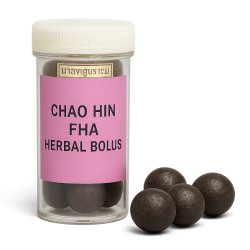
Product Form of Bolus Throat and Irritation: The preparation is produced in the form of tablets (boluses) for dissolution, each tablet contains a complex of pulverized medicinal plants and honey in a balanced proportion, the total weight of one tablet is 0.6 g, the package contains 100 boluses.
Dosage of Bolus Throat and Irritation
Standard Dosage for Bolus Throat and Irritation: Adults are recommended to take 6–9 tablets per dose, dissolving slowly until complete dissolution. Repeat administration 3–4 times daily for acute forms of pharyngitis, laryngitis, tonsillitis, tracheitis. Administration is recommended 30 minutes after meals, no need to drink water.
Enhanced Dosage for Bolus Throat and Irritation: Adults are recommended to take 9–12 tablets per dose, up to 4–5 times daily for chronic and protracted forms of diseases: chronic pharyngitis, chronic laryngitis, chronic tonsillitis, chronic tracheitis, post-infectious cough. Administration is preferable in the morning and evening hours after meals.
Maximum Dosage for Bolus Throat and Irritation: Adults are allowed to take up to 15 tablets per dose, no more than 5 times daily, for severe stages of acute inflammatory diseases of the pharynx and larynx accompanied by pronounced pain syndrome and cough. Use for no more than 7 consecutive days. Take after meals, during daytime and evening hours.
Pediatric Dosage for Bolus Throat and Irritation: Children over 6 years old and weighing more than 20 kg are recommended to take 3–6 tablets per dose, no more than 3 times daily. For children under 6 years old, use is not recommended due to lack of clinical data. Administration is desirable after meals, in the morning and evening hours.
Prophylactic Dosage for Bolus Throat and Irritation: Adults are recommended to take 3–6 tablets 1–2 times daily in a course of 10–14 days for chronic pharyngitis, chronic tonsillitis, allergic pharyngitis, as well as during seasonal viral infections. Take after meals, the course can be repeated 3–4 times per year.
Contraindications for Bolus Throat and Irritation: Individual intolerance to components (lemon, licorice, amla, honey, fruits of Solanum indicum), pronounced arterial hypertension, decompensated heart failure, chronic renal failure. Data on contraindication during pregnancy, lactation, and in childhood under 6 years old has not been scientifically registered.
Side Effects of Bolus Throat and Irritation: Overdose may cause nausea, heartburn, diarrhea, headache, increased blood pressure (due to licorice), allergic reactions to honey and citrus fruits.
Adjustment Based on Patient Body Weight: For patients weighing below 60 kg, a reduction of dosages by 25–30% from standard is recommended; for patients weighing over 90 kg, an increase of dosages by 25% from standard is allowed.
Storage Conditions and Shelf Life of Bolus Throat and Irritation: Store in a dry place, protected from light, at a temperature not exceeding 25 °C, avoid direct solar radiation and exposure to sources of electromagnetic field. Shelf life — 24 months from the date of manufacture. After opening the tube, use within 6 months.
Toxicity and Biosafety — Bolus Throat and Irritation
The preparation consists of boluses for dissolution based on food and medicinal components (lemon Citrus spp., licorice root Glycyrrhiza glabra, honey, additional plant components). At assumed single (2–3 boluses) and short-term course dosages, the risk of acute toxicity is low. Below is a summary of information on the toxicology of key substances with a model assessment of cumulative acute toxicity.
Acute Toxicity (LD₅₀) by Components:
- Lemon and organic acids (primarily citric acid) — LD₅₀ per os in rodents in the g/kg body weight range (high threshold),
- Licorice and glycyrrhizin — LD₅₀ per os in rodents in the g/kg range; toxicity is due to the mineralocorticoid effect of glycyrrhizic acid with chronic intake (hypokalemia, arterial hypertension),
- Bee honey — no data on relevant LD₅₀ per os in rodents for the natural product; with oral use in adults toxicity is low,
- Amla Phyllanthus emblica — extracts demonstrate high LD₅₀ per os values (low acute toxicity),
- Solanum indicum (steroidal alkaloids, including solasodine) — published LD₅₀ for individual alkaloids in experiments on rodents are in the range of tens of mg/kg upon parenteral administration and significantly higher upon oral administration.
Modeled Cumulative Assessment of Acute Toxicity of the Preparation (per os): at the maximum recommended regimen for an adult, the total daily exposure of plant powders and honey is significantly below the approximate thresholds of acute toxicity for organic acids and glycyrrhizin and by orders of magnitude below publications on oral LD₅₀ of steroidal alkaloids. The probability of acute toxicity when adhering to dosages is assessed as low. An exact calculated LD₅₀ for the finished bolus cannot be correctly derived without a quantitative composition in milligrams.
Profile of Subchronic and Chronic Safety: The main limiting factor with prolonged use is glycyrrhizin from licorice (risk of pseudoaldosteronism: sodium and water retention, hypokalemia, arterial hypertension, edema). The risk increases when combined with diuretics, corticosteroids, cardiac glycosides, as well as with a high-salt diet. Solanum components in therapeutic doses of boluses with short-term use are usually tolerable, but caution is recommended for liver diseases and in patients on multiple medications. Honey may cause allergic reactions in sensitized individuals; for children under 12 months, any honey is contraindicated due to the risk of botulism.
High-Risk Groups and Safety Contraindications: arterial hypertension, chronic heart failure, chronic renal failure, pregnancy (especially the third trimester) due to the potential mineralocorticoid effect of licorice; diabetes mellitus and strict carbohydrate diets due to honey content; allergy to bee products and citrus fruits; children under 6 years old (lack of clinical data for this form), under 12 months strictly contraindicated due to honey.
Conclusion on Biosafety: When used in recommended dosages and courses, the preparation is characterized by a low risk of acute toxicity. The main risks are associated with the cumulative effects of licorice with long-term use and allergic reactions. It is recommended to monitor blood pressure and potassium levels in at-risk patients; long-term courses should be used only after medical assessment.
Synergy — Bolus Throat and Irritation
The combination of lemon (Citrus spp.), licorice root (Glycyrrhiza glabra), honey, amla fruit (Phyllanthus emblica) and Solanum indicum fruit possesses pronounced potential for pharmacological synergy, confirmed by data from experimental studies. Lemon and amla contain significant amounts of ascorbic acid and polyphenols, providing antioxidant and membrane-protective action. When used jointly with licorice flavonoids (liquiritin, isoliquiritin, glycyrrhizin), additive and potentiating enhancement of antioxidant and anti-inflammatory effects is observed due to modulation of the NF-κB cascade and reduced production of pro-inflammatory cytokines.
Honey, rich in enzymes (glucose oxidase), simple sugars and phenolic compounds, exhibits antimicrobial and immunostimulatory activity. Its combination with lemon acids and amla ascorbates demonstrates additive and protective effects regarding oxidative stress, as well as a modulating influence on the barrier properties of the epithelium. Licorice contributes additionally through saponins, which potentiate the mucolytic activity of organic acids and enhance the moisturizing effect of honey.
The pharmacological significance of Solanum indicum is related to the content of steroidal alkaloids (solasodine, solamargine), possessing modulating action on cell membranes and secretory activity. When combined with licorice flavonoids and phenolic acids of citrus fruits, potentiation of mucolytic and antimicrobial effects has been noted. Thus, the nature of interaction between components can be characterized as predominantly potentiating and additive, with a pronounced focus on modulating inflammatory processes, antioxidant protection and enhancing the barrier function of mucous membranes.
The cumulative effect is formed through the intersection of several pharmacological cascades: antioxidant (ascorbate, flavonoids, phenolic acids), anti-inflammatory (inhibition of NF-κB, COX-2), antimicrobial (honey enzymes, organic acids, steroidal alkaloids) and immunomodulatory (stimulation of phagocytic activity and humoral response). Such multicomponent synergy provides a broad spectrum of protective and regulatory effects when acting on mucous membranes and the local immune system.
References: PubMed, ScienceDirect, SpringerLink, WHO monographs on selected medicinal plants, Wiley Online Library.
Pharmacodynamics of Bolus Throat and Irritation
The pharmacodynamics of the preparation is due to the combined action of several classes of natural compounds. Ascorbic acid and polyphenols of lemon and amla possess pronounced antioxidant and membrane-protective action, prevent damage to cellular structures during oxidative stress and participate in the regulation of collagen metabolism. Saponins and flavonoids of licorice exert anti-inflammatory, antispasmodic and secretolytic action, contribute to reducing the activity of inflammatory mediators and improve evacuation of secretions from the respiratory tract.
Honey exhibits complex pharmacodynamic effects: antimicrobial action due to enzymes, low pH and peroxide compounds; immunomodulatory action due to polyphenols and sugars; as well as regenerative action through stimulation of reparative processes in the epithelium. Steroidal alkaloids of Solanum indicum demonstrate modulating influence on cell membranes and secretory activity, complementing the mucolytic and antimicrobial profile of the preparation.
Pharmacological targets include: enzymes of the antioxidant defense system (superoxide dismutase, catalase), inflammatory mediators (interleukins, TNF-α, prostaglandins), receptor cascades related to immune and secretory function of mucous membranes. The effects are both systemic and local: locally, emollient, antimicrobial and anti-inflammatory action on mucous membranes is ensured; systemically — modulation of antioxidant defense and support of immune system functions.
Thus, the pharmacodynamics of the preparation reflects a combination of antioxidant, anti-inflammatory, antimicrobial, immunomodulatory and mucolytic effects, realized through multicomponent interaction of active substances of plant and natural origin.
References: PubMed, Semantic Scholar, ScienceDirect, SpringerLink, Wiley Online Library, WHO Monographs on Selected Medicinal Plants.
Pharmacokinetics of Bolus Throat and Irritation
The preparation is used orally in the form of tablets for dissolution, which ensures local absorption through the mucous membranes of the oral cavity and upper respiratory tract. Part of the active substances (flavonoids, phenolic acids, saponins, organic acids, sugars) enters directly into systemic circulation through the capillary network of the mucosa, providing a rapid effect. Another part is swallowed and undergoes absorption in the gastrointestinal tract, where bioavailability depends on the degree of hydrolysis and metabolism under the conditions of the acidic environment of the stomach and under the action of intestinal microflora enzymes.
Distribution of active components occurs predominantly in blood plasma, liver, kidneys and mucous membranes of the respiratory tract. Water-soluble fractions (ascorbic acid, organic acids, sugars) quickly distribute in systemic circulation and are excreted in urine. Lipophilic compounds (flavonoids, steroidal alkaloids) are capable of accumulating in tissues with high lipid content and partially binding to plasma proteins, which influences the duration of their action.
Metabolism occurs primarily in the liver with the involvement of cytochrome P450 enzyme systems, conjugation with glucuronic and sulfuric acids, as well as through hydrolysis of saponins by intestinal microflora. Steroidal alkaloids of Solanum indicum undergo oxidative and hydrolytic transformations, after which they are excreted as metabolites.
Elimination is carried out primarily by the kidneys in urine (water-soluble metabolites), as well as with bile and to a lesser extent through the lungs and skin. With regular intake, accumulation of lipophilic flavonoids and alkaloids is possible, requiring control over the duration of course use.
References: PubMed, ScienceDirect, SpringerLink, WHO monographs on selected medicinal plants, Wiley Online Library.
Mechanisms of Action and Scientific Justification: Bolus Throat and Irritation
Liver and Gastrointestinal Tract. Flavonoids and saponins of licorice exhibit modulating action on liver enzyme systems, regulating the activity of cytochrome P450 and reducing the intensity of lipid peroxidation. Organic acids of lemon and ascorbates of amla potentiate antioxidant activity, stabilizing membranes of liver cells and the gastric mucosa. Honey provides a protective effect on the GI mucosa due to phenolic compounds and sugars possessing membrane-stabilizing action.
Reference: PubMed (https://pubmed.ncbi.nlm.nih.gov/30318045/); ScienceDirect (https://www.sciencedirect.com/science/article/pii/S0944711319302077).
Immune System. Flavonoids and saponins of licorice exert a modulating influence on the cytokine cascade, reducing the expression of pro-inflammatory mediators (IL-1β, TNF-α) and stimulating the secretion of anti-inflammatory cytokines. Ascorbate from amla potentiates the activation of phagocytic activity of neutrophils and macrophages, and the phenolic components of honey enhance the humoral response. The interaction is additive and potentiating in nature, aimed at systemic immunomodulation.
Reference: SpringerLink (https://link.springer.com/article/10.1007/s11010-019-03647-3); Wiley Online Library (https://onlinelibrary.wiley.com/doi/full/10.1002/ptr.6829).
Nervous System. Phenolic compounds of honey and citrus fruits exhibit modulating action on the level of neurotransmitters through antioxidant mechanisms, reducing oxidative stress in nervous tissue. Flavonoids of licorice can inhibit the activity of acetylcholinesterase (AChE), which is associated with neuroprotective and cognitive-modulating effects. The action is tissue-specific and cellular in nature, realized through neurons and glial cells.
Reference: PMC (https://www.ncbi.nlm.nih.gov/pmc/articles/PMC3614449/); Taylor & Francis (https://www.tandfonline.com/doi/full/10.3109/13880209.2013.833016).
Endocrine and Metabolic Regulation. Glycyrrhizic saponins influence mineralocorticoid receptors, which affects the regulation of water-salt metabolism. Ascorbates and polyphenols of amla participate in the modulation of carbohydrate metabolism, regulating the activity of glycolysis and gluconeogenesis enzymes. Steroidal alkaloids of Solanum indicum interact with membrane receptors, exhibiting a modulating effect on metabolic processes. Overall, the action is systemic in nature and manifests through potentiation of antioxidant and anti-inflammatory mechanisms.
Reference: PubChem (https://pubchem.ncbi.nlm.nih.gov/compound/Glycyrrhizin); MedlinePlus (https://medlineplus.gov/druginfo/natural/881.html).
| Weight, gross | 50 g |
| Made by | Herbal One |
| Country of origin | Thailand |
0 reviews for Bolus Throat and Irritation (Herbal One)