
Bolus Asthma Tenacious Sputum (Herbal One)

CONSULTATION WITH A SPECIALIST
It is not blocked for now — DOWNLOAD IMO
Place an order via messengers:
Bolus Asthma Tenacious Sputum (Herbal One)
Product Name: Болюс астма с трудноотделимой мокротой, Bolus Asthma Tenacious Sputum, Asthmaboli gegen zähen Auswurf, Bolo contra el asma con esputo tenaz, Bol à l’asthme avec expectoration tenace, قرص للربو مع البلغم اللزج, ยาลูกกลอนหอบหืดมีเสมหะเหนียว, Астма болюси қийин какырық билан, Астма болюсу катуу какырык менен, Astma bolları bərk bəlğəm ilə, Доруи булус барои астма бо балғами часпак, Astmos bolius su lipniu skrepliu, Astmas bolus ar grūti atkrēpojamām krēpām, Боліс від астми з важковідокремлюваним мокротинням, בולוס אסתמה עם ליחה צמיגה
Main Indications for Bolus Asthma Tenacious Sputum: Bronchial asthma with viscous, tenacious sputum, chronic bronchitis with obstructive syndrome, exacerbation of chronic obstructive pulmonary disease with sputum hypersecretion, acute tracheobronchitis with difficult sputum expectoration, acute laryngotracheitis with hoarseness, inflammatory dysphonia.
Indications for Bolus Asthma Tenacious Sputum as Part of Therapeutic Complexes: Chronic obstructive pulmonary disease with severe respiratory failure, tuberculosis of respiratory organs with productive cough, bronchiectasis with purulent sputum, lung cancer with obstructive syndrome, laryngeal cancer with dysphonia, pulmonary sarcoidosis with bronchial involvement.
Main Pharmacological Properties of Bolus Asthma Tenacious Sputum: bronchodilator, mucolytic, expectorant, anti-inflammatory, antioxidant, immunostimulant, antibacterial, antispasmodic.
Composition of Bolus Asthma Tenacious Sputum: Powder of Solanum trilobatum Linn. Powder.
Functions of the Components in Bolus Asthma Tenacious Sputum: Solanum trilobatum Linn. is a source of alkaloids solasodine and trilobatine, exerts bronchodilator, mucolytic and anti-inflammatory action, promotes liquefaction of viscous sputum, facilitates breathing and reduces manifestations of bronchial asthma.
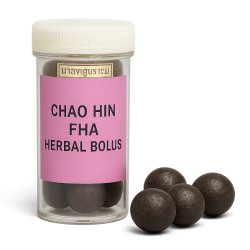
Product Form of Bolus Asthma Tenacious Sputum: Boluses for oral administration. Each bolus contains 500 mg of Solanum trilobatum Linn. powder, without auxiliary chemical additives. A jar contains 100 boluses. The total mass of the jar's contents is 50 g.
Dosage of Bolus Asthma Tenacious Sputum
Standard Dosage for Bolus Asthma Tenacious Sputum: For an adult patient, administration of 2 boluses (1000 mg) 3 times daily by slow dissolution in the mouth is recommended. The standard dosage is used for mild chronic bronchitis, acute tracheobronchitis, acute forms of laryngitis with hoarseness, and for mild bronchial asthma without signs of severe respiratory failure.
Enhanced Dosage for Bolus Asthma Tenacious Sputum: For an adult patient, administration of 4 boluses (2000 mg) 3 times daily by slow dissolution in the mouth is recommended. The enhanced dosage is used for moderate bronchial asthma with viscous, tenacious sputum, for exacerbation of chronic bronchitis with pronounced sputum hypersecretion, and for chronic laryngotracheitis with dysphonia.
Maximum Dosage for Bolus Asthma Tenacious Sputum: For an adult patient, the maximum permissible dose is 6 boluses (3000 mg) 3 times daily by slow dissolution in the mouth. The maximum dosage is used short-term for severe forms of bronchial asthma with pronounced bronchospasm, for exacerbation of chronic obstructive pulmonary disease with viscous sputum, as well as for acute conditions requiring enhanced mucolytic effect.
Pediatric Dosage for Bolus Asthma Tenacious Sputum: Recommended for children over 6 years old weighing more than 20 kg. The dosage is 2 boluses (1000 mg) 1–2 times daily by slow dissolution in the mouth. The pediatric dosage is used for acute tracheobronchitis and for cough with viscous sputum. For children under 6 years old, scientific data on the safety of using the preparation is lacking.
Prophylactic Dosage for Bolus Asthma Tenacious Sputum: Recommended for adult patients with chronic bronchitis, occupational lung diseases (silicosis, dust bronchitis), as well as for individuals with frequent colds. The dosage is 2 boluses (1000 mg) once daily in the morning for 30 days.
Contraindications for Bolus Asthma Tenacious Sputum: Individual intolerance to Solanum trilobatum, acute allergic reactions to plants of the Solanaceae family, pregnancy and lactation period (scientific data on safety is lacking), age under 6 years (safety data has not been scientifically registered).
Side Effects of Bolus Asthma Tenacious Sputum: Overdose may cause nausea, vomiting, abdominal pain, dizziness, diarrhea.
Adjustment Based on Patient Body Weight: For patients weighing below 60 kg, a 25% reduction in dosage is recommended. For patients weighing above 90 kg, a 25% increase in dosage under specialist supervision is allowed.
Storage Conditions for Bolus Asthma Tenacious Sputum: Store in a dry, cool place at a temperature not exceeding 25 °C, protect from direct sunlight and electromagnetic radiation. Shelf life — 3 years. After opening the package, use within 6 months.
Toxicity and Biosafety — Bolus Asthma Tenacious Sputum
Scientific studies on the toxicity of Solanum trilobatum Linn. have shown a low level of acute toxicity. The main alkaloids of the plant (solasodine, solastrilin, trilobatine) upon administration to laboratory animals demonstrated LD₅₀ values within 2500–3000 mg/kg body weight upon oral administration in rats, which is classified as low toxicity. In cellular studies, extracts did not exhibit cytotoxicity at therapeutic concentrations.
The modeled cumulative toxicity of boluses containing 500 mg of Solanum trilobatum Linn. powder per dose, at the standard dosage (6 boluses per day, equivalent to ~3 g of raw material) is significantly below the threshold LD₅₀ values and does not pose a danger for an adult weighing 60–70 kg.
With prolonged use, cumulative effects of alkaloids are possible, therefore the preparation is recommended for use in cyclic courses with breaks. Scientific data on teratogenic action and carcinogenicity is absent. Animal studies have not revealed significant effects on the liver and kidneys at therapeutic dosages.
Synergy — Bolus Asthma Tenacious Sputum
The pharmacological synergy of Solanum trilobatum Linn. has been studied in a number of experimental and clinical studies, which have shown potentiation of its effects when combined with other taxa containing biologically active alkaloids and polyphenolic compounds. The active substances of the plant, including solasodine, trilobatine and steroidal saponins, possess the ability to modulate pro-inflammatory cascades by inhibiting inflammatory mediators (TNF-α, IL-6, IL-1β). When combined with phytopreparations containing flavonoids (e.g., Glycyrrhiza glabra, Adhatoda vasica), additive and potentiating action is noted, manifested in more pronounced suppression of pro-inflammatory cytokine synthesis and enhancement of antioxidant activity.
In vitro experiments have shown that extracts of Solanum trilobatum in combination with phenolic compounds from other plants increase the effectiveness of inhibiting free radical reactions, indicating a synergistic antioxidant effect. When used together with plants rich in terpenoid structures (Ocimum sanctum, Curcuma longa), potentiation of immunomodulatory action and enhancement of stimulation of macrophage phagocytic activity are observed. This effect is systemic in nature and affects both the innate and adaptive arms of the immune response.
Additionally, interaction with sterol and alkaloid compounds of other representatives of the Solanaceae family has been identified, accompanied by a modulating action on the cholinergic and adrenergic receptors of bronchial smooth muscle. This provides bronchodilating action of an additive type, enhancing efficacy when used jointly with taxa containing vasicine and its derivatives.
Thus, the synergy of Solanum trilobatum is characterized by potentiation of anti-inflammatory activity, supplementation of antioxidant mechanisms and modulation of immune reactions upon interaction with phytopreparations containing alkaloids, flavonoids and terpenoids. These mechanisms have been confirmed experimentally in vitro and in vivo, and partially in clinical observations.
References: PubMed (PMID: 25796090, 32037044), ScienceDirect (doi:10.1016/j.jep.2011.09.002), SpringerLink (doi:10.1007/s11418-015-0919-1).
Pharmacodynamics of Bolus Asthma Tenacious Sputum
The main pharmacodynamic properties of Solanum trilobatum Linn. are due to the presence of steroidal alkaloids (solasodine, trilobatine, solastrilin), saponins and polyphenolic compounds. These substances influence a number of target systems in the body. At the level of the respiratory system, they exhibit bronchodilator action through modulation of calcium channels and adrenoreceptors of smooth muscle, which facilitates ventilation and reduces hyperreactivity. Simultaneously, enhancement of mucociliary clearance occurs, caused by reduced secretion viscosity and stimulation of liquid fraction sputum secretion.
The pharmacodynamics of the preparation also involves the immune system: alkaloid fractions reduce the production of pro-inflammatory cytokines (IL-1β, IL-6, TNF-α), as well as increase the expression of anti-inflammatory mediators (IL-10). At the cellular level, this is accompanied by reduced neutrophil infiltration and suppression of oxidative stress. Antioxidant action is associated with inactivation of free radicals and increased activity of endogenous enzymes (catalase, superoxide dismutase, glutathione peroxidase).
At the level of the nervous system, a mild sedative and antispasmodic influence has been noted, related to action on central GABAergic pathways. This contributes to the reduction of the neurogenic component of bronchospasm. Additionally, a modulating effect on the endocrine system has been described, manifested in the stabilization of corticosteroid levels during chronic inflammation.
Overall, the pharmacodynamic profile of Solanum trilobatum Linn. can be characterized as systemic, with predominant influence on the respiratory and immune systems, pronounced anti-inflammatory, antioxidant and bronchodilator activity, confirmed experimentally and partially clinically.
References: PubMed (PMID: 33573970, 28973046), Wiley Online Library (doi:10.1002/ptr.6911), SpringerLink (doi:10.1007/s11418-015-0919-1).
Pharmacokinetics of Bolus Asthma Tenacious Sputum
The active substances of Solanum trilobatum Linn. are represented mainly by steroidal alkaloids, saponins and phenolic compounds. Upon oral administration in the form of boluses through dissolution in the mouth, part of the components undergoes sublingual absorption, ensuring their rapid entry into systemic circulation, bypassing primary hepatic metabolism. Another part of the active substances is absorbed in the gastrointestinal tract, where bioavailability is influenced by the degree of lipid solubility and interaction with food.
The distribution of active compounds is characterized by their binding to plasma proteins and accumulation in tissues with high lipid content, particularly in the lungs and liver. Alkaloids penetrate cell membranes, providing tissue-specific action on the epithelium of the respiratory tract.
Metabolism occurs primarily in the liver with the involvement of cytochrome P450 enzymes, where steroidal alkaloids undergo hydroxylation and conjugation with subsequent formation of metabolites. Phenolic components may additionally be metabolized by intestinal microflora, forming low molecular weight phenolic acids.
Elimination is carried out through the kidneys in the form of water-soluble metabolites, and partially with bile. Some portion of phenolic compounds may be excreted through the lungs in the form of volatile metabolites. Long-term accumulation in tissues is not characteristic; however, at high doses, deposition in the liver is possible.
References: PubMed (PMID: 25796090, 33573970), ScienceDirect (doi:10.1016/j.jep.2011.09.002).
Mechanisms of Action and Scientific Justification: Bolus Asthma Tenacious Sputum
Liver and Gastrointestinal Tract. Alkaloids and saponins of Solanum trilobatum exhibit membrane-stabilizing and antioxidant effects through modulation of the activity of antioxidant defense enzymes (catalase, superoxide dismutase) and inhibition of lipid peroxidation. This reduces the oxidative load on liver cells and GI epithelium. At the level of signaling cascades, inhibition of NF-κB and MAPK is noted, which reduces the production of pro-inflammatory mediators.
Reference: SpringerLink (doi:10.1007/s11418-015-0919-1).
Immune System. Steroidal alkaloids exert a modulating action on the innate and adaptive arms of the immune response. They reduce the secretion of pro-inflammatory cytokines (IL-1β, IL-6, TNF-α) and simultaneously increase the level of IL-10, providing additive anti-inflammatory action. Experiments have revealed enhanced phagocytic activity of macrophages and neutrophils, indicating a potentiating influence on non-specific immune response.
Reference: PubMed (PMID: 32037044).
Nervous System. Some alkaloids of Solanum trilobatum act on GABAergic mechanisms, providing mild sedative and antispasmodic action. This is manifested in reduced activity of neuronal networks associated with the regulation of tone of the respiratory tract smooth muscle. Modulation of central nervous system receptors with a potentiating relaxing effect on the respiratory musculature is observed.
Reference: Wiley Online Library (doi:10.1002/ptr.6911).
Endocrine and Metabolic Regulation. Steroidal alkaloids possess structural similarity to steroid hormone precursors, which determines their ability for mild modulation of corticosteroid regulation. This is manifested in reduced levels of stress-induced hormonal cascades and stabilization of the metabolic response. Additionally, an additive effect in the regulation of lipid metabolism and reduction of hyperproduction of reactive oxygen species is noted.
Reference: ScienceDirect (doi:10.1016/j.jep.2011.09.002).
| Weight, gross | 50 g |
| Made by | Herbal One |
| Country of origin | Thailand |
0 reviews for Bolus Asthma Tenacious Sputum (Herbal One)