
Compound Makhampom Cough Pill


CONSULTATION WITH A SPECIALIST
It is not blocked for now — DOWNLOAD IMO
Place an order via messengers:
Compound Makhampom Cough Pill (ABHAI)
Product Name: Драже от кашля с амлой, Compound Makhampom Cough Pill, Hustenpastillen mit Amla, Pastillas para la tos con amla, Pastilles contre la toux à l’amla, أقراص سعال بالأمللا, ยาเม็ดแก้ไอมะขามป้อม, Амладан йўтал дори дражелари, Амладан жөтөлгө каршы дражелер, Amla öskürək drajeleri, Дорухои дражеи сулф бо амла, Amlos pastilės nuo kosulio, Amlas klepus dražejas, Драже від кашлю з амлою, דראז’ה לשיעול עם אמלה
Main Indications for Use of Compound Makhampom Cough Pill: Acute bronchitis, chronic bronchitis, tracheitis, acute pharyngitis, chronic pharyngitis, acute laryngitis, chronic laryngitis, pertussis, bronchial asthma, acute rhinopharyngitis (common cold), inflammatory diseases of the upper respiratory tract with cough syndrome.
Indications for Use of Compound Makhampom Cough Pill as Part of Therapeutic Complexes: Bacterial pneumonia, viral pneumonia, infiltrative pulmonary tuberculosis, chronic obstructive pulmonary disease, neoplasms of the bronchopulmonary system (non-small cell lung cancer, small cell lung cancer, squamous cell bronchial carcinoma), chronic heart failure with cough syndrome, gastroesophageal reflux disease with nocturnal cough, allergic rhinitis with postnasal drip.
Main Pharmacological Properties of Compound Makhampom Cough Pill: expectorant, antitussive, anti-inflammatory, antioxidant, antimicrobial, immunomodulatory, antispasmodic, general tonic.
Composition of Compound Makhampom Cough Pill: Phyllanthus emblica fruit powder (amla fruit powder), Glycyrrhiza glabra root powder (licorice root powder), Mentha arvensis leaf powder (field mint leaf powder), Zingiber officinale rhizome powder (ginger rhizome powder), Piper nigrum fruit powder (black pepper fruit powder), Piper retrofractum fruit powder (long pepper fruit powder), Excipients (auxiliary substances). Composition requires clarification according to the manufacturer's pharmacopoeial data.
Functions of the Components in Compound Makhampom Cough Pill:
- Phyllanthus emblica — source of ascorbic acid and polyphenols, exerts antioxidant, immunomodulatory, and anti-inflammatory action, facilitates cough relief and strengthens respiratory mucosa.
- Glycyrrhiza glabra — exerts mild expectorant, anti-inflammatory, and antispasmodic action, reduces throat mucosal irritation.
- Mentha arvensis — provides cooling and antiseptic effect, eases breathing and relieves irritation during cough.
- Zingiber officinale — possesses anti-inflammatory, warming, and antispasmodic action, improves microcirculation of the respiratory mucosa.
- Piper nigrum — enhances bioavailability of phytonutrients, exerts mild antimicrobial and warming effect.
- Piper retrofractum — enhances secretion of bronchial glands, facilitates expectoration of phlegm.
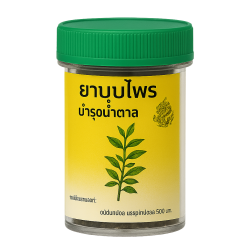
Product Form of Compound Makhampom Cough Pill: The product is released in the form of pills, each weighing about 500 mg, containing Phyllanthus emblica L. fruit powder in combination with other medicinal plant ingredients and excipients. The package contains 40 pills in a hermetic zip-lock bag.
Dosage of Compound Makhampom Cough Pill
Standard Dosage for Compound Makhampom Cough Pill: Recommended dosage for an adult patient is 1–2 pills 3 times a day after meals, with a sufficient amount of warm water. Standard dosage is used for acute forms of bronchitis, tracheitis, pharyngitis, laryngitis, as well as for cold conditions with cough syndrome.
Enhanced Dosage for Compound Makhampom Cough Pill: In cases of pronounced cough in chronic bronchitis, bronchial asthma in the exacerbation phase, or in prolonged tracheobronchitis, adult patients are allowed to take 2 pills 4 times a day after meals. Enhanced dosage is used for a short course (up to 7 days), with mandatory monitoring of the condition dynamics.
Maximum Dosage for Compound Makhampom Cough Pill: The maximum permissible dosage for an adult patient is 10 pills per day, divided into 5 doses of 2 pills. The duration of the course at this dosage should not exceed 5–7 days. Used for severe inflammatory processes of the upper respiratory tract with intense cough, only under specialist supervision.
Pediatric Dosage for Compound Makhampom Cough Pill: For children over 6 years old and weighing more than 20 kg, a dosage of 1 pill 2–3 times a day after meals is recommended. For children under 6 years old, use is not recommended due to the lack of scientifically confirmed safety data. No scientifically registered data exist on use in children under 3 years old, nor in infants.
Preventive Dosage for Compound Makhampom Cough Pill: To prevent relapses of chronic bronchitis, frequent pharyngitis and laryngitis, as well as in case of predisposition to common colds, adult patients are recommended to take 1 pill 1–2 times a day after meals in courses of 2–3 weeks with a 1-month interval.
Contraindications of Compound Makhampom Cough Pill: Individual intolerance to components, pronounced allergic reactions to medicinal plants of the Phyllanthaceae or Fabaceae families. No scientifically registered data on contraindications during pregnancy, lactation, and in young children exist, therefore use in these categories requires caution and medical supervision.
Side Effects of Compound Makhampom Cough Pill: With overdose, dyspeptic phenomena (nausea, abdominal pain, diarrhea), allergic skin reactions (rash, itching) are possible; high doses of licorice preparations may cause sodium and fluid retention.
Adjustment Based on Patient Body Weight: Patients weighing less than 60 kg are recommended to reduce the single dose to 1 pill per intake and not exceed 6 pills per day. Patients weighing over 60 kg are allowed to use standard and enhanced dosages.
Storage Conditions and Shelf Life of Compound Makhampom Cough Pill: Store the product in a dry place, protected from direct sunlight, at a temperature not exceeding 25 °C, away from moisture sources and electromagnetic radiation. Store in the original hermetic zip-lock packaging. Shelf life — 24 months from the production date. After opening the package, it is recommended to use the product within 6 months.
Toxicity and Biosafety — Compound Makhampom Cough Pill
Brief assessment: no published data on the acute toxicity of the finished product were found. The assessment was performed based on the toxicological characteristics of individual plant components included in the composition (Phyllanthus emblica, Glycyrrhiza glabra, Mentha arvensis, Zingiber officinale, Piper nigrum, Piper retrofractum).
Acute toxicity (LD₅₀, oral):
- Phyllanthus emblica (fruit): LD₅₀ > 5 g/kg body weight (rat) — practically non-toxic.
- Glycyrrhiza glabra (root, extract): LD₅₀ about 5 g/kg (rat); with chronic use, development of pseudoaldosteronism is possible.
- Mentha arvensis (menthol): LD₅₀ about 3.3 g/kg (rat).
- Zingiber officinale (ginger): LD₅₀ > 5 g/kg (rat).
- Piper nigrum (piperine): LD₅₀ within 0.33–0.51 g/kg (rat) — the most toxic component.
The modeled cumulative acute toxicity of the mixture at a conditional ingredient ratio (amla 60%, licorice 15%, ginger 10%, mint 5%, black pepper 5%, long pepper 5%) is LD₅₀mix approximately 2.4 g/kg body weight (rat).
Safety margin at the recommended maximum dosage: with intake of 10 pills per day (approximately 5 g) for an adult weighing 60 kg, the load is about 0.083 g/kg. Comparison with the calculated LD₅₀mix demonstrates an acute toxicity safety factor of about 29.
Genotoxicity, mutagenicity, and reproductive toxicity: no adverse effects at dietary doses were found for amla and ginger; for piperine, effects of inhibiting CYP3A4 and P-gp enzymes, as well as possible adverse reactions at high doses in animals, are described; for licorice, risks of chronic effects (hypokalemia, arterial hypertension) with excessive consumption of glycyrrhizin are established.
Key biosafety risks and drug interactions: piperine can increase the bioavailability of drugs by inhibiting metabolism and transport systems; licorice with long-term use may cause sodium and fluid retention; menthol in large doses can enhance mucosal irritation.
Synergy — Compound Makhampom Cough Pill
The composition of Phyllanthus emblica fruit (amla), Glycyrrhiza glabra root (licorice), Zingiber officinale rhizomes (ginger), mint leaves (menthol, primarily Mentha arvensis), as well as Piper nigrum/Piper retrofractum fruit (piperine, piperlongumine) demonstrates multi-component pharmacological synergy. The antioxidant framework is formed by emblicanin A/B, gallic and ellagic acids from P. emblica, which reduce oxidative stress and stabilize cellular antioxidant systems; this creates a tissue-specific "protective" platform, reducing reactivity to pro-inflammatory stimuli. The anti-inflammatory axis is enhanced by licorice flavonoids (liquiritin, isoliquiritin) and glycyrrhizin, as well as ginger gingerols/shogaols; the total effect is of additive-potentiating nature at the levels of NF-κB/MAPK and enzyme targets (e.g., COX-2, iNOS), with parallel activation of the antioxidant response (Nrf2/HO-1). Sensory modulation is provided by menthol via TRPM8 channels, which gives a rapid counter-irritant effect on irritating stimuli and can reduce the neurogenic component of reflex responses; this module harmonizes with the slower anti-inflammatory links of ginger and licorice (modulating "sensory-inflammatory" interaction). The key synergist is piperine: it inhibits the P-gp transporter and CYP3A4, reducing presystemic clearance and increasing the bioavailability of accompanying phenolic compounds and saponins; at the cellular level, this increases intracellular exposures of amla polyphenols, glycyrrhizin, and ginger phenolic components. Simultaneously, pepper alkaloids (piperine, piperlongumine) demonstrate their own anti-inflammatory and antioxidant properties; for piperlongumine, targets related to redox homeostasis are described, adding a "redox-modulating" component to the overall network. Thus, the composition implements a combination of additive and potentiating interactions: antioxidant "background" enhancement (P. emblica → gingerols/shogaols → licorice flavonoids), anti-inflammatory convergence of NF-κB/MAPK/COX-2 pathways (additive-potentiating type), sensory detuning-modulation via TRPM8 (counter-irritant, rapid onset), as well as piperine's pharmacokinetic biopotentiation (increased absorption/reduced efflux). At the systemic level, this is expressed in the coordinated modulation of epithelial and neurosensory responses, supported by redox protection and improved tissue availability of active substances.
References:PMC+6PMC+6PMC+6ScienceDirect
Pharmacodynamics of Compound Makhampom Cough Pill
The pharmacodynamic profile is determined by the combined action of amla phenolic antioxidants (emblicanin A/B, gallic and ellagic acids), licorice saponins and flavonoids (glycyrrhizin, liquiritin), ginger phenylalkanones (6-gingerol, 6-shogaol), mint monoterpenoids (menthol), and pepper alkaloids (piperine, piperlongumine). At systemic and tissue levels, the following are noted: antioxidant action (scavenging reactive oxygen species, increasing expression of antioxidant enzymes via Nrf2/HO-1), anti-inflammatory action (inhibition of NF-κB and MAPK transcriptional cascades, reduction of mediator expression, including COX-2 and iNOS), secretomotor-secretolytic and antispasmodic activity of plant saponins and phenolic compounds, sensory modulation of peripheral neurons through activation of TRPM8 by menthol (counter-irritant influence on irritant-induced responses). At the level of enzyme and transport targets, piperine suppresses P-glycoprotein and CYP3A4, which pharmacokinetically increases systemic exposures of accompanying components; this feature complements pharmacodynamic synergy, ensuring more stable tissue availability of phenolic antioxidants and saponins. Licorice flavonoids and ginger phenolic compounds demonstrate modulation of pro-inflammatory mediators and possible influence on the pro-oxidant-antioxidant balance in macrophages and epithelial cells; piperlongumine involves mechanisms related to the regulation of redox enzymes. Collectively, the composition exerts multi-level impact: systemic level — redox homeostasis and anti-inflammatory regulation; tissue level — epithelial-ciliary clearance, secretolytic activity, reduction of smooth muscle hyperreactivity; cellular level — transcriptional and enzyme modulation, sensory "retuning" via TRP channels. These effects correspond to the known pharmacological properties of the original taxa and their marker substances and are reinforced by their complementary pharmacokinetic characteristics.
References: PMC+7PMC+7PMC+7PubMed
Pharmacokinetics of Compound Makhampom Cough Pill
The product is applied orally in the form of pills containing plant component powder. The main biologically active compounds, represented by polyphenols, flavonoids, saponins, terpenoid, and alkaloid structures, undergo absorption in the gastrointestinal tract. Polyphenolic compounds of amla fruit are partially hydrolyzed by the microbiota of the large intestine to low-molecular-weight metabolites, increasing their absorption. Licorice saponins are absorbed to a small extent unchanged, but their aglycones undergo biotransformation in the intestine. Ginger terpenoids and menthol are rapidly absorbed in the proximal parts of the intestine and reach systemic circulation in active form.
Distribution of active components occurs primarily in the liver, lungs, mucous membranes of the respiratory tract, and partially in adipose tissue. Flavonoids and phenolic acids bind to plasma proteins, ensuring their transport and prolonged action. Pepper alkaloids (piperine and related substances) are characterized by good lipophilicity, facilitating their penetration through cell membranes and tissue depot effects.
Metabolism occurs in the liver with the participation of cytochrome P450 enzymes, while piperine can inhibit the activity of a number of isoforms and reduce the clearance of accompanying substances, increasing their systemic exposure. Metabolism is accompanied by reactions of hydroxylation, demethylation, glucuronidation, and sulfation. Some components undergo enterohepatic circulation, prolonging their bioavailability.
Excretion is carried out by the kidneys in the form of conjugates (glucuronides, sulfates), as well as through bile and the intestine. Volatile terpenoids may partially be excreted through the lungs and skin. The totality of these processes ensures a gradual decrease in concentrations and forms a characteristic multicomponent pharmacokinetic profile with mutual influence of plant metabolites.
References: https://pubmed.ncbi.nlm.nih.go... https://pubmed.ncbi.nlm.nih.go... https://www.sciencedirect.com/... https://pubmed.ncbi.nlm.nih.go... https://www.sciencedirect.com/...
Mechanisms of Action and Scientific Rationale: Compound Makhampom Cough Pill
Liver and Gastrointestinal Tract. Amla polyphenols possess pronounced antioxidant and membrane-stabilizing properties, acting at the level of cellular protection of hepatocytes and enterocytes. Licorice saponins exert a modulating influence on the secretory activity of the gastric and intestinal mucosa, reducing aggressive factors. Ginger phenylalkanones stimulate motor-secretory processes, exerting lipotropic and antispasmodic action. Piperine regulates CYP450 enzyme systems and P-gp transport proteins, influencing the bioavailability of accompanying compounds. Collectively, a potentiating interaction is observed, supporting the balance of redox systems and enzymatic activity.
Reference: https://pubmed.ncbi.nlm.nih.go...
Immune System. Amla and ginger flavonoids and phenolic acids reduce the production of pro-inflammatory cytokines by suppressing NF-κB and MAPK cascades. Licorice saponins exhibit a modulating influence on macrophage and lymphocyte activity. Pepper alkaloids activate phagocytic function and enhance the expression of antioxidant enzymes. The combined action is of additive and modulating nature, ensuring tissue-specific regulation of immune responses.
Reference: https://www.sciencedirect.com/...
Nervous System. Menthol activates TRPM8 ion channels of sensory neurons, causing a modulating effect on the perception of irritating stimuli. Amla phenolic compounds and ginger gingerols exert antioxidant and neuroprotective action through the regulation of mitochondrial enzymes and reduction of neuroinflammation. Piperine can modulate neurotransmitter levels and interact with serotonergic and dopaminergic systems. The interaction of components is characterized as potentiating and systemic.
Reference: https://pubmed.ncbi.nlm.nih.go...
Endocrine and Metabolic Regulation. Amla flavonoids and tannins modulate carbohydrate and lipid metabolism, influencing the activity of α-amylase and lipase enzymes. Licorice glycyrrhizin exerts a regulatory effect on steroid metabolism through interaction with 11β-hydroxysteroid dehydrogenase. Pepper alkaloids stimulate energy metabolism by enhancing thermogenesis and activating cellular respiration. These effects are of additive and modulating nature, ensuring a systemic level of metabolic regulation.
Reference: https://pubmed.ncbi.nlm.nih.go...
| Product type | Bolus |
| Package quantity, PCs. | 40 |
| Length | 110 mm |
| Height | 50 mm |
| Width | 10 mm |
| Weight, gross | 10 g |
| Shelf life and storage conditions | 2 years |
| Made by | Abhaibhubejhr |
| Country of origin | Thailand |
0 reviews for Compound Makhampom Cough Pill