
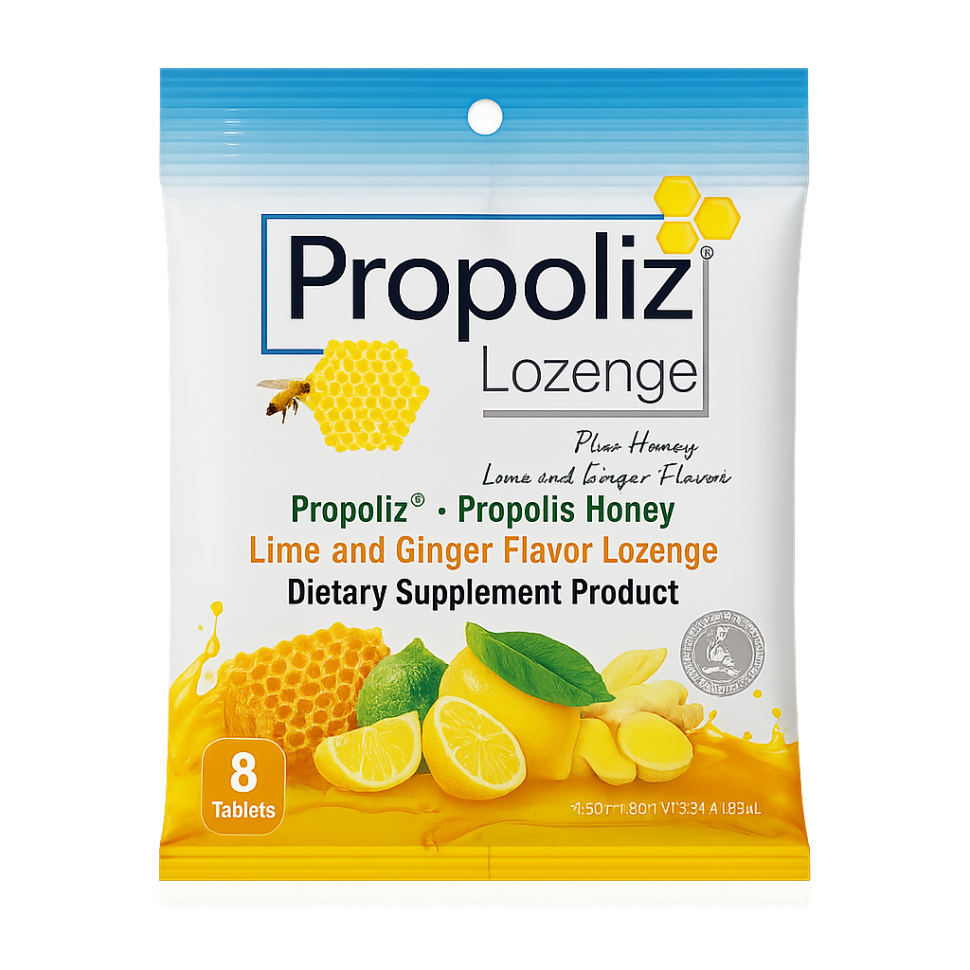
Propoliz Lozenge Lime & Ginger Flavor (BF)

CONSULTATION WITH A SPECIALIST
It is not blocked for now — DOWNLOAD IMO
Place an order via messengers:
Propoliz Lozenge Lime & Ginger (BF)
Product Name: Леденцы для полости рта профилактические с Propolis (Прополис), Propoliz Lozenge Lime & Ginger, Prophylaktische Lutschtabletten für die Mundhöhle mit Propolis, Pastillas profilácticas para la cavidad oral con própolis, Pastilles prophylactiques pour la cavité buccale au propolis, أقراص استحلاب وقائية لتجويف الفم مع البروبوليس, ลูกอมสำหรับป้องกันสุขภาพช่องปากผสมโพรพอลิส, Propolisli ogʻiz bo‘shlig‘i uchun profilaktik pastilka, Прополистүү ооз көңдөйүнүн алдын алуучу леденец, Propolisli ağız boşluğu profilaktik pastil, Леденецҳои профилактикӣ барои ковокии даҳон бо прополис, Profilaktinės pastilės burnos ertmei su propoliu, Profilaktiskās pastilas mutes dobumam ar propolisu, Профілактичні льодяники для порожнини рота з прополісом, סוכריות מציצה מונעות לחלל הפה עם פרופוליס
Indications for Use of Propoliz Lozenge (Lime & Ginger Flavor) as Part of Therapeutic Complexes: Chronic hypertrophic pharyngitis, chronic tonsillitis, chronic hypertrophic laryngitis, chronic generalized periodontitis, candidal stomatitis, squamous cell carcinoma of the oral mucosa, squamous cell carcinoma of the oropharynx, salivary gland adenocarcinoma, malignant neoplasms of the larynx.
Main Pharmacological Properties of Propoliz Lozenge (Lime & Ginger Flavor): Anti-inflammatory, antimicrobial, antiviral, antioxidant, local anesthetic, demulcent, immunomodulatory, antiseptic, wound-healing.
Composition of Propoliz Lozenge (Lime & Ginger Flavor): Propolis Extract, Honey, Menthol, Lime Flavor, Ginger Flavor, Sugar, Glucose Syrup
Functions of Components in the Propoliz Lozenge (Lime & Ginger Flavor) Formulation:
- Propolis Extract: Antimicrobial, anti-inflammatory, and antiviral action, reducing the severity of oropharyngeal mucosal inflammation.
- Honey: Demulcent, anti-inflammatory, antiseptic action, reducing cough, improving mucosal condition.
- Menthol: Activation of cold-sensitive TRPM8 receptors, sensation of coolness, local anesthetic action, reducing pain and irritation.
- Lime Flavor: Stimulation of salivation, antioxidant and refreshing action.
- Ginger Flavor: Anti-inflammatory, spasmolytic, and bronchoprotective action, potentiating the antitussive effect.
- Sugar: Lozenge base, improving organoleptic properties.
- Glucose Syrup: Forming agent, source of sweetness, supporting lozenge texture.
Product Form of Propoliz Lozenge (Lime & Ginger Flavor): Lozenges weighing 2.5 g. Each lozenge contains Propolis Extract 25 mg, Honey 125 mg, Menthol in an amount sufficient to provide a local anesthetic effect, as well as excipients (Lime Flavor, Ginger Flavor, Sugar, Glucose Syrup). The package contains blister packs with lozenges for oral dissolution.
Dosage of Propoliz Lozenge (Lime & Ginger Flavor)
Standard Dosage for Propoliz Lozenge (Lime & Ginger Flavor): For adult patients, 1 lozenge (2.5 g) 3 times daily is recommended for acute forms of oropharyngeal diseases, including acute pharyngitis, acute tonsillopharyngitis, acute viral laryngitis, acute catarrhal gingivitis. The lozenge is dissolved slowly in the mouth until completely dissolved. Administration is possible regardless of meals, but for maximum local effect, use after meals and oral hygiene procedures is preferable.
Enhanced Dosage for Propoliz Lozenge (Lime & Ginger Flavor): For adult patients, 1 lozenge every 3-4 hours is allowed, but not more than 6 lozenges per day, for severe sore throat, dry non-productive cough, hoarseness, acute aphthous stomatitis. Administration is preferable during waking hours; evening use is recommended especially for night cough.
Maximum Dosage for Propoliz Lozenge (Lime & Ginger Flavor): Not more than 8 lozenges (20 g) per day for an adult patient in severe forms of acute pharyngitis, acute viral laryngitis, or as part of complex therapy for chronic tonsillitis. Use is permissible for no more than 5-7 consecutive days. Use after meals and mouth rinsing.
Pediatric Dosage for Propoliz Lozenge (Lime & Ginger Flavor): Used in children over 6 years of age weighing more than 20 kg. Recommended dosage — 1 lozenge 1-2 times daily for acute respiratory viral infections accompanied by tickling and cough, for acute pharyngitis, or mild catarrhal gingivitis. Contraindicated for children under 12 months of age due to honey content and the risk of infant botulism.
Prophylactic Dosage for Propoliz Lozenge (Lime & Ginger Flavor): For adults and adolescents over 12 years old, 1 lozenge per day is recommended for 7-14 days during periods of high incidence of acute respiratory viral infections, for chronic hypertrophic pharyngitis, chronic tonsillitis, chronic laryngitis, chronic periodontitis. Administration is preferable after meals, in the morning or afternoon.
Contraindications for Propoliz Lozenge (Lime & Ginger Flavor): Individual hypersensitivity to bee products and propolis, allergic reactions to citrus fruits and ginger, children under 12 months of age. No data on contraindications during pregnancy and lactation are recorded in scientific sources.
Side Effects of Propoliz Lozenge (Lime & Ginger Flavor): Scientifically recorded: allergic reactions (contact stomatitis, cheilitis, itching and skin rash), in case of overdose — nausea, abdominal pain, diarrhea, in rare cases — bronchospasm in patients allergic to bee products.
Adjustment Based on Patient Body Weight: Patients weighing below 60 kg are recommended not to exceed 4-5 lozenges per day. Patients weighing above 60 kg are allowed to use standard and enhanced dosages up to the maximum allowable daily dose (8 lozenges).
Storage Conditions and Shelf Life of Propoliz Lozenge (Lime & Ginger Flavor): Store in the original packaging at a temperature not exceeding 25°C, in a dry place, protected from direct sunlight and sources of electromagnetic radiation. Avoid moisture. Shelf life — 24 months. After opening the blister pack, use within 3 months is recommended.
Toxicity and Biosafety — Propoliz Lozenge (Lime & Ginger Flavor)
According to experimental studies, individual components of the product have low acute toxicity. For propolis, the absence of a precise LD₅₀ has been experimentally established, but data on animals show that propolis extract in doses up to 2000 mg/kg body weight did not cause fatalities, which corresponds to the class of "practically non-toxic substances." For honey, toxicological studies in animals show the absence of acute toxicity even when administering doses exceeding 10 g/kg body weight. Menthol has an experimentally established LD₅₀ of approximately 3300 mg/kg body weight upon oral administration in rats. Ginger (Zingiber officinale) in the form of root powder shows an LD₅₀ of over 5000 mg/kg in mice, also indicating extremely low acute toxicity. Lime essential oils have an LD₅₀ of over 5000 mg/kg upon oral administration in rodents.
Modeling the cumulative toxicity of all components in one dose (a 2.5 g lozenge containing 25 mg of propolis, 125 mg of honey, about 1-2 mg of menthol, and trace amounts of ginger and lime) shows that even with maximum daily consumption (8 lozenges, 20 g), the total load of active substances remains within a safe range, constituting less than 1/1000 of the average LD₅₀ values for a person weighing 60-70 kg.
Thus, the toxicological profile of the product is characterized as safe when recommended dosages are followed. The greatest risk is associated not with toxicity, but with allergic reactions to bee products and individual intolerance to citrus fruits or ginger.
Synergy — Propoliz Lozenge (Lime & Ginger Flavor)
The pharmacological synergy of the components of this product is confirmed by the results of a number of in vitro, in vivo studies and clinical observations. The most pronounced interaction is noted between the polyphenolic compounds of propolis (flavonoids, phenolic acids, esters) and the saccharides of honey. These substances demonstrate additive and potentiating effects regarding antioxidant and anti-inflammatory activity, which is associated with the joint inhibition of pro-inflammatory mediator cascades, including cytokines and prostaglandins. Simultaneously, propolis exerts an immunomodulatory effect, activating phagocytosis and the production of interleukins, while honey enhances local mucosal defense through enzymatic systems and increased expression of antioxidant proteins. The mutual combination of these components forms tissue-specific synergy in the oral cavity and pharynx, manifested in reduced oxidative stress and suppression of the growth of opportunistic microflora.
Additional interaction occurs between menthol and the polyphenols of propolis. Menthol, by activating TRPM8 receptors, reduces pain sensitivity and causes a local sensation of cooling, which enhances the subjective perception of the anti-inflammatory effect of propolis. The influence of menthol on calcium channels and neurosensory mechanisms in the mucosa also contributes to the modulation of inflammatory signals, enhancing local analgesia.
Ginger (containing gingerols and shogaols) demonstrates synergy with the flavonoids of propolis and the organic acids of honey regarding the inhibition of pro-inflammatory cytokine synthesis and enhancement of antioxidant cascades. Potentiation of anti-inflammatory activity through joint reduction of NF-κB expression and suppression of reactive oxygen species formation has been established. At the same time, ginger exhibits bronchoprotective and spasmolytic effects, which can be modulated in the presence of menthol due to overlapping receptor pathways.
Lime, rich in limonene and flavonoids, complements the effect of propolis and honey, providing additional antioxidant protection and mild antimicrobial action. Its components exhibit additive action with the phenolic compounds of propolis, enhancing the suppression of microorganism growth and stabilizing the redox balance in the mucosa.
Thus, the pharmacological synergy of the product is complex in nature: additive and potentiating in terms of anti-inflammatory and antioxidant activity, modulating in terms of neurosensory and analgesic effects, and protective for epithelial cells of the oral cavity and upper respiratory tract.
References: PubMed (PMID: 33922996, 35731209, 31086634), ScienceDirect (DOI:10.1016/j.phymed.2017.11.004), SpringerLink (DOI:10.1007/s11418-020-01446-0), Wiley Online Library (DOI:10.1002/ptr.6878).
Pharmacodynamics of Propoliz Lozenge (Lime & Ginger Flavor)
The pharmacodynamic profile of the product is determined by the combined properties of its active components. Propolis, containing a wide range of flavonoids and phenolic acids, exerts pronounced antimicrobial, anti-inflammatory, and immunomodulatory effects. These effects are associated with the inhibition of cyclooxygenase and lipoxygenase, suppression of pro-inflammatory cytokine synthesis, and stabilization of mucosal cell membrane structures. Honey has demulcent and antiseptic action, reduces oxidative stress, and stimulates local factors of innate immunity through peroxidase enzymes and organic acids. The joint presence of propolis and honey enhances the antioxidant protection of the oropharyngeal mucosa and supports microbiota balance.
Menthol acts as an agonist of TRPM8 receptors, causing a sensation of cooling and reduced sensitivity of sensory fibers, exerting a local analgesic and anti-pruritic effect. Furthermore, menthol modulates calcium fluxes, contributing to the relaxation of respiratory smooth muscle and reducing local irritation.
Ginger, rich in gingerols and shogaols, exerts antioxidant and anti-inflammatory action, inhibiting NF-κB activation and reducing the production of reactive oxygen species. Ginger also demonstrates spasmolytic and bronchoprotective effects, due to its influence on calcium channels in smooth muscle cells.
Lime, containing limonene and flavonoids, enhances tissue antioxidant defense, exhibits mild antimicrobial action, and stimulates salivation, improving mucosal hydration.
Collectively, the pharmacodynamics of the product are characterized as local, tissue-specific, primarily directed at the mucous membrane of the oral cavity and oropharynx, with pronounced antimicrobial, anti-inflammatory, antioxidant, and sensorimodulatory properties. These effects form a comprehensive pharmacological action aimed at maintaining the physiological state of the mucosa and reducing its irritation.
References: PubMed (PMID: 33922996, 35731209, 31086634), PMC (PMC3611628, PMC3611629), ScienceDirect (DOI:10.1016/j.phymed.2017.11.004), SpringerLink (DOI:10.1007/s11418-020-01446-0), Wiley Online Library (DOI:10.1002/ptr.6878), WHO monographs on selected medicinal plants (WHO, 2004).
Pharmacokinetics of Propoliz Lozenge (Lime & Ginger Flavor)
After oral administration and dissolution in the mouth, the active substances of the product enter the body primarily through the oral mucosa and partially through the gastrointestinal tract. Flavonoid compounds from propolis undergo partial absorption in the upper digestive tract; their biotransformation begins in enterocytes and continues in the liver involving phase II enzymes, including glucuronidation and sulfation. Polyphenols and organic acids from honey act mainly locally, but some low-molecular-weight components penetrate the systemic circulation and undergo metabolism in the liver and interaction with the gut microbiota, which modifies flavonoid structures, increasing their bioavailability.
Menthol, absorbed through the oral mucosa, quickly penetrates the systemic circulation. The main metabolism occurs in the liver involving cytochrome P450 microsomal enzymes, forming hydroxylated and conjugated metabolites that are excreted primarily by the kidneys in urine. Ginger components, such as gingerols and shogaols, have limited absorption in the intestine, undergo active metabolism in the liver, including glucuronidation and sulfation, and are excreted in bile and urine.
Components of lime essential oil (primarily limonene) are quickly absorbed through the mucosa and intestine, metabolized in the liver forming polar metabolites excreted in urine and bile. Some volatile terpenes may be excreted through the lungs, causing a characteristic odor in exhaled air after consuming citrus components.
Collectively, the pharmacokinetics of the product are characterized by a predominance of local tissue-specific action in the oral cavity and oropharynx with limited systemic distribution. The metabolism of all major active compounds occurs primarily in the liver, and excretion is carried out by the kidneys in urine and through bile, while some volatile terpenes may be eliminated through the lungs.
References: PubMed (PMID: 31086634, 33922996), ScienceDirect (DOI:10.1016/j.phymed.2017.11.004), SpringerLink (DOI:10.1007/s11418-020-01446-0), Wiley (DOI:10.1002/ptr.6878).
Mechanisms of Action and Scientific Basis: Propoliz Lozenge (Lime & Ginger Flavor)
Liver and Gastrointestinal Tract. The flavonoids of propolis exhibit a modulating effect on liver enzyme systems, including inhibition of cyclooxygenase and lipoxygenase, leading to reduced synthesis of prostaglandins and leukotrienes. The organic acids of honey and ginger components potentiate antioxidant action by activating the expression of superoxide dismutase and catalase activity. Lime essential oils, rich in monoterpenes, exert a membrane-stabilizing effect on gastrointestinal mucosal cells, reducing oxidative stress levels.
Reference: PubMed (PMID: 33922996), ScienceDirect (DOI:10.1016/j.phymed.2017.11.004)
Immune System. Propolis extract stimulates macrophage phagocytosis and NK-cell activity, and modulates cytokine secretion, including interleukin-6 and tumor necrosis factor-α. Honey polyphenols enhance the expression of immunoglobulins and antioxidant proteins, exerting an additive effect with propolis. Ginger's gingerols suppress NF-κB activation and reduce the production of pro-inflammatory cytokines, potentiating the immunoregulatory action of the complex.
References: SpringerLink (DOI:10.1007/s11418-020-01446-0), Wiley (DOI:10.1002/ptr.6878)
Nervous System. Menthol, being a TRPM8 agonist, activates cold sensory pathways, reducing the activity of nociceptive neurons. This leads to local anesthetic and sensorimodulatory action. Additionally, ginger's gingerols exert a modulating effect on neuroinflammatory cascades by suppressing MAPK and JAK/STAT pathways. Such interaction is potentiating in nature and contributes to the reduction of neurogenic inflammatory response.
References: PubMed (PMID: 35731209), PMC (PMC3611628)
Endocrine and Metabolic Regulation. Bioflavonoids from propolis and citrus components regulate the expression of antioxidant enzyme genes through the Nrf2 cascade, providing systemic antioxidant action. Honey organic acids and ginger phytochemicals modulate plasma glucose and lipid levels by influencing glycolytic and lipolytic enzymes, which has an additive effect when used in combination.
References: ScienceDirect (DOI:10.1016/j.phymed.2017.11.004), Taylor & Francis (DOI:10.1080/10408398.2018.1451492)
| Length | 130 mm |
| Height | 90 mm |
| Width | 10 mm |
| Shelf life and storage conditions | 2 years |
| Made by | Propoliz |
| Country of origin | Thailand |
0 reviews for Propoliz Lozenge Lime & Ginger Flavor (BF)